Places

In the garden – video

This morning, I took my trusty Olympus C-770UZ into our garden here in Romania and shot some video footage in super macro mode. I love the bokeh I get that way, and how close I can get to things.

I found an iridescent beetle sunning itself on some parsley leaves, a butterfly resting on some spinach leaves, two beetles getting it on, a bee collecting pollen on a squash flower, ants drinking nectar on a raspberry blossom, and more.

See the video on SmugMug, Vimeo or YouTube.

Standard
Reviews

WordPress.com gets more expensive

Ever since I learned about WordPress, I thought it was the coolest blogging platform, and the more I found out about the WordPress.com network, the more I liked the options they offered their users. To this day, I regret not having started to publish directly on WordPress.com instead of doing it on my own with a self-install of WordPress, but each path has its pros and cons. Incidentally, I discussed them (the pros and cons) at length with WordPress staff recently, and may put together a guide to switching from WP.com to WP.org and vice-versa, at some point.

One of the things I really liked about WordPress.com was the 5GB space upgrade, which, among other things allowed me to upload videos that would be transcoded and played directly inside the blog. For $20/year, it was a great deal. I never got to use it on my own blogs, which were and still are self-hosted, but I recommended it to clients and friends. I liked it because the video player was and still is integrated into the blogging platform. This saves the user the hassle of uploading it to a different video sharing site, then putting the right embed code into the blog post.

Now, sadly, that option is gone. I received an email from WordPress today which announced the arrival of a formal video upgrade option, called VideoPress, at a cost of $60/year. Like other video upgrades on the market (such as Vimeo’s own Plus program), VideoPress allows the upload and streaming of SD and HD video. The price is also the same.

wordpress-upgrades

I can understand this change though. According to WordPress, allowing people to upload videos under the regular 5GB space upgrade was a testing ground which allowed them to figure out what they needed to charge long-term. After all, HD video eats up a lot of space and requires a lot of processing power to compress, not to mention the bandwidth needed to stream it. Here’s what Matt Mullenweg, WP’s founder, says in a response to a question about the price tag:

“We try to run every part of our business in a way that’s sustainable and supportable for the long-term. By charging a fair amount for a superior service we can continue to invest in expanding the feature to be a great option for high-end video, just like WordPress is a fantastic option for high-end blogging. (And you wouldn’t believe how expensive it is to host and stream video, which is part of the reason we’ve waited to launch this until now, we’ve been working at getting the costs down.” [source]

Now when you realize that both WordPress and Vimeo charge $60/year for HD video uploads, think about YouTube, and the astronomical expenses it has to eat up every year because it doesn’t charge its users anything to upload gobs and gobs of video.

I looked at the specs for the video sizes of the new WordPress Video Player, and there are three of them: 400px (SD), 640px (DVD) and 1280px (HD). That’s plenty for live streaming. I do wish there was an option that would let the video authors allow downloads of the original video files, like Vimeo does it.

The upper limit on a single video file is 1GB, although it’s not hard-capped like at Vimeo. WordPress will let you upload 1.5-2GB files, although they say results may vary and uploads may die out if your connection is slow.

One thing I’m not clear on is the space allowed for the uploaded videos. Is there a weekly cap, like Vimeo’s 5GB/week limit, or can we upload as many videos as we want? And if so, what’s the total space limit allotted to us when we purchase the upgrade? Is there a special cap, separate from the standard space of 3 GB per blog? Or does each video count against the total space allotted to the blog? Because if that’s the case, that would mean VideoPress is going to be more expensive than Vimeo Plus, since users will need to purchase space upgrades for their videos in addition to VideoPress.

For example, a user would shell out $60 for VideoPress, then soon find out they’ve filled up their 3GB quota, and need to purchase a space upgrade. It’s not hard to imagine one would need about 15GB or more per year with HD video, and that would mean an additional $50 on top of the initial $60, bringing the price tag to $110. This point definitely needs clarification, because it just wouldn’t be fun to get taxed twice for it.

I do like the nice gesture on WordPress’ part, where they gave existing users of the space upgrade and the video player a free VideoPress upgrade for a year. Had they not done that, the transition would have been too jarring for them, so kudos to WordPress for putting money aside and thinking about the user experience.

Standard
Thoughts

This is Dominic the two-legged dog. Amaz…

This is Dominic the two-legged dog. Amazingly inspirational stuff. He is happy and well-adjusted in spite of his handicap.

Standard
Places

The mole cricket

Q: What insect from the Gryllotalpidae family burrows around people’s gardens and eats the roots of freshly planted vegetables?
A: The mole cricket.

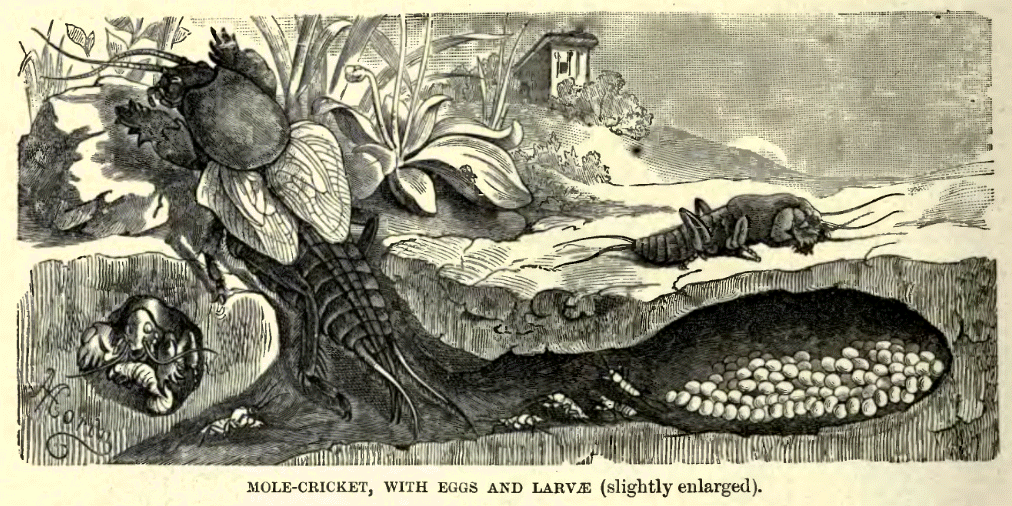
mole-cricket

This nasty critter, which grows to 2 inches or more in length (I’ve seen some that were over 3 inches), has strong forelimbs that it uses to dig around in gardens here in Europe. They’re supposed to be omnivores, and they feed on whatever they find. In the spring, they feed quite a bit on the roots of the planted seedlings of tomatoes, peppers, spinach, cabbage and other common garden vegetables and fruits, which means the seedlings die.  They wither and dry out, unable to extract food from the ground since their roots are gone. This also means that your crop, which you, as a gardener, took great care to plant and nourish, is wiped out by some filthy creepy-crawly thing that gives nothing in return and only gets fatter and uglier with each seedling root it shoves in its ravenous mouth.

It is for this very reason that these ugly critters are considered garden pests, and people do what they can to get rid of them. Some put out pesticides, but then you’ve got poisons on your vegetables, and that’s not healthy. Others, like my grandfather, used to go out at night with a flashlight and squash them when they reared their heads from their burrows. Thankfully, they have plenty of natural predators, though you wouldn’t want most of those guys around your garden either — I’m talking about rats, skunks, foxes, armadillos and raccoons. Birds are another of their predators, and they’re definitely welcome in my garden.

My wife caught a mole cricket recently (they’re called “coropisnite” in Romania), and I recorded a short video clip. Sorry the focus isn’t that great — my Nokia N95 doesn’t focus very well in video mode at close distances.

http://vimeo.com/4445113

Updated 7/6/09:

Images used are public domain. Source: Wikipedia.

Standard
Thoughts

Where's the Solar Coaster when you need it?

Lamenting the absence of a practical, usable solar car…

In an episode of The Raccoons which aired in 1985, entitled “The Evergreen Grand Prix“, Cedric, one of the protagonists and Cyril Sneer’s son, comes up with a design for an innovative solar car that Cyril promises to mass-produce in a new deal struck with a big car manufacturer, a Mr. Mammoth. Once the manufacturer hears the car is solar-powered, he objects, because he sells other tie-in products like gasoline and oil, and they can’t be used when the fuel source is sunlight.

Cyril quickly changes his mind, trashes his son’s brilliant design, and builds a road-hog prototype instead. When it comes time to demonstrate his prototype’s abilities publicly, Cedric and Bert come up with a surprise. They rebuild the trashed solar car and propose to Cyril that the two prototypes race together to see who wins.

the-solar-coaster

Mr. Mammoth is eager to see what happens, and gives the okay. Naturally — or, I suppose, unnaturally, given the current status quo — the solar car wins, to Cyril’s dismay. The manufacturer then agrees to mass-produce self-assembly kits of the solar car, which goes on to be a great success.

So I ask, given that this episode saw the light of day in 1985, has anything progressed in the area of solar cars since then? After all, it’s been 29 years. That’s a long time, during which many new developments could have been architected. The answer is sadly no.

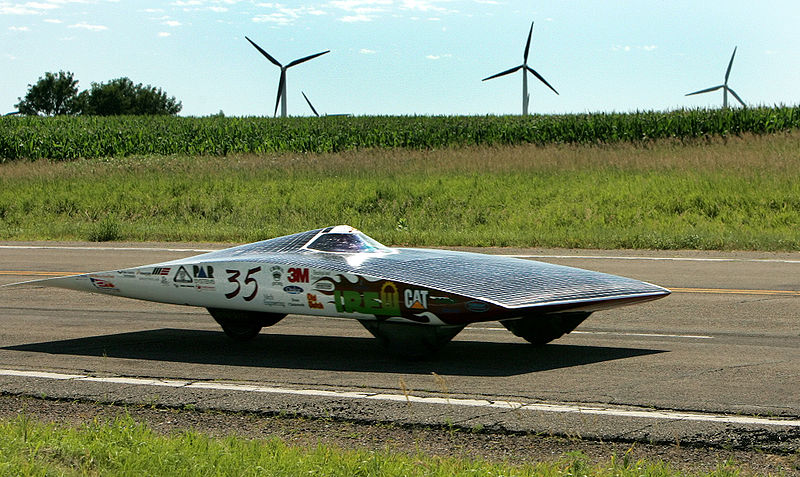
To put things in perspective, the Solar Coaster used a single rectangular solar panel which also doubled as a rear spoiler, and it was enough to make the car “peppy”, as one of the lines in the show went. Today’s solar cars (actually, all solar cars since their inception, sadly) have placed photovoltaic panels over the entire top of the car, and it’s still not enough. They have had to adjust the design radically in order to increase the top surface area, so the cars have no side height at all. They’re basically tapered tops and bottoms, packed full of solar cells, and yet their performance cannot be described as peppy.

borealis-iii-solar-car

I realize the Solar Coaster doesn’t exist. It’s only the fancy of the show’s writers, but still, it’s a good standard by which to judge the solar car’s progress within the last three decades, simply because the idea has been around for that long, if not longer. From my point of view, R&D in photovoltaic cells has stagnated sadly, and this is what’s holding back the solar car. Incredible leaps have been made in computer technology, building technology, and even the performance of petrol-fueled cars, but unfortunately the solar car is still the sickly step child no one likes to play with. To paraphrase Terry from “On the Waterfront”, it could have been a contender; it could have been somebody. [Sorry for the clichĂ©.]

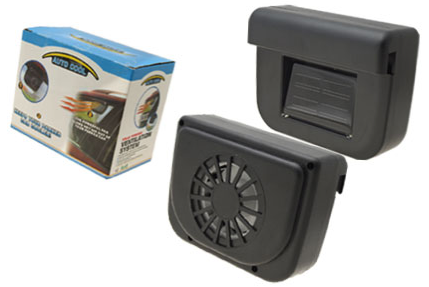
Instead of a serious contender, we’re offered a glorified solar fan in the form of the 2010 Toyota Prius, whose solar cells will be used to cool the car while it’s parked. Thanks, but we’ve had that stuff around since the 80s too.

solar-power-car-vent

If you want to watch the full “Evergreen Grand Prix” episode, it’s available on Youtube in three parts: part 1, part 2 and part 3. If you’re seeing this on my site, not on my feed, you can also watch the videos below.

Standard