Places

The mole cricket

Q: What insect from the Gryllotalpidae family burrows around people’s gardens and eats the roots of freshly planted vegetables?
A: The mole cricket.

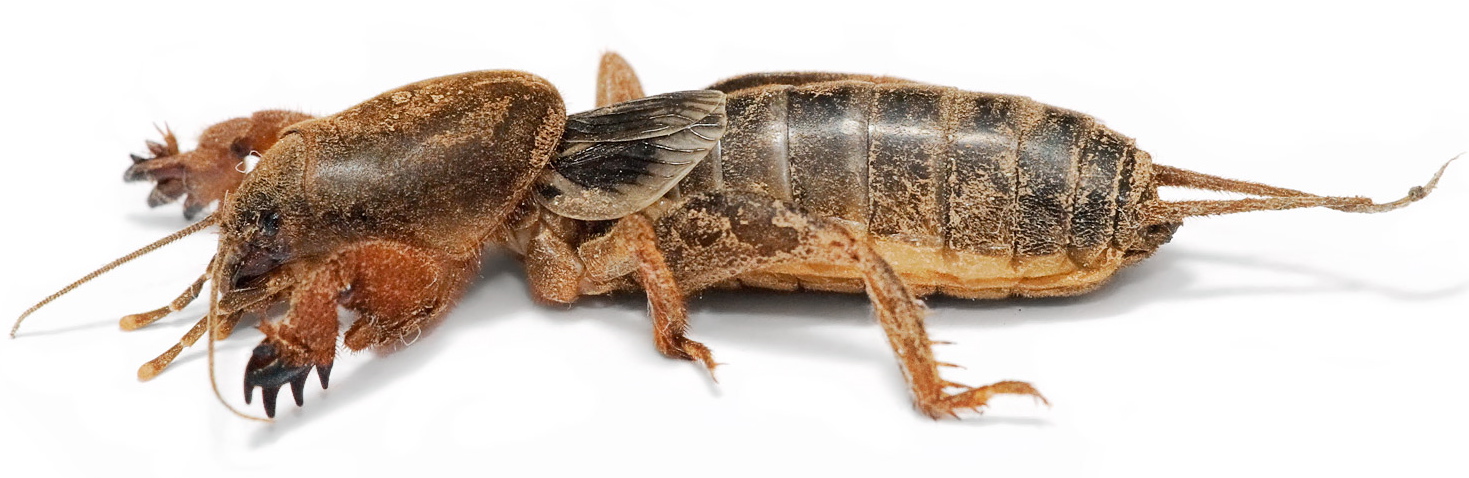
mole-cricket

This nasty critter, which grows to 2 inches or more in length (I’ve seen some that were over 3 inches), has strong forelimbs that it uses to dig around in gardens here in Europe. They’re supposed to be omnivores, and they feed on whatever they find. In the spring, they feed quite a bit on the roots of the planted seedlings of tomatoes, peppers, spinach, cabbage and other common garden vegetables and fruits, which means the seedlings die.  They wither and dry out, unable to extract food from the ground since their roots are gone. This also means that your crop, which you, as a gardener, took great care to plant and nourish, is wiped out by some filthy creepy-crawly thing that gives nothing in return and only gets fatter and uglier with each seedling root it shoves in its ravenous mouth.

It is for this very reason that these ugly critters are considered garden pests, and people do what they can to get rid of them. Some put out pesticides, but then you’ve got poisons on your vegetables, and that’s not healthy. Others, like my grandfather, used to go out at night with a flashlight and squash them when they reared their heads from their burrows. Thankfully, they have plenty of natural predators, though you wouldn’t want most of those guys around your garden either — I’m talking about rats, skunks, foxes, armadillos and raccoons. Birds are another of their predators, and they’re definitely welcome in my garden.

My wife caught a mole cricket recently (they’re called “coropisnite” in Romania), and I recorded a short video clip. Sorry the focus isn’t that great — my Nokia N95 doesn’t focus very well in video mode at close distances.

http://vimeo.com/4445113

Updated 7/6/09:

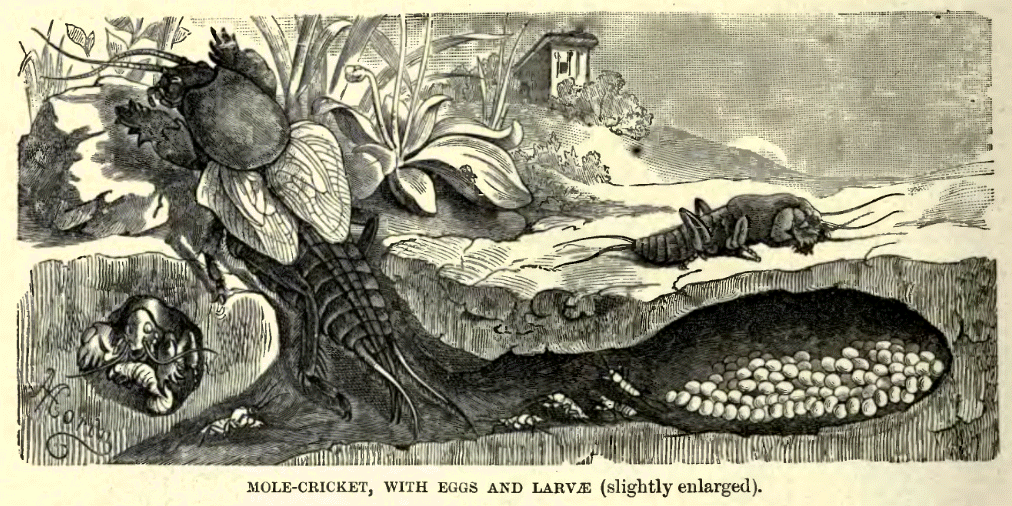
Images used are public domain. Source: Wikipedia.

Standard
Thoughts

Where's the Solar Coaster when you need it?

Lamenting the absence of a practical, usable solar car…

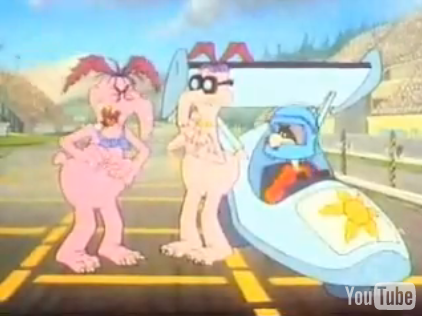
In an episode of The Raccoons which aired in 1985, entitled “The Evergreen Grand Prix“, Cedric, one of the protagonists and Cyril Sneer’s son, comes up with a design for an innovative solar car that Cyril promises to mass-produce in a new deal struck with a big car manufacturer, a Mr. Mammoth. Once the manufacturer hears the car is solar-powered, he objects, because he sells other tie-in products like gasoline and oil, and they can’t be used when the fuel source is sunlight.

Cyril quickly changes his mind, trashes his son’s brilliant design, and builds a road-hog prototype instead. When it comes time to demonstrate his prototype’s abilities publicly, Cedric and Bert come up with a surprise. They rebuild the trashed solar car and propose to Cyril that the two prototypes race together to see who wins.

the-solar-coaster

Mr. Mammoth is eager to see what happens, and gives the okay. Naturally — or, I suppose, unnaturally, given the current status quo — the solar car wins, to Cyril’s dismay. The manufacturer then agrees to mass-produce self-assembly kits of the solar car, which goes on to be a great success.

So I ask, given that this episode saw the light of day in 1985, has anything progressed in the area of solar cars since then? After all, it’s been 29 years. That’s a long time, during which many new developments could have been architected. The answer is sadly no.

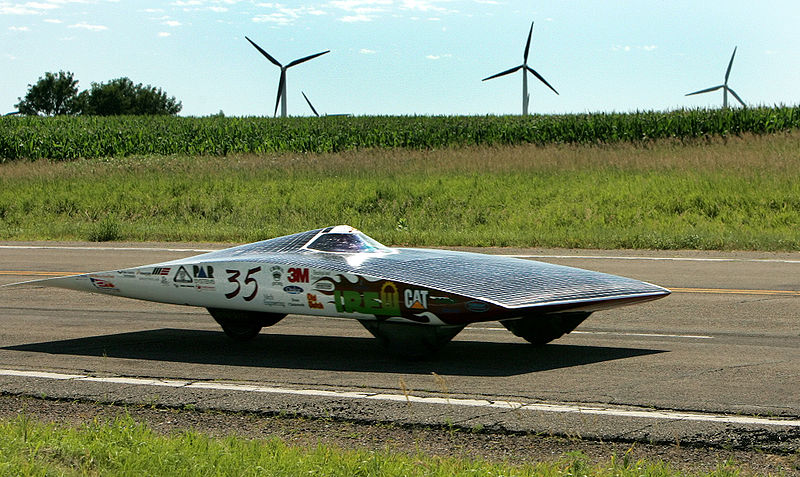
To put things in perspective, the Solar Coaster used a single rectangular solar panel which also doubled as a rear spoiler, and it was enough to make the car “peppy”, as one of the lines in the show went. Today’s solar cars (actually, all solar cars since their inception, sadly) have placed photovoltaic panels over the entire top of the car, and it’s still not enough. They have had to adjust the design radically in order to increase the top surface area, so the cars have no side height at all. They’re basically tapered tops and bottoms, packed full of solar cells, and yet their performance cannot be described as peppy.

borealis-iii-solar-car

I realize the Solar Coaster doesn’t exist. It’s only the fancy of the show’s writers, but still, it’s a good standard by which to judge the solar car’s progress within the last three decades, simply because the idea has been around for that long, if not longer. From my point of view, R&D in photovoltaic cells has stagnated sadly, and this is what’s holding back the solar car. Incredible leaps have been made in computer technology, building technology, and even the performance of petrol-fueled cars, but unfortunately the solar car is still the sickly step child no one likes to play with. To paraphrase Terry from “On the Waterfront”, it could have been a contender; it could have been somebody. [Sorry for the cliché.]

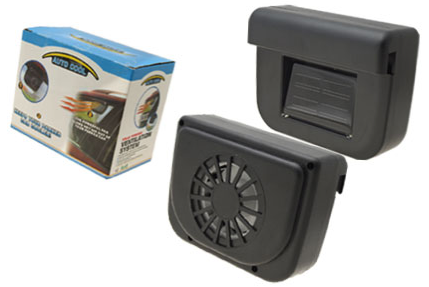
Instead of a serious contender, we’re offered a glorified solar fan in the form of the 2010 Toyota Prius, whose solar cells will be used to cool the car while it’s parked. Thanks, but we’ve had that stuff around since the 80s too.

solar-power-car-vent

If you want to watch the full “Evergreen Grand Prix” episode, it’s available on Youtube in three parts: part 1, part 2 and part 3. If you’re seeing this on my site, not on my feed, you can also watch the videos below.

Standard
Thoughts

Frustrated with European shopping carts

My wife recorded a video clip of me venting my frustration with European shopping carts back in February. Sorry for the rough words in the video, but I tell you, every time I go shopping and have to deal with those idiotic things, I want to get the guy that invented them, pin him to a wall and lob rotten apples at him. What simpleton makes all four wheels pivot, seriously? How can you not realize that loaded shopping carts have inertia, and cannot be steered at all when all four wheels pivot?

American shopping carts should be the standard. Only their front wheels pivot, so they’re easy to steer everywhere, especially around corners. They’re probably cheaper to make for that same reason. As for their European counterparts, they go anywhere except where you want them. It’s absolutely ridiculous, and what makes it worse is they’re everywhere in Europe. It’s like every store got together to figure out how best to frustrate and anger their customers, and decided to get these asinine carts. If that really was their intent, then they succeeded. It truly boggles the mind how they all went for the same moronic design. Didn’t any of their executives put two and two together? Don’t they use shopping carts? Don’t they know there’s something better already available?

See this video on blip.tv, Vimeo or YouTube.

Standard
Places

Italian road trip – Day 2 – Florence

Our Italian road trip took us from Pisa to Florence, where we arrived on the evening of February 18th, just as dusk set in. We navigated the Florence streets at night with some difficulty, but arrived at our lodging in due time, where we rested for the day ahead.
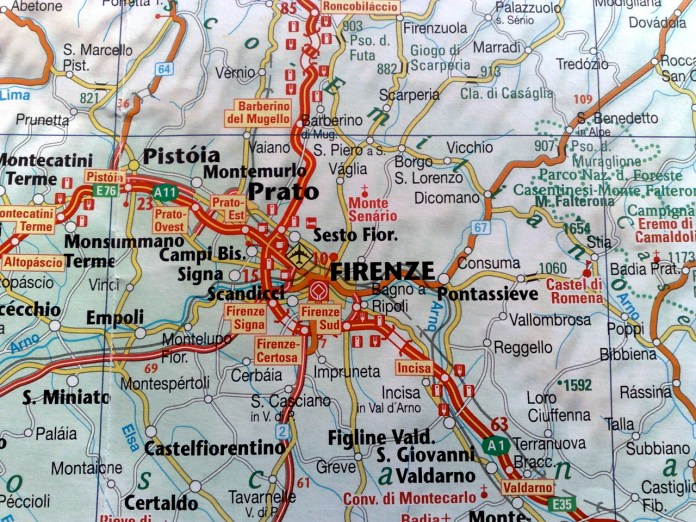
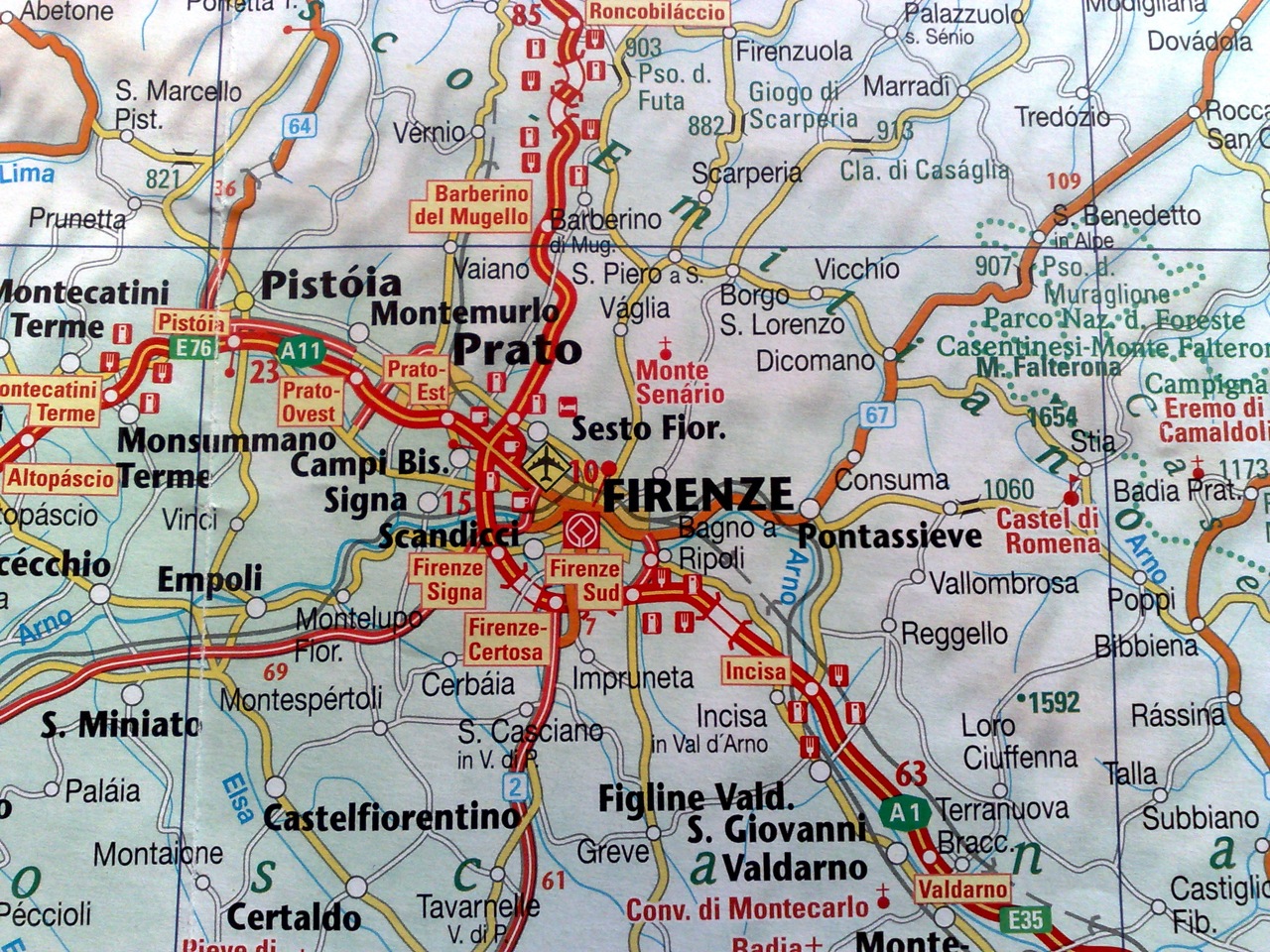
Map of Firenze

Here’s us descending the hills of Tuscany into Florence, on the main highway that connects it to Pisa.

See this video on Vimeo

A funny thing happened that evening. We’d been following our somewhat convoluted route through the city, when we reached a bridge we needed to cross but couldn’t. It’d been blocked — barricaded — by the city, for reasons unknown, since no work was being done on the road. We stopped to call for directions. On the other side of the barricades, a line of angry Italians was forming. Apparently the barricades had only been put up that day, and they weren’t happy about it.

One of them, a young, strong fellow in his 20s, had been building up some steam underneath his collar. With no thought of turning around and finding another route, he got out of his car and started to break the plastic ties that held the barricades together, bare-handed. These were thick ties — the same kind used to handcuff people when they’re arrested — yet he snapped them with relative ease. After breaking a few, he figured it was tedious, so he got a sharp hunting knife from his car and sliced through the rest of the ties, then threw the barricades aside and drove right through.

I’d gotten out of my car to have a better look at what he was doing, and stood there amazed. Seriously, it takes guts to have complete disregard for the authorities of a city. On the one hand, what he did was wrong, but on the other hand, he helped us and the many other drivers stuck there. We knew of no other route to get where we were going, and we’d have been lost if he hadn’t cleared the way. and after a short while, reached the place where we were staying — Villa Aurora — a picturesque antique villa perched on one of the Tuscan hills that surrounded the city.

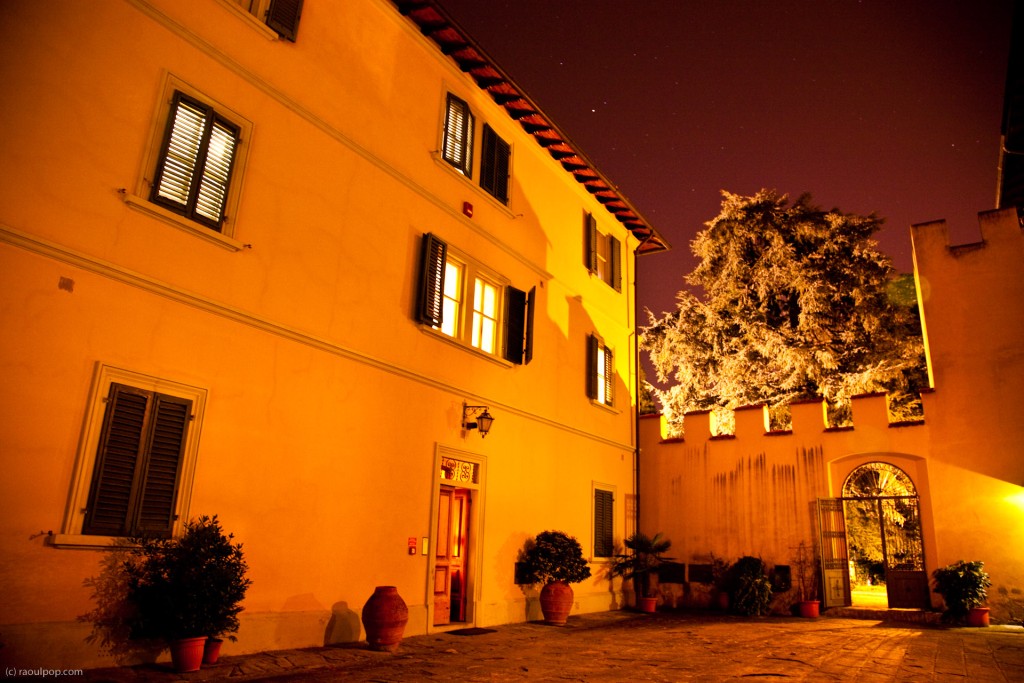
The villa and its surroundings were so beautiful that in spite of my fatigue and the cold weather, I had to make time for a few nighttime photos, after which I slept like a log till early morning.
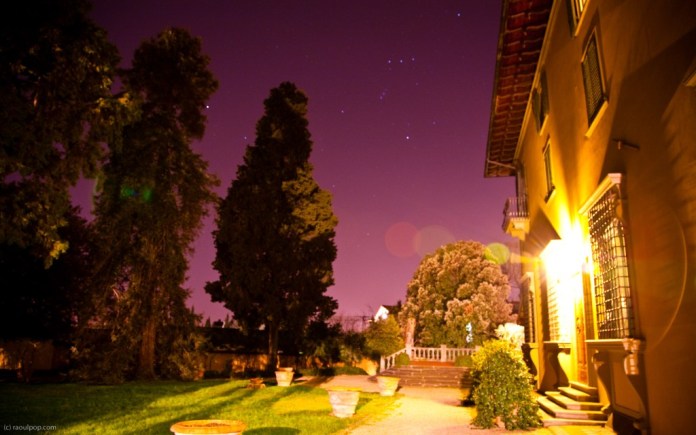
Tuscan courtyard, night

Interior courtyard at night

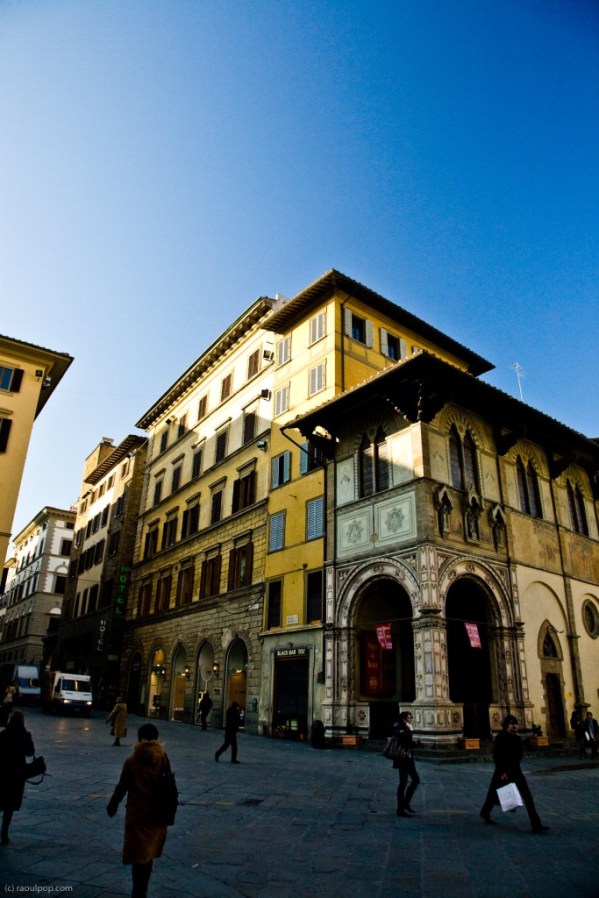
We got up with the dawn and after a hearty breakfast, drove into the city to visit. We parked in the subterranean lot behind the railway station, near the church of Santa Maria Novella, then walked through the city for several hours.
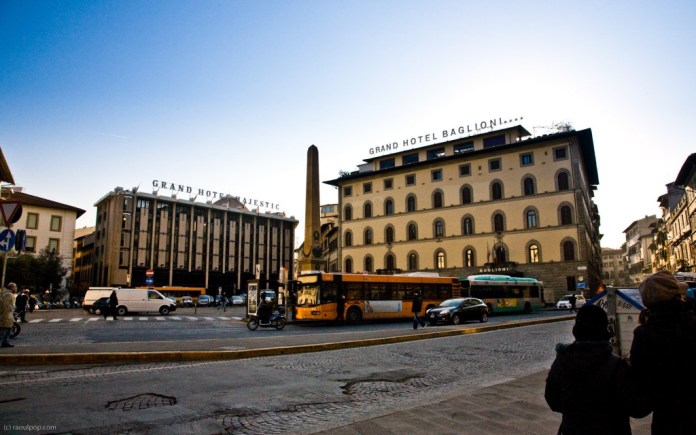
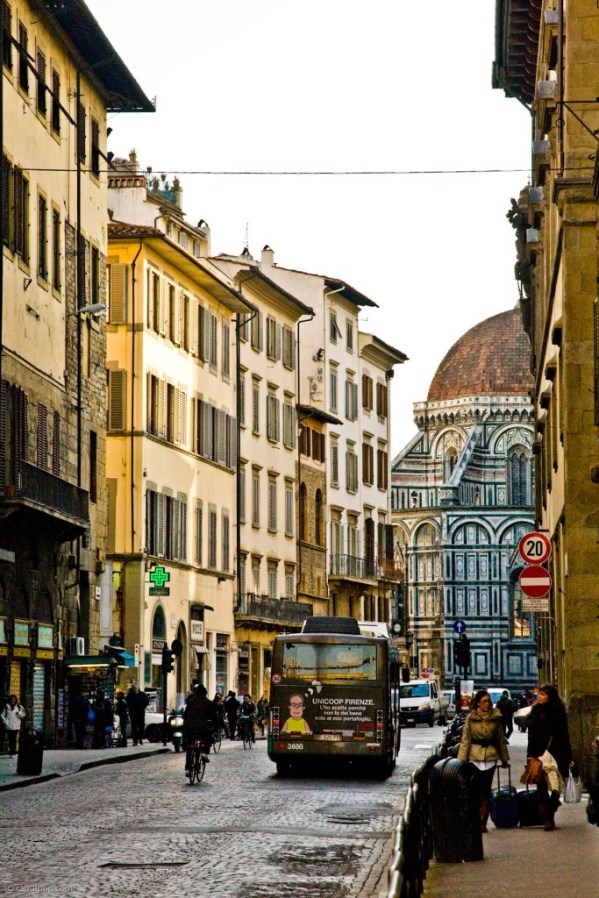
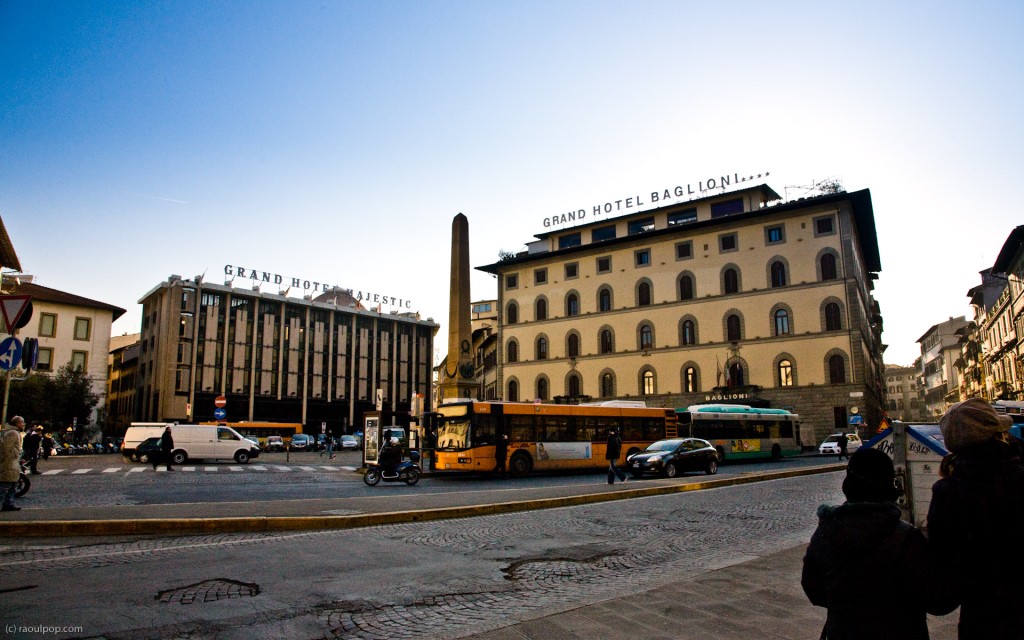
A couple of grand hotels

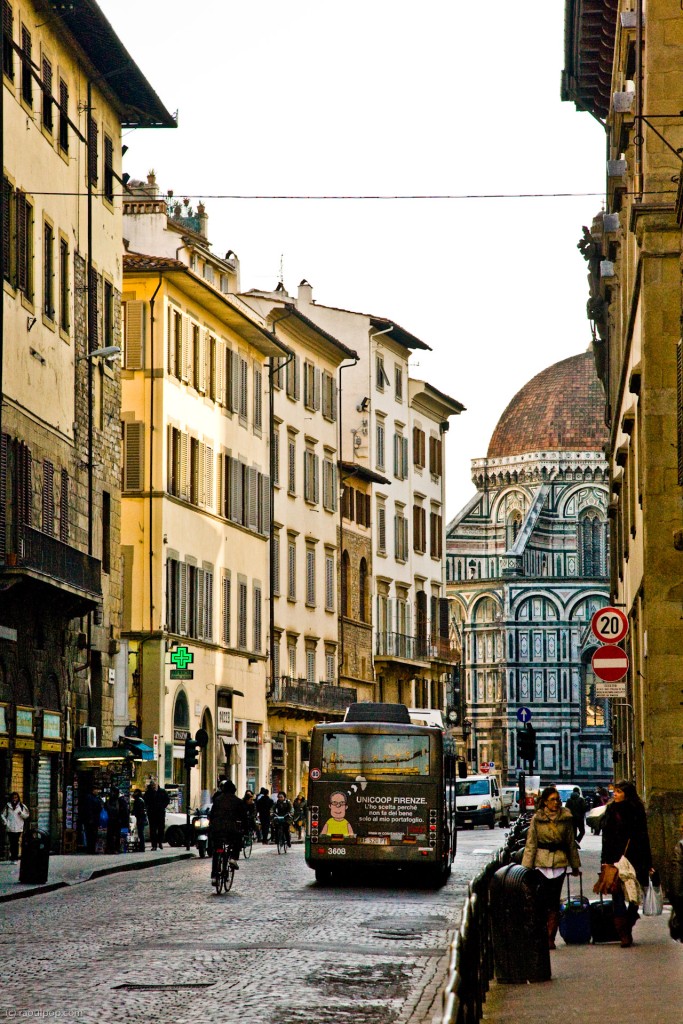
20 eccetto

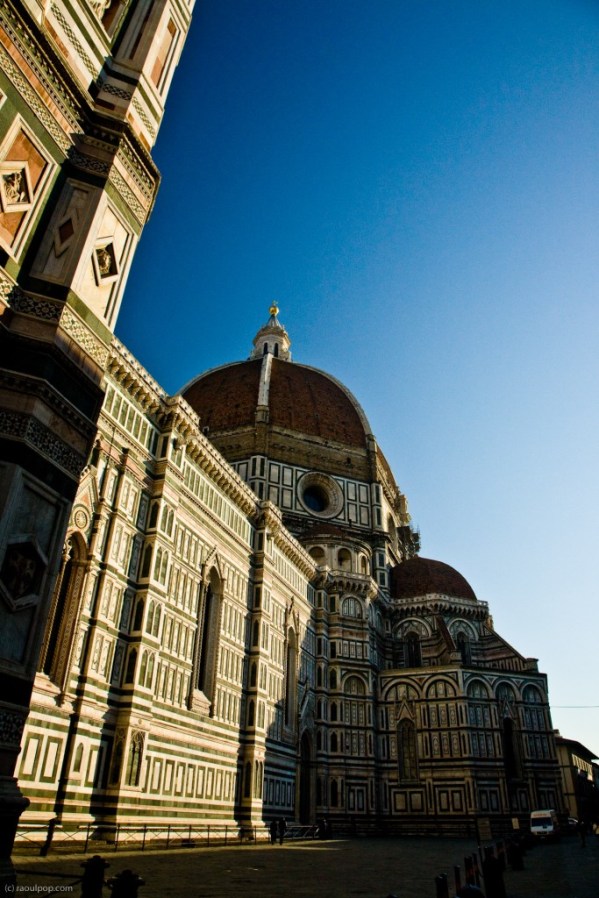
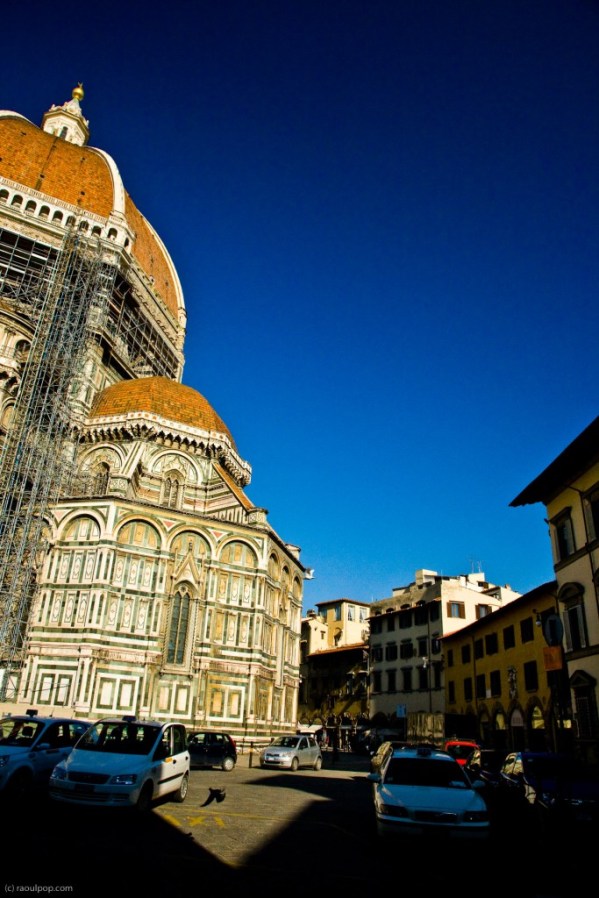
We visited the Duomo while it was still early morning and the tourists weren’t around, then had the best hot chocolate ever at a place called SergioBar, right in the Piazza del Duomo.

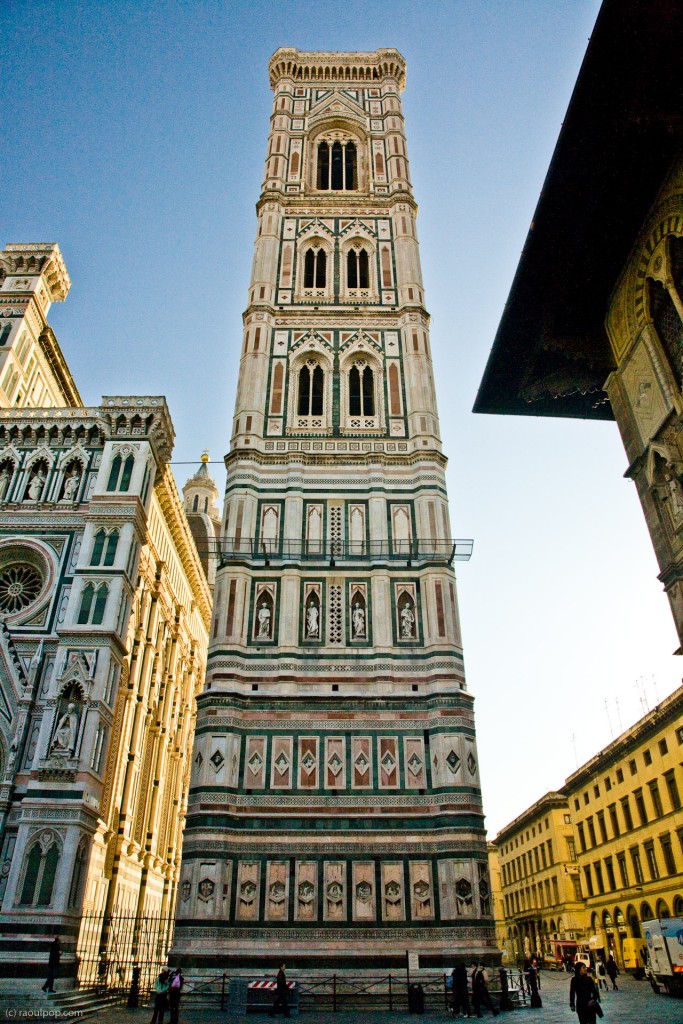
Bell tower

Bronze doorway detail

Morning traffic

Il Duomo II

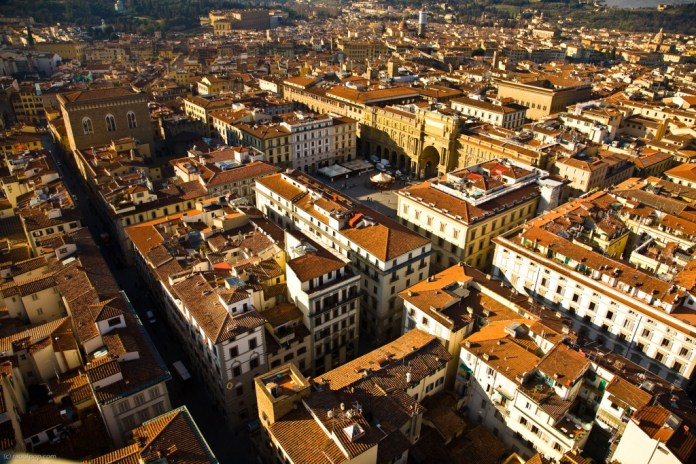
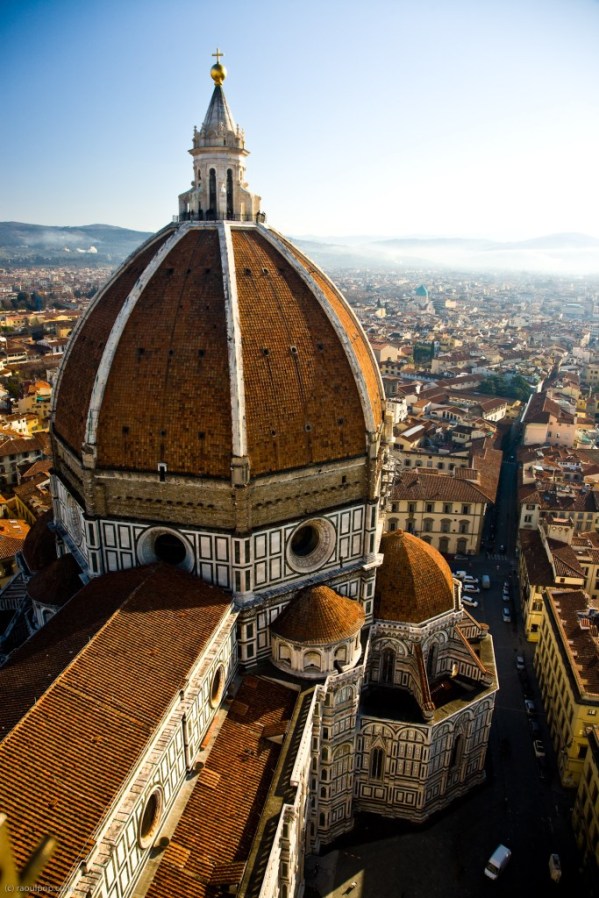
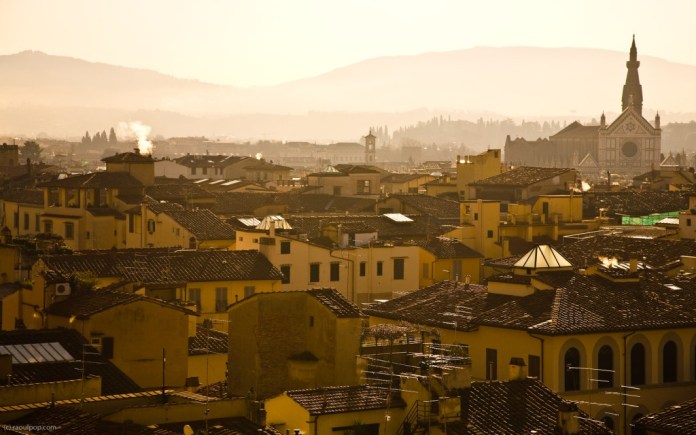
I highly recommend climbing to the top of either the Campanile or the Duomo, in the morning or in the late afternoon, when the sun casts long shadows on the city. The climb is long and exhausting, but you’ll be treated to some fantastic views of Florence.
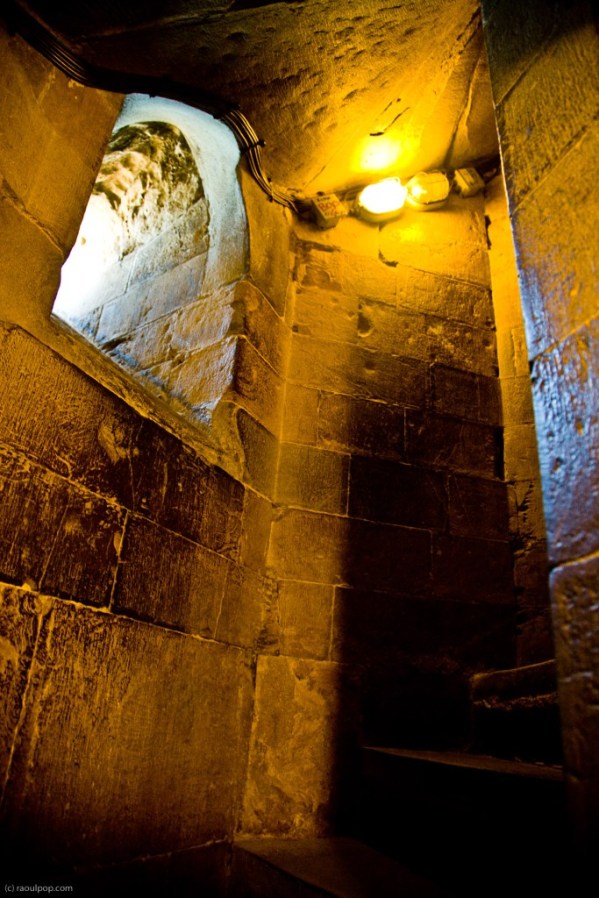
Climbing the Campanile

Florence rooflines in early morning sunlight

Tuscan rooflines

Il Duomo

Il Duomo III

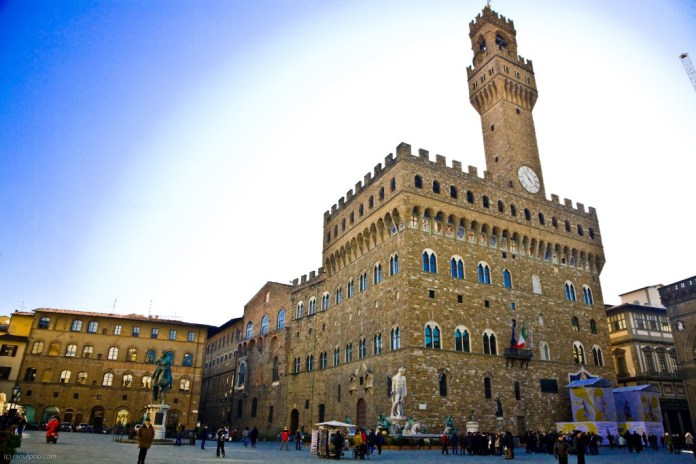
After that, we made our way to the Palazzo Vecchio and the Ponte Vecchio.
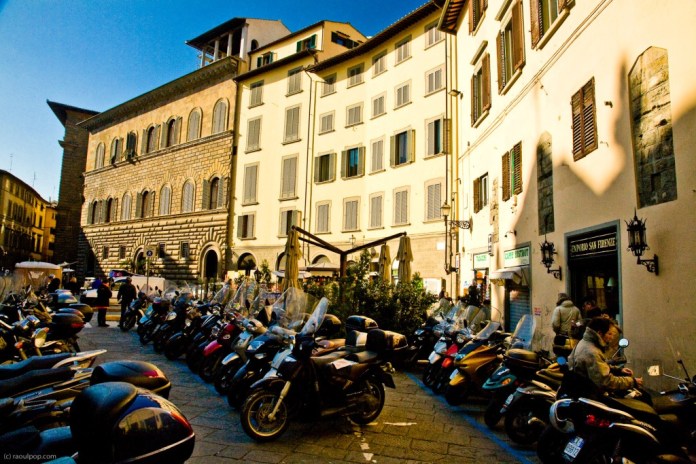
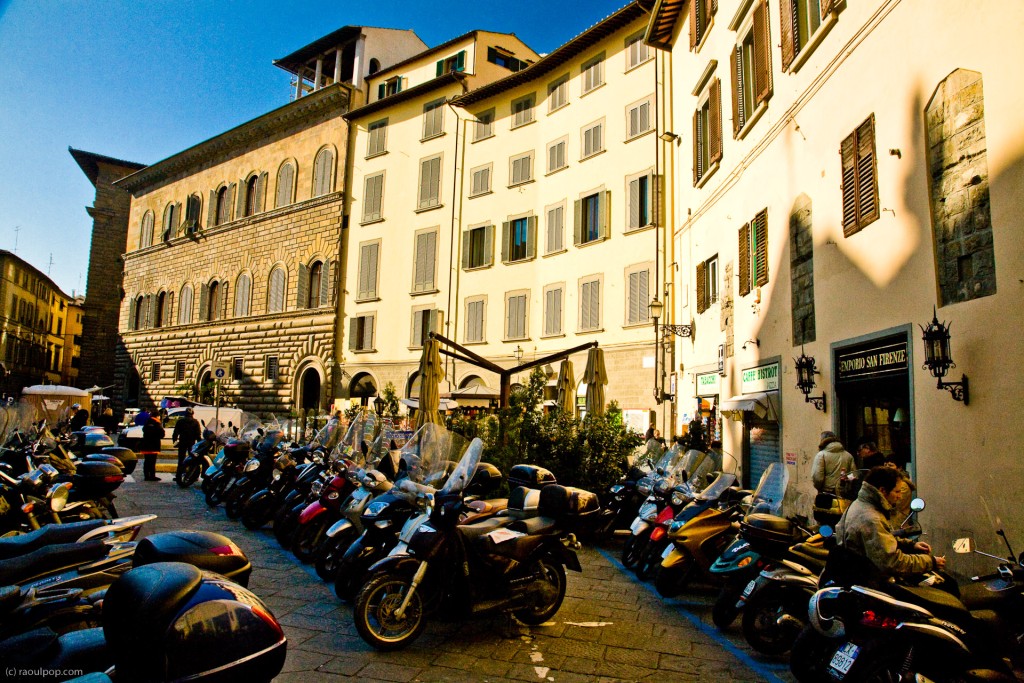
Scooter city II

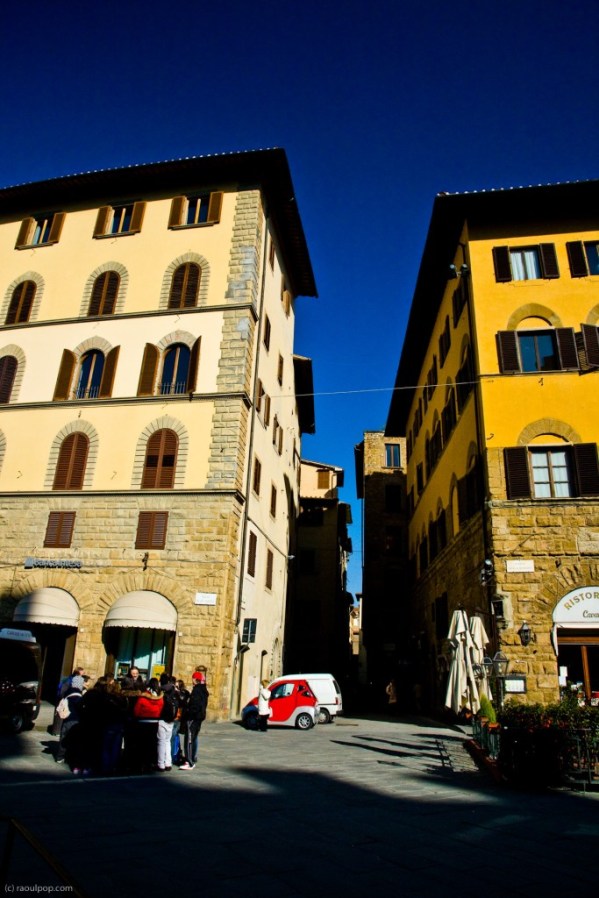
Huddle

Piazza della Signoria II

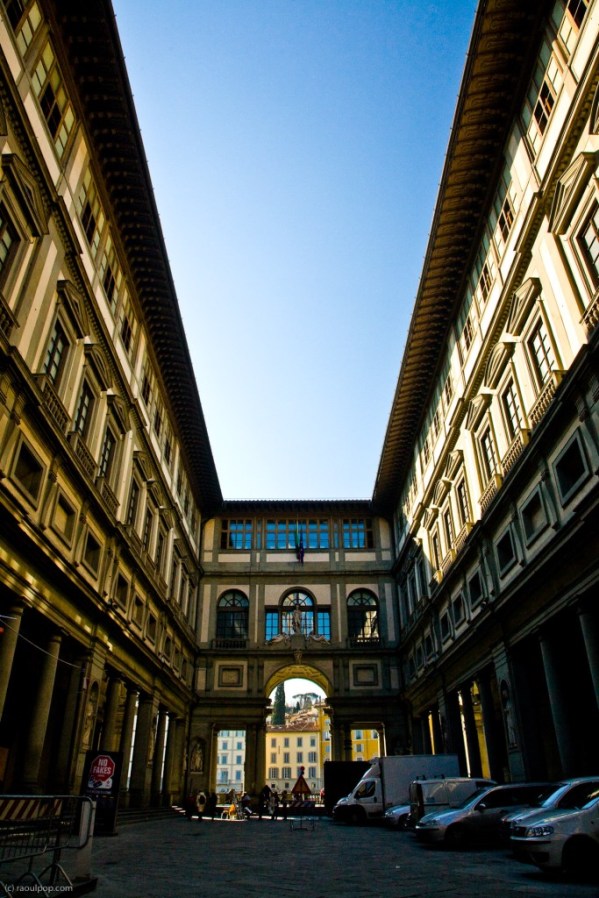
No Fakes, Thanks

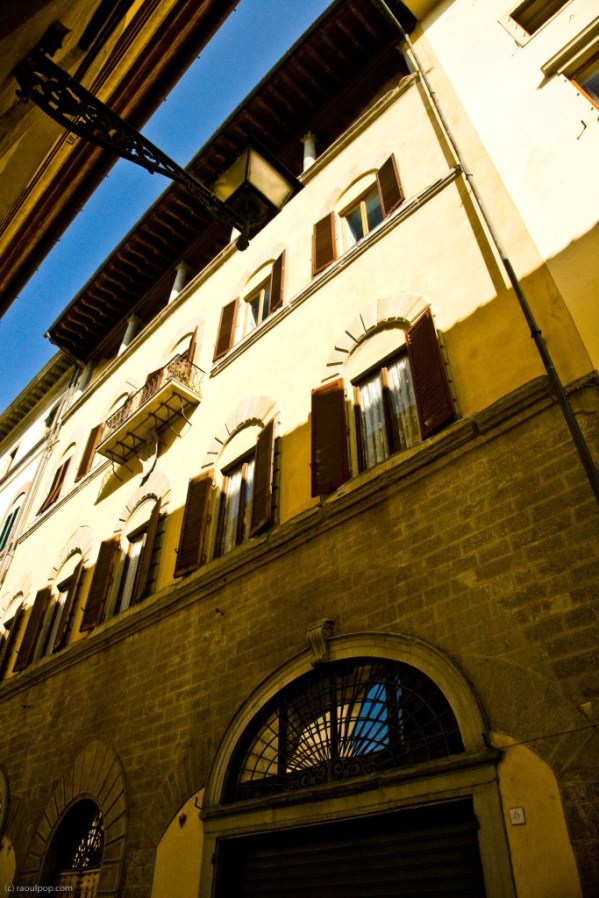
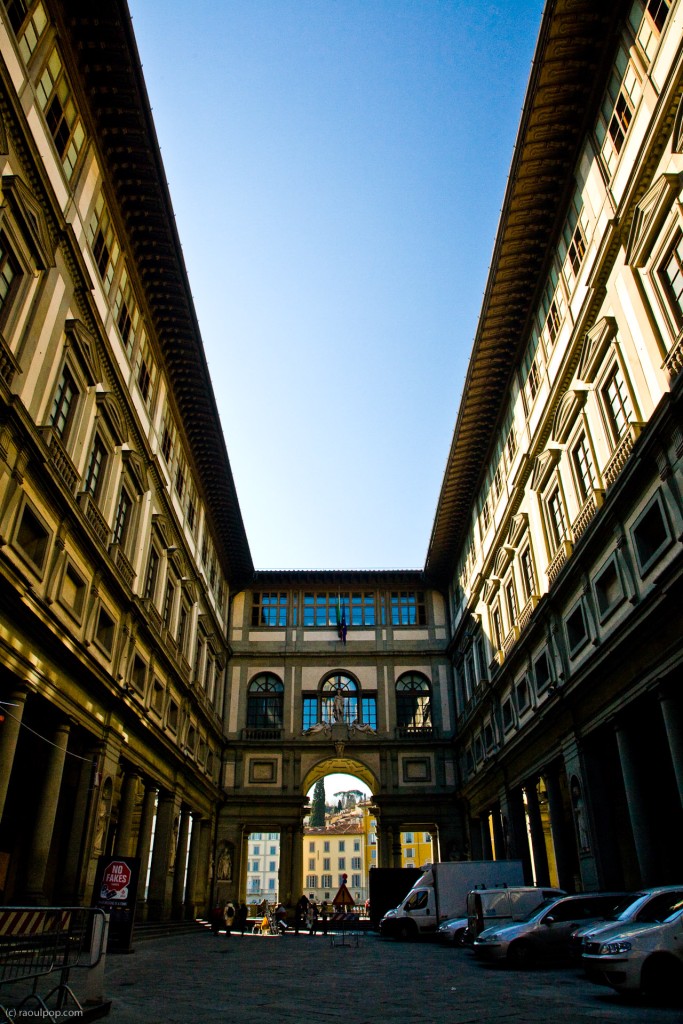
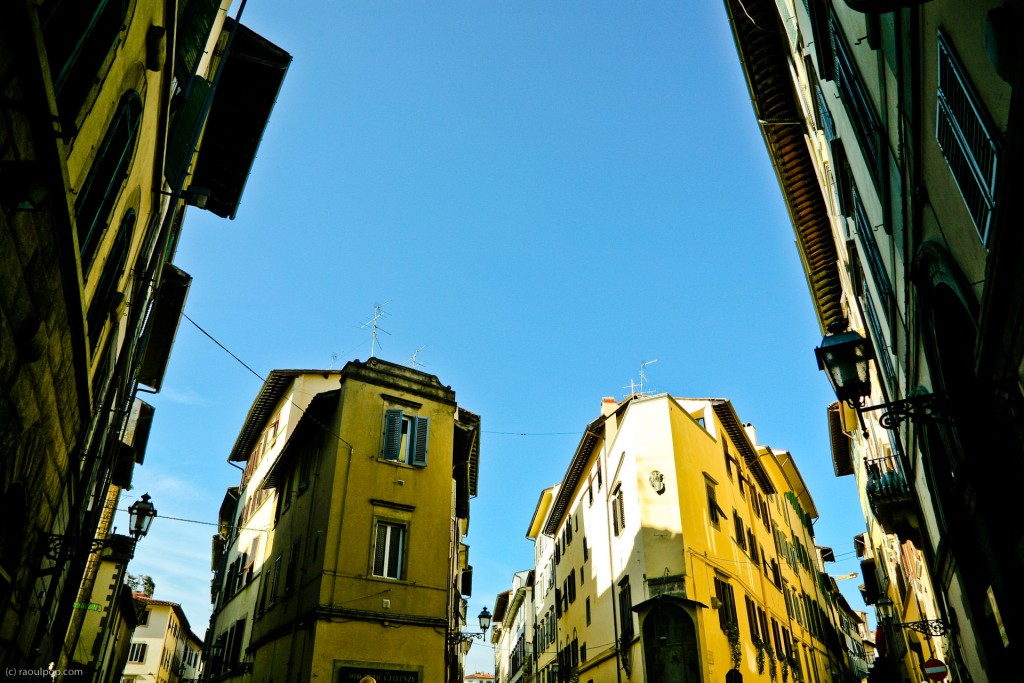
Narrow slit of sky

Didn't I see this in a movie somewhere?

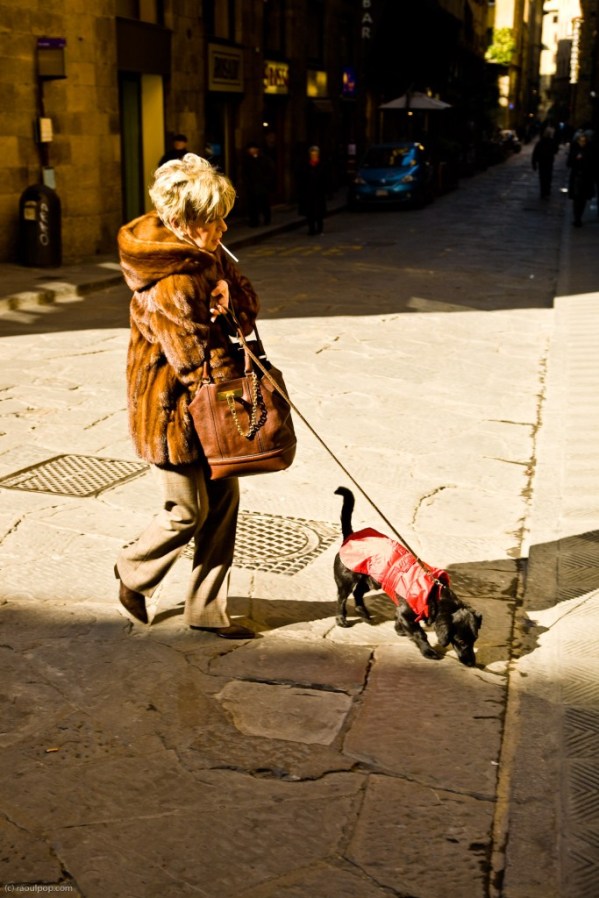
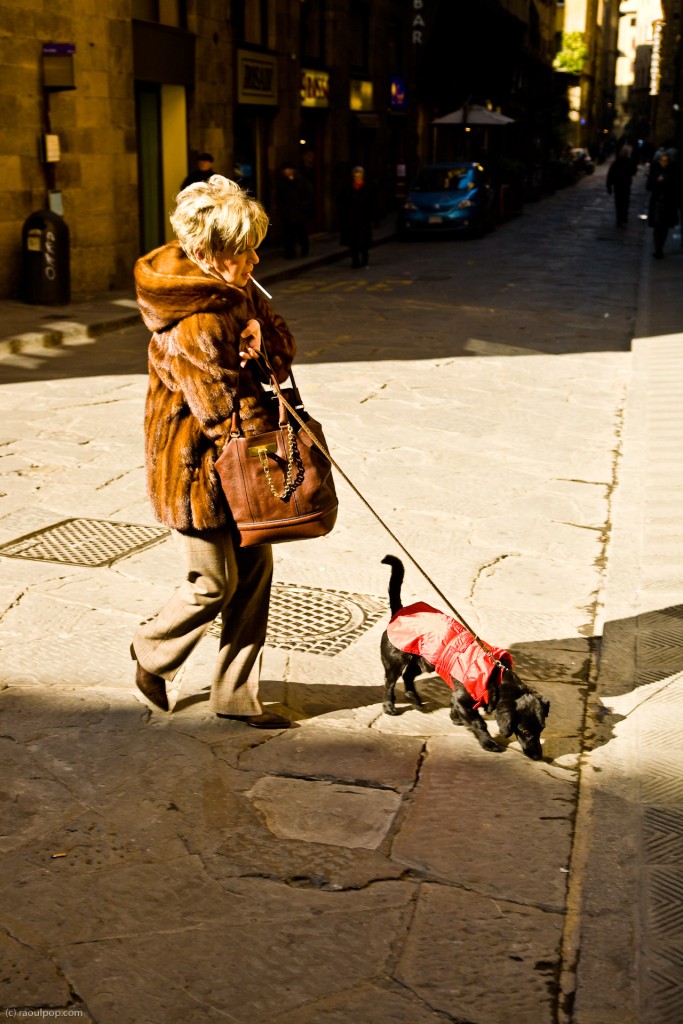
Old lady walking her pooch

We crossed the old bridge then climbed up to the Palazzo Pitti with its hilltop gardens and amazing views of Florence and the surrounding areas, then came back down and slowly made our way back across the Arno to the railway station and our car. Venice was next on our list, but we had to drive a good while till we got there and find a hotel to sleep for the night.
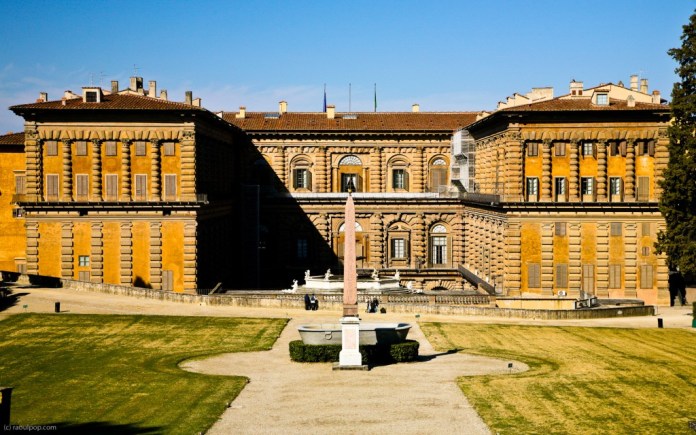
Palazzo Pitti

Hilltop gardens

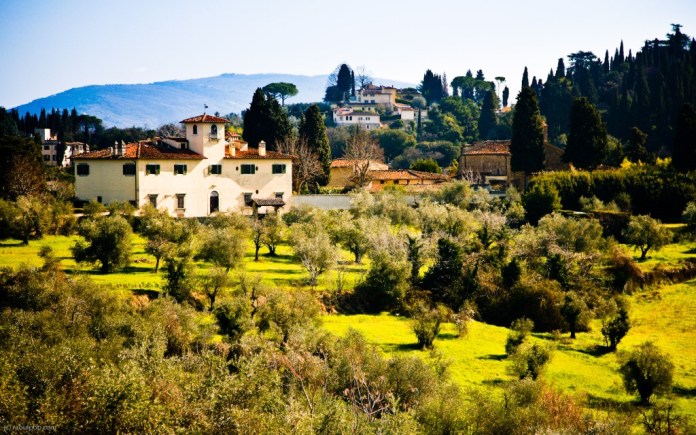
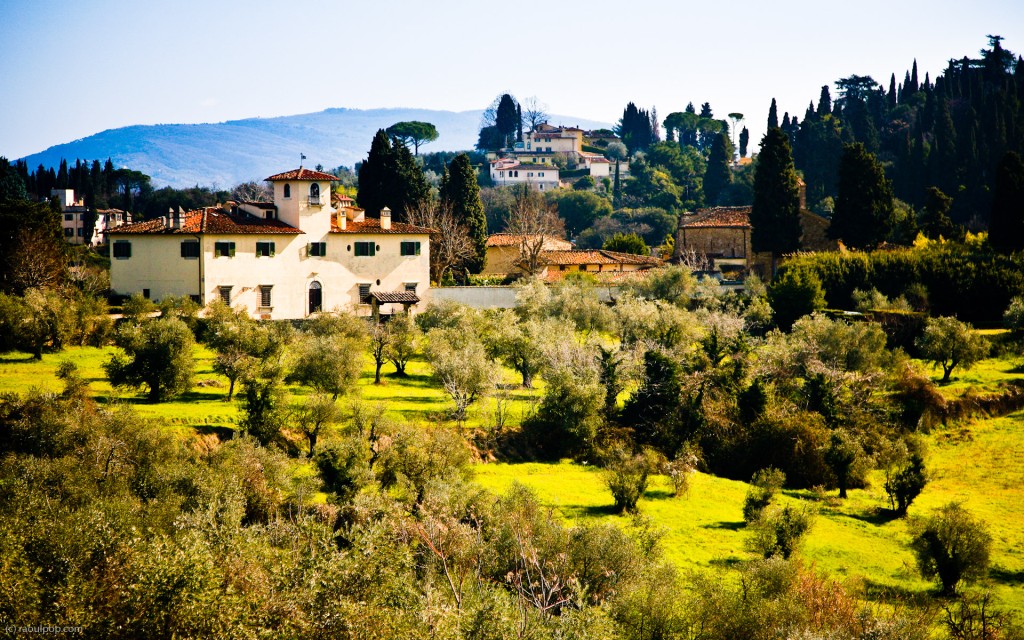
Tuscan villa

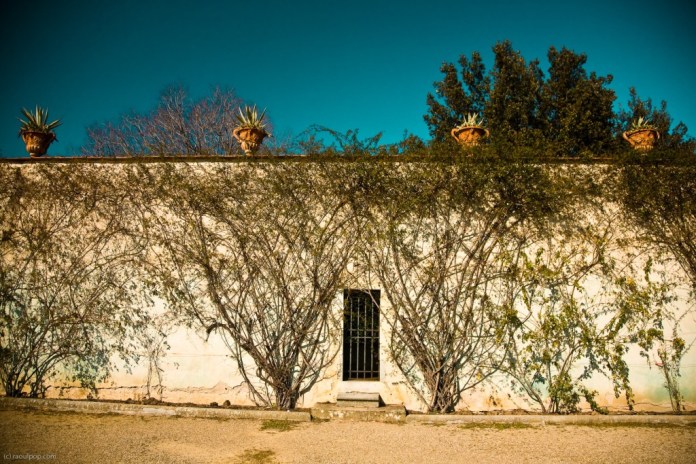
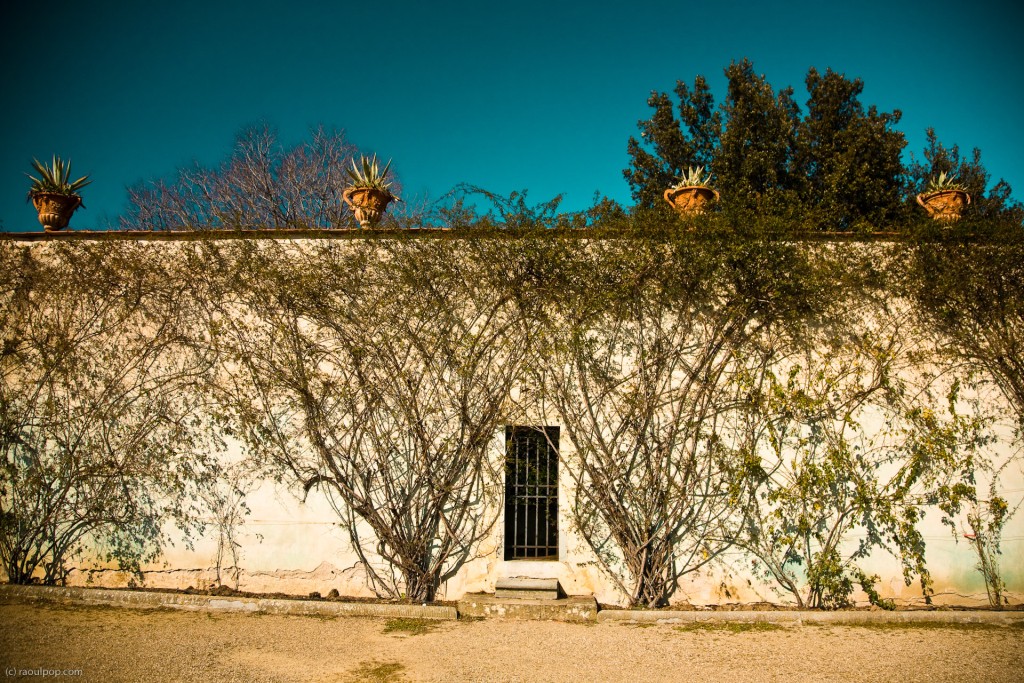
Walled and barred

Where the road divides

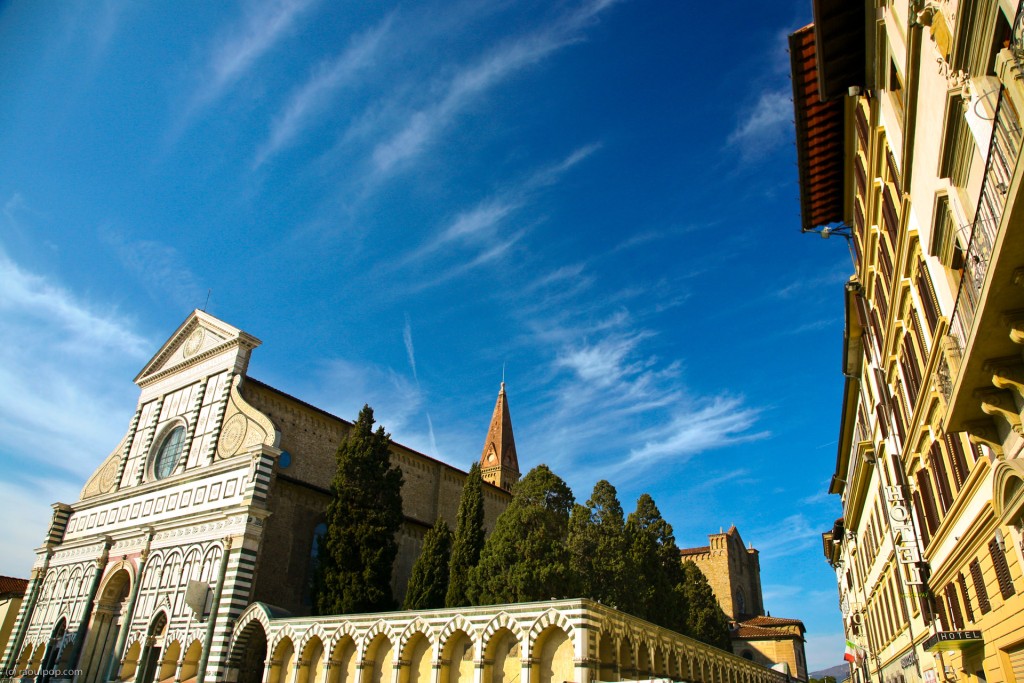
Santa Maria Novella

After making our way out of the city, we took the highway toward Venice, then exited somewhere near Modena and made our way toward Ferrara on country roads. It was near Modena that we saw the Lamborghini factory — actually, passed right by it — but it didn’t occur to us till after the fact. That was unfortunate, it would have been nice to take a tour.

We found a small, cozy and very clean hotel on the outskirts of Ferrara and slept there for the night.
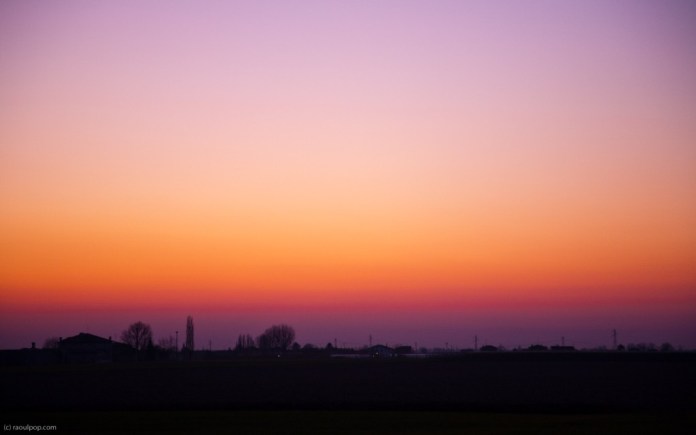
Dusk in Emilia Romagna

All the photos you see here and more can be found at larger sizes in the Firenze album in my photo catalog.

Standard
Places

Barcelona in 1908

Barcelona in 1908


I love the way this video was done.

Standard