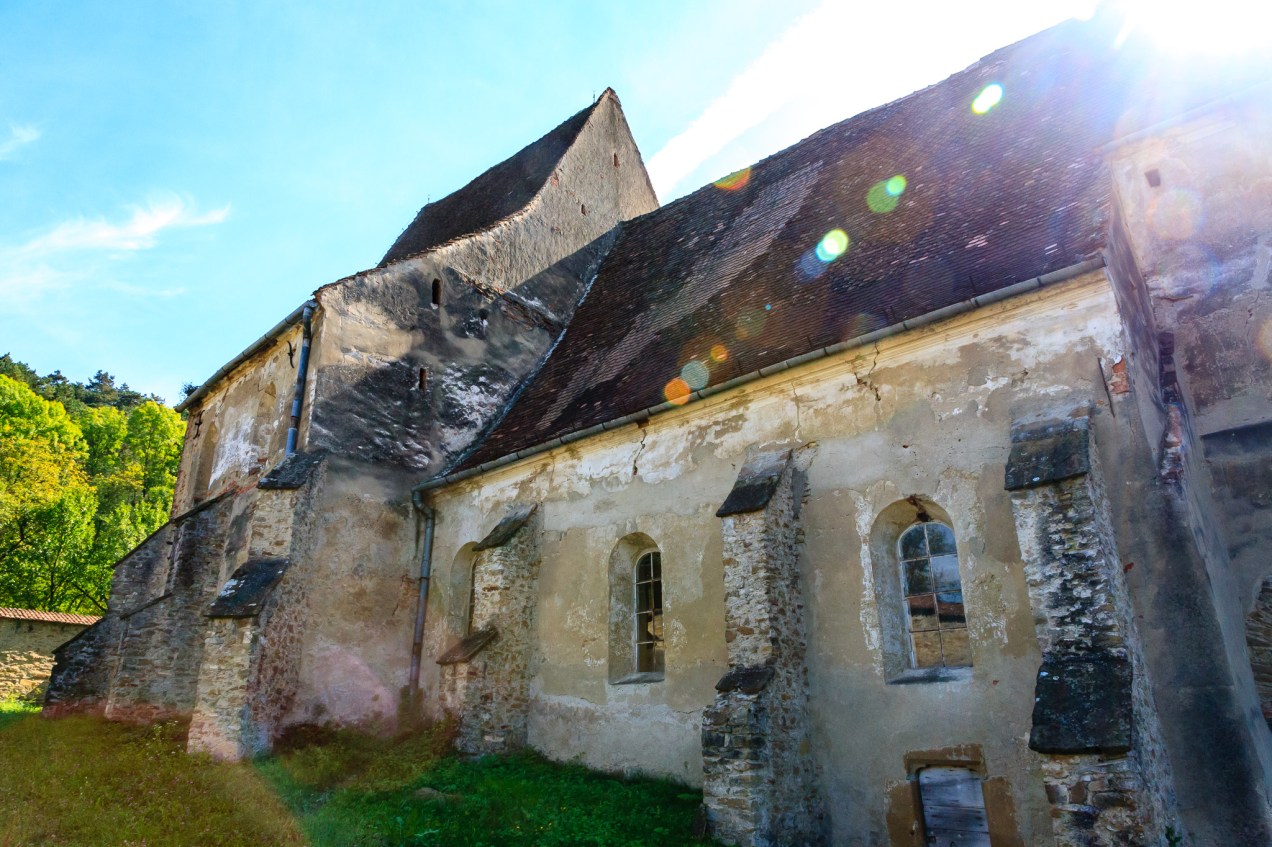
This church in the village of Richis (“Reichesdorf” in German and “Riomfalva” in Hungarian) was built sometime between 1350-1400 and it initially functioned as a Cistercian abbey. The abbey did not have a bell tower to begin with because the Cistercian order was not allowed to have them. In 1400, it became a Catholic church and a bell tower was built as a separate structure from the church. In 1500, the fortified wall was built around the church, to defend it from invading tartars and turks.
Sometime between 1540 and 1550, the Saxons became Evangelicals and converted the decorations of the church to what they deemed as a more austere place to worship. They tore some of the medieval ornamentation, particularly the sculptures, and they whitewashed the walls, inside and out. It was only in 1957, when the newly arrived priest led an effort to scrape away the lime whitewash and restore the church that the early gothic motifs were rediscovered.
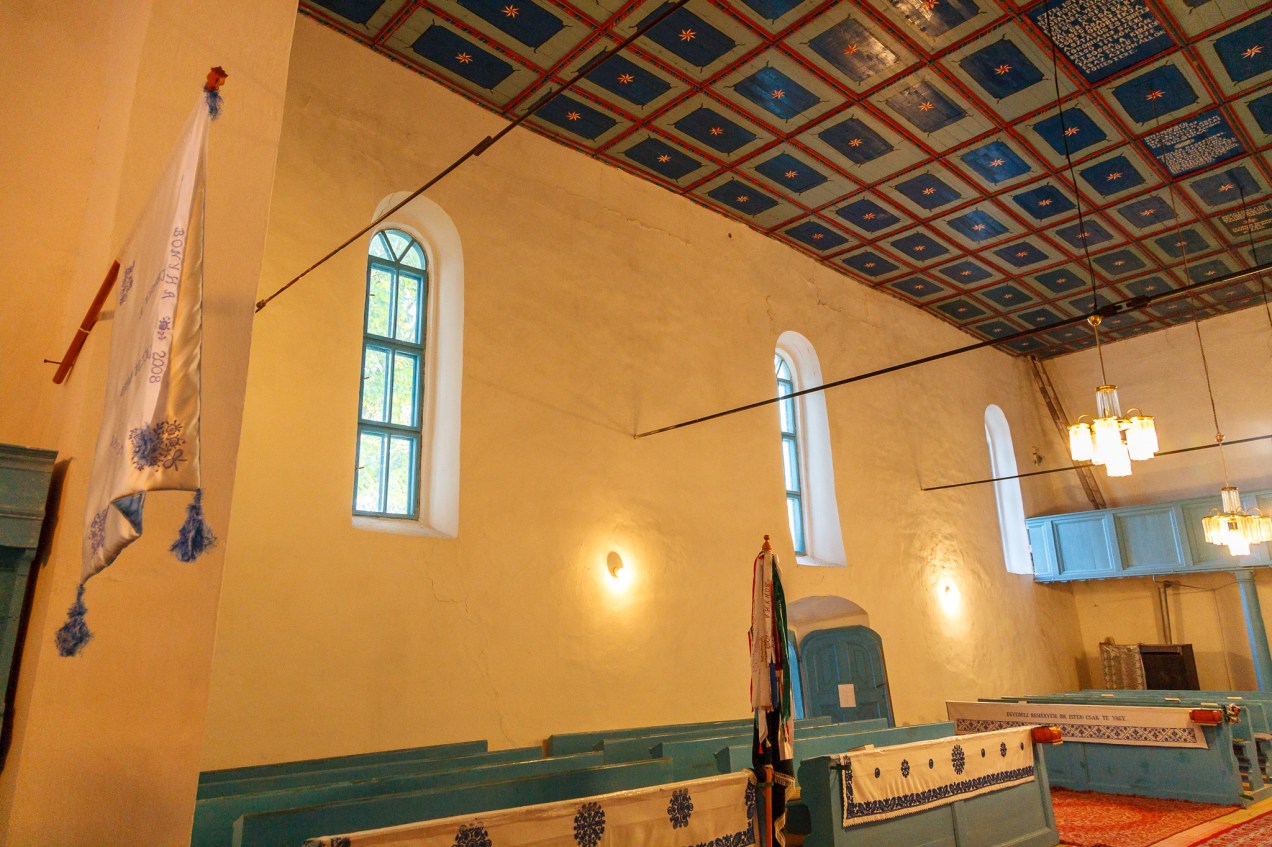
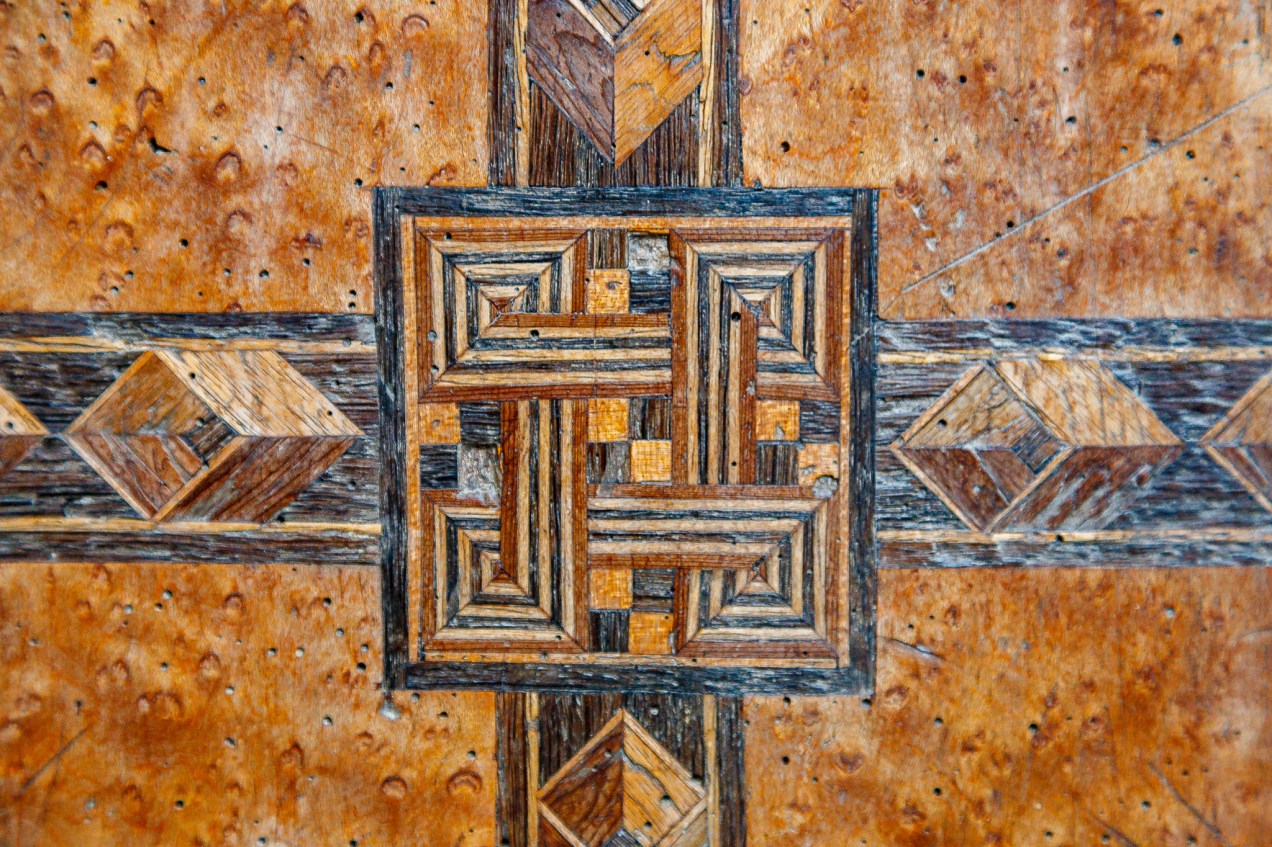
The church interior is abundant in unique animal, vegetal and human motifs. The most captivating is the “green man”, a symbol of nature’s fertility. Another symbol of the natural wealth in the region is the very name of the place, Reichesdorf, which means “wealthy village”. Should you visit, you’ll want to see the 1775 baroque altar made of sculpted wood, illustrating the Crucifixion.
The local guide of the church is Mr. Schaas, one of the few Saxons left in the village, whom you’ll see in the gallery I’ve published here. He always welcomes visitors and is glad to tell the story of the church to you.
Enjoy the photos!

The fortified church in Reichesdorf, Transilvania, Romania

The fortified church in Reichesdorf, Transilvania, Romania

The fortified church in Reichesdorf, Transilvania, Romania

The fortified church in Reichesdorf, Transilvania, Romania

The fortified church in Reichesdorf, Transilvania, Romania

The fortified church in Reichesdorf, Transilvania, Romania

The fortified church in Reichesdorf, Transilvania, Romania

The fortified church in Reichesdorf, Transilvania, Romania

The fortified church in Reichesdorf, Transilvania, Romania

The fortified church in Reichesdorf, Transilvania, Romania

The fortified church in Reichesdorf, Transilvania, Romania

The fortified church in Reichesdorf, Transilvania, Romania

The fortified church in Reichesdorf, Transilvania, Romania

The fortified church in Reichesdorf, Transilvania, Romania

The fortified church in Reichesdorf, Transilvania, Romania

The fortified church in Reichesdorf, Transilvania, Romania

The fortified church in Reichesdorf, Transilvania, Romania

The fortified church in Reichesdorf, Transilvania, Romania

The fortified church in Reichesdorf, Transilvania, Romania

The fortified church in Reichesdorf, Transilvania, Romania

The fortified church in Reichesdorf, Transilvania, Romania

The fortified church in Reichesdorf, Transilvania, Romania

The fortified church in Reichesdorf, Transilvania, Romania

The fortified church in Reichesdorf, Transilvania, Romania

The fortified church in Reichesdorf, Transilvania, Romania

The fortified church in Reichesdorf, Transilvania, Romania

The fortified church in Reichesdorf, Transilvania, Romania

The fortified church in Reichesdorf, Transilvania, Romania

The fortified church in Reichesdorf, Transilvania, Romania

The fortified church in Reichesdorf, Transilvania, Romania

The fortified church in Reichesdorf, Transilvania, Romania

The fortified church in Reichesdorf, Transilvania, Romania

The fortified church in Reichesdorf, Transilvania, Romania

In Reichesdorf, Transilvania, Romania

The fortified church in Reichesdorf, Transilvania, Romania

The fortified church in Reichesdorf, Transilvania, Romania

The fortified church in Reichesdorf, Transilvania, Romania

The fortified church in Reichesdorf, Transilvania, Romania

The fortified church in Reichesdorf, Transilvania, Romania

The fortified church in Reichesdorf, Transilvania, Romania

The fortified church in Reichesdorf, Transilvania, Romania

The fortified church in Reichesdorf, Transilvania, Romania

The fortified church in Reichesdorf, Transilvania, Romania

The fortified church in Reichesdorf, Transilvania, Romania

The fortified church in Reichesdorf, Transilvania, Romania

The fortified church in Reichesdorf, Transilvania, Romania

The fortified church in Reichesdorf, Transilvania, Romania

The fortified church in Reichesdorf, Transilvania, Romania

The fortified church in Reichesdorf, Transilvania, Romania

The fortified church in Reichesdorf, Transilvania, Romania

The fortified church in Reichesdorf, Transilvania, Romania

The fortified church in Reichesdorf, Transilvania, Romania

The fortified church in Reichesdorf, Transilvania, Romania

The fortified church in Reichesdorf, Transilvania, Romania











 Raoul Pop