
Interesting Places is a playlist I put together for my travel and nature videos. It contains 52 videos at the moment, with more to come in the future. Here are just a few of the videos you’ll see in it:
Enjoy!
Interesting Places is a playlist I put together for my travel and nature videos. It contains 52 videos at the moment, with more to come in the future. Here are just a few of the videos you’ll see in it:
Enjoy!
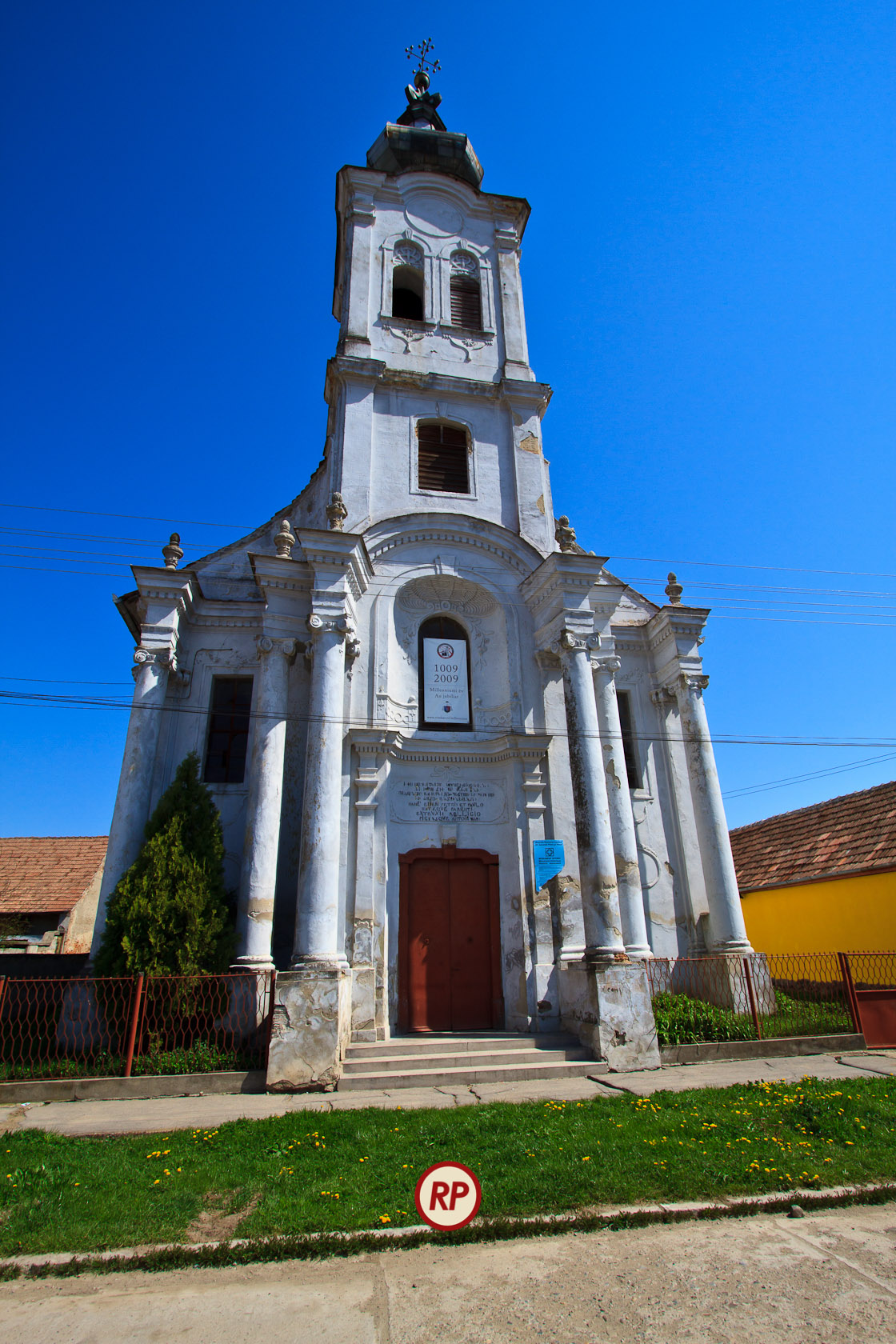
On a side street in Dumbraveni, Romania, in a neighborhood full of gypsies, you’ll find the city’s old Roman-Catholic church. It’s over 1,000 years old, and it’s not being properly maintained, as is the case with many of Romania’s historic buildings. Looking at the building itself, it’s hard to believe it’s stood there for a millenium, but there it is. Sure, there are architectural details which date the building, but it’s not imposing, certainly nothing of the scale of the Armenian-Catholic church just a few blocks away from it.

When we got there, it was locked up. The front door — now made of iron — was bolted. The sign marking it as an historic monument was torn. The back doors were nailed shut, and so were the windows. One of the doors was even walled in.

I walked around the building, trying to avoid human feces that marked the grass courtyard, and noticed that even though the cellar doors were nailed shut, I could pry one of them ajar and squeeze through.
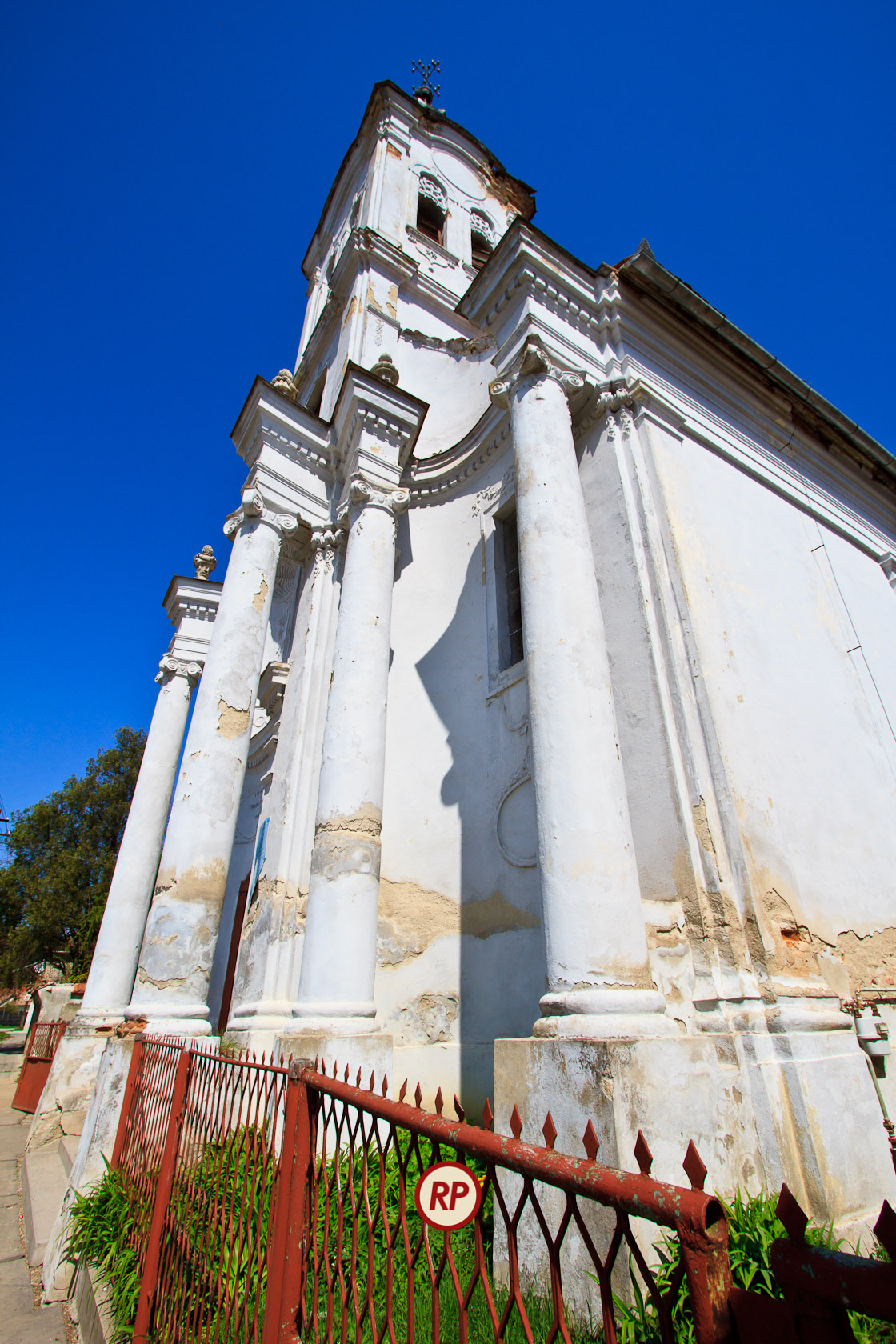


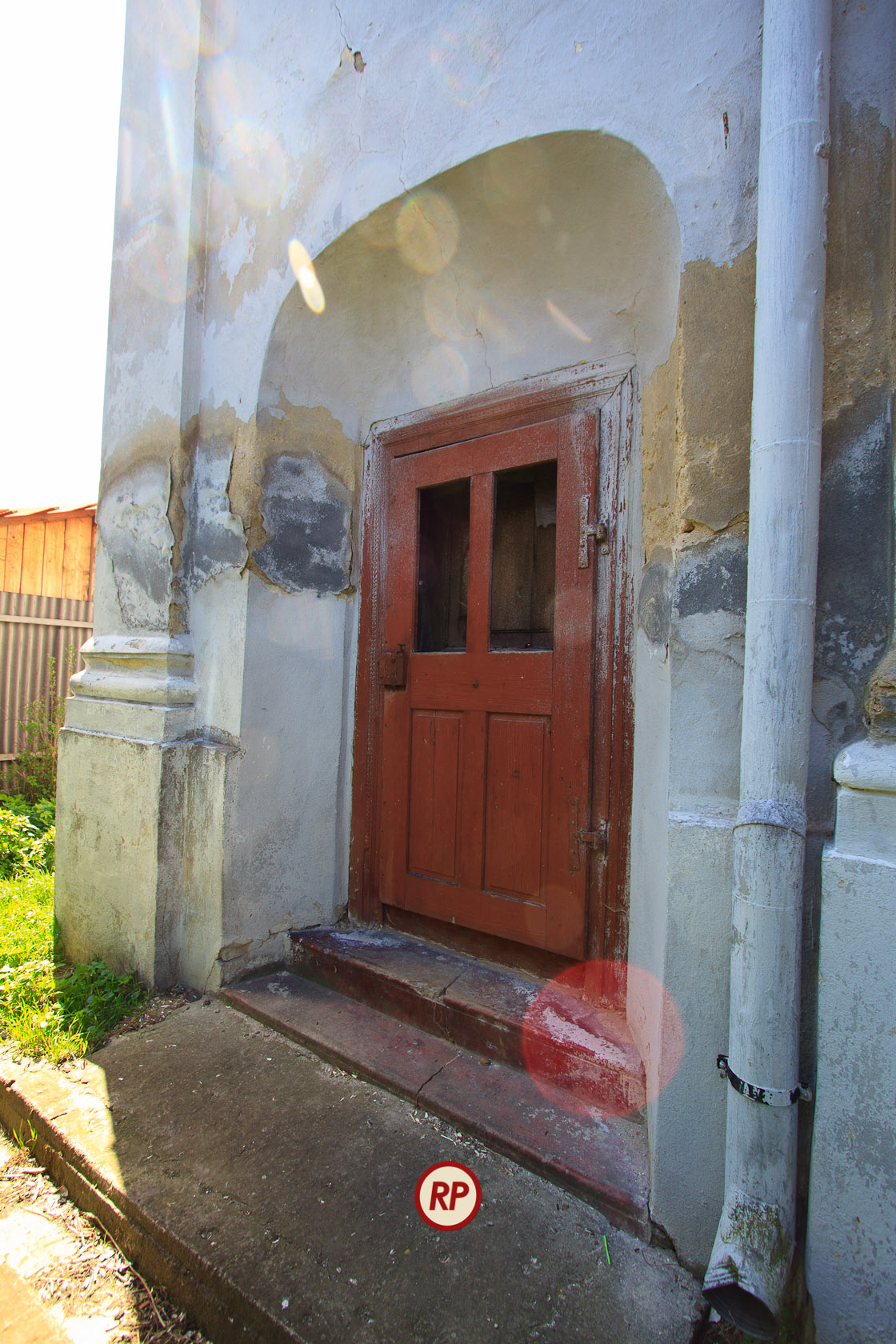
My sense of adventure got the better of me, and I went ahead. I grabbed a little LED flashlight from the car, and headed inside. It was clear the vaults underneath the church had been looted and vandalized, numerous times. There were countless footsteps in the sand, and trash left there by hooligans. Important architectural details, like the columns you see in one of the photos, were either shattered and on the floor, or downright missing.


The grave you see below, one of several built into the supporting walls of the vaults, has been desecrated, along with others. If you look carefully, you’ll see human bones among the rubble.

There was an iron door with intricate relief work, which leads to an inner sanctum. It was bolted shut, and I could see a serious amount of time has passed since it was opened.


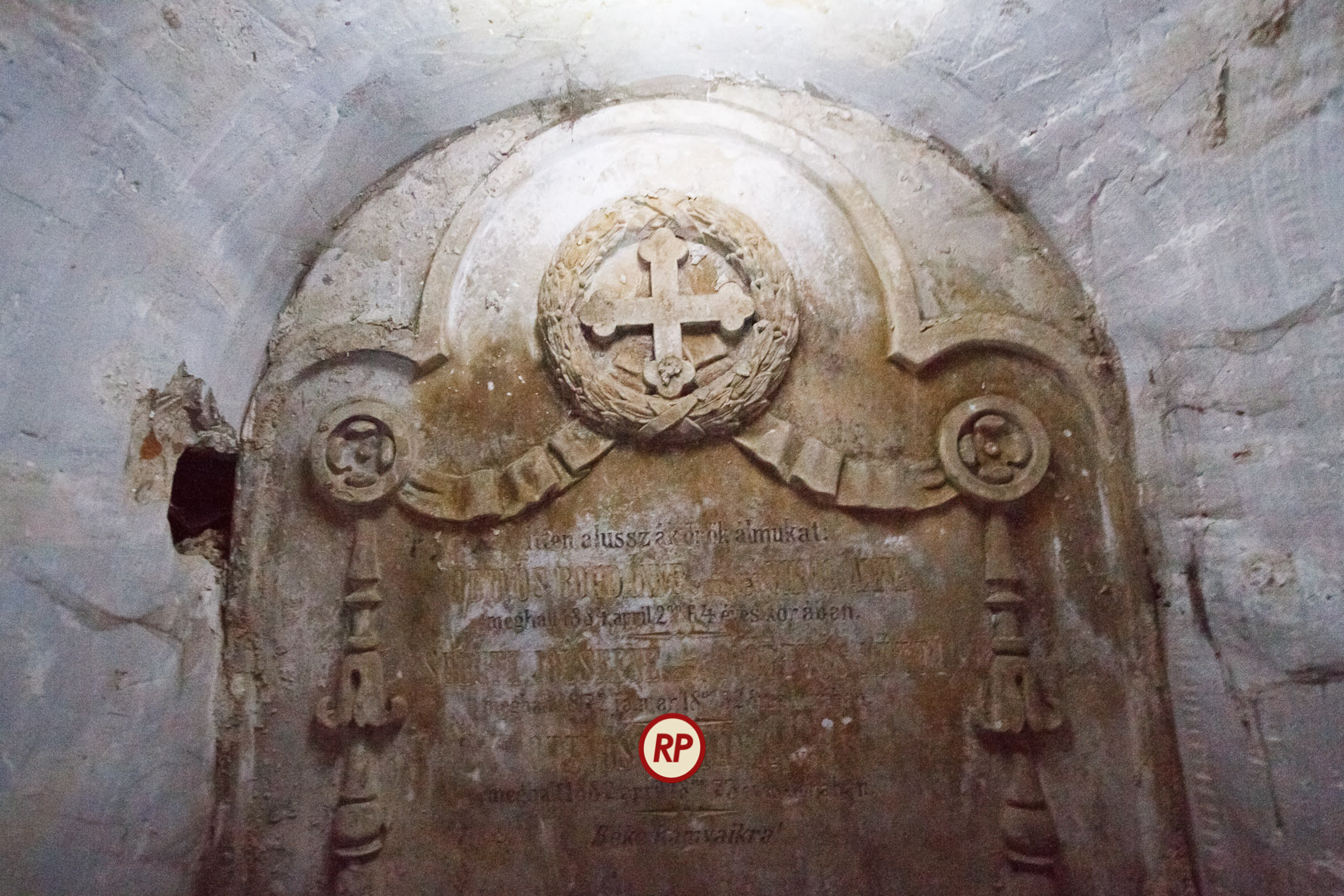
There is a lower level to the vaults, partially uncovered here. I’m not sure if the walls below are stable enough for someone to go inside. I would have doubts about venturing there.

The intricate design of the mold on the vault walls is a possible indication that they were painted once.

There you have it. I’m not sure of this church’s fate. No caretaker was in sight when I was there, nor were there visible signs that the church was being cared for.
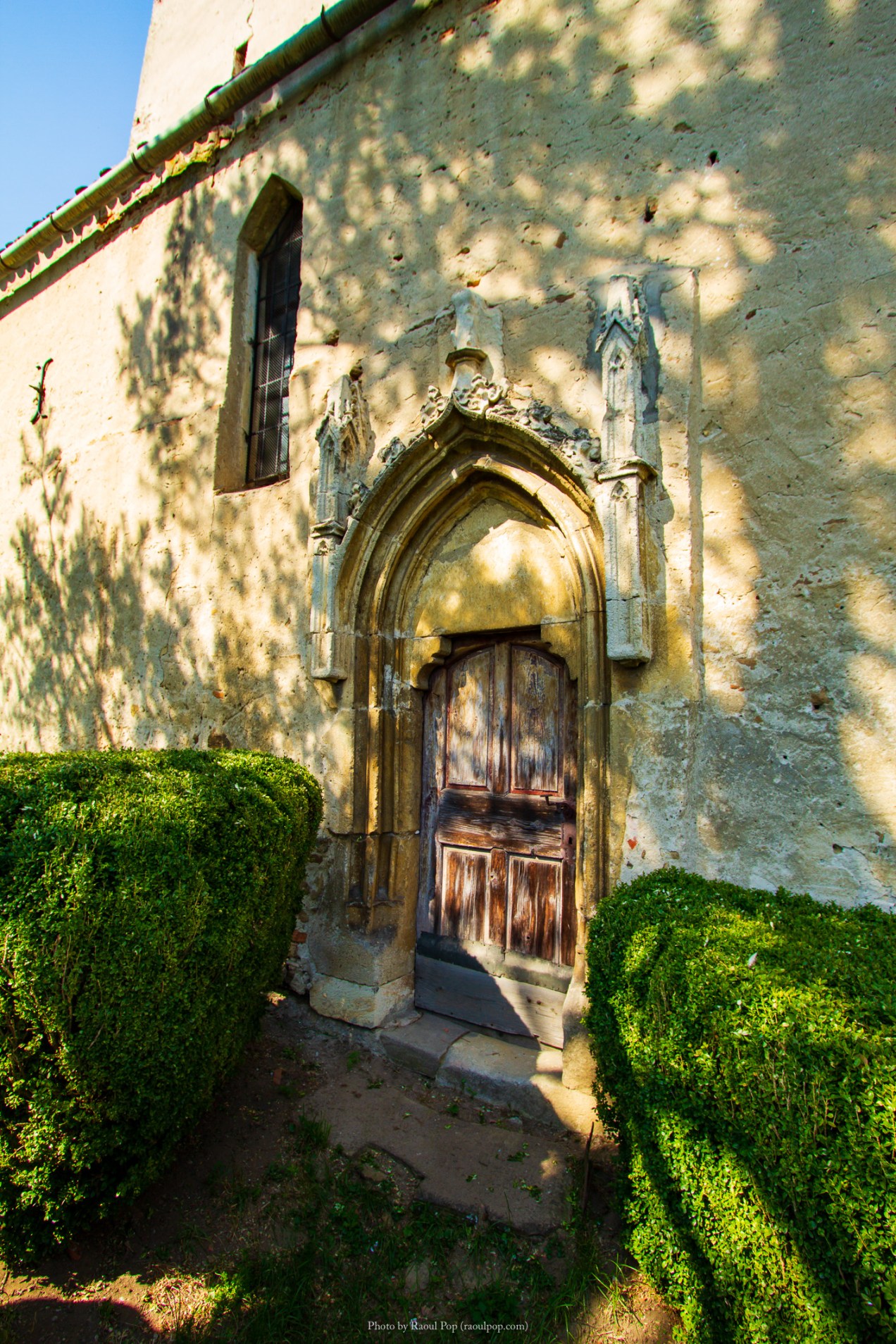
Having already visited about twenty-five fortified churches in Southern Transilvania, I can say that one of the most underrated fortified churches in this region is the one in Curci. It’s sad that it’s so, because it is quite beautiful, both on the outside and on the inside. Its outside is truly picturesque and its inside, though white-washed, as is the case with most reformed churches, still shows remnants of its more colorful gothic past, with green men on its walls and ceilings and murals hidden beneath multiple coats of lime paint.
When we visited in the spring of 2011, its caretaker told me no one had visited it for over 5 months. How can anyone miss a church like this one? It is a truly beautiful place.
Curciu, also known as Criș in Romanian, Kiertš or Kirtsch in German and Küküllőkőrös, Szászkőrös, and Kőrös in Hungarian (that’s right, three separate names), is an old Dacian settlement that was once called “La Fântâni”, itself built over yet older settlements from the bronze and iron age (source). It is first mentioned in written documents in 1332, and we also find it in court documents in 1337 alongside the name of a Saxon, Petro de Keuruz, who was called to testify as a witness about a legal matter. Curciu is also the place where my grandfather on my mother’s side was born.
The construction of the Saxon church was completed in the first half of the 14th century and took about 50 years. A lot of river rocks were used in its walls, as you’ll see in the photographs. The structure underwent modifications in 1425-1430, when the choir loft was added and again sometime in the 1450s. The church’s organ was built in 1844 by Wilhelm Maetz and it is still intact and undamaged to this day.
It isn’t a big church, but there are so many interesting architectural details that clearly point out a master at work. When you look at it as a whole (its chosen location, its perspective from all points of view, the way the architect chose to express the various functions of the building and the spaces used), it is a thing of wonder. It made me want to explore every little nook and cranny, and come back to it in the future.
If you’d like to visit this church, the village of Curciu is about 12 km away from Medias. You’ll need to take a paved country road toward the village of Darlos, pass through it, and follow the sign toward Curci.u Once there, you’ll need to ask around for the way to the caretaker’s house, who will then give you a personal tour of the domain.
Enjoy the photographs!


Video from a nice, quiet, late-autumn afternoon we spent in Grosvenor Park (North Bethesda, MD).
One of the last few great days of autumn before winter set in.
While in the States, my wife and I loved to bike up and down the C&O Canal (Chesapeake and Ohio Canal). The scenery is truly picturesque, particularly along the section from DC to Great Falls. I recorded these videos during the summer of 2008, on various of our biking trips.
The Waterfalls at Great Falls, MD
I hope you enjoyed them!
 Raoul Pop