Thoughts

Changes in TV viewing habits

The BBC reported recently on how TV viewing is becoming a more social experience. When I read through that article, I said, hang on a minute, I had an idea back in October of 2005 along the same lines… I called it audience-inclusive advertising, but the thoughts I wrote in there can be applied to other content on TV, like shows, which is what’s currently happening.

It’s fun to read through my original article and see how much of the stuff has already come to fruition. Here’s one:

A site can be set up and maintained by a consortium of advertising agencies and brand owners or a neutral body, that would either track viewer product preferences through data mining and random surveys, or would actively encourage users to register and provide product preferences. Alternately, existing user data could be compiled from various databases.

Now we have Facebook and Twitter, and advertisers love to mine their data sets for user product preferences, to give them surveys (think of all the annoying quizzes on Facebook), and collect data on them every time an app is authorized. So this has already happened.

Through the medium of the website, brand owners can also take a cue from the users about the kind of products they need to advertise, this time in a more direct way, through hard data. Even more, they can more easily survey the users about the kind of new products they want to see.

Think of all the fan pages set up on Facebook by companies and brands. You can become a fan, learn more about the company, and be surveyed, live, about your preferences. Beautiful.

Another way to keep the audience is to offer prizes for watching the ads and picking through clues that are weaved through both the ads and the shows. Entries can then be registered on the show’s site or at this main site for a chance to win something, perhaps even products featured on the show, or something as banal as an actor’s coat, or the actual bottle of perfume used by an actress on the show. These aren’t things that cost much but mean a lot to the audience.

Do you notice how many product giveaways there are on Facebook and Twitter? Companies are giving away not just stuff that doesn’t cost a lot, like an actor’s wardrobe, but they’re giving fans cars, computers, cameras, TVs and other things that cost a fair bit of money. And it’s all done for the purpose of keeping users (fans, if you will) tuned into the company’s platform and brand.

It’s also fun to see what stuff didn’t get implemented (yet?), but I’ll let you do that by reading through my original article.

Standard
Thoughts

Blendtec blends line-up of Olympus gear

Tom Dickson, host of the popular “Will It Blend” video series, recently blended a full line-up of Olympus gear: a DSLR, a point-and-shoot camera, a lens, a HD camcorder, a digital voice recorder, plus some art. But this video doesn’t finish in typical fashion, with him revealing the blended remains of the unwitting electronics. There’s a great twist, and it makes me think Olympus had their hand in this. The tagline is “The ultimate multimedia blend. What will you create?” It’s highly entertaining but also cringe-inducing — it’s hard to see all that good photo gear go to waste.

Take Two: The Full Olympus Multimedia Blend

The first take for this video ended with a surprising bang…

New Olympus cameras get mixed by Blendtec

Standard
Thoughts

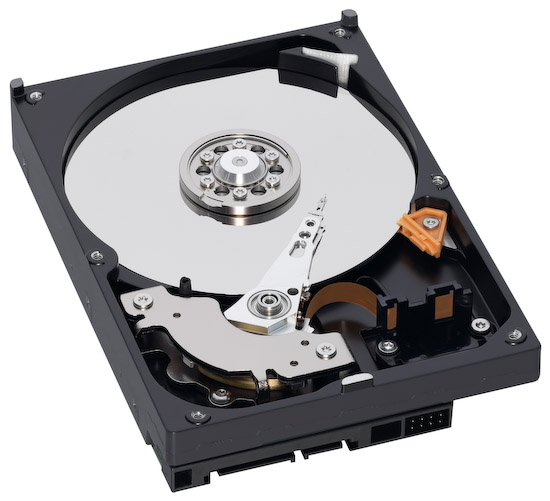
Storage drops below 7 cents per gigabyte

In January of 2009, I mentioned the price of storage had just dropped below 9 cents per gigabyte. I see now that 2 TB drives are selling below $150 (they’re $140), so it’s time to update my figures. At $139.99 for a 2 TB (2,000 GB) SATA hard drive, that comes out to less than 7 cents per GB. That’s a great deal, and it goes without saying that it’s the lowest price for data storage consumers have ever seen.

Updated 4/19/10: Micro Center is selling 2 TB Seagate SATA drives for $119.99. It’s an in-store special, with a one drive per household limit, but still, that makes it 6 cents per gigabyte. What can I say — expect the price to keep dropping…

On the downside, it seems hard drive manufacturers have hit a ceiling with 2 TB drives. I haven’t heard talk of 3 or 4 TB drives, or anything larger than that. Perhaps I haven’t been keeping up with storage news properly, so if you’ve heard some good news, do let me know!

Standard
Thoughts

Not happy with changes to Kinder Surprise

Updated: Since I wrote this post and made the video, I have learned that Kinder Surprise and Kinder Joy are two different products and what had happened is that Kinder Surprise was temporarily taken off the market due to shipping concerns during the warm months. Now both are back on the market and I’m happy as can be getting the occasional Kinder Surprise and playing with the toy. 🙂

I used to love Kinder Joy, the little egg-shaped chocolate treats. They’d have these nice little toys inside, often cars, wrapped in these reasonably tasty shells made of milk chocolate. Now they’ve changed things completely.

The toys are these cheap things that fall apart as soon as you assemble them, and they’re no longer appealing, and the eggshell chocolate is gone. Even though they’re still wrapped in a plastic egg-shaped shell, the chocolate is now this soft fudge of white chocolate which sits on one side of the egg, while the toy is in the other half.

I guess it’s cheaper to pour the chocolate into half a shell than to mold it into an eggshell shape while the toy is inside. It’s also cheaper to forgo sterilizing the plastic parts for the toy, since they’re now sealed separately into other half a shell. And it’s also much cheaper to go with flimsy things instead of nice little cars.

I made a video of one of these “late-model” Kinder Joy eggs, so you can see this for yourselves.

Standard
Thoughts

YouTube and music publishers: a model for revenue sharing

One of the videos I uploaded to YouTube recently was identified as using copyrighted music. I’d used a song from the 50s, thinking that after 60 years, no one would give a hoot whether that song was being used as a track in a YouTube video. Still, it was identified by YouTube’s content ID program and pointed out to me.

Leaving aside the discussion of music copyrights in the US, which is absolutely insane, given that even 70-year old songs still aren’t public domain, I’d like to propose a model for revenue sharing among YouTube users and music publishers. It’s quite simple, and allows for easy licensing and monetization of music tracks. If implemented, I dare say it would also increase the revenues of music publishers quite a bit.

Here’s how it would work:

  1. Music publishers use YouTube’s content ID program to identify potential matches between their catalogs and YouTube videos, same as they’re already doing.
  2. Potential copyright issues will continue to be identified, same as they are right now.
  3. Videos won’t be restricted, as they are now, but will continue to play in all geographical locations, for every YouTube user, accumulating views.
  4. If the videos are successful and accumulate over 10,000 views, they will be invited into YouTube’s revenue sharing program.
  5. Once they start making money through that program, a portion of that money will go to the music publishers who own the licensing rights for that particular song or piece of music. I wouldn’t mind paying up to 25% of the profits from a video to a music publisher if I chose a particular song I loved for my video, and my video was successful. Besides, I wouldn’t have to actually “pay” myself. YouTube would automatically distribute the revenues accordingly.

The best part of this is that the process is fair, doesn’t punish anyone, and benefits all involved. If a video is successful, then it pays, and if it only gets a few hundred views, who cares if uses a song that should be licensed? If a tree falls in the forest and no one’s around to hear it, does it still make a sound? Does it matter?

Prosecuting individuals in this day and age, when the practice of adding songs to videos is so widespread, is terribly inefficient, and fosters ill-will. Why not use existing technology and platforms to add value, make money and foster goodwill?

The two areas where I see some tweaking will be needed are in the correct identification of music tracks, where the dispute/review process will need to be made easier and faster, and in the use of a sliding scale to calculate the percentage due to the publishers for the user of their songs, based on the song’s popularity and relevance. But those are minor things given the immense potential of this model to revolutionize the way we look at music copyright disputes on YouTube.

Standard