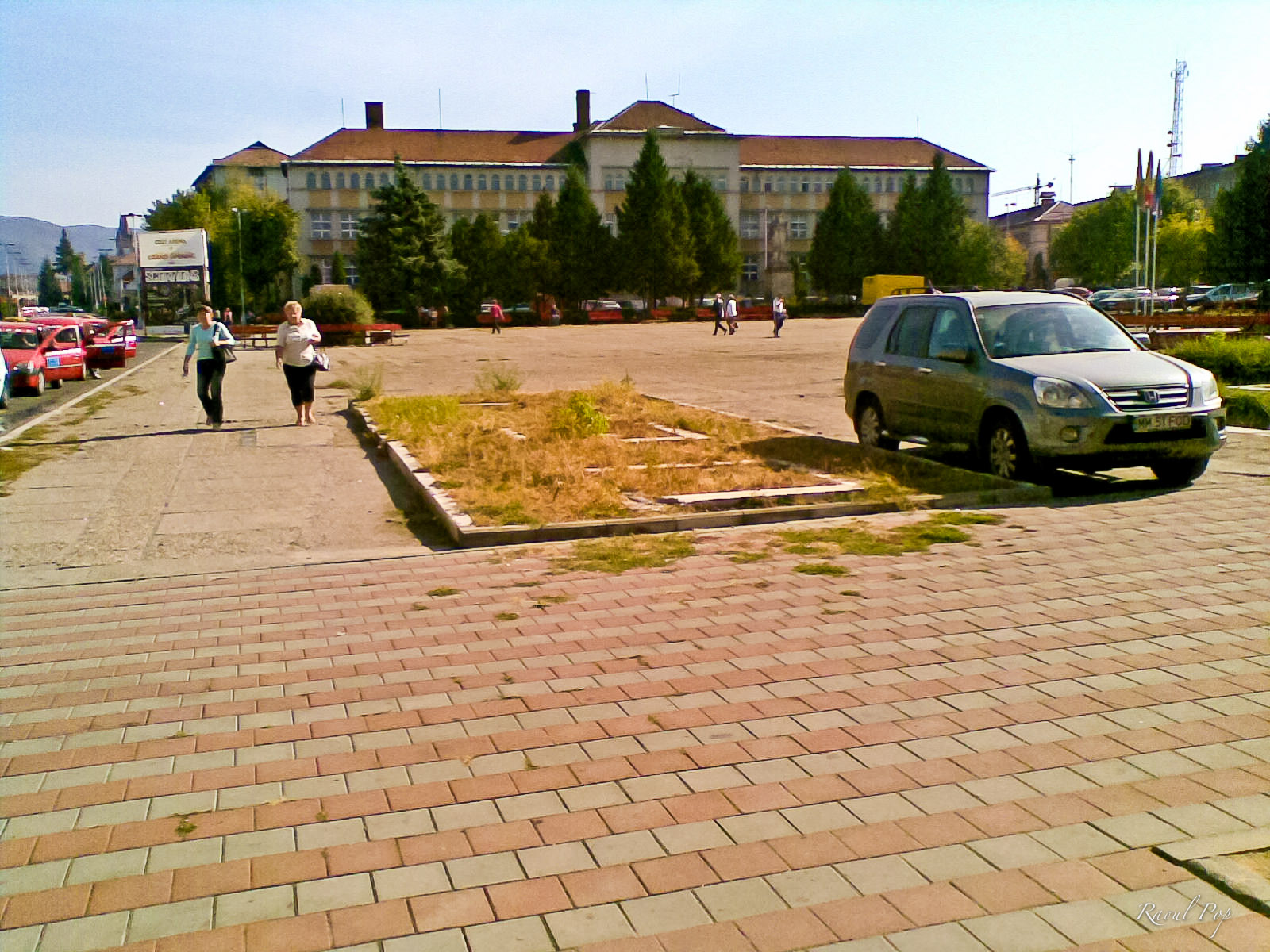
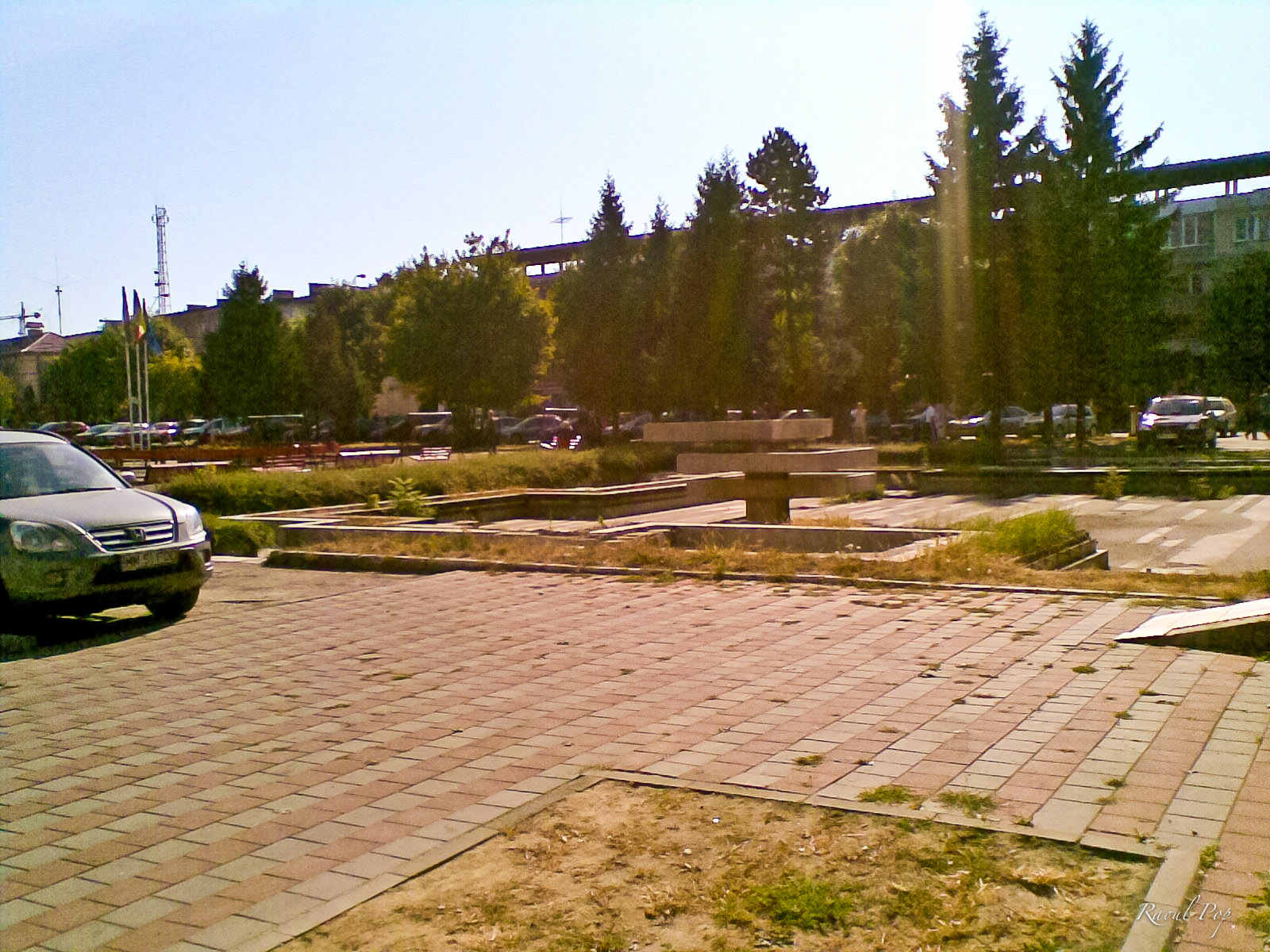
We walked through downtown Baia Mare recently, where I took these photos. As I wrote before, I have a few gripes with the lack of urban planning and renovation going on in that area.
Look at the photos, try to imagine the foreign-made cars aren’t there, and you’ll have to admit to yourself that the sights you’re seeing are from a city still stuck under a communist regime. I felt like I was back under Ceausescu in the 80s when I walked there.
Tony Darnell at Deep Astronomy has put together this wonderful video showing the Hubble Ultra Deep Field in 3D. It’s an amazing view of an incomprehensibly large universe, which helps put us in perspective. We are so insignificant, toiling away on this puny little planet we call Earth, a lot of us involved in nefarious or corrupt activities, trying to accumulate needless wealth at the expense of others, all while our impossibly short lives run out much too quickly.
Here’s my advice. Watch the video, then go outside and take a walk in nature. Enjoy its beauty. Think about family and dear friends. Then go through your house and clean all the stuff you don’t really need. Let’s all of us (the ones who are touched by this big picture) try to live our lives in a simpler, healthier way.
My parents just got back from a big, worldwide conference in Buenos Aires, Argentina — the 15th World Congress of Psychiatry. My dad, who is a devoted psychiatrist, went there to learn new things, like most doctors who go to conferences.
Unfortunately, all but five of the entire group of Romanian doctors (150 in total) who registered for the conference decided to play hooky. This was after their travel, hotel stay and meals were paid for by European pharmaceutical companies, who flew them out there so they could stay up to date on the latest research.
One of the event staff confided to my father that the Romanian doctors couldn’t be bothered to even pick up their badges, which is something that only takes a few minutes. Instead, they all went on a sightseeing trip through Patagonia and were absent for the entire duration of the conference.
A few months ago I bought a Nokia X3-02 “Touch and Type” cellphone, and I’m sorry to say that I’m disappointed with it. I’ve been gradually let down by it over time, and in the end, it’s just not what I’d hoped it would be. In the store, I was dazzled by its small, thin design (I love thin phones). I loved its metal shell as well. It felt the proper weight as it sat in my hand.
After I took it home, I started to see the defects. This was a brand new phone mind you, and already one of its clamshell latches (on the back) refused to close properly. And the more I used its touch screen, the less I liked it. I’m accustomed to working with quality touch devices like the ones on the iPod Touch, the iPad and the Magic Trackpad. The touch screen on the Nokia X3 is just not as good. It feels like a sad, cheap imitation of a great original.
Granted, this is Nokia’s first touch-and-type device, as they say in their intro video for the phone.
But they have other touch screen devices in their product line-up. They’ve had time to perfect their touch screens. Why launch a phone with an inferior touch screen?
Once you ask that question, then you have to ask a bunch of other questions as well:
Why are they using so many versions of their operating systems on their phones?
Can they come up with common design elements and aesthetics on their phones, to make them seem like they’re part of the same product line-up? Because right now, if you were to look across the whole Nokia line-up, you wouldn’t know all the phones are from the same company unless you looked at the logo.
Can they reduce their product line-up to something more manageable? Why have a gazillion phones? What’s the point of that? I understand the need for targeting products at various audiences and at different price points, but do you need tens/hundreds of phones to do that? Why not have at most 10 phones in the line-up?
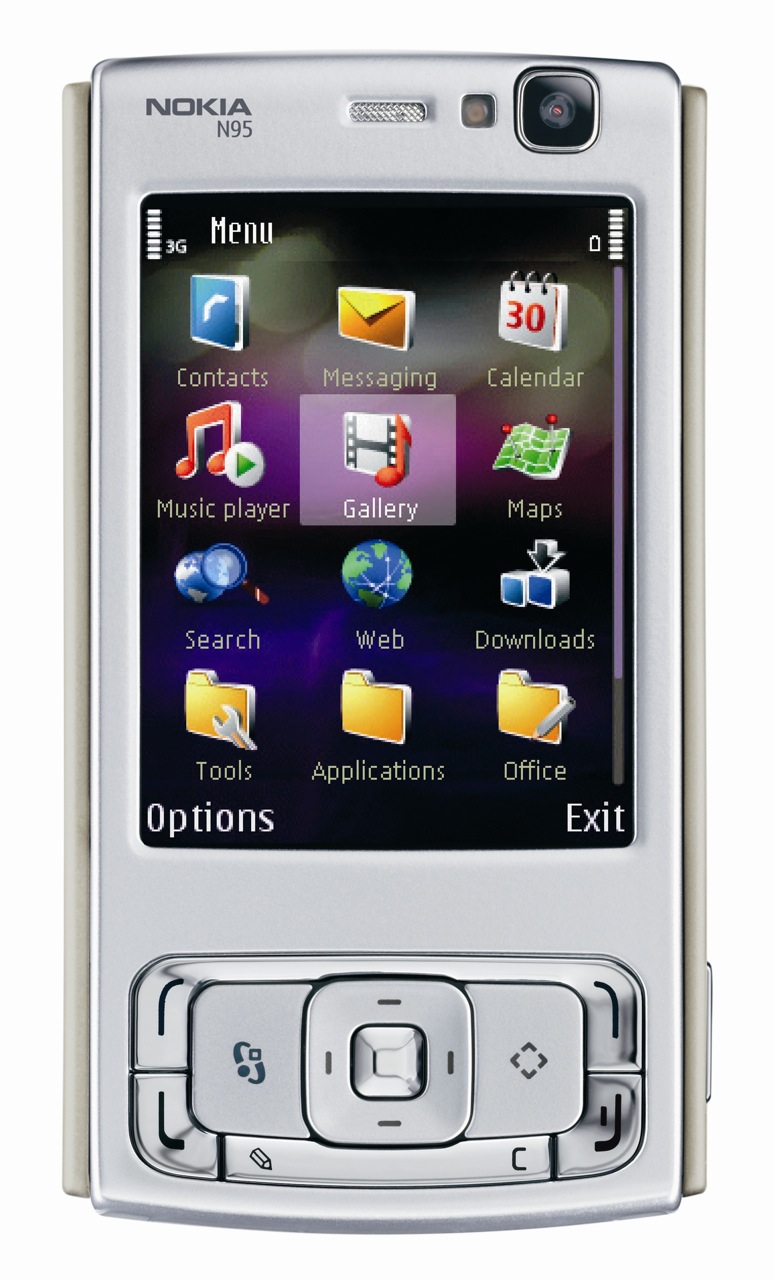
Why launch the phones with lackluster features? As an example, the X3 has a 5 megapixel camera, but it’s a sad facsimile of the 5 megapixel camera on my old Nokia N95, which was launched in 2007. And there are less in-software options available on the phone, so it’s even harder to get better photos out of the camera. It also doesn’t have a flash.
Another thing I quickly discovered about the X3 is its annoying sleekness. Normally, a sleek phone is a good thing, but somehow, the X3 has the annoying characteristic of being very likely to slip out of your hand. You’re afraid to hold it by its top half, because you’ll press the on-screen buttons. You can’t hold it by its lower side, because that’s where the keypad is. So you hold it by the sides, but they’re rounded and thin, so the phone slips right out of your hand and falls to the ground. To its credit, it’s pretty sturdy and unless it’s going to fall on bare concrete, it’ll probably be fine, but the design was not well tested before it was launched.
Another problem which I discovered, and I’m not sure if this happens on just my phone or on all the Nokia X3 phones, is a software bug that lets the built-in @Mail application access the internet when the phone is on a WiFi connection, but will not let it access the internet over WAP or GPRS. I’ve sent the phone in for service and it remains to be seen what Nokia will do with it (if anything).
I can’t help comparing the phone with my Nokia N95, which as I mentioned above, was launched in 2007.
I bought it in 2008, brand new, unlocked, and have been using it ever since. I’ve used it, by my count, on four different mobile networks, one in the US and three in Romania. It worked just fine on all of them, did what it was supposed to do and it has served me well. I’ve recorded more video and shot more photos with it than I remember, and some of those videos and photos came out quite nicely. I still use it today, though it’s now my backup phone.
The N95 is Nokia at its best (for its time). It was compatible with a ton of cell networks, was even capable of 3G speeds, could use WiFi networks, had a 5 megapixel camera with a built-in flash, a ton of options for manipulating the photo software, recorded video at 640×480 resolution in stereo sound, it could play music and movies, it had Bluetooth, Infrared and USB 2.0 connections, it could use MicroSD cards, it had a second camera for video calls or video conferencing and best of all (for me) was the ability to sync it with my Mac using iSync and tether it to my MBP via Bluetooth.
The only things I didn’t like about the N95 were its operating system, which was (still is) a bit wonky, and the incredibly expensive apps (at the time) on the Nokia (now known as Ovi) Store.
Fast forward four years, and what has Nokia done since then? The software for their phones is still wonky and still looks the same, I’m still confused about where to find certain phone or system options when I look for them, their new phones still only have 5 megapixel cameras (some still sell with 2 megapixel cameras, like my wife’s new C3), most of their phones record almost unusable 3gp video with crappy sound (the X3 is a prime example) instead of mp4 or mov files, and I’m sure I could keep adding to this litany of complaints if I tried. Meanwhile, other phone manufacturers are doing unbelievable things with their phones.
One other thing comes to mind: Nokia Maps. In recent years, Nokia keeps advertising this app and the fact that their maps are free, but what they fail to mention is they’re not really usable. Sure, the maps are free. You can download them from the Nokia website at any time. But the maps are no good without an extra internet option on your phone’s monthly plan, and more importantly, you also have to pay extra in order to get the driving instructions (the voice guidance files and the step-by-step turns). So really, all the maps are good for is to give you general guidance about your whereabouts. But they won’t tell you how to get to your destination unless you pay more. Sure, you could futz around with your mobile phone, zoom in and out of the maps and eventually figure out how to get there, but that’s not going to be possible if you’re driving.
To be fair, I haven’t used today’s equivalent of the N95, which would be the N8 (or the E7). How much do you want to bet the Maps app has the same shortcomings on those devices as well? They’re supposed to be better. Unfortunately for them, they’re still using the Symbian OS, which from my experience is wonky and ill-organized, as mentioned above. I’ve heard Nokia plans to launch a new smartphone this year that uses a new and better OS. We’ll see how that works out.
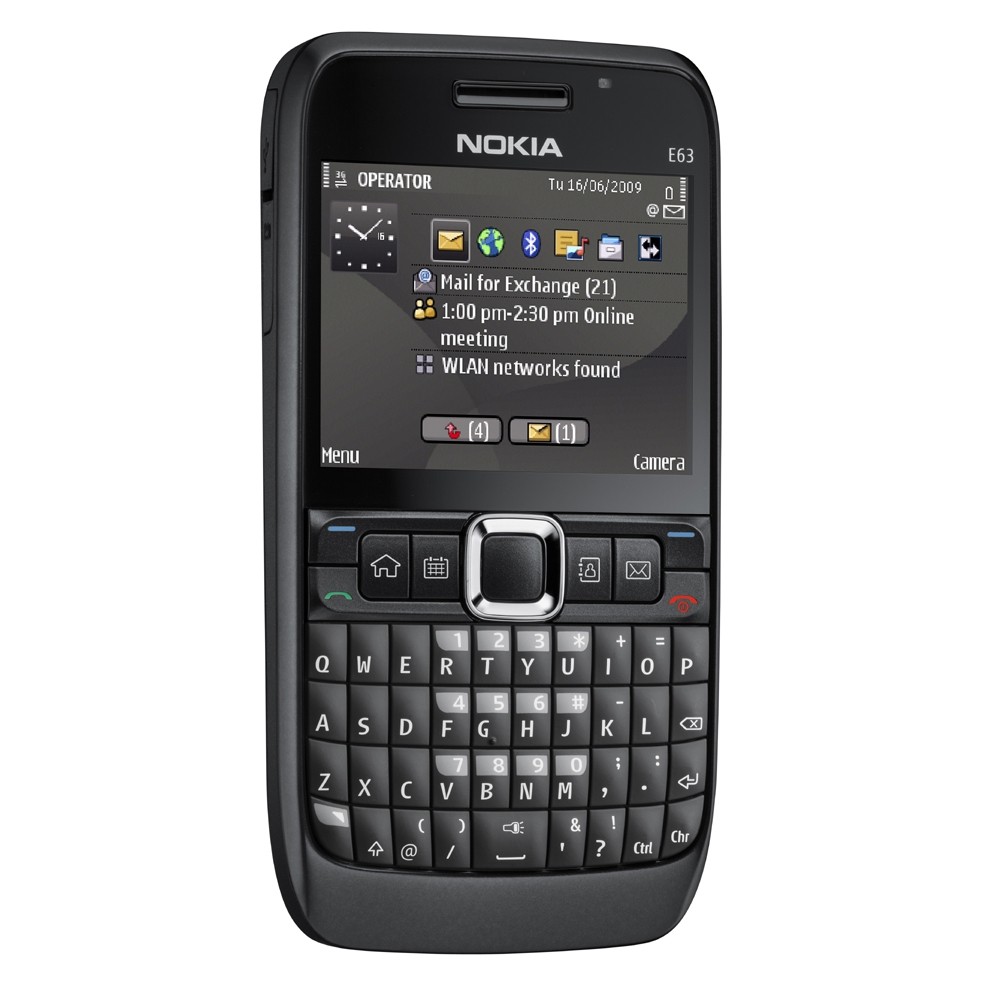
There is a saving grace for Nokia though. Do you know what my favorite phone right now is? I’m using it and I love it. It’s the Nokia E63. Yes, I know it’s old, and it’s actually a hand-me-down phone (I bought it for my wife about 1 1/2 years ago), but I love it.
It’s got a surprising amount of options (if you keep digging through the OS screens). The camera is only 2 megapixels and the video camera only records at 320×240 pixels, but as far as the rest is concerned, it has the same options as my Nokia N95, and it has the incredible bonus of an actual keyboard. Of course, I can sync it to my Mac, just like the N95 (and unlike the X3, which still has no official sync plugin).
I never realized until now how useful an actual keyboard is on a phone. Sure, the virtual keyboard on an iPod Touch or iPhone is nice, but there’s something wonderful about pressing actual rounded buttons. I was so frustrated with buttoning on keypads and using predictive text (which sucks for anything other than simple messages). Now I can easily send emails and text messages from my phone at any time. It’s made my communication so much easier!
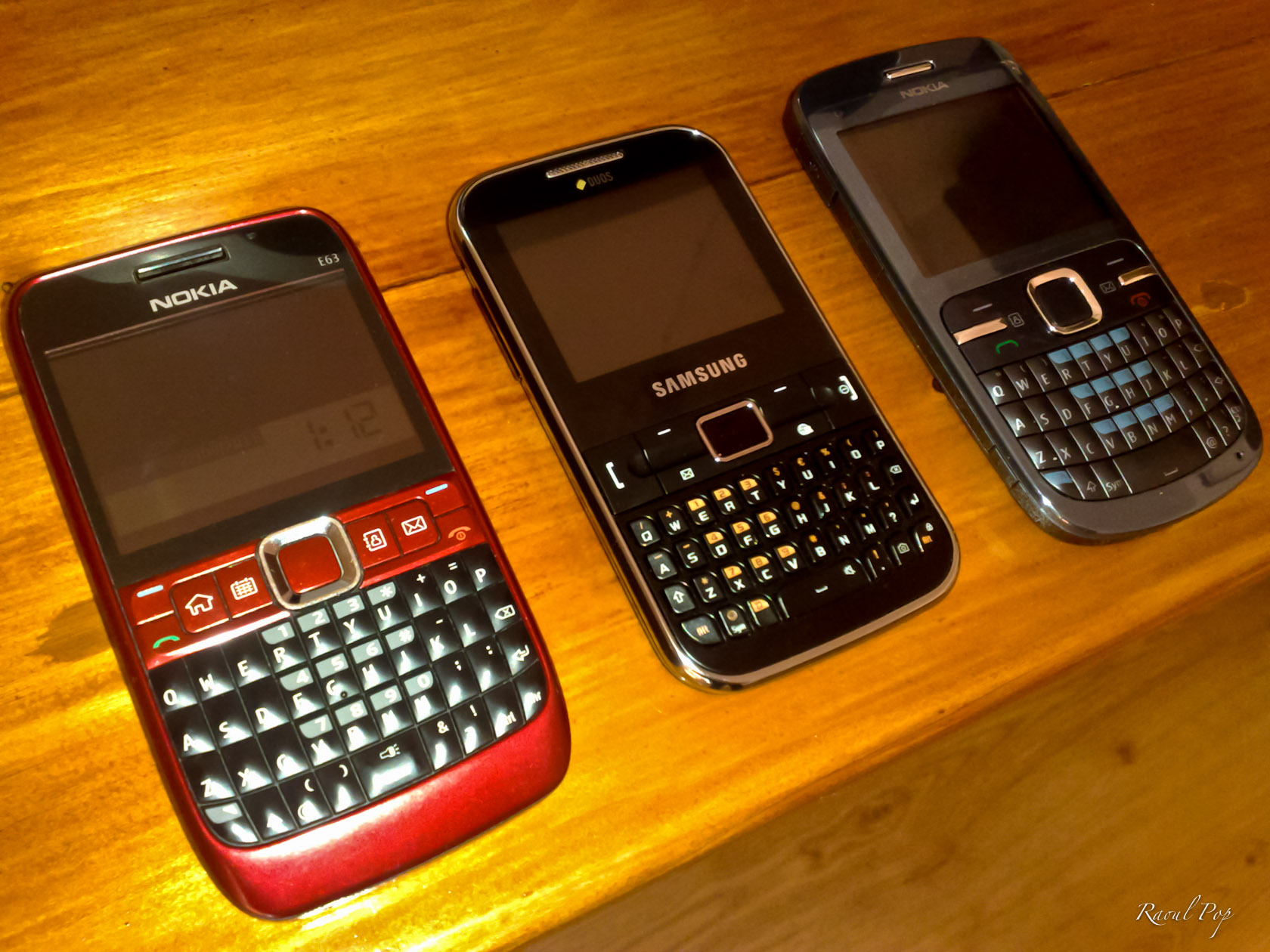
As a matter of fact, do you know what our current phone line-up is? It’s this: a Nokia E63, a Samsung Ch@t GT-C3222 and a Nokia C3. Notice something common across all of them? They all have keyboards. I think the Nokia keyboards are better designed. The buttons have rounded edges so it’s easier to press them. But there’s no mistaking the productivity gain from having an actual keyboard on a phone.
So what’s the point I’m trying to make? The point is this: phones with keyboards are awesome. Nokia should focus on them. If they’ve got to use their kludgy old Symbian OS, then simplify it and put it on nice phones with nice keyboards and nice cameras. That will work well and won’t disappoint. And if Nokia’s bent on imitating Apple and putting touch screens on their phones, they should work on the quality of those touch screens. They should make sure they’re just as good or better than what Apple’s got. I know that’s a hard standard to beat, but if they shoot for that, they’ll probably end up with 80% of what Apple’s got in terms of touch screen functionality, and that’ll do just fine.
I’ll end on a final note, with a pet peeve of mine. If all these phones from Nokia have Nokia Maps and access geo satellites, why in the world aren’t they geotagging the photos I take with them? This has been bothering me ever since I bought the N95. It started as a nagging wish on the back burner, but now it’s a full blown pain in the derriere kind of thing. The iPhone’s doing it. Now consumer-grade digital cameras, cheap ones, come with built-in GPS chips. Here Nokia’s had this in their phones for 4 years or more, and they still haven’t bothered to do it right. It’s not even a hardware upgrade. It’s just a software upgrade that checks for an internet connection, goes out, gets the geo coordinates when the camera app is activated, and applies them to the photos. And if there’s no internet connection, then the photos don’t get geotagged. How hard can it be? Sadly, this is yet another example of Nokia’s inefficiency.
I sent the following enhancement request to the Pages team via the Apple website and figured it’d be a good idea to share it here as well. Perhaps you have some suggestions for me, something that could help me in the meantime?
Better memory management. My wife and I write graphics-rich books (recipe books, piano methods etc.). Currently, there is no way to layout an entire book in a single Pages document, because after 5-7 pages or so containing digital photographs imported at print-ready resolution, Pages runs into a memory management bottleneck and every keystroke takes 1-2 seconds. We’re forced to either work on individual pages as separate files, which makes pagination and text flow a real hassle, or to divide the book into sections of a few pages each and basically run into the same pagination and text flow issues.
Support for offset printing in Pages. It’s great that I can export to digital book formats (ePub, PDF) but what I really need is support for export to offset printing methods. When I export to a PDF from Pages, the text is never 100% black. It’s a mixture of colors, which is a disaster in the making for offset printing and necessitates a lot of work on the resulting files after they’re exported from Pages, just to get them offset-ready. Please include a one-click PDF export for offset; call it what you will, but make it work.
I know Pages is not supposed to be a full-featured design and layout application, but it could almost fill those shoes if these two things were resolved.





 I sent the following enhancement request to the Pages team via the Apple website and figured it’d be a good idea to share it here as well. Perhaps you have some suggestions for me, something that could help me in the meantime?
 Raoul Pop