We (Ligia and I) present episode 16 of Ligia’s Kitchen, published for your viewing pleasure late last night. It shows you how to make a nutritious green smoothie. The green smoothie is, of course, a basic raw vegan recipe, but one which is often prepared incorrectly. If the fruits and vegetables used as its ingredients aren’t properly selected, the wrong combinations might give you indigestion or flatulence… While most men enjoy a little potty humor, it’s never funny when others are laughing about us, so do take care to observe this recipe — or other well-known green smoothie recipes — properly.

There is one small correction to the video, which we only observed in the final editing step. It’s only noticeable for those who speak Romanian. Ligia says at one point we should “alter” the kinds of green leafy vegetables used in the green smoothie. What she meant to say was “alternate”, or switch between various kinds of leafy vegetables, so as to offer some needed variety in the taste of this daily drink.

LK-016-RO-HD with English subtitles
Released 5/2/11

Places

The fortified church in Curciu

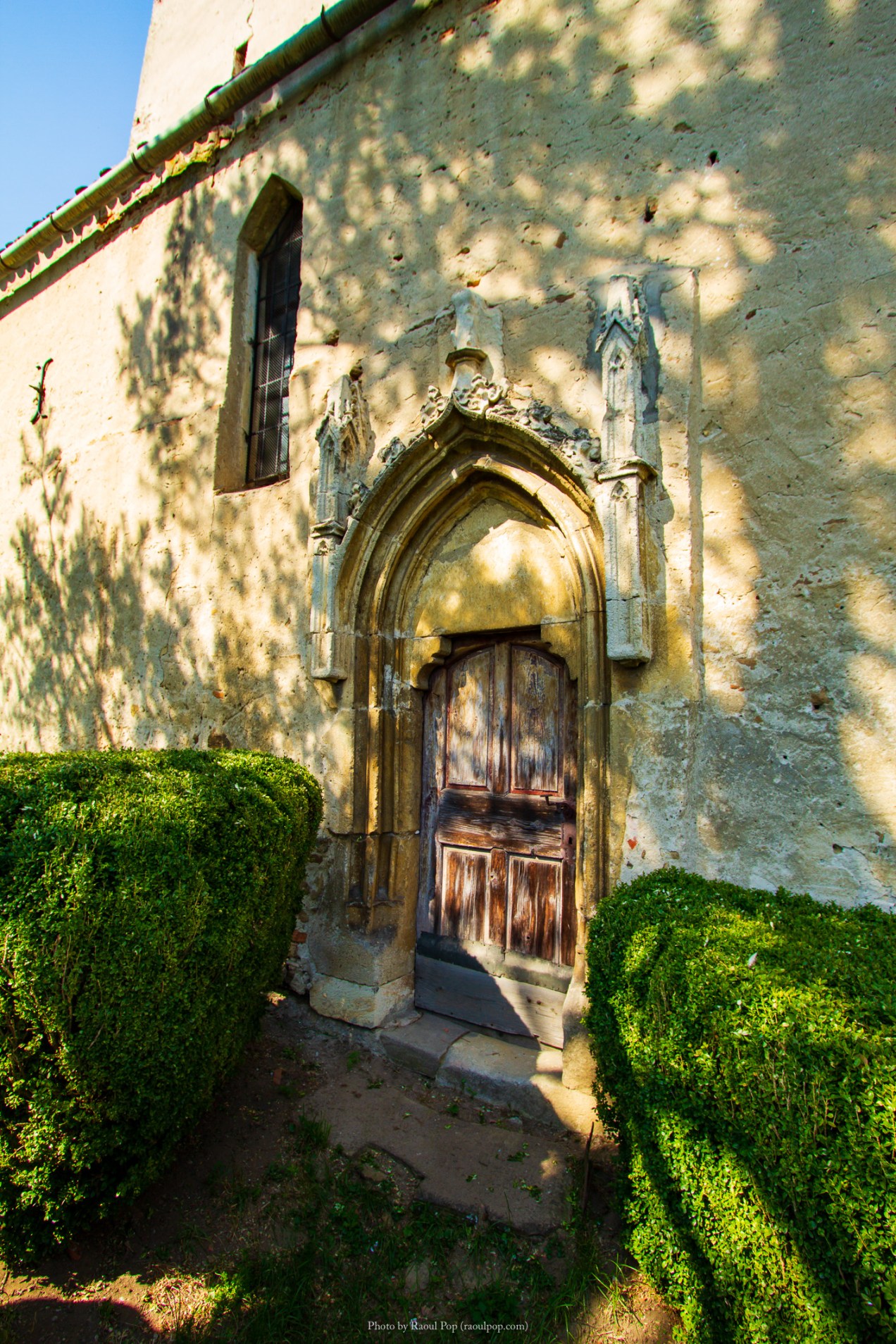
Having already visited about twenty-five fortified churches in Southern Transilvania, I can say that one of the most underrated fortified churches in this region is the one in Curci. It’s sad that it’s so, because it is quite beautiful, both on the outside and on the inside. Its outside is truly picturesque and its inside, though white-washed, as is the case with most reformed churches, still shows remnants of its more colorful gothic past, with green men on its walls and ceilings and murals hidden beneath multiple coats of lime paint.

When we visited in the spring of 2011, its caretaker told me no one had visited it for over 5 months. How can anyone miss a church like this one? It is a truly beautiful place.

Curciu, also known as Criș in Romanian, Kiertš or Kirtsch in German and Küküllőkőrös, Szászkőrös, and Kőrös in Hungarian (that’s right, three separate names), is an old Dacian settlement that was once called “La Fântâni”, itself built over yet older settlements from the bronze and iron age (source). It is first mentioned in written documents in 1332, and we also find it in court documents in 1337 alongside the name of a Saxon, Petro de Keuruz, who was called to testify as a witness about a legal matter. Curciu is also the place where my grandfather on my mother’s side was born.

The construction of the Saxon church was completed in the first half of the 14th century and took about 50 years. A lot of river rocks were used in its walls, as you’ll see in the photographs. The structure underwent modifications in 1425-1430, when the choir loft was added and again sometime in the 1450s. The church’s organ was built in 1844 by Wilhelm Maetz and it is still intact and undamaged to this day.

It isn’t a big church, but there are so many interesting architectural details that clearly point out a master at work. When you look at it as a whole (its chosen location, its perspective from all points of view, the way the architect chose to express the various functions of the building and the spaces used), it is a thing of wonder. It made me want to explore every little nook and cranny, and come back to it in the future.

If you’d like to visit this church, the village of Curciu is about 12 km away from Medias. You’ll need to take a paved country road toward the village of Darlos, pass through it, and follow the sign toward Curci.u Once there, you’ll need to ask around for the way to the caretaker’s house, who will then give you a personal tour of the domain.

Enjoy the photographs!


Standard
Thoughts

Modern lawn care: a lot of hot air

One of the things I strongly believe in is the need for manual labor, especially during these highly industrialized times. I believe such work yields better results and it keeps us grounded, in touch with the earth from which we ultimately draw our living. I dislike the “modern” methods of lawn care, where one uses hedge trimmers and leaf blowers to do a job which can be done much more adequately by simpler, manual tools such as a broom and a pair of hedge scissors.

Don’t mistake me for a luddite. I use lawnmowers when they’re justified, like when a lawn requires it, because of its size, or because it can’t be cut by a push-mower or a scythe. The scythe in particular is a great way to cut grass, and it’s also a great workout for one’s back and abdomen. It’s been around for millennia. It’s only been replaced by machinery during the last couple of centuries.

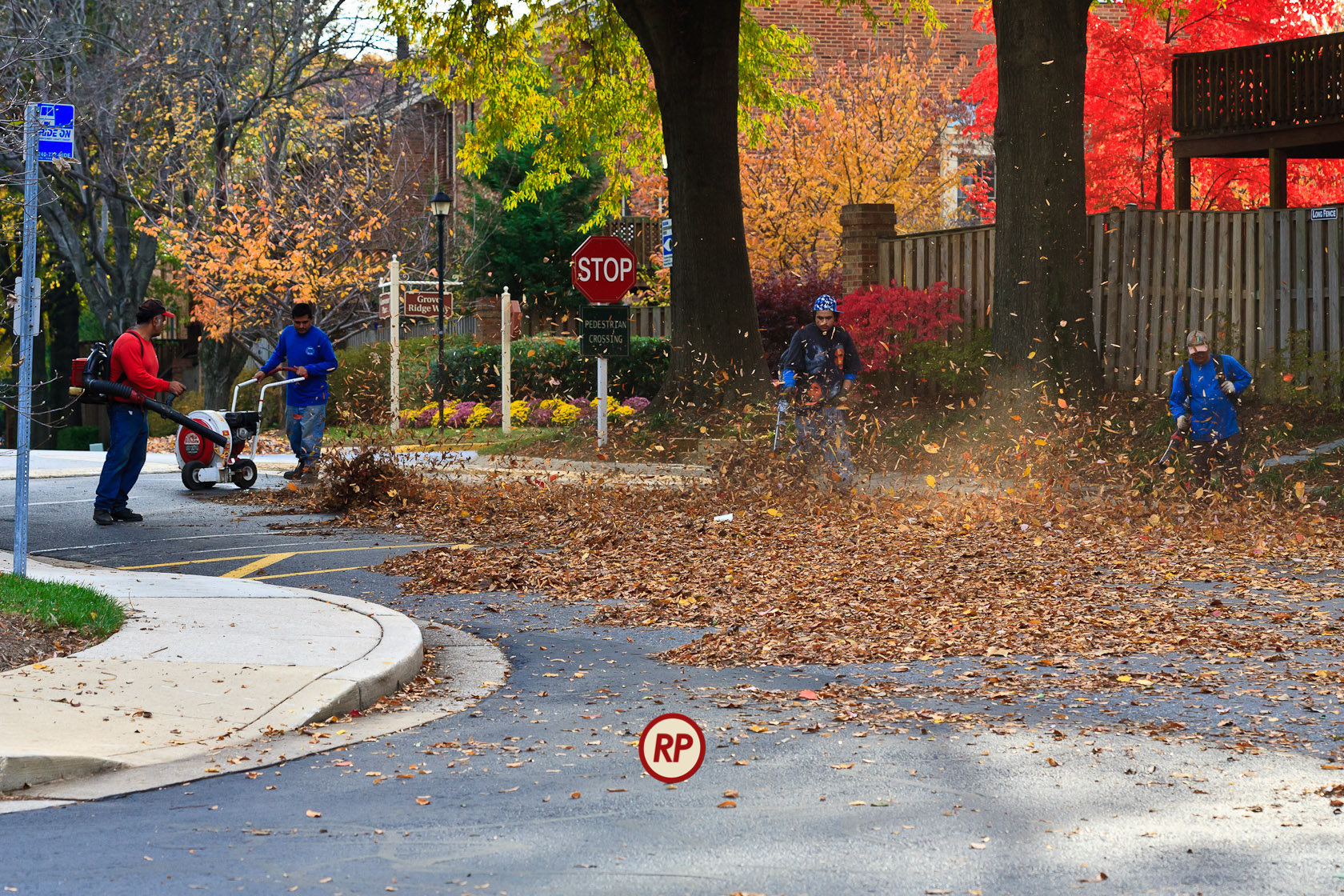
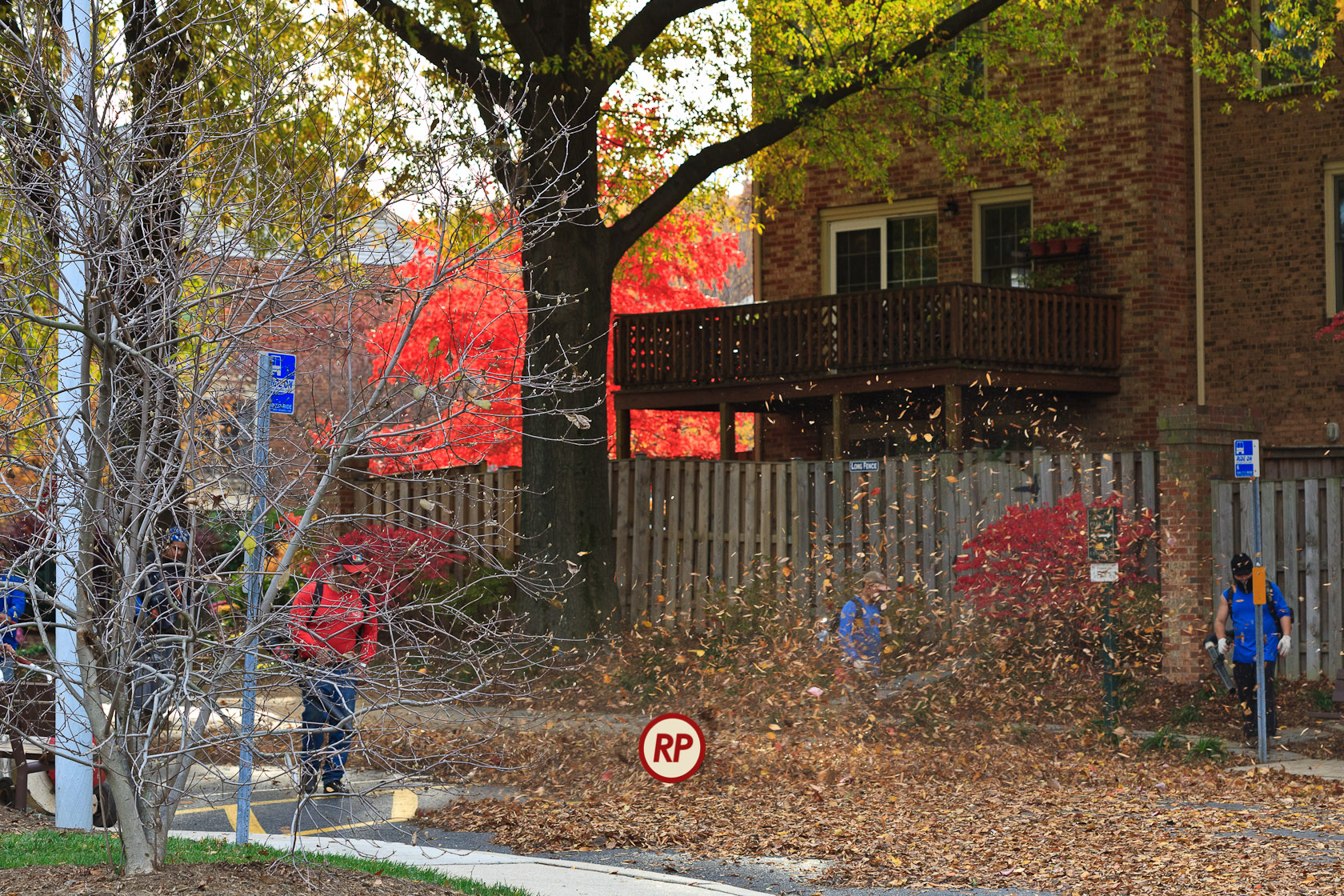
If you live in the suburbs, then this next picture should be familiar to you.
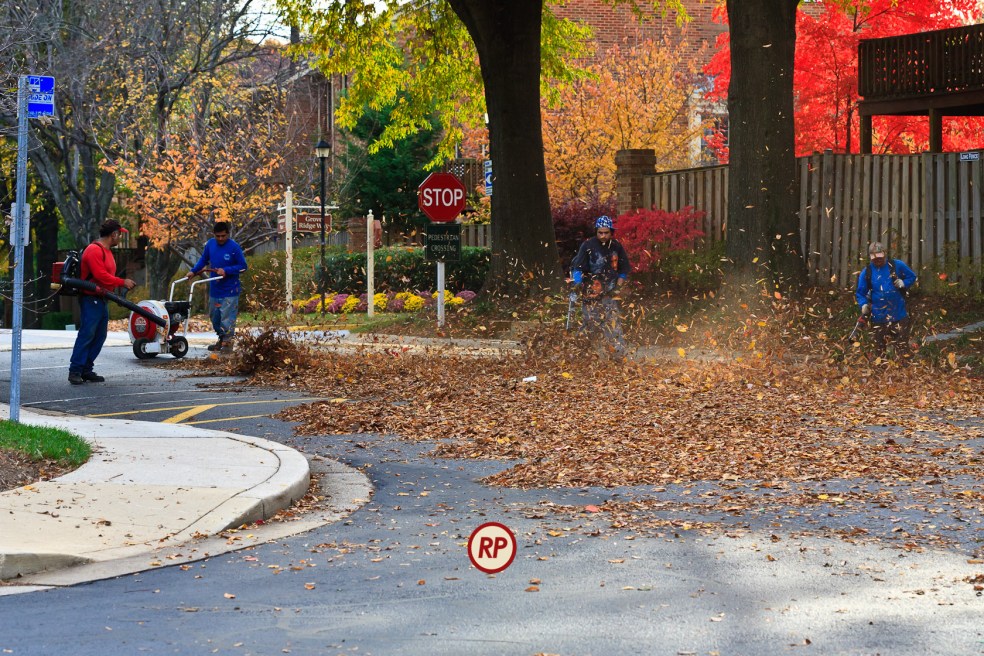
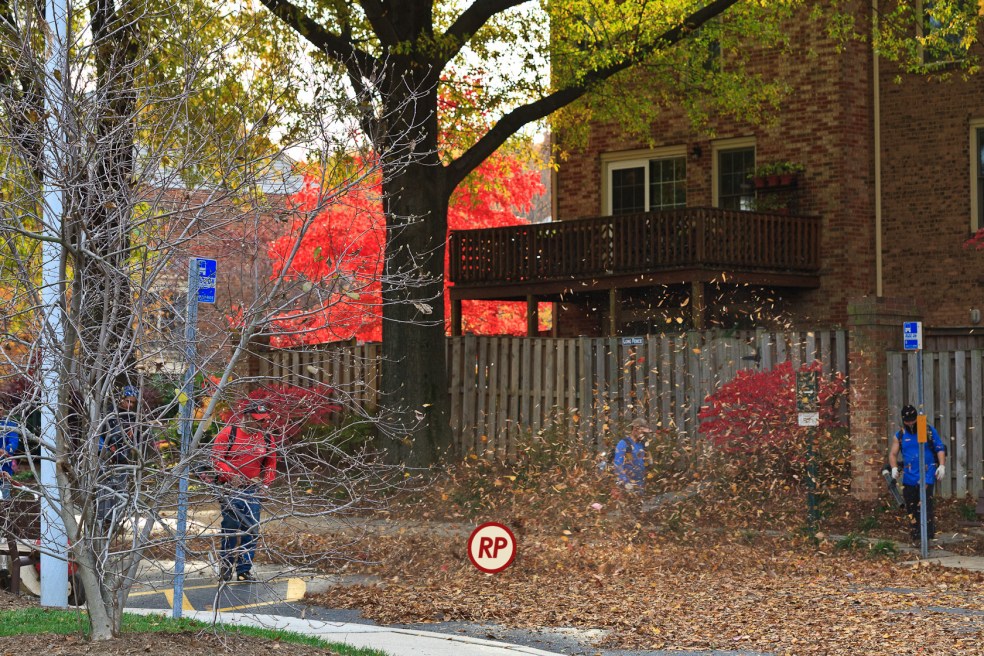
That, of course, would be landscaping day, or if you happen to live within a larger community that has a lot of lawns, this would be part of landscaping week, which would happen every month, or worse, during frequent rainfall, every couple of weeks. Every day of that period, the maddening roar of the leaf blowers would be heard all over the compound, gnawing away at your brain, making it impossible to take a nice afternoon nap, or to concentrate on a project.

I find it so inefficient to blow leaves around all day, for hours on end, when a pair of men with a couple of good brooms and some rakes would make short work of those leaves, with no noise at all, no pollution from two-cycle engines, and much less dust. I’ve often seen landscaping teams use tractors to mow little patches of grass where a push mower would have done just fine, or use hedge trimmers to walk for entire yards and trim little weeds here and there, when a man could have simply pulled them up by the roots.

I associated this sort of inefficiency, expense of petrol, noise and air pollution with the US, because so much gets wasted there these days, by people who feel entitled to everything the country has to offer, even though they offer little to nothing in return. So I was surprised to find the same waste had arrived in Romania, where my wife and I currently reside.

Here people still use scythes to cut the grass in the countryside. It’s a wonder to behold a good scythe-handler. A single man can make short work of an entire hillside in an afternoon. And it’s even more beautiful to hear the noise a sharpened scythe makes as it cuts through long grass: a metallic whoosh, coupled with a slight singing of the blade at the apex of its swing. Every other noise of nature is perfectly audible: the birds, the bees, the distant bleating of sheep, the breeze blowing through the grass and the edge of a forest nearby… It’s wonderful!

And yet, the noxious use of leaf blowers and hedge trimmers has found its way into Romanian cities, probably brought here through the export of popular American culture. Here, too, we can see workers parading through our street and through the city center with leaf blowers and hedge trimmers, making a huge noise of it all, for days on end. It’s such a pathetic (and polluting) spectacle. The noise is unbearable. Here we have tall brick buildings, built by the Saxons. These cities seem made for echoes. The wall of noise obliterates everything around. It bounces off the walls and can be heard hundreds of yards or kilometers away. It’s such a waste.

It was but a few short years ago that the city would hire scythe-men to come and cut the grass. In a few short hours, with a few swoops of the scythe, they’d be done, and someone would come after them to gather up the cut grass. It was peaceful and quiet. Now, we’re polluted with noise, and the blasted filthy smoke from the blowers and trimmers.

The sad part is that here, the public lawns found on streets and in city parks are not of the scale found in the States. They’re small. And Eastern European grass is soft. If one must use more modern machinery, they could easily switch to push mowers and be done in the same amount of time, without all the ridiculous noise and smoke.
Standard
Thoughts

Solar windows finally feasible

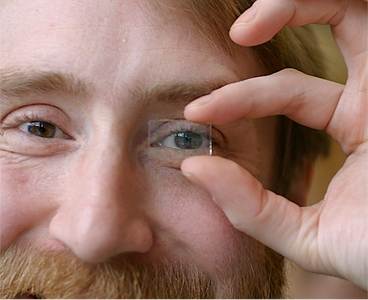
Back in 2004, I wrote about an idea of mine, to integrate solar panels into house or apartment windows, and thus help offset the cost of electricity. I’m glad to say it’s come to fruition. The technology to do this has been discovered. Granted, it’s still in the research phase, and the efficiency of these 1st generation solar windows is only 1.7%, but I’m thrilled to see that it’s a workable idea, and look forward to the day when we can purchase these windows from a store, presumably with a higher efficiency and a long working expectancy.

Richard Lunt, one of the researchers who developed the new transparent solar cell, demonstrates its transparency using a prototype cell. Photo credit: Geoffrey Supran and Cosmic Log, MSNBC.com.

Thanks to RAPatton on FriendFeed, who made me aware of this!

Standard

Here’s episode 15 of Ligia’s Kitchen! When you watch it, you’ll find out how to make a delectable raw apple cake. To those who’ve patiently waited for it, sorry — we’ve been bogged down by renovations and other projects these past couple of weeks.

LK-015-RO-HD with English subtitles
Released 4/16/11