Lists

Three cool jacket designs

Here are three innovative jacket designs.

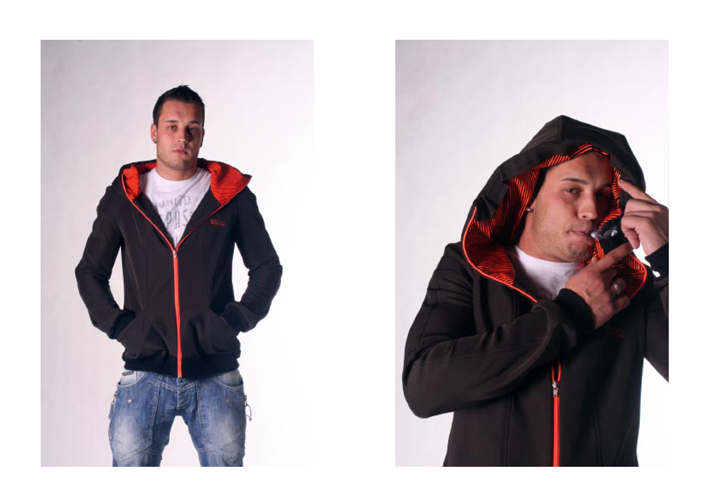
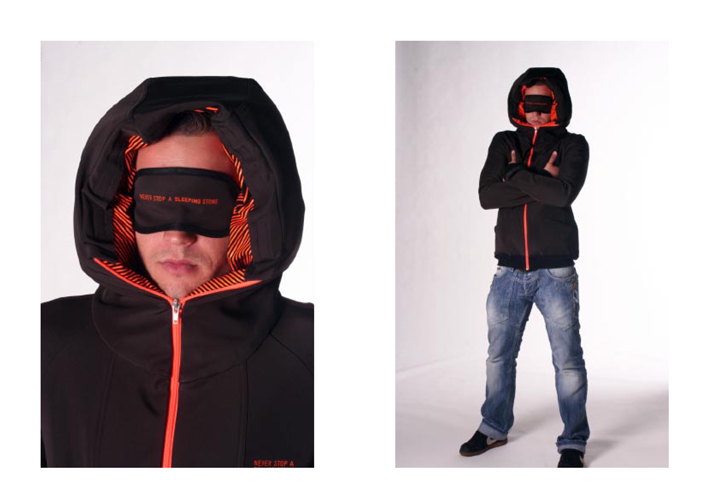
Jacket with inflatable hood by Rahel Ritchie

Not yet in production, but I think it’s very cool. It’s got a built-in pillow so you can sleep while traveling.

jacket-with-inflatable-hood-1

jacket-with-inflatable-hood-2

jacket-with-inflatable-hood-3

[via LikeCool and Rahel Ritchie]

RuckJack

“Rucksack? Jacket? You decide.” Another neat convertible jacket design, this one turns into a rucksack, and it’s not expensive. Price is between £46-56.

ruckjack

[via LikeCool]

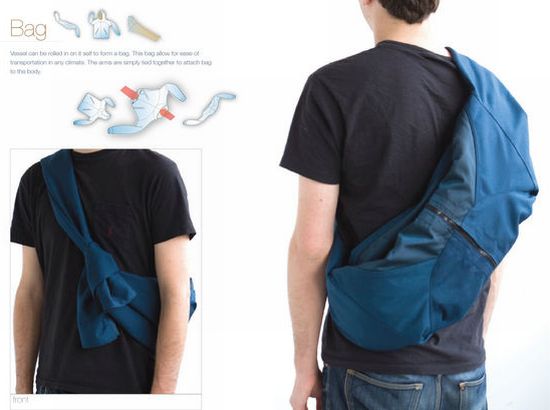
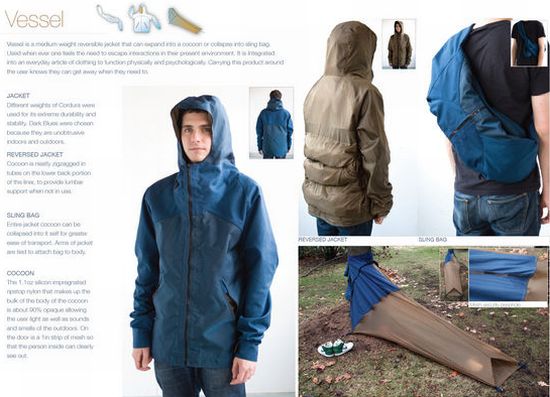
Vessel 3-in-1 jacket by Justin Gargasz

This innovative jacket is not only a backpack but also a tent!

vessel-3-in-1-jacket-1

vessel-3-in-1-jacket-2

vessel-3-in-1-jacket-3

[via The Design Blog]

Standard

We just published episode 6 of Ligia’s Kitchen, which will show you how to make nature’s miracle cure, wheatgrass juice. This stuff is really, really healthy, but there’s one catch: it tastes terrible. Even after you drink it for years, it’s still hard to get it down. But if you can, it does amazing things for your body.

Enjoy!

Episode LK-006-RO-HD
Released 1/16/11

Exercise

Some things you shouldn’t do after a workout

I learned these things the hard way. Maybe you won’t have to.

  • Don’t shave!
    It may come naturally to you after a morning workout. You take a shower, then you’ll want to shave, since your hair’s been softened by the hot water. Don’t do it! There’s still plenty of blood right under your skin, thanks to the workout, and your hand muscles, having just lifted heavy weights, will inadvertently exert too much pressure on the skin. These two things will translate into cuts, cuts and more cuts… unless your face is tougher than treated leather.
  • Don’t eat right away.
    Allow your body to relax a bit, for at least 30-60 minutes. You may be tempted to drink a shake, or dig into a steak, wanting to get some proteins and carbs into your body, but it’s not a good idea. You’ve just lifted heavy things or done some strenuous cardio, and your body is still racing. It needs time to relax and get back to normal before you can eat and digest food properly.
  • Don’t go outside in cold weather.
    Sure, you may think you’re tough, because you’ve just bested yourself at the deadlift, leg press or bench press, but if you’ve broken out in sweat, and then you go outside in your workout clothes, or right after a shower, thinking you’ll be just fine for a few minutes, you may discover pneumonia couldn’t care less about your fitness level. Dry yourself thoroughly, get dressed properly, and then head outside.
Standard
How To

Do you want to learn quilling?

In addition to Ligia’s Kitchen, we’ve just launched a new show today called Quilling – Arta de a Rula Hartia (The Art of Paper Filigree), with my wife as the host and me as the producer (and everything else inbetween).

The show is in Romanian, but we’ve got English subtitles for all you wonderful English speakers out there. And of course we’re filming in HD, so you can see all the little intricacies of the art, as my wife demonstrates them for you.

This won’t be a weekly show — we’re thinking something along the lines of monthly or sometimes twice a month — but we’ll do our best to make it a more or less regular show.

Stay tuned, I plan to launch a show of my own as soon as I can dig myself out from under all this work I’ve made for myself…

Enjoy!

Standard
Thoughts

What’s next in data storage?

My recent musings on high definition and the state of the technology behind it have spurred me to think about data storage (not that it’s a new subject for me). But so far, I’ve commented only on what’s already been developed, and didn’t take the time to think about what’s next.

What’s the motivation behind this post? It’s simple. For Ligia’s Kitchen, it costs me about 10.5 GB for 5 minutes of final, edited footage of show, with a one-camera setup. What goes into the 10.5GB? There’s the raw footage (and sound files, if I use a standalone mic), the edits, and the final, published footage. When I use two cameras, the space needed can easily go up by 1.5-2.5x, depending on the shots I need to get. I shoot and edit in 1080p, and output to 720p.

My storage needs are okay for now. I’ve got plenty of space, and if I keep going at this rate, I should be fine. But… and there’s always a but, isn’t there… I have more show ideas in mind. And there’s the hypothetical possibility of shooting with a RED camera at some point in the future, if certain factors come together to allow it. So I’m thinking ahead.

Current hard drive technology (bits of data on disks) has certainly come a long way. Those of us who’ve been in the business long enough know what prices used to be like for capacities that are laughable by today’s standards. Back in 1999, I paid $275 for a 27GB hard drive. My laptop’s drive in college could store a grand total of 120MB. And when I began to learn programming, I’d load the code into memory from tape…

I remember being really excited about Hitachi’s new Perpendicular Magnetic Recording Technology, which came out in early 2006. They even had an animation on their website, which they’ve taken down since. That technology is behind all of the new hard drives that are on the market today, by the way. Hitachi came up with a way to get the bits of data to stand up (hence the term perpendicular) instead of lying down on hard drive platters, thus doubling the amount of data that could be stored onto them.

There are two roads ahead when it comes to data storage, of which one is more likely to succeed:

  • Optical storage (this is probably the future of storage)
  • Biological storage

Let’s first look at biological storage. One particular article made the rounds lately: researchers at the Chinese University in Hong Kong have managed to store 90GB of data in 1g of bacteria. While it sounds exciting, the idea of storing my data in petri dishes on my desk doesn’t readily appeal to me, and certain complications come up:

  • 1g of bacteria is about 10 million cells (that’s a LOT); one must start thinking about the potential for bio hazards when you work with bacteria.
  • The data is stored in a bacteria’s DNA, which means it’s encrypted (a good thing), but it’s also subject to significant mutation (a bad thing) and it takes a long time to retrieve it because you need a gene sequencer, which is tedious and expensive (a bad thing).

I’m not against this. Hey, if they can make it safe and fast, okay. But I believe this is going to be relegated to special applications. The article suggests the technique is currently used to store copyright information for newly created organisms (I wonder how many new bacteria researchers as a whole have created, and is it any wonder antibiotics have such a hard time working against them when we keep playing God). I also see this sort of data storage as a way for spies to operate, or for governments to keep certain secrets.

Okay, onto more cheery stuff, like optical storage. I’ve always thought there was massive potential here, and am glad to see significant work has already been done to make this a reality. There are two technologies which are feasible, according to research that’s already been done:

  • HDSS (Holographic Data Storage Systems), which so far can store up to 1TB of data in a crystal the size of a sugar cube, but doesn’t yet allow rewrites
  • 3D optical data storage, which so far can store up to 1TB of data onto a 1.2mm thick optical disc

These developments are very encouraging. Optical storage is safe, and its potential capacities are huge, possibly endless. And when you think about computer hardware, and how manufacturers are looking at using optical technology in the bridges and buses and wires inside the hardware, because it’s incredibly fast, you start to see how optical makes sense. Let’s also not forget fiber optic cabling, and its incredible capacity to carry data. It certainly looks like optical is the future!

So what’s going to happen to the standard 3.5″ form factor of today’s hard drives? Well, it’s likely that it will stay the same, even though it the storage technology inside it might change. We’ll have crystals and lasers instead of platters and heads, but they’ll likely be able to fit them in there somehow. I don’t think we’ll need to start keeping crystal libraries on our desks, like in Superman’s Crystal Cave, and sticking various-sized crystals into our computers any time soon, although it did look pretty cool when Christopher Reeve did it in the movie.

It really all depends on how soon this new technology will come to market. Right now, there’s clearly enough vested interest in the 3.5″ and 2.5″ form factors to motivate drive manufacturers to shoehorn the new technologies into those shapes, but if optical hard drives won’t be here for the next 5-10 years, then it’s possible that the form factor will change as well. We are after all moving to smaller, sleeker shapes for most computers, notebooks and desktops alike.

Standard