
- Dan Heller’s Photography Business Blog: Follow-up: Creative Commons and Photography http://tinyurl.com/27k6kc #
- How do redirects work with websites? http://tinyurl.com/39o6be #
- Random Chipmunk Notes http://tinyurl.com/22qrrf #
- THIS JUST IN: Danish power outlets! http://tinyurl.com/2yyg2d #
- Best Faces of 2007 http://tinyurl.com/36vapo #
- DXG USA announces $149.99 HD camcorder http://tinyurl.com/24u4m5 #
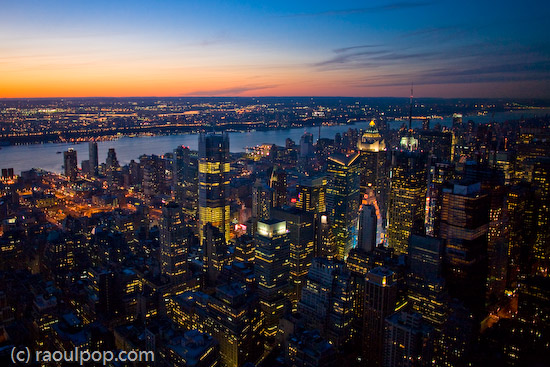
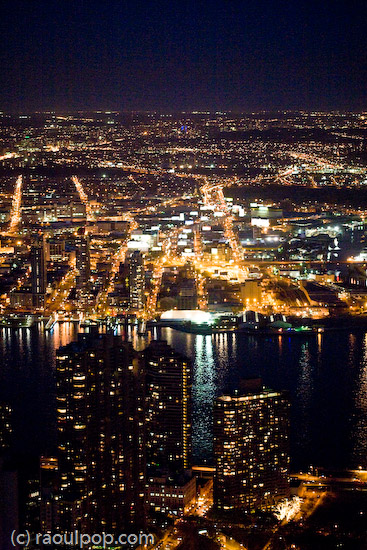
Manhattan, from the top of the Empire State Building
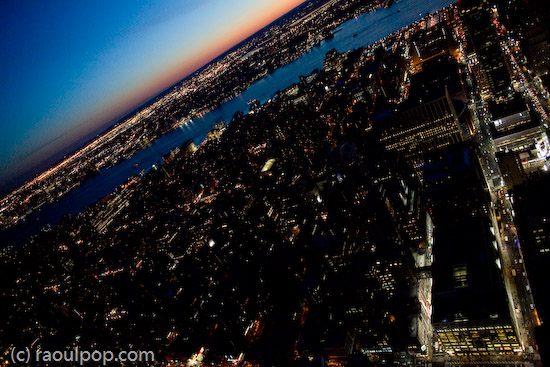
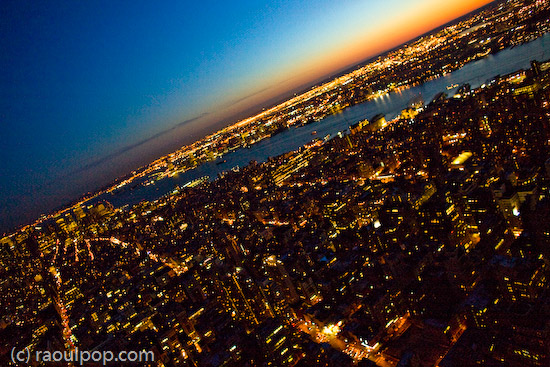
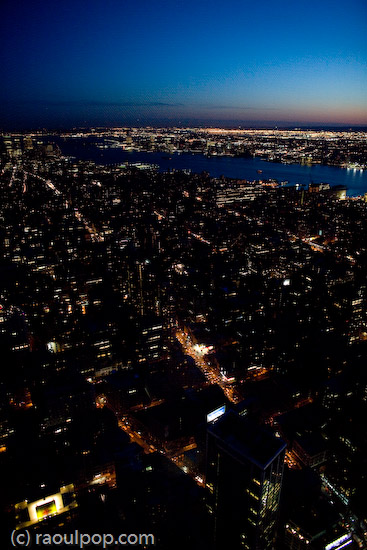
These are photos of the Manhattan skyline, as seen from the top of the Empire State Building. We got there just as the sun ducked behind the horizon, so we caught the beautiful transition from dusk to twilight to night.
These were taken last May — that will tell you how behind I am with my post-processing. You’ll find more info about that trip in this post. I keep trying to squeeze every bit of free time out of my schedule to work on my photos, and somehow it’s never enough. But enough complaining, here are the photos.
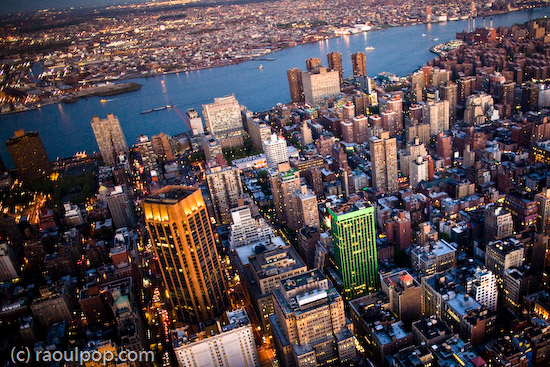
We were so high up that the curvature of the Earth became evident, especially at wide focal lengths. You’ll see me play that up in a few of the photos.

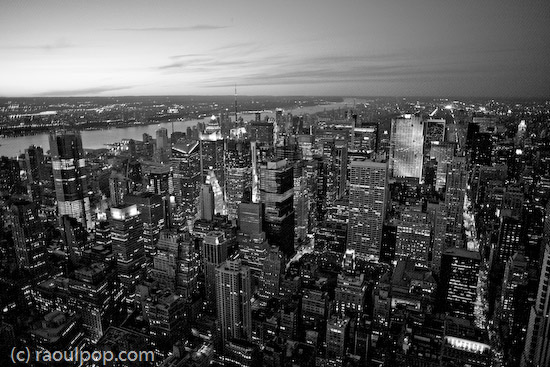
I’m just amazed at all the life below. There’s so much squeezed into so little space.
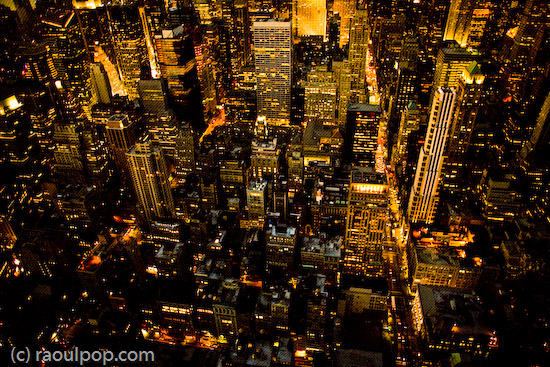
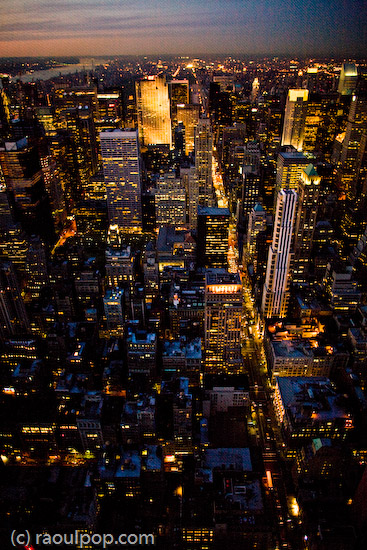
I love how the Hudson cuts a wide swath across the horizon.

The slanted perspective makes the curvature of the horizon more evident (at least I think so, anyway).
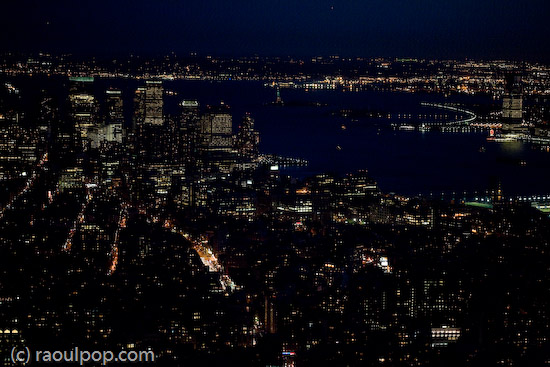
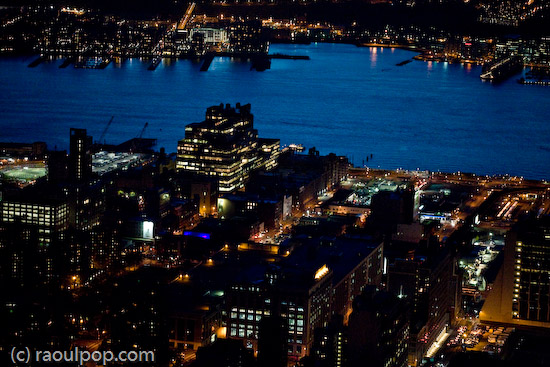
This is the top of the Empire State Building. It looks sort of like a spaceship, doesn’t it?
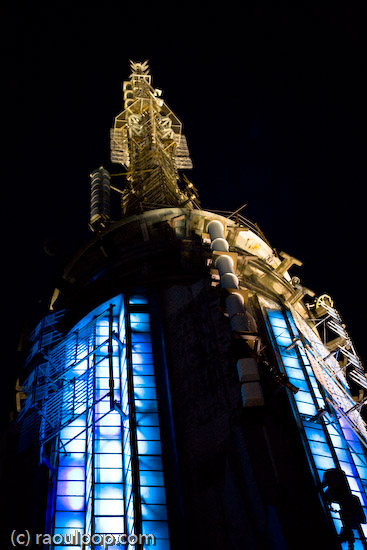
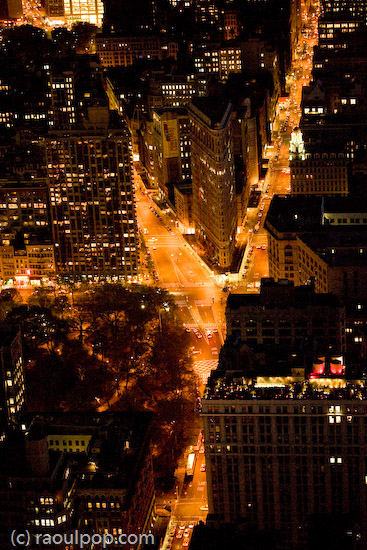

It was truly crowded at the top. We had to wait in line just to look at the view. People were snapping photos left and right, and shoving cameras between each others’ heads just to get a glimpse of the city. It was crazy, it was packed, and there were more people coming up every minute. I wonder if it’s ever quiet up there.
When we got back down, we were spent, literally. Then we had to make our way back to the hotel…
But what happens if you die?
This is a bit of a rant, but a recent comment on one of my articles reminded of an argument I sometimes hear as a consultant. It goes something like this: “But what happens if you die?” I cringe when I hear it — not because I can’t defend it — because I find it silly.
Actually, it’s not really an argument or a question at all. It’s a symptom. It tells me that the person making it is feeling very insecure about the deal.
Here’s what I told a recent potential client when I was asked that question:
I understand the “drop dead” factor, and it’s something that my long-term clients and I talked about. The thing is, unless I drop dead while the project is in development, you’re fairly safe. Once the project is completed, another knowledgeable designer/developer can come in and pick up where I’ve left off. Even while the project is being developed, if I can’t continue for whatever reason, the work isn’t lost. It isn’t as if I write my code in some language that no one understands. A good coder should be able to understand what I’ve done and build on it.
And that’s the truth. I can’t see how that argument could possibly stand on its own feet. If you’re a good developer, are in communication with the client, you back up your work, and you have certain deliverables and a timeline tied to a project, how can the project just disappear if you should kick the bucket? Makes no sense to me. Even if I should die, my computer will still be there. My wife or my friends will be there. My source code should be there. Besides, if it’s a website, chances are I’m working on a server somewhere as well, not just in my home, so the files can be retrieved even if my computer were to crash or be locked down.
Isn’t it individuals that have driven innovation throughout the ages? It’s people doing the work and driving toward goals, people that could croak at any point, I suppose, not machines. If the same “what if” argument to them, where would we be today? If a company looking to hire someone stops to think, what if he or she dies tomorrow, where will they be? If you find a good product or a good man, do you wait a few years to see whether or not that product will disappear or that person will croak? You have to take some risk if you want to see results, and sometimes the opportunities are there only for short amounts of time.
Happy New Year!
Things were quite busy at our home as the New Year arrived. I was working on my site, transferring the content over from ComeAcross and making sure the feeds were pointing the right away. That was my New Year’s surprise, something that I’d planned to do for quite some time. I wanted to move all of my content from ComeAcross to my namesake domain. It’s now pretty much finished, minus a few details that still have to be worked out. By the way, I apologize for the double feed items that occurred overnight. I’ve straightened that out and it shouldn’t happen again.
We also found time to celebrate with a wonderful dinner prepared by Ligia, and a couple of movies. We watched “The Shop Around the Corner” (1940), which was wonderful even for a second time, and “The Secret of NIMH” (1982) an animated movie which could have been much more entertaining, but was so stretched out that it was dull. Children might still enjoy it though, for its animation and colors, which were done quite well.
I leave you with a few photos. This was the last dawn of 2007.

New Year’s wouldn’t be New Year’s without the celebratory sparkler.

The clear sky allowed us a wonderful view of the New Year’s half moon. The photo is somewhat soft, and I apologize for that, but there was no way I could have gotten that close without the aid of the digital zoom on my trusty Olympus C770UZ (and as you may already know, digital zooms will make things softer).

Happy New Year! May this year bring you many blessings and good health!
My photographic portfolio
❗ Updated 8/16/09: I now have an entirely new standalone photo catalog with e-commerce enabled, which means you can instantly purchase prints (in varying sizes and finishes) or digital downloads (at varying resolutions according to your needs) of each of my published photos. The link is the same as below: raoulpopphotography.com. See this page for more details.
A few weeks back, I announced my portfolio site, Raoul Pop Photography, and I got positive feedback about it, which was nice.
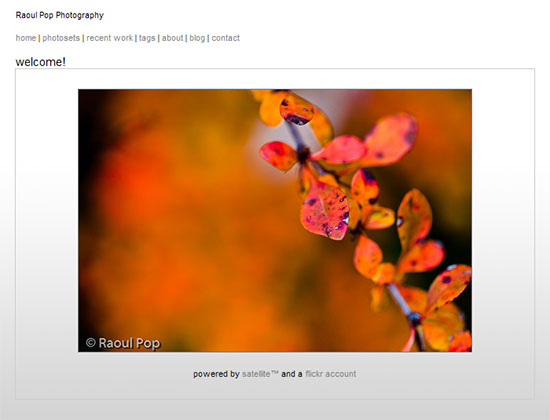
❗ Updated 1/12/09: Since I wrote this, I worked to create a standalone photo catalog, outside of my Flickr photo stream, and that’s what you’ll find when you visit my photography site. I’m leaving the thoughts you see below for historical reference, but keep in mind they no longer apply.
Now I’ve gone through an extensive process of sorting, winnowing and re-organizing the photos I’ve posted to Flickr, and I’m happy to announce that my portfolio site is all the better for it. You see, my portfolio site feeds directly from my Flickr account via Satellite. The big advantage is that every time I make a change to my photos and sets on Flickr, the change is reflected instantly on my portfolio site.
On the whole, my photos look significantly better now, because I deleted many, many photos that I didn’t think were good enough any more. Going through my photos has made me think hard about the sorts of photographs I take, and categorizing them into sets and collections has given me a new and deeper understanding of what makes me tick as a photographer. It’s all pretty interesting stuff to me, and I think you can tell it’s gotten me excited. 🙂
Also not to be missed, if you’re interested in that sort of thing, is my list of photos taken with each camera I’ve used over time. These photos are grouped into sets, and they’ll give you a good idea of the sorts of images you can get with each camera. Don’t read too much into it though. Short of various differences that can be limiting or advantageous between camera models and brands, a camera is only a tool. While it’s important that the tool perform as expected and be flexible enough to capture the photo, there are three more parts to a good photo: there’s the photographer, who’s got to know what he or she is doing, then there’s the quality of the light, which can make or break a photo, and finally, the post-processing, to make the photo stand out.
 Raoul Pop
