Places

The fortified church in Zagar

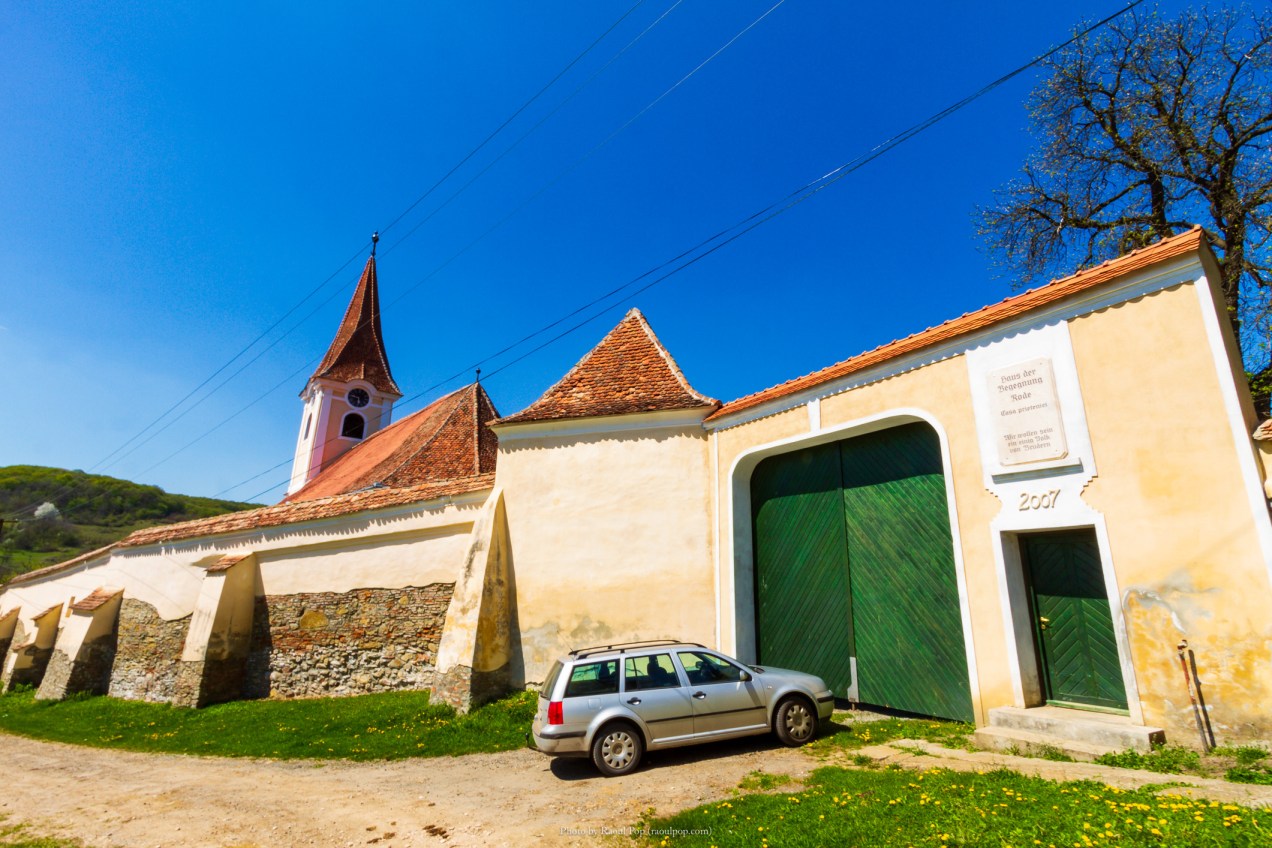
There is a fortified church in the village of Zagăr, which is located in the county of Mureș, Transilvania. I was not able to find out any information about it online; I don’t know why it’s not documented. The only thing I was able to find was a mention of the vineyards in the region, which are known for their white wines (source). The village is known as Rode in German and Zágor in Hungarian. It was first mentioned in written documents in 1412 (source). The same source states that the church was rebuilt in the year 1640 but does not give a reason why.

We also weren’t able to visit the buildings themselves (the church and the parochial house) when we visited in 2011, because the place was locked up and no one was around. On the upside, it’s a well-maintained place, restored in 2007, judging by the inscription on the back gate. Perhaps at some time in the future we’ll revisit it.

Enjoy the photographs!

Standard

These were taken in November of 2010, so let’s say it was eight years ago or so. Things may look different now — hopefully better, given how much tourism this little town gets each year.

It was one of our typical jaunts through the medieval fortress, along its walls and back down the stairs toward the bottom of the hill. Still, the images show different spots from the ones you’ve seen here and here.

Should you want to know more about the town, click here and here. Enjoy the photographs!

Places

More images from Sighisoara

Gallery
Places

The fortified church in Hetiur

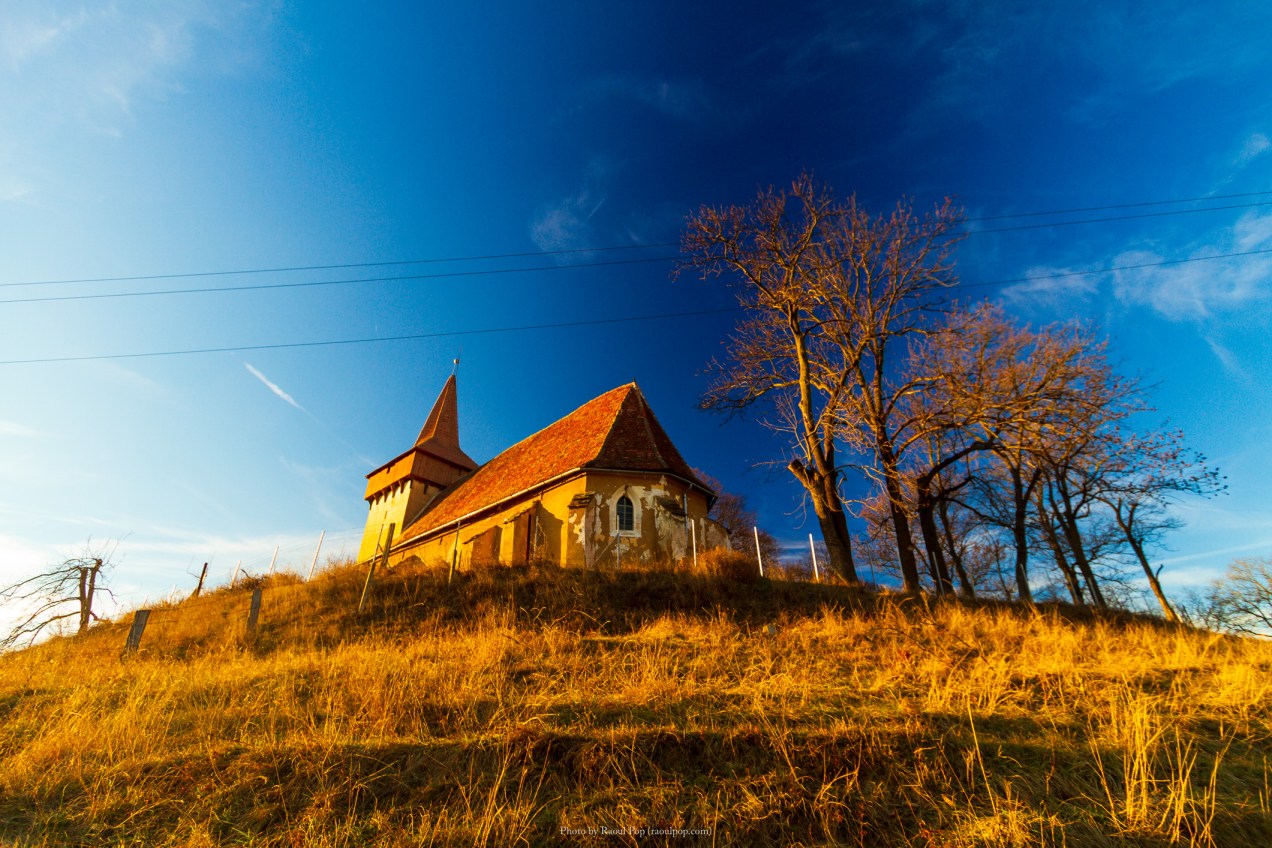
Hetiur is a small village located between Sighișoara and Tg. Mureș in Transilvania, about 10 km away from the former. Formerly named Hetur and Hetura, known in Saxon as Marembrich and Hungarian as Hétúr, it is a Saxon settlement first mentioned in written documents in 1301. As is typical with settlements in Romania, the place is much older than the written documents. Coins from the time of Hadrian, made between 119-121 AD, were found in the village. Pieces of gold and silver jewelry made by the Daci were also found there. The village’s curious name comes from Hungarian and it means “seven masters” or “seven rulers”.

The fortified church was built in the 15th century in the Gothic style and underwent modifications and repairs in the 17th and 19th centuries. The church was blessed in person by Pope Martin the 5th, who also granted it a tax-free status, meaning the church no longer had to pay yearly dues to the Catholic Church. (source)

Enjoy the photographs!

Standard

Not much is known about the small medieval church in this Transylvanian village. Known in Romanian as Viișoara, it is Hundorf in German and Csatófalva in Hungarian. The clue about it not being fortified perhaps lies in its German name: “Hun-dorf” means “Hungarian village”. Since it was predominantly Hungarian with few Saxons, and it was the Saxons who fortified churches during medieval times… it didn’t happen here.

One source states the church was finished in the 15th century and then underwent modifications or restorations in 16th, 17th and 19th centuries. When we visited it in 2011, it wasn’t in the greatest of shapes. A date on one of the buttresses said “2010”, as in some repairs had been made just a year before our visit, but the place didn’t look it. Still, it wasn’t falling down either, so it was getting some care, though it wasn’t getting any good use.

Enjoy the photographs!

Places

The medieval church in Viișoara

Gallery

Dumbrăveni ((before 1945 “Ibașfalău”; German: “Elisabethstadt”; Saxon dialect: “Eppeschdorf”; Hungarian: “Erzsébetváros”) is an historically significant town in Transilvania. Archaeological digs revealed proof that it was an inhabited place as early as the Paleolithic. We fast-forward through history to come to the time of the Hungarian colonization/occupation of Transilvania, when in 1214, it became part of a region controlled by the Hungarian rulers.

In 1552, the Apafi family obtained all of the land around the town of Dumbraveni and Grigore Apafi became the ruler. He immediately began the construction of a castle in the center of the town, a castle of which I will talk in a future post. The interesting part of it is that the castle adjoins the Armenian Catholic church, or rather that the church ended up being built next to it hundreds of years later.

The Armenians were invited to colonize the region in 1671 by the Apafi family. As they were very good merchants and the town was already a market town, they (and the town) quickly prospered. In turn, they gained a good amount of autonomy and in 1766, they started the construction of this large church right next to the Apafi Castle. The construction ended in 1783 and the church was dedicated to St. Elizabeth, in concordance with the town’s new name (at the time) of Elisabethopolis. (source)

As a structure, the church is striking. You’d have to visit a Western European town to find its equivalent. Scale-size, it is much larger than the churches of its time in Romania. One thing you’ll notice right away is the facade is asymmetric, and that’s because the top of one of the towers was knocked down by a storm in 1927. Instead of re-creating the cupola, the town decided to cover it with a flat roof.

The church altar and statues were made by sculptor Simon Hoffmayer. The church hall houses a valuable collection of books, about 2200 volumes on religion, language and natural sciences from the 16th-19th centuries, written in Italian, Armenian, Hungarian, and French Altin. (source)

By the way, there’s another old Catholic church in Dumbraveni, with catacombs. That one doesn’t seem to be maintained and isn’t known by tourists. You can see it here.

Enjoy the photographs!

Places

The Armenian Catholic Church in Dumbraveni

Gallery