Lists

Gadget Monday – February 16, 2009

Here are this week’s seven cool gadgets. Did you see last week’s edition of Gadget Monday?

Parans luminaires

A company called Parans has come up with a way to bottle sunlight and deliver it inside office spaces or homes as natural lighting.

The concept is remarkably simple yet works wonderfully. They have sunlight collectors sitting on the roof or exterior walls of a building. They look like this.

The light then gets concentrated and carried through special fiber optic cables created to preserve all of the light’s characteristics.
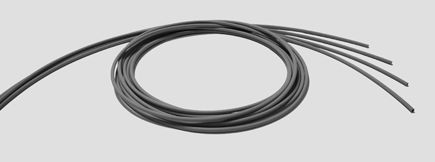
These cables are then connected to special light fixtures that diffuse the natural light indoors. They can be panel lights or floodlights.

With this new lighting method, employees or home owners get all of the benefits of natural sunlight in rooms where they normally can’t get it and don’t need to spend money on electricity or electric lighting appliances. I’m not sure what the cost is, but I’d love to see companies take up this new lighting method. Just think, all those employees sitting in tiny cubicles under fluorescent lighting, not seeing the light of day, all day long, all week long, could instead be bathed in natural light, which would cheer them up and boost their productivity.

Images used courtesy of Parans.

World Clock

Someone has come up with this world clock, built in Flash. It shows the time of day where you are in the world, but it also lists all sorts of important statistics, like world population, births, population grown, divorces, cancer incidence, forest lost, species extinct, and deaths. The death statistics are interesting because they’re broken down by reason, such as TB, AIDS, malaria, cancer and others. You can click on buttons that re-calculate the statistics per year, month, day or now. It’s definitely worth a look.

World Clock

Altec Lansing expressionist CLASSIC speakers

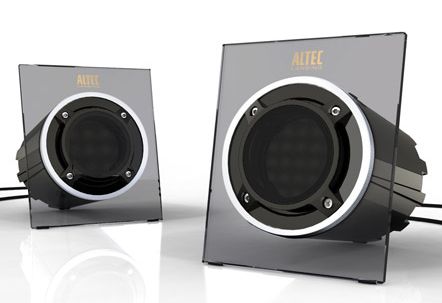
These speakers would go great with an iMac or an all-in-one PC. They have a clear, square face that holds the cylindrical enclosure for the speakers. They connect to your computer through a regular 3.5mm audio cable, and they have an auxiliary input for iPods or other MP3 players as well. The output is 7.5 Watts per channel.

Altec Lansing expressionist CLASSIC computer speakers - 1

Altec Lansing expressionist CLASSIC computer speakers - 3

Altec Lansing expressionist CLASSIC computer speakers - 4

[via Cult of Mac and Altec Lansing]

Addonics NAS Adapter

This little device, slightly bigger than a C battery, will turn any USB external drive into a network drive. You simply plug the USB cable into the Addonics NAS Adapter, and you connect the adapter to your router with a standard network cable. Its USB port is powered, which means you can even plug in a small portable USB drive, and you won’t need to worry about connecting it to a separate power supply.

Addonics NAS Adapter - 1

The adapter is compatible with any version of Windows, Mac OS X and Linux (2.6.x and higher). It supports the Samba protocol for up to 64 clients, has a built-in FTP server for up to 8 clients, and can be used as a print server or Bit Torrent client. You can manage it through its built-in web interface. The best part is that it retails for only $55. At that price, it’s a must-have.

Addonics NAS Adapter - 2

[via Engadget and Addonics]

FloDesign Wind Turbine

This new turbine, created by Massachussetts-based FloDesign, uses jet engine aerodynamics to extract more energy from the wind. It is still a horizontal axis turbine, but its patent-pending design focuses air flow and speeds it up, which means its blades can rotate at lower wind speeds. Because it uses jet engine technology, which is an enclosed design, this means it can also rotate at much higher speeds, and is also safer to be around. The blades orient themselves to the wind automatically because the turbine is equipped with a fin that acts as a windvane. The product hasn’t launched yet, nor is the company taking orders yet, but I for one look forward to seeing this on the market.

FloDesign Wind Turbine

There’s also a demo video on YouTube, which explains the technology in more detail.

[via Gizmag and FloDesign]

musicPower Encore Portable USB Power Supply

This neat gadget has rechargeable batteries inside. You plug it into an outlet while you’re at home to recharge its batteries, then take it with you while you travel. If you run out of juice for your iPhone or iPod, you simply plug those devices into the musicPower Encore, and they recharge using the energy stored inside. It’s a neat way to transport the energy you need to keep your toys working. It sells for $20 at ThinkGeek.

musicPower Encore USB Power Supply - 1

musicPower Encore USB Power Supply - 2

musicPower Encore USB Power Supply - 3

[via Geeky Gadgets and ThinkGeek]

SDXC Memory Cards

The next-generation SD cards, called SDXC (Xtended Capacity), will have increased storage capacity, up to 2 TB, and will have increased read/write speeds as well, anywhere from 104-300 MB/sec. The official specs are due to be released by the SD Association in Q1 of this year, 2009.

A 2TB SDXC card will be able to store about 480 hours of full HD recording, or about 136,000 high-quality photos. Keep in mind the USB 3.0 spec has also been released recently, which means we’ll have USB 3.0 card readers. We’ll be able to store and transfer more data than ever before. I for one wonder if CF cards will continue to be the staple storage device for DSLRs, or whether SDXC cards will replace them altogether.

SDXC CardMicro SDXC Card

[via Gizmag and SD Association]

Standard
Reviews

PictureSurf, a new gallery plugin for WordPress

PictureSurf Plugin

PictureSurf is a new WordPress plugin that launches today (February 10, 2009). It aims to make it easier for bloggers to upload galleries to their WordPress sites.

I spoke with PictureSurf’s founder, Alan Rutledge, via chat this morning, and I wanted to find out what makes his plugin different from the standard WordPress functionality. You may or may not be aware of the fact that WordPress offers an Image Gallery feature that’s built into the core WP install.

From Alan’s perspective, the PictureSurf plugin differentiates itself by offering:

  1. An enhanced user interface, because it lets you drag and drop photos to rearrange them, label multiple photos at once and,
  2. A little more SEO juice, because of better permalinks and conditional nofollow tags on the thumbnail links. The nofollow tags are activated when there’s too little content on the photo page — for example, your description of the photo is too short, etc.

As I told Alan, I don’t see enough of a difference between this plugin and what WordPress already offers to convince me to use it myself. The PictureSurf website claims that it’s faster to build a gallery with their plugin than with WP, but I ran into a glitch when I tried to use it. I couldn’t upload any photos. The upload engine froze and even though I hit Cancel and tried to re-upload the photos a few more times, I wasn’t able to do it. Still, that’s not too important. I’m sure that if I had more time, I could have gotten it working properly.

The thing is, I built a WordPress Image Gallery for this review in under 30 seconds. Each thumbnail links to its own photo page, very much like PictureSurf does it. I was able to choose how many images I wanted in each row. And I was also able to drag and drop the images to change the order in which they appear in the gallery. You can see the gallery below.

Another claim made by the PictureSurf plugin is that you can monetize your blog much better when an image sits on its own page instead of displaying on a blank page. I’ll agree with that, but I’ll also add that WordPress lets you do the very same thing. In WP’s Image Gallery options page, you get to choose where the thumbnail links go: they can go to the images themselves, or to something called attachment pages, which are pages that WP generates dynamically for each photo, using your blog’s own theme. So I ask again, what is it that differentiates PictureSurf from WP’s built-in functionality?

As much as I love WordPress plugins, I’m a big believer in built-in functionality. I don’t want to be stuck in a situation where I need to stop using a plugin, for whatever reason, and have my post archives become unusable because the plugin is no longer there. I ran into that issue with a video plugin I used in the past. It stopped being supported, and then I had to modify all of my old posts where I embedded videos, in order to make them playable again. If the long-term survival of your content is not a concern for you, then don’t worry about it. It is a concern for me though.

Last, but not least, I found PictureSurf’s design somewhat rough. It just doesn’t integrate as well as it should into the WordPress Editor. Furthemore, if it aims to take over the image gallery role, then it should fully take over that role. If I install PictureSurf, once I click on the Image Upload button in the WordPress Editor toolbar, it’s the PictureSurf AJAX window that should open up, not the WordPress Image Uploader. And when I access an old post that uses an image gallery, written before I installed PictureSurf, it should automatically take over that gallery and display the images using the PictureSurf gallery settings. But none of this happens. Old posts remain the same. I’d have to modify each and every one, manually, in order to get PictureSurf working there. As a publisher and writer, that’s a labor I’m not willing to undergo.

For me, the PictureSurf plugin does not differentiate itself enough from the standard WordPress functionality and does not offer enough added value in order to make it to my roster of active plugins. I find the WordPress Image Gallery feature quite adequate and necessary, and therefore, using the PictureSurf plugin becomes a matter of preference, not need. I myself do not need it, therefore I won’t use it. Your situation may differ. Feel free to try it out and see what you think.

Standard
Thoughts

New site design is live

This past week, I spent a feverish few days working on this new site design. I have been working on several different layouts during these past few months, but liked none of them except the one you see now. I built it from scratch, since that’s the way I like to do things.

New site design

One of the decisions I pondered was whether I should go with a three-column or a two-column design. The three-column layout would have allowed me to reserve one of the columns for ads. In the end, I thought good taste should trump ad space, unlike what’s happening on so many other sites.

If you find my articles useful and you’d like to support my site, please use the sponsors listed in the sidebar. Buy the stuff you need from them. I’ll get a small percentage of each sale.

Site sponsors

I’m also looking for a main site sponsor, whose logo and link will be featured in the top right corner of my site. I’d like the arrangement to be simple: a flat monthly fee over a certain period of time; the fee and period can be negotiated. See the Advertising page for more details.

Main sponsor placement

Standard
Lists

Gadget Monday – February 9, 2009

Here are this week’s seven cool gadgets. Did you see last week’s Gadget Monday?

Aptera 2e to begin deliveries in October

The Aptera 2e, the wonderfully designed electric car that gets over 100 mpg  and has a 0.15 drag coefficient, will begin to deliver on its orders this October, in 2009. The car is lightweight, fast, strong and impact resistant, and will have all of the amenities we’ve become used to in our cars: AC, stereo, etc. It can charge overnight in your garage using a standard 120V socket, and the projected cost is $0.50 per charge, which will last up to 100 miles.

Aptera 2e - 4

[via LikeCool and Aptera]

World’s first 10 megapixel camera phone

Samsung launched the first 10 megapixel camera phone in Korea, the SCH-B600. Guess when? I did a double-take when I saw the date of this press release: October 10th, 2006!

US mobile phone users, it’s time to feel ashamed of the pathetic specs of your cellphones! Seriously, the iPhone is still at 2 megapixels. As a matter of fact, most cellphones are still at 2-3 megapixels. My Nokia N95 is only at 5 megapixels, yet the Koreans have had a 10 megapixel cellphone with 3x optical zoom — not a crappy digital zoom — for over 2 years! Did I mention they can also watch satellite TV on it?

Don’t feel too bad, though. T-Mobile users in the US will soon get the Samsung Memoir (SGH-t929), an 8 megapixel cellphone with no optical zoom and a touch screen. It’ll run on T-Mobile’s 3G (EDGE in most areas) network.

Let me get this straight: US users get an 8 megapixel cellphone with no optical zoom and no TV, more than 2 years after the Koreans have had a 10 megapixel cellphone with 3x optical zoom. Yeah, that makes sense. Just wanted to make sure.

[via Samsung PR: 1, 2]

Nikon Fabre Photo EX Microscope

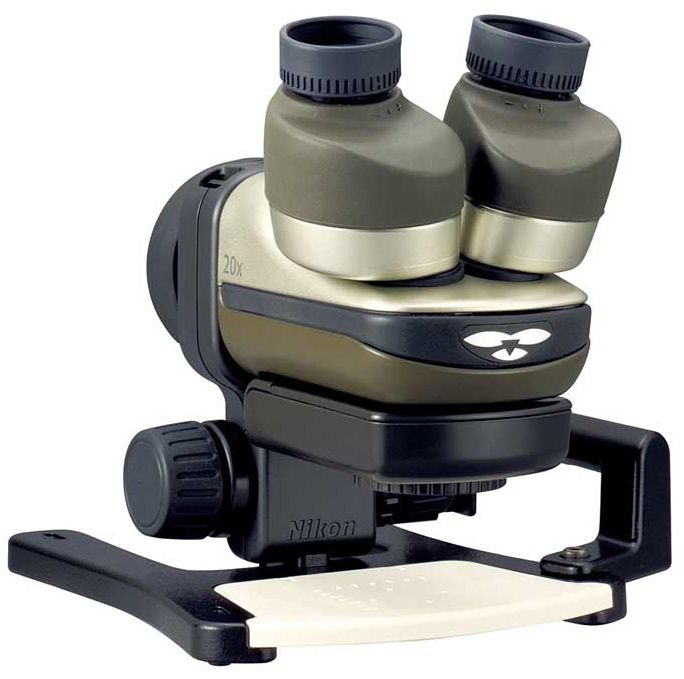
This upgraded version of the Fabre Photo microscope from Nikon, originally introduced in 2006, will launch on February 20th. It will let you connect any Nikon DSLR to it via a NAS-L1 digital SLR attachment. If you use a FSB-U1 compact digital camera bracket, you can attach any Coolpix series camera.

The optical system has 20x magnification, and field of view of 11mm in diameter. Shooting magnification varies with the camera, but it will range from 45x without extension tubes to 66x with two extension tubes and a DX-format camera.

(DX is Nikon’s cropped-sensor format; FX is their full sensor format, equivalent to the original 35mm film.)

[via Engadget]

Mission One, the first all-electric motorcycle

Mission Motors, an SF-based company, has built an all-electric road bike. It’s designed to be the fastest all-electric motorcycle. It’ll go up to 150 mph. Its range is 150 miles on a single charge. Recharge time is under 2 hours at 240 V, or 8 hours at 120 V. It was engineered to have a constant 100 foot-pounds of torque anywhere between 0 and 60 mph. I tried to look up the spec 0-60 time, but couldn’t find it anywhere.

[via DesignBoom and Mission Motors]

Homemade Scrabble Keyboard

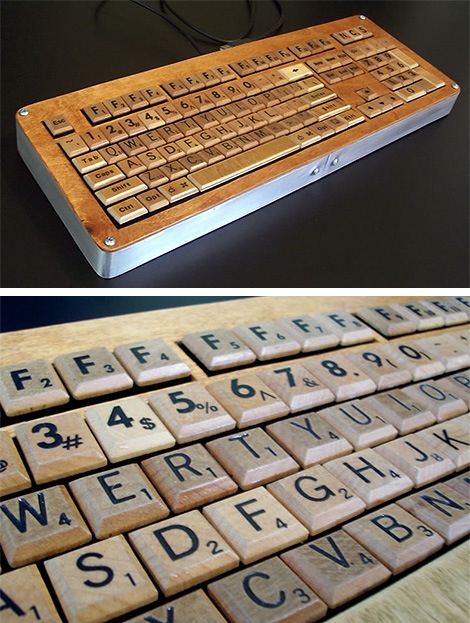
Someone took the time to assemble a full set of keyboard keys from wooden Scrabble playing bits, bevel their edges, and fit them to a keyboard enclosure that can connect to your computer via USB. I love the effort they put into this, and I love the idea of a wooden keyboard as well.

[via LikeCool]

RITI Coffee Ink Printer

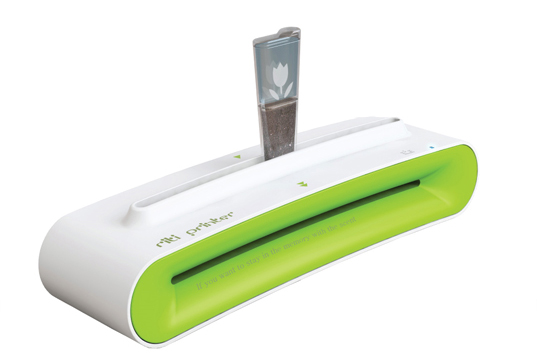
This new printer uses the pigment from used coffee grounds to print on regular paper. You simply pour the coffee grounds into the ink cartridge, print a document, then move the cartridge back and forth to print each line and advance the paper through the printer. This printer not only uses less electricity but also no expensive ink whatsoever. I don’t know what its print resolution is, but I imagine it’s decent enough for readable text.

[via The Design Blog]

Wooden Vespa by Carlos Alberto

It’s a classic Vespa, and it’s built of wood. It looks amazing. Enough said.

Make sure to visit Carlos’ website (use link below) to see the-making-of photos.

[via Boing Boing and Carpintaria Carlos Alberto]

Standard
How To

New Gmail buttons and shortcuts

Gmail's new buttons

I woke up today to find new Gmail buttons. At first I thought it was just Firefox playing tricks on me, but no, the buttons look the same in Safari. The Gmail Team announced the change on their blog yesterday, on 2/3/09. As expected, the change took a while to propagate to all of the Gmail accounts.

Along with the new buttons, they introduced two new keyboard shortcuts, “l” and “v”, which will allow you to label and label/archive messages on the fly. The “l” key opens a drop-down menu which allows you to label emails. You can navigate the drop-down menu using the arrow keys and mark a label using the Enter key. The “v” key does the same thing, and it also archives the message at the same time, removing it from the inbox.

Don’t forget that while you’re in the Gmail inbox, you can select multiple message by using the Shift key. Left-click on the first one, then Shift-Click on the last one, and all in-between will be selected. You can then use “l” or “v” to apply labels to all of them at once.

Standard