Thoughts

Frustrated with European shopping carts

My wife recorded a video clip of me venting my frustration with European shopping carts back in February. Sorry for the rough words in the video, but I tell you, every time I go shopping and have to deal with those idiotic things, I want to get the guy that invented them, pin him to a wall and lob rotten apples at him. What simpleton makes all four wheels pivot, seriously? How can you not realize that loaded shopping carts have inertia, and cannot be steered at all when all four wheels pivot?

American shopping carts should be the standard. Only their front wheels pivot, so they’re easy to steer everywhere, especially around corners. They’re probably cheaper to make for that same reason. As for their European counterparts, they go anywhere except where you want them. It’s absolutely ridiculous, and what makes it worse is they’re everywhere in Europe. It’s like every store got together to figure out how best to frustrate and anger their customers, and decided to get these asinine carts. If that really was their intent, then they succeeded. It truly boggles the mind how they all went for the same moronic design. Didn’t any of their executives put two and two together? Don’t they use shopping carts? Don’t they know there’s something better already available?

See this video on blip.tv, Vimeo or YouTube.

Standard
Places

Italian road trip – Day 2 – Florence

Our Italian road trip took us from Pisa to Florence, where we arrived on the evening of February 18th, just as dusk set in. We navigated the Florence streets at night with some difficulty, but arrived at our lodging in due time, where we rested for the day ahead.

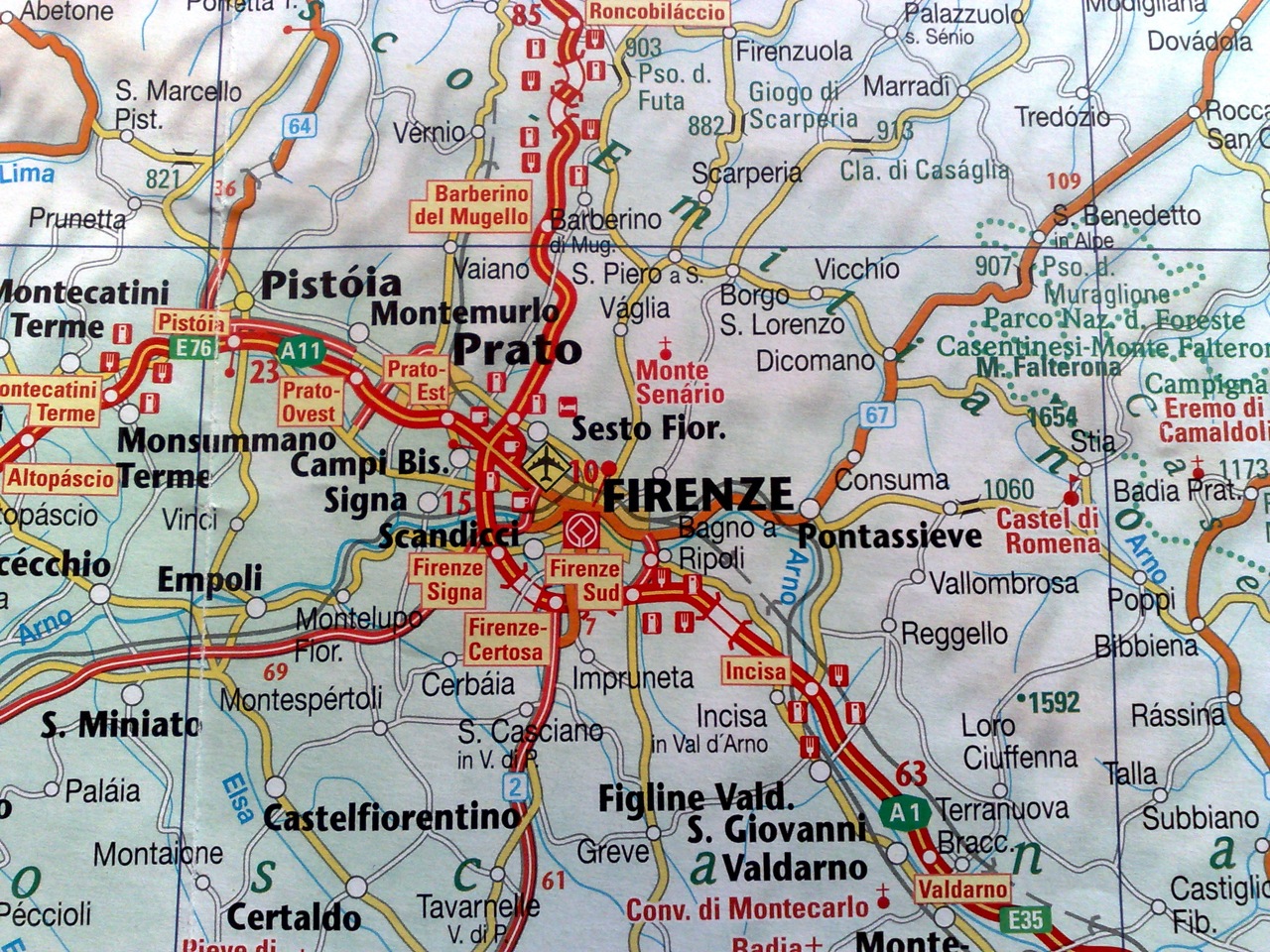
Map of Firenze

Here’s us descending the hills of Tuscany into Florence, on the main highway that connects it to Pisa.

See this video on Vimeo

A funny thing happened that evening. We’d been following our somewhat convoluted route through the city, when we reached a bridge we needed to cross but couldn’t. It’d been blocked — barricaded — by the city, for reasons unknown, since no work was being done on the road. We stopped to call for directions. On the other side of the barricades, a line of angry Italians was forming. Apparently the barricades had only been put up that day, and they weren’t happy about it.

One of them, a young, strong fellow in his 20s, had been building up some steam underneath his collar. With no thought of turning around and finding another route, he got out of his car and started to break the plastic ties that held the barricades together, bare-handed. These were thick ties — the same kind used to handcuff people when they’re arrested — yet he snapped them with relative ease. After breaking a few, he figured it was tedious, so he got a sharp hunting knife from his car and sliced through the rest of the ties, then threw the barricades aside and drove right through.

I’d gotten out of my car to have a better look at what he was doing, and stood there amazed. Seriously, it takes guts to have complete disregard for the authorities of a city. On the one hand, what he did was wrong, but on the other hand, he helped us and the many other drivers stuck there. We knew of no other route to get where we were going, and we’d have been lost if he hadn’t cleared the way. and after a short while, reached the place where we were staying — Villa Aurora — a picturesque antique villa perched on one of the Tuscan hills that surrounded the city.

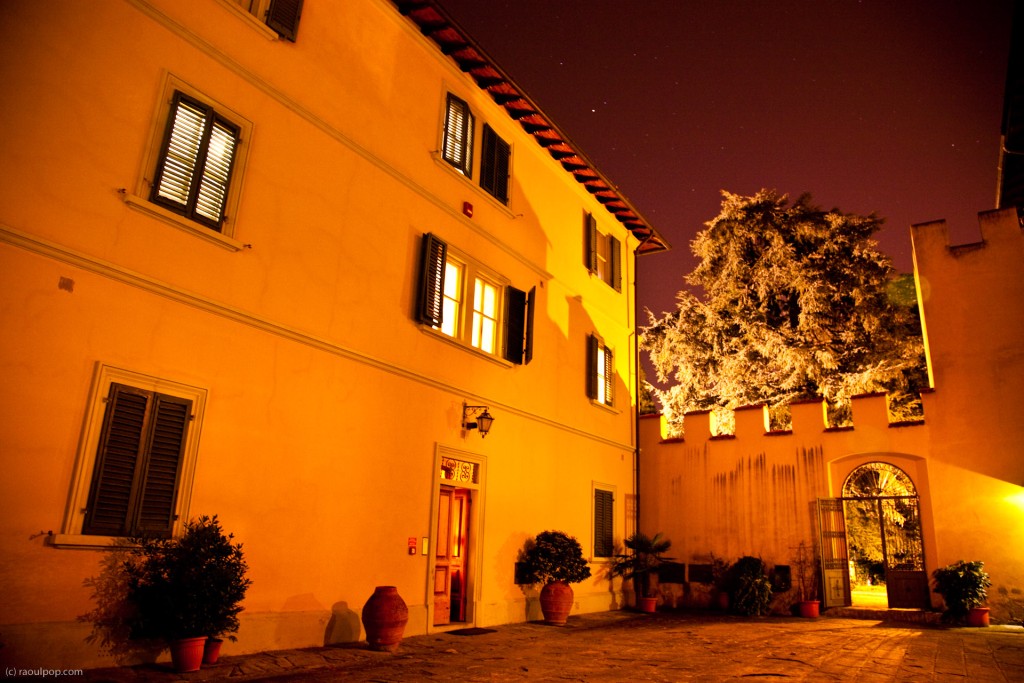
The villa and its surroundings were so beautiful that in spite of my fatigue and the cold weather, I had to make time for a few nighttime photos, after which I slept like a log till early morning.

Tuscan courtyard, night

Interior courtyard at night

We got up with the dawn and after a hearty breakfast, drove into the city to visit. We parked in the subterranean lot behind the railway station, near the church of Santa Maria Novella, then walked through the city for several hours.

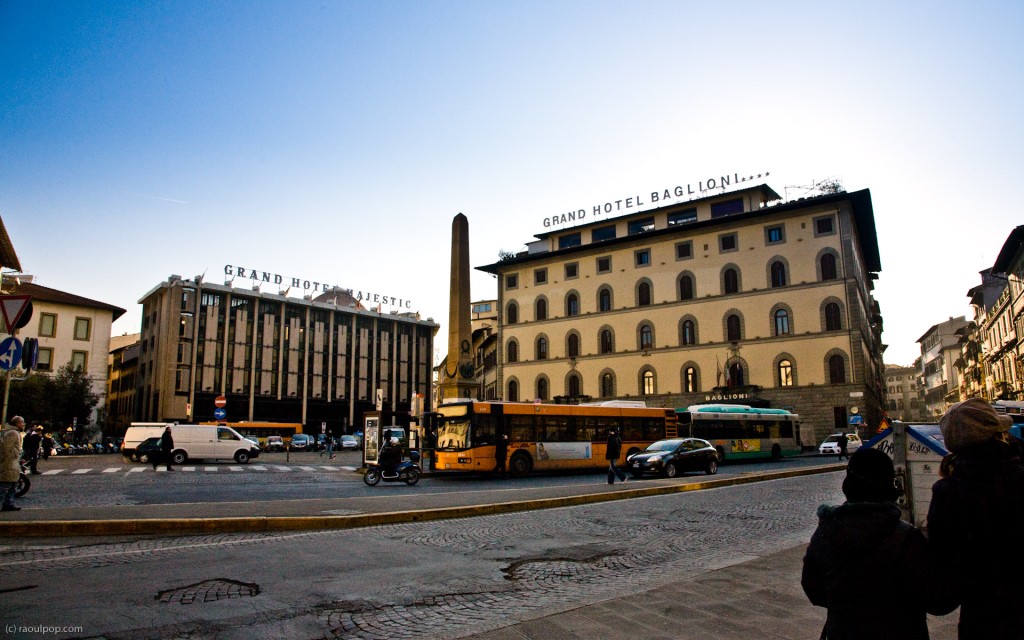
A couple of grand hotels

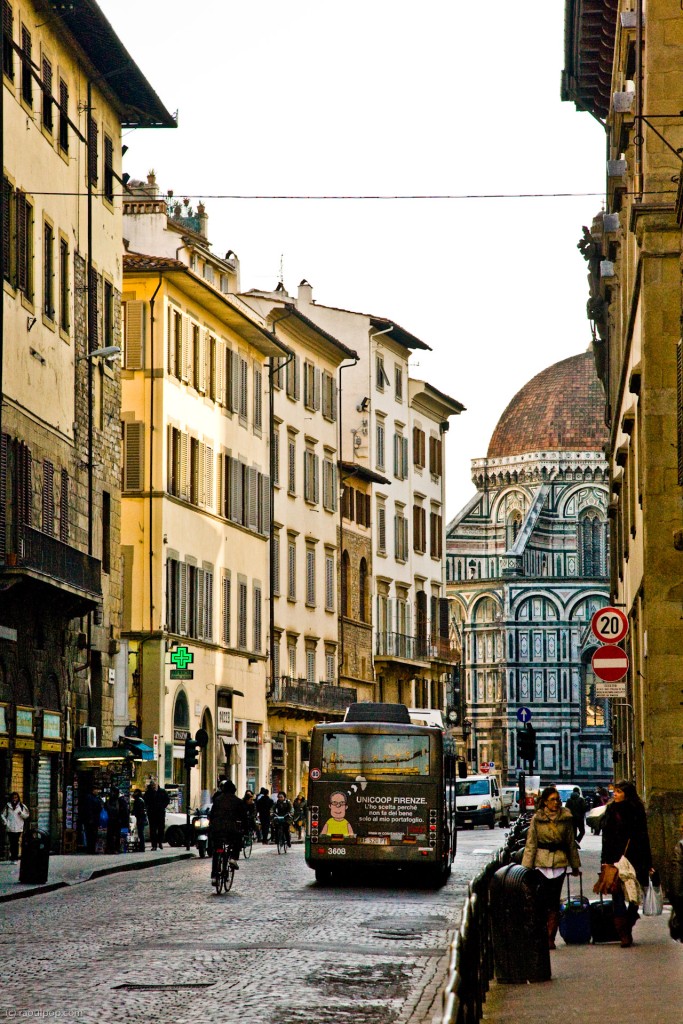
20 eccetto

We visited the Duomo while it was still early morning and the tourists weren’t around, then had the best hot chocolate ever at a place called SergioBar, right in the Piazza del Duomo.

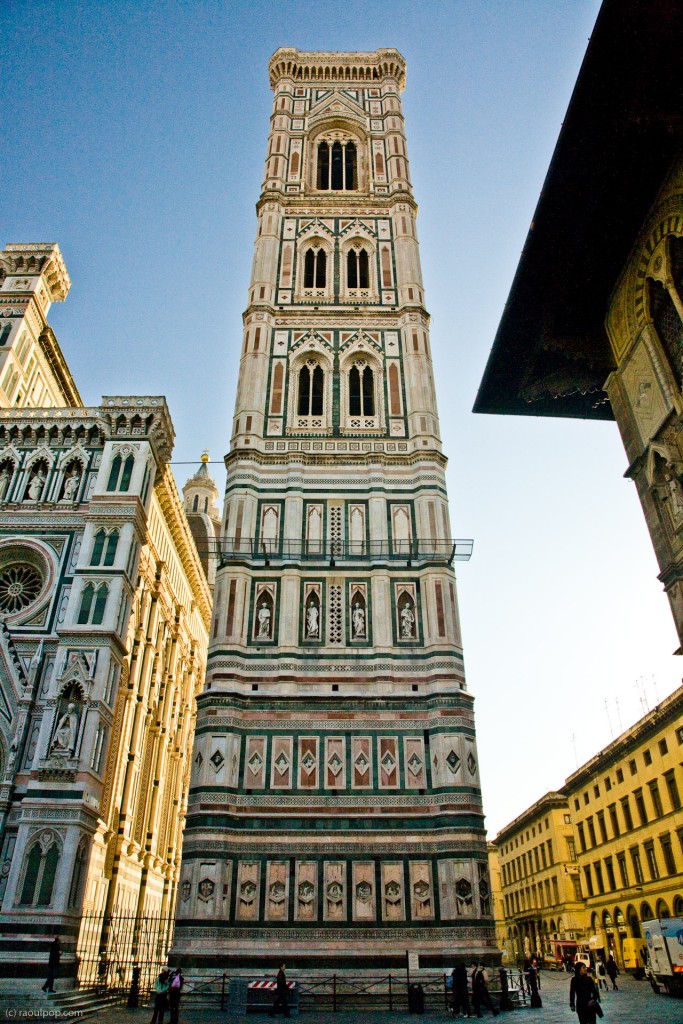
Bell tower

Bronze doorway detail

Morning traffic

Il Duomo II

I highly recommend climbing to the top of either the Campanile or the Duomo, in the morning or in the late afternoon, when the sun casts long shadows on the city. The climb is long and exhausting, but you’ll be treated to some fantastic views of Florence.

Climbing the Campanile

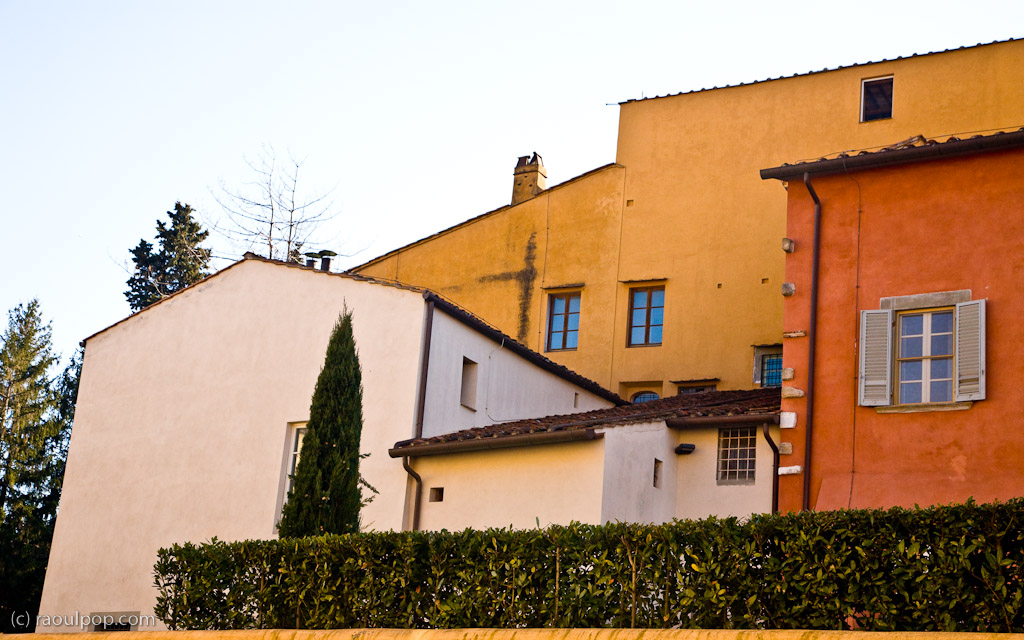
Florence rooflines in early morning sunlight

Tuscan rooflines

Il Duomo

Il Duomo III

After that, we made our way to the Palazzo Vecchio and the Ponte Vecchio.

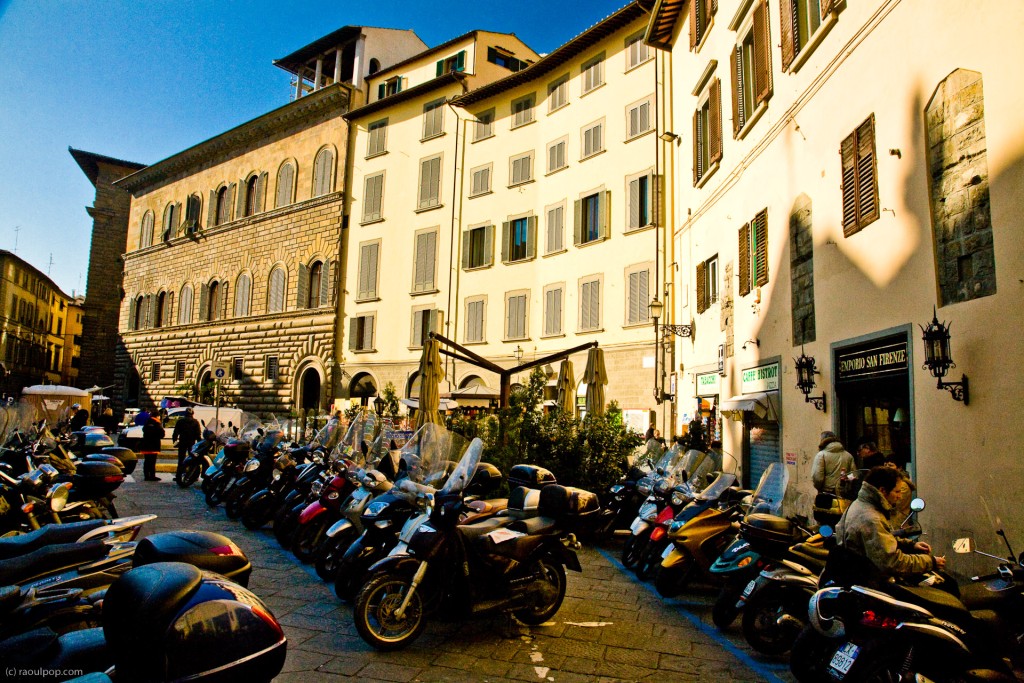
Scooter city II

Huddle

Piazza della Signoria II

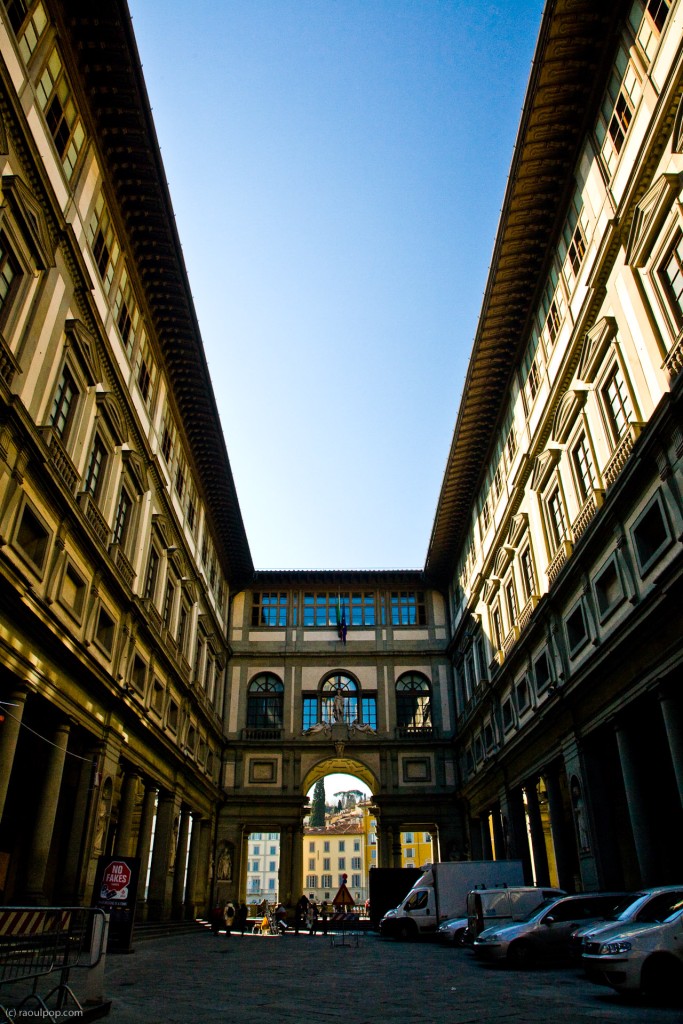
No Fakes, Thanks

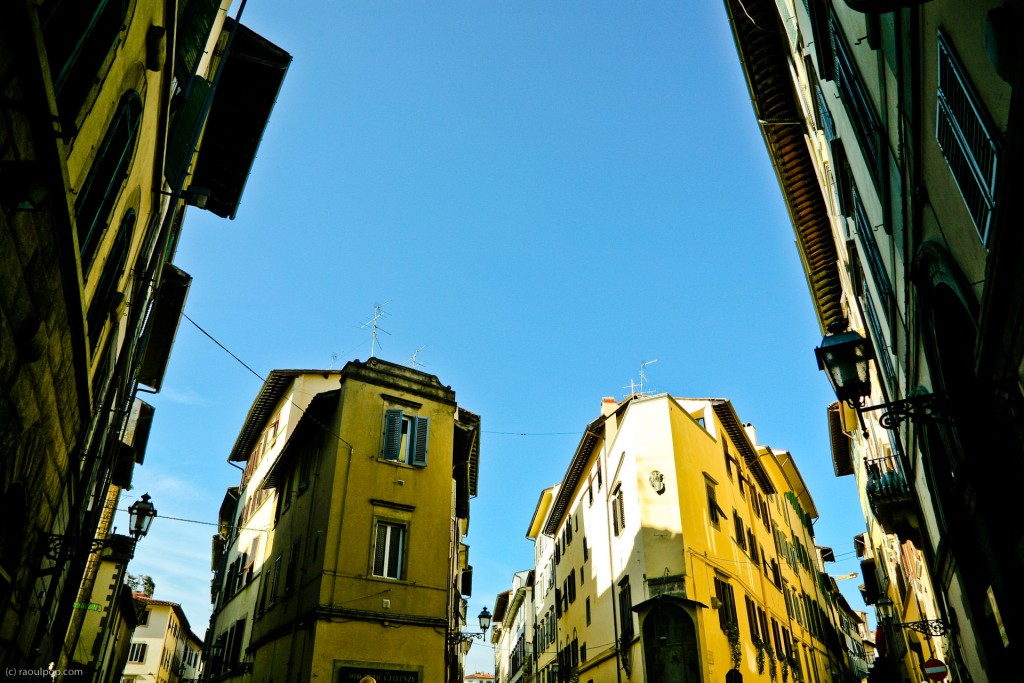
Narrow slit of sky

Didn't I see this in a movie somewhere?

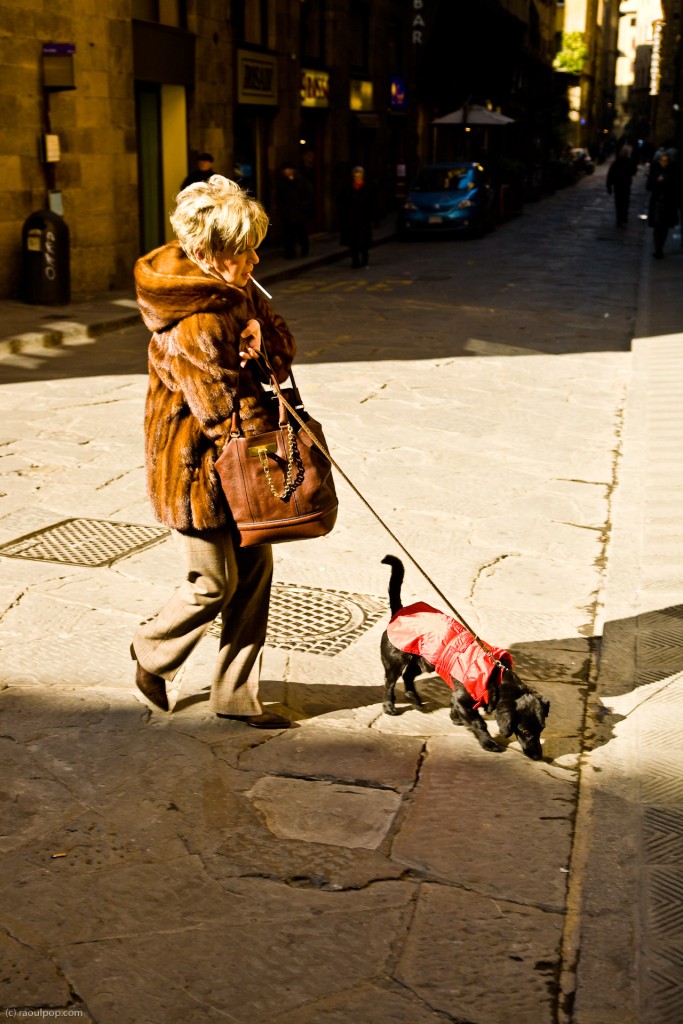
Old lady walking her pooch

We crossed the old bridge then climbed up to the Palazzo Pitti with its hilltop gardens and amazing views of Florence and the surrounding areas, then came back down and slowly made our way back across the Arno to the railway station and our car. Venice was next on our list, but we had to drive a good while till we got there and find a hotel to sleep for the night.

Palazzo Pitti

Hilltop gardens

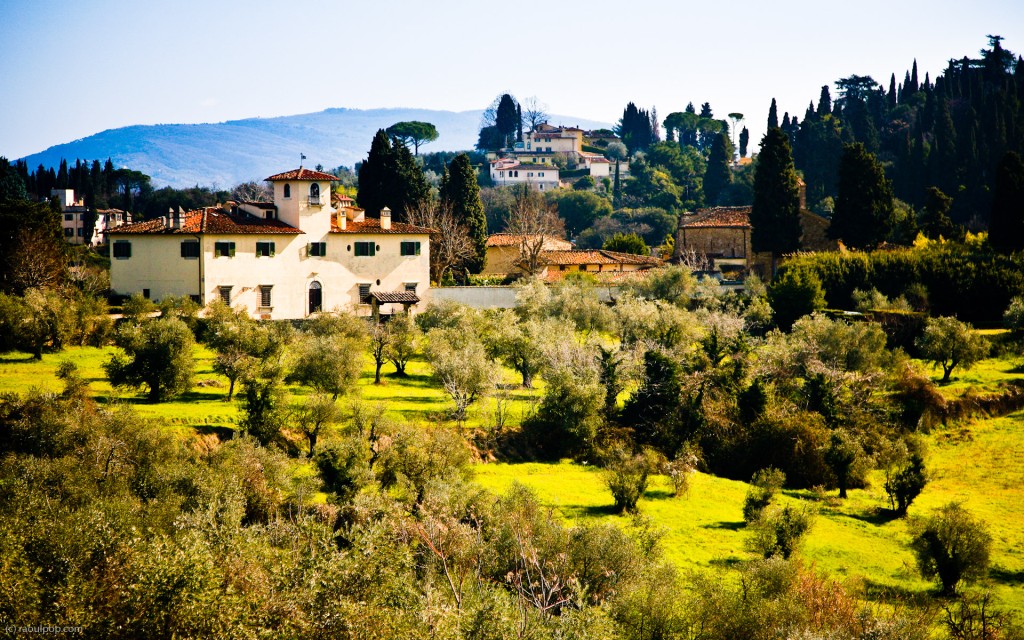
Tuscan villa

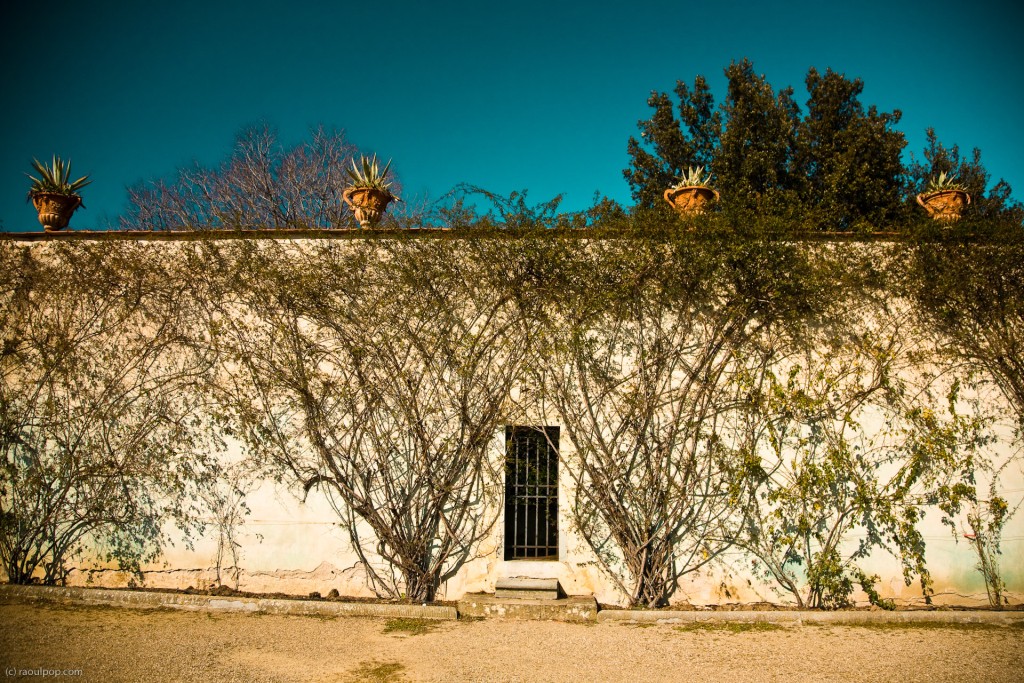
Walled and barred

Where the road divides

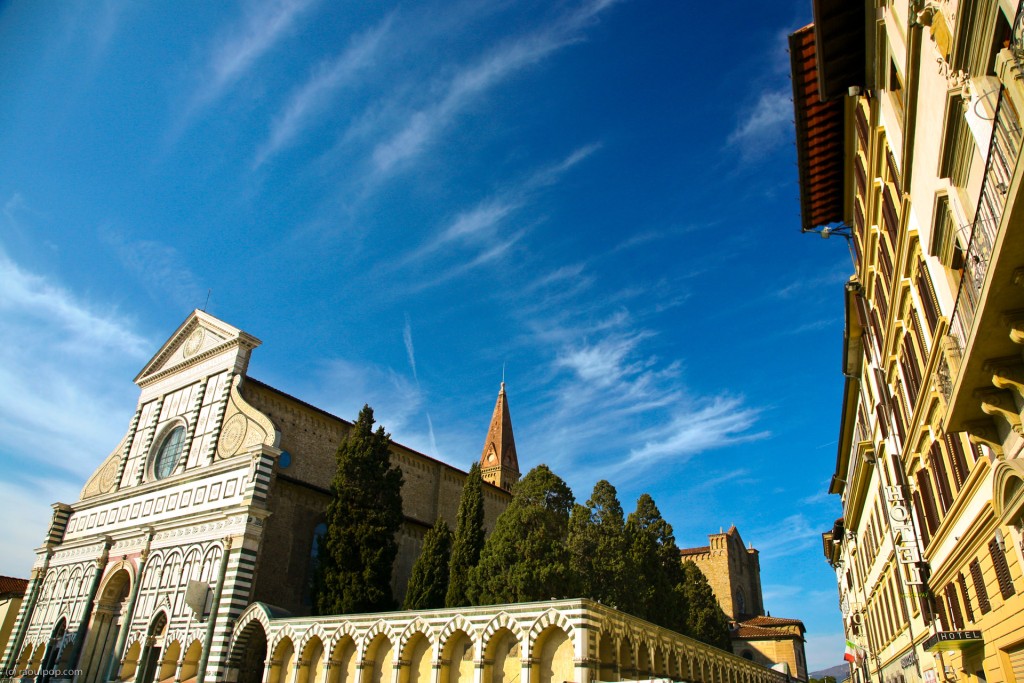
Santa Maria Novella

After making our way out of the city, we took the highway toward Venice, then exited somewhere near Modena and made our way toward Ferrara on country roads. It was near Modena that we saw the Lamborghini factory — actually, passed right by it — but it didn’t occur to us till after the fact. That was unfortunate, it would have been nice to take a tour.

We found a small, cozy and very clean hotel on the outskirts of Ferrara and slept there for the night.

Dusk in Emilia Romagna

All the photos you see here and more can be found at larger sizes in the Firenze album in my photo catalog.

Standard
Places

Italian road trip – Day 1 – Pisa

This slideshow requires JavaScript.

Our Italian road trip started in Pisa on February 18th.

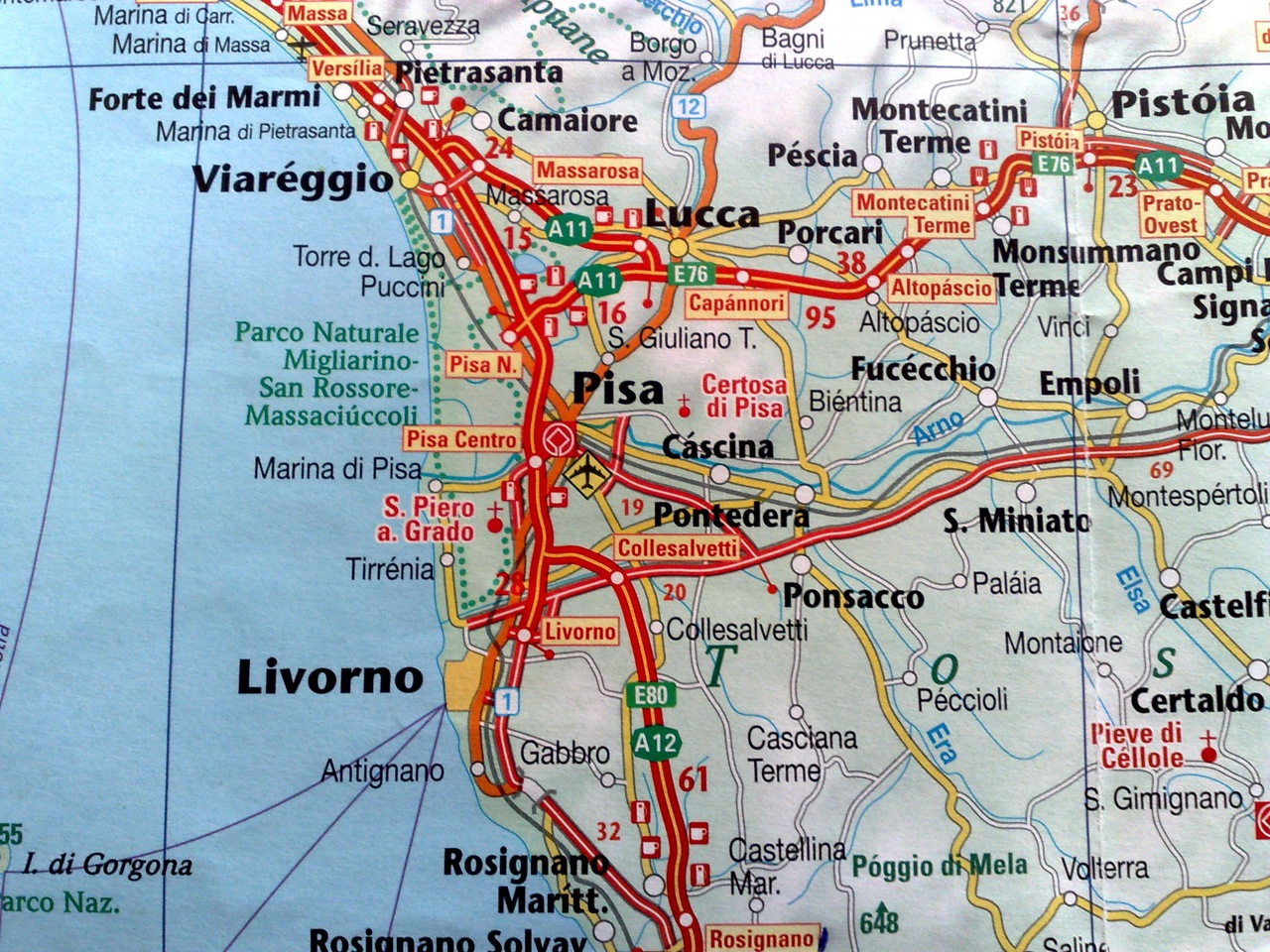
Map of Pisa

A map of Pisa and the surrounding region.

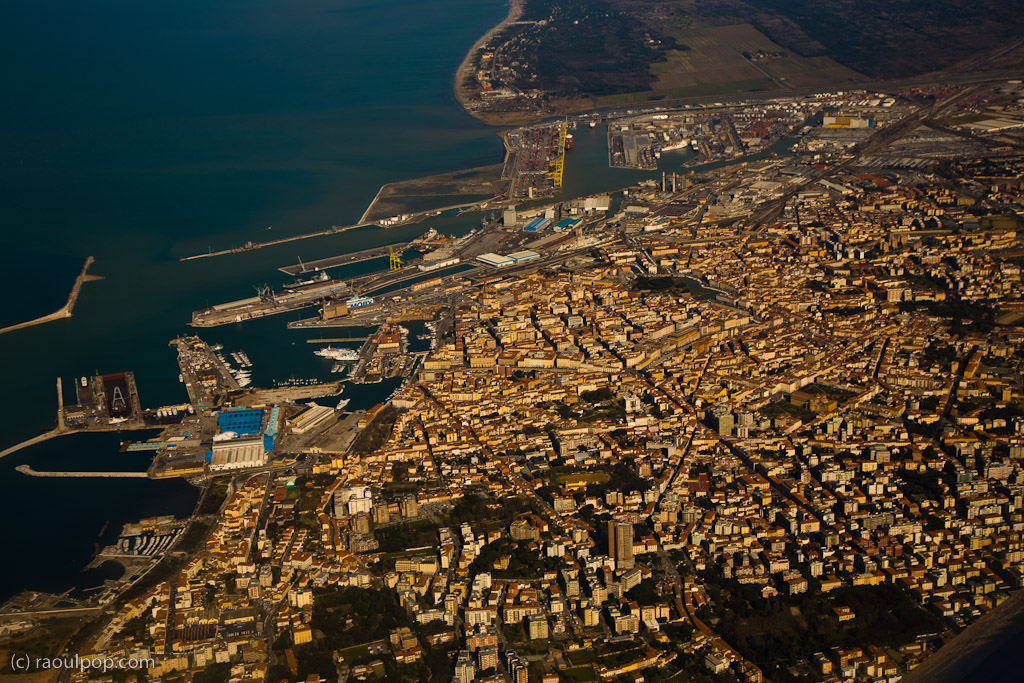
We arrived at Pisa Airport via Ryanair around 11 am. The airplane passed Pisa, then circled back over Livorno and landed.

High above the clouds.

High above the clouds.

On a Ryanair flight above the city of Pisa, in Tuscany, Italy. The Mediterranean Sea is visible in the upper left.

On a Ryanair flight above the city of Pisa, in Tuscany, Italy. The Mediterranean Sea is visible in the upper left.

On a Ryanair flight above the city of Livorno, in Tuscany, Italy.

On a Ryanair flight above the city of Livorno, in Tuscany, Italy.

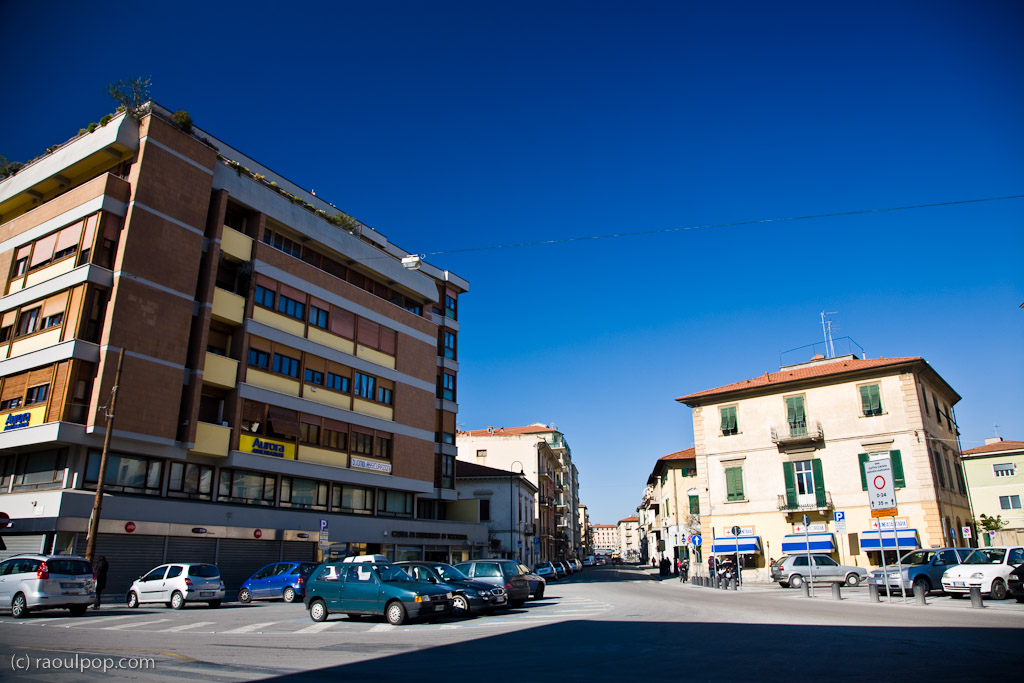
It was around noon that we got our luggage and rental car sorted out and left. On our way out, we took a wrong turn and found ourselves in the industrial zone outside the city. As long as we were there, we stopped to have lunch. The food was good, but the prices were the same as in downtown restaurants. I don’t know about you, but if I’m going to pay the same price, I’d rather have my food in a nice place, not in a hole in the wall near a bunch of warehouses. We left after asking someone for directions, and were soon inside the city. We stopped at the intersection you see below to find our way around.

An intersection in Pisa.

An intersection in Pisa.

We needed to find the leaning tower, and thankfully, there were signs to guide us along the way. Once in the old town center, we found a nice area and decided to stop and visit for a while. We found the parking lot you see below, and parked there.

Downtown somewhere

We stopped here to visit the old town center.

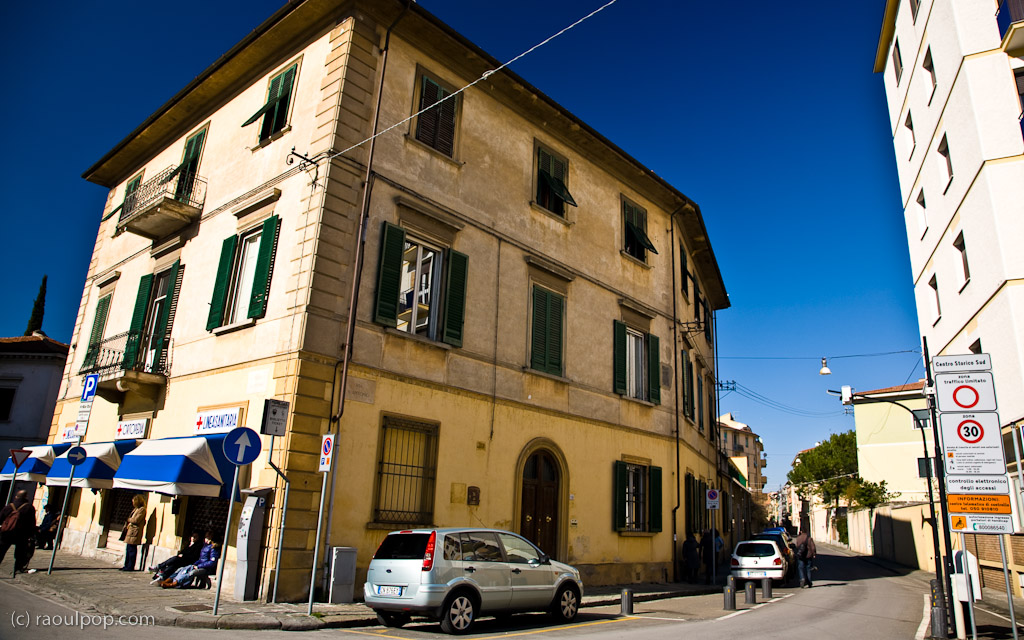
In this photo, you can see the same building visible in the lower right corner above, but from nearby. We parked our car a little ways down this street. The ZTL (Zona Traffico Limitato) sign, marked by a round red circle, can be seen here. Make sure to obey these signs while you’re driving in Italy. They mark specific areas where traffic is limited during certain days and hours. You can incur hefty fines if you drive through one of these areas when you’re not supposed to do it.

We found a parking spot on this street.

We found a parking spot on this street.

We started to walk around, taking photos of interesting buildings and spots we saw. Nearby, there was this building with a cross on the roof. It appeared to be a church, but was unmarked and not open to the public.

A building that appears to be a church, yet is without any name and cannot be entered. Pisa, Italy.

Not sure what this is, but I liked the facade.

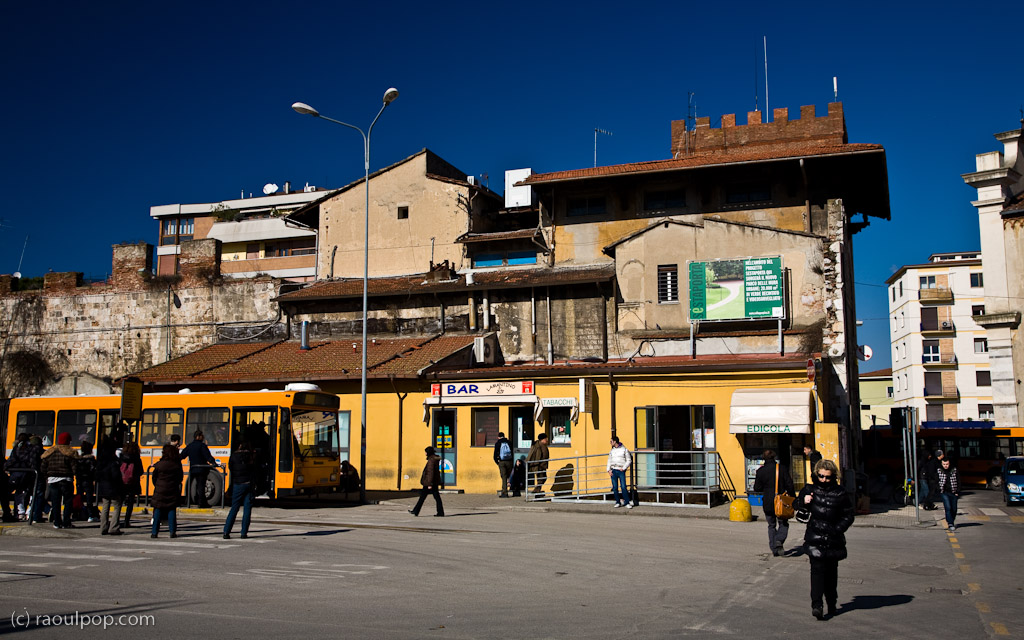
This building appears to have once been a villa for a wealthy family. Now it’s been converted to a bus depot, called CPT Autoservizi Lazzi. There are ticket counters inside and behind it, there’s a large parking lot where people wait to board the buses.

CPT Utoservizi Lazzi

CPT Autoservizi Lazzi

This is the back of the villa from the previous photo. As you can see, a few smaller buildings are huddled next to it, and what’s left of the old city wall abuts the villa on its left side.

Edicola

Transfer point for the CPT Autoservizi Lazzio.

The villa itself was built to last, with plenty of attention to detail. Notice the wonderful ironwork protecting the windows, and the late Gothic columns that divide the window openings.

Wrought iron arches

Wrought iron arches

Guess what I found on the other side of the old city wall? The headquarters for the Asociazione Radioamatori Italiani, Sezione di Pisa (Italian Amateur Radio Association, Pisa Club). Glad to see ham radio folks are still around. While Romania was under the clutches of communism, amateur radio was one of the very few ways people could communicate with foreigners. They used to build their own radio equipment, at risk, and try to get in touch with folks in Western Europe. Some would keep in touch with their families, who’d already fled the country, some would do it for camaraderie, and others to keep their hopes up by knowing they had a line to the free world.

Associazione Radioamatori Italiani

Asociazione Radioamatori Italiani, Sezione di Pisa

I liked the juxtaposition of these buildings and their rooflines.

Corsia 5 bus station

Corsia 5 bus station

The sign in the photo below says “Area di atessa sicura”. I’m not exactly sure what it refers to: perhaps that’s a bus waiting area, or a place where you can wait in peace — for what, I don’t know. At any rate, if you’ll look up at the roofline, you’ll agree with me that it’s an unusual corner. I haven’t yet seen a broken roofline at the corner of a building.

Area di atessa sicura

Area di atessa sicura

A building which housed, among other things, one of the restaurants in downtown Pisa.

Ristorante Centrale

Ristorante Centrale

One of the side streets that branched off the main piazza and roundabout that can be seen in this photo.

Morning walk

A typical Italian street

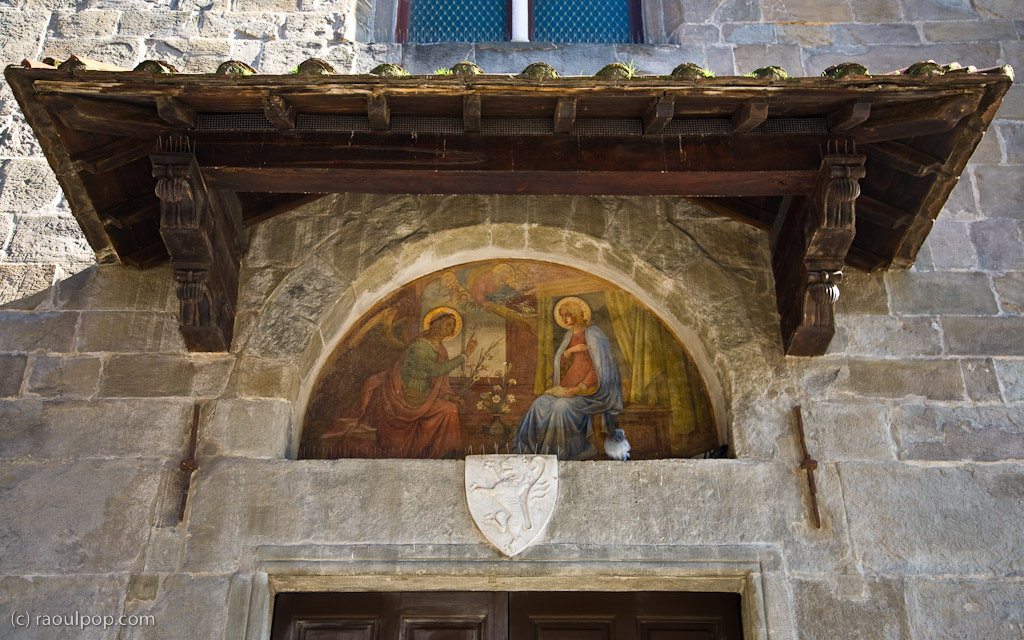
There’s a church that’s visible in the photo above. There’s a mural underneath the awning that covers the entrance. This is that mural, which depicts the annunciation, or the scene when the angel Gabriel tells Mary that she’s been chosen to bear the Son of God. I would have liked to go inside the church, but that was unfortunately not possible — it was locked.

Ave Maria gratia plena

Ave Maria gratia plena

But enough about Pisa’s streets. Let’s get to what everyone wants to see: the Leaning Tower of Pisa. Here it is, as seen from the back entrance to the Piazza dei Miracoli.

Leaning Tower I

The Leaning Tower of Pisa and the Duomo

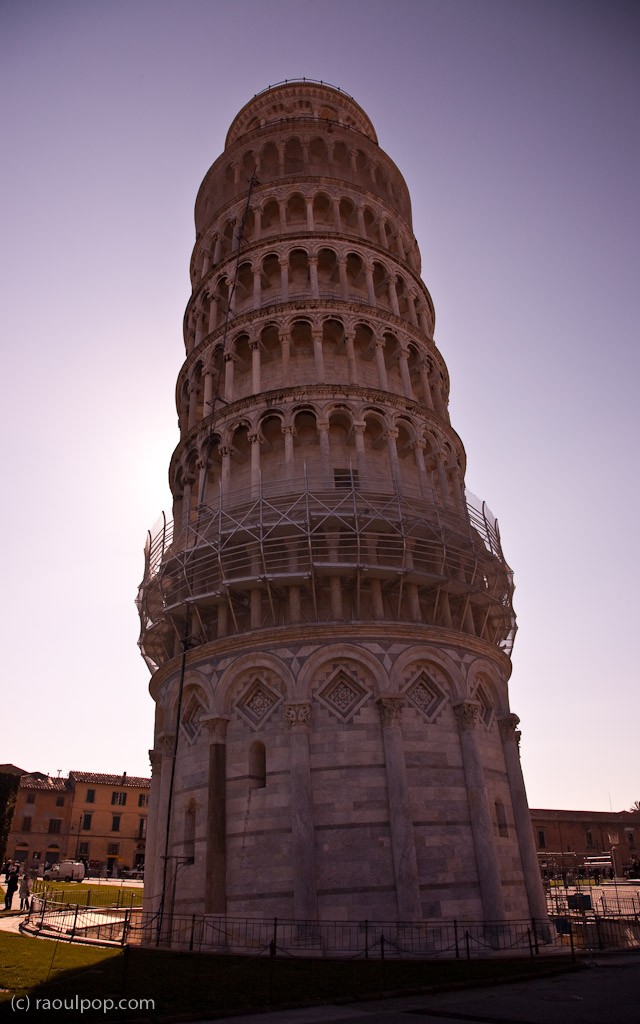
Here’s another view of the tower, from its back — an angle that’s seldom used, and that’s why you see no people in the foreground. Everyone goes to photograph the tower from the lawn of the Duomo, because that’s where they do all those silly tricks where they pinch the tower between their fingers, or pretend to push it with their hands and feet, or… well, you get the idea.

Leaning Tower II

The Leaning Tower of Pisa

Here’s a view of the Duomo from its back. This is actually where the altar is located, so if you’re inside it, it’s the front, but such is the way cathedrals are. The back is the front is the back, depending on whether you’re inside or outside.

Il Duomo I

The Duomo of Pisa

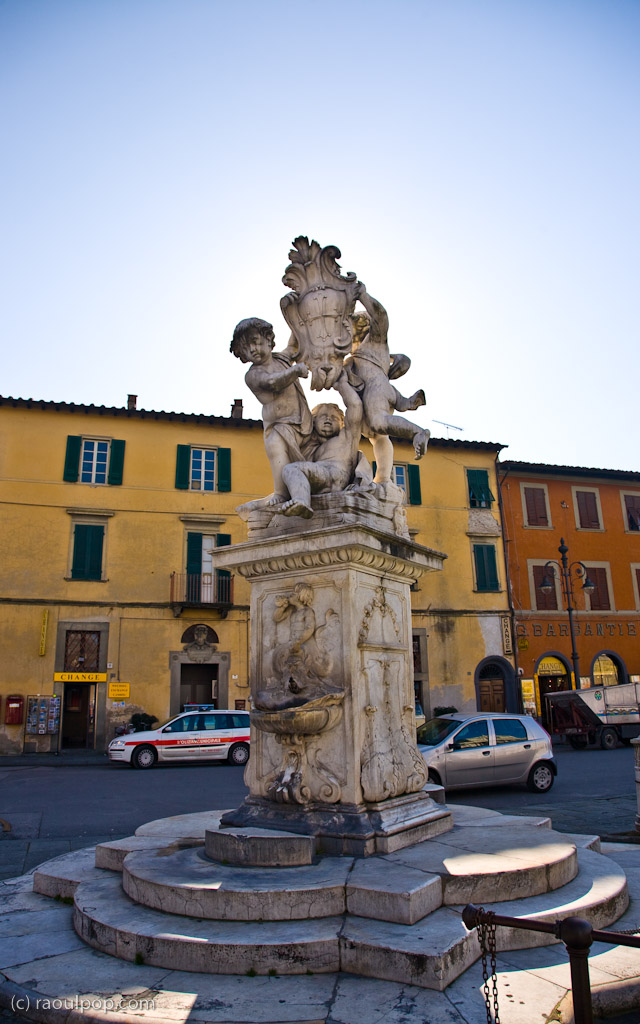
These little guys are holding up some family crest — probably the folks who put up the most amount of money to have the place built. Note the smaller cherubim riding on top of something above the water spout. He looks like he’s peeing inside the bowl — a fairly common theme in these older water fountains.

Some cherubim is peeing in the water fountain

Three nice cherubim and one naughty one

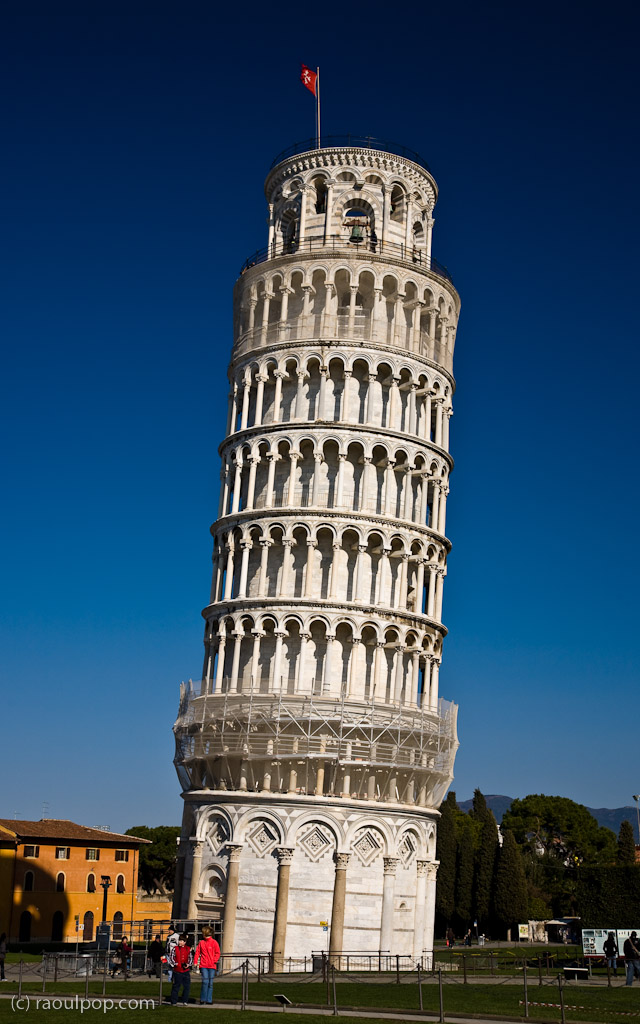
Here we go, this is the typical view of the leaning tower, the one that everyone brings back with them.

Leaning Tower III

Leaning Tower of Pisa

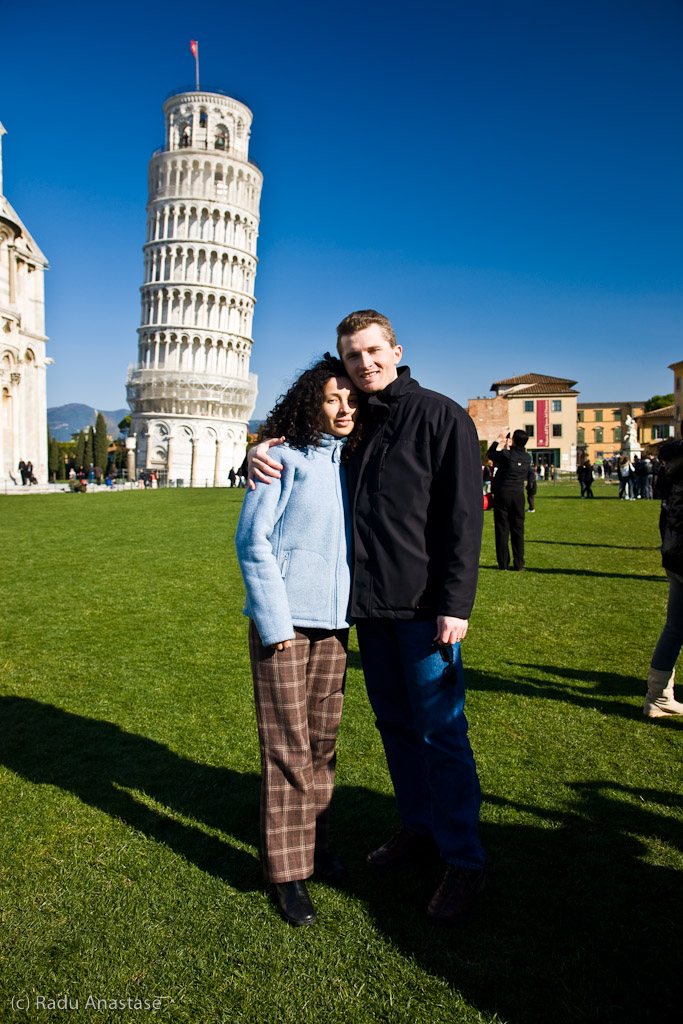
And this is us in front of the tower, doing the typical tourist thing and smiling for the camera with the landmark behind us. As cheesy as I think it looks when I see others doing it, I have to admit that it’s nice to have these photos when I look back at the places I visited. By the way, my brother in law, Radu Anastase, took this photo. He’s a talented photographer who at 19 years of age has already had paid work published in Romanian magazines.

Us, at the Leaning Tower of Pisa

Us, at the Leaning Tower of Pisa

Here’s another view of the Duomo, from the nice, grassy lawn that covers most of the piazza. Shortly after taking this photo, a guard came and shooed everyone off the grass — apparently, they don’t want people trampling on it, which is silly. It’s practically a historical pastime to get on the grass and take photos of the tower. They might as well get over it.

Il Duomo IV

The Duomo of Pisa

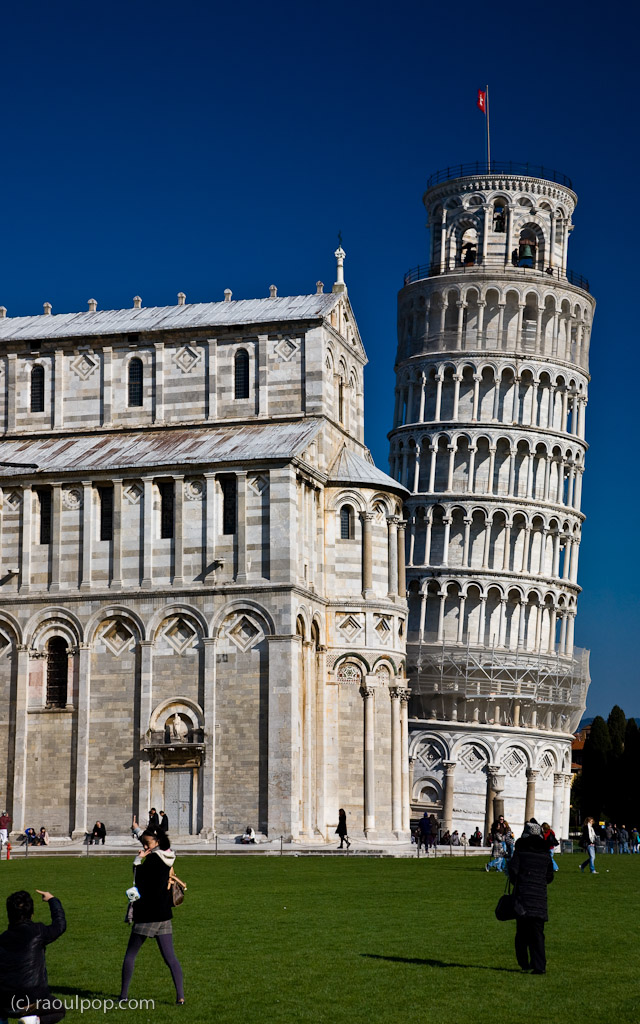
I like this shot of the tower peeking out from behind the Duomo, because it emphasizes the tilt in its vertical axis.

Peekaboo

Peekaboo

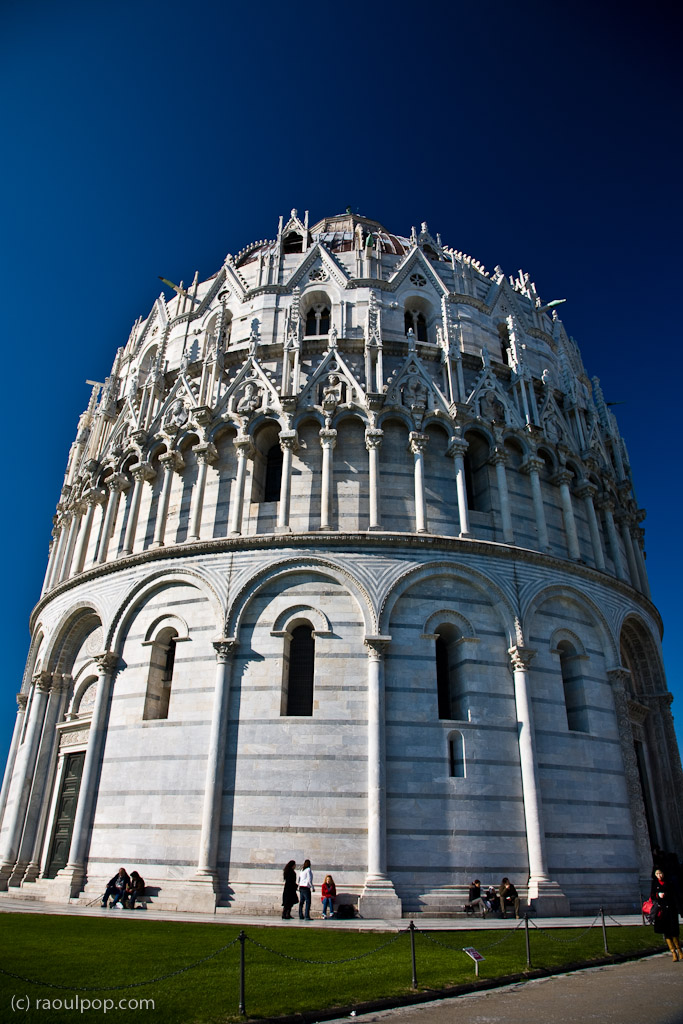
I was impressed with the Baptistry, the round dome next to the Duomo. It’s older than the Duomo, and might even be a few centimetres taller than the Tower, according to Wikipedia.

The Baptistry

The Baptistry

Here’s another view of the Baptistry, from its front entrance.

The Baptistry, from the front

The Baptistry, from the front

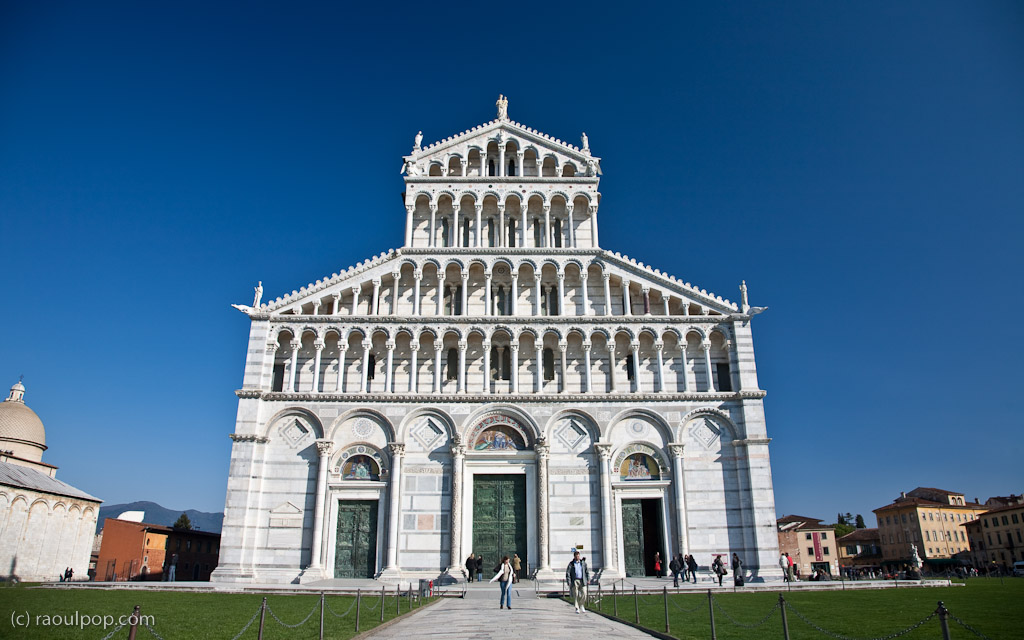
The Duomo’s front is impressive indeed, with all those rows of repeating arches, held up by rows of Corinthian columns.

Il Duomo V

The Duomo of Pisa, main entrance

Notice the bottom row of columns, which is engraved with intricate reliefs. Can you imagine the work that went into making them?

Il Duomo VI

The Duomo of Pisa, from below

The inside was even more impressive. Light streamed in through the windows in the upper level, reflected off the richly adorned ceiling and filtered down to the marble floor.

Inside the Duomo II

Inside the Duomo

This is a panoramic photograph which includes the main altar and main ceiling mural of the Duomo. You can’t appreciate it fully here, but its original resolution is 2835 x 6852, and it’s made up of three individual photographs.

Inside the Duomo VI

A panoramic view of the inside of the Duomo

I chose to process this photograph differently because I thought the subject matter fit this finish better. It’s one of the side walls of the Duomo, the one that faces the Camposanto.

Il Duomo VII

The Duomo of Pisa, side wall

About the same time that I took this photo, Radu (my brother-in-law), took this photo of Ligia. She’s his older sister and my lovely wife, just in case you’re trying to figure out the relationship. She was walking toward us from the Camposanto.

The shadows were getting longer. It was time for us to leave. We needed to arrive in Florence by nightfall. We headed out the same way we came in, through the back entrance, which was less crowded than the alternative.

What you see below is a typical Tuscan landscape. They have those wonderful conifers which grow in the shape of popsicles, and that specific architecture that defines the region. All this photo needs is a few gentle rolling hills and some distance between me and the villas, and it’d be perfect.

Leaving by the back door

Leaving the Piazza dei Miracoli

I saw this Tuscan villa on the way to our car, which was parked just down the street from here. I love this kind of architecture.

Tuscan villa

A Tuscan villa in Pisa

I’d have liked to have seen more of Pisa, but when we only had a week at our disposal and our route was already mapped out, I had to stick to the schedule. It was time to leave and get on the highway. Firenze, the next stop on our road trip, awaited.

All of these photographs (and more) are available in larger sizes in the Pisa album in my photo catalog.

Standard
Places

The Italian road trip

We came back yesterday morning from a wonderful week-long road trip through Italy. We started out in Pisa last Wednesday, February 18th, and returned from that same city yesterday, on February 25th. Before we left, we mapped out a circular route that cut through the following regions: Toscana, Emilia Romagna, Veneto, Marche, Abruzzo, and Lazio.
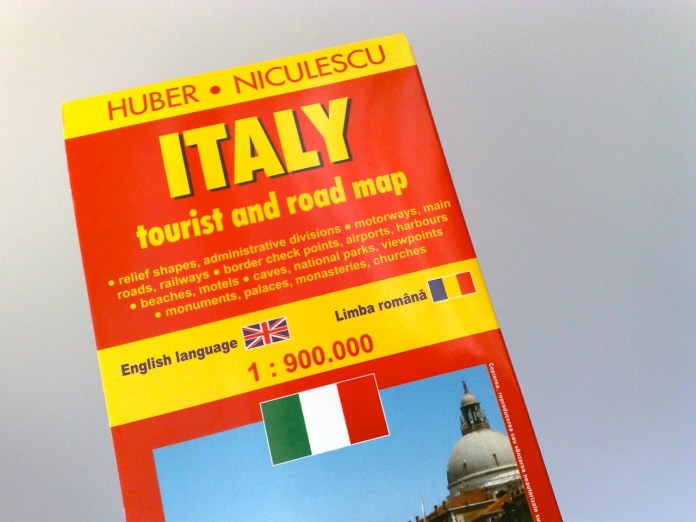
Italy - Tourist and Road Map

Morning fog over Florence

I traveled to Italy in 1999, 10 years ago, and stayed in Rome for three weeks. I also visited Florence for a day. Lots of things have changed in Italy since then. Here’s what happened this time around.

The route

The towns we visited were, in chronological order: Pisa, Firenze, Venezia, Ravenna, Rimini, Grottammare, Tivoli, Roma, Ladispoli, Capálbio and Rosignano Marittimo. All in all, we drove about 1,300 km. It was a fairly large amount of ground to cover, and I was even told it couldn’t be done in a week, but I knew that if we stuck to the route and were disciplined about the amount of time spent in each city, we could accomplish our goal. We did, and even had time to make unscheduled stops in towns too beautiful to pass by, such as Grottammare, Capálbio and Rosignano Marittimo.

Unbeknown to us, we passed right by the Lamborghini factory in Sant’ Agata, near Modena. It was evening, and we drove through the little village on our way to Ferrara. We wondered what in the world the red Lamborghini brand was doing on a glass-encased rectangular building that lined the road, and about an hour later, the jigsaw puzzles came together and it finally dawned on me what we’d seen. D’oh! We didn’t have time to go back, or else I’d have tried to get a tour. That would have been fun!

My intent is to write individual articles about each city we visited, each illustrated with plenty of photos, so stay tuned for that. I will add links to those articles below as they are published.

The weather

It was February, which is technically winter, but we stuck to the warmer regions of Italy, so we had beautiful, spring-like weather. Temperatures ranged from 1 – 19° C while we were there, and it was mostly sunny, with little rain.

Late afternoon fields

There was no snowfall, although if we’d ventured further north, I’m sure we’d have gotten some. There were times when we passed through mountains, particularly on our way from Pescaro to Rome, that the weather got downright freezing and snow was clearly visible on the mountain tops.

Mountain village

The prices

We visited during the off-season. Not many people go to Italy in February, so prices are less than in high season.

Expect to pay about €10-20 per plate for lunch and about €15-30 per plate for dinner at restaurants. Even a restaurant located right on the main canal in Venice or near the Basilica di San Pietro in Rome won’t cost you more, for lunch anyway. Of course, you can also go into a buffet and get a slice of pizza or some spaghetti or something, and it’ll be a lot less, but it’s nice to know going to a restaurant won’t break the bank. Make sure to always ask for a menu before being seated if you’re uncomfortable getting up from the table once you find out what things cost.

A restaurant near Basilica din San Pietro

Going to a supermarket and buying bread, fruits, vegetables and various kinds of cheeses and other delicatessen is even less expensive than going to a buffet or cafe. You can eat the food up on a hilltop, or in a forest, or even in your hotel room if you’re rushed for time — just not in public parks, because it’s not allowed there. It’s healthier and a lot lighter on the wallet. But make sure not to litter if you eat out in nature. Bring an empty bag along and take all your trash with you. It’s the civilized thing to do.

The hotels were also not as expensive as we thought — at least the ones we looked at. Rooms ranged in price from €50/night at a two-star hotel to €90/night at a four-star hotel for a double room with the usual amenities, including breakfast.

Fuel prices ranged from €1 to €1.30 per liter for regular diesel, which is what our rental car used.

The people

We had nothing stolen from us this time, unlike what happened to me in 1999, and on the whole, the people were a lot friendlier than I remembered them. Even if I could only speak a little Italian, they were willing to help me and we got along in fragments of mixed English and Italian. I found the people in the smaller cities and villages were a lot nicer than those who lived in the larger cities. It looks like my theory about larger cities being too stressful for healthy living is true — not that I’m the first to think of it.

The transportation

We rented a Ford C-Max 1.6L Diesel. I liked it a lot. It’s the European version of an American station wagon. It can seat five people and their luggage comfortably for long stretches of time. The ride was smooth, the gear shifting was smooth, braking was strong but not crude, and things worked as they should. It had decent acceleration for a 1.6L diesel engine loaded down with five passengers and a full trunk, even going uphill.

Our rental car, a Ford C-Max 1.6L Diesel

I liked its many storage compartments, and the fold-out trays behind the front seats, which can be used for light meals inside the car. I liked the windshield wipers, and here’s why: when you squirted wiper fluid onto the windshield, they did a few passes, then stopped for a few seconds to wait for the last beads of fluid to pour down the glass, and did one last pass to get them. It’s a clever little touch that means a lot to me, because I always found myself having to do that last pass manually on other cars.

I also liked the car’s light fuel consumption. On average, it did 6.1 liters per 100 km, and oftentimes it did even less, even when I drove over 100 km/h, which is pretty good considering the load it carried and the car’s size.
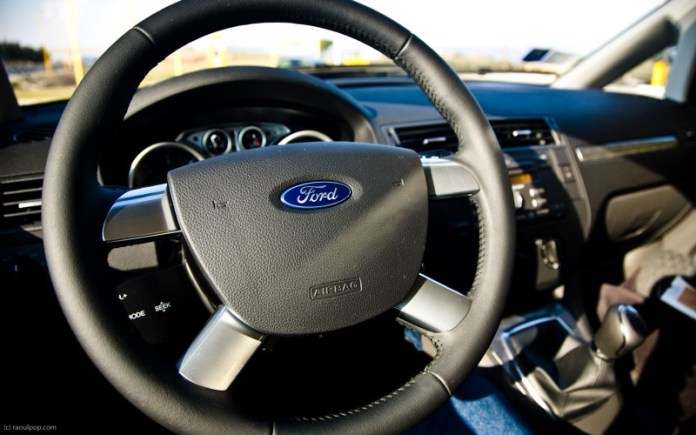
Steering wheel and dashboard, Ford C-Max 1.6L Diesel

One thing that bugged me about the car was the safety belt beeping. If you didn’t put your belt on right away, it started to beep annoyingly every few seconds. That really got on my nerves, and it seems like most newer cars bug you like this. One reason I like my MINI so much is because it doesn’t beep. All I get is a red light on the dashboard. That’s plenty for me.

Another thing was the somewhat soft steering at higher speeds. I didn’t go faster than 130 km/h with it because of that very reason. It just seemed like it wouldn’t do very well if I had to do a quick swerve to avoid something, so I didn’t push my luck.

Would I rent this car again? Definitely. I even took it offroad, and it’s so well-built underneath that you can’t break your exhaust pipe on a rock or crack your oil drum, like you can with other cars. Everything is neatly tucked away above the car’s steel frame. Even though ground clearance isn’t high, you can take it over uneven ground and it’ll do just fine, within reason.

Driving and traffic

The drivers are civilized and slow-paced in the smaller cities or villages, but fairly crazy in the larger cities like Florence and Rome. They’ll make four lanes out of two at stop signs or roundabouts — that’s if they stop at all. You really have to keep on your toes when you drive there, or you might run into another car or a pedestrian, who will step out into the road at a crosswalk and expect you to stop, which is not what happens in the US, but is what you should do in Italy. Honking and cutting in front of other cars without warning is quite common and should be expected there.

While this style of driving was a shock to my system at first, I quickly got used to it and found it quite advantageous in the end. You see, I had to constantly pick my way through the cities by following the maps and street signs, and if I was a little late with a turn, I could cut through the traffic my “elbowing” my way in, so to speak, just like the others did. They might honk at me and shake their hands at me, in typical Italian fashion, but I’d just shrug my shoulders and smile — and they’d let me pass.

I didn’t see a single case of road rage in Italy, unlike in the US, where some doofus is liable to pull out their gun in the middle of the street. The Italians might get angry, but it’s only surface anger — a small reaction to the situation which quickly gets forgotten as the annoyance disappears. If they honk at you, it’s to get your attention, not because they’re truly angry. If they shake their hands at you, they’re not swearing, it’s just the way they react. Really, it’s not as bad as it seems. Just go with the flow.
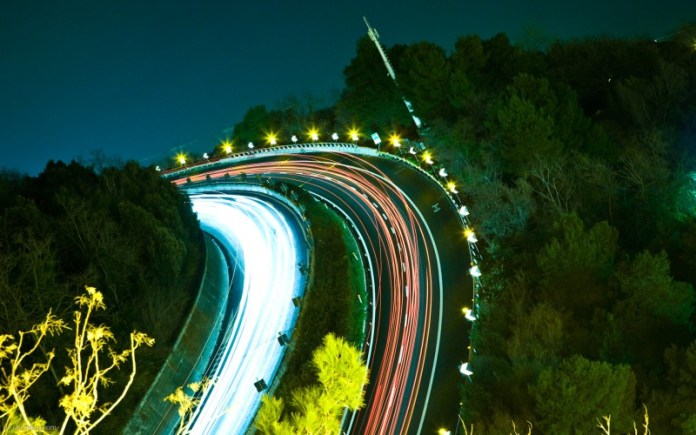
An Italian highway at night

Roads and street signs

The roads were kept in good shape. There were a few towns (Pisa, for example) where the roads were in construction and full of potholes, and a few sections of the highways where potholes were beginning to emerge through the asphalt, but generally speaking, the roads were smooth, well-built and fairly safe.

I have a bone to pick with Italian speed limit signs. You’re generally expected to do 50 km/h while in the city and 90 km/h outside, but more often than not, they had me going 50 km/h outside the cities, in places where I should have been going 70-90 km/h or more. The Italian drivers themselves didn’t obey the speed limit signs. They usually did 10-20 km/h more than the posted speed limit, or even more, even in the cities. I tried to obey the posted limit but also keep up (more or less) with the general traffic, and I hope I’m not going to be surprised with one or more speeding tickets in the mail.

Street and landmark signs are pretty good. Sometimes, there are too many of them and you can’t figure out which way to turn while the traffic behind you keeps pushing you along. What I did was to put on my emergency blinkers and pull to the right. As long as you don’t do it in the middle of an intersection, people will understand.

Be careful with a new batch of signs called ZLT (Zone a Traffico Limitato). They weren’t in place in 1999. They were introduced recently to curb the traffic through certain areas in popular cities, and to reduce the amount of pollution. You’ll get a hefty fine if you happen to pass through such a zone when you’re not supposed to do it. The signs should say what hours and days the ZLT rules are enforced. Ask a policeman to be sure, or just don’t venture inside the zones. Find a parking spot somewhere near the places you want to see, and go on foot.

Hotel signs are another matter altogether. There are tons of little signs advertising hotels of all kinds along the roads in major cities. They’ll say go left or go right, but unfortunately, those initial signs aren’t followed up by subsequent signs that take you to the hotel. You may find yourself nowhere near the hotel at the end of 5 minutes’ or 10 minutes’ driving, even though you’ve turned like the sign said. That can get pretty frustrating, particularly if it’s getting dark and you need to find a place to stay.

The hotels

In Italy, there’s a huge difference between a two-star or three-star or four-star hotel in a city, particularly in a city’s downtown area, and a two-star or three-star or four-star hotel on the city’s outskirts, or in the countryside. Keep that in mind when you look for hotels in Italy.

We stayed at a two-star hotel on the outskirts of Ferrara one night. A few days later, we looked at two-star and three-star hotels in the middle of Pisa (centro), and they didn’t even compare to the two-star hotel out in the countryside of Ferrara. That hotel was clean, roomy, warm and downright luxurious when compared to the dumps they call two-star hotels in Pisa. Those don’t even have bathrooms in the rooms — they have a single bathroom in each hallway, yet they have a sink, bidet and trash can next to the bed, which is disgusting.

The lesson to be learned is simple: stay at four-star hotels inside the cities, if you find a good price, or find two or three-star hotels, or even bed & breakfast places, outside the cities, in the countryside or in small villages, if you want something clean and comfortable. Of course, that entails having a car so you can get around without having to worry about public transportation routes, which don’t exist (to my knowledge) in the countryside.

While most gadgets one carries around with them when traveling are made to work on both 120V and 230V current these days, almost all of the electrical outlets in Italian hotels take only the thinner round prongs, not the thicker round prongs used elsewhere in Europe. This means you won’t be able to recharge your laptop or camera batteries or your cellphone if you don’t bring or buy an adapter that has the thinner round prongs.

Two types of plug prongs from Europe

Also related to electrical outlets, make sure to also have an electrical strip or splitter with you. You’ll be lucky to find one spare outlet in most hotel rooms, and if you have multiple gadgets and no splitter, you won’t be able to recharge all of them during the night. I found no spare outlet in a few of the rooms we stayed, and had to unplug the TV in order to plug in my own stuff.

Here’s the list of places we stayed at, in chronological order:

Villa Aurora, Firenze: not open to the public. Family of ours from Florence arranged our stay there, so it doesn’t really count, but it was beautiful. I’ll post photos from there in my Italy album, probably under a new sub-album for Florence. Price is usually €50/night for a double room.

Hotel Daniela, Ferrara: a two-star hotel with bigger, cleaner rooms and newer fixtures and linens than a three-star hotel in downtown Pisa. It had rooms with real bathrooms, proper heating, shiny floors and clean, comfortable beds. Shower water was piping hot, which was nice. Breakfast was included, and it was good. Espresso was good as well. Only problem was a pipe/drain in one of the walls that made a small but annoying dripping noise during the night. Thankfully we were so tired we slept through it. Price was €60/night for a double room with a queen size bed and €80/night for a triple room with a queen size bed and a single bed. The hotel is in the middle of a field. The view isn’t special in any sort of way, but the price is decent and it’s very clean. There’s parking in the back.

Hotel Caldini, Chiaggio: no stars were advertised for this hotel, but the rooms were large, clean, well heated and it had large, proper bathrooms. Breakfast was not included, but we started on the road so early that day that we didn’t need it. The price was definitely worth it: only €50/night for a double room with a queen size bed and €55/night for a triple room with a queen size bed and two single beds. The hotel is inside Chiaggio’s centro, and faces a canal with small boats. Nice view. There’s parking in the front of the hotel.

Bed & Breakfast La Toretta sul Borgo, Grottommare: this was an experience above and beyond everything we’d hoped to find on our road trip. We found the city of Grottommare by happenstance, because we saw its lights from the highway. It looked nice, so we pulled off, and when we entered the old part of the city, our jaws dropped. We just had to find a place to stay right there in the old city, so we kept looking around until we found this B&B, which is set right in a medieval building in an old citadel. They only had one room available, but we didn’t care. We crowded into it, all five of us, and we loved it. I definitely recommend it, and will post photos soon. Breakfast was included and it was delicious. The espresso was great. The view was amazing, and so was the decor. Price was €100/night for a room with a queen size bed and two bunk beds, meant for four people. We squeezed in five of us anyway, and it was worth it for the amazing experience. You can get a double room there for €60/night. Parking is available in the general parking area right outside the castle, but you’re allowed to drive up to a piazza close to the B&B to unload your luggage, if you can squeeze your car through the narrow medieval streets.

Hotel Executive, Roma: four-star hotel near Piazza Fiume. The rooms we got weren’t quite up to four-star standards, as the bed covers, room fixtures and furniture looked like they’d been there for a few decades, but at least the bed linens and the bathrooms were clean. A nice bonus was a large terrace that I used to take photos of Rome at night and in the early morning — we were given rooms on the top floor since that’s all they had available. Price was €100/night for a double room and €130/night for a triple room, breakfast included. The espresso was good. They had valet parking but it cost €35/night, so we used metered parking on the street, which was hard to find but only €4/day.

Hotel Miramare, Ladispoli: a three-star hotel built in the early 1900s, with original marble pebble floors, stairwell and doors. I think the rest of the stuff got renovated sometime during the last 10 years or so. The taste of the recent interior decorator left quite a bit to be desired, but the original architecture and design thankfully still showed through. The rooms were nicely sized and clean. The bathrooms were alright as well, but the shower stall was so tiny I could barely fit in it, and I’m not a large person at 5’11” and 165 pounds. The hotel isn’t soundproofed in any way, shape or form, so you’ll hear your neighbors if they talk somewhat louder or do something else… We got woken up early in the morning by sounds from the bathroom fixtures of our neighbors. Smoking is allowed in the hallways, but the smoke will make its way into your room sooner or later. The breakfast, included in the price, was halfway decent. The espresso was the best I had during this road trip. The price was €60/night for a double room with a queen size bed and €80/night for a triple room with a queen size bed and a single bed. For what it’s worth, the hotel is right on the beach. Parking is €5 per night, or you can find a parking spot on the streets, which is free but hard to find in-season.

Hotel Repubblica Marinara, Pisa: a four-star hotel outside Pisa’s centro. This was the best equipped hotel we stayed at during this trip. I liked everything about it. The rooms were large and clean and had interesting lighting, the bathrooms were large and clean, and they smelled fresh. I think they’d redecorated the hotel recently. Some hallways still smelled of fresh paint. The shower stall was finally properly sized. I could stretch in there and twist around as one normally does when they wash, without hitting my elbows on the walls. Another thing I loved about this hotel was the presence of extra electrical outlets in the room, which is a rarity in Italy, believe me. The had four outlets right above the desk and one outlet next to each side of the bed. Two of those four outlets next to the desk even worked with the thicker prongs of the plugs from other regions in Europe. I was in gadget heaven, as I could finally charge up all my stuff in peace. Price was €90/night for a double room with a queen size bed and €110/night for a triple room with a queen size bed and a single bed. Breakfast was included and they had ample free parking in the back of the hotel.

Electrical outlets in our hotel room

We really enjoyed our trip to Italy. It got a little stressful in the larger cities as we tried to find our way around and a place to stay, but it’s a very freeing experience to go out on your own and plot your own course through a country, then follow up on your plans and bring them to completion. It’s also fun to stray off the course when you discover something you really want to see, as we did, then pick up where you left off. As I promised above, I plan to write up the experiences we had in each city and to publish photos that I took. Stay tuned for that.

Standard
Events

The Atlantic Cable – Eighth Wonder of the World

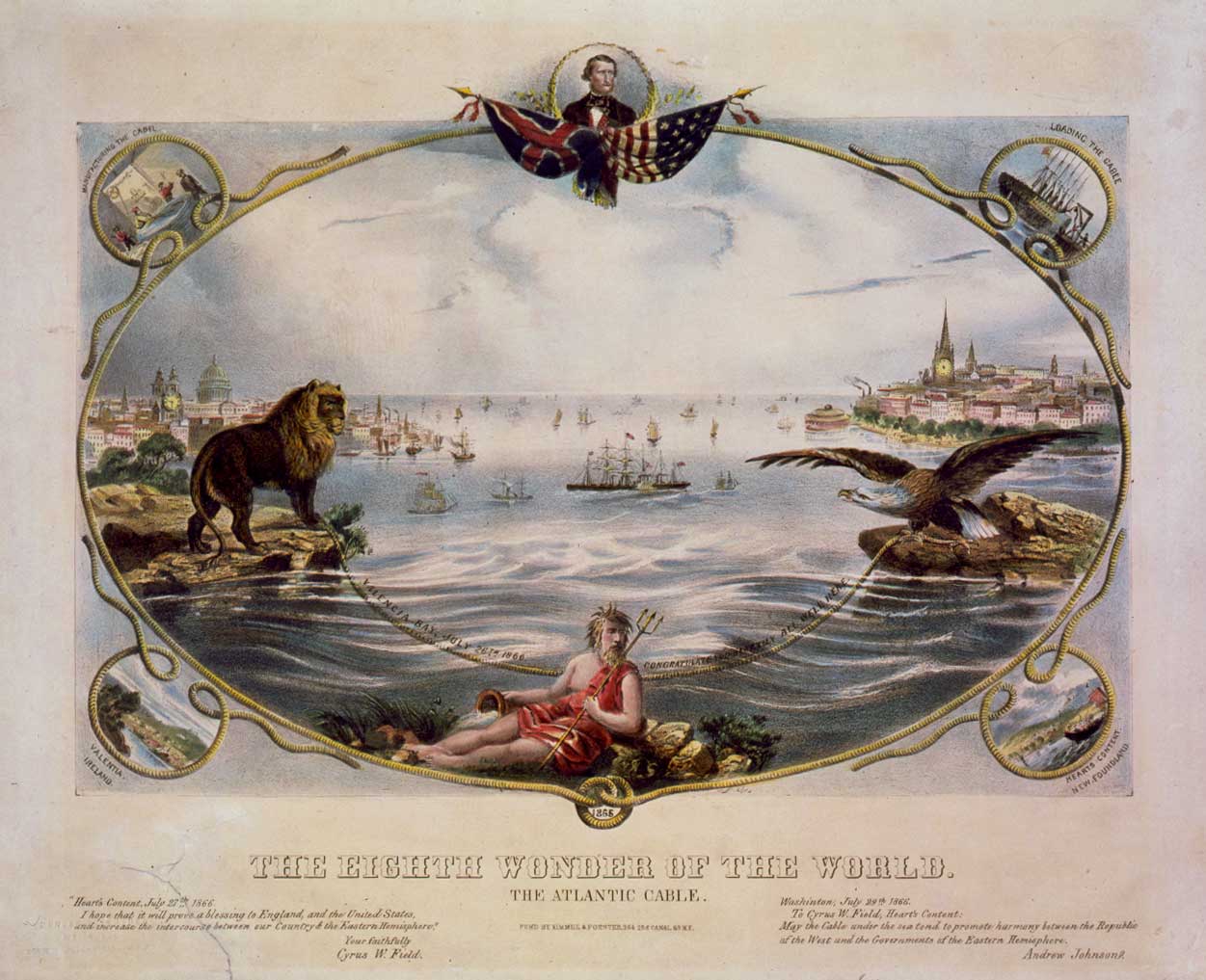
In July 1866, after the successful completion of the project which undertook to lay a single undersea cable through the North Atlantic, from Newfoundland to Ireland, this following commemorative print was created:

The Eighth Wonder of the World

The Atlantic Cable was the idea of the New York merchant and financier Cirus W. Field, who wanted to communicate with Europe in hours, not weeks, and in 1854, conducted the first trial of laying a 2,000 mile cable between the US and Europe. The first three attempts were not successful, but in 1866, his persistence paid off, and his cable worked. Needless to say, he was showered with due praise and honors for his efforts — one of them being this print.

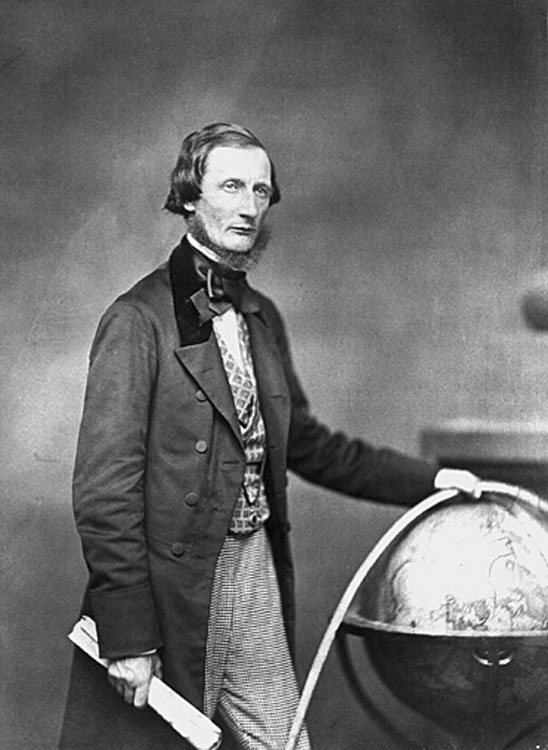
When you look at Cirus W. Field, the man, he wasn’t that imposing. He seems to have been of average height and thinner build, and yet, this is the man that laid the foundation of long-distance communication. Isn’t it wonderful what one person can achieve if they set their mind to it?

Cyrus W. Field, as photographed by Mathew Brady in 1958

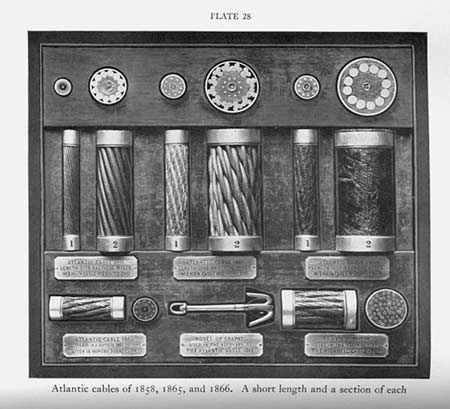
Just how did those trans-Atlantic telegraph cables look? You can see longitudinal and transverse sections of each size in this print:

Samples of the Atlantic cables used in the 1800s

The cables are quite complex, as you can see above. When you think that 2,000 miles of these cables had to be made, from scratch, in the mid 1800s, it’s no wonder they were at the time called the Eighth Wonder of the World.

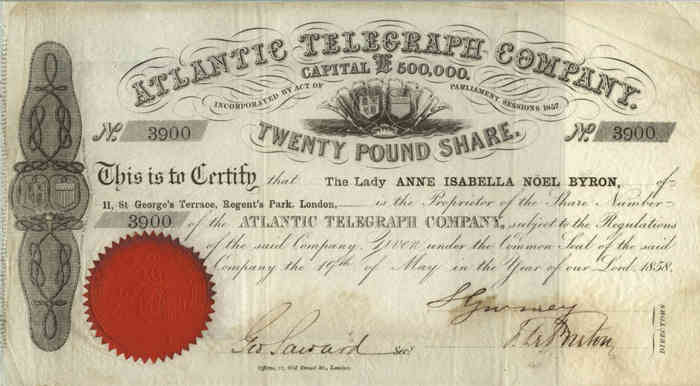
The failures to lay working cables before 1866 attracted controversy. You see, Cyrus Field didn’t finance the matter himself. He’d have been bankrupted many times over. He used other people’s money by selling shares in the venture. Here’s one such stock certificate, sold to Lady Anne Isabella Noel Byron, Lord Byron’s widow. This certificate lost most of its value after the failure of the 1858 cable, then became worthless until the formation of the companies which handled the laying of the 1865 and 1866 cables.

Atlantic Cable Stock Certificate

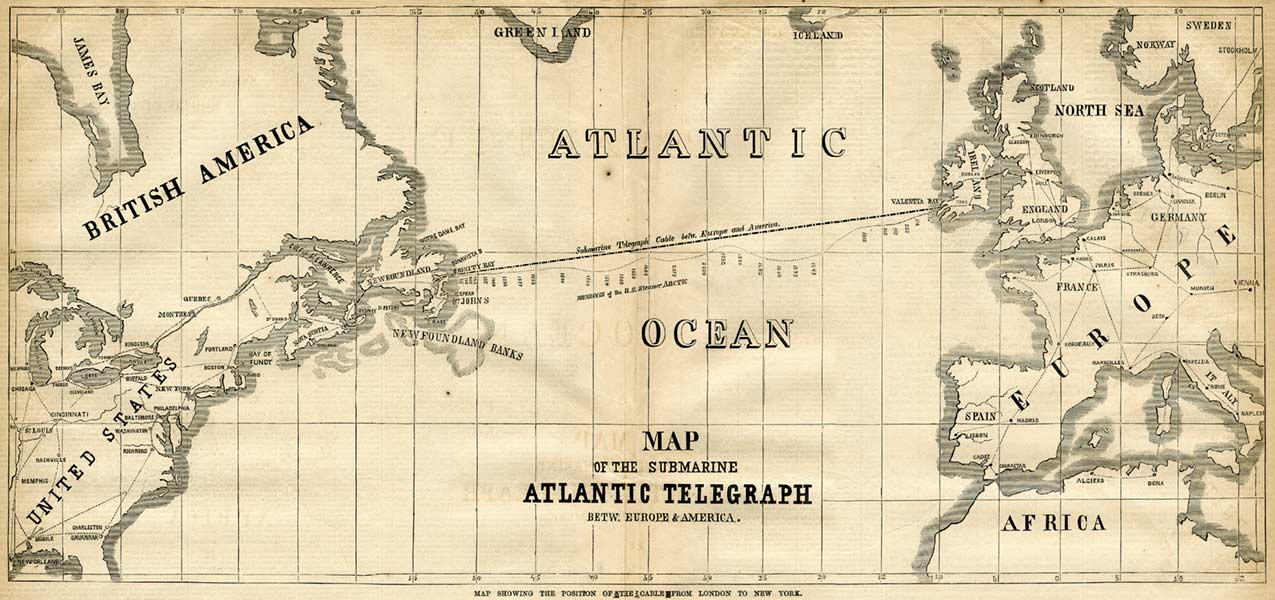
The route of the 1858 cable can be seen in the map included here:

1858 Telegraph Cable Map

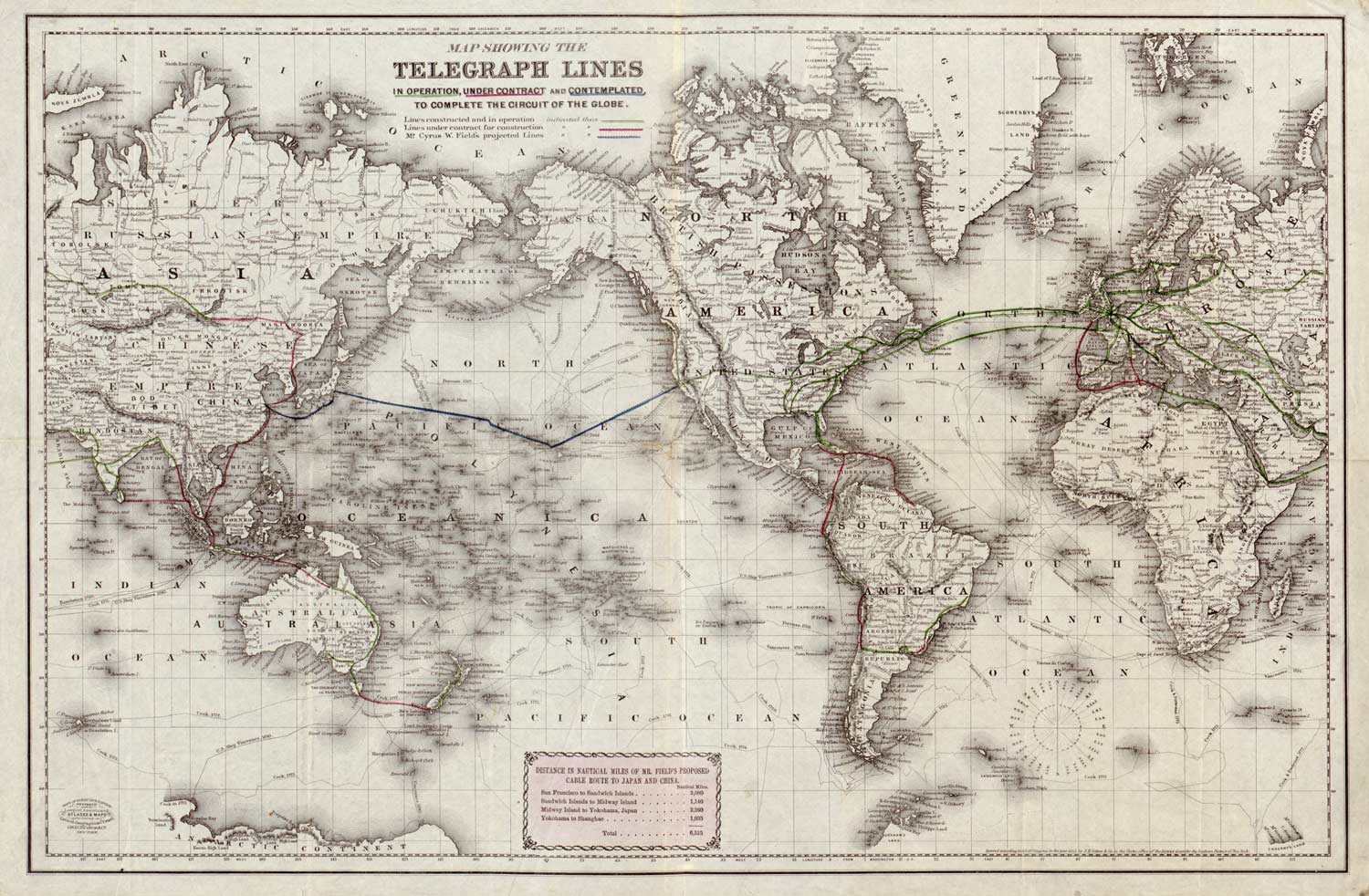
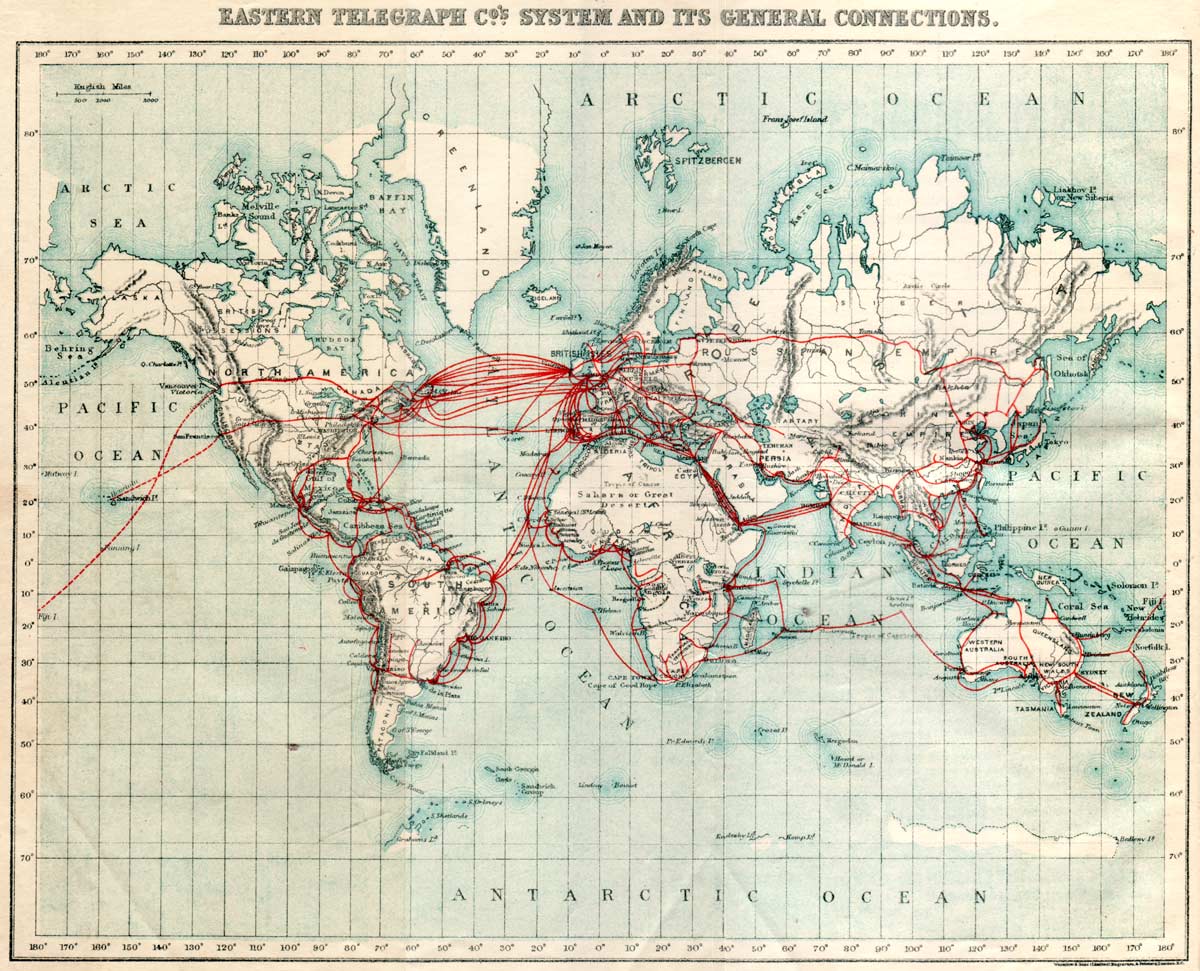
The routes of the cables available in 1870 can be seen on this map:

1870 Telegraph Cable Map

Pause here for a bit and think about this: in the late 1800s, these were all of the communication routes available in the entire world. That was it. There was no internet, no telephone, no TV, no radio, only written letters and telegraph. Oh yes, they also had Indian smoke signals, but they weren’t as widely used, and those communication lines aren’t marked on these maps as each transfer hub was assembled and disassembled on the fly.

It’s easy to complain about how much faster and more reliable our Internet access could be, but the fact of the matter is that we’ve made amazing strides in communication over the past century and a half. As I write this, I’m sitting at a desk in a village in rural Dobrogea, Romania, and am storing these letters or bits or whatever you want to call them on my server back in the United States, instantly, each and every time I press the “Save Draft” button in my WordPress Editor. That’s amazing, in and of itself.

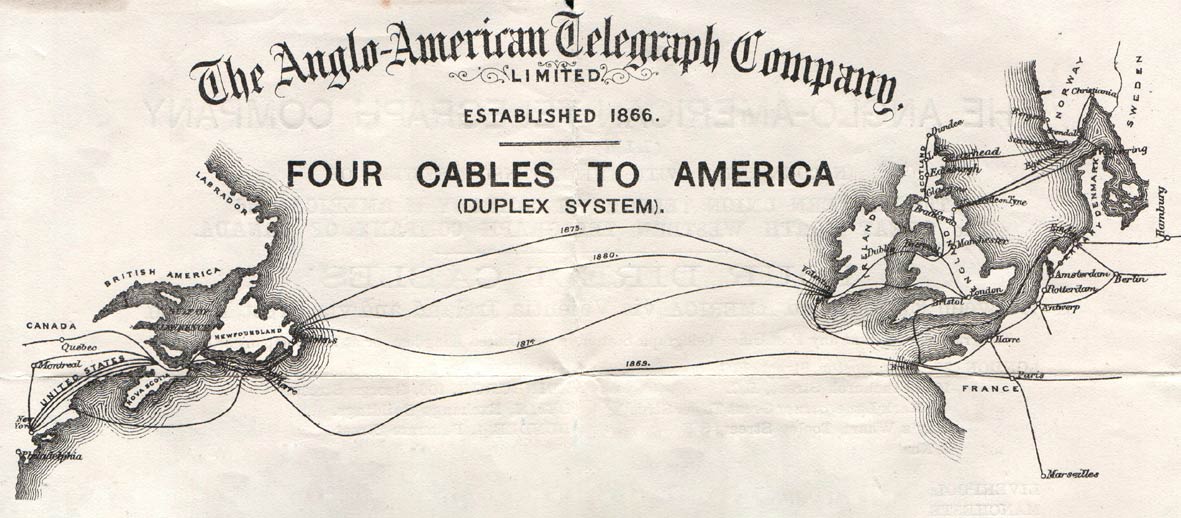
Let’s fast forward and see how fast things progressed from that single cable laid in 1866. By 1880, there were four cables already.

1880 Telegraph Cable Map

By 1901, there were 14 cables. That’s right, fourteen, from four just 20 years earlier.

1901 Telegraph Cable Map

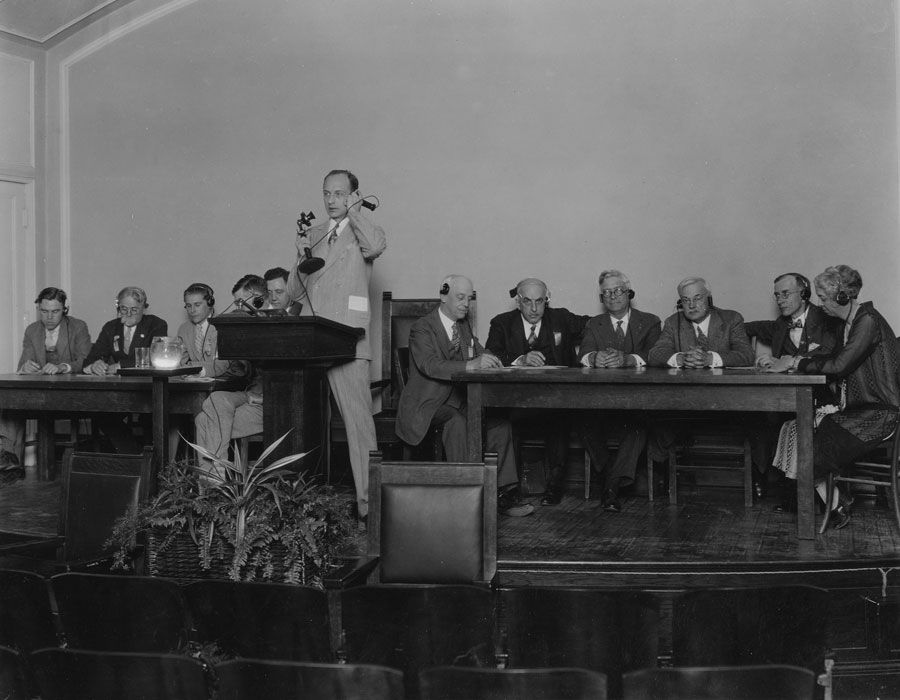
Although trans-Atlantic telegraph communications progressed quite fast, the first trans-atlantic telephone call did not occur until 1927. It was made from Columbia, Missouri, to London, lasted six minutes and cost $162, which was quite a large sum for that time.

The first trans-Atlantic telephone call, in 1927

Just think, now we can talk anywhere in the world for pennies a minute, or do audio or video chats with applications like Skype or iChat for free. We sure have come a long way!

Sources

Images used courtesy of the History of the Atlantic Cable & Undersea Communications and Missouri School of Journalism Archives.

Standard