
Post-It Love
Gotta love this short film, it’s awesome. It’s about a man and a woman who find love at the office. Their romance blossoms through Post-It note designs they make for each other.
Tag Archives: love
You can do better
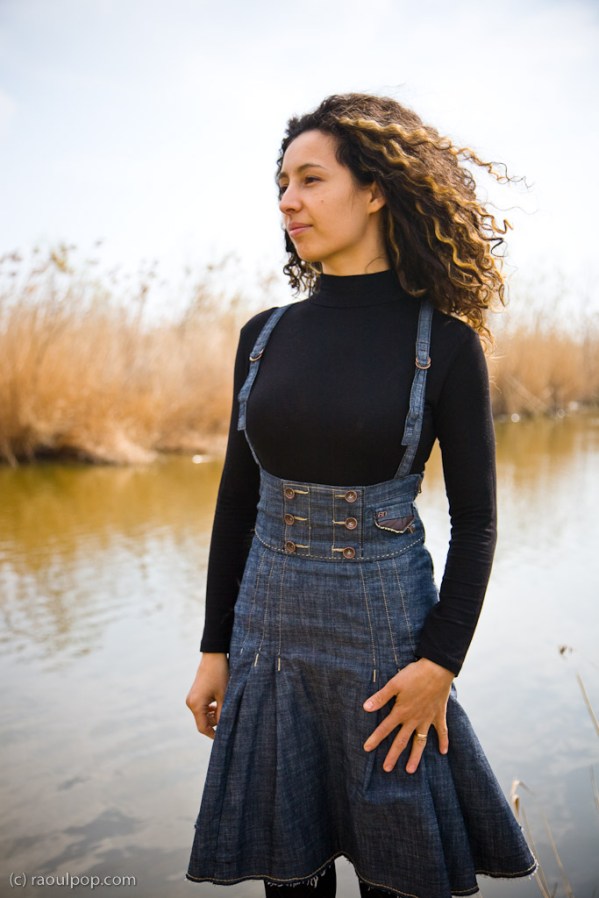
A couple of weekends ago, I was walking on the quay near the Casino in the city of Constanta. There was this girl sitting on one of the benches with a guy, supposedly her boyfriend. Her curly hair reminded me of my wife, so I watched them for a bit, to see how they fit together as a couple. I was disappointed.
The girl seemed nice, but the guy, a classic douchebag if I’ve ever seen one, kept forcing her to kiss him, pulling her toward him, and fondling her. She tried to resist, to keep a little distance and admire the view (it was a beautiful spring day) but all this douchebag wanted to do was to feel her up. Finally she gave in and let him have his way. That’s when I turned away, disgusted.
There are so many girls who simply give in. They’re pressured into relationships they don’t really want to have, into sexual acts they don’t really want to perform, into marriages where they’re not happy, and the list goes on, ad nauseam. They think a douchebag is all they’re entitled to in their lives. They think they’ve got to put out in order to get the relationship started and keep it going. They think abuse is normal.
None of that is normal. You can do better! Have a little self- respect. You will get the right guy, and he’ll be nice to you. You just have to be pickier, and have a little patience.
Have a look at my wife. It goes without saying that I think she’s hot. She could have had plenty of guys. But when she dated, before we met, she demanded respect from all those guys, didn’t fool around, and kept herself for her husband. You know what? Instead of being scorned for not putting out, she was respected all the more for her decision.
So really, it all comes down to how much self-respect you have for yourself, and what you choose to do with your life. If you’re not going to respect yourself, no one else will. Don’t put out. Don’t be like the girls in this other post. Wait for the right guy, or even more, look for the right guy. Don’t give up along the way. Don’t let every stranger that enters your life have dessert before they get through the main course. Put them through plenty of tests before they get to the goodies. Don’t cheapen yourself. Each and every one of us has a God-given capability to be more than we think we could be. I say reach for the sky, and see what happens.
Micropayments: the only equitable way to reward web publishers
The more time I spend writing and publishing articles on the internet, the more I realize that trying to get paid for my efforts through advertising is not a sustainable way to make a living. I get decent web traffic, but that’s not enough. Have you seen the going CPM rates these days? I’d need to get ridiculous amounts of traffic in order to see any sort of worthwhile profits, and even then, I’m not so sure the costs of running my website wouldn’t trump my revenues or at least take a big bite out of them.
The current system is messed up. Most web publishers don’t get tons of traffic, which also means they don’t make money. They’re lucky if they break even with things like Google AdSense or affiliate programs or other some other ad programs. They, like me, don’t want to load up their websites with ads, left and right, top and bottom, inbetween the lines and everywhere else. They just want to worry about writing and publishing informative articles. They don’t want to spend ¾ of their time (or more) advertising their site and getting their buddies to vote up their posts on Digg or StumbleUpon or who knows where else. They’d much prefer to not have that headache at all, and to only write and publish. But they can’t, because the system is faulty. It only rewards the very few who get the most traffic.
Do you want to know why newspapers aren’t making money these days? Why they’re going under? Sure, blame shoddy journalism, blame whatever else, but the truth is they relied mostly (or solely) on advertising for their revenues, and look where they are now. Subscription fees were kept artificially low, and as circulation numbers started to go down, they couldn’t charge their regular rates for ads, and revenues went down fast, in a vicious spiral that fed itself.
Had a decent micropayment system been in place, the web would be a flourishing, profitable, preferred way to make a living nowadays, instead of the insane, overloaded, “buy, buy, buy, look at me, no look at me, no, I’m better, wait, my titles are more interesting, I get more traffic, I make more money, I know how to increase your traffic, I have more free stuff” nuthouse that it has become. Everyone’s desperate to publish more articles, to make the titles and text more titillating, to grab an extra click from you here and there, to make you vote or like or bookmark their stuff so they can supposedly get more clicks and votes and likes and bookmarks and more and more and more meaningless crap that leads nowhere and contributes to nothing.
Unfortunately for the world and the web, micropayments were talked to death, even in the early days of the internet, and all the fancy initiatives went nowhere. A lot of people were wronged because no one bothered to get things going. Just think, all this time, web publishers of all sizes could have been making an honest living! Fortunately, this nasty situation can still be set right.
Here’s my micropayment initiative. I think it’s workable, and more than that, it would allow a lot of people to make a decent living by doing what they love: writing, not hustling and wasting their time pushing their site on people.
First, we need all the browsers and feed readers to work with the companies or organizations that would process micropayments. Whether the functionality is built in or added through plugins is up to the browser makers and feed reader makers to decide. Users would enter their account information directly in their browser’s or feed reader’s preferences, and their micropayment accounts would be automatically charged every time they access a micropayment-enabled article, on the web or via a feed. There’d be no logging in every time, like with PayPal, which is a hassle when all you want to do is read an article.
Second, search engines and websites would display the price of the article next to its title, just like they’d display the site or the date the article was written. The browser itself would display an extra icon when such a web page is accessed, just like it displays a lock when HTTPS websites are accessed. Perhaps a dollar sign or some other currency sign would show up next to the website’s address. If the user would move their mouse over the button, the price would be displayed, similarly to the behavior of the alt or title tags.
Third, and this would happen behind the scenes, the browser itself would read the price tag of the article the user is reading, and would send that information along to the micropayment service along with the user’s account information. Notice this means the user could use their micropayment service of choice — so there wouldn’t have to be just one — and the browser or the website wouldn’t care. The micropayment service would then transfer the price of the article from the user’s account to the web publisher’s account. The transaction fees would best be charged in bulk, per 50 or 100 transactions or so, and would be deducted from the web publisher’s balance.
That’s it! It’s so simple I just don’t know why it hasn’t yet been implemented.
As for the price of the articles, each web publisher could set their own price. I propose 5 cents per view. When candy and soda costs 75 cents to $1 or more, I think no one would balk at paying 5 cents to read a good article. But let’s have a look at some proposed traffic figures just to give you an idea how 5 cents can add up.
Say you get 5,000 views per month. That’s a modest amount of traffic, but at 5 cents per view, you’d still make $250 at the end of the month. That’s nothing to scoff at. Tell me if you wouldn’t be happy with that money in your bank account!
How about someone who gets 25,000 views per month? That’s a fairly decent amount of traffic. At 5 cents per view, they’d make $1,250 per month. That’s already a line of income. That’s money in the bank you could be using to pay your bills, but you’re not seeing it because micropayments don’t exist yet. Isn’t that infuriating?
How about someone who gets 50,000 views per month? That’s a nice amount of traffic. At 5 cents per view, they’d make $2,500 per month. That’s practically a decent salary right there. If you keep your expenses low, you might even be able to live off that in the US. If you lived in another country where living expenses are less, you could live nicely on that money.
The best part is this: it isn’t free money, and it isn’t money that could be yanked away if your advertisers get pissed off with something you wrote. This is money each and every web publisher has rightfully earned through their work, and yet there is no micropayment system out there to make this possible. This means all the web publishers out there are currently being cheated out of money they could be earning. Isn’t it ridiculous and completely unfair? Think of newspapers, where dedicated journalists work, day in and day out, and who have to close when they could focus their efforts on web publishing and turn a very nice profit with their traffic!
What about developing countries? I suppose the price for reading an article could differ based on your country of origin. The micropayment processor would automatically charge those countries less per article, say 30 to 40 to 70% less, depending on their general economic status.
What about subscriptions? They’re nice but not sufficient. They’re nice because you can predict your income more reliably when you know you’ll have so many subscriptions coming in every month, but not sufficient because users don’t pay per usage. If they end up spending less time on your site, then they’ll feel like they’ve wasted their money on the subscription. Also, just in case you haven’t noticed, subscription numbers are down everywhere these days. When money gets tight, subscriptions are among the first things to go.
What about goodwill, and doing stuff for free? That’s nice, and I already do plenty of stuff for free, but the problem with goodwill is that this world still functions with money. When was the last time you paid your mortgage with goodwill? When you buy your groceries, do you pay with a smile and a hug?
Micropayments are the best way to go forward. I wish people would stop talking about them already and someone would get going with the idea. It goes without saying — but I’ll say it anyway — that I for one would be glad to work with any legitimate company that wants to start processing micropayments.
It's Valentine's Day
Look what my sweetheart gave me for Valentine’s Day. It’s a gingerbread heart with the words “I love you” written on it, in Romanian.

This means more to me than any expensive gift. I like practicality. I like that I can eat this gift, and in the act of consuming it, I’m showing her that I love her gift. On the plus side, it also won’t sit around afterward on a shelf, gathering dust, fulfilling no practical purpose than that of decorum.
I think that’s what Valentine’s Day ought to be about. Not necessarily about gifts one can eat, because we should all watch our waistlines, but about gifts that show the other person that they’re loved — small gestures that mean a great deal.
Interestingly enough, those sorts of gifts never really cost much. As a matter of fact, showing your loved one that you still care can be a simple as holding her hand, or hugging her more often, or kissing her. How about treating her nicely, all the time? That doesn’t cost any money, but it does cost you some pride if you need to swallow some harsh words instead of speaking them.
Here’s a photo of us in Predeal, a winter destination for Romanians. It’s nestled in the Carpathian Mountains, and it’s the easy access to skiing and other winter sports that draws people there. We visited it recently. We are at the top of one of the peaks, at the end of the telechair ride, when we took this photo. I sat the camera on a ledge, which is still visible in the lower left corner, and put it in self-timer mode, then stepped back to join my wife.

Happy Birthday Tataie
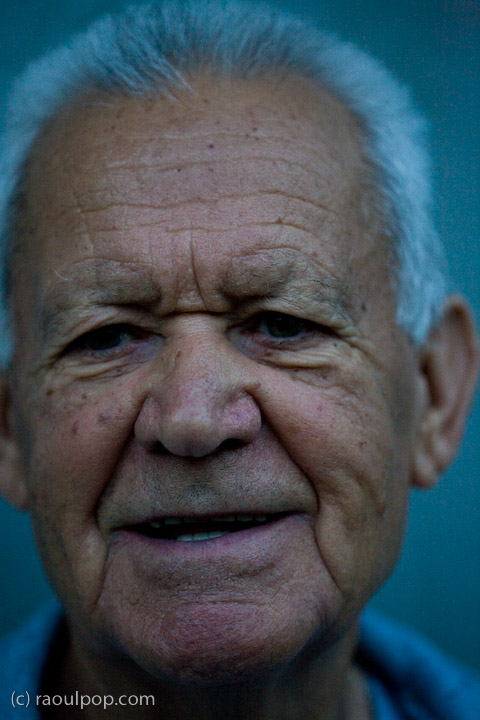
It’s my grandfather’s birthday today. He died just a couple of weeks ago after a painful struggle with mesothelioma, a form of cancer caused by asbestos exposure.
He’d been coughing for a few years. It was a persistent cough, but it wasn’t a severe cough. He coughed here and there, and especially after he came into a cooler room after working outside, in his beloved garden. Then things got worse. He kept getting cold-like symptoms and coughing more. When doctors in Romania examined him, they discovered water in one of his lungs. They started drawing it out with syringes regularly, liters at a time. A lesion of sorts developed at the site where they kept inserting the needle. A biopsy of the lesion revealed nothing. Things didn’t improve.
My parents hoped that the Florida weather would do him good, so they brought him to the States. He loved the weather, but didn’t get better. They thought US medical care would be better than Romanian medical care, so they put him in a hospital here. Doctors literally paraded by his bedside by the tens, specialist after specialist, all of them clueless. Oh, let’s try this, let’s try that, blah, blah, blah — that’s how the story usually goes. X-rays and CT scans and urine and lab tests every day, and still they couldn’t figure things out.
Finally they decided to open him up and see what was going on. That’s when they discovered he had mesothelioma, with a few “localized” tumors in his right lung. But they still couldn’t figure out what to do about the water accumulation, so they proposed to insert talcum powder between the lung walls, in the hope of sealing that chamber and stopping the leaks (that’s apparently a standard procedure for this sort of thing).
So they opened him up again and inserted the powder. Water still accumulated, this time more slowly, but it still happened. Then he developed difficulty swallowing. They stuck tubes with cameras down his throat. More CT scans, more X-rays, and still no idea why. Well, let’s enlarge his esophagus and cardiac sphincter (the opening from the esophagus to the stomach.) That might help… Well, it didn’t. He still had trouble swallowing.
They didn’t know what else to do for him, so they released him from the hospital. The bill came to well over $100,000, and my grandfather was no better than before. He was worse, and now he had to contend with pain from the surgery and the other procedures done on him while in the hospital.
My mother had to blend everything into a soupy puree before feeding him, and still he had trouble swallowing. He withered and dried out and lost tens of pounds. He was hardly recognizable, but his spirit was still well, and he hoped he’d get better. That was the hardest part, to see him trying to eat and unable to swallow, then leave the table with a horribly sad look on his face.
We knew he wouldn’t last long like that, so we convinced him to return to Romania, where at least he could die in his own home, if it were to come to that. Once he got there, my aunt, who took care of him, put him on IV fluids. He got a little better. We decided to try seeing some specialists there in Romania, so she took him to the hospitals in Sibiu and Timisoara.
If you don’t know how the healthcare system works in Romania, I’ll tell you. It’s based on heavy bribes. If you don’t bribe the doctors and nurses, no one cares about you. No one even looks at you, and you’re treated like scum. If you have the money to give them, you actually get somewhat decent service, depending on how much you give. You can’t lay the blame entirely on the medical personnel for this practice though. Doctors’ salaries are horribly tiny, smaller than the salaries of some janitors at well-to-do companies. So they need cash infusions from the patients in order to be able to live properly. But the way they go about it is disgusting to me. And there’s no telling when they’ll make up stuff about your condition just so they can get more money out of you. They’ll even do extra procedures (if they’re unethical people) so you’ll pay them more.
Once in the hospital, they slipped a feeding tube through his nose and into his stomach. In Sibiu, they opened him up again and discovered some lesions on his esophagus, and some on his stomach. They said he needed his esophagus replaced, but that they couldn’t do the procedure, and that he needed to be sent to Timisoara. We believe the doctor who operated on him at Sibiu twisted his stomach or intestines around and caused a severe blockage in his GI tract, because his digestion and regularity were never the same after that.
In Timisoara, the specialist who was to replace his esophagus with a silicone stent bragged to high heaven that he was the only one doing the procedure in Romania and in the entire Western Europe. If that sounds phony to you, don’t worry, you’re right. He just wanted to make sure he got enough money for the job. He ended up operating on my grandfather, but replaced less of the esophagus that he’d originally said. We’re not sure why. Things went completely downhill from there.
My grandfather never recovered from that operation. His situation got worse and worse every day. Now he couldn’t digest his food at all, even the soups he was fed through his tube. He coughed up blood and fluids of various colors. He got thinner and more dehydrated every day. My aunt put him back on IV fluids, but they didn’t help. He was in horrible pain, throughout the day and night. He moaned in agony. He couldn’t sleep. When he did manage to sleep, he would writhe and cry out in anguish. He was dying.
Four days before he died, he asked my aunt to make the preparations for his burial. He knew it and he was ready. He asked her to let him go, to stop trying to keep him alive. She couldn’t stop caring for him, but she knew it was going to end anyway. He looked forward to joining my grandmother in the grave next to hers.
And then he died in the evening. I got the call from my mother. She was crying. I couldn’t cry. I knew what he’d been through, and wanted him to get the rest and peace he so badly needed. I was angry with everything that had happened to him, and still am. Why did he have to die in such pain? Why did he have to encounter the utmost morons in his quest for decent medical care? Why did he have to suffer so much?
We don’t know when he got exposed to asbestos. It wasn’t uncommon in communist Romania to get exposed to dangerous conditions or materials. He worked at the same factory all his life, and got promoted to chief technical engineer from a humble line worker. He came up with various inventions and improvements during his career, and was even decorated by Romania’s dictator, Nicolae Ceausescu, for his contributions. I’m not saying this because I care about Ceausescu, who was a horrible man, but I care about my grandfather and about his life’s work, and was glad to see him get recognized.
For me, my grandfather’s suffering serves to underline how little medical science really knows about the human body, and how horribly few things they can do to cure people. In spite of all our technology and advances and drugs, when it comes to treating disease, our options are very limited, and very primitive. We can:
- Mask the symptoms by treating them with drugs
- Cut into people and butcher them with plain knives or sear them with electric knives, then sew them up with string
- Poison them with radiation therapy and chemotherapy
I remember my frustration with this while in medical school, and perhaps it had something to do, subconsciously, with my leaving it to return to IT work. At least in IT you can find out what’s really wrong and can fix it either through code or hardware replacements.
What my grandfather’s death also showed (amply) is how many idiots there are in the healthcare system. My God, we have so many doctors out there that can’t diagnose their way out of a paper bag, and they run test after test and try this and that and still can’t figure out what’s wrong. I’m fortunate enough to know there are good doctors (although they’re few and far between) who know how to diagnose with much less information at their fingertips, because I’ve met some of them.
If all these retards can graduate medical school and can pass the boards, then clearly medical education isn’t doing its part in weeding them out. I had plenty of them in my class in med school, too. They were the ones who got by very nicely by rote memorization. Worked great, until you asked them to analyze something — then they looked at you like a hen looks at a newspaper.
Another one of my beliefs was reinforced: that the overwhelming majority of nurses are lazy asses that don’t care at all about their patients. I’m sorry if that offends you, but that’s the truth. I know this because I saw they way they treated my grandfather, and I saw the way they treated other patients over the years.
All nurses seem to want is more money and more benefits for as little work as humanly possible. Oh sure, they put in a lot of “hours”, but most of those hours are spent socializing at the nursing station, not by the patient’s bedside. What’s unfortunate is that the market is tilted so much in their favor right now (and will continue to be for the next several years) that nothing significant can be done about it. There’s a nursing shortage, and that means we’re going to have mediocre, good-for-nothing nurses in all of our hospitals until supply meets demand, and hospitals can start to weed out the non-performers.
I tell you, the nursing profession will not emerge unscathed from this. The stink caused by these bad nurses will taint the good ones, too. The good ones are out there, I’ve met some of them, and when I say they’re good, I honestly mean it. They’re great, and they care, and they know a lot, but they’re few and far between, and they’re mostly in academia.
Coming back to my grandfather, I think of my grandmother’s death two years ago, also in June. A week or so after her burial, it was my grandfather’s birthday, and I remember him celebrating it with us, his family, but without his beloved wife. The sorrow was evident on his face, even through his smiles, and there was nothing any of us could do for him but to try and cheer him up.
Now, he’s resting in the grave, and it’s his own birthday. There’s no birthday celebration now. Just pain and a feeling of irreplaceable loss.
Rest in peace, tataie. You taught me how to build and fix things and work in the garden, and how to use tools and paint and be the man I am today. You were the first man I looked up to, the first one that made me want to learn how to shave. I saw you do your best, every day, to care for and protect your family. You never spoke much, but you did much. You were loved, and are loved. Rest in peace.
 Raoul Pop