Places

The Bolyai Castle

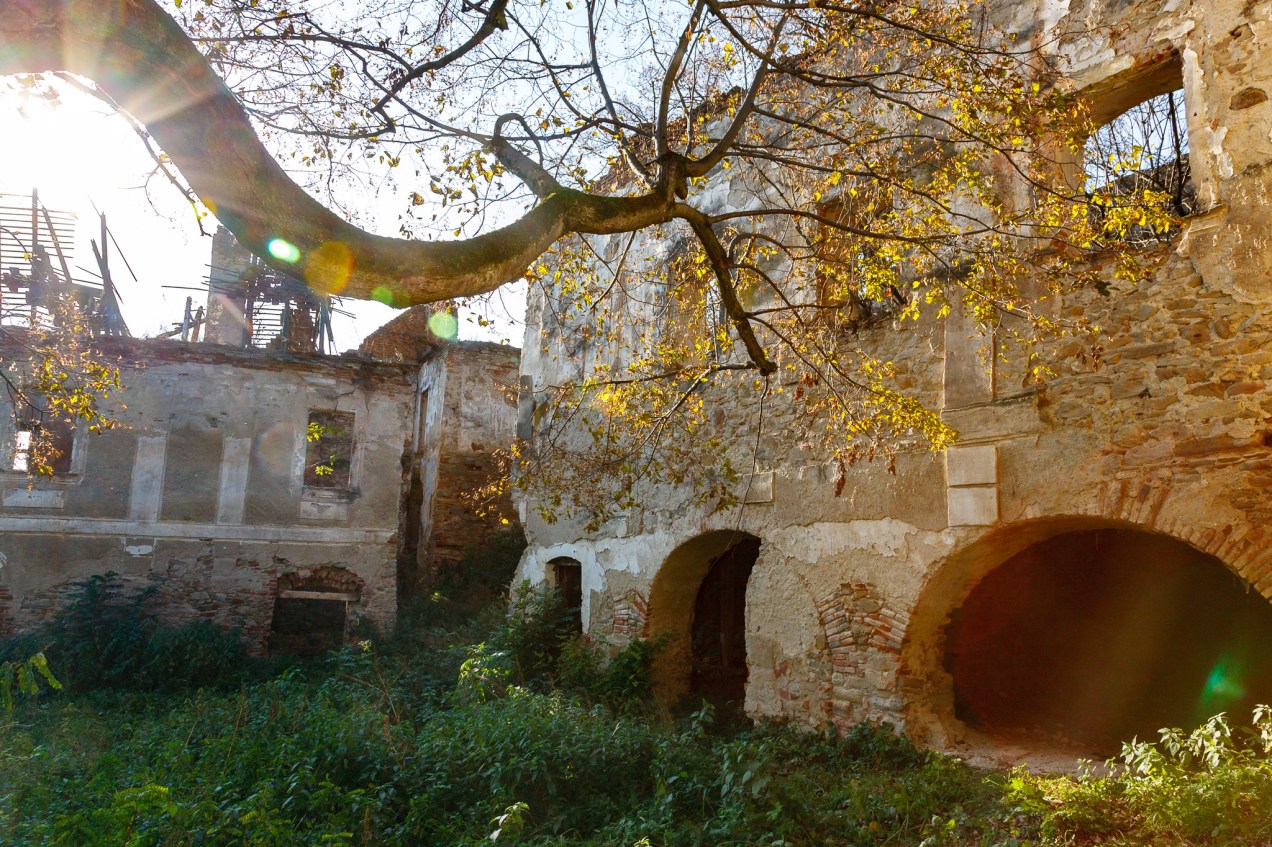
This castle with a rich history is now found in an advanced state of ruin in the out-of-the-way village of Buia (“Bell” in German, “Bólya” in Hungarian) in Transilvania, Romania. I took these photographs in 2009. I don’t know how much of it still stands today, eight years later. The castle isn’t big but it is interesting in its mix of gothic and baroque architecture and it must have looked beautiful when it was in good shape. In its heyday, it had 12 rooms. The courtyard was paved and furnished with stone tables and chairs. Outside, there was a walking alley lined with chestnut trees. Pine trees were planted all around the castle. One source says the castle’s chapel possibly existed even before the castle itself and was integrated into one of its wings afterward. Another source says there existed at one point a particularly gruesome execution room where the guilty were thrown into sickle blades, and that there was a tall linden tree just outside the castle where people were hung and kept there as an example for others.

The full name of the place is the Toldi-Bolyai Castle and its construction dates from 1324. If the name Bolyai sounds familiar to you, that’s because the largest university in Romania is named Babeș-Bolyai and it’s in Cluj-Napoca, about 2 hours away by car from this castle. Another written mention from 1467 says it belonged to Vízaknai Miklós, about whom I cannot find more information, but given that Vízaknai is Ocna Sibiului, which is not far away from Buia, I take it Miklós was the ruler of the region at that time. In 1599, we find the castle in the possession of Mihai Viteazul, a legendary Romanian ruler, to whom it was gifted by Báthory Zsigmond (the ruler of Transilvania at the time) after the battle of Șelimbăr, along with a number of villages in the area. After Mihai’s death, the castle came to the Gálfi family; Gálfi János left an inscription above the castle’s entrance which is barely visible now. It was then gifted to Toldi György (hence the castle’s name) by Bethlen Gábor, who was Prince of Transilvania at the time. The Toldi family kept the castle until the 19th century. In 1920, the castle became the property of the government of Romania. A village dispensary was built there by modifying some of the rooms for the needs of medical personnel. It functioned until 1978, after which the place was left to the winds and was used for the storage of various village goods without any care at all for its state.

Standard
Places

The fortified church in Bahnea

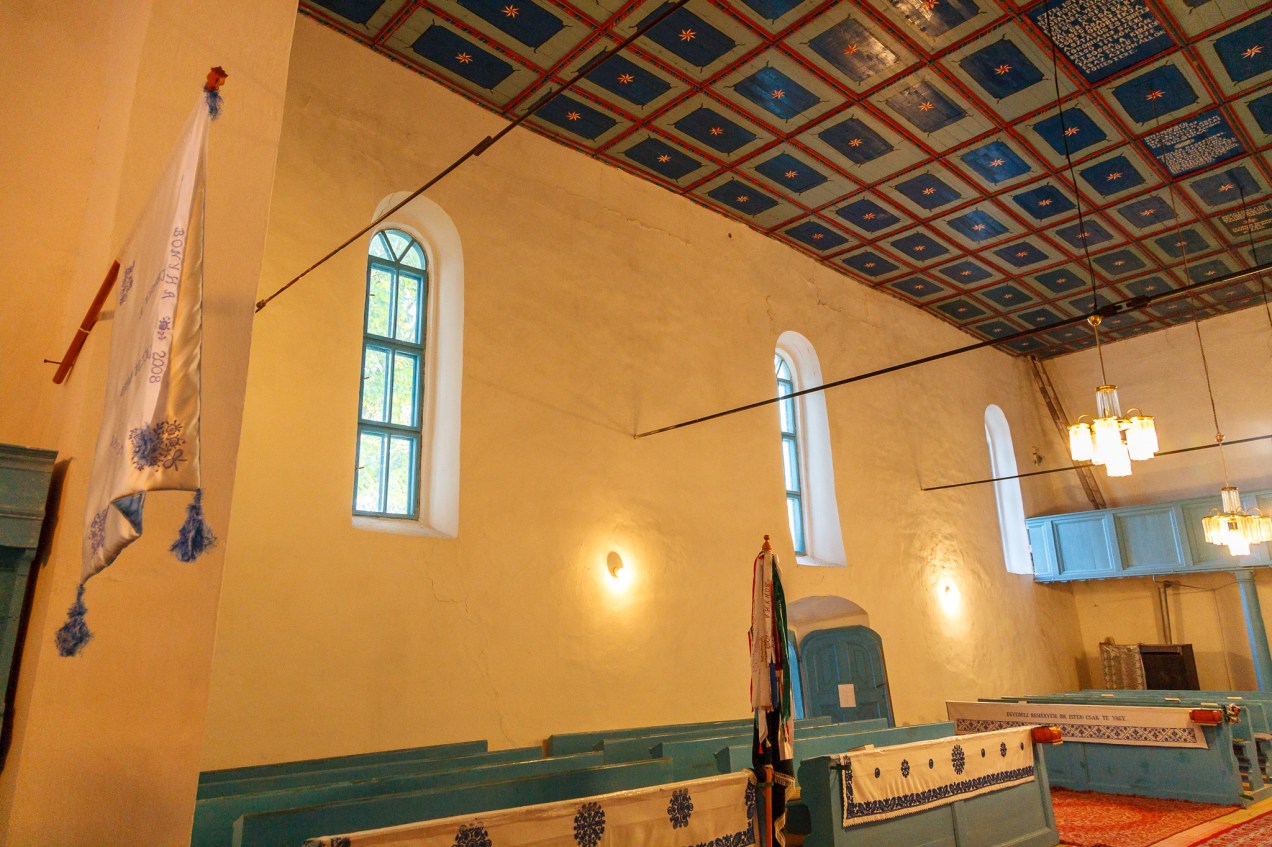
This historic church is a bit harder to find. Bahnea (“Bachnen” in German, “Bonyha” in Hungarian) is a small village off the main roads, which you can only reach by driving on narrower county roads. The church itself is also hard to spot even when you’re in the village, because it’s hidden away behind the houses and backyard gardens, on a small hill. Here is a link to its location on Google Maps. It is a beautiful structure though, with lots of history, and the priest is an easygoing Hungarian fellow who is glad to talk with you and show you around.

The village is first mentioned in written documents in 1291. The church dates to the beginning of the 14th century, sometime between 1300-1350. The owners of the church (and the village) were the Bánffy family, an old Hungarian aristocratic family with lots of history and properties (castles and palaces) in Transilvania.

Just like the Saxons, the Hungarians who came to live in Transilvania were initially Catholic and later became Reformed. The Saxons became Evangelical around 1500 and the Hungarians became Reformed around 1600. So it was with the Church. Built Catholic, its walls were adorned with frescoes and its columns with various sculptures and Green Men. Come the Reformation, the frescoes were whitewashed and some of the sculptures defaced, and they stayed that way until the 20th century, when a restoration effort uncovered some of them.

Enjoy the photographs!

Standard
Places

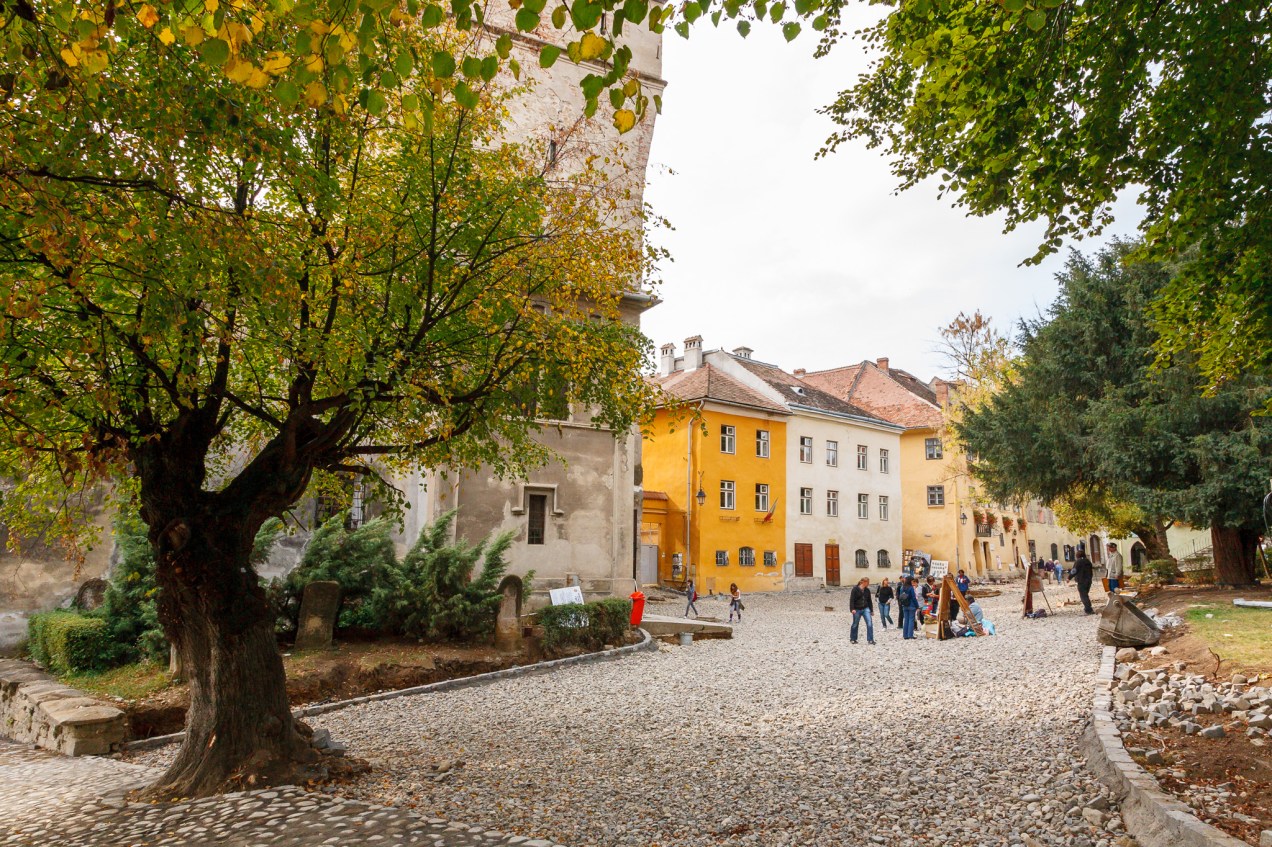
Sighisoara: on the beaten path

As opposed to these photos, the ones you’ll see here are popular sights most tourists get to see (or not, depending on what they’re looking at). Enjoy!

Standard
Places

The fortified church in Copsa Mare

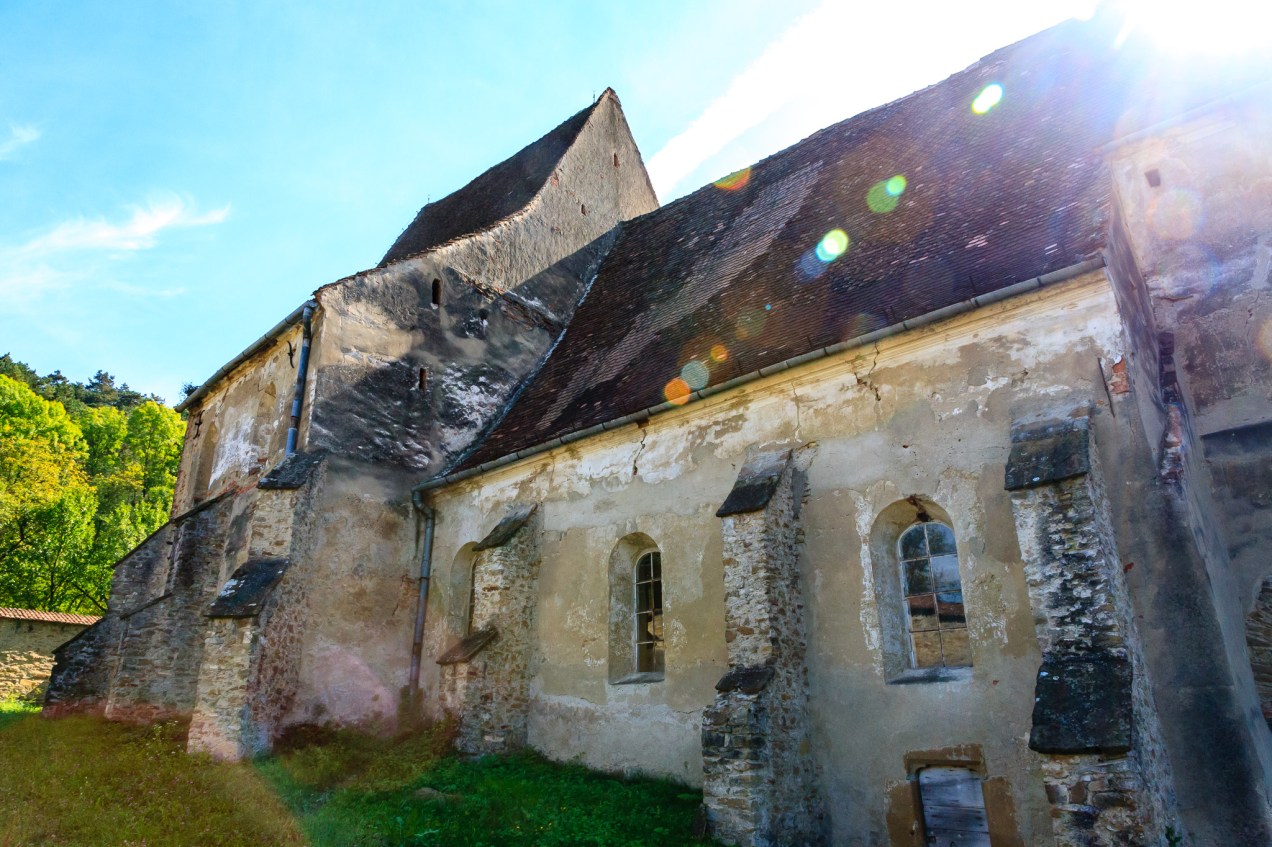
The construction of the Saxon church in the village of Copsa Mare (“Gross-Kopisch” in German and “Nagykapus” in Hungarian) started in the 14th century and underwent transformations in order to further fortify it in 1510, 1519 and 1797. In 1800, the organ was installed. In 1854, the Gothic altar was replaced with a Baroque one. The fortified wall was added in the 16th century, in 1519 to be more exact.

The village was once renowned for its vineyards. The Saxons who lived there owned the largest and best-known vineyards of Southern Transilvania. The village is first mentioned in written documents in 1283 and from those documents it can be deduced that an earlier church structure existed where the current one resides.

Planul_fortificatiei_din_Copsa_Mare

Enjoy the photographs!

Standard
Places

The fortified church in Richis

This church in the village of Richis (“Reichesdorf” in German and “Riomfalva” in Hungarian) was built sometime between 1350-1400 and it initially functioned as a Cistercian abbey. The abbey did not have a bell tower to begin with because the Cistercian order was not allowed to have them. In 1400, it became a Catholic church and a bell tower was built as a separate structure from the church. In 1500, the fortified wall was built around the church, to defend it from invading tartars and turks.

Sometime between 1540 and 1550, the Saxons became Evangelicals and converted the decorations of the church to what they deemed as a more austere place to worship. They tore some of the medieval ornamentation, particularly the sculptures, and they whitewashed the walls, inside and out. It was only in 1957, when the newly arrived priest led an effort to scrape away the lime whitewash and restore the church that the early gothic motifs were rediscovered.

The church interior is abundant in unique animal, vegetal and human motifs. The most captivating is the “green man”, a symbol of nature’s fertility. Another symbol of the natural wealth in the region is the very name of the place, Reichesdorf, which means “wealthy village”. Should you visit, you’ll want to see the 1775 baroque altar made of sculpted wood, illustrating the Crucifixion.

The local guide of the church is Mr. Schaas, one of the few Saxons left in the village, whom you’ll see in the gallery I’ve published here. He always welcomes visitors and is glad to tell the story of the church to you.

Enjoy the photos!


Standard