Lists

Gadget Monday – February 23, 2009

Here are this week’s seven cool gadgets.

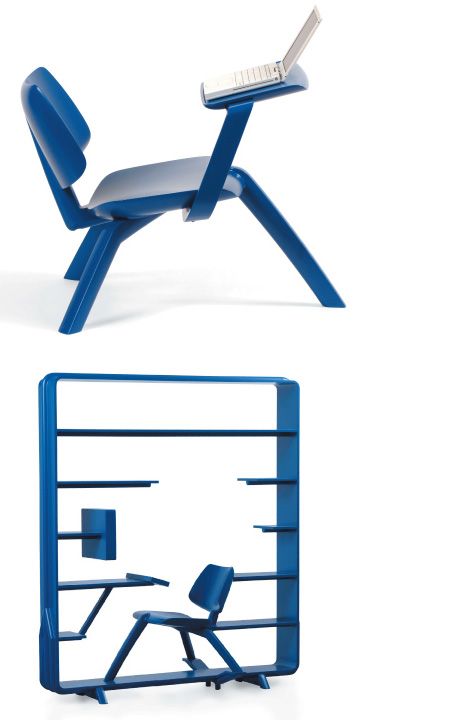
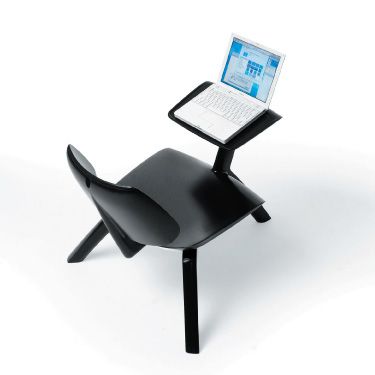
Cleanroom Chair and Cabinet-Chair by Ontwerpers

This new furniture design features a laptop pad built into a chair. No word on what the material is — I don’t know if it’s wood, or foam-coated wood, or plastic, but I think the design is really neat. As you can see below, there’s a chair built into a cabinet as well, which means you’ll have an all-in-one unit where you can sit, use your computer, and store your books and other stackable media.
[via LikeCool]

Sanyo eneloop Rechargeable Batteries

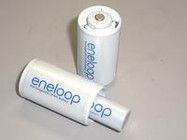
The Sanyo eneloop batteries have a very low discharge rate, unlike other rechargeable batteries, which means they’ll still retain up to 85% of their charge, even after 1 year. They also come pre-charged from the factory, which means they’re ready to use, right away. And they can be recharged 1,000 times or more.
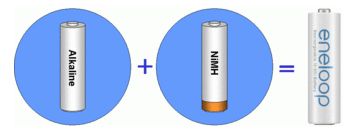
Sounds like I need to get some of these batteries myself. My Energizer rechargeables have no charge left at all after they’ve spent a 2-3 weeks in their storage case.

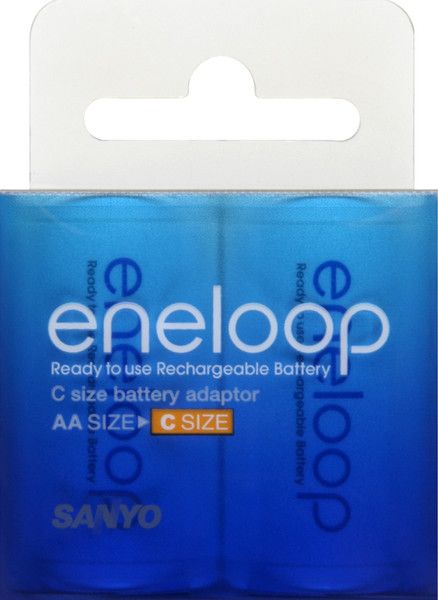
The eneloop batteries come in AA and AAA sizes, and should you need them, they have adaptors for C and D sizes as well.
Sanyo eneloop Rechargeable Batteries - 5

Sanyo eneloop Rechargeable Batteries - 6

[via Your Photo Tips and Sanyo and Trevor Carpenter]

5-Minute Candles

The concept is so simple, and yet that’s what makes it cool. These are mini-candles packaged in a small matchbook. There are ten of them in each book. Carry them with you for any special occasions. They can be stood up inside the package or placed on a cake. A pack of 4 matchbooks at 10 candles each (40 candles total) sells for $6 from Pokito.

[via Trusty Pony and Poketo]

Verbatim Speaker Keyboard

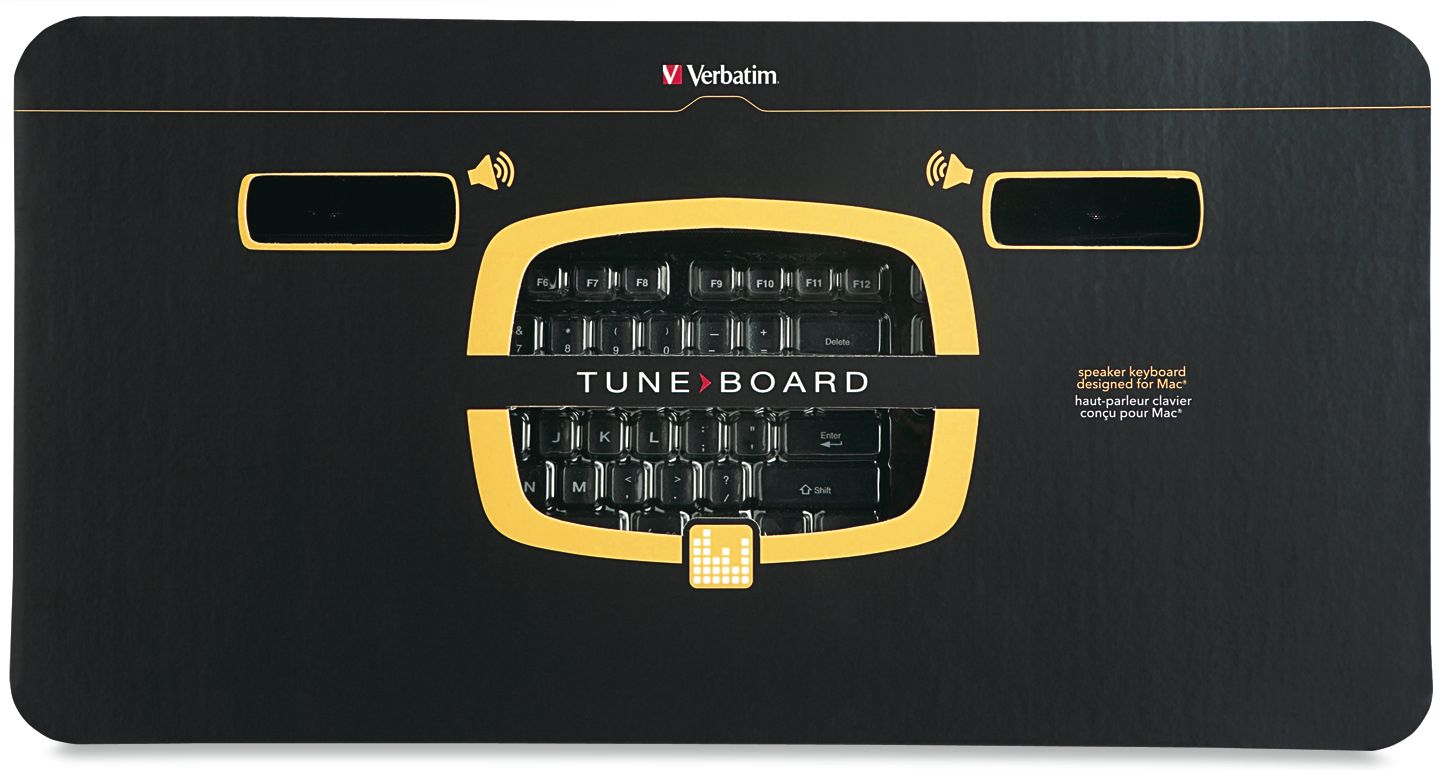
Verbatim has a new keyboard that will work with both Macs and PCs. The neat thing about it is that it has built-in speakers and backlit keys. The built-in speakers will reduce the clutter on your desk, and the backlighting will let you type accurately at night.

[via Beta News and Verbatim]

Levitating Light Bulb

The levitating light bulb is a project that uses Nikolas Tesla’s wireless power transfer technology, invented in the 1890s. The bulb and the casing contain hidden circuitry that uses electromagnetic feedback to keep the lightbulb in the air, approximately 2.5″ from the lower surface, while also transferring electric power to it wirelessly. As you can see from the demo video on YouTube, the technology isn’t perfect, and the light isn’t constant, but it’s still a wonderful step forward, and as a science project, it’s very interesting.

[via LikeCool and bea.st]

Stainless steel Ofuro

A Japanese-style hot tub that looks like a cooking pot. It’ll set you back a pretty penny with its $20,000 price tag, but if you’re a spender with a lot of money, what’s $20K… On the plus side, it’s built of a 14-gauge steel and chromium alloy, and has insulation built into its walls, so it retains the water temperature. I like the design, but it’s too much for my wallet.

[via LikeCool and Hammacher-Schlemmer]

The Covert Carry On

This rolling duffel bag is actually made of two parts: a regular duffel bag, and a lower part, which contains the bag frame and rolling wheels. You zip them together when you enter the airport, and when you reach your seat on the plane, you zip apart the top, which can be stowed under the seat, and put the bottom part in the overhead bin. This allows you easy access to the various items you may need during the flight, such as snacks, a pillow, or a book. It’s a great idea.

[via Trusty Pony and Hammacher-Schlemmer]

Standard
Lists

Gadget Monday – February 16, 2009

Here are this week’s seven cool gadgets. Did you see last week’s edition of Gadget Monday?

Parans luminaires

A company called Parans has come up with a way to bottle sunlight and deliver it inside office spaces or homes as natural lighting.

The concept is remarkably simple yet works wonderfully. They have sunlight collectors sitting on the roof or exterior walls of a building. They look like this.

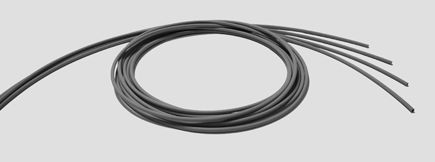
The light then gets concentrated and carried through special fiber optic cables created to preserve all of the light’s characteristics.

These cables are then connected to special light fixtures that diffuse the natural light indoors. They can be panel lights or floodlights.

With this new lighting method, employees or home owners get all of the benefits of natural sunlight in rooms where they normally can’t get it and don’t need to spend money on electricity or electric lighting appliances. I’m not sure what the cost is, but I’d love to see companies take up this new lighting method. Just think, all those employees sitting in tiny cubicles under fluorescent lighting, not seeing the light of day, all day long, all week long, could instead be bathed in natural light, which would cheer them up and boost their productivity.

Images used courtesy of Parans.

World Clock

Someone has come up with this world clock, built in Flash. It shows the time of day where you are in the world, but it also lists all sorts of important statistics, like world population, births, population grown, divorces, cancer incidence, forest lost, species extinct, and deaths. The death statistics are interesting because they’re broken down by reason, such as TB, AIDS, malaria, cancer and others. You can click on buttons that re-calculate the statistics per year, month, day or now. It’s definitely worth a look.

World Clock

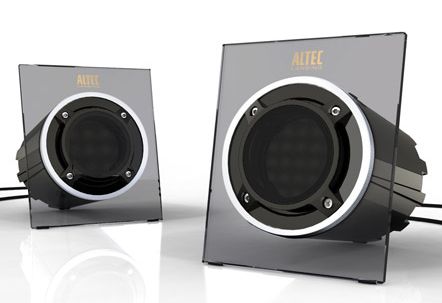
Altec Lansing expressionist CLASSIC speakers

These speakers would go great with an iMac or an all-in-one PC. They have a clear, square face that holds the cylindrical enclosure for the speakers. They connect to your computer through a regular 3.5mm audio cable, and they have an auxiliary input for iPods or other MP3 players as well. The output is 7.5 Watts per channel.

Altec Lansing expressionist CLASSIC computer speakers - 1

Altec Lansing expressionist CLASSIC computer speakers - 3

Altec Lansing expressionist CLASSIC computer speakers - 4

[via Cult of Mac and Altec Lansing]

Addonics NAS Adapter

This little device, slightly bigger than a C battery, will turn any USB external drive into a network drive. You simply plug the USB cable into the Addonics NAS Adapter, and you connect the adapter to your router with a standard network cable. Its USB port is powered, which means you can even plug in a small portable USB drive, and you won’t need to worry about connecting it to a separate power supply.

Addonics NAS Adapter - 1

The adapter is compatible with any version of Windows, Mac OS X and Linux (2.6.x and higher). It supports the Samba protocol for up to 64 clients, has a built-in FTP server for up to 8 clients, and can be used as a print server or Bit Torrent client. You can manage it through its built-in web interface. The best part is that it retails for only $55. At that price, it’s a must-have.

Addonics NAS Adapter - 2

[via Engadget and Addonics]

FloDesign Wind Turbine

This new turbine, created by Massachussetts-based FloDesign, uses jet engine aerodynamics to extract more energy from the wind. It is still a horizontal axis turbine, but its patent-pending design focuses air flow and speeds it up, which means its blades can rotate at lower wind speeds. Because it uses jet engine technology, which is an enclosed design, this means it can also rotate at much higher speeds, and is also safer to be around. The blades orient themselves to the wind automatically because the turbine is equipped with a fin that acts as a windvane. The product hasn’t launched yet, nor is the company taking orders yet, but I for one look forward to seeing this on the market.

FloDesign Wind Turbine

There’s also a demo video on YouTube, which explains the technology in more detail.

[via Gizmag and FloDesign]

musicPower Encore Portable USB Power Supply

This neat gadget has rechargeable batteries inside. You plug it into an outlet while you’re at home to recharge its batteries, then take it with you while you travel. If you run out of juice for your iPhone or iPod, you simply plug those devices into the musicPower Encore, and they recharge using the energy stored inside. It’s a neat way to transport the energy you need to keep your toys working. It sells for $20 at ThinkGeek.

musicPower Encore USB Power Supply - 1

musicPower Encore USB Power Supply - 2

musicPower Encore USB Power Supply - 3

[via Geeky Gadgets and ThinkGeek]

SDXC Memory Cards

The next-generation SD cards, called SDXC (Xtended Capacity), will have increased storage capacity, up to 2 TB, and will have increased read/write speeds as well, anywhere from 104-300 MB/sec. The official specs are due to be released by the SD Association in Q1 of this year, 2009.

A 2TB SDXC card will be able to store about 480 hours of full HD recording, or about 136,000 high-quality photos. Keep in mind the USB 3.0 spec has also been released recently, which means we’ll have USB 3.0 card readers. We’ll be able to store and transfer more data than ever before. I for one wonder if CF cards will continue to be the staple storage device for DSLRs, or whether SDXC cards will replace them altogether.

SDXC CardMicro SDXC Card

[via Gizmag and SD Association]

Standard
Lists

Gadget Monday – February 9, 2009

Here are this week’s seven cool gadgets. Did you see last week’s Gadget Monday?

Aptera 2e to begin deliveries in October

The Aptera 2e, the wonderfully designed electric car that gets over 100 mpg  and has a 0.15 drag coefficient, will begin to deliver on its orders this October, in 2009. The car is lightweight, fast, strong and impact resistant, and will have all of the amenities we’ve become used to in our cars: AC, stereo, etc. It can charge overnight in your garage using a standard 120V socket, and the projected cost is $0.50 per charge, which will last up to 100 miles.

Aptera 2e - 4

[via LikeCool and Aptera]

World’s first 10 megapixel camera phone

Samsung launched the first 10 megapixel camera phone in Korea, the SCH-B600. Guess when? I did a double-take when I saw the date of this press release: October 10th, 2006!

US mobile phone users, it’s time to feel ashamed of the pathetic specs of your cellphones! Seriously, the iPhone is still at 2 megapixels. As a matter of fact, most cellphones are still at 2-3 megapixels. My Nokia N95 is only at 5 megapixels, yet the Koreans have had a 10 megapixel cellphone with 3x optical zoom — not a crappy digital zoom — for over 2 years! Did I mention they can also watch satellite TV on it?

Don’t feel too bad, though. T-Mobile users in the US will soon get the Samsung Memoir (SGH-t929), an 8 megapixel cellphone with no optical zoom and a touch screen. It’ll run on T-Mobile’s 3G (EDGE in most areas) network.

Let me get this straight: US users get an 8 megapixel cellphone with no optical zoom and no TV, more than 2 years after the Koreans have had a 10 megapixel cellphone with 3x optical zoom. Yeah, that makes sense. Just wanted to make sure.

[via Samsung PR: 1, 2]

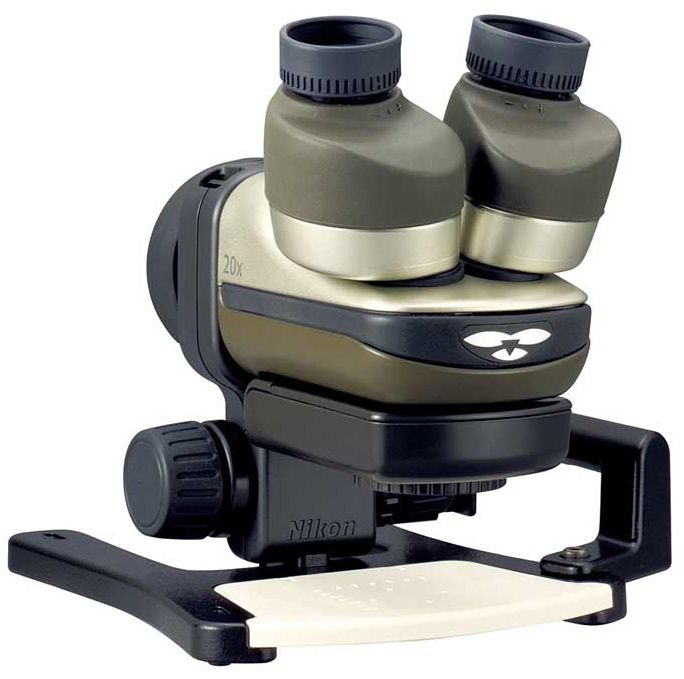
Nikon Fabre Photo EX Microscope

This upgraded version of the Fabre Photo microscope from Nikon, originally introduced in 2006, will launch on February 20th. It will let you connect any Nikon DSLR to it via a NAS-L1 digital SLR attachment. If you use a FSB-U1 compact digital camera bracket, you can attach any Coolpix series camera.

The optical system has 20x magnification, and field of view of 11mm in diameter. Shooting magnification varies with the camera, but it will range from 45x without extension tubes to 66x with two extension tubes and a DX-format camera.

(DX is Nikon’s cropped-sensor format; FX is their full sensor format, equivalent to the original 35mm film.)

[via Engadget]

Mission One, the first all-electric motorcycle

Mission Motors, an SF-based company, has built an all-electric road bike. It’s designed to be the fastest all-electric motorcycle. It’ll go up to 150 mph. Its range is 150 miles on a single charge. Recharge time is under 2 hours at 240 V, or 8 hours at 120 V. It was engineered to have a constant 100 foot-pounds of torque anywhere between 0 and 60 mph. I tried to look up the spec 0-60 time, but couldn’t find it anywhere.

[via DesignBoom and Mission Motors]

Homemade Scrabble Keyboard

Someone took the time to assemble a full set of keyboard keys from wooden Scrabble playing bits, bevel their edges, and fit them to a keyboard enclosure that can connect to your computer via USB. I love the effort they put into this, and I love the idea of a wooden keyboard as well.

[via LikeCool]

RITI Coffee Ink Printer

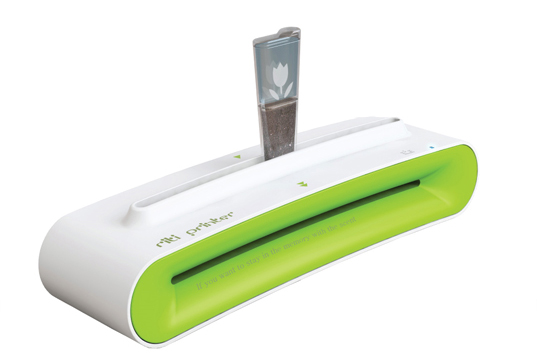
This new printer uses the pigment from used coffee grounds to print on regular paper. You simply pour the coffee grounds into the ink cartridge, print a document, then move the cartridge back and forth to print each line and advance the paper through the printer. This printer not only uses less electricity but also no expensive ink whatsoever. I don’t know what its print resolution is, but I imagine it’s decent enough for readable text.

[via The Design Blog]

Wooden Vespa by Carlos Alberto

It’s a classic Vespa, and it’s built of wood. It looks amazing. Enough said.

Make sure to visit Carlos’ website (use link below) to see the-making-of photos.

[via Boing Boing and Carpintaria Carlos Alberto]

Standard
Thoughts

Energizer's new Advanced Lithium batteries

In early January, I was contacted by an ad agency on behalf of Energizer. Would I be willing to get the word out about their new Advanced Lithium batteries, as a blogger and photographer? Sure, but I’ll need to try them out first, I said. I promised I would use them in my Canon 5D’s vertical grip and in my 580EX II speedlite, and see how long they last.

Energizer Advanced Lithium Batteries

Well, I just got the batteries. I picked them up at the post office a couple of days ago, and it’s time to try them out. I’ll let you know how things turn out in a little while. Just to keep things on the level, I was not paid to write about them. All I got from the agency was the batteries, as review units.

In the meantime, if you have something to say about the batteries, feel free to do it, either here on my site, or on the forum that Energizer’s already set up.

Standard
Reviews

A look at the Samsung T260HD HDTV widescreen monitor

I tried, unsuccessfully, to use an HDTV as my main computer display in the past. Although the specs of that Sony HDTV were superb, its brightness and contrast levels were made for a TV, not a computer display, and it gave me headaches when I stood close to it, as I would when I’d work at my computer. Things have a way of working out though. One of the commenters on my HDTV post, Adam Juntunen, pointed me to something that might just work for my needs.

Samsung has come up with a product that is made to work as both a display and an HDTV. It’s the first such product that I’ve heard of: the T260HD, a 26″ widescreen computer display and HDTV. The T260HD is part of a line-up of four monitors which includes the T200HD (20″), T220HD (22″) and the T240HD (24″).

What sets the T260HD apart for me is the fact that it was made to fulfill both functions from the factory. Although I haven’t used it (yet), my hope is that the Samsung engineers accounted for the difference in display characteristics that is needed when one uses it as a computer display vs. a TV. What is heartening for me is that it’s listed among the computer displays, not the HDTVs, on the Samsung website, which means it’s really more of a computer display than an HDTV, which is just what I need.

The design makes this display stand out. The enclosure is made of glossy black plastic, and it looks as if there’s a clear panel of glass set over the front of the display, which should make it easy to clean. A hint of maroon color marks the bottom of the enclosure, right below the logo, giving it a distinctive look. I do hope though that the glossy black plastic doesn’t scuff easily. Other Samsung TVs do scuff over time, which means that as you dust them, small hair-width scratches appear on the plastic, marring its glow.

Promotional: Don’t spend too much on flat screen TVs; there are flat panel TV deals you can take advantage of. LCD TV deals are available for consumers to buy at discounted prices.

The specs listed on the Samsung website are thin on the details, and I can’t make out whether its color depth is 8-bit, 10-bit or 12-bit. My guess, given its price, is that it’s 8-bit or 10-bit — probably the former, not the latter. Color depth in a display is a very important specification, because if you work with photos, like I do, and your DSLR captures 12-bit or 14-bit color images, you won’t be able to edit them competently on a display whose color depth capabilities are much lower. A 6-bit display, for example, like many laptops have, would be fairly useless to you, because it just won’t reproduce the color tones faithfully.

Let’s have a look at some of the salient features of this display:

  • Full HDTV monitor: that’s good, and also to be expected since it’s a computer display as well, and its resolution is 1900 x 1200 pixels.
  • Dolby Digital Surround sound: it has invisible speakers built in, and they’re rated at 3 W each; I’ve heard these types of speakers on other Samsung products, and they’re pretty good — certainly a lot better than most monitor speakers.
  • Dual HDMI, DVI and VGA inputs: that’s impressive for a 26″ display. I see that Samsung didn’t skimp and even included a SCART connector for the European countries. I love that.
  • Low power consumption: one spec says it uses 0.3W in Standby mode, yet another says it uses < 2W in that same mode. At any rate, it only uses 70 W max, and that’s great for a 26″ display.
  • 10,000:1 dynamic contrast ratio: I think this spec is trumped up, as I see it on a lot of other, cheaper displays and TVs. I have no idea what it means. Supposedly, the increased contrast between light and dark helps you see things better. I’ll be the judge of that when I try it in person. I see that the Apple Cinema Displays are listed at a 700:1 contrast ratio, which I think is a much more reasonable figure.
  • 5 ms response time: this is a little sluggish given that most displays in that size are at 3 ms. Still, it’s better than the Apple Cinema Displays, which are still listed at 14 ms. I think 5 ms is sufficient for most movies and video games, but then I’m not into the violent, fast-paced video games.
  • 300 cd/m² brightness: this isn’t as bright as other displays in the same sizes, which are at 400-700 cd/m², but you know what, I’d rather not have headaches caused by too much brightness, so this should be fine for me.

What I’ve seen so far of this monitor has certainly whet my appetite, and I’d love to try it out for myself. If and when I do, I’ll let you know how it works out.

The Samsung T260HD is available from Amazon and B&H Photo.

Photos used courtesy of Samsung.

Standard