2018 iPhone Line-up
Thoughts

Tim Cook says iPhones are justifiably expensive

In an interview on “Good Morning America”, Tim Cook said the following when asked about the prices of the new iPhones, which have grown well above the $1,000 mark: “it’s the most advanced device we’ve ever done… [and]… replaces every other gadget consumers might need“.

Dear Tim, I would like to propose a challenge to you.

If the new iPhones are indeed a replacement for most other devices we might need, then please make it a substitute for the laptop and desktop computer. Please justify their cost with one more worthwhile argument. Notice I did not say a “replacement“, because I also have a desktop and laptop and tablet and I don’t foresee giving them up, especially not my desktop. A substitute is sorely needed though. 

As I’m sure you’re well aware, the smartphone has become the only computing device for a lot of people throughout the world. And those people have to squint at a small screen and type on a non-existent virtual keyboard and poke around the (small, albeit now bigger) screen with their fingers whenever they need to do something important. It would be so much easier to plug it into a small device and be able to use it properly, as most of us have done, growing up using regular computers.

The iPhone is, as you say, a powerful and advanced device. Why not open up that power to the traditional users of a computer? I’m talking about a keyboard, a mouse and a monitor, of course, so we can use and work with email, word processing, spreadsheets and presentations on a bigger screen (these apps may be boring but they’re still the ones that run the world of business). It feels like you have deliberately held this option back from the consumers so it wouldn’t eat into your other lines (tablets, laptops, etc.). I can’t see another reason for it. I can’t imagine that you did not know that Samsung has been working on the Dex for years. It’s even been on the market for a couple of years now. It’s good. It’s so good it’s got me thinking I should buy a Samsung phone.

My request isn’t new. I’ve talked about it before. And no, the iPad isn’t the answer to my needs and those of many other people. 

Will you please do this? 
Standard
Places

The fortified church in Mosna

The village of Moșna, known as Meschen in German and Muzsna in Hungarian, is first mentioned in written documents in 1283, and there is evidence that a settlement existed there since the 1st century AD (source). Moşna was also the home of Stephan Ludwig Roth (1796-1849), a famous Saxon priest, pedagogue and human rights campaigner (source).

The Saxon settlers in the area first built a Romanesque basilica in the 13th century, which was then modified and expanded in the late 15th and early 16th centuries in the Gothic style. The man responsible for the project was Andreas Lapicidas of Sibiu (Hermannstadt), a master stone mason, known as Endreas Steinmetz in Sachsen. His initials can be seen inside the church, carved on a lintel.

The Moșna fortified church is one of the biggest in Transilvania and it is a remarkable work of Gothic architecture. The church itself is structured around three naves with ribbed vaults for ceilings. The naves are separated through four pairs of columns, the ones in the west side having been made of bricks and decorated differently so as to preserve the eastern group of columns intact, since the latter was erected using stone from the pillars of the former Romanesque basilica. Inside, the most noteworthy architectural elements are the door to the sacristy, the stone pulpit and the monumental tabernacle which measures 11.05 m in height.

The fortifications include five towers and a 9m defense wall that surrounds the church and allows for ample space inside the fortress. The bell tower has seven levels and three bells, the oldest of which dates from 1515. The gate tower in the south-eastern corner has five levels. The northern side of the fortification is guarded by a tower with four levels. A shorter, three-level tower stands to the south and it hosts a museum dedicated mostly to the trades and customs of the Saxon community but which also includes exhibits discovered during various archaeological explorations, such as coins and fragments of weaponry.

When we visited in 2011, we arrived right around noon, which as some of you may know, is the worst time of the day for photos. I also had with me a camera that was more remarkable for its zoom (30x) than the dynamic range of its sensor and the quality of its photos. I plan to visit again soon and take some photographs that will do the place justice. It’s undergone significant repairs and restoration work since 2011, so it looks different now. We’ve actually revisited it just a couple of months ago, but it was for a photoshoot for Ligia’s ongoing project, Straie Alese, so I didn’t focus on capturing the architecture.

Enjoy the photos!

Standard
Places

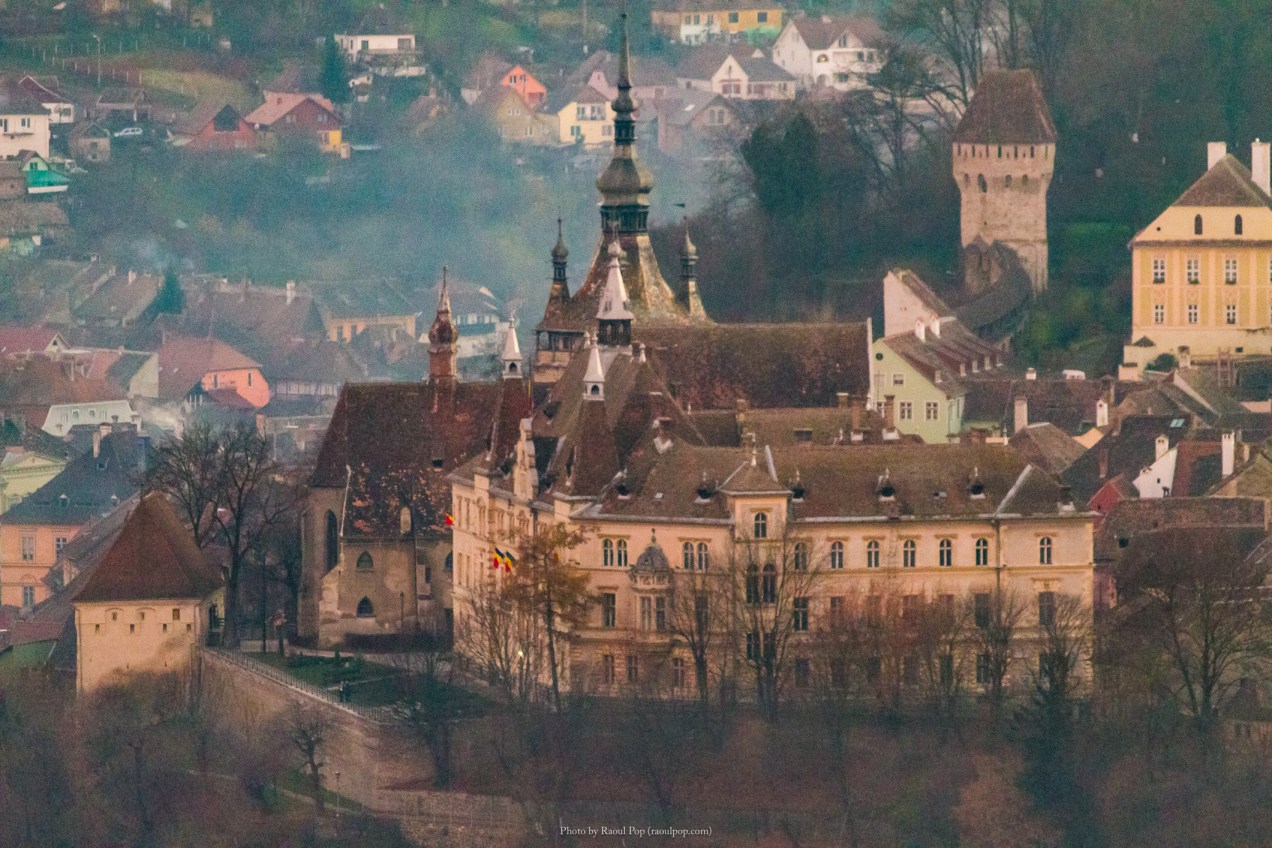
Sighisoara from a distance

The same day I took these photos, we decided to drive into the hills surrounding the town and see if we could find a scenic spot from whence to photograph it. We found a couple of spots. There are a couple of pensions perched up there, with great views of the valley and the town. While the pensions/restaurants themselves are underwhelming (one was closed, another only served water and bad coffee), the views are worth the drive.

By the time I set up my equipment, it was dusk and twilight was fast approaching. You’ll have to excuse the liberal use of noise reduction in the photographs, but I was shooting with the long end of a 70-300mm lens at f5.6, fast shutter speeds and high ISO. What made the photos more interesting was the creeping fog, which was enveloping the town from all sides. I can see the appeal of such scenery in stories about vampires, but I assure you, there are none there.

When night fell over the valley, we drove back down and I took a few shots of an historic church and of the Târnava Mare river which passes through the town. One last thing: the mountains which you see in some of the photographs are the Southern Carpathians, more specifically the Făgăraș Mountains.

Enjoy the photographs!

Standard
Places

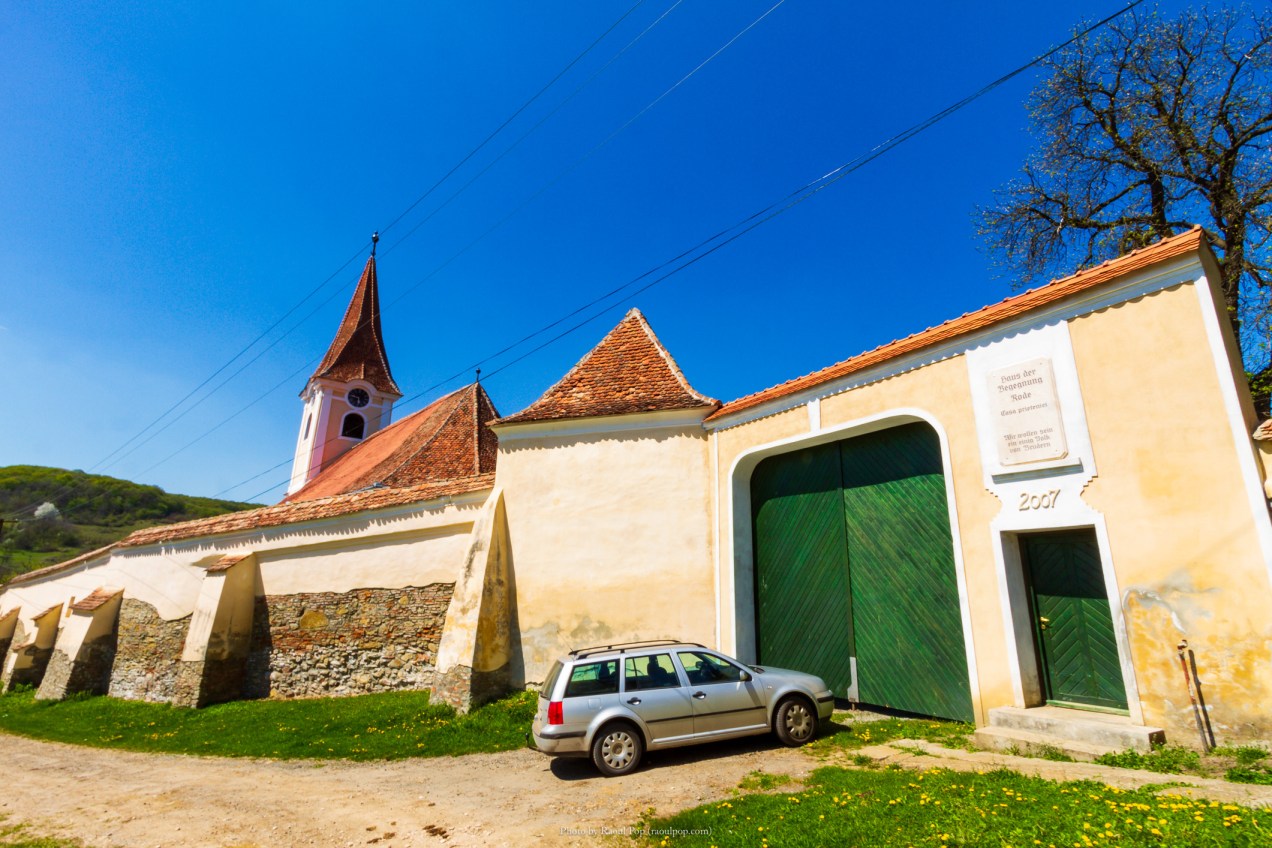
The fortified church in Zagar

There is a fortified church in the village of Zagăr, which is located in the county of MureÈ™, Transilvania. I was not able to find out any information about it online; I don’t know why it’s not documented. The only thing I was able to find was a mention of the vineyards in the region, which are known for their white wines (source). The village is known as Rode in German and Zágor in Hungarian. It was first mentioned in written documents in 1412 (source). The same source states that the church was rebuilt in the year 1640 but does not give a reason why.

We also weren’t able to visit the buildings themselves (the church and the parochial house) when we visited in 2011, because the place was locked up and no one was around. On the upside, it’s a well-maintained place, restored in 2007, judging by the inscription on the back gate. Perhaps at some time in the future we’ll revisit it.

Enjoy the photographs!

Standard

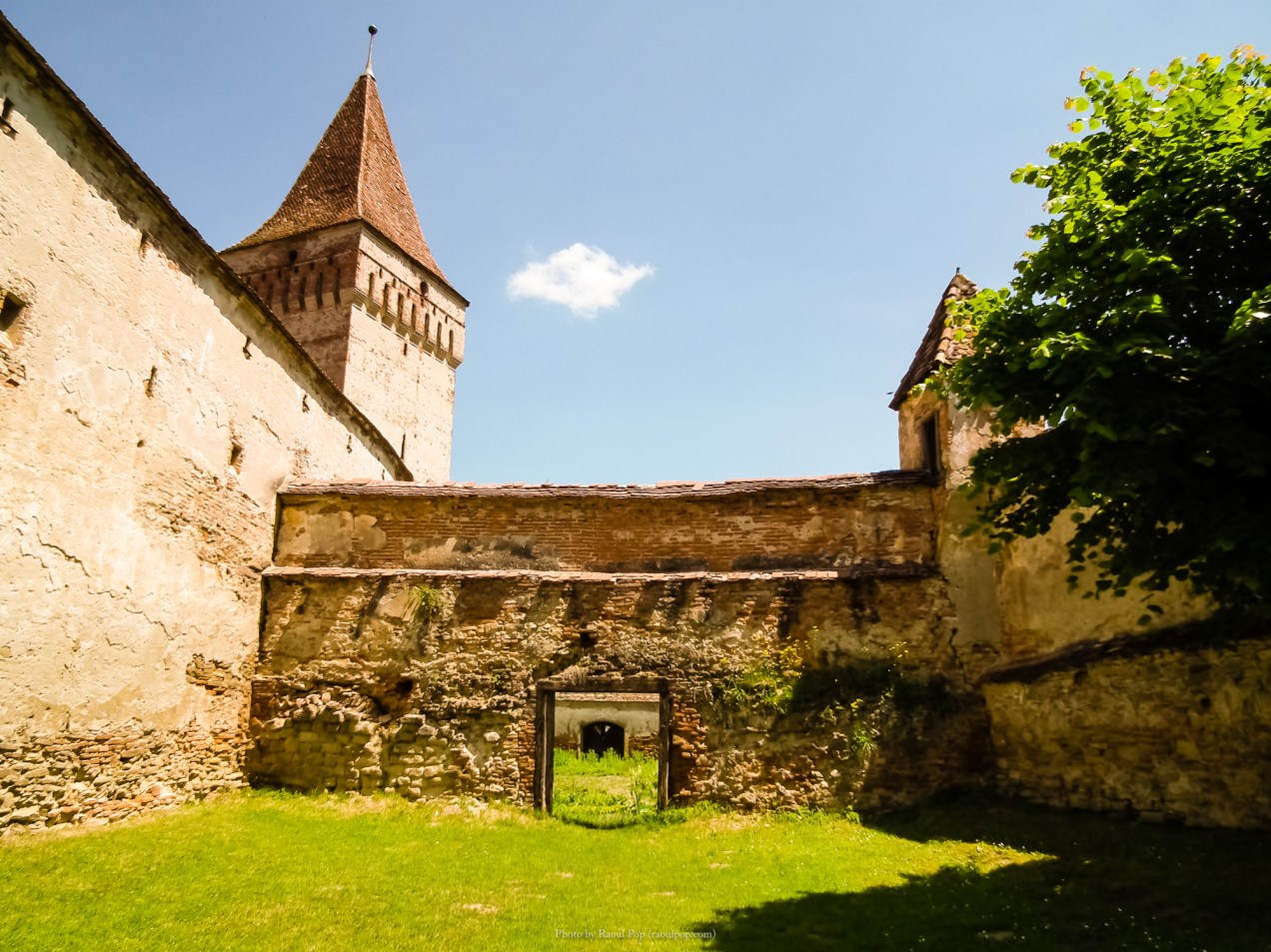
These were taken in November of 2010, so let’s say it was eight years ago or so. Things may look different now — hopefully better, given how much tourism this little town gets each year.

It was one of our typical jaunts through the medieval fortress, along its walls and back down the stairs toward the bottom of the hill. Still, the images show different spots from the ones you’ve seen here and here.

Should you want to know more about the town, click here and here. Enjoy the photographs!

Places

More images from Sighisoara

Gallery