How To

The garden shed

We’ve recently finished putting together a “severe weather” garden shed in our yard, made by a company called Arrow. We wanted a model that could withstand hurricane-force winds, since we live in South Florida, where hurricanes do occur from time to time. The particular model that we purchased was the Homestead 10′ x 8′ (HS108). We filmed our progress along the way (it took 1½ months from beginning to end), and you can see the video below.

The process of selecting and getting the garden shed approved and built highlighted several areas of concern when it comes to the manufacturing, retail and inspection aspects of this particular model. It all turned out to be more involved and more costly than we thought. It certainly was an adventure in do-it-yourself construction.

Watch video on YouTube (parts 1 and 2) | blip.tv

We looked for guidance from our city (Hollywood, FL) when we made the decision about what garden shed to get, but they were not helpful. All they told us was that many of the sheds sold at local building stores may not be approved for use and may not pass the inspections, and that we needed a product approval sheets for the shed.

We went to Home Depot looking for sheds, but we thought the pre-assembled ones they had on display were flimsy and might not withstand strong winds. Then we went to Lowe’s looking for a shed, found one made by a company called Arrow, only to be given the run-around when it came to the product approval sheets. The store clerk thought they were on the Lowe’s website. They weren’t. The management thought the Contractor Services department had them. Perhaps they did, though we couldn’t get them to help us. Then we tried the Arrow website, where they should have been listed alongside the shed specs. They weren’t.

Fortunately (or perhaps unfortunately), we did find a particular model on the Arrow website, called the Homestead, rated for “severe weather” and engineered for the Miami-Dade county building code, which is stricter than what we have in Broward county. That meant it was sure to be approved for use here, and would pass the inspections if assembled correctly. The price was much higher than we thought though (about $1,700) for a pre-fab, un-assembled shed that came in two flat boxes and was only 10 feet by 8 feet (80 sq ft). Still, I remembered seeing a Homestead model at Lowe’s, so we went back to check. To our surprise, it was on sale for a little under $500. We thought ourselves in luck, but the clearance price should have raised a red flag for us. We bought it, knowing we’d at least have no problems getting it approved with the city.

Sure enough, it was approved, and the time for the initial inspection came. The clerks at Lowe’s told us we’d need to pour a six-inch concrete slab. Fine, no problem. Wrong. According to the building inspector, the engineering plans for the shed (put together by Arrow to supposedly comply with the Miami-Dade building code) required a house-sized foundation, which meant digging a trench all around the edge of the foundation that was 1 foot wide by 1 foot deep, with a 45-60 degree slope on the inner lip, using re-bar around its perimeter, not just wire mesh, and naturally filling it all up with concrete. That more than quadrupled our original estimate of the amount of concrete that we needed to purchase. We thought 1 pallet would be enough for a 6-inch slab. We ended up buying over 4 pallets of concrete (almost 5) in the end.

Forget the clearance price! The ridiculous foundation requirements in effect raised the price of the shed to well over its original retail price once again!

I have to lay the blame for this squarely in Arrow’s lap. After all, they were the ones who hired an engineering firm to put together the plans for the shed, and to get them approved with Miami-Dade. I sincerely doubt there’s anything in the Miami-Dade building code that specifies one must have a house-sized foundation for a flimsy pre-fab shed. That makes no sense whatsoever. All other sheds on the market do just fine with a 4-6 inch concrete slab, yet this model, which is shorter and smaller than the rest, somehow needs a house-sized foundation? No way. Someone was careless or fearful when they drew up the plans, and the customers are now paying for it!

I might have been more lenient in my overall view of the shed, had it proven sturdier during the assembly and in the final review. But it’s just as flimsy and cheaply made as the rest of the pre-fab garden sheds on the market, many of which come pre-assembled and cost a third of this shed’s original retail price. There’s nothing to set it apart for me from the rest, other than the presence of extra wall beams at waist height, and the lack of a need to use hurricane anchors to strap it to the ground once it’s assembled. The sheet metal used for its walls and doors is just as cheap and easily bent or dented, the doors open and close just as badly as on other pre-fab sheds, and to top it all off, it’s so darn short I bang my head on the lintel every time I go in and out!

Oh, and lest I forget, let me mention that Arrow forgot to provide the sufficient number of bolts and nuts needed to assemble the shed properly. We were delayed by a day during the assembly process because we needed to make a trip to the store to get some more hardware, which should have been included with the shed to begin with. On the bright side, they did include the Hilti anchors needed to anchor the shed to the concrete foundation, though I expected to need to get those myself.

Yes, the shed is now fully assembled, approved, and we’re using it. But it proved to be much more expensive in the end than it should have been, it took much more time and effort to get the project completed, and in my eyes at least, it wasn’t really worth all that. Imagine how those people who bought this shed at its original retail price felt! They must have felt they were ripped off royally. Thank goodness we at least got it at clearance price.

The City of Hollywood could also have been more helpful when I called them asking for guidance on garden sheds. Instead of dismissing me with some generic advice, they could have said, hey, here’s one of our building inspectors, talk to him and he can recommend sheds that he knows will get approved, cost less, and take less time to put together. While I understand that a government employee can’t recommend specific brands and models, at least I could have gotten helpful advice that could have saved us money, time and effort. Instead, the City of Hollywood was the only city in Broward County to raise property taxes this year, during a big recession, making me wonder exactly what we’re paying for, if they’re not helpful to us, its residents.

All I can say is this shed better hold up when the next hurricane comes, or Arrow will hear from me again.

Standard
Thoughts

Undercover Boss was my idea too

A couple of weeks ago, my jaw dropped as I browsed Twitter. SNL had put together a skit lampooning a new show on CBS called “Undercover Boss“. I didn’t even know the show existed, much less that it had been on SNL.

Since the show’s launch after the Superbowl, it turned into a nationwide hit, because it struck a vein with viewers. Several powerful themes are at work in each show, themes which I knew would make the show a success when I thought of it, such as the contrast between the rich and the poor, the proverbial desire to “be in someone else’s shoes”, and the will to find out what’s wrong and right it.

Don’t get me wrong. No one stole my idea. There was no foul play involved. I was simply late to the table. When I thought of the idea, the show was likely already in development. By the time I was looking for a production company to help me develop the show, “Undercover Boss” was already in production. Two different people had the same idea — well, almost the same idea, because my concept was slightly different, as I’ll explain in a bit — but one of them had it sooner than me.

My concept of the show differs somewhat from what is currently in production. I thought of it from a different angle perhaps. I’m not sure how many of you are familiar with the story of Scheherazade, the mythical Persian queen and the teller of “One Thousand and One Nights“, but I read those stories avidly as a child, and I still remember them.

A recurring theme in some of her stories is that of the caliph (ruler or king if you will) disguising himself in different ways and going out into his country by himself, or accompanied by a trusted servant, to see first hand how things are going, and what he must do to make things better. There’s a certain element of thrill in taking on a different position in life, particularly for someone who’s been accustomed to the royal treatment all his days, and clearly, there’s a benefit to his subjects if he gets to know how they live and is motivated to change things for the better.

Nowadays, there are very few kings left, and they haven’t got much power, unfortunately. Presidents don’t need to disguise themselves to find out how things are, because in those countries where there is enough freedom of speech, everyone is eager to tell them just what needs to be fixed. Even in countries where there is little freedom of speech, like Iran, people will risk life and limb in order to voice their beliefs.

However, there are clearly places where people are afraid to speak their minds for fear of retribution, and that is in corporate environments. In small companies, the owner or director generally knows what’s what, but in large companies, particularly multi-national ones, there are so many layers between the workers and the top guy or gal that many of them only know their company through the figures that filter up through the ranks. If someone has an idea about how to do things better, or is unhappy with something, they’ll likely keep their mouth shut for fear of losing their job, particularly in these tough economic times. So how is the CEO to know what’s really going on, and how his or her policies affect each John or Mary that works at their companies? They can’t, unless they, too, do what the caliphs used to do.

So far, so good, right? Well, I didn’t want to have camera crews follow the “new guy” around all day long. That’s  pretty much a dead giveaway and doesn’t encourage true reactions. I wanted to film with concealed cameras and microphones. In situations where that wasn’t possible, we could have planted cameras in concealed locations, or used “co-workers” who were really production crew members, carrying the concealed cameras themselves. I also wanted to film an entire season without airing a single episode, so word wouldn’t get out about what we were doing. Then after filming a whole season, and doing as many of these shows as possible, we would have started to air the episodes. Now that would have been truly amazing.

But I’m not the one with show running on CBS, am I? I’m just the guy with the me-too idea — this time, anyway — so the important thing is the folks who had the idea first got it made, and it’s successful, and that’s good, not just for them, but also for the American worker, because I believe in the power of this show to encourage positive changes in America’s corporate environment, changes that can make things better for the average worker.

I have a few more good ideas like this one. If you’re a serious production company with the resources to help me develop and pitch a hit show to a TV channel, please get in touch with me. I’d like to move fast on my other ideas, so I won’t be left in the dust again. I look forward to talking with you!

Standard
Reviews

An interview with Robert Kenner about Food, Inc

David Brancacio from PBS’s Now program sat down with Robert Kenner, the director for a documentary about food and the food industry called, appropriately enough, “Food, Inc”, to talk about the making of this very interesting film.

You can watch the interview here, and the trailer for the documentary here. It comes out on DVD and Blu-Ray in a couple of days, on November 3rd, and can be purchased directly from the movie’s official website or from stores like Amazon. I highly encourage you to get it and watch it.

http://www.youtube.com/watch?v=c2sgaO44_1c

Standard
Thoughts

Republicans move to block net neutrality

The latest push to get the net neutrality bill passed met with resistance from Republicans and Comcast, one of the large American ISPs. Apparently they think the market regulates itself. It would, in a perfect world, but not in one where politicians working hand in hand with ISP lobbyists move to block any measures that would encourage real competition and require increases in broadband speeds, which is what the US politicians across both sides of the aisle have been doing for the past decade.

Is it any wonder then that broadband internet still sucks in the US? I say 5 Mbps broadband at $20/month or less ought to be legislated as a minimum, and all ISPs ought to be forced to offer it as one of their monthly subscription options. That would teach them a lesson they deserve.

Standard
Reviews

Life Inc – another perspective on today's society

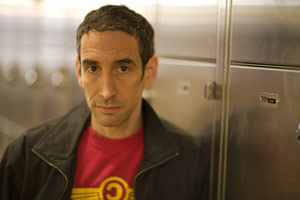
Douglas Rushkoff Douglas Rushkoff, an award-winning writer, documentary filmmaker and scholar, has written a book entitled “Life Inc”, where he delves into what he calls the “corporate mindset” of today’s society, and how to overcome it in order to make our lives and our world better.

I’ll let him tell you what the book is about in his own words:

“What I started to do was to look at the different ways we as modern Americans have become disconnected from one another, disconnected from the places we live, disconnected from the value we create, and even disconnected from our own sense of self-worth. I came to the conclusion that corporations, or what we call the corporate mindset, were really at the center of this phenomenon.”

“We’re living in a world where if you want to make money, you’ve got to work for a corporation.”

According to Rushkoff, it turns out this “corporate mindset” can be traced back to the Renaissance, which is when kings began to monopolize on the income created by people. Instead of letting them trade freely among themselves, they created charter corporations which had exclusive control over certain industries. The kings got shares of stock in those monopolies, thus income, and those companies got to make all the money there was to be made in those markets. This centralization of power continued right through to our own time.

“The society built through the Industrial Age was built to mythologize the mass-produced object, because we needed to create a society of consumers who thought buying all of this stuff would somehow make them happier.”

“Most of us spend so much time working and consuming that we have very little time left to do anything that has to do with other people.”

“The more we behave as individual actors in competition with one another, the harder it is to encounter one another in a friendly way.”

“People can start investing in one another and with one another, make their towns better, and earn returns that you’re not getting from your Smith Barney broker… and see the return of your investment in the place you actually live.”

“This [economic recession] isn’t just a crisis, it’s an opportunity. It’s the first moment in the last couple of hundred years that we’ve had to rebuild our society and our economy on principles that serve humanity instead of killing life.”

I agree with most of what he has to say, and it’s important to realize he’s not against corporations per se, but against the slow creep of the corporate mindset into everyday life. After all, it’s thanks to corporations that we have industrial design, which allows us to get products designed to exact specifications and high standards. And the concentration of capital and research at some corporations and organizations has resulted in amazing advances in technology that have benefited all of us. Yes, you can do a lot of things in your garage, and you can get a lot of stuff done with your neighbors and in your community, but you can’t build a highly sophisticated computer, digital camera or a modern car at home. (You might be able to assemble them from purchased parts, but those parts were made in factories, too.) There is plenty of value to what he has to say, and the book warrants a close read. We do need to become more human, more connected, more dependent on our communities.

There’s a 9-minute video summary of the book at his Vimeo account. He’s also posted video clips summarizing the main ideas of each book chapter there. I’ll post the main video summary and the first three clips below. There’s also more info on his website at rushkoff.com. You can get the book from Amazon.

Life Inc. The Movie from Douglas Rushkoff on Vimeo.

Life Inc. Dispatch 01: Crisis as Opportunity from Douglas Rushkoff on Vimeo.

Life Inc. Dispatch 02: Insulation Equation from Douglas Rushkoff on Vimeo.

Life Inc. Dispatch 03: Money as Debt from Douglas Rushkoff on Vimeo.

Standard