Thoughts

Cigna increases premiums while CEO gets more pay

Our medical insurance policy is with Cigna. We’re on the Open Access Plus plan. After I renewed my Cigna policy recently, I got our new insurance cards, and noticed that the premiums and copays increased as follows:

  • PCP Visit ($20 vs $15)
  • Specialist ($40 vs $30)
  • Hospital ER ($100 vs $50)
  • Urgent Care ($50 vs $25)
  • Rx ($10/25/50 vs $10/20/45)

Those are some pretty hefty increases, particular for items 2-4 above, so I thought I’d have a look at Cigna’s executive compensation packages, to see if they’re tightening the belt there as well.

Their CEO is H. Edward Hanway. Here’s what he makes [source]:

  • Current annual compensation: $30.16 million
  • 5-year compensation: $120.51 million
  • His performance vs. pay rank is 162/175, which means he’s the equivalent of a D/F student

In 2006, two years ago, here’s what he was making [source]:

  • Annual compensation: $28.82 million
  • 5-year compensation: $78.31 million
  • Performance vs. pay rank: 166/189, which was slightly better than what he’s averaging now

So what we’ve got here is an overpaid CEO that isn’t pulling his weight, but still paying himself gobs of money off our backs. God knows how much the other executive officers are making, all while we, the customers, get charged more for our premiums and copays. Talk about a rotten deal.

I don’t think that’s fair at all.

Standard
Thoughts

Pork's dirty secret: It's one of America's worst polluters

Pork’s Dirty Secret: The nation’s top hog producer is also one of America’s worst polluters : Rolling Stone.

I’m shocked beyond belief by what I read in Rolling Stone magazine today, in the article pointed about above. Let me quote a few excerpts to draw your attention to the crimes that have gone unpunished for the last couple of decades, done right here in the US, under our eyes and noses, and with the approval of smarmy politicians all too happy to oblige deep-pocketed campaign contributors.

This is how pig farms function:

“Taken together, the immobility, poisonous air and terror of confinement badly damage the pigs’ immune systems. They become susceptible to infection, and in such dense quarters microbes or parasites or fungi, once established in one pig, will rush spritelike through the whole population. Accordingly, factory pigs are infused with a huge range of antibiotics and vaccines, and are doused with insecticides. Without these compounds — oxytetracycline, draxxin, ceftiofur, tiamulin — diseases would likely kill them. Thus factory-farm pigs remain in a state of dying until they’re slaughtered. When a pig nearly ready to be slaughtered grows ill, workers sometimes shoot it up with as many drugs as necessary to get it to the slaughterhouse under its own power. As long as the pig remains ambulatory, it can be legally killed and sold as meat.

The drugs Smithfield administers to its pigs, of course, exit its hog houses in pig shit. Industrial pig waste also contains a host of other toxic substances: ammonia, methane, hydrogen sulfide, carbon monoxide, cyanide, phosphorous, nitrates and heavy metals. In addition, the waste nurses more than 100 microbial pathogens that can cause illness in humans, including salmonella, cryptosporidium, streptocolli and girardia. Each gram of hog shit can contain as much as 100 million fecal coliform bacteria.

Smithfield’s holding ponds — the company calls them lagoons — cover as much as 120,000 square feet. The area around a single slaughterhouse can contain hundreds of lagoons, some of which run thirty feet deep. The liquid in them is not brown. The interactions between the bacteria and blood and afterbirths and stillborn piglets and urine and excrement and chemicals and drugs turn the lagoons pink.”

This is the man in charge of the largest pig producer in the US:

“The chairman of Smithfield Foods, Joseph Luter III, is a funny, jowly, canny, barbarous guy who lives in a multimillion-dollar condo on Park Avenue in Manhattan and conveys himself about the planet in a corporate jet and a private yacht. At sixty-seven, he is unrepentant in the face of criticism. He describes himself as a “tough man in a tough business” and his factories as wholly legitimate products of the American free market. He can be sardonic; he likes to mock his critics and rivals.”

This is how the journalist describes his encounter with the smell from one of the pig shit lagoons:

“Concentrated manure is my first thought, but I am fighting an impulse to vomit even as I am thinking it. I’ve probably smelled stronger odors in my life, but nothing so insidiously and instantaneously nauseating. It takes my mind a second or two to get through the odor’s first coat. The smell at its core has a frightening, uniquely enriched putridity, both deep-sweet and high-sour. I back away from it and walk back to the car but I remain sick — it’s a shivery, retchy kind of nausea — for a good five minutes. That’s apparently characteristic of industrial pig shit: It keeps making you sick for a good while after you’ve stopped smelling it. It’s an unduly invasive, adhesive smell. Your whole body reacts to it. It’s as if something has physically entered your stomach. A little later I am driving and I catch a crosswind stench — it must have been from a stirred-up lagoon — and from the moment it hit me a timer in my body started ticking: You can only function for so long in that smell. The memory of it makes you gag.”

And this is what happens to the people who live near the pig shit lagoons:

“Epidemiological studies show that those who live near hog lagoons suffer from abnormally high levels of depression, tension, anger, fatigue and confusion. “We are used to farm odors,” says one local farmer. “These are not farm odors.” Sometimes the stink literally knocks people down: They walk out of the house to get something in the yard and become so nauseous they collapse. When they retain consciousness, they crawl back into the house.”

And this is what happens when the lagoons spill their vile contents into the environment, which happens all too often:

“The biggest spill in the history of corporate hog farming happened in 1995. The dike of a 120,000-square-foot lagoon owned by a Smithfield competitor ruptured, releasing 25.8 million gallons of effluvium into the headwaters of the New River in North Carolina. It was the biggest environmental spill in United States history, more than twice as big as the Exxon Valdez oil spill six years earlier. The sludge was so toxic it burned your skin if you touched it, and so dense it took almost two months to make its way sixteen miles downstream to the ocean. From the headwaters to the sea, every creature living in the river was killed. Fish died by the millions.”

As if those sorts of unmitigated environmental disasters aren’t enough, it gets worse:

“… Corporate hog farming contributes to another form of environmental havoc: Pfiesteria piscicida, a microbe that, in its toxic form, has killed a billion fish and injured dozens of people. Nutrient-rich waste like pig shit creates the ideal environment for Pfiesteria to bloom: The microbe eats fish attracted to algae nourished by the waste. Pfiesteria is invisible and odorless — you know it by the trail of dead. The microbe degrades a fish’s skin, laying bare tissue and blood cells; it then eats its way into the fish’s body. After the 1995 spill, millions of fish developed large bleeding sores on their sides and quickly died. Fishermen found that at least one of Pfiesteria’s toxins could take flight: Breathing the air above the bloom caused severe respiratory difficulty, headaches, blurry vision and logical impairment. Some fishermen forgot how to get home; laboratory workers exposed to Pfiesteria lost the ability to solve simple math problems and dial phones; they forgot their own names. It could take weeks or months for the brain and lungs to recover.”

And now the bastard that runs Smithfield, Joseph Luter, wants to expand into Europe, particularly into Poland and Romania:

“When Joseph Luter entered Poland, he announced that he planned to turn the country into the “Iowa of Europe.” Iowa has always been America’s biggest hog producer and remains the nation’s chief icon of hog farming. Having subdued Poland, Luter announced this summer that all of Eastern Europe — “particularly Romania” — should become the “Iowa of Europe.” Seventy-five percent of Romania’s hogs currently come from household farms. Over the next five years, Smithfield plans to spend $800 million in Romania to change that.”

You want to see a real terrorist? One that’s irreversibly damaged the environment, killed millions of fish and other aquatic life, and ruined the lives of tens of thousands of people? Look no farther than Joseph Luter. The evidence is overwhelming. And yet he’s not in prison. No, he’s out, enjoying his life while ruining the lives of others. I say we put him not in jail, but in a prison which contains one of his very own pig shit lagoons, where he’s to spend the remainder of his criminal life.

Luter has made pig farming profitable, but at what expense? The environmental disasters he’s directly responsible for equal the ones perpetrated on mankind by the industrial revolution — only we outgrew those abuses, and didn’t expect to find such flagrantly illegal and morally corrupt behavior in the businesses of today.

Don’t think Luter is the only one. You look at cows, at sheep, at chicken and other farm animals, and you’ll find incredible, criminal abuses of animal life and the environment in all those industries. Seemingly everywhere, our food supply has been hijacked by companies hell-bent on making profits at the expense of health, safety, the environment and even life.

Quotes used courtesy of Rolling Stone magazine. If the magazine feels that the quotes are too extensive, please contact me and I will abbreviate them.

Standard
Reviews

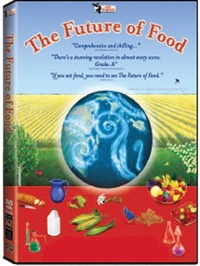
Watch "The Future of Food"

If you have not yet heard of a documentary called “The Future of Food” (2004), or haven’t yet watched it, please take the time to do so. It is vital that you know what’s going into the food that you eat, and it’s vital that you know it now, before it’s too late.

What’s been happening over the past 20 years here in the States is that our food supply has been slowly taken over by biotech companies who are interested only in their bottom line. They have used tactics akin to racketeering practices in order to get farmers to use their seeds and only their seeds. They have placed their executives in key government positions, in order to ensure that their policies go through. They have done and are doing everything in their power to get us to eat their genetically modified foods, without regard for safety, common sense, decency or ethics. I’m not saying this by myself. The documentary itself will prove it to you.

All that is bad enough, but what’s really appalling is that they are patenting genes. They have patented plant genes, and now they want to patent animal genes and even human genes. They are trying to get the market in their tight snare, so they can squeeze profits out of everywhere and ensure they control our food supply completely. They have even patented one of the genes involved in breast cancer, then sued researchers who had been doing working on it, to force them to pay exorbitant licensing fees. Needless to say, research on that gene has been significantly curtailed, directly due to their malefic influence. That’s the sort of “work” they engage in.

When I call them racketeers, I have a great frame of reference in mind. It’s a short crime drama made in 1936, entitled “The Public Pays“, which won an Oscar. It depicted a protection racket that preyed on the local milk distribution in one American city, and the people’s successful fight against them. The biotech goons may not beat up people and physically destroy their milk trucks and containers, but they have legal “procedures” which wield the same sort of power and yield the same horrible results. This time, they’re working hand in hand with specially-placed government officials who make sure the biotech rules get enforced and the little guys get screwed royally — not to mention that the consumers, and the marketplace in general, are manipulated to no end as well.

Don’t believe me? Watch the documentary. And if you can find “The Public Pays”, watch that as well and compare the two to see the striking similarities. What’s more, if someone can assure me that “The Public Pays” is now in the public domain, I’ll gladly post it online, either at Google Video or somewhere else.

As you get to the end of the “Future of Food” documentary, you’ll get heartened by the organic farming efforts, which are great, but keep in mind that Whole Foods now sells mostly non-organic fruits and vegetables, and also imports supposedly organic foods from China, whose food supply is so laden with pesticides it’s not even funny. Yet Whole Foods still dares to hold the same high prices on their stuff, which means they’ve cut costs and are pocketing the difference. Lesson learned: don’t shop at Whole Foods. Go to Trader Joe’s or MOM’s, if you have them in your neighborhoods.

Seek REAL organic foods, and make sure to vote with your wallets. Where you buy your food, and what sort of food you buy, determines our food supply’s future. Write to your congressmen and demand that the proposed law (introduced by Dennis Kucinich) to label genetic foods as such be finally approved.

My wife just chimed in with some great advice. It turns that while we wait for foods to be properly labeled as GM or not, there’s an easy way to tell already. Fruits and vegetables all have little stickers on them, with numeric codes (4 or 5-digit numbers). It seems that if those numbers start with 4, they’re conventionally-grown, but not genetically modified. If they start with 8, they’re GM — stay away from them! And if they start with 9, they’re organically grown and are safe to eat. Not sure if this is officially true, but she says that’s usually been the case, at least for the organic foods that she buys.

Here’s how you can watch the documentary:

  • Google Video (free, but quality isn’t that great)
  • YouTube (free, but in multiple parts): start here
  • Netflix (instant streaming, DVD quality, but requires subscription)
  • Amazon (you can purchase the DVD)
Standard
Thoughts

Thank you Congressman Van Hollen!

This is Congressman Chris Van Hollen, the man that represents our district on the Hill. He’s got our heartfelt thanks and gratitude.

Do you want to know why? My wife and her students had to suffer for seven months at her piano studio — without heat in the winter and without air conditioning in the summer — because of Pepco’s unbelievable (one could call it criminal) inability to fix a panel on the outside of the building where she works and had caught fire. (Pepco is our local electricity company.)

The store owner and store manager called Pepco on numerous (countless) occasions to ask about the status of the repairs. They’d get one excuse after another. Usually, Pepco tried to blame the county, who they said was moving too slow in their approval of the repairs permit. Most often, they simply didn’t pick up the phone. Too busy, I gather. Hah.

The store owner even tried to contact the Washington Post, to see if they’d be interested. They weren’t. Shame on them. I guess the story was too small to bother with, right?

This went on for SEVEN MONTHS. I’d love to know how an electricity company that can respond within hours in case a tree downs a power line can’t get their act together and fix an electrical panel in SEVEN MONTHS.

I wrote about it here on my site back in April. Nothing came of that, either. I guess Pepco doesn’t care about bad PR unless it airs on big media, like the Washington Post — who didn’t seem to care.

Long story short, do you know who cared? Congressman Van Hollen, that’s who! We wrote to him on 5/27/2008, and a day later, on 5/28, he wrote a letter back to us and promised he would look into it. He put us in touch with one of his staffers, Miti Figueredo, who even called us to confirm that the congressman was interested in helping us.

Fast forward to 6/09/2008 (yesterday). It was horribly hot — temperatures approached 100 degrees. Pepco showed up in force, with a large team, and got the panel fixed within hours. The store and the studio now have air conditioning once more!

Thank you, Congressman Van Hollen! Thank you for caring when no one else seemed to care! You have our many thanks and gratitude! Thank you for truly representing your district and for caring about your constituents!

Standard
Thoughts

Open source software and its use by for-profit companies

Everyone is happy to use free, open source software these days, and for-profit companies are only too happy to join that bandwagon. After all, they’re supporting the open source movement — or are they?

If you’re not sure, there’s an easy litmus test: see how much they contribute to the open source movement.

  • Look at how much they donate to open source. Many companies will make token donations to open source organizations, but let’s face it, that money isn’t going to the developers themselves, it’s going to public relations and ads and the CEOs of those organizations. (Lest we forget, the CEO of Mozilla made $500K/year while the developers made nothing.)
  • Look at how much of their own code (written in-house) they give back to the open source community. If they don’t do much of either, there’s a pretty good chance they’re in it simply to profit off the backs of the many unpaid open source contributors.

After all, companies are more than happy to use free, open source software, since it means they have to do less development themselves, and they don’t have to pay anything at all for that software. But then they charge an arm and a leg for products developed using open-source software. They win, the original developers get screwed, and the customer pays through the nose for something that was free.

I find that sort of a business practice completely hypocritical. Building your business on the backs of malnourished, borderline-healthy geeks, coding their nights away, unpaid is unethical and exploitative. It harks right back to medieval times, when lords would get filthy rich at the expense of poor, overworked serfs. We were supposed to have evolved beyond that, but as it turns out, those sorts of practices haven’t been phased out, they’ve just been sublimated and adapted.

It gets even worse than that. Some companies aren’t content with just using free, open source software to fatten their pockets. They turn around and try to lock the products they’ve built on the free software, and to make it illegal for users of those products to change them. This is quasi-legal and reproachable, because it goes against the original GPL license of that software. You can’t modify open source software by lines of code here and there, and then call that software yours. It’s intellectual theft. This is why I support GPLv3, in spite of the fact that Stallman gives me the willies.

Some developers would argue that they’re writing free software because they want to, and they don’t care if and when they get credit or if they get paid, or even if some ethically questionable company will use their code to make money. They say they’re only interested in writing free code. I say they’re devaluing their work, and when they’ll find themselves without a job, they’ll wish others placed more value on their code.

I don’t need to name specific companies. You just apply this simple litmus test to the big name (or small name) companies out there, and you’ll find them out soon enough.

In the end, a company’s real commitment to the open-source software philosophy can be measured by how much new, internally written code, it contributes back to the open source community.

Standard