Thoughts

This video is an epiphany. It explains how people’s conceptions of time affect their lives and societies — and vice-versa. My jaw kept dropping as I watched it. If you’re a sentient human being, you will think it’s the best 10 minutes you’ve spent in a long time.

RSA Animate – The Secret Powers of Time

The Secret Powers of Time by Philip Zimbardo

Aside
Thoughts

Gotta give them something to do

It’s easy to decry TV, movies and sports as nothing more than a time suck, as a constant push toward looser morals and a consumer culture, but they also provide a benefit that’s not often discussed — that of giving people something acceptable to do with their time. Among other things, they redirect energy that would be spent on real life behaviors into vicarious behaviors, and in some ways, that’s a good thing in today’s world.

You look back through recent history, and you’ll see that as societies became more civilized, people distanced themselves from nature and segmented their existence not only in terms of time but also in terms of space. When economies were based solely (or mostly) on agriculture and crafts, people had plenty to do all day long. Life and work followed a natural cycle, and they intermingled. (You see some of that these days with telecommuting.) People had homes, and they had land, and they worked on that land and around their homes all day long. They put in long hours during the spring, summer and autumn, and relaxed during winter, at home with their families. Nowadays, very few people still live on that cycle. Most people have office jobs and live in apartment buildings, particularly in the larger cities where the costs of owning a home are prohibitive. When they get home at night, what’s there to do? Little, really. When you have an apartment, what are you going to do? Stare at the walls? Vacuum the floors? Re-organize your sock drawers? I suppose that’s how the need for mass entertainment developed, first with sports, then movies, then TV. When you have (roughly) five hours of free time per day, you’ve got to spend it somehow, so why not become a sports fan, or why not watch movies or TV?

As one follows the progress of their favorite sports team or TV show, they live in that world, through those characters or stars, and experience the highs and lows of that microcosm. Some would say that’s a form of population control, of dumbing down the population, of occupying their time with nonsense so they don’t wake up and start something. In some ways, it is, but it’s also needed. What would people do with the energy and time they spend on sports and TV if those outlets didn’t exist? Some would spend it in positive ways — with their families, on books, arts, hobbies, games, newspapers, trips and the like — and yet others (and this is a number that can’t be quantified) would spend it in negative ways — and the variety of those ways is something that would boggle the mind. For that group of people, the fact that they spend their time in front of the TV or in the stands, cheering for their sports teams, is undoubtedly a good thing.

So, beside the fact that there are very real benefits to TV networks and advertisers as more people tune in to see TV shows and sports matches, or to movie studios as more people go to see their latest creation, or to sports teams when fans fill their stadiums, there are arguable benefits to be gained for society in general as more people tune out the outside world and turn on their TVs. The issue is clearly more complicated than that, and I’m oversimplifying things, but I wanted to point out this particular aspect. It’s but one view among many that can be taken when you talk about this subject. The more I think of this, the more I realize its complexity can’t possibly be explained in a single post, so don’t expect an overarching conclusion here — just an observation.

Standard
Thoughts

What cartoons are your children watching?

This is a question I keep asking myself every time I turn on the TV and look at the Cartoon Network, or The Disney Channel, or Nickelodeon these days. It’s unbelievable how much thoughtless, cheaply made programming they shove into their slots, with little or no thought for substance, style, quality and most of all, for values.

Just like most foods you can buy at the store these days are made up mostly of fillers and devoid of nutrition and natural goodness, most cartoons on TV are nothing but patina, a modicum of presentation pulled over a steaming pile of dung.

The Disney Channel is in the most shameful state of all. They have a legacy to live up to. They have a heritage, which is something no other channel has. Back in the early 90s, when I came to the States, The Disney Channel was way up there on a pedestal in terms of programming quality. It was heaven for a boy with a hunger for good cartoons.

Now, it’s 95% garbage. They’ve got terrible live-action shows geared solely toward filling programming slots and selling merchandise and hurriedly-done computer-animated cartoons.

What happened to shows like Duck Tales, or the Rescue Rangers, or Tale Spin? What happened to the old cartoons with Mickey Mouse, Pluto, Daffy Duck and the rest of the gang? Aren’t there any people who still have good ideas at Disney’s TV subsidiary? There are obviously very talented people at Pixar, where great movies still get made. Can’t Disney recruit some more people like that? They’ve obviously got the money, since they just spent $4 billion on Marvel. Only a small fraction of that money would go a long way toward turning around The Disney Channel.

Overall, the industry is in decline, precisely because they’ve been focusing on quantity, not quality and substance. They’re trying to spend as little money as possible and churn out as much footage as possible, without any foresight or real planning about a show’s direction, character development, plot, dialogue, character animation (movement, drawing style, aesthetic appearance, etc.), progress (generally, if characters are doing something or striving to achieve something, progress or setbacks toward an overarching goal ought to be achieved with each show), and most of all, since these cartoons are shown on children’s channels, they ought to be kid-friendly, they ought to promote good values, and they ought to appeal to one’s artistic sensibilities.

As for those who give these shows the go-ahead, I can only describe their approach as auto-pilot. They’re throwing stuff at a wall in order to see what sticks, and instead of trying to figure out why stuff doesn’t stick, they’re looking for more stuff to throw. They care little about any of the things I mentioned above. They care about filling slots, preferably with stuff made by people they know, and about selling ads during those slots. They’re trying to hock merchandise instead of realizing their jobs involve a much higher responsibility than that of a vendor at the local flea market. They ought to care deeply about what they put on the air, and instead of examining the merchandise they’re selling through the critical lens of someone who is helping shape young children into responsible, caring, sensible adults, they’re looking at these cartoons as a means to an end — the end being solely the channel’s bottom line.

What they don’t realize is their revenues are decreasing not because they need more live action shows on a cartoon channel, or because less people are watching TV because they’re spending more time on the internet, or because they need to spend less money and cut more corners — they’re decreasing as a direct result of the crap they are putting on TV. If only they took their time to find quality cartoons and filled their programming slots with them, they would see revenues and ratings increase, not to mention that we’d have happier, healthier children all around.

You may ask yourselves, how do I find good cartoons when the good offerings are so slim? I outlined a few good rules of thumb in this post. The most important part is that you should use your good judgment to find shows that are worth watching. Don’t give into popular opinion or into what kids may ask for, because at younger ages, they need guidance. They’re not ready to save the world, in spite of what’s portrayed in run-of-the-mill cartoons. Ask your friends, or go online to sample what’s available in stores. Go to YouTube and look for video clips from quality cartoons you can purchase, or if you hear of a good cartoon show that’s not televised, go to their website and see if they show clips. Now, more than ever, there’s real choice, because you’re not limited by what’s on the TV channels, and it’s so easy and affordable to get to the good stuff if you only put a little effort into it.

Standard
Reviews

Life Inc – another perspective on today's society

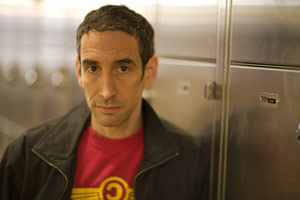
Douglas Rushkoff Douglas Rushkoff, an award-winning writer, documentary filmmaker and scholar, has written a book entitled “Life Inc”, where he delves into what he calls the “corporate mindset” of today’s society, and how to overcome it in order to make our lives and our world better.

I’ll let him tell you what the book is about in his own words:

“What I started to do was to look at the different ways we as modern Americans have become disconnected from one another, disconnected from the places we live, disconnected from the value we create, and even disconnected from our own sense of self-worth. I came to the conclusion that corporations, or what we call the corporate mindset, were really at the center of this phenomenon.”

“We’re living in a world where if you want to make money, you’ve got to work for a corporation.”

According to Rushkoff, it turns out this “corporate mindset” can be traced back to the Renaissance, which is when kings began to monopolize on the income created by people. Instead of letting them trade freely among themselves, they created charter corporations which had exclusive control over certain industries. The kings got shares of stock in those monopolies, thus income, and those companies got to make all the money there was to be made in those markets. This centralization of power continued right through to our own time.

“The society built through the Industrial Age was built to mythologize the mass-produced object, because we needed to create a society of consumers who thought buying all of this stuff would somehow make them happier.”

“Most of us spend so much time working and consuming that we have very little time left to do anything that has to do with other people.”

“The more we behave as individual actors in competition with one another, the harder it is to encounter one another in a friendly way.”

“People can start investing in one another and with one another, make their towns better, and earn returns that you’re not getting from your Smith Barney broker… and see the return of your investment in the place you actually live.”

“This [economic recession] isn’t just a crisis, it’s an opportunity. It’s the first moment in the last couple of hundred years that we’ve had to rebuild our society and our economy on principles that serve humanity instead of killing life.”

I agree with most of what he has to say, and it’s important to realize he’s not against corporations per se, but against the slow creep of the corporate mindset into everyday life. After all, it’s thanks to corporations that we have industrial design, which allows us to get products designed to exact specifications and high standards. And the concentration of capital and research at some corporations and organizations has resulted in amazing advances in technology that have benefited all of us. Yes, you can do a lot of things in your garage, and you can get a lot of stuff done with your neighbors and in your community, but you can’t build a highly sophisticated computer, digital camera or a modern car at home. (You might be able to assemble them from purchased parts, but those parts were made in factories, too.) There is plenty of value to what he has to say, and the book warrants a close read. We do need to become more human, more connected, more dependent on our communities.

There’s a 9-minute video summary of the book at his Vimeo account. He’s also posted video clips summarizing the main ideas of each book chapter there. I’ll post the main video summary and the first three clips below. There’s also more info on his website at rushkoff.com. You can get the book from Amazon.

Life Inc. The Movie from Douglas Rushkoff on Vimeo.

Life Inc. Dispatch 01: Crisis as Opportunity from Douglas Rushkoff on Vimeo.

Life Inc. Dispatch 02: Insulation Equation from Douglas Rushkoff on Vimeo.

Life Inc. Dispatch 03: Money as Debt from Douglas Rushkoff on Vimeo.

Standard
Thoughts

Meet Buttons, the cutest kitteh ever

The one with the tiny nose

Sorry for the baited title. This post is really about how web users interact with written content on the Internet, and how people in general interact with the news these days. But read on anyway, you might find this useful, and there’s even another cute kitty photo at the end.

I’ve been sitting on the sidelines lately, looking at the way people interact with items on FriendFeed, and I realized it’s all part of how people in general interact with the world these days. In a word, it’s superficial. On the web, there’s barely any interaction with items that have no thumbnails. If there’s no image to be digested quickly with a news item, then it gets buried, fast. That particular news item might be truly meaningful, it could have real value, it could be worth at least a few minutes of someone’s time, but users just don’t take the time to click through and find out what’s going on if there isn’t an image to go along with it. It’s like they’re little kids and they gotta have pictures in their story books. Whatever happened to being adults?

I’m not talking about my own articles, and I’m not talking about FriendFeed per se. I’m talking about the bigger picture. You can see this on TV as well. In the US nowadays, instead of showing the person who is talking, whether that be a news presenter or a person being interviewed, the stations overlay the audio on top of looping footage of the things the person is talking about, or they run the audio on top of marginally related video, ostensibly to keep a spastic audience glued to the set. In Romania, where I’ve been staying these past few months, they divide the TV screen in half. They show the commentator in one half, and they show video footage in the other. Your eyes keep jumping from one spot on the screen to the other, to make sure they catch all the action. And they also scroll text and stock and weather alerts on the bottom of the screen. It’s nuts. You just don’t get the chance to digest what the person is saying, because your attention is continually grabbed and pulled in many different directions.

If you are reading this on FriendFeed or in a RSS reader that shows media content thumbnails, do you know why you clicked on it? Likely because I had a photo of a cute kitten to draw your attention, not because you wanted to do some actual reading. It would have been much better if I showed some woman in a bikini — many more people would be reading this article right now, or at least skimming it, hoping for more photos.

Isn’t it sad though? For a person who likes to write, and wants to communicate through writing, it’s so disappointing to see the audience drifting from adult food to baby bites, to cute or sexy photos with (preferably) one or two sentence captions, instead of real articles. Whatever happened to sitting down and reading something?

Don’t tell me it’s because you’re busy. I don’t buy it. You’re lying to yourself and you’re lying to me. People have always had lots of work to do. Sure, it wasn’t computer work a few decades ago, but it was chores or factory work, and it took just as much time and much more effort. But they knew how to relax. They could sit down with a magazine or newspaper in hand, tune out everything else, and read something they found interesting.

You still have that ability. Stop being immature and clicking on everything, and pick the stuff you want to spend your time on carefully. There’s only so much time in one day, and you can’t keep up with a thousand RSS subscriptions and still do other things. Thin out the stuff you want to see on the web every day. On a larger scale, thin out the stuff you want to do every day, because you can’t do it all. Decide on what’s important to you, and stick with that. Maybe if more people took this advice, the world would be a saner place for those who write on the web, like me. We wouldn’t have to go nuts trying to get the word out about our content, because people would take the time to find interesting stuff and stick with it.

If you’re a FriendFeed user, let me tell you it’s not cool to subscribe to tons of people just so you can watch news items stream by you in real time and feel good about keeping up with everything that’s going on in the world, because that’s not the case. In the end, you’re just as superficial as the guy who looks at a magazine cover and thinks he knows everything inside it. Instead of wasting your time doing that stuff, pick the people you find interesting, weed out the rest, and really sit down to see what they have to say.

Now, just because you read/skimmed this far, here’s another photo of kittens, this time two of them, playing together. See, I’m not such a bad person.

Games kittens play

Standard