A Guide To A Good Life

Proposed EU measures to extend product lifetime

I am happy to let you know that things are underway within the EU to ensure that products will last longer and will be easier to repair in the future. These are proposed measures at the moment, they’re not law, but they soon could be. The idea, according to the EEB (European Environmental Bureau) is to:

  1. Extend the lifetime of products
  2. Extend the availability of repair services
  3. Improve consumer information and rights
  4. Make these measures binding, not voluntary

If you live within the EU, I encourage you to contact your representatives to the EU Parliament and to ask them to support these proposed measures.

Even if this isn’t law yet, I am happy to see my own feelings on the matter mirrored by those in a position to do something about it. You may recall that I wrote an article called “Truly sustainable computing” back in August of 2015, where I proposed that desktop computers have a projected lifespan of 20 years and laptops and mobiles phones have a projected lifespan of 10 years.

The proposed EU measures would apply to every category of products, not just to computing devices, so things like cars, electronics, appliances would all be covered by the new regulations, ensuring we would once again have quality products that last a long time.

I say “once again” because those of you who are younger than me may not recall we had this sort of thing before the 1970s. The idea of “planned obsolescence” was introduced in the 1960s by manufacturers and that’s when things started to go downhill for products in terms of durability, repairability and build quality. You could still get kitchen appliances made in the late 1960s that looked and worked perfectly even in the late 2000s. You can no longer do that with today’s appliances.

It’s irresponsible in so many ways for us to generate mountains of e-waste every year and it’s doubly irresponsible for manufacturers to make them, one because they’re using the Earth’s resources without any regard for the future and two, because they make them easily breakable and disposable, contributing to the enormous amounts of waste that we generate as a race. It’s time we did something quantifiable and legally binding about this!

Standard

Here’s a short video log I recorded yesterday as I got to thinking about how we as humans tend to separate into groups and sub-groups and identify with them. We form separate cultures and sub-cultures and nowadays, we want to stand apart from what we see as the commercialism and consumerism of modern society. 

And yet, when we do that, we actually make it easier for advertisers to target us, because instead of making general ads for general products, they get to make very targeted ads for products specifically tailored to particular groups. So the effort to escape consumerism then becomes a moot point. 

People think this is a bad thing for some reason. But I say it’s a good thing. I don’t think there has ever been a time in the history of mankind when products tailored for specific uses could make it to market faster than nowadays. Sure, you have to sort through the crap, and there’s a lot of it, but there’s some really good stuff out there, made just for your needs. 

I also touch on the idea of money as currency and the inherent benefit of being able to convert skills or objects into such a portable currency that you can take pretty much anywhere and exchange it for what you need. Some people say we don’t need money, that we can trade directly, service to service, product for product, etc., but I sa that only goes so far. It’s so much more limited than money, particularly when you hold a very portable currency like the dollar, the pound or the euro. 

Yes, I’m still in bed, so please excuse my disheveled appearance. 

Thoughts

Truly sustainable computing

Plenty could be written about this subject. I just want to call for change in two areas, because I believe they’d have the greatest impact here and now:

  1. Desktop computers should have a projected life span of 20 years.
  2. Laptops and mobile phones should have a projected life span of 10 years.

Why 10 years for laptops and mobile phones? Because they’re portable, they get banged up more and chances are they’re not going to look that good after 8-10 years, but they should be made to last that long nonetheless. Even if you won’t want to use them after a few years, you can sell them and someone else with a smaller budget will be happy to use them for as long as they last.

This means internal circuitry, which is most often the culprit in computing, should be made to last a looooong time. This is doable. There are cars and planes in use today with circuits made 15-20 years ago, which are still functioning properly. I think hardware meant for personal computing is purposely made to stop working after a few years, because computers are always upgraded and hardware manufacturers plan for obsolescence from the get-go.

There is a better way. Enclosures for all computing devices should be solidly made and finished. They should be stunningly beautiful and their design should stand the test of time. They should be easy to open and the innards serviced. And internal components should be made in such a way that they stand the rigors of heavy use through two decades, even if they become obsolete, market-wise. I think we’ve gotten to the point in computing where even if a computer is no longer desirable by someone who wants a fast machine, it’s still good enough for daily use by someone who does basic computing tasks.

I may live to eat the words in this paragraph, but surely USB 3.0, Thunderbolt, PCIe, 4K resolution and other goodies that are currently available should suffice for a while. I can’t imagine word processing applications or web applications requiring more than this, even 10 years from now. And if they do, a solid, serviceable enclosure and upgradeable hardware with backward compatibility for widely accepted standards and protocols should be enough to keep a computer going… and going… and going…

And once we pass that 20-year mark, why not make our next goal even bigger? Let’s plan for 100-year computers and let’s start doing it right now. Wouldn’t it be great if we could have machines made in 2015-2016 still in daily use in 2115-2116?

If you work in hardware, I’m sure you can think of plenty of reasons why this isn’t doable. It’s pretty easy to find reasons not to do something, and this applies to just about anything. But I want to challenge you to find ways to make this work, because it’s what we need to do in order to survive in the future. We can’t go on trashing the planet and taking from it indefinitely. We need to start conserving and giving back to it. We should focus on making it clean and beautiful.

I don’t know about you, but I’m sick and tired of phones I have to throw away after 2-3 years because they turn into unusable crap. I’m sick and tired of computers and external hardware that start to break down after 3 years, some of them right after their warranty expires. And if would see what a mess we’ve made of this world, with destructive mining for rare earth minerals used in our electronics and with mountains of electronic trash polluting the ground and water tables in many places around the world, you’d be sick and tired of this as well.

There are much better ways of doing things. FairPhone is pointing the way for mobile phones. iFixit is helping too, with online service manuals and parts. But the bulk of the work still hasn’t been done. I still don’t see 20-year computers and 10-year laptops in stores. Where are they? Who’s making them? I’d like to buy one.

Standard
Apple Wireless Keyboard
Thoughts

White keyboards and cleanliness

Back when Apple came out with white keyboards, I was annoyed. I appreciated the white aesthetic, the clean design, but they got dirty so quickly. Within a few weeks of normal use with clean hands, there was a visible layer of grime on the keys used most. It was like a heat map drawn with dirt. Yuck. I wash my hands every time I go to the bathroom, so that’s 7-8 times a day or more, and my keyboards still get dirty.

I found myself cleaning my keyboards often, and every time I did it, I asked myself two questions. I kept repeating them like a mantra, annoyed with the amount of time I was spending doing menial stuff:

  1. How could so much grime collect on my keyboards?
  2. Why didn’t they make black keyboards?

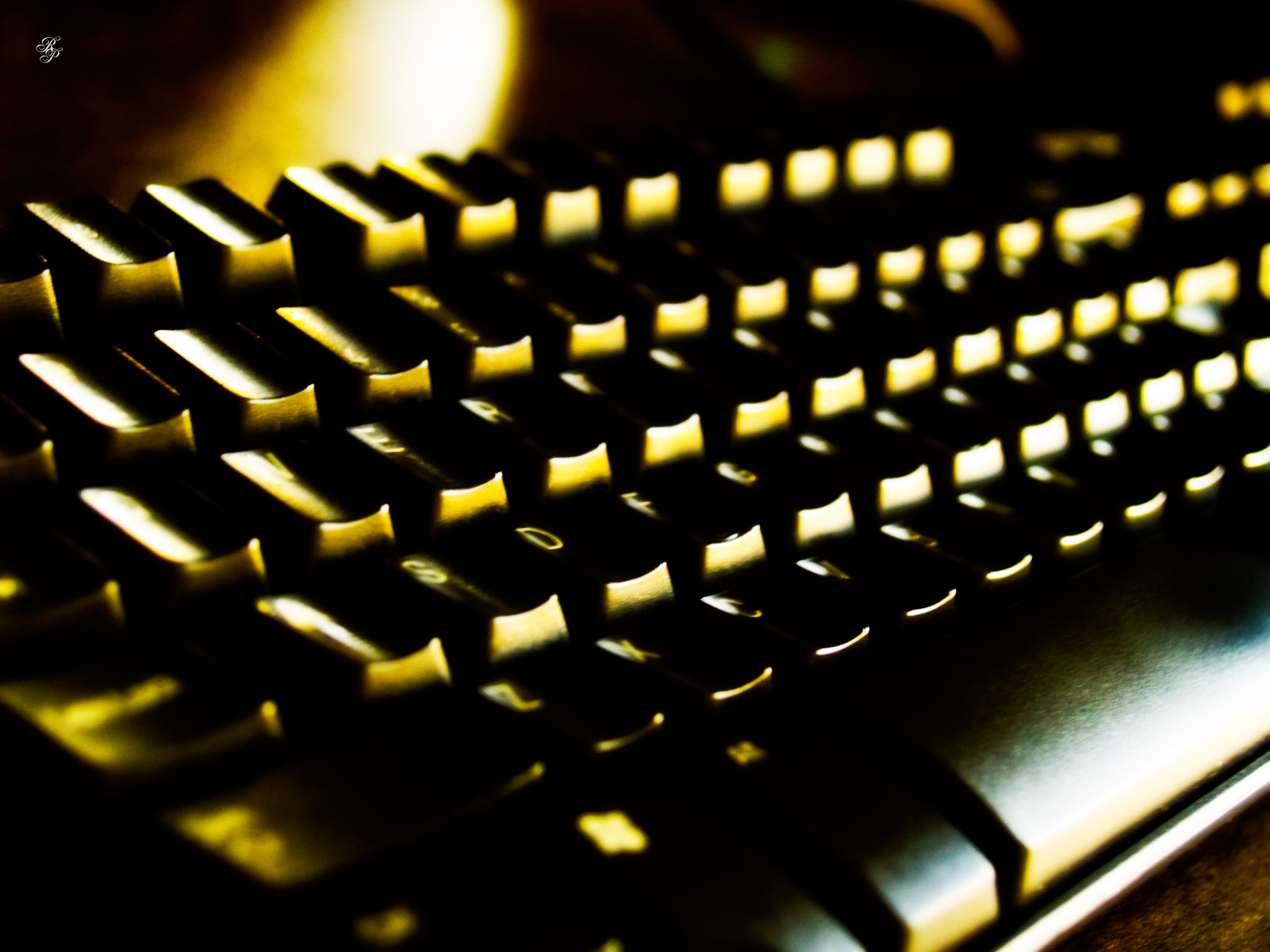
A black computer keyboard.

Of course, the answer was staring me in the face, every time I used my keyboard. See this and this. Keyboards and mice are breeding grounds for all kinds of nasty bacteria. And because most of them are black, we don’t see how dirty they are and we don’t clean them often, although we should. I bet that’s exactly why they went with white (beside the fact that their design kick at the time involved a lot of white and silver). They wanted to give us a simple visual reminder of the state of our keyboards and make us clean them, lest we look filthy to our families, friends and co-workers. It was a bit of a pill to swallow, but it was (and is) for our own good.

Apple Wireless Keyboard

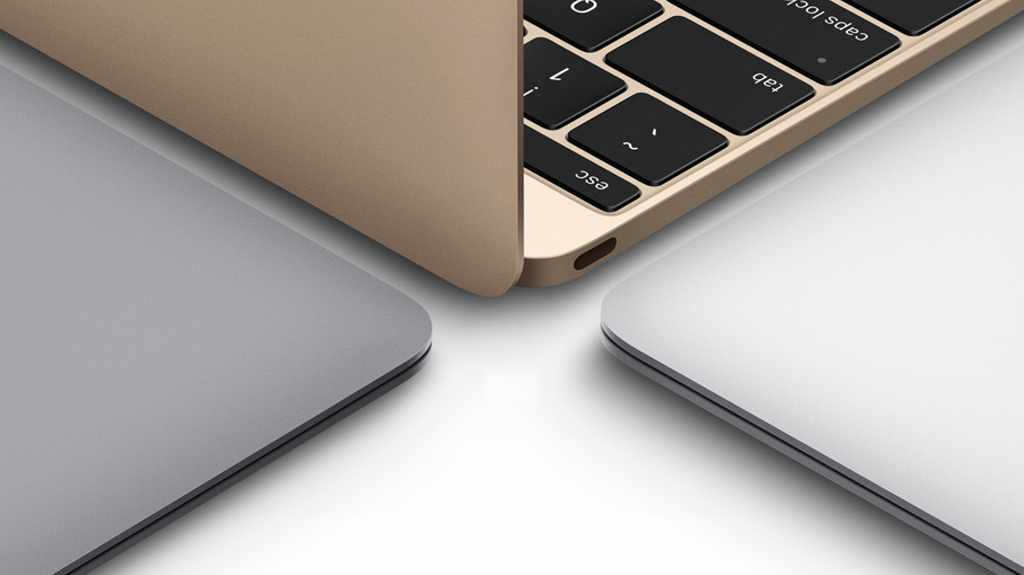
In recent times, Apple has gone to black keyboards on their laptops. Rumor has it they’re also going to make black keyboards for their desktops. While I get the practicality of it, I can’t help thinking people are going to just let the filth accumulate on their keys now that the stark visual reminder is gone. Let’s face it, we’re all so damned busy these days (mostly with drivel) that we’re going to forget to clean our keyboards. We won’t do it until they’re sticky, and by that point… yuck.

New MacBooks

Just in case you’re wondering how I clean my keyboards, I typically use Q-tips dipped in rubbing alcohol, they work great. In the past, I also came up with more inventive ways to clean them, such as putting the keys in the dishwasher. That method doesn’t work so well with the newer Bluetooth keyboards, it’ll cook the circuitry, because there’s no way to remove the keys unless you pry the case open.

Standard
Reviews

Blackmagic Design Cinema Camera

When it launched a little more than a year ago, the Blackmagic Design Cinema Camera took the industry by storm. It is the first (and quite possibly still the only) 2.5K video camera under $5,000 able to use EF, ZE and MFT-mount lenses. It stores the video on SSDs, in 12-bit RAW format with 13 stops of dynamic range (unheard of in virtually all video cameras). It has both SDI video output and Thunderbolt, for super-fast video downloads to your editing station.

The Blackmagic Cinema Camera with EF Mount from Blackmagic Design brings to film makers a tool that many have waited for. Recording to a 2.5K image sensor, the camera is capable of recording 12-bit RAW DNG files, as well as ProRes and DNxHD formats to built-in removable SSD drives, while delivering 13 stops of dynamic range. And it does so at a previously unheard of price point.

The camera is housed in an elegant, minimalist enclosure, crafted from a single block of aluminum. It can be used hand held or mounted on industry standard hardware. The lens mount accepts Canon EF and Zeiss ZE lenses, and the LCD touchscreen provides monitoring, plus the ability for the user to add metadata such as shot number, filenames and keywords.

To handle the high data video output, the company includes a full version of DaVinci Resolve, its premier color correcting software for Mac and Windows. Also included is a copy of UltraScope. When connected to a computer via Thunderbolt, the software provides technically accurate waveform monitoring, displaying six live scope views on a single monitor.

Since everything has been designed to provide high quality acquisition, the camera is perfect for independent film, television commercials and episodic television production, all places where image quality is paramount. And being affordable, it will also find its way into wedding, sporting event and music video capture.

Dynamic Range

  • Captures a super wide dynamic range of 13 stops into 12-bit DNG files for a true “filmic” look
  • Preserves detail in both shadows and highlights, and even handles indoor shots while keeping the details of any images captured through windows
  • Allows for keeping all sensor data and enhancing the creative decisions during DaVinci Resolve color grading

EF Compatible Lens Mount

  • Supports optics from leading lens crafters such as Canon, Zeiss and many more
  • Compatible with EF, ZE and MFT-mount lenses
  • Allows full electronic control of the lens – simply point, set iris and focus on command

Capacitive Touchscreen Display

  • Five inch touchscreen allows for setting up a shot, as well as playback from the SSD using the transport control buttons below the screen
  • Enter shot data and update the camera’s settings using the capacitive touchscreen display
  • Double tap to zoom the image for fast and accurate focus
  • Data strip displays information including record status, shutter angle, ISO, battery level, record time and more

Metadata Entry

  • Features built-in metadata entry so that files include information compatible with popular editing software
  • Dramatically speeds up the whole post production process
  • Entering metadata is easy – simply tap the capacitive LCD touchscreen to display the slate where information can be entered including shot number, search tags, scene number, Timecode, and more
  • Set shot number and other data to increment automatically
  • Metadata is compatible with leading editing software and is fully searchable, bypassing the time consuming task of searching for specific shots when editing a project

SSD Recorder

  • Built-in SSD recorder uses low cost 2.5″ SSDs
  • Allows for 2.5K uncompressed CinemaDNG RAW 12-bit capture, as well as Apple ProRes and Avid DNxHD compressed video formats
  • Play back directly from the camera, mount the disk to any computer, or use Blackmagic Design’s HyperDeck Studio deck
  • With Apple ProRes and Avid DNxHD video formats, record for more than five hours on a single 480 GB SSD
  • All file formats conform to open standards used by most professional NLE software
  • When finished shooting, simply connect the SSD to a computer and edit or color shots straight from the disc

Connectors

  • Uses only standard connections, no custom cable required
  • Dual balanced microphone/line audio inputs for recording high quality uncompressed audio
  • 3 Gb/s SDI out for on set monitoring or for sending to live production switchers
  • Includes 12 to 30 VDC input for power and battery charging
  • Stereo mini (3.5 mm) headphone output
  • LANC remote control and high speed Thunderbolt port for computer capture

Open File Formats

  • Camera uses standard file formats
  • Recording native 2.5K resolution uses the open CinemaDNG format, delivering full 12-bit RAW recording quality
  • Choose 1080HD recording into ProRes and DNxHD compressed video formats for even greater compatibility

Included Software

  • Full DaVinci Resolve 9.0 software including Resolve USB dongle for Mac and Windows
  • Shoot wide dynamic range images and then make color correction decisions in post production
  • Media Express software for video capture from the camera’s Thunderbolt port
  • UltraScope provides technically accurate waveform monitoring
  • Connect the camera to any computer using Thunderbolt to display six live scope views on a single monitor
  • Use UltraScope on set or in any location for parade, waveform, vectorscope and histogram signal measurement
  • Includes picture view, audio level and phase monitoring

Buy it here: Blackmagic Design Cinema Camera with EF Mount

Or here: Blackmagic Design Cinema Camera with EF Mount

Standard