Thoughts

Obama wants to increase airport security tax

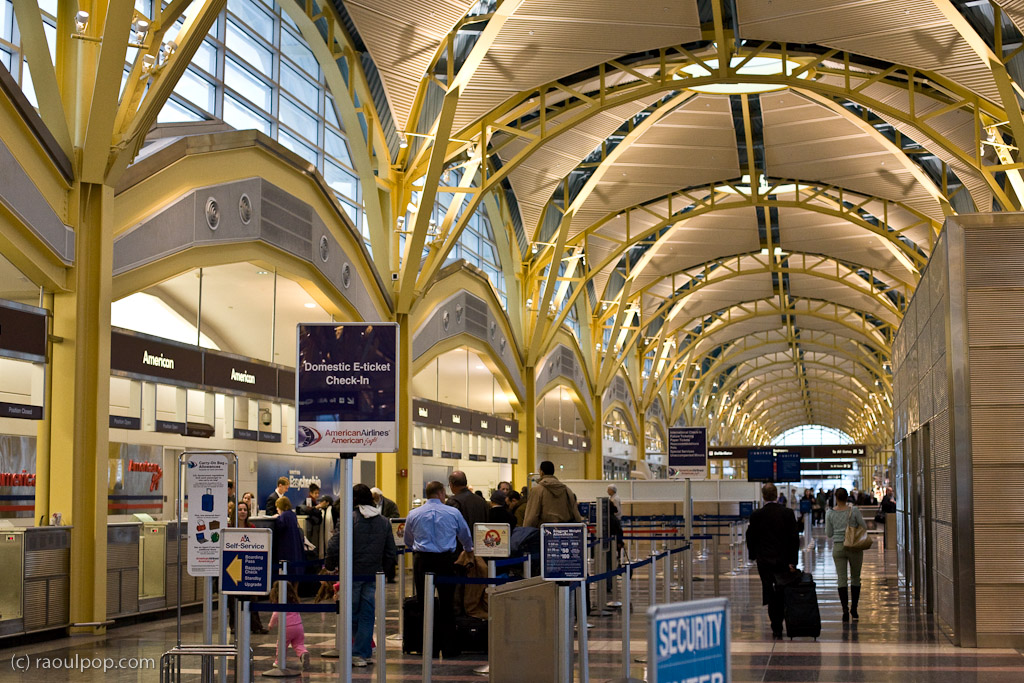
Waiting to check in

We’re currently getting charged $2.50 per passenger to go through the security theater* at our airports. Now the Obama administration wants to increase this fee. Quoting from this article at the Economist:

“The Homeland Security portion of Obama’s proposed 2010 budget (PDF) includes a plan to raise the fees by an as-yet-undisclosed amount in 2012. The increase, the White House says, is needed because the current fee only funds about 36% of airport security costs.”

So let me get this straight: not only do we have to go through the inane, annoying and useless experience of getting scanned, uber-prodded and turned over every time we want to board a plane, but now we’ll have to pay more for that unsavory experience as well? Thanks a lot, Mr. Obama. I can see my vote went to a good cause.

As I said before, I think we should be doing away with the whole darned thing. What happened to accepting the risk and moving on? That’s how the United States was founded and built. It wasn’t built by wimps who wanted to make sure no letter openers or nail clippers got on the plane with them. Why zap us with X-rays, make us take off our shoes, put us through air blowers to sniff us (I’ve half a mind to fart when I go through those things just to see what happens), open up our luggage, and generally speaking stink up the whole flying experience when we don’t really need any of it?

It’s shocking to hear that, isn’t it? Truth of the matter is we wouldn’t really need any of it if security were done right, and if people had the courage to step up and disarm the terrorists when and if they dared do something on a plane. Since the general populace is a bunch of pansies who’d rather have big-brother government do everything for them, now we have to put up with cretinous security checks and starting next year, with increased fees for said security checks. Hooray for democracy, where the majority rules with a pudgy, slightly damp and sweaty fist, tired from holding the remote control too long.

* Term coined by Bruce Schneier.

Standard
Thoughts

Another point of view about ferryboats

Nowadays, people think a ferry is a romantic way to get over a river, but in the 1930s, during the Great Depression, people used to think otherwise.

A ferry ride

A ferry ride

For a great look back in time, watch “Bridge Ahoy“, a Popeye cartoon released on May 1, 1936. In it, Bluto overcharges passengers for rides on his ferry, so Popeye, Olive and Wimpy decide to build a bridge and let people cross the river for free.

You see, when you’re the only way to get across a river, you’ve got a monopoly. You control the market and set your own price. Before monopoly laws, it’s probably what happened with ferryboats, and it didn’t sit well with the cash-strapped folks of the mid-1930s. If we had only ferryboats to get across rivers nowadays, we’d no doubt share the same feelings.

Things worked out in the cartoon and the three delivered a bridge made to order. Everyone was happy except Bluto, the ferryboat owner, which was as expected.

Of course, if we carry this solution over to modern times, it breaks down right away. You see, we get charged to go over bridges nowadays. Kind of makes the point of building a bridge to avoid ferry tolls moot, doesn’t it?

Standard
Thoughts

Our economy: a very distinctive photoplay

I found this photo of a truck advertising the Rialto Theatre on Shorpy. What perked my interest was the juxtaposition of the truck in front of the US Treasury Building. Although the photo was taken in 1925, it’s somehow applicable to our times.

Rialto Theatre truck in front of US Treasury, 1925

Doesn’t it seem strangely non-coincidental that a photoplay/movie truck would find itself in front of the Treasury building, particularly when you consider what economic times we’re living in? I for one have been feeling like we’re watching a theater performance every time I turned on my TV in recent months. Politicians and government employees and suits from the Federal Reserve (which is separate from the US government) and CEOs have all paraded in front of the cameras and wept for the state of our economy when they themselves were at fault for its state. They’ve been crying crocodile tears and promising to make it all better, and we sat there mesmerized, hoping for a savior.

We had the drama of the economic downturn, then the drama of the election. The first act is over. Now we await the second act, which includes a bonus appearance from a fantastic pork-barrel stimulus plan guaranteed to make all the Washington hogs cry out for joy. I don’t want to spoil the plot, so I won’t tell you what I think of it, but it’ll involve a lot of work from the US Treasury building in the photo above. They’ll need to print a lot of Monopoly money to finance it all.

At any rate, this is what I think of the economic crisis. And this is what I think of the way companies are treating their employees nowadays. Finally, this is what I think of the problems car companies are having. Call me the guy from the nosebleed seats who thinks the show sucks and keeps throwing peanuts at the performers. Maybe I’ll get booted from the theatre, but at least I’ve spoken my piece.

Just remember, there will be a third act…

Photo used courtesy of Shorpy.

Standard
Thoughts

A few words on the economic crisis at hand

I’ve just got to say what I’m about to say, because it’s gnawing at me from inside, and I need to have it out. I’m not going to pretend I’m some economic guru, and I’ll use plain words.

My thinking on economics is simple. I understand tangible products. If an economy makes stuff I can touch and see, if it manages to sell that stuff both inside and outside the country, and the unemployment rate is low, then things are well.

I think things started to go sour when our industries decided to shift manufacturing to third-world countries. The thinking was that cheaper labor would result in cheaper products and lower prices. The truth was that it took jobs away from our country and it really only resulted in higher profits for the investors, not lower prices for us. As more companies would announce they were moving factories abroad, I would wince, because I knew our economic power was decreasing with each and every move. When you’re making less stuff in your own country, it’s plain common sense to realize that your economy is weaker.

As our economy started to move away from manufacturing and toward the service sector, I winced again. If you’re not making tangible products, what are you really making? Services? Knowledge? That’s all nice and good, but you can’t base an economy on intangibles. You just can’t. You have to have a good, healthy mix. I suppose I shouldn’t complain about this so much, since I work in IT. Still, at least what I make is tangible. I make websites and web systems. You can see and touch those, or click on them anyway. But not everyone can be a knowledge worker. It takes a certain amount of dedication, interest, perseverance and education, and many people simply don’t have the inclination to do that, or to be knowledge workers. That’s where having a good mix of jobs to offer your people is important. The more manufacturing jobs you move away from the country, the less variety you can offer your people. Plus, what do you do with all the folks you’re laying off as you “restructure” your economy?

When real estate prices started going up like crazy, I knew they’d come down, hard. They were bound to do so. When a pathetic little townhouse with a few tiny rooms, made out of plywood and fake brick cladding, cost over $400,000, that couldn’t be good. As prices kept going up, and people bought up multiple properties using ARMs, banking on the hope that the values of these properties would continue to grow, but no regular person could afford to actually own one of them, that was just plain wrong. When the home prices in most neighborhoods are so high that they’re out of reach for most, that’s asking for trouble.

Then I heard about the gaming that went on behind the scenes, as loans were approved by mortgage companies which seemed to sprout out everywhere. We knew someone who worked at one of these companies, and that person was just shocked at what went on. Executives would push employees to approve more and more loans only so they could get fat bonuses and afford McMansions and Mercedes cars. Meanwhile, the employees got nothing but low pay and long hours.

What’s more, I also heard about investment firms buying up groups of mortgages left and right, and re-selling them, and creating ridiculous layers of investments and speculations on top of these (mostly) insecure loans, in order to squeeze as much profit from them as possible. I’m sure that if you go back and check most loans, you’ll find 5-6 layers of additional financial speculation on top of the original mortgage. That’s insane and it makes me sick when I think about it. Instead of letting someone borrow money and charging them the set interest fee for the life of the loan, banks were selling these loans left and right as soon as the papers were signed, not caring where they ended up, letting others take the fall when and if the loan defaulted, etc ad nauseam. I knew that wasn’t going to end well.

Fast forward a couple of years to where we are today, and is it really any surprise that we’re here? Is it? And what’s being done about it? The government wants to bail out the banks and give them insane sums of money. You can’t do that! If they’ve mismanaged their own money so badly over these past several years, while their executives got filthy rich, let those same “smart” executives figure out how to fix their own problems! But no, what we’ve got now are scare tactics employed across the main stream media, where politicians and bankers are trying to scare us into giving in and allowing the bailout plan to go through. We’ve got bankers lobbying politicians to get the plan passed, and we’ve got them salivating at the thought of getting a piece of the bailout pie. This is ridiculous and irresponsible!

I keep thinking about Bush’s televised speech when he wanted to go into Iraq. And then I think about his speech just a few days ago, where he used the exact same scare tactics and language to try and get us to agree to the bailout plan. Jon Stewart did a great job of contrasting the two speeches on The Daily Show [reference]. Here’s a man that’s derailed our country, our economy, our international standing, and our military over the past 8 years, and we get to see his scare tactics in use once more. He’s clearly beholden to special interests, and they write his agenda. They wrote his agenda when he said we should go into Iraq, and they’re writing his agenda now that he wants to bail out the corrupt bankers. Given his track record, does he really deserve any credibility? I don’t think so.

So what should we do? Ride it out. Let the bankers suffer and cry. Let’s take our proverbial castor oil, let the crap pass through the system, and move on. They said it would be a disaster yesterday, when the stock market tumbled 778 points, and yet it jumped back up by 485 points today as investors gobbled up stocks while the prices were low. I think we all need a serious round of belt-tightening. Many Americans need to learn a hard lesson, namely that life doesn’t work on credit, that you need actual, real money to buy stuff. People and politicians and banks everywhere need to learn real fiscal responsibility. They need to learn that they can’t run up bills on credit cards and loans and credit derivatives and bond issues and not expect them to come due at some point. They need to learn that saving is more important than spending, and that a healthy economy means an economy that keeps its jobs inside the country, and makes most of what it needs inside the country as well.

It is truly unfortunate that none of the candidates running for president is saying this. I support Obama on my website, as you can tell by the Obama button in the sidebar, but that doesn’t mean I agree with him on everything. I think he’s the better choice out of the two, but he’s pretty short on substance when it comes to what needs to be done about our economic crisis. And he actually supports the bailout plan — probably out of fear, because he doesn’t want to be saddled with a big recession should he win office. I honestly wish Ron Paul was still running for president, because he’d get my vote, solely for his common sense approach to this whole mess.

Standard
Thoughts

You can always count on pride

On DC’s beltway, you can easily spot trucks carrying concealed military equipment. All you have to do is to go about your business, and you will pass one or two semi trucks every day, each carrying some big payload wrapped in canvas. While the trucks are generic, the canvas isn’t. You will almost certainly find some logo or initials on it.

If you’re diligent, you can trace that logo back to the company, then find out what contract they were awarded, by whom, and finally, what concealed equipment you might have seen. It’s not hard to do this if you have a somewhat basic knowledge of how government/military contracts work.

I’m not saying this because I want to divulge any government secrets or put anyone at risk. I simply want to point out that most people can’t keep their mouth shut when it comes to bragging about their work, particularly when they’re proud of what they’re doing.

Remember Napster back in its golden days (circa 1997)? You could log on and download music all day long. College students everywhere were doing it. I did it too, for a while, until I realized it was wrong to rob artists of their hard work like that. Later, I even deleted most of the music I’d downloaded, and since then, I’ve been buying my music.

I’m not sure how online music sharing works today, but back then, most hardcore music sharers would mark their files by putting some sort of identifier (such as a nickname) inside the meta data. Some even put site URLs in the meta data. I’m sure that as music labels clamped down on file sharers, these nicknames and site URLs made it easier for them to find the culprits.

These file sharers and the military contractors are just two examples of how one can always count on pride to get at some information. Like most things in this world, this is nothing new, but it’s something to keep in mind if you’re working on something you’d like to keep under wraps.

Standard