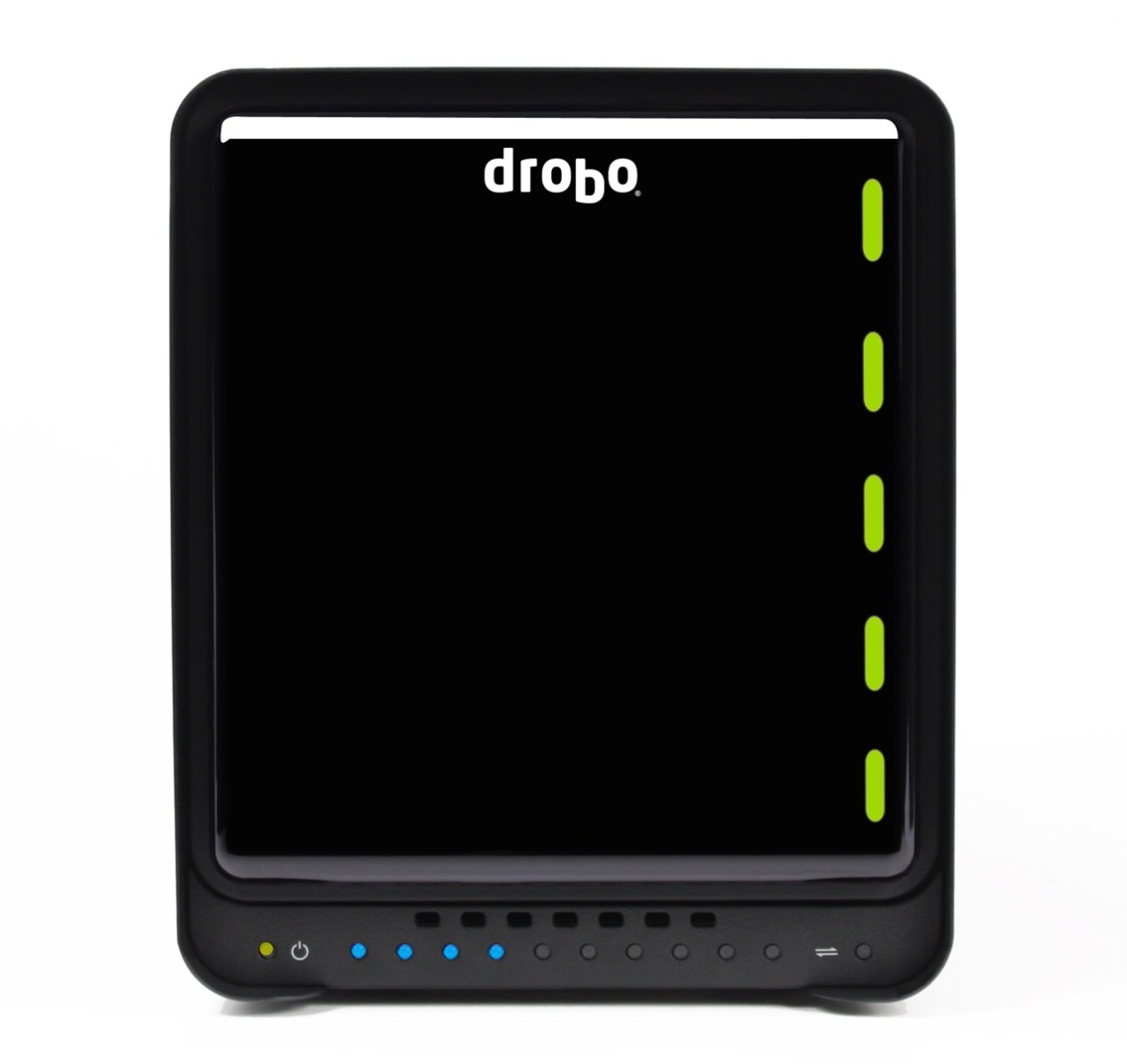
I’ve had multiple Drobo units since 2007. To this day, I still enjoy adding a hard drive to a Drobo. It’s one of those things that can be an ordeal on other tech, but on a Drobo, it’s been made fun through proper planning and design.
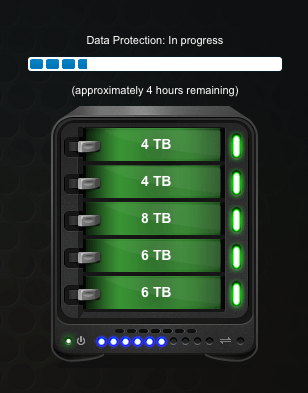
It lets you that it’s low on space, you order a drive, and when it comes, you look at the app, which tells you exactly what size-drive is in each bay. Pressing a small lever on the side of the bay releases the drive, which slides out. You put the new one in, the Drobo immediately checks it and formats it, then begins striping the data set across it. By the way, that’s a screen shot showing my Drobo 5D.
I love this process. It’s so simple and so fun! The Drobo doesn’t care what hard drive you buy, as long as it’s larger than what you already had. It allows you to grow the capacity of your Drobo in time, as the prices for newer, bigger hard drives decrease, without any sort of headaches. This is technology done right.
Why is iTunes being used as the sync hub for all media and mobile apps?
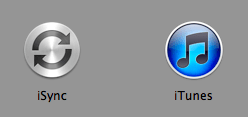
Do you remember iSync? It was the app that Apple made specifically for syncing devices to their computers. It worked pretty nicely to sync contacts and calendars from the Mac to a mobile phone (this was before the iPhone came out). I used it to sync my Nokia E63 and N95 to my iMac and MacBook Pro.
I wrote about this back in 2011 as well. The problem is still there. Why are we syncing contacts, calendars, movies, TV shows and mobile apps, through an app designed for music and named for music? Why not have an app that’s properly named, where we sync everything we want, through a brand new interface?
What name should we pick for it? The clue is right there in the name for a product recently launched: Apple Music. The central app should be called Apple and it should be available on both desktops and mobile devices. It shouldn’t even have a name, it should just be the Apple icon. We’ll click on it to connect with Apple and sync our devices, purchase apps, music, movies, hardware, etc. That’s right, I’m talking about a unified interface with a single, seamless web presence where we can buy and sync everything Apple and everything made or coded for Apple, which is accessible through an Apple icon from our computers or mobile devices. No more iTunes Store and App Store and a separate Apple Store!
iTunes can remain but it’ll need to be renamed to something else, since we play both movies and music in it. Apple Media perhaps? How about Apple Player?
Why are there two apps for messaging?
We have FaceTime and Messages. What happened to iChat? Let’s put these two apps together again. Apple lost so much ground when someone else (WhatsApp and others) made a unified app that keeps text, media sharing and video chat together. Why would we need two apps (two places we need to check and open up) when one can do the job?
They should marry these two apps and call the new app… Apple Talk. It makes sense and Apple already owns the trademark on it.
I am happy to let you know that things are underway within the EU to ensure that products will last longer and will be easier to repair in the future. These are proposed measures at the moment, they’re not law, but they soon could be. The idea, according to the EEB (European Environmental Bureau) is to:
Extend the lifetime of products
Extend the availability of repair services
Improve consumer information and rights
Make these measures binding, not voluntary
If you live within the EU, I encourage you to contact your representatives to the EU Parliament and to ask them to support these proposed measures.
Even if this isn’t law yet, I am happy to see my own feelings on the matter mirrored by those in a position to do something about it. You may recall that I wrote an article called “Truly sustainable computing” back in August of 2015, where I proposed that desktop computers have a projected lifespan of 20 years and laptops and mobiles phones have a projected lifespan of 10 years.
The proposed EU measures would apply to every category of products, not just to computing devices, so things like cars, electronics, appliances would all be covered by the new regulations, ensuring we would once again have quality products that last a long time.
I say “once again” because those of you who are younger than me may not recall we had this sort of thing before the 1970s. The idea of “planned obsolescence” was introduced in the 1960s by manufacturers and that’s when things started to go downhill for products in terms of durability, repairability and build quality. You could still get kitchen appliances made in the late 1960s that looked and worked perfectly even in the late 2000s. You can no longer do that with today’s appliances.
It’s irresponsible in so many ways for us to generate mountains of e-waste every year and it’s doubly irresponsible for manufacturers to make them, one because they’re using the Earth’s resources without any regard for the future and two, because they make them easily breakable and disposable, contributing to the enormous amounts of waste that we generate as a race. It’s time we did something quantifiable and legally binding about this!
We need to focus our efforts on finding more permanent ways to store data. What we have now is inadequate. Hard drives are susceptible to failure, data corruption and data erasure (see effects of EM pulses for example). CDs and DVDs become unreadable after several years and archival-quality optical media also stops working after 10-15 years, not to mention that the hardware itself that reads and writes to media changes so fast that media written in the past may become unreadable in the future simply because there’s nothing to read it anymore. I don’t think digital bits and codecs are a future-proof solution, but I do think imagery (stills or sequences of stills) and text are the way to go. It’s the way past cultures and civilizations have passed on their knowledge. However, we need to move past pictographs on cave walls and cuneiform writing on stone tablets. Our data storage needs are quite large and we need systems that can accommodate these requirements.
We need to be able to read/write data to permanent media that stores it for hundreds, thousands and even tens of thousands of years, so that we don’t lose our collective knowledge, so that future generations can benefit from all our discoveries, study us, find out what worked and what didn’t.
We need to find ways to store our knowledge permanently in ways that can be easily accessed and read in the future. We need to start thinking long-term when it comes to inventing and marketing data storage devices. I hope this post spurs you on to do some thinking of your own about this topic. Who knows what you might invent?
It’s high time we were able to come home and place our mobile phones in a dock that’s connected to a display, keyboard and mouse, and have it turn into a full-fledged desktop and laptop replacement. Mobile phones have sufficient computing power for most of our needs, they have the apps most of us use on desktops as well, and there are incredible energy savings to be had. Hardware manufacturers need to start making sincere, concerted efforts toward this end.
You may also want to read through this post of mine, where I tried my best to use a tablet (an iPad) as my main computer, only to be frustrated to no end by the lack of common ammenities and functionalities we’ve come to expect on desktops and laptops, simple things such as the use of a mouse, drag-and-drop functionality between folders, a finder/file explorer and the ability to easily access drives and files on the network.
I realize that people who engage in heavy computing on a daily basis, such as 4K video editing, 3D graphics and 3D video rendering, large-scale CAD projects, serious coding that requires powerful compilers and other such tasks, will still need very powerful desktop computers and even small server farms in order to do their jobs and I am in no way suggesting that they start using mobile phones to do their work.
We simply have to acknowledge that the majority of the population that uses computers can do just fine with the computing power of a mobile phone. I’m talking about the people who mostly check their email, use social networking sites and apps for social networking sites, plus some online banking and take casual photos and videos. What if all those people were able to use their mobiles phones as replacement desktops or replacement laptops? Wouldn’t that be a significant cost savings to them?
Looking at the greater picture, if all those people, or at least a significant portion of them did this, wouldn’t that translate into significant energy savings for cities, counties, states and countries? Aren’t we always talking about reducing our carbon footprint? Well, instead of using a laptop that consumes about 60W when plugged in, or a desktop that eats up about 200W, give or take, why not use a mobile phone that consumes 3-5W when plugged in?



 Raoul Pop