Thoughts

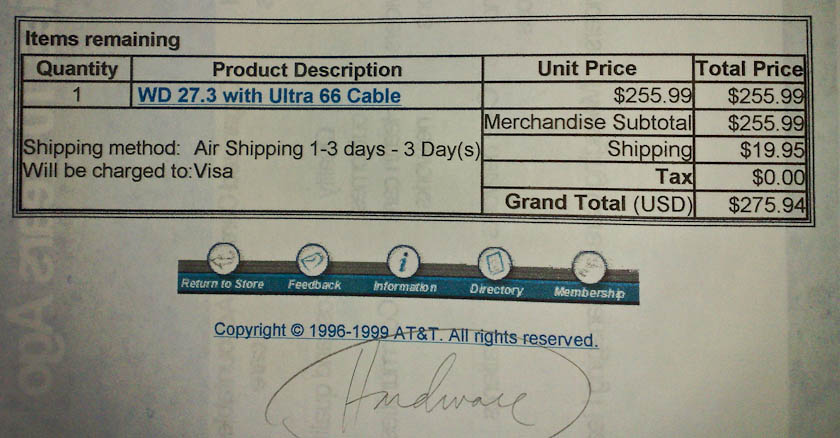
A 27 GB hard drive for $276?

While cleaning up old paperwork, I ran into a receipt from late 1999, for a WD 27.3 GB hard drive with an Ultra 66 Cable. The price for that thing was $275.94 with taxes. Nowadays, I can get a 2 TB hard drive (that’s 2,000 GB) for less than $150. How times have changed!

Standard
Thoughts

A crash test between a 1959 and a 2009 Chevrolet

In the 50 years since US insurers organized the Insurance Institute for Highway Safety, car crashworthiness has improved remarkably.

Demonstrating this was a crash test conducted on Sept. 9 between a 1959 Chevrolet Bel Air and a 2009 Chevrolet Malibu, which you can see in the video embedded below.

In a real-world collision similar to this test, occupants of the new model would fare much better than in the vintage Chevy, which was surprising to me. I wash shocked to see that supposedly rock-solid car literally come apart at the seams, explosively, as if it were built of plastic. The crash test was conducted at an event to celebrate the contributions of auto insurers to highway safety progress over 50 years.

Standard
Thoughts

Are camera guns a lost art?

A little while back, photos of a camera gun made the rounds on all the cool blogs, and people everywhere thought they were new and exciting. How easily we forget… Camera guns — analog cameras and film cameras mounted to gun barrels or provided with pistol grips — were more common in the 60s and 70s than we might think today.

I watched an episode of Columbo last night, entitled “The Greenhouse Jungle”, released 10/15/72 (almost 37 years ago) and in it, Columbo’s assistant pulled out a camera gun that looked even better than the stuff making the rounds these days.

camera-gun-columbo-episode

As he explained in the episode, the device was a “camera-mounted starlight scope”, used “quite a bit at Berkeley for night work”. camera-gun-columbo-episode-2

camera-gun-columbo-episode-3

Since I can find no modern camera guns, I’m tempted to call them a lost art, perhaps yet another victim of a PC society where everyone’s afraid of everything.

camera-gun-1

camera-gun-2

camera-gun-4

I think the inspiration for camera guns came from the portable video cameras equipped with a pistol grip, sold around the same time period. They looked like this.

gun-camera-3

These last two images came from a site called Atomic Rocket, where they have a whole page dedicated to futuristic sidearms.

Standard
Thoughts

The prohibition and Key Largo

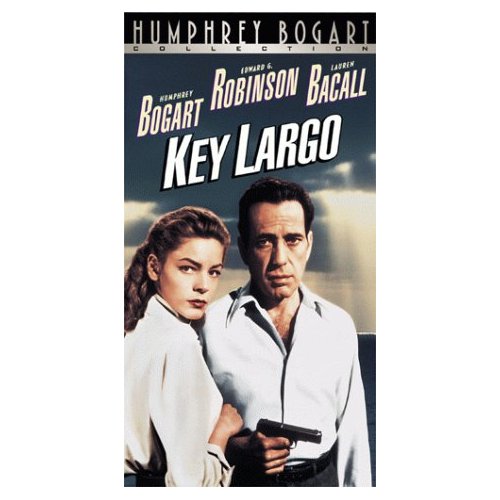
key-largo-movie

In the 1948 movie “Key Largo”, starring Humphrey Bogart, Lauren Bacall and Edward G. Robinson, and one of the phrases in the movie got me thinking. Rocco (Robinson’s character), terrified by the hurricane, commands one of his gangsters to start talking, to say anything.

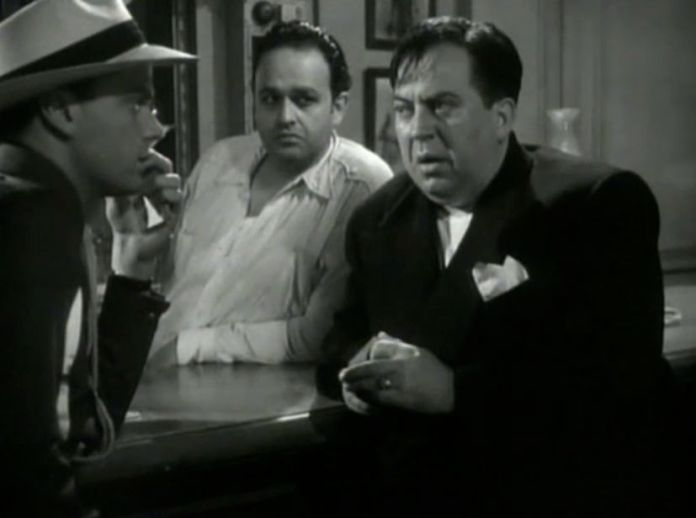
screenshot-key-largo-movie

The gangster, Curly, starts talking about the prohibition. Here’s what he says:

“I bet you 2, 3 years, we get prohibition back. This time we make it stick. Bet you 2, 3 years prohibition comes back. Absolutely, yeah… The trouble was — see, before — too many guys wanted to be top dog. One mob gets to massacring another, the papers play it up big, see, so what happens… naturally, the papers play it up big, and the public get the idea prohibition’s no good, and if they can get rid of it, prohibition, I mean…”

[here we get a separate scene of Rocco being completely terrified by the power of the hurricane, then the talk turns to prohibition once more, continuing the previous line]

“… so the public votes out prohibition, that’s the end of the mobs. Next time it’ll be different, though. We learned our lesson, alright. Next time the mobs’ll get together.”

Perhaps this is why some drugs are still illegal, like marijuana. I realize the debate is much bigger than this, but still, it’s possible that some stand to lose a whole lot of money if marijuana were to be legalized, just like the mobsters lost a lot of money when alcohol was once more legally available. It’s a good theory, right?

In my opinion, marijuana is no dangerous than alcohol, so I don’t see what the big deal is. I don’t consume it, and am only concerned with the unfair scrutiny all hemp varieties get due to their association with marijuana. Hemp seeds, for example, are very nutritious, and hemp string and rope is quite useful around the house. It’s gotten to the point where you can’t grow any kind of hemp, because you’ll be automatically raided, even though you have nothing to do with marijuana at all. It’s silly.

The prohibition/drugs discussion aside, “Key Largo” is a great movie, definitely worth watching. You can get it from Amazon, or you can rent it from Netflix.

Standard
Reviews

Life Inc – another perspective on today's society

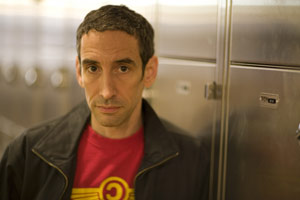
Douglas Rushkoff Douglas Rushkoff, an award-winning writer, documentary filmmaker and scholar, has written a book entitled “Life Inc”, where he delves into what he calls the “corporate mindset” of today’s society, and how to overcome it in order to make our lives and our world better.

I’ll let him tell you what the book is about in his own words:

“What I started to do was to look at the different ways we as modern Americans have become disconnected from one another, disconnected from the places we live, disconnected from the value we create, and even disconnected from our own sense of self-worth. I came to the conclusion that corporations, or what we call the corporate mindset, were really at the center of this phenomenon.”

“We’re living in a world where if you want to make money, you’ve got to work for a corporation.”

According to Rushkoff, it turns out this “corporate mindset” can be traced back to the Renaissance, which is when kings began to monopolize on the income created by people. Instead of letting them trade freely among themselves, they created charter corporations which had exclusive control over certain industries. The kings got shares of stock in those monopolies, thus income, and those companies got to make all the money there was to be made in those markets. This centralization of power continued right through to our own time.

“The society built through the Industrial Age was built to mythologize the mass-produced object, because we needed to create a society of consumers who thought buying all of this stuff would somehow make them happier.”

“Most of us spend so much time working and consuming that we have very little time left to do anything that has to do with other people.”

“The more we behave as individual actors in competition with one another, the harder it is to encounter one another in a friendly way.”

“People can start investing in one another and with one another, make their towns better, and earn returns that you’re not getting from your Smith Barney broker… and see the return of your investment in the place you actually live.”

“This [economic recession] isn’t just a crisis, it’s an opportunity. It’s the first moment in the last couple of hundred years that we’ve had to rebuild our society and our economy on principles that serve humanity instead of killing life.”

I agree with most of what he has to say, and it’s important to realize he’s not against corporations per se, but against the slow creep of the corporate mindset into everyday life. After all, it’s thanks to corporations that we have industrial design, which allows us to get products designed to exact specifications and high standards. And the concentration of capital and research at some corporations and organizations has resulted in amazing advances in technology that have benefited all of us. Yes, you can do a lot of things in your garage, and you can get a lot of stuff done with your neighbors and in your community, but you can’t build a highly sophisticated computer, digital camera or a modern car at home. (You might be able to assemble them from purchased parts, but those parts were made in factories, too.) There is plenty of value to what he has to say, and the book warrants a close read. We do need to become more human, more connected, more dependent on our communities.

There’s a 9-minute video summary of the book at his Vimeo account. He’s also posted video clips summarizing the main ideas of each book chapter there. I’ll post the main video summary and the first three clips below. There’s also more info on his website at rushkoff.com. You can get the book from Amazon.

Life Inc. The Movie from Douglas Rushkoff on Vimeo.

Life Inc. Dispatch 01: Crisis as Opportunity from Douglas Rushkoff on Vimeo.

Life Inc. Dispatch 02: Insulation Equation from Douglas Rushkoff on Vimeo.

Life Inc. Dispatch 03: Money as Debt from Douglas Rushkoff on Vimeo.

Standard