Places

Biking on the Via Appia (part 2)

This is a two-part article. Here’s Part 1.

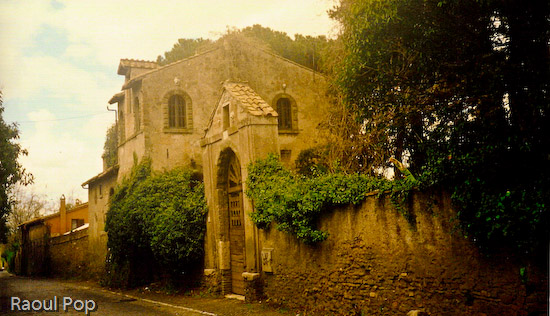
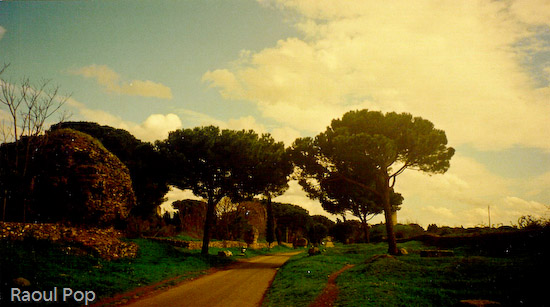
While in Rome, my brother kept dangling this promise of taking our bicycles out to Via Appia and making a day trip out of it. I wanted to see it because the Via Appia was the most important Roman road of its time. Roman bases, villas and famous tombs adorned its sides in its heyday, and their ruins can be seen even today. The road itself was a marvel of Roman engineering. It was so well-made that portions of it are still preserved, thousands of years later.

Well, I kept feeling like the horse that can’t reach the carrot, since my brother still buried his nose in books every day. But, I kept nagging him, and in my last week there, we managed to make a half-day trip out of it. It was a wonderful time!

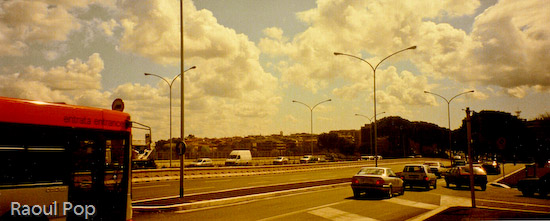
We took our bikes and rode through the city till we reached the highway shown below (don’t ask me for the name, I forgot it), rode alongside it for a bit, then took a side street down a little hill that took us to the start of the Via Appia. From then on, it was an easy (and beautiful) ride out into the countryside.

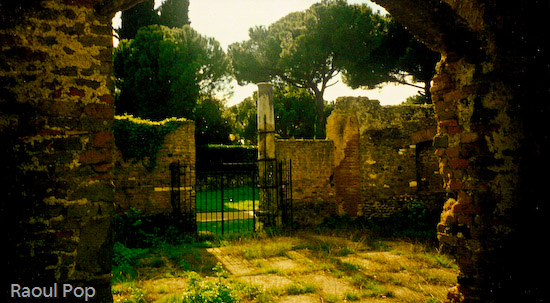
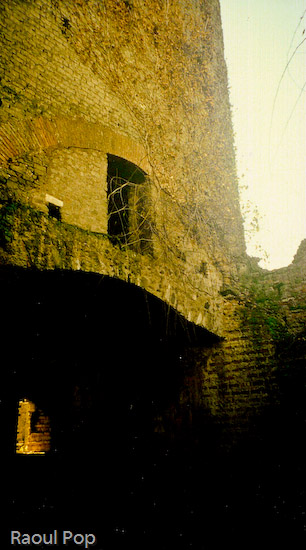
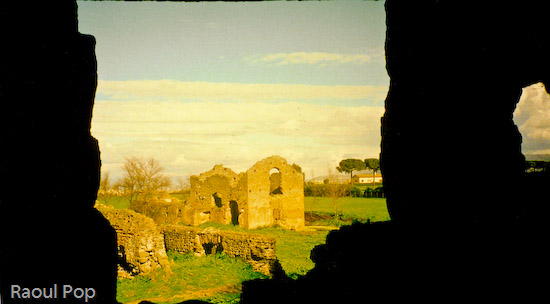
Along the way, we stopped so I could take photos (of course), and also snuck into some pretty unsafe ruins, as you’ll see below. I’m still amazed the floors didn’t crumble under us as we climbed onto the second floor of a villa. I can only attribute it to good, old, solid Roman construction.
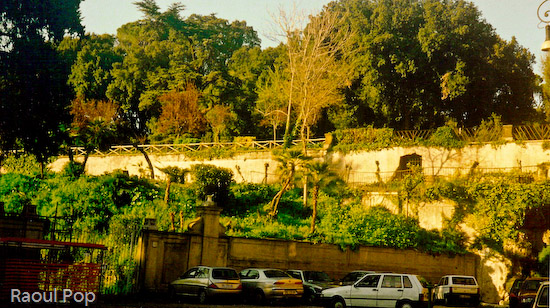
Toward the Via Appia

Roman highway

Time takes its toll

The way we came

Keeping up appearances

Greeting the visitors

Light at the end of the tunnel

Looking right through

You can also read more about the Via Appia over at Wikipedia. Stay tuned for my post on Florence.
Standard
Places

Walking along the Constanta wharf

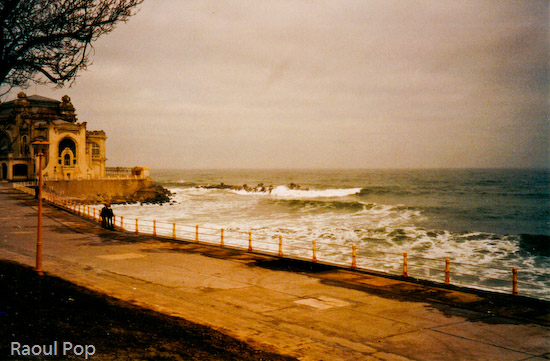
Constanta, located on the Black Sea, is one of the main cities of Romania. It’s a busy port, and a city with a lot of history. I guess its equivalent here in the States would be Miami. I visited Constanta with Ligia in April of 2003 and took some photos on the wharf, which is a pretty famous spot. It, and the Casino built on it, have been featured in several famous Romanian movies.

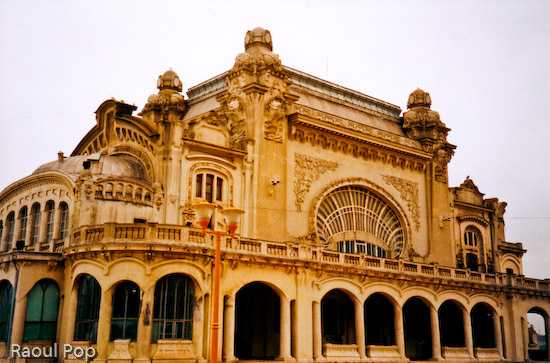
The building that now houses the Casino was planned and drawn by a Romanian architect, and built in 1909 in the Art Nouveau style. The architect’s wife drowned in the Black Sea, and he wanted to pay homage to her memory through the majestic building.

Casino Palace

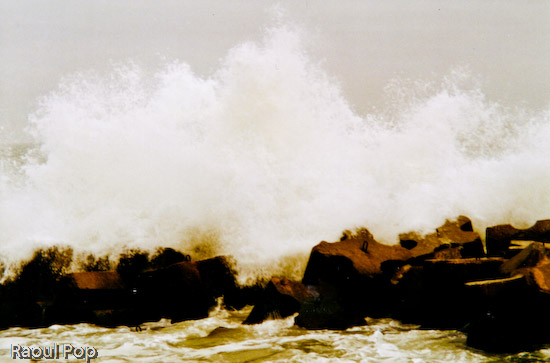
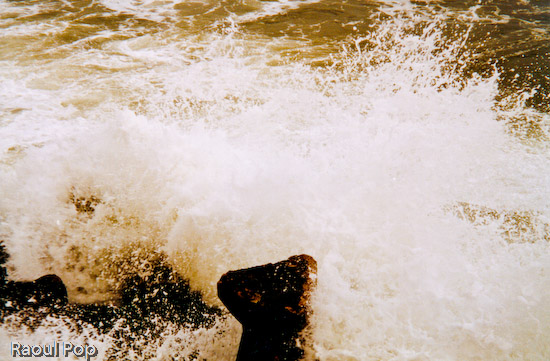
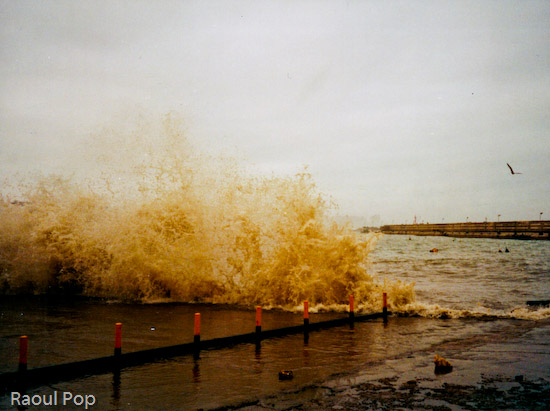
I’d walked along the same wharf as a child, with my parents, many years ago. Revisiting the spot was bitter-sweet, and the cold, damp spring day didn’t make it any sweeter. I’d watched the same concrete embankment as a child, and was fascinated by the fury of the waves breaking against it. That same embankment was still standing in 2003 — the very same stones — although they were now showing their age.

Waves splashing against the embankment

Embankment, embattled

A furious endeavor

Constanta wharf

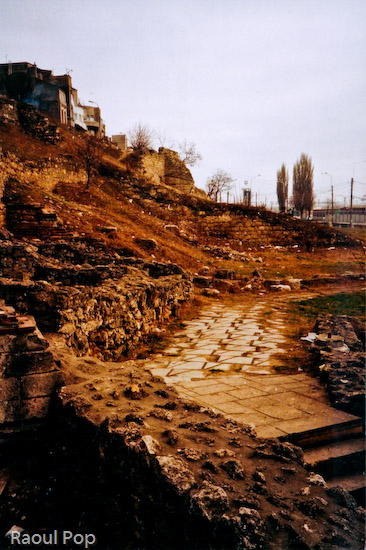
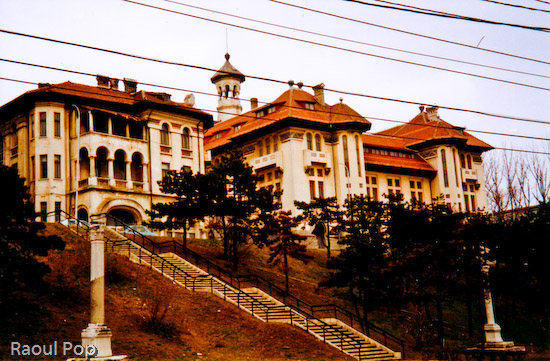
Before reaching the wharf, we walked along the main street that leads from downtown to the beach, and visited the ruins of an old Roman building which was probably a public bath house at some point. On the hill, homes of the old aristocracy stood as a reminder of Romania’s monarchic past. I for one miss the monarchy. With a king, you know who’s in charge and who’s to blame. Politicians blame each other, blame circumstances, lie and steal — it’s a circus, and no one is ever held accountable.

Ruins of a Roman building

Old aristocratic homes

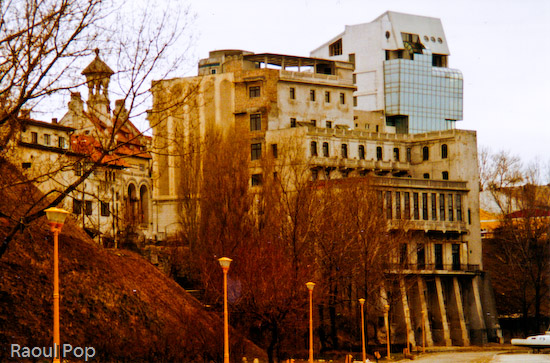
As we walked off the beach and back toward downtown, we saw this odd building, a mix of modern and old architectural styles.

City buildings

Standard
Places

A second trip to the National Seminary at Forest Glen

A little more than a week ago, I wrote about the National Seminary at Forest Glen, here in the DC suburbs, and also posted some photos I took there this summer. I promised I’d post the rest of the photos, which I took in the summer of 2005, and I held true to that promise.

I can safely say I have no more photos to post from the site, since it’s being redeveloped as I write this, and will soon look different. The old buildings will stand no more, but will be replaced by their modern counterparts, which will supposedly look and feel the same. We’ll see how that turns out… So, you may call these photos “limited edition”. I can’t get you any more. Enjoy them, and visit the site sometime next year if you’re able. You may or may not recognize the spots in the photos, depending on how extensive the redevelopment will be.

To help you understand the layout of the site, I’ve posted a map of the grounds below. I also invite you to visit the National Seminary website (which may or may not be up for long — that’s where I got the map). The site has photos of bygone times, showing you how the grounds and buildings looked when they were actually in use. It’s very interesting stuff, and my advice is to spend one of these chilly autumn evenings curled up with your laptop on the sofa, reading through it.

Map of the National Seminary at Forest Glen

Standard
Places

The National Seminary at Forest Glen

Just posted photos taken this summer at the National Seminary at Forest Glen, a historic site located in the suburbs of DC.

The history of the place is a pretty interesting read. After being bought in the 1730’s as a much larger property, parts of it were sold off, and finally, what is now known as National Seminary was sold to John and Vesta Cassedy in 1894. They set out to transform it into a girls’ finishing school. In 1916, the school was sold to Dr. James E. Ament after Vesta Cassedy died. John Cassedy then married a recent graduate of the school and lost interest in running it. In 1937, during the Great Depression, with the school’s student population foundering, it was sold to Roy Tasco Davis, who set out to transform it into National Park College, a place where academics and practical skills. He didn’t have much time to do this, because the property caught the eye of an Army general, who invoked the War Powers Act, condemned the property, annexed it to Walter Reed Hospital, and used it as a place where wounded soldiers could recover.

When the Army tired of the property, they let it go to ruin. They wanted to completely tear down the buildings, but local residents objected and managed to get the site designated as a historical landmark in the 1970s. Finally, a deal was made in 2005 to get the entire site redeveloped, the old buildings restored or rebuilt, and luxury condominiums built there. From what I understand, a development company bought the property, under the solemn promise to stick to the historical character and look of the site as they rebuild there. The site is now under construction, and many of the old buildings, too dilapidated to stand up, will be torn down and reconstructed.

Ligia and I visited it this summer (2006) and last summer (2005), and photographed the various buildings. It was also a great place to eat raspberries and mulberries. I still need to post the photos taken last summer, but I’ll do it soon.

(Added 10/19/06: here they are!)

Standard
Places

Collosseum at night

At some point, I’ve got to photograph the Collosseum during the day, but I have a feeling it’s not going to look nearly as dramatic as it does at night. This was back in ’99, during some heavy renovations. I couldn’t get in to see it from the inside.

Collosseum

Collosseum

Standard