Reviews

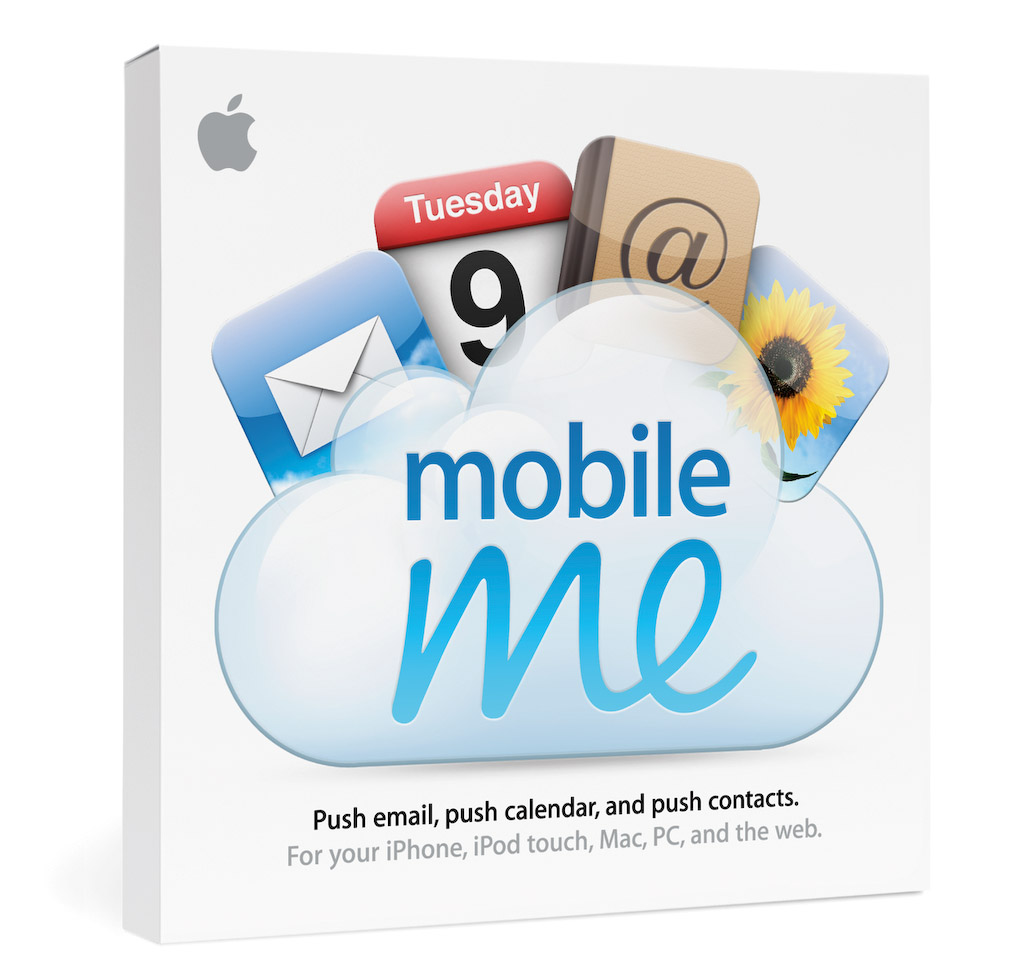
Meet the replacement for .Mac: MobileMe

I mentioned in yesterday’s iPhone 3G announcement that Apple had secretly purchased the domain me.com for an undisclosed sum of money (in the neighborhood of 11 million). It came as no surprise to Apple fans when we found out that MobileMe was the replacement for .Mac. Users had griped for years about .Mac’s lackluster performance and puny space available (1GB for $99/year last I used it).

So, other than the new domain name (personally, I liked the .Mac domain), how’s the new service different?

  • More space: 20GB for the same price ($99/year for individuals and $149/year for a family pack). Additional space is $49/year for another 20GB or $99/year for another 40GB.
  • Push… everything: Apple has upgraded their .Mac email service and calendar and contact syncing to “push” technology. I don’t really see what’s different here when I compare it to .Mac, except the syncing is seamless and faster. And oh, now it works with PCs/Exchange as well.
  • Great web interface: Apple outdid itself here. .Mac had a web interface as well, but it was slow and kludgy. The new web interface behaves like desktop applications and looks really, really nice. Not sure how fast it loads on regular broadband connections, but we’ll find out soon, won’t we?

That’s about it, really. The bulk of the effort went into the better, cross-platform syncing and the innovative, beautifully-designed web interface. The additional space was long overdue.

Existing .Mac members will be upgraded automatically to MobileMe, and their existing subscriptions will be transferred over to the new service when it becomes available on July 11.

What’s the draw to MobileMe? For me, it’s the Back to My Mac service, which was introduced alongside iChat Screen Sharing in Leopard. It wasn’t enough to get me back when .Mac was overpriced and underfeatured, but it may be enough now that MobileMe has more space and is better designed. For iPhone users, it’s the obvious integration and contact/calendar syncing between the phone and the computer(s).

In terms of web storage space, the 20GB isn’t really that big of a deal for me. There are PLENTY of companies out there that offer more space. ADrive, for example, offers 50GB for free, and they’ve worked reliably for the past several months that I’ve used them. Dropbox, although it offers less space for free, has incredibly nice integration between Macs and PCs, and lets me share files seamlessly from computer to computer, or with my friends.

What I have to wonder about is Gmail. Given the partnership between Apple and Google, I’d have hoped that Google products would be better integrated into MobileMe somehow. It seems they’ve still been left by the wayside. They work, but not quite. I still can’t sync my calendar appointments properly from Gmail to iCal, and still can’t sync my contacts properly from Addressbook to Gmail (unless I have an iPhone or iPod Touch). Even Gmail’s IMAP interface in Mail leaves a lot to be desired. After using it for a few months, I switched back to POP3.

That’s annoying. I suppose it may have had something to do with Apple’s desire to keep building on their existing products and to develop an Apple-designed web interface (which is quite different from the spartan design of Google’s products).

Images used courtesy of Apple, Inc. More information about MobileMe can be found in Apple’s original press release, or on the MobileMe website.

Standard
Reviews

Google Health is a good thing

When it launched a few weeks ago, Google Health received fairly lackluster reviews. Privacy issues and lack of features were the main complaints. Well, I’m here to tell you those initial views are wrong.

Even if you’re a long-time reader of my site, you may not know what qualifies me to make that statement, so let me tell you a bit about myself.

My background

A few years ago, I was Director of Health Information Systems at a South Florida hospital, where I implemented an electronic medical records system. My job was fairly unique, because I not only wrote the policies and procedures for the system and oversaw its implementation, but I also rolled up my sleeves and built the various screens and forms that made it up. I, along with my staff, also built and maintained the servers and databases that housed it.

As far as my education is concerned, I hold a Master’s Degree in Health Services Administration (basically, hospital administration). I was also admitted to two medical schools. I ended up attending one for almost a year until I realized being a doctor wasn’t for me, and withdrew.

For plenty of years, I’ve been a patient of various doctors and hospitals, as have most, if not all of you, for one reason or another.

Furthermore, my father is a doctor: a psychiatrist. He has a private practice, and also holds a staff job at a hospital. My mother handles his records and files his claims with the insurance companies, using an electronic medical records system. I get to hear plenty of stories about insurance companies, billing ordeals, hospitals and the like.

So you see, I’ve seen what’s involved with medical records and access to said records from pretty much all sides of the equation. Again, I say to you, Google Health is a good thing, and I hope you now find me qualified to make that statement.

The benefit of aggregation

Just why is it such a good thing? Because I wish I could show you your medical records — or rather, their various pieces — but I can’t. That’s because they exist in fragments, on paper and inside computer hard drives, spread around in locked medical records facilities or in your doctors’ offices, all over the place. If you endeavored to assemble your complete medical history, from birth until the present time, I dare say you’d have a very difficult time getting together all of the pieces of paper that make it up — and it might not even be possible. That’s not to mention the cost involved in putting it together.

A few of the problems with healthcare data sharing

Do you know what my doctor’s office charges me per page? 65 cents, plus a 15 cent service fee. For a 32 year old male (that’s me) it would take a lot of pages (provided I could get a hold of all of them) and a lot of money to put my medical record together.

The sad part is that this is MY medical information we’re talking about. It’s information that health services workers obtained from MY body. It’s MY life and MY record, yet I can’t have access to it unless I fill in a special form at every doctor’s office I’ve ever visited, and pay for the privilege. Is that fair? NO. Can something be done about it? YES, and so far, Google Health is the only service I’ve seen that is trying to pull together all of the various pieces that make up my medical record, for my benefit and no one else’s. Sure, the system is in its infancy, and there’s a lot of work to be done to get it up to speed, but that’s not Google’s fault.

I’ve been inside the healthcare system, remember? I know how things work. I know how slowly they work, to put it mildly. I know how much resistance to change is inherent in the system. Just to get medical staff to use an electronic medical records system is still a huge deal. The idea of giving the patient access to the records, even if it involves no effort on the part of the medical staff (but it does, as you’ll see shortly) is yet another big leap.

Let’s also not forget to consider that medical records systems are monsters. Each is built in its own way. There are certain lax standards in place. Certain pieces of information need to be collected on specific forms. The documentation needs to meet certain coding standards as well, or the hospitals or doctors’ offices or pharmacies won’t get reimbursed. There are also certain standards for data sharing between systems, and the newer systems are designed a little better than older ones.

Yet the innards of most medical health systems are ugly, nasty places. If you took the time to look at the tables and field names and views and other such “glamorous” bits inside the databases that store the data, you’d not only find huge variations, but you’d also find that some systems still use archaic, legacy databases that need special software called middleware just so you can take a peek inside them, or form basic data links between them and newer systems. It’s a bewildering patchwork of data, and somehow it all needs to work together to achieve this goal of data sharing.

The government is sort of, kind of, pushing for data sharing. There’s NHIN and the RHIOs. There are people out there who want to see this happen and are working toward it. Unfortunately, they’re bumping up against financial and other barriers every day. Not only are they poorly funded, but most healthcare organizations either do not want or cannot assign more money to either getting good record systems or improving their existing ones to allow data sharing.

Add to this gloriously optimistic mix the lack of educated data management decisions made in various places — you know the kind of decisions that bring in crappy systems that cost lots of money, so now people have to use them just because they were bought — and you have a true mess.

Oh, let’s also not forget HIPAA, the acronym that no one can properly spell out: Health Insurance Portability and Accountability Act. The significant words here are Insurance and Accountability. That’s government-speak for “CYA, health organizations, or else!” There’s not much Portability involved with HIPAA. In most places, HIPAA compliance is reduced to signing a small sticker assigned to a medical records folder, then promptly forgetting that you did so. Your records will still be unavailable to you unless you pay to get them. Portability my foot…

Benefits trump privacy concerns

Alright, so if you haven’t fallen asleep by now, I think you’ve gotten a good overview of what’s out there, and of what’s involved when you want to put together a system like Google Health, whose aim is to pull together all the disparate bits of information that you want to pull together about yourself. Personally, I do not have privacy concerns when it comes to Google Health. There are more interesting things you could find about me by rummaging through my email archives than you could if you went through my health records. If I’m going to trust them with my email, then I have no problems trusting them with my health information, especially if they’re going to help me keep it all together.

Not sure if you’ve used Google Analytics (it’s a stats tool for websites). Not only is it incredibly detailed, but it’s also free, and it makes it incredibly easy to share that information with others — should you want to do it. You simply type in someone’s email address in there, and you grant them reader or admin privileges to your stats accounts. Instantly, they can examine your stats. Should you prefer not to do that, you can quickly export your stats data in PDF or spreadsheet format, so you can attach it to an email or print it out, and share the information that way.

I envision Google Health working the same way. Once you’ve got your information together, you can quickly grant a new doctor access to your record, so they can look at all your medical history or lab results. You’ll be able to easily print out immunization records for your children, or just email them to their school so they can enroll in classes. A system like this is priceless in my opinion, because it’ll make it easy to keep track of one’s health information. Remember, it’s YOUR information, and it should NOT stay locked away in some hospital’s records room somewhere. You should have ready access to it at any time.

Notice I said “whose aim is to pull together all the disparate bits of information you WANT to pull together” a couple of paragraphs above. That’s because you can readily delete any conditions, medications or procedures you’d rather keep completely private from Google Health. Should you import certain things into it that you don’t feel safe storing online, just delete that specific thing, and keep only the information you’d be comfortable sharing with others. It’s easy; try it and see.

Lots of work has already been done

Another concern voiced by others is that there isn’t much to do with Google Health at the moment — there isn’t much functionality, they say. I disagree with this as well. Knowing how hard it is to get health systems talking to each others, and knowing how hard it is to forge the partnerships that allow data sharing to occur, I appreciate the significant efforts that went on behind the scenes at Google Health to bring about the ability to import medical data from the current 8 systems (Beth Israel Deaconess, Cleveland Clinic, Longs, Medco, CVS MinuteClinic, Quest, RxAmerica and Walgreens).

What’s important to consider is that Google needed to have the infrastructure in place (servers, databases) ready to receive all of the data from these systems. That means Google Health is ready to grow as more partnerships are forged with more health systems.

In order to illustrate how hard it is to get other companies to share data with Google Health, and why it’s important to get their staff on board with this new development in medical records maintenance, I want to tell you about my experience linking Quest Diagnostics with Google Health.

Quest is one of the companies listed at Google Health as having the ability to export/share their data with my Google Health account. What’s needed is a PIN, a last name and a date of birth. The latter two are easy. The PIN is the hard part. While the Quest Diagnostics websites has a page dedicated to Google Health, where they describe the various benefits and how to get started, they ask people to contact their doctors in order to obtain a PIN. I tried doing that. My doctor knew nothing about it. Apparently it’s not the same PIN given to me when I had my blood drawn — by the way, that one didn’t work on Quest’s own phone system when I wanted to check my lab results that way…

Quest Diagnostics lists various phone numbers on their site, including a number for the local office where I went to get my bloodwork done, but all of the phone numbers lead to automated phone systems that have no human contact whatsoever. So Quest makes it nearly impossible to get in touch with a human employee and get the PIN. Several days later, in spite of the fact that I’ve written to them using a web form they provided, I still don’t have my PIN and can’t import my Quest Diagnostics lab results into my Google Health account.

Updated 5/27/08: Make sure to read Jack’s comment below, where he explains why things have to work this way with Quest — for now at least.

That is just one example of how maddening it is to try and interact with healthcare organizations, so let me tell you, it’s a real feat that Google managed to get eight of them to sign up for data sharing with Google Health. It’s also a real computer engineering feat to write the code needed to interact with all those various systems. I’m sure Google is working on more data sharing alliances as I write this, so Google Health will soon prove itself even more useful.

More work lies ahead

I do hope that Google is in it for the long run though, because they’ll need to lead data sharing advocacy efforts for the next decade or so in order to truly get the word out to patients, healthcare organizations and providers about the benefits of data sharing and Google Health.

For now, Google Health is a great starting point, with the infrastructure already in place and ready to receive more data. I’m sure that as the system grows, Google will build more reporting and data export capabilities from Google Health to various formats like PDF, as mentioned several paragraphs above, and then the system will really begin to shine. I can’t stress enough what a good thing this is, because just like with web search, it puts our own medical information at our fingertips, and that’s an invaluable benefit for all.

Join me for a short screencast where I show you Google Health. You can download it below.

Download Google Health Screencast

(6 min 28 sec, 720p HD, MOV, 39.8MB)

Standard
Thoughts

There's hope after all for independent web developers

Three weeks ago, I wrote a post describing my thoughts on the web development industry, and things looked pretty bleak. I did promise a brighter outlook in a short while, and this post is the fulfillment of that promise.

So, what can we do to ensure that we’ll continue to have jobs? Well, we can do any of the following, and these are loose thoughts, in no particular order:

  • Develop our skills even further, and become more specialized in the new and cutting edge technologies, that aren’t yet offered by the “masses”. Make a living from that, although we’ll live in constant stress, always re-learning, always jumping on the next “hot” technology.
  • Form networks of peers, and work together on projects while maintaining our cherished independence. I’m not talking about cheesy networking, I’m talking about finding people who are really good at doing certain separate things, and sticking together in teams, then bidding for projects and sharing the revenues.
  • Who says we can’t lead? We can form our own companies, and hire specialized developers for the projects we have contracts to do. But that would mean we wouldn’t be by ourselves anymore, and I for one like being by myself.
  • If you can’t beat them, join them. We can seek employment with the larger companies that will gobble up the market, or are already doing so. Or, we can seek employment with already established brick and mortar companies that need web developers as they realize more and more of their technologies will need to move from the desktop to the web.
  • Develop free or low cost turn-key solutions, and hope we make enough money from donations or from the sales volume to sustain our efforts and allow us to make a living.
  • Develop systems that fill specific needs, and support those systems. Sell them to niche industries. Question is, how do you gain credibility as a one-man team when companies are looking for long-term solutions where support can be provided indefinitely? If you’re gone, what happens to the system? Those are real questions that demand good answers.
  • Move offshore and do our work from there. I would imagine there’s an offshore market for Americans who understand American business and the Americans as a people.

Furthermore, we can differentiate ourselves on service, on approachability, on geographical closeness, on people-to-people relationships, through networks, because of no language barriers, through innovation, truthfulness, and trustworthiness. Those are all very, very real and tangible assets that we can develop and possess, to our most definite advantage.

I think nowadays, by far the biggest differentiator is innovation. Just look at the slew of Web 2.0 companies that have sprung up, and they’re all getting funding! It’s shocking, even to me. But while innovation opens doors, good work, reliability and good customer service keep people coming through those doors. And the great thing is that while not all web developers are innovators, all web developers can and should strive to do good work, create reliable products, and provide good customer service.

You may think I’m being dismissive, but it’s true, and I speak from personal experience when I say this. Treat your clients well, make good products, and they’ll keep coming back. Not only that, but they’ll recommend you to others. You want to know something? I have never gotten a client solely through my website. It’s shocking to say that about a web development business, but it’s true. My clients may have used my site to research me and to read more about my services, but I get clients after personal meetings with them. And they usually find out about me not from my website, but from my previous or existing clients. Or, they’ll have interacted with me in a completely different setting, like my community or my church, where my occupation didn’t matter that much, they liked what they saw in me, then contacted me for work-related purposes. That’s important to remember!

Another important aspect is trustworthiness, and I can’t emphasize this enough. You’ve got to be credible. Your clients need to be able to trust you. My clients trust me with their SSNs and credit card numbers and passwords to various accounts. I don’t ask them for that information, they give it to me and ask me to help them conduct transactions related to the projects we’re working on. It goes without saying that I do my best to delete that information from my mind and computer, because I don’t need to know it beyond the project itself, but if that’s not trust, I don’t know what is. And that’s the sort of relationship you need to establish with your client. When they trust you like that, you know they’re going to stick with you. And if you continue to be honest and hold to your promises, that relationship will only strengthen.

So it turns out that the secret to a good career as a web developer is no secret at all. It’s simply good business, and that’s a relief! Here’s to our collective entrepreneurial success!

Standard
Reviews

Google Apps for Your Domain gets going

In what I think is an astonishing twist, Google has turned their “private label” Gmail service offered about 6 months ago to companies and schools interested in the idea into Google Apps for Your Domain, an all-in-one solution that offers Gmail, Google Talk, Google Calendar and Google Pages for whatever domain you’d like. In typical Google fashion, they’ve also made it free! Now no one can complain that they can’t get their site going or email set up. All anyone needs is an internet connection and a domain name, and they’re set. Granted, the functionality of Google Pages isn’t quite full featured, but it’s plenty for the needs of most people.

All I can say is Wow, because I’m floored. It’ll take some time for this to sink in. Private label IM, free! Private label Gmail, free! Private label web calendaring, free! Wow!

Standard
Thoughts

Why you shouldn't "let go of difficult clients"

I recently read an article entitled “Letting Go of Difficult Clients“, written by Amy Berger and featured in the August 2006 issue of The Costco Connection. I do not agree with the views she expresses there.

While there are times when a relationship with a client has to be severed, none of the conditions presented by Ms. Berger in her article are truly qualified. What’s more, they encourage a sort of irresponsible attitude, where consultants who don’t comprehend the meaning of the client-consultant relationship and the level of trust that’s involved with it, fire clients on a whim, severely endangering the projects with which they’re involved.

Let me go through her article and explain what I mean:

  • “The client seems ambivalent.” This is perfectly normal. I don’t know of many people that can afford to spend thousands of dollars without carefully considering the options. I also don’t know of many people whose schedule allows them to do the things they’ve planned all the time. Unexpected circumstances always come up and delay things. If you fire a client based on a delay that couldn’t be helped, you’ll end up looking like a heel. If you hang in there, you not only get the contract, but also gain a deeper level of trust with the client.
  • “You can’t tell who’s boss.” Exactly how can you help someone’s immediate and unexpected transfer? Sure, if you want to lose your contract, go in there and blow off steam about how “disorganized” they are. But if you want to keep the contract, you go and meet with the new principals, and agree on how to move forward.
  • “Your communication styles don’t mesh.” Since when have two people’s communication styles meshed completely? Let’s get serious! There are husbands and wives who don’t manage their communication well, and they live together day in and day out. It’s your responsibility as a consultant to be flexible, and work with the client to ensure proper communication.
  • “The client is overinvolved.” Most people take some time to get sold on a new idea. The more different this new idea is from what they’re used to, the more time it takes for them to understand it, and it takes yet more time for them to trust it. If the client doesn’t get back to you immediately with feedback on what you present him or her with, wait, and occupy yourself with other projects in the meantime. Give them gentle reminders from time to time, and express your availability to discuss the project further if needed. Eventually, they’ll come around, or they’ll move on. But let that decision be theirs, not yours. Exactly what do you lose, as a consultant, if you spend a minute or two a week crafting a short message to remind the client of the project? You only stand to gain a contract, and your gentle persistence will help soothe the client’s fears.

Let me give an example to illustrate this last point. Two years ago, I started working on moving a client’s offline, paper-based business, to an online website that would automate the tasks she did by hand, saving her countless hours of drudgery. She was used to the paper process, understood it well, and knew it worked. But she also knew she needed to make a change, because managing it on paper took up too much of her time. When I put forward the idea of a website that could do all she did on paper and more, she was reluctant, but I gently persisted, and with the aid of mutual friends, she was finally persuaded to go forward with the project.

Within a year, she started to see the benefits, and got excited. But it took two years for her to realize the full potential of moving her business online, and now she finally admitted that I’ve changed the way she does business. She told me she now realizes how easy it is to run her business this way, and has started to look for a house in a different area, because she no longer has a need for a physical presence in the area that her business serves.

What’s the moral of this story? If you expect a client to change their views based on one presentation or a meeting, you’re kidding yourself. It takes time, months and even years, for people to make sense of something that’s completely new to them.

Now here are the circumstances when you can start thinking about firing the client:

  • He or she doesn’t pay the bills. I’m not talking about delays of weeks. That’s normal, and with big businesses, that’s even expected. Something tragic may have even happened that has severely limited their finances. But when they keep saying the check’s in the mail, and it never arrives, that’s when it’s time to get serious. Verifiable lying is always a good indicator of a client that needs to be fired. Besides, the problem of non-payment is easily solved by always asking for a percentage of the project upfront. That way you’re guaranteed at least a part of the payment, and if need be, you can get the other part with the aid of a mediator or a lawyer, although I’ve always tried to avoid those routes. Our society is litigious enough as it is.
  • He or she abuses your time. By this I mean several calls a day for weeks on end, that you know are unnecessary, and that review the same objectives, time and time again. There’s nothing wrong with checking on your progress, in particular if the deadline is looming or the project’s critical, but when you start to screen your phone calls because you fear he or she might be calling and they’re going to waste your time once again, that’s when it’s time to re-evaluate your relationship with the client. I’m not saying you should fire them right away, but you should try to set boundaries. They can be as simple as limiting the contact to 1-2 phone calls or emails a day, or more complicated, depending on your relationship. Only when that doesn’t work is it time to think about severing the relationship.
  • The language or behavior gets abusive. It’s normal for a client to get upset, or feel frustration. People have different temperaments, and some get upset more easily. Change is usually one of the most common reasons, because it prompts fear. People fear the unknown, and when they’re afraid, they get upset more easily. Technology is another frustration-inducer. It’s hard for an older individual to catch up with the younger folks who’ve grown up with technology and can speak its language. Don’t misjudge a client’s frustration for truly abusive behavior. Instead, look for a pattern. If the behavior is always angry and abusive, then this client’s not for you, and I daresay, not for anyone.

But if you messed up, and the client calls you, and he or she is angry or frustrated, whose fault do you think it is? Theirs or yours? Don’t try to escape providing good customer service by blaming the client! That’s my fear when I read Amy Berger’s article. On one level, she’s encouraging consultants to provide half-hearted service by bailing out when they feel like it, and that’s just not right. It pays to always examine thoroughly what’s going on before jumping the gun and firing the client. You’ll find your relationships with your clients get much more rewarding that way.

Oh, and if Amy or any of you still feel like firing your clients willy-nilly, send them my way. Tell them to go to Exprimare and to contact me. I’ll see if I can help them.

Standard