As mentioned in my previous post, I have put together a gallery of photographs from our visit to the Apafi Castle in Dumbraveni, Transilvania, Romania. It’s across the street from the Armenian Catholic church. It’s also worth noting that the Apafi Family also owned this manor in Mălâncrav, a village not far away from Dumbraveni. Legend has it there was and still might be an underground tunnel between the two properties.

When we arrived at the castle, there was no gatekeeper, as seems to be usual at these places. There was a phone number to call, someone answered and told us we’d need to wait about two hours until they got back. We weren’t going to do that, so we walked around the exterior walls and interior courtyard. The place was in a terrible state, as you can see from the photos. I felt an odd kinship with the place, like I’d been there before, a long time ago.

During communist times, it was used as an agricultural cooperative, where they stored and repaired machinery and grains, and the interior of the castle was used as a trade high school. So you can imagine that things look just as bad on the inside as they do on the outside. Gone are the period interiors, the furniture has long disappeared and nothing is the same. Remember though, it was 2011 then, it’s 2018 now, so perhaps the place has been somewhat restored in the meantime.

The history of the castle is not without its ups and downs. If you remember Grigore (Gergely) Apafi from my previous post, he bought all of the land in and around Dumbraveni in the middle of the sixteenth century from the Bethlen family (another ruling family in the region), and built the castle in the years 1552-1567, in the Renaissance style. His son Miklós established the family residence there in 1590. Things went on and even got better.

The castle’s golden age was in the period when Prince Mihaly Apafi made Dumbraveni his princely residence. Unfortunately after the death of his son Mihály in 1713, the family had no male descendants and Countess Bethlen Kata, his wife, came into possession of the estate. She made an agreement with the Treasury of the Austro-Hungarian regime in 1722, according to which she could use the estate during her lifetime, after which the castle would become the property of the Treasury. This agreement was contrary to an inheritance contract between the Apafi and Bethlen families from 1584, which stated that if a family dies without descendants, the other family receives their properties.

This is where things are unclear. One account states that Count Adam Bethlen brought a lawsuit based on the mentioned inheritance contract, and won the right to the property in 1776. Another account states that after the castle became the property of the Treasury, it was given to a boyar (grof) by the name of Gabor Bethlen. Regardless of that outcome, the estate was eventually sold to the Armenians, and the Bethlen family received another estate in turn, the castle remaining in the property of the Armenians.

The castle was in ruins at the end of the 18th century and in the 19th century served as a court, prosecution hall, jail, library and school. Another source says it was also a military post.

In 2010, Norway, Lichtenstein and Iceland have provided government support for the renovation of the castle. Supposedly the Union of Armenians of Romania hosts a museum inside the castle, in four rooms, but as I said above, no one was available to show us around.

Enjoy the photographs!

Places

The Apafi Castle in Dumbraveni

Gallery

Dumbrăveni ((before 1945 “Ibașfalău”; German: “Elisabethstadt”; Saxon dialect: “Eppeschdorf”; Hungarian: “Erzsébetváros”) is an historically significant town in Transilvania. Archaeological digs revealed proof that it was an inhabited place as early as the Paleolithic. We fast-forward through history to come to the time of the Hungarian colonization/occupation of Transilvania, when in 1214, it became part of a region controlled by the Hungarian rulers.

In 1552, the Apafi family obtained all of the land around the town of Dumbraveni and Grigore Apafi became the ruler. He immediately began the construction of a castle in the center of the town, a castle of which I will talk in a future post. The interesting part of it is that the castle adjoins the Armenian Catholic church, or rather that the church ended up being built next to it hundreds of years later.

The Armenians were invited to colonize the region in 1671 by the Apafi family. As they were very good merchants and the town was already a market town, they (and the town) quickly prospered. In turn, they gained a good amount of autonomy and in 1766, they started the construction of this large church right next to the Apafi Castle. The construction ended in 1783 and the church was dedicated to St. Elizabeth, in concordance with the town’s new name (at the time) of Elisabethopolis. (source)

As a structure, the church is striking. You’d have to visit a Western European town to find its equivalent. Scale-size, it is much larger than the churches of its time in Romania. One thing you’ll notice right away is the facade is asymmetric, and that’s because the top of one of the towers was knocked down by a storm in 1927. Instead of re-creating the cupola, the town decided to cover it with a flat roof.

The church altar and statues were made by sculptor Simon Hoffmayer. The church hall houses a valuable collection of books, about 2200 volumes on religion, language and natural sciences from the 16th-19th centuries, written in Italian, Armenian, Hungarian, and French Altin. (source)

By the way, there’s another old Catholic church in Dumbraveni, with catacombs. That one doesn’t seem to be maintained and isn’t known by tourists. You can see it here.

Enjoy the photographs!

Places

The Armenian Catholic Church in Dumbraveni

Gallery

Valea Viilor (“Wurmloch” in German, “Nagybaromlak” in Hungarian) is a village in Sibiu County, Transilvania, in a region known for its wine production during medieval times. Its name is translated in English as “The Valley of the Vineyards”. It is first mentioned in written documents in 1263 as “posessio Barwmlak”.

The church in this Saxon village was first built in the 14th century (see source). Its ruins can be seen beneath the floor of the sacristy. In 1414 a new church was erected over it. In turn, most of that later structure was then demolished or modified during the years 1500-1528, as the church was enlarged and fortified walls were built around it, making it a fortified church (see source).

Unlike a lot of other Saxon fortified churches in Transilvania, this structure received attention from later generations, and underwent needed repairs in 1738, 1782, 1826, 1969, 1987, 1996 and in recent years as well.

When we visited it back in April of 2011, the gates were locked and no gatekeeper was to be found, so we walked around its defensive walls, admiring the solid medieval architecture that has stood the test of time. Enjoy the photographs!

Places

The fortified church in Valea Viilor

Gallery

Today is the International Day of the Romanian Blouse, and it is also the first day of an exhibition of a part of Ligia’s collection of traditional, authentic Romanian costumes (blouses, skirts and more). About twenty costumes are currently on display at the Museum of Natural Gas in Medias and can be seen there during normal business hours through the end of this week (the 29th of June). Admittance is free.

Some time ago, the two of us decided to call Ligia’s collection “Straie Alese“, because it includes authentic, rare, vintage, hand-woven and loom-woven articles of clothing from all parts of Romania. Most pieces are 50-70 years old and some are more than a century old. For those who have already asked, most are not for sale. A select few of the costumes are sometimes offered for sale.

The launch of the exhibition was held earlier today. You can see the photo gallery below. Now, an exhibition at a museum does not happen by itself. There were a tight-knit group of women who keep the tradition alive in our city and who were glad to find out about Ligia’s collection and they worked with Ligia to organize the showing, so we’d like to thank them here for their guidance and invaluable assistance. The exhibition would not have happened without them! 👏🙌🌻

We’re glad this first event happened right here in our city, which, situated as it is in the geographical heart of Romania and in the bosom of Transilvania, seems especially favored by fate to be a good starting place for a project that can reach far and wide. We are of course open to collaborations with other museums, here in Romania and abroad.

Enjoy the photographs!

Events

An exhibition of Ligia’s traditional Romanian costumes

Gallery
Places

A foggy autumn morning

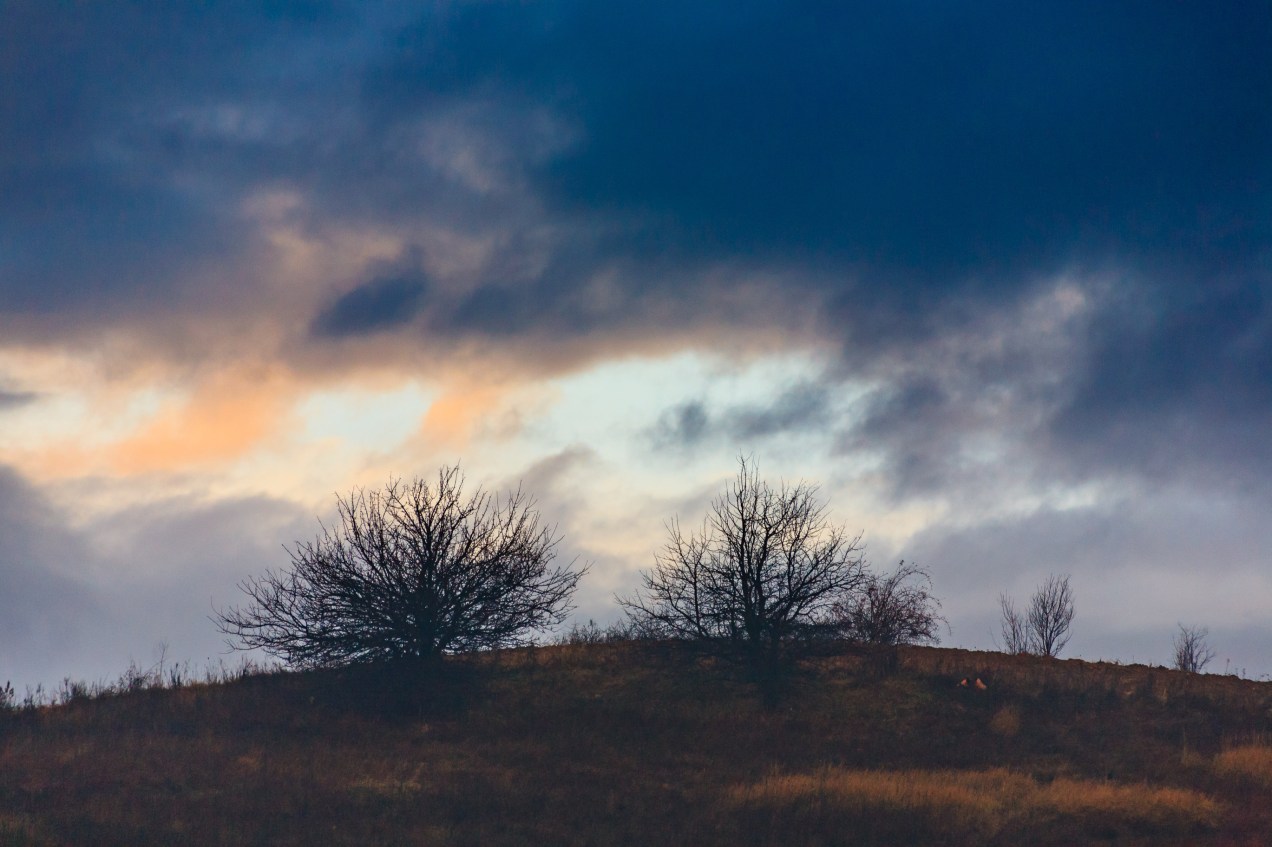
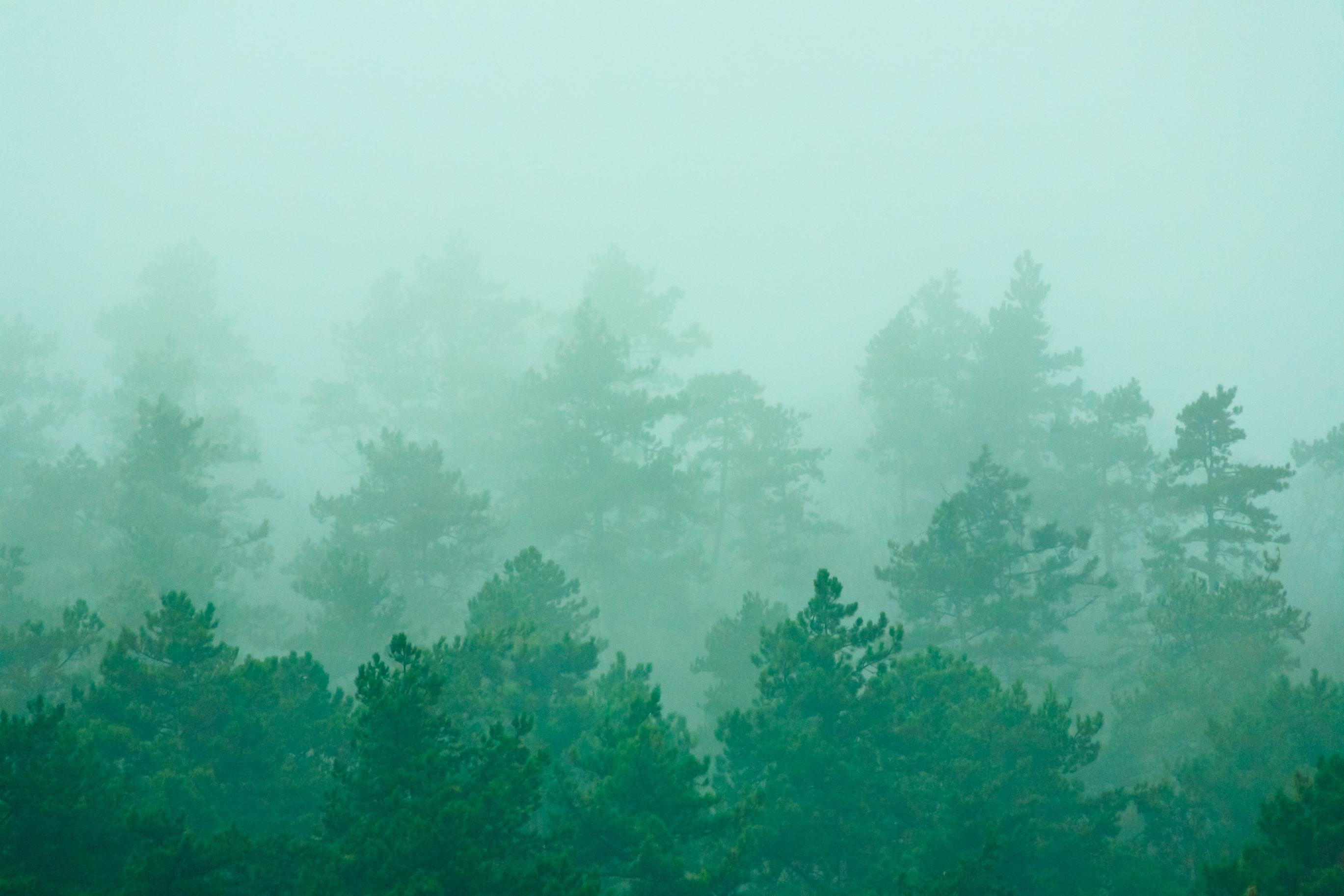
One foggy autumn morning, I took some photographs… and here they are 😁. I love fog almost as much as I love thick snowfall, and for the same reasons: the air of mystery, the white shroud enveloping everything, the quiet, the timeless quality and mood… oh, I could go on and on… This particular morning, we were driving to Sibiu and we were atop the hills between Slimnic and Șeica Mare. I have to confess that I don’t typically plan these things out, but when I encounter them, I have a camera with me and I take advantage of the opportunity to capture those beautiful moments. We parked the car and I walked around those hills, taking in the atmosphere. I hope you’ll enjoy the photographs!

I have a surprise for you. It’s going to be a surprise for me, too, because I’m going to try something new. I’m going to use this nifty payment button that WordPress has recently introduced, and I’m going to let you purchase all these images as a pack. There are 24 images here, which I’m going to deliver to you as a download at their original resolution once you purchase them. The terms outlined here will apply to how you use them. Here are a few ideas: make prints at a local lab, use the whole pack as a screensaver, use them as desktop backgrounds, use them in your artwork, use them on your website, etc. The price is $25. That’s a little more than $1 per image. If there’s demand, I may extend this same sort of deal to other photo galleries of mine published in the past or photos I publish in the future. A generous image pack, an affordable price for the whole thing, simple, easy, done.

Image Pack 20180608

You are purchasing the photographs from this post: a set of 24 images of a foggy autumn morning

$25.00

Standard