Places

New Year's Day at Amsterdam Airport

KLM Royal Dutch Airlines

We flew with KLM from IAD (Washington-Dulles airport in the US) to OTP (Otopeni-Bucharest airport in Romania) during this past New Year’s Eve and Day. I highly recommend KLM, we’ve had the best flying experience with them of all the airlines we’ve used so far.
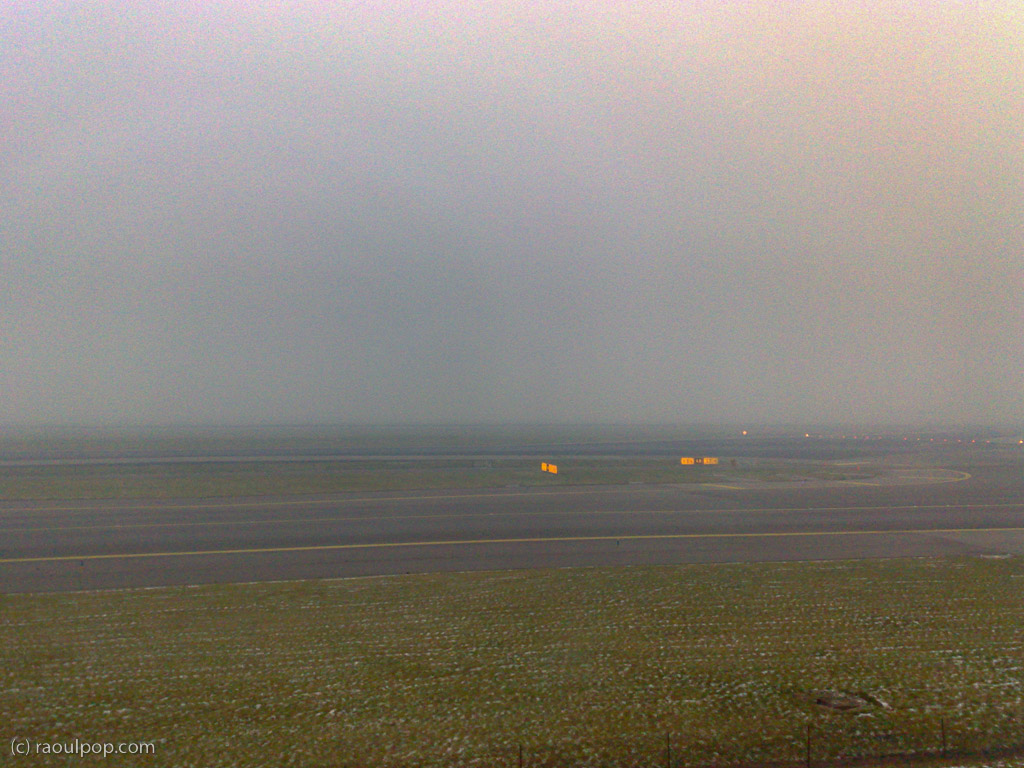
Foggy day at Amsterdam Airport

I should warn you that Delta handles the ticketing and check-in for KLM at American airports — this means rude and borderline-incompetent service. At least that was our experience at Dulles Airport in DC. KLM can’t help it I suppose. At least once you step onto their planes, it’s a different world altogether. It’s clean, well-lit, well-ventilated, they’re friendly, accommodating, their in-flight video service is amazing, and their food is great.

How is KLM different from other airlines? Well, they’re not evil, like United Airlines, and they’re not clueless, like Alitalia, and they’re not mean, like Spirit.

We picked New Year’s for our flight out of Washington because we thought most people would stay at home. We were wrong. The flight to Amsterdam was fully booked. Who flies on New Years Eve anyway?! Apparently, young people, Muslims and Indians. I understand the latter two groups, because they don’t celebrate New Year’s on the same day as the Western world, but since when have young folks decided to give up partying on New Year’s Eve?

It was a foggy, somewhat snowy New Year’s morning when we arrived in Amsterdam. You couldn’t see a thing on the runway as the plane landed. Thank goodness the pilots knew what they were doing. By the time we cleared through customs and security, the fog cleared a bit as well, or at least as much as the photos show.
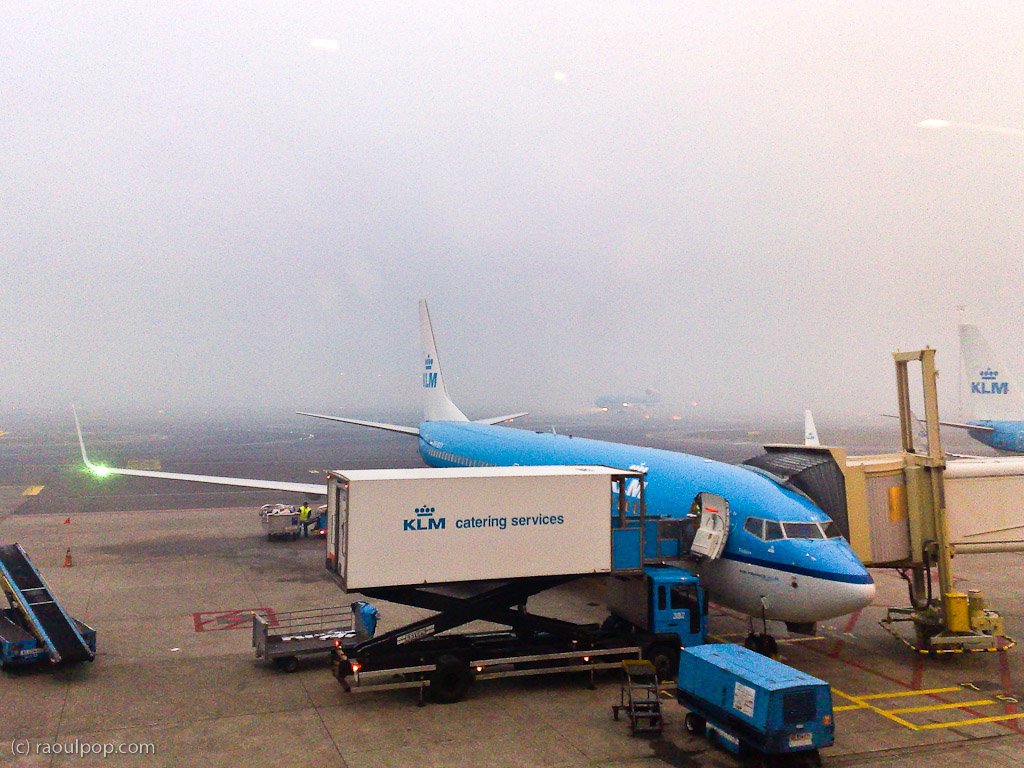
Our plane getting loaded for departure

The flight from Amsterdam to Bucharest was empty, which figures. Most Romanians stay home on New Year’s. They prefer to have their traditional parties, then start the new year with some time off. I think there were at most 12 people on the entire plane. I felt bad for KLM, having to fly that big jet with so few people on board, but I suppose things average out in the long run.

Oh, and yes, KLM did wish us a Happy New Year while we were over the Atlantic Ocean, and gave us a choice of champagne or orange juice to toast in the new year. Quite nice of them!

Why don’t I have any photos from the Bucharest airport? Because photography still isn’t allowed there, which is dumb, but then that’s par for the course in Romania.

Standard
Places

The ancient city of Histria

On the shore of Lake Sinoe in Romania, very close to the Black Sea, lie the ruins of the oldest documented city on the territory of modern-day Romania: Histria. (See satellite view below, or go to Google Maps to explore the full map.) We visited it in September of 2008.

It started its life around 630 BC [reference], built by Milesian colonists from Greece, to trade with native Getae tribes (Geti in Romanian). The Getae were Thracian tribes that occupied Dacia, whose territory is matched in smaller proportion by modern-day Romania. They, and the other people who settled in Romania at later times (like the Romans) are the ancestors of modern-day Romanians — my ancestors.

When Histria was built, its port was literally on the shore of the Black Sea. Over its approximately 14 centuries’ existence, silt deposits from the Danube River blocked off its access to the sea and formed what is now Lake Sinoe. This meant that the city’s importance as a port and trading post slowly diminished as the silt deposits grew to become the current land border between the Lake Sinoe and the Black Sea. It must have been painful to try and salvage the city’s livelihood by finding routes through the growing silt, hoping that ships stuck in the increasingly shallow water would somehow want to come back, should they manage to get away. Little did they know that in modern times, a canal would be cut through the silt shore at Periboin, not far from them.

By 100 AD, the city, who had resisted countless attacks and rebuilt its walls time after time after time, could only rely on fishing as a source of income. It managed to survive another 600 years or so, until it was destroyed one last time in the 7th century AD by the Avars and the Slavs. Its inhabitants moved away, and the once bustling and prosperous city, who had forged an important trading link between the Greeks and the Dacians so many centuries ago, began to decay, unoccupied.

Its name forgotten, it didn’t even appear on maps. Its memory swallowed whole by time, its walls covered by the ground itself, it lay in wait until it was re-discovered by a Frenchman, Ernest Desjardins, in 1868. In 1914, Vasile Parvan, a Romanian, began the first excavations of the site. The archeological digs continue to this day, conducted by various multinational teams. This was how we found it a month or so ago.

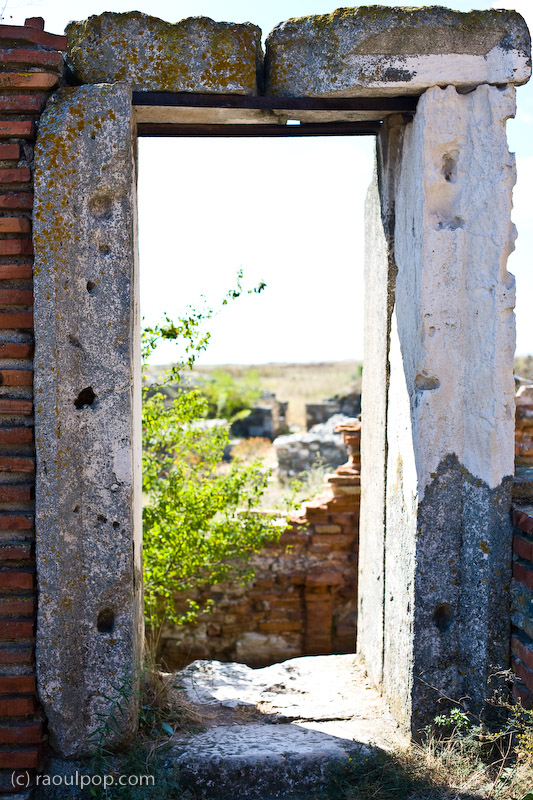
It was a warm, sunny, late-summer day when we visited. The heat shone down oppresively while we drove through the flat Dobrogea landscape. Yet a soft, cooling breeze from Lake Sinoe met us as soon as we stepped onto the grounds of the city.

There was a peace and quiet at Histria that I can only find when I visit certain ruins. I stood among the remains of the walls, and thought of the people that lived there before I set foot on what used to be their homes. They were born, lived and died there, making a living the best way they knew how, in a famous city by the Black Sea. The breeze must have been stronger then, since the waves of the sea beat against the city’s very shores.

What an adventurous spirit those Greek traders must have had, to get in their boats and travel far off, in hope of establishing a little colony of their own in an unknown land. How did they choose the site? Likely because it sits on top of a slight hill. Just think, the first few families built little homes out of field stone (there are very few trees around), and through hard work applied over time, grew that little settlement into an important port of trade and a fortress, one rich enough to attract the attention of countless attackers.

As I sat there and listened to the lull of the waves, I understood why they rebuilt after each attacks. The peace between each bout of violence was worth the effort, and the surroundings themselves invited (and still invite) company. Had their direct access to the Black Sea not been cut off, I believe Histria would survived to this day, and perhaps the city of Tomis (Constanta) might have had a different fate.

If you walk slowly among the houses or on the streets at Histria, you too will understand why it survived for so long. It’s hard to leave a place like that. It’s so peaceful, so quiet, so welcoming. You want to spend more time there, looking toward the horizon, hoping against hope to spot your ship, which is making its way slowly but surely toward the small port, bearing goods that will replenish your warehouse and provide for your family for another year.

The full set of photos from Histria is available at my online photography catalog. You’re welcome to view them all there. Mircea Angelescu, a Romania researcher, developed a 3D model of Histria which can give you a detailed idea of the city’s layout over time. More info on Histria can be found at Wikipedia.

Standard
Places

George Washington's Mount Vernon Home

We visited Mount Vernon, George Washington’s own estate near Washington, DC, this past summer. If you don’t live in the DC area, you don’t necessarily get to appreciate one of the grand gestures done to honor George Washington’s memory, namely that of building a parkway (named after him) that starts right at the gates of his estate and becomes a major thoroughfare that winds its way parallel to the Potomac River, through Alexandria, past the Ronald Reagan National Airport, through DC, and upwards, past the CIA Headquarters, right to I-495. Getting to his home becomes a pleasurable drive on a scenic parkway for the DC area driver, particularly those who are traveling South from DC and Maryland.

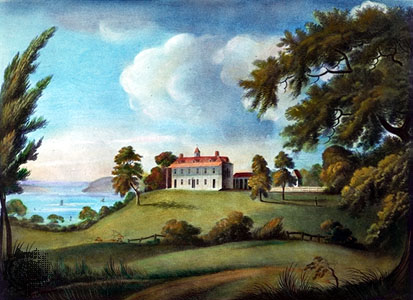
The location for Washington’s farm, and particularly his mansion, couldn’t have been chosen better. Even today, the view is spectacular, and one can only imagine what the surrounding area looked like during his time, unspoiled by modern “advances” and urban planning. An aquatint from Francis Jukes, done in 1800, gives us an idea, though I have a hunch he embellished things a bit.

Ligia and I visited Mount Vernon on two occasions, and took plenty of photographs each time. I picked the best ones from both sets and published them at my online photo catalog. There are 70 photos in the Mount Vernon set there, and all of them are available in HD (1920×1200 pixels, 16:10 aspect ratio). I selected a representative sample of those photographs for you to see right here. The gallery is shown below.

I hope you enjoyed the photos, and that you will find time to go visit Mount Vernon if you’re ever in the DC area. I for one am heartened to see that we are still paying respect to one of our nation’s founders and our first president, even in these very unpatriotic times, when we are getting involved in wars that our founders would have nothing to do with, and when fear-mongering has taken the place of freedom, and liberty, and justice for all.

One bit of advice: if you’re planning to visit the estate multiple times, get the yearly pass. It pays for itself in just two trips. We’re glad we got it. Our third visit, if we should go again, will be free.

More information about Mount Vernon can be found directly on the estate website, or at Wikipedia. Google Books also lists two books on Mount Vernon. The first is called “George Washington’s Mount Vernon – At Home in Revolutionary America“, and is written by the Dalzell brothers, and the second is called “Mount Vernon: Washington’s Home and the Nation’s Shrine“, by Paul Wilstach and Henry Saylor. The great thing about the two books is that they can be read online in their entirety.

Standard
Places

Washington DC panoramic

In May of 2007, I happened to be at the top of the Key Bridge Marriott Hotel in Arlington, VA. That hotel has the most amazing view of DC and Arlington from its ballroom, which sits right on top of it and has floor to ceiling windows.

I also just happened to have a video camera and tripod with me (ahem), and took some footage of the DC skyline, the Key Bridge, and the Potomac River. That footage sat around on my computer till last week, when I finally had the time to edit it properly and to work on a soundtrack for the video.

This video is the result. You can download it below, or view it at Vimeo or YouTube. (The soundtrack doesn’t sound as good at YouTube, their compression isn’t that great.)

➡ Download Washington DC Panoramic (720×540, MOV, 2:16)

By the way, I took this photo that same evening, from the roof of the building. The hospitality manager was a really nice guy and he let me go up and spend about 15 minutes taking photos up there.

Standard
Places

Photos from Baltimore's Inner Harbor

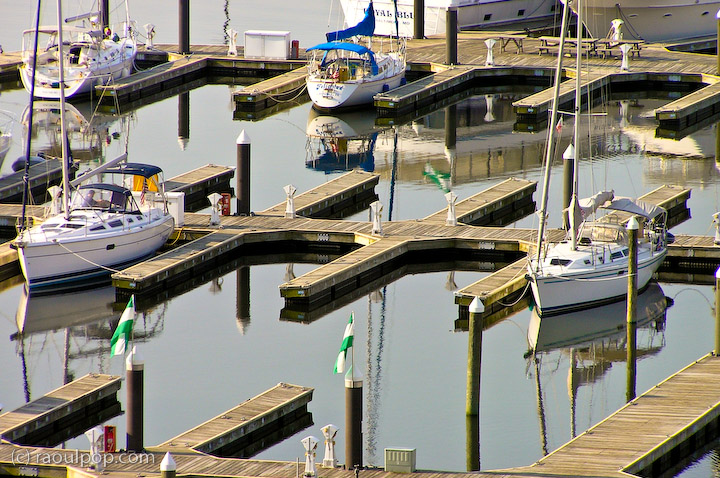
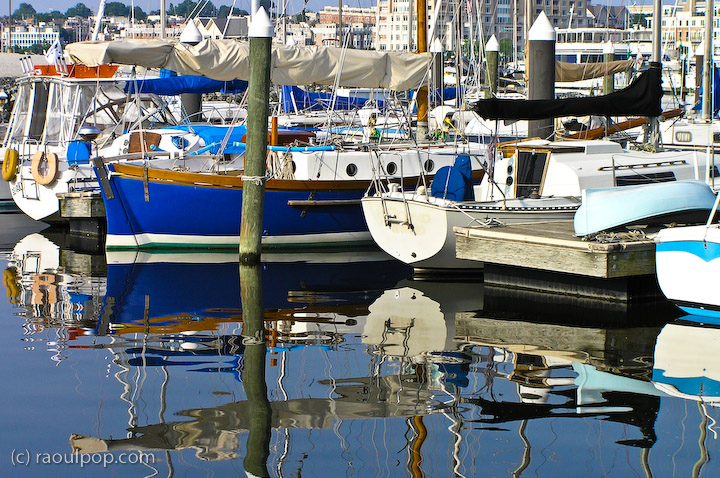
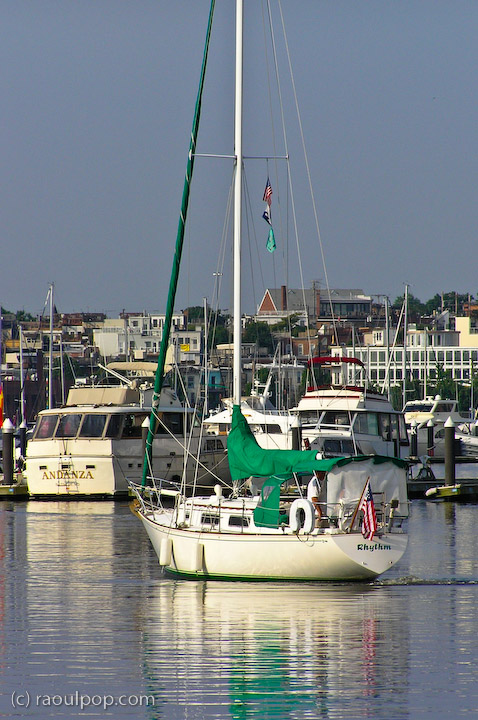
My wife and I recently joined up with my parents for a weekend stay in Baltimore. I took a lot of photos of the beautiful inner harbor. Here are 56 of them. Yes, that’s fifty-six. I think that’s the most photos I’ve ever posted in a single post. I’ll single out several of them below, but most will be posted as thumbnails, so click through to see them at full size.

This was another one of those situations where a versatile zoom lens was much better than a prime lens. There was no other way to compose photos but to zoom into the foreground. I obviously can’t walk on water, so a prime lens, with its fixed focal length, was no good to me.

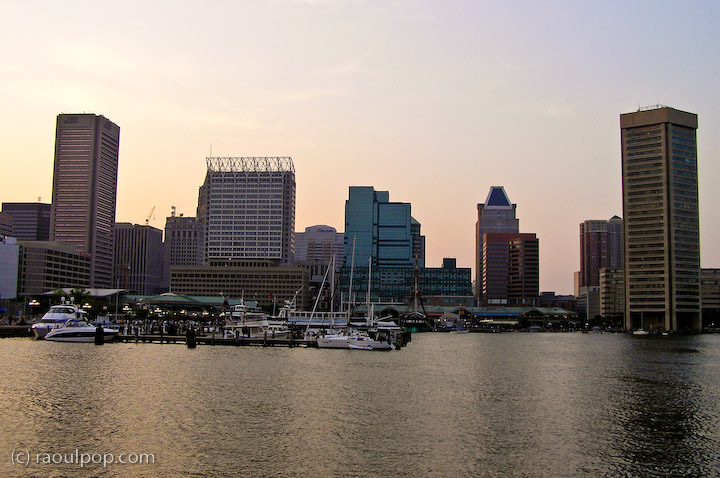
From afar, the Inner Harbor looks like this:

To the right, you have the Baltimore World Trade Center tower, and to the left you have one of the marinas. The downtown skyline is clearly visible in the background.

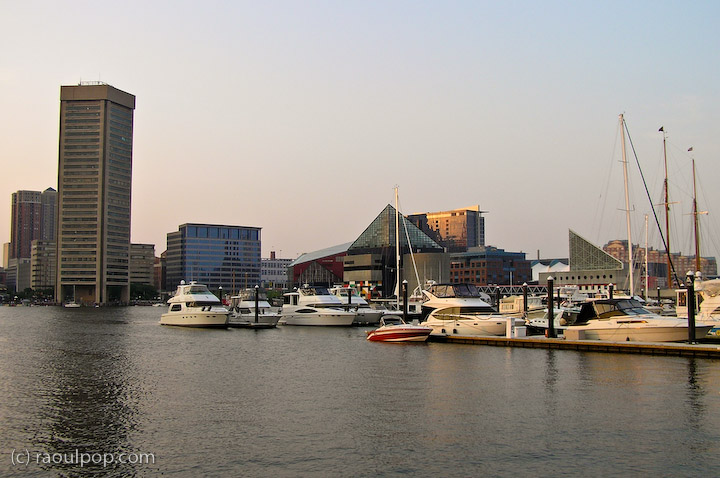
If you stand in the same spot and look to the right, past the WTC tower, you see this:

That’s the Baltimore Aquarium in the center, and another of the marinas in the foreground. The Power Plant building is behind the Aquarium from this location.

Now, if you look even further to the right, you’ll see this:

That big, tall building is the Marriott Waterfront Hotel. That’s where we stayed. It’s a beautiful hotel, but it’s hard to get to it if you’re not familiar with the area. There are no street-level signs to direct you to it, so you’ll drive right by it and past the harbor if you’re heading toward it on Fleet Street. Unless you stick your head out the window and look up to see a little logo on top of the building, you won’t even know it’s there. Strange, you wouldn’t think you’d miss such a tall building, but we missed it and literally drove right by it the first time.

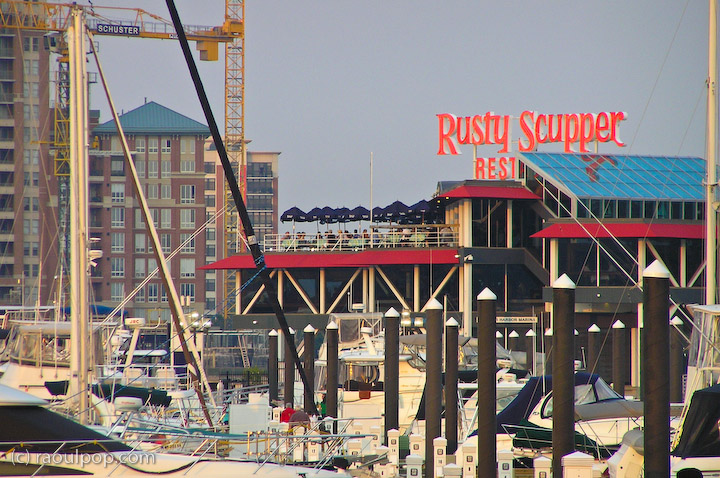
If you look even further to the right from the same spot, you see the Rusty Scupper restaurant.

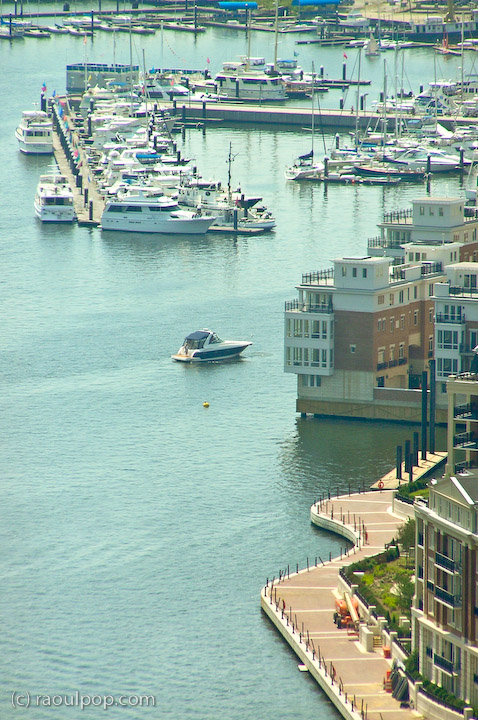
Further down the quay, you’ll find newly constructed housing that’s literally built right on the water. Each unit has its own boat dock.

We spent most of our time on the other side of the harbor, so let’s head over there, shall we?

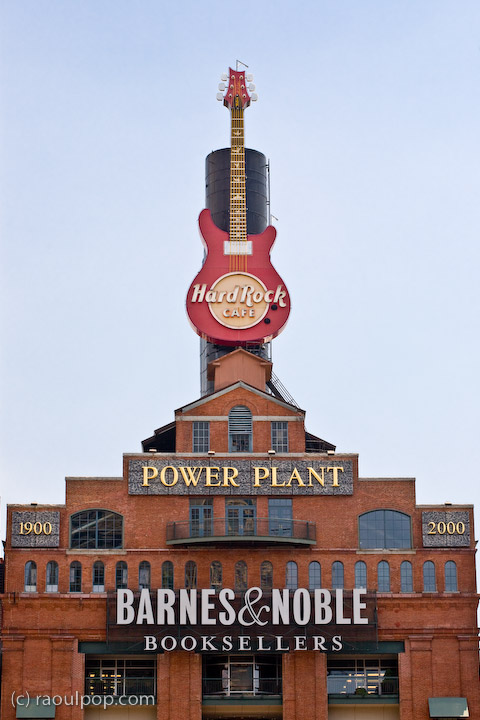
By far the most noticeable landmark in the Inner Harbor is the Power Plant building, which houses the Hard Rock Cafe, ESPN Zone, Barnes & Noble Booksellers and a few more locales.

Here’s the Baltimore Aquarium:

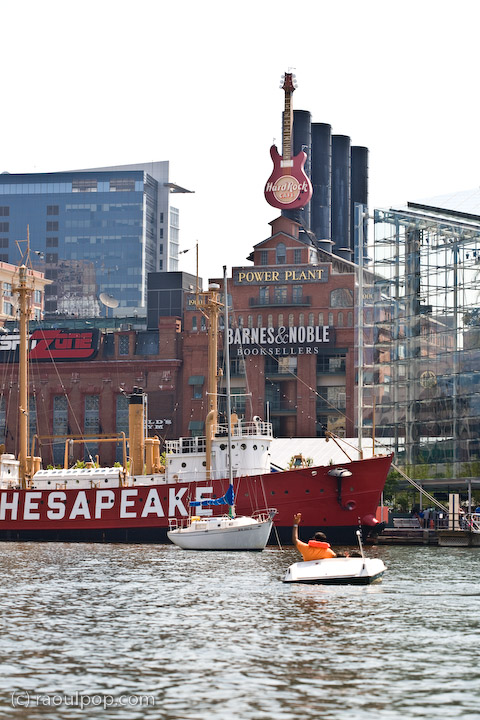
Many boats were anchored and available for tours in the harbor. In the photo above, you see the Chesapeake and the Torsk submarine. In the photos below, you’ll see the Constellation and Taney, the last surviving boat from Pearl Harbor.

Paddle boats and electrical boats (little fiberglass dinghys) were available for rental, so we got one and puttered around the inner harbor (in the vicinity of the WTC).

This is what the little electrical boats looked like:

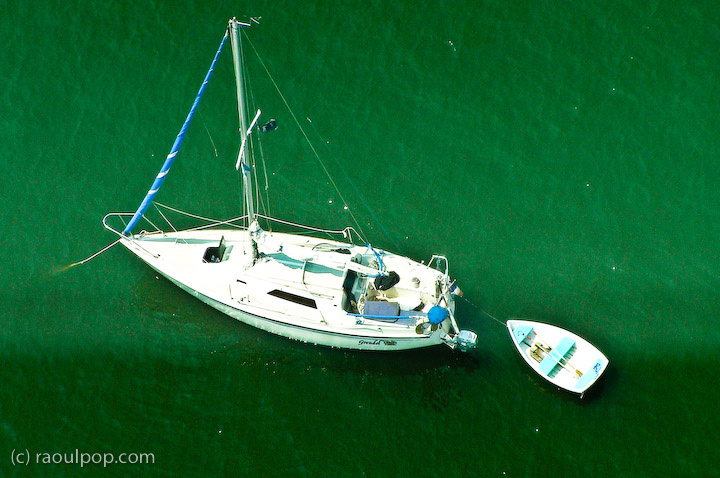
We went around this small yacht a few times. It was anchored right in the middle of the inner harbor. I think the folks inside it were still asleep, although it was mid-morning.

That photo was taken from the top of the Baltimore World Trade Center Building. They say it’s the tallest five-sided building in the world. I didn’t think it was all that impressive. Perhaps I’m just sour because the top floor wasn’t open to the public, so I had to take photographs through their thick, unwashed and tinted windows. Not exactly exciting, and if you see a strange tint in some of the photos, that’s why. I’m sorry about it.

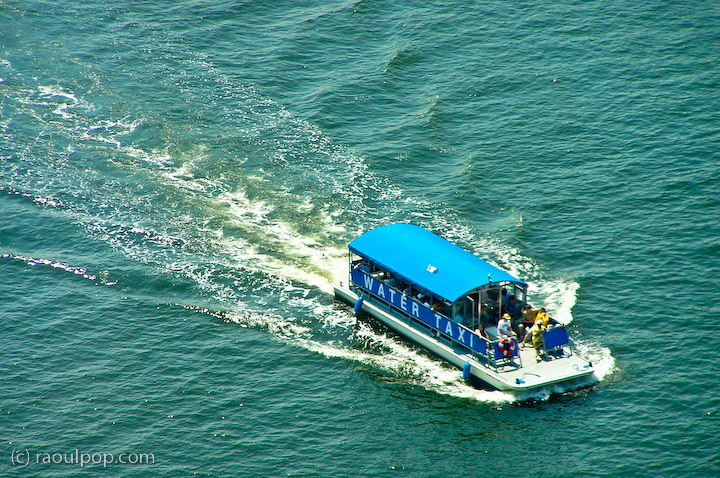
The beautiful thing about the Inner Harbor is that’s it’s so easy to get around. You can walk along the quay, or you can hop into a water taxi. An all-day ticket costs $9, which is a good deal.

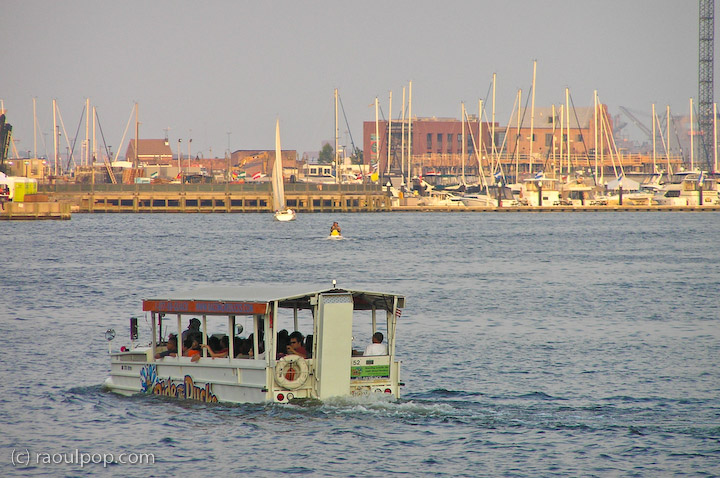
One of the funnier things I saw (and a great idea, too!) were the Baltimore Ducks. They were buses you could take to get tours of downtown and the harbor. They would simply drive right into the water. We’ve just got to use them the next time we visit Baltimore.

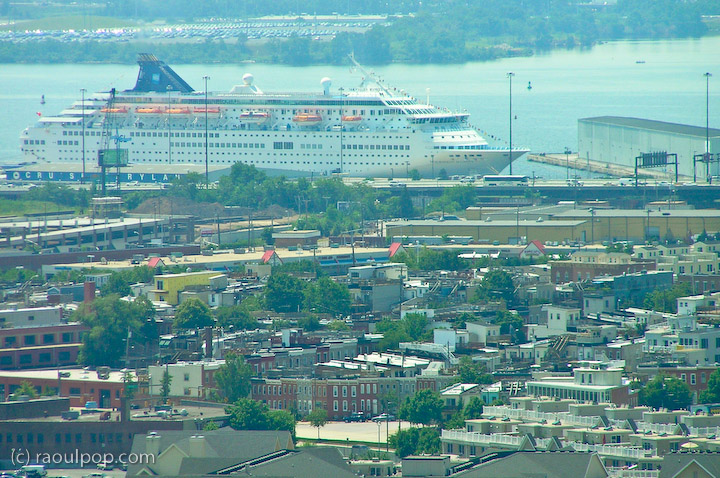
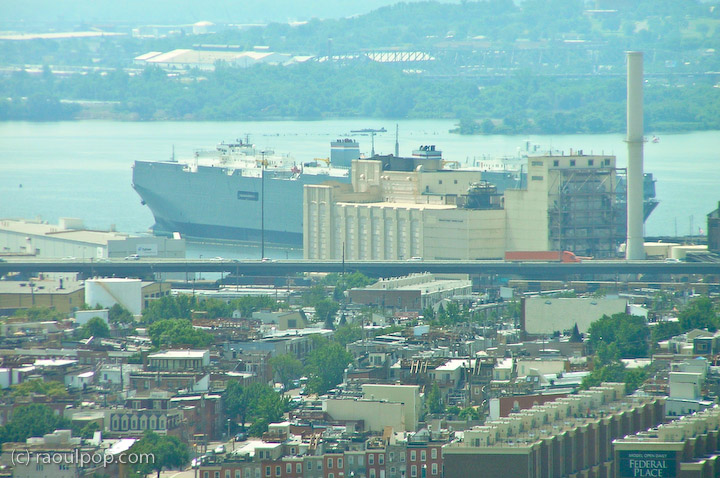
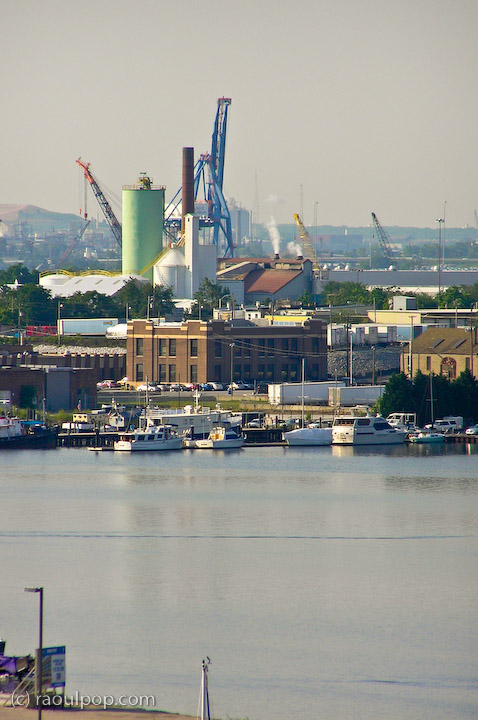
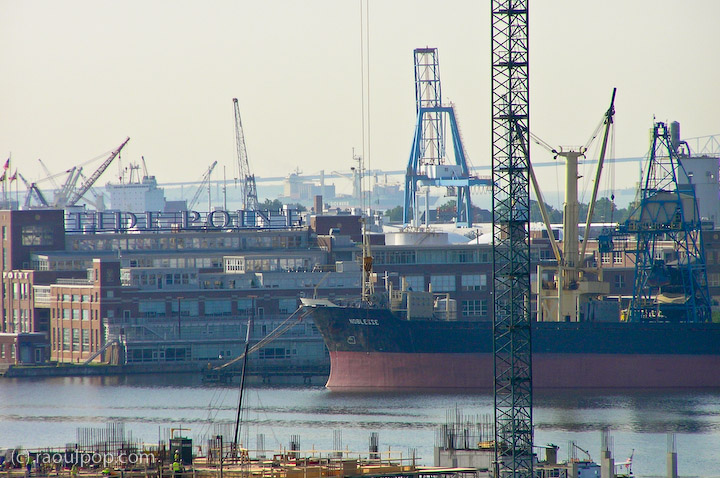
From the top of the WTC, you can see the working side of the Baltimore port as well. There was a large cruise ship anchored far off, and a few freighters were either getting loaded or unloaded as well.

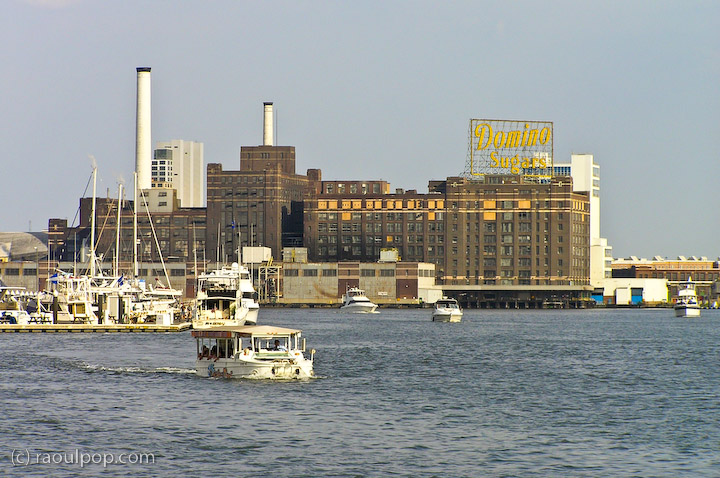
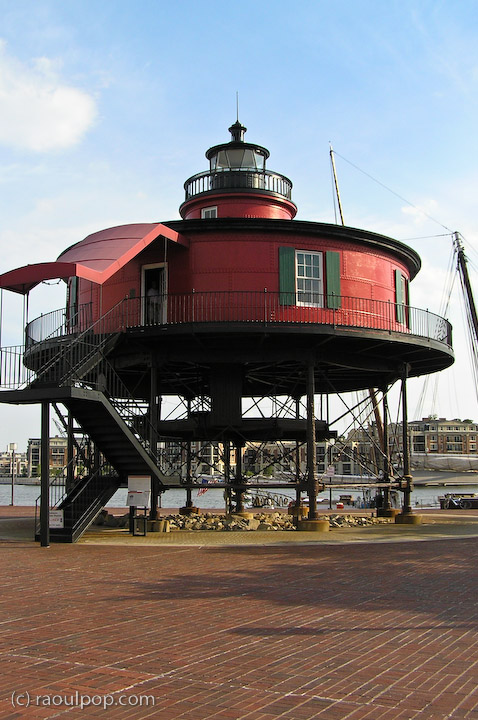
Our hotel had great views of the larger harbor. We could see the Domino Sugars factory, the Seven Foot Knoll Lighthouse, and the outlying, more quiet, marina across from Domino Sugars.

All of these photos and more are available for viewing (and licensing, if interested) in the Baltimore gallery of my photo catalog.

Standard