How To

A bit about Wide Color Range and Lightroom

Those of you who follow my blog know I love color. I always look for ways to increase the intensity and range of the colors in my photos. I like to call it WCR (Wide Color Range). Who knows what it’s really called… Since I’m self-taught, that’s what I call it. I wrote recently about one of the ways I post-process my photos, and have gotten a lot of great feedback on that method. But it’s not suited to every situation. While it works very well for architecture, some nature, and even some portrait photography, the colors get to be too harsh in other situations.

So I started to experiment, and found that Lightroom is quite capable when it comes to achieving most of my post-processing goals. I really like the ability to make tonal and individual color adjustments without opening Photoshop. For example, I find Lightroom’s heal tool much easier to use than the heal tool in Photoshop. There’s a very practical reason for preferring to work in Lightroom as well, and it’s this: every time I transfer a RAW image to Photoshop, it turns into a 45MB file. Add an extra layer, and it doubles in size. That means every finished PSD or TIF file gets to be anywhere from 90-135MB or more. Compare that with 7-8MB for the original DNG file, and you can see how quickly hard drive space becomes an issue, particularly when a typical photo session of mine yields about 300-400 photos or more.

The key to using Lightroom (at least for me) is to be bold, to not be afraid of potentially ruining a photo. There’s always the reset button in case my results are off the mark. That means I can experiment all I want, non-destructively, which is hugely beneficial.

Here are a few of my recent results with Lightroom. In this photo, the sky was a fairly colorless light blue, though there were some tonal differences that allowed me to change hues and their intensity and really bring out the greens.

Green power

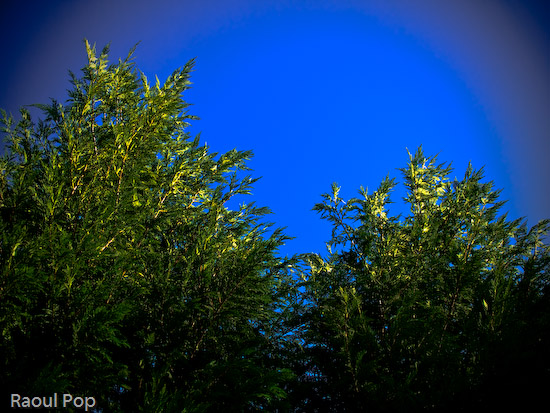
Here the sky was a light blue, but I wanted a different look, since I have tons of tree photos in my library.

Sensory perception

This was fairly simple, just slight vignetting with blue and green color enhancements, but I really like the result.
Windswept but steady

This one was a bit more complicated, with lots of tonal, hue, saturation and lightness adjustments. I really like how all of the trees are straight, spaced closed together, and yet still allow a nice view of the horizon. That’s why I photographed them.

Get up, stand up

There was no blood on the tracks in this photo, nor was there any red paint. There were some dark orange rust spots though. I changed their hue from orange to dark red in Lightroom, then increased that particular color’s saturation. Finally, I decreased that color’s lightness in order to darken it. In real life, those railroad tracks look perfectly normal, though rusty from a winter’s disuse.

Blood on the tracks

Standard
Places

Cabin John Regional Park

This summer, Ligia and I visited Cabin John Regional Park here in Potomac, MD. It’s a lesser known park, and it doesn’t really get as many visitors as it deserves, but it’s a pretty beautiful place. To discover that beauty, you need to get off the beaten path, as is the case with many things in life.

We did get off the beaten path when we visited it, so much so that we got lost, and getting back onto the path was an adventure in itself. At least we got some good photos out of it.

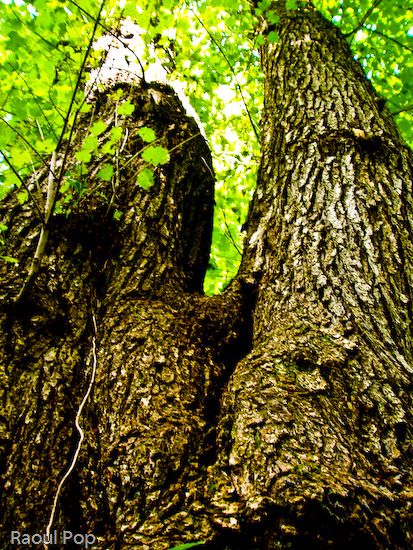
This tree almost looks like someone with their legs in the air.

Looks like legs

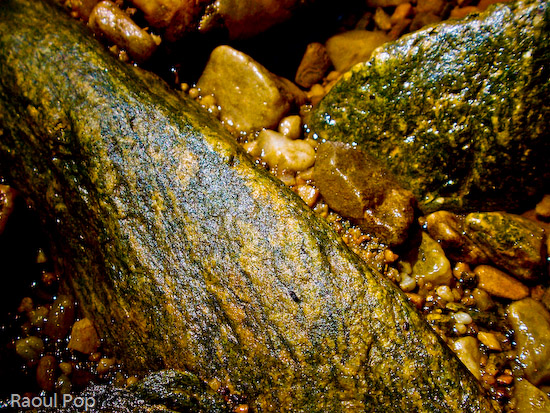
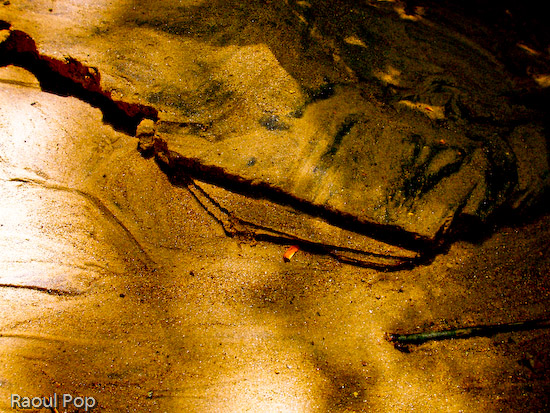
There was a nice little brook running through the forest, and some of its riverbed was exposed. Not only did we find beautiful pebbles, but we also found some great sand patterns.

Wet

Abstract sand patterns

Brook bed imprint

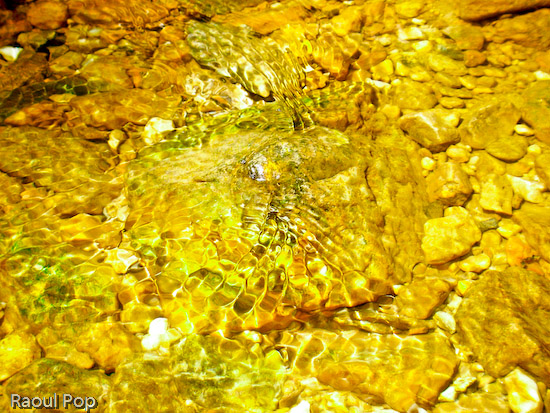
The light reflected beautifully off the water’s surface.

Water patterns

Leaves trapped among pebbles

Beautiful reflection

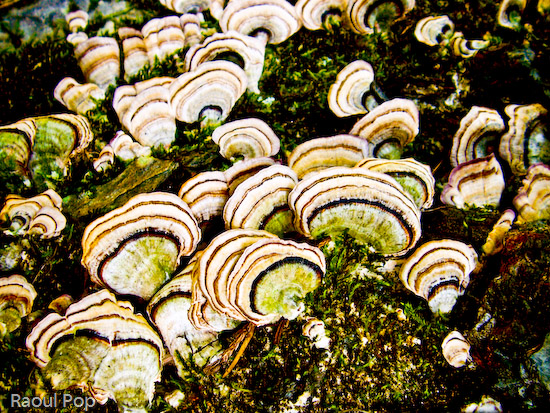
Lichen grew abundantly on a fallen tree trunk.

Lichen growing on tree bark

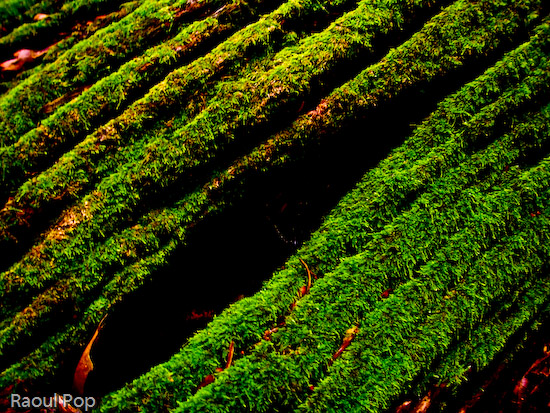
We also found thick moss, colored a deep green, growing on another fallen tree trunk.

Thick moss growing on tree bark

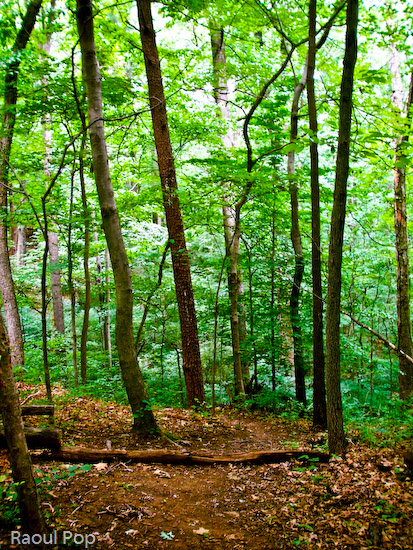
After almost two hours of wandering the forest, we were relieved to find the path once more.

Forest path

Standard
Places

A trip to the C&O Canal Park

Back at the start of September, Ligia and I visited the C&O Canal Park, on the Maryland side. It was a rainy day, so we didn’t stay for long, but I did manage to take quite a few photos. I thought I’d share them with you. Enjoy!

Here’s Part 2.

Standard
Places

Camping in the Shenandoah National Park

This past weekend, close friends of ours and Ligia and I went camping in the Shenandoah National Park. It was a surreal experience. We left a little later than we’d planned, and caught the rush hour traffic heading west on Route 66. We rued our day as we slowly crawled through miles of clogged up highway, but when we got out of the Manassas area, the traffic improved.

At any rate, we’d been slowed down enough that we arrived on Skyline Drive after dark. Then, it started raining as we approached the park. As if that wasn’t enough, fog set in and we could barely see ahead of us. But after all, we were traveling on mountain tops, and it was the start of fall, so the weather can be pretty unpredictable and wet. After trudging around in the dark, we got to the camp, and found one of the few remaining spots for the night. We were shocked to find out that they were booked solid and there was a waiting list. Our friends, who wanted to stay for two nights, couldn’t.

We bought some firewood and headed to our camp site, dreading the experience that would follow: pitching our tents in the dark, in rain, and in strong wind. Fun isn’t the word to describe it. We turned on our headlights and kept them on as we unpacked the tents and raised them. I’ll spare you the muddy details, but you’d be amazed what four pairs of helping hands, working in unison, can accomplish when under pressure.

We got the tents up, then tried to eat. What to eat? We wanted to heat up the food, but we needed a fire. Have you ever tried to start a fire while it’s raining and windy? No copious amounts of lighter fluid and paper will help. It kept dying down, even though the wood was dry. Finally, I gave up and called in the reserves: our friends. They both tried it, persevered, and finally succeeded. We gave up warming the food and ate some cold sandwiches instead, as we sat and warmed ourselves by the fire.

Fireside chats? Not that night! After we got done eating, we went directly to bed, where another surprise awaited us. Our tents were summer tents, and while they held up very nicely in the wind and rain, they were, shall we say, constructed more for the purpose of aeration than insulation. Luckily, we’d brought plenty of covers, but our friends didn’t. Even though they didn’t admit it, methinks they froze their butts off during the night. And what a night! A gale wind blew the whole time, and waves of rain beat down on our tents. It was noisy and lousy, and cold. It took me a while to fall asleep, but thankfully, I stayed asleep till morning after that. We woke up early, with the wind still blowing outside. The rain had stopped, and I managed to get a fire going without help.

We ate our breakfast and had tea, then had two wonderful surprises. One was the Monarch butterflies, in various stages of development, attached to the exterior walls of the bathrooms. Why they picked the bathrooms I don’t know, but that’s where I found them.

Monarch butterfly larva

Monarch butterfly cocoon

Monarch butterfly cocoon

I found the gold lining on their cocoons truly amazing. That’s actually what drew me to them in the first place. If I hadn’t seen the gold spots and crown lining, I’d have passed by them like many of the other people using the bathrooms. It’s no wonder they’re called Monarch butterflies. They sure look regal with those spots of gold, don’t they?

Then Ligia had the second surprise. She found a wild apple tree, and picked a few apples. (They were delicious, by the way.) What do you think she found on one of them? An Eyed Hawk Moth larva, of all things! What was it doing in the Appalachian mountains? It normally lives in Europe. I don’t know, but it was a beautiful thing to behold.

Eyed hawk moth larva

After our breakfast — and this time we could chat around the fire — we took off and went hiking on the Rose River Trail. Our goal: Rose River Falls. The trail was easy and beautiful. Here are a few photos from the hike:

A nonconformist tree

Tree on a rock

Rose River turned out to be a brook in the forest — quite the optimistic name for a brook, isn’t it? 🙂

Rose River

Forest art on display

Rose River Waterfall

After the hike, we had a wonderful late lunch at the Skyland Lounge, then headed out on Skyland Drive, and stopped along the way at overlooks to take photos of the gorgeous vistas. Here are a few of them:

Wide vista

Set against the sunset sky

Mountain tops

Hazy outlines

Fall colors

Was it a wonderful trip? You bet your britches it was, and I’d do it again in a heartbeat, even with all the nightmarish traffic and surreal weather.

Standard