Thoughts

Undercover Boss was my idea too

A couple of weeks ago, my jaw dropped as I browsed Twitter. SNL had put together a skit lampooning a new show on CBS called “Undercover Boss“. I didn’t even know the show existed, much less that it had been on SNL.

Since the show’s launch after the Superbowl, it turned into a nationwide hit, because it struck a vein with viewers. Several powerful themes are at work in each show, themes which I knew would make the show a success when I thought of it, such as the contrast between the rich and the poor, the proverbial desire to “be in someone else’s shoes”, and the will to find out what’s wrong and right it.

Don’t get me wrong. No one stole my idea. There was no foul play involved. I was simply late to the table. When I thought of the idea, the show was likely already in development. By the time I was looking for a production company to help me develop the show, “Undercover Boss” was already in production. Two different people had the same idea — well, almost the same idea, because my concept was slightly different, as I’ll explain in a bit — but one of them had it sooner than me.
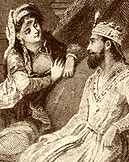
My concept of the show differs somewhat from what is currently in production. I thought of it from a different angle perhaps. I’m not sure how many of you are familiar with the story of Scheherazade, the mythical Persian queen and the teller of “One Thousand and One Nights“, but I read those stories avidly as a child, and I still remember them.

A recurring theme in some of her stories is that of the caliph (ruler or king if you will) disguising himself in different ways and going out into his country by himself, or accompanied by a trusted servant, to see first hand how things are going, and what he must do to make things better. There’s a certain element of thrill in taking on a different position in life, particularly for someone who’s been accustomed to the royal treatment all his days, and clearly, there’s a benefit to his subjects if he gets to know how they live and is motivated to change things for the better.

Nowadays, there are very few kings left, and they haven’t got much power, unfortunately. Presidents don’t need to disguise themselves to find out how things are, because in those countries where there is enough freedom of speech, everyone is eager to tell them just what needs to be fixed. Even in countries where there is little freedom of speech, like Iran, people will risk life and limb in order to voice their beliefs.

However, there are clearly places where people are afraid to speak their minds for fear of retribution, and that is in corporate environments. In small companies, the owner or director generally knows what’s what, but in large companies, particularly multi-national ones, there are so many layers between the workers and the top guy or gal that many of them only know their company through the figures that filter up through the ranks. If someone has an idea about how to do things better, or is unhappy with something, they’ll likely keep their mouth shut for fear of losing their job, particularly in these tough economic times. So how is the CEO to know what’s really going on, and how his or her policies affect each John or Mary that works at their companies? They can’t, unless they, too, do what the caliphs used to do.

So far, so good, right? Well, I didn’t want to have camera crews follow the “new guy” around all day long. That’s  pretty much a dead giveaway and doesn’t encourage true reactions. I wanted to film with concealed cameras and microphones. In situations where that wasn’t possible, we could have planted cameras in concealed locations, or used “co-workers” who were really production crew members, carrying the concealed cameras themselves. I also wanted to film an entire season without airing a single episode, so word wouldn’t get out about what we were doing. Then after filming a whole season, and doing as many of these shows as possible, we would have started to air the episodes. Now that would have been truly amazing.

But I’m not the one with show running on CBS, am I? I’m just the guy with the me-too idea — this time, anyway — so the important thing is the folks who had the idea first got it made, and it’s successful, and that’s good, not just for them, but also for the American worker, because I believe in the power of this show to encourage positive changes in America’s corporate environment, changes that can make things better for the average worker.

I have a few more good ideas like this one. If you’re a serious production company with the resources to help me develop and pitch a hit show to a TV channel, please get in touch with me. I’d like to move fast on my other ideas, so I won’t be left in the dust again. I look forward to talking with you!

Standard
Thoughts

Top Gear in Romania

The Top Gear team visited Romania for a bout of grand touring. They started in resort towns along the Black Sea, like Constanta and Mamaia, then found their way to the famed Transfagarasan mountain highway, by way of Bucharest, the People’s Palace and a bunch of villages inbetween. It was fun to see them drive through the same places and on the same roads I’ve driven on so many times in the past. I’m not sure when they did this show, but it must have been before the appearance of many potholes on the A2 highway — potholes which I struggled to avoid during my recent winter road trip.

I am peeved with their depiction of Romania though. It looks like the Top Gear team sought out a gypsy village on purpose to add some color to the show, but I, and the overwhelming majority of Romanians would say that was a rather distasteful decision. Color and drama could have been added in many other ways. But I digress…

The show ends with a climactic drive on the Transfagarasan highway, during which all three (Jeremy, Richard and James) agree that it’s the best road in the world. Nice.

http://www.youtube.com/watch?v=4rSX422XOcE

Top Gear in Romania – Part 1

http://www.youtube.com/watch?v=6z3EpetLLUw

Top Gear in Romania – Part 2

http://www.youtube.com/watch?v=xsnfsBHfjS0

Top Gear in Romania – Part 3

http://www.youtube.com/watch?v=DbnDQB29K2U

Top Gear in Romania – Part 4

Standard
Thoughts

Is the M3 is more economical than the Prius?

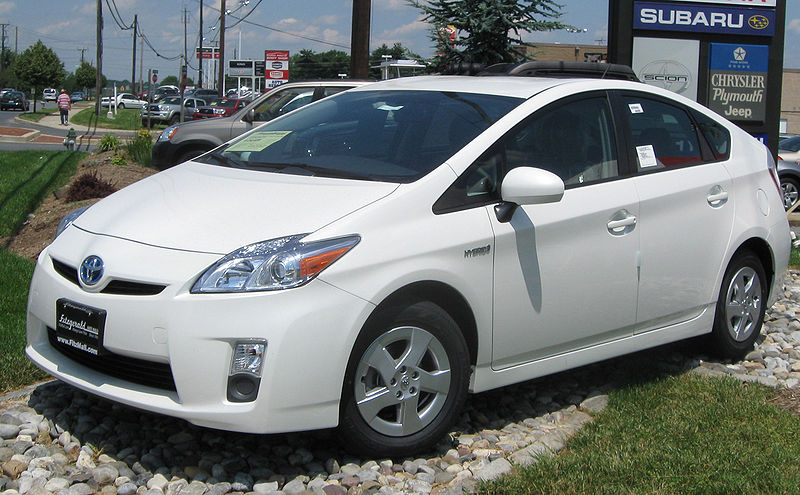
Which car would you rather drive: the BMW M3 or the Toyota Prius?

2009-bmw-m3

2010-toyota-prius

I’d take the M3. It’d be no competition for me.

As it turns out, Top Gear tested these two cars around the track. The M3 got better mileage than the Prius while both cars traveled at the same speeds for 10 laps. This was part of a show segment where the BBC had asked them to show which cars are more economical, given the high price of gasoline.

Supercars – The one gallon fuel crisis race – Top Gear – BBC

Top Gear also tested a bunch of supercars (Lamborghini, Ferrary, Aston Martin, McLaren and R8), and found the Audi R8 gets the best gas mileage — 5 mpg — during healthy track driving. The runner-up was the Lamborghini Murcielago at 4.1 mpg.

Jeremy Clarkson’s conclusion was this: it’s not the car, it’s how you drive it. You can get decent fuel economy from a sporty car that you love to drive, or you can get decent fuel economy from a boxy, under-performing hybrid. Take your pick.

This is why I love Top Gear. It’s always fun to watch.

Images used are public domain, obtained from the Wikimedia Commons.

Standard
Thoughts

How about a real Apple TV (an Apple tablet)?

Ligia and I were watching cartoons in bed this morning, on my laptop, and I realized Apple still hasn’t capitalized on the opportunity to create a real Apple TV. Here I was, after having ejected my external drives, disconnected the laptop from its peripherals, taken it off its stand and put it on our bed, when all of this could be handled very simply with a larger iPod — a combination iPod/Apple TV/Apple Cinema Display.

Try as I might, I just can’t watch movies or video content on my iPod. The screen is too small, even though I have an iPod touch. It has no speakers, so I have to use headphones. Clearly, Apple has the technological know-how to put together a really nice Apple TV that’s not yet another box tethered to a TV in the living room, but a display with integrated speakers and the circuitry that allows it to get on my network and access media from various drives, or to play the media I sync to it through iTunes, or to download media from the Internet. And yet, it’s content to charge people for small fry (iPods, hamstrung Apple TVs, etc.) when it comes to personal entertainment devices.

Just think, with a nice LED screen of about 13-17 inches, a touch screen, plenty of onboard storage, a good battery, WiFi, Bluetooth, and speakers, they could have an amazing device that I could take with me wherever I decide to sit in the house or in the yard. I could take it in bed and watch movies without draining my already tired laptop battery, I could take it outside on the patio at night to watch stuff there, etc.

Apple already has all of this technology. Why don’t they put it together?

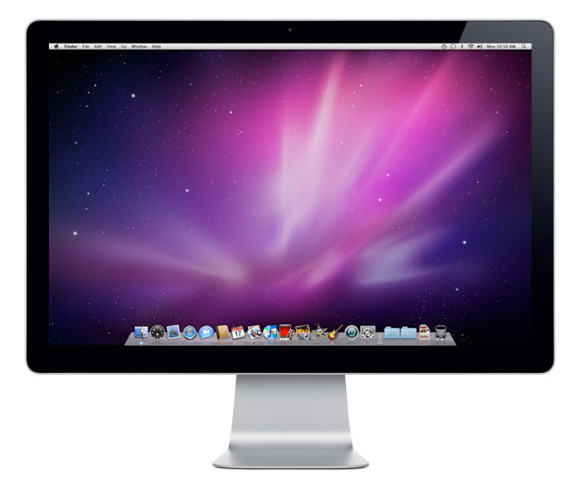
They have the LED displays already, in their laptops and in their Cinema line.

led-cinema-display

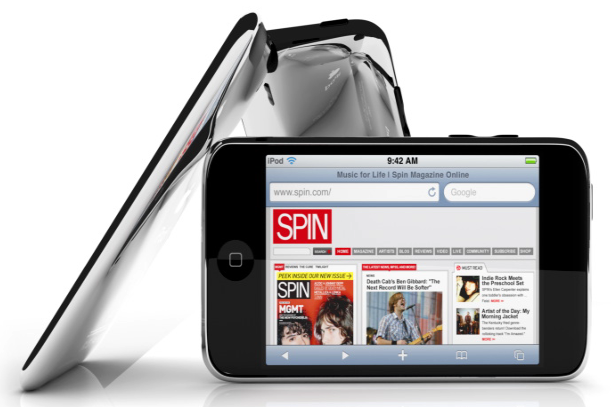
They have the touch screen capabilities, from the iPod and iPhone.

ipod-touch

They have the media playback capabilities and other circuitry from the Apple TV.

Apple TV

They have the amazing batteries from the MacBook Pro line.

new-apple-batteries

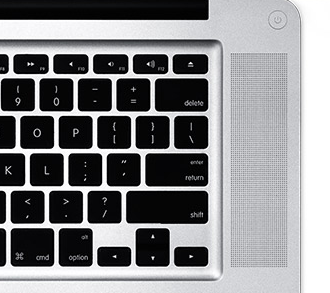
The speakers are also from the MacBook Pro line, and they’re some of the best small speakers on the market, if not the best.

macbook-pro-speakers

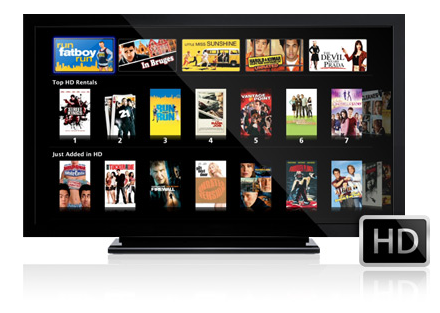
People talk about an iTablet, but I’m not really sold on the idea. Yes, if you put all of these components together, you could have an iTablet, but what I want is a larger iPod, or rather a usable, untethered Apple TV with a nice, built-in display and decent battery life. It could look something like this (and no, this isn’t a rendering, it’s a screenshot from Apple’s own website).

itv

Take away the stand, and imagine a nice iPod-like bezel around it, so you can grab it in your hands and hold it. Perhaps it could have some sort of leg that folds out to let it stand on its own, too. This is what I’m looking for. An iPod I can actually watch, anywhere.

Images used courtesy of Apple.

Standard
Thoughts

Gotta give them something to do

It’s easy to decry TV, movies and sports as nothing more than a time suck, as a constant push toward looser morals and a consumer culture, but they also provide a benefit that’s not often discussed — that of giving people something acceptable to do with their time. Among other things, they redirect energy that would be spent on real life behaviors into vicarious behaviors, and in some ways, that’s a good thing in today’s world.

You look back through recent history, and you’ll see that as societies became more civilized, people distanced themselves from nature and segmented their existence not only in terms of time but also in terms of space. When economies were based solely (or mostly) on agriculture and crafts, people had plenty to do all day long. Life and work followed a natural cycle, and they intermingled. (You see some of that these days with telecommuting.) People had homes, and they had land, and they worked on that land and around their homes all day long. They put in long hours during the spring, summer and autumn, and relaxed during winter, at home with their families. Nowadays, very few people still live on that cycle. Most people have office jobs and live in apartment buildings, particularly in the larger cities where the costs of owning a home are prohibitive. When they get home at night, what’s there to do? Little, really. When you have an apartment, what are you going to do? Stare at the walls? Vacuum the floors? Re-organize your sock drawers? I suppose that’s how the need for mass entertainment developed, first with sports, then movies, then TV. When you have (roughly) five hours of free time per day, you’ve got to spend it somehow, so why not become a sports fan, or why not watch movies or TV?

As one follows the progress of their favorite sports team or TV show, they live in that world, through those characters or stars, and experience the highs and lows of that microcosm. Some would say that’s a form of population control, of dumbing down the population, of occupying their time with nonsense so they don’t wake up and start something. In some ways, it is, but it’s also needed. What would people do with the energy and time they spend on sports and TV if those outlets didn’t exist? Some would spend it in positive ways — with their families, on books, arts, hobbies, games, newspapers, trips and the like — and yet others (and this is a number that can’t be quantified) would spend it in negative ways — and the variety of those ways is something that would boggle the mind. For that group of people, the fact that they spend their time in front of the TV or in the stands, cheering for their sports teams, is undoubtedly a good thing.

So, beside the fact that there are very real benefits to TV networks and advertisers as more people tune in to see TV shows and sports matches, or to movie studios as more people go to see their latest creation, or to sports teams when fans fill their stadiums, there are arguable benefits to be gained for society in general as more people tune out the outside world and turn on their TVs. The issue is clearly more complicated than that, and I’m oversimplifying things, but I wanted to point out this particular aspect. It’s but one view among many that can be taken when you talk about this subject. The more I think of this, the more I realize its complexity can’t possibly be explained in a single post, so don’t expect an overarching conclusion here — just an observation.

Standard