See how easy it is to make raw sesame milk at home, in mere minutes, in our latest episode of Ligia’s Kitchen! Sesame milk is full of calcium and is incredibly delicious. The wonderful thing about the calcium in it is that it’s readily absorbed by our bodies, unlike the artificial calcium added into various other beverages.
This is video from a sledding outing with our friends, near Medias, Romania. Remember sledding?
I ask the question because most people look at me funny when I talk to them about hauling an old-fashioned sled up a hill, then sliding down said hill at great speeds, only to repeat the process until completely exhausted, at which time we’d trudge on home with big smiles on our faces.
My sled is part wood, part cast iron, with steel feet. It’s a heavy, sturdy monster that I’ve had since I was a kid, and there’s a good chance this sled will last me my whole life. I might even be able to pass it down to my children.
In the States, I rarely saw people sledding. Sure, if you visit winter resorts, there’s bound to be some sledding going on. But the neighborhood sledding slope has been slowly disappearing.
Remember when parents and children alike would know just which slopes were perfect for sledding? And they couldn’t wait to get their sleds and run outside after snowfall? Remember being in awe at the glossy photo of the latest wooden sled in the L.L. Bean catalog? I can’t even find those old sled models in their catalog anymore… All I can find now are kiddy sleds and plastic somethings. I’m talking about real sleds, like these!
When I grew up in Romania, the hills were full of children, yelling, laughing, crying, running about, having snowball fights, sledding. It was the same for my wife. Now, the hills are mostly silent. Medias is surrounded by hills, yet when we wanted to go sledding, we had to drive around for about 1 1/2 hours, looking for a good slope. Nobody knew where they were anymore.
I’d love to see more people sledding. It’s great exercise and it’s tons of fun! I think local governments can help by maintaining sledding slopes at certain locations. Nothing fancy, no artificial snow, just some lights and a man to turn them on and off. Word would get around and people would come.
By the way, this is what the moon looked like that night, after we got home.
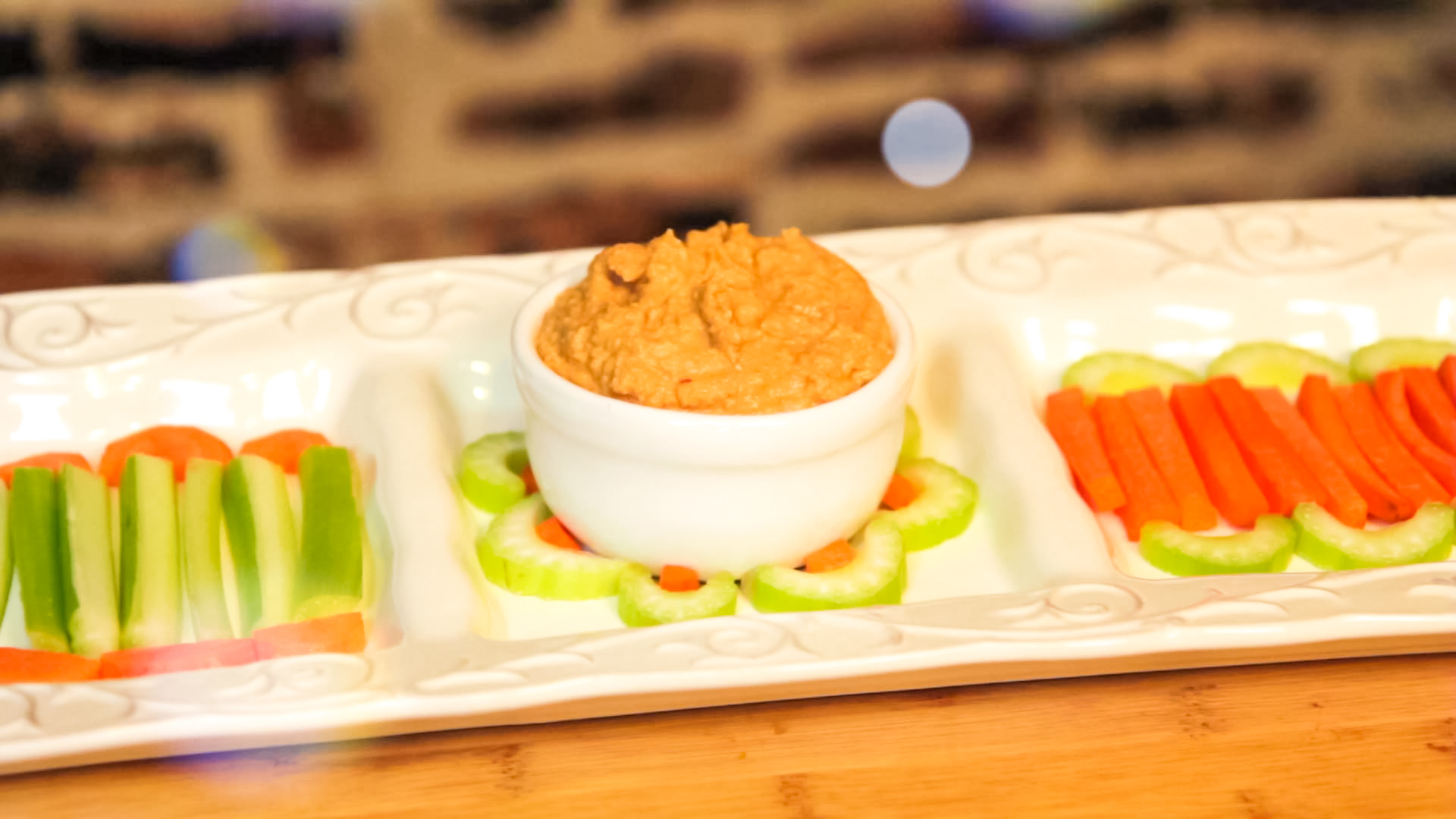
Ligia made a delicious pate in this episode of Ligia’s Kitchen, which you can spread on raw bread or you can devour as a veggie dip (which is what we did at the end).
LK-027-EN-HD
Released 1/26/12
It’s quick and easy to make (just blend the ingredients together) and super-delicious, so we hope you’ll try it at home!
I made a short video last year, which I wasn’t sure I should post publicly, because it contains disturbing imagery. However, I finally convinced myself I should, simply because I want you, dear reader, to be able to make informed decisions when you go shopping for food.
The video you’re about to see shows the guts of farm-grown chickens. These are from an independent farm where they grow in crates, as they do in most farms these days. They’re not free range, and they’re certainly not organic. The name of the farm doesn’t matter. What matters is that these chickens weren’t treated as badly as those in true factory farms, and yet their insides tell a dark story about the way we, as humans, treat our food.
Their internal organs are pretty much destroyed, at around 6-7 months of age. They’re large, heavy, hard, tumor-laden, distended, they’re retaining huge amounts of water — they look as if they’ve been eating the most unhealthy crap there is — and they have. All of that chicken feed they get as food makes them look like this, coupled with the lack of movement, the drugs, the stress of living in crates, in the stench of thousands of others like them, unable to roam, forage for food, smell the clean, fresh air of unpolluted nature.
These chickens (and others in much worse condition) are what you find when you go to the supermarket. Sure, you don’t find their guts for sale. You find their meat, which looks decent enough, especially after it’s been pumped full of water, nitrates, MSG and colorants. But their guts find their way into pet food. They’re what you feed your pets.
Please, think about all this the next time you’re buying chicken (or other meat) at the supermarket. I’m not trying to convince you to stop eating meat — that’s your decision to make — I’m just trying to help you make better decisions when it comes to food.
Look for free-range chickens, for organic chickens, buy from local farms where you can see them roaming the land, scratching the earth for worms, not from factory farms.
Or you could try not eating meat. We don’t. We’re raw foodists. But as I said before, I’m not trying to force our lifestyle on you. You are free to choose what you do. Just be aware of the consequences.
I made a video follow-up to my past articles on Sigma DSLRs (see this and this), where I talk about where Sigma is today and why I think they’re lagging behind the market by 2-3 years.
Sigma’s R&D has not developed new DSLRs fast enough to keep up with market demands and the wonderful capabilities of the Foveon sensor are not put to proper use.
The Foveon sensor is remarkable in that it captures RGB color at each pixel due to its three plates (vs. a single plate in regular sensors). It is supposed to give much more accurate color reproduction than regular sensors.
Unfortunately, because Sigma has not worked fast enough to create DSLRs that can truly compete with those made by more popular camera makers such as Canon and Nikon at all leves (including, but not limited to low light performance and HD video), its DSLR arm now finds itself in a terrible slump.
Their latest offerings, the SD15 and the SD1 have not sold well, and I hope they do something soon in order to catch up with consumer expectations.