Places

Italian road trip – Day 2 – Florence

Our Italian road trip took us from Pisa to Florence, where we arrived on the evening of February 18th, just as dusk set in. We navigated the Florence streets at night with some difficulty, but arrived at our lodging in due time, where we rested for the day ahead.
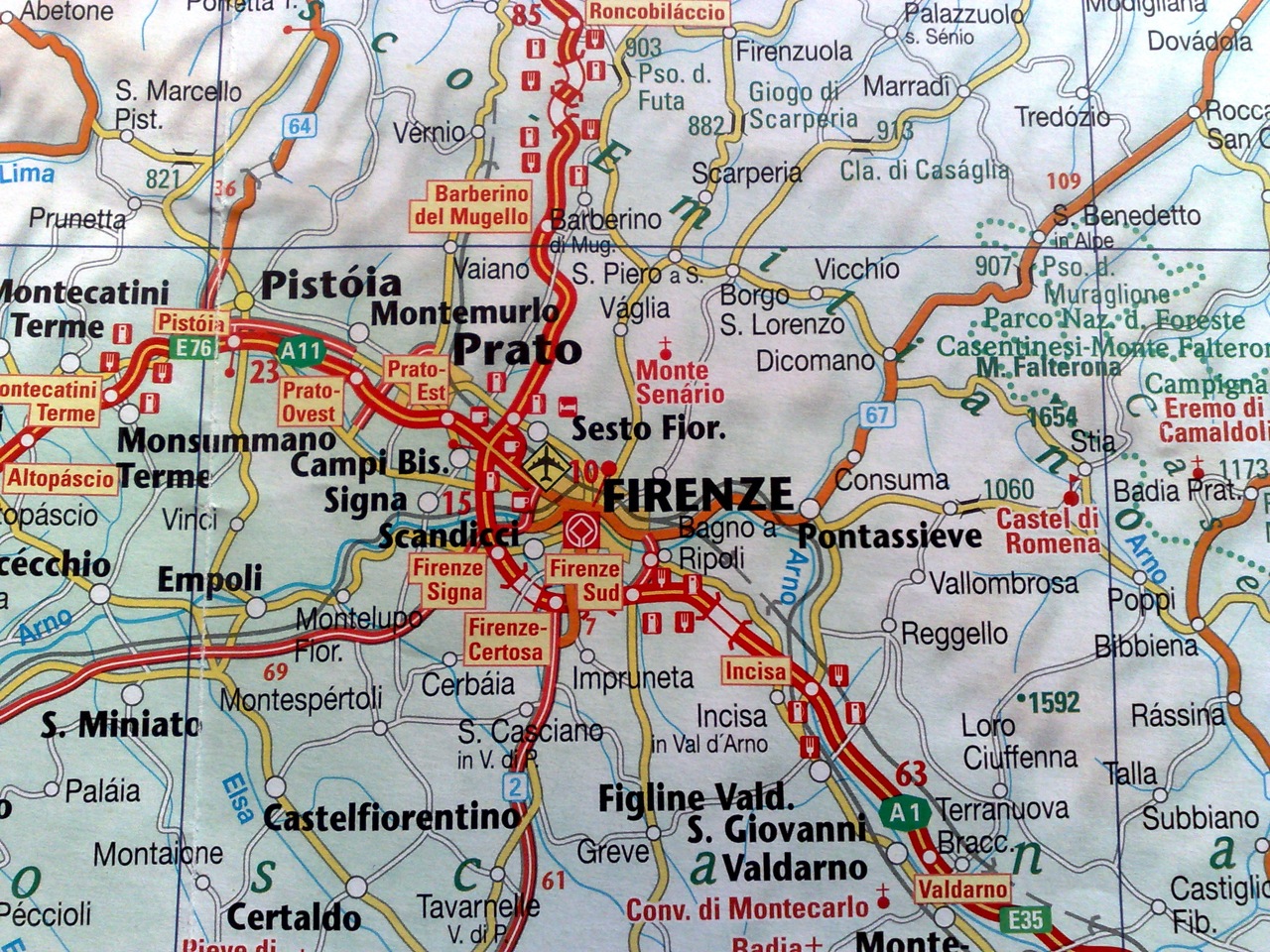
Map of Firenze

Here’s us descending the hills of Tuscany into Florence, on the main highway that connects it to Pisa.

See this video on Vimeo

A funny thing happened that evening. We’d been following our somewhat convoluted route through the city, when we reached a bridge we needed to cross but couldn’t. It’d been blocked — barricaded — by the city, for reasons unknown, since no work was being done on the road. We stopped to call for directions. On the other side of the barricades, a line of angry Italians was forming. Apparently the barricades had only been put up that day, and they weren’t happy about it.

One of them, a young, strong fellow in his 20s, had been building up some steam underneath his collar. With no thought of turning around and finding another route, he got out of his car and started to break the plastic ties that held the barricades together, bare-handed. These were thick ties — the same kind used to handcuff people when they’re arrested — yet he snapped them with relative ease. After breaking a few, he figured it was tedious, so he got a sharp hunting knife from his car and sliced through the rest of the ties, then threw the barricades aside and drove right through.

I’d gotten out of my car to have a better look at what he was doing, and stood there amazed. Seriously, it takes guts to have complete disregard for the authorities of a city. On the one hand, what he did was wrong, but on the other hand, he helped us and the many other drivers stuck there. We knew of no other route to get where we were going, and we’d have been lost if he hadn’t cleared the way. and after a short while, reached the place where we were staying — Villa Aurora — a picturesque antique villa perched on one of the Tuscan hills that surrounded the city.

The villa and its surroundings were so beautiful that in spite of my fatigue and the cold weather, I had to make time for a few nighttime photos, after which I slept like a log till early morning.

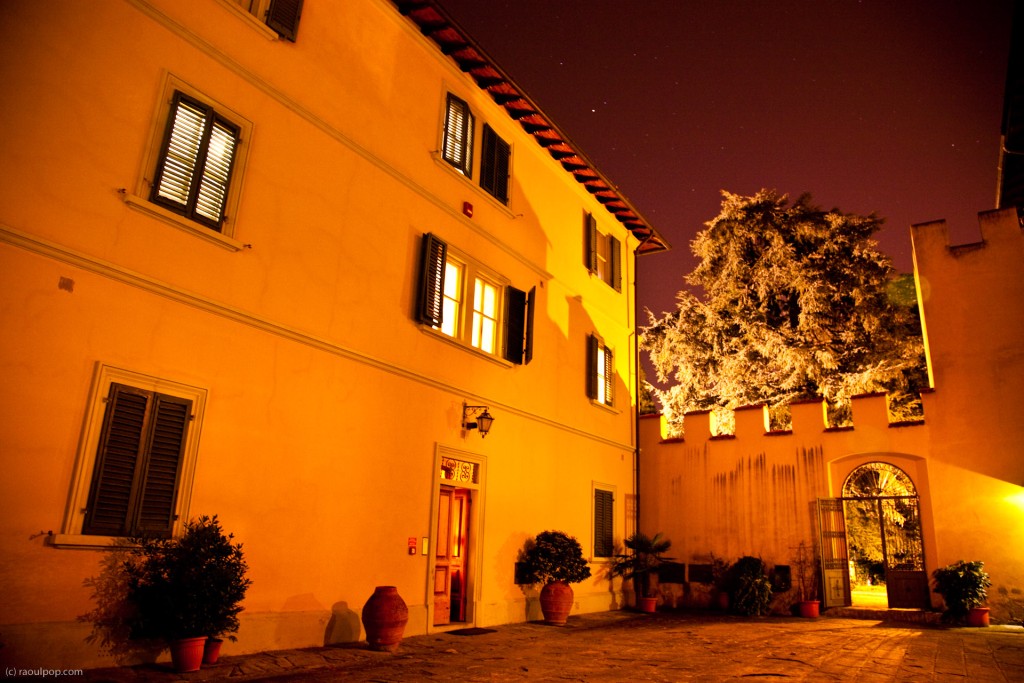
Tuscan courtyard, night

Interior courtyard at night

We got up with the dawn and after a hearty breakfast, drove into the city to visit. We parked in the subterranean lot behind the railway station, near the church of Santa Maria Novella, then walked through the city for several hours.
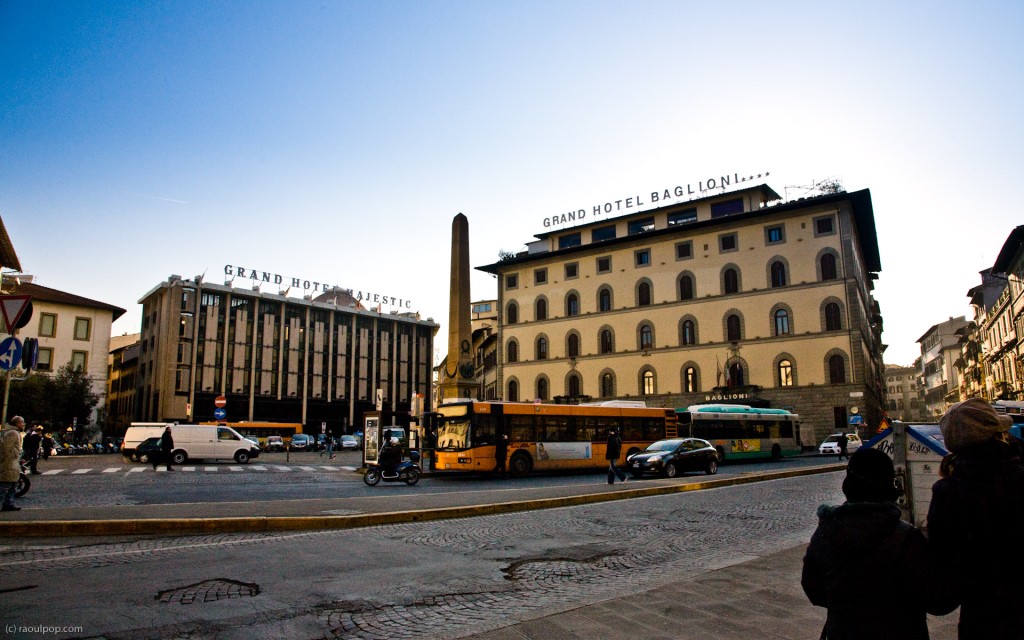
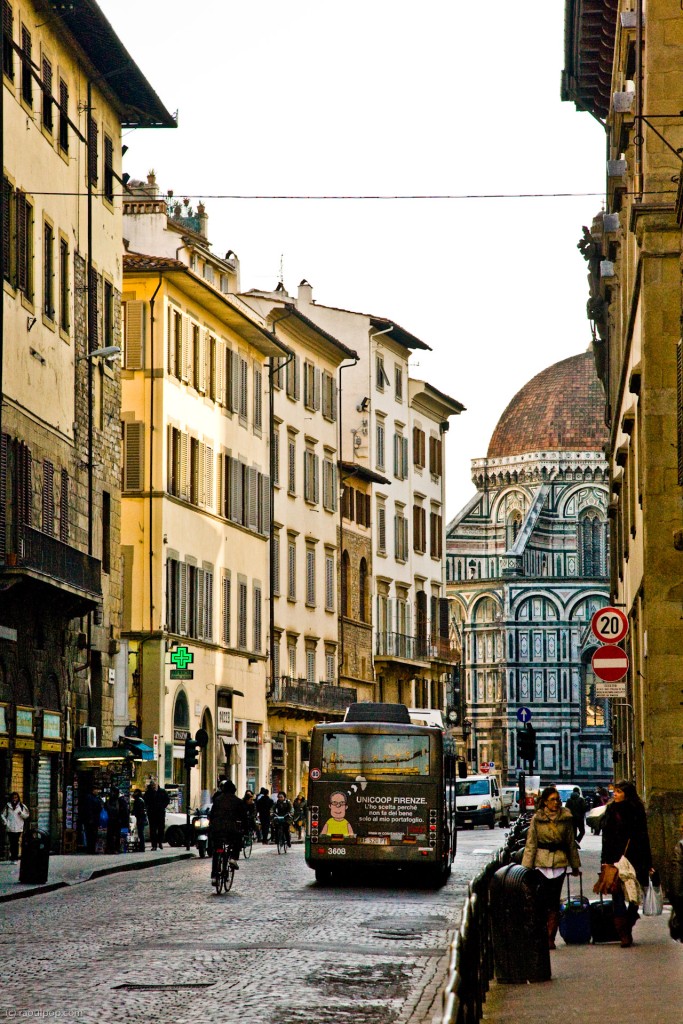
A couple of grand hotels

20 eccetto

We visited the Duomo while it was still early morning and the tourists weren’t around, then had the best hot chocolate ever at a place called SergioBar, right in the Piazza del Duomo.
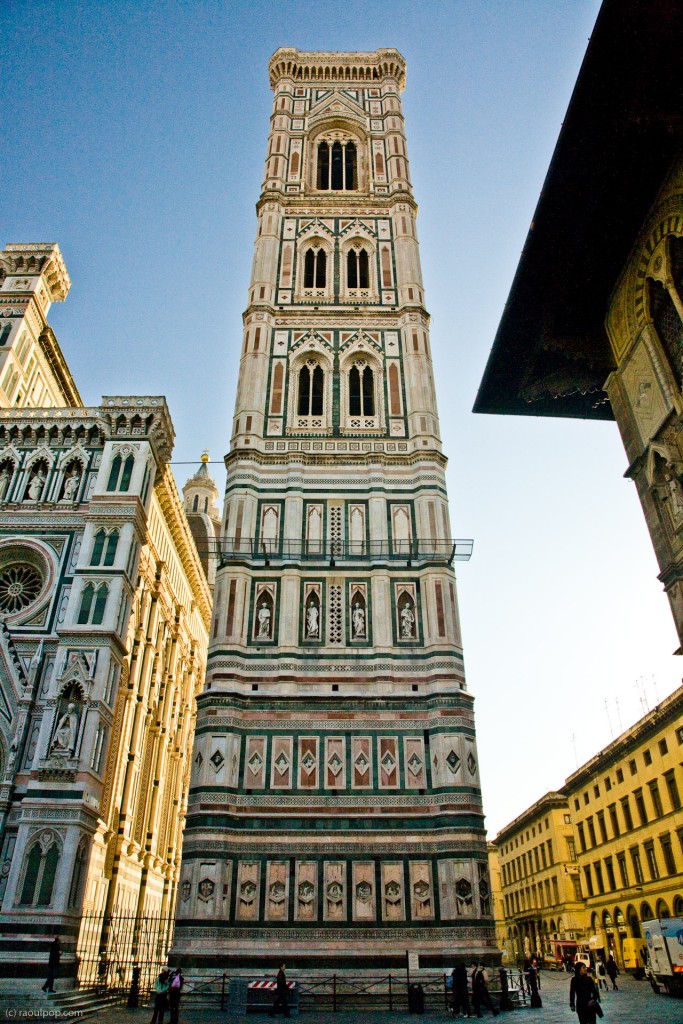
Bell tower

Bronze doorway detail

Morning traffic

Il Duomo II

I highly recommend climbing to the top of either the Campanile or the Duomo, in the morning or in the late afternoon, when the sun casts long shadows on the city. The climb is long and exhausting, but you’ll be treated to some fantastic views of Florence.

Climbing the Campanile

Florence rooflines in early morning sunlight

Tuscan rooflines

Il Duomo

Il Duomo III

After that, we made our way to the Palazzo Vecchio and the Ponte Vecchio.
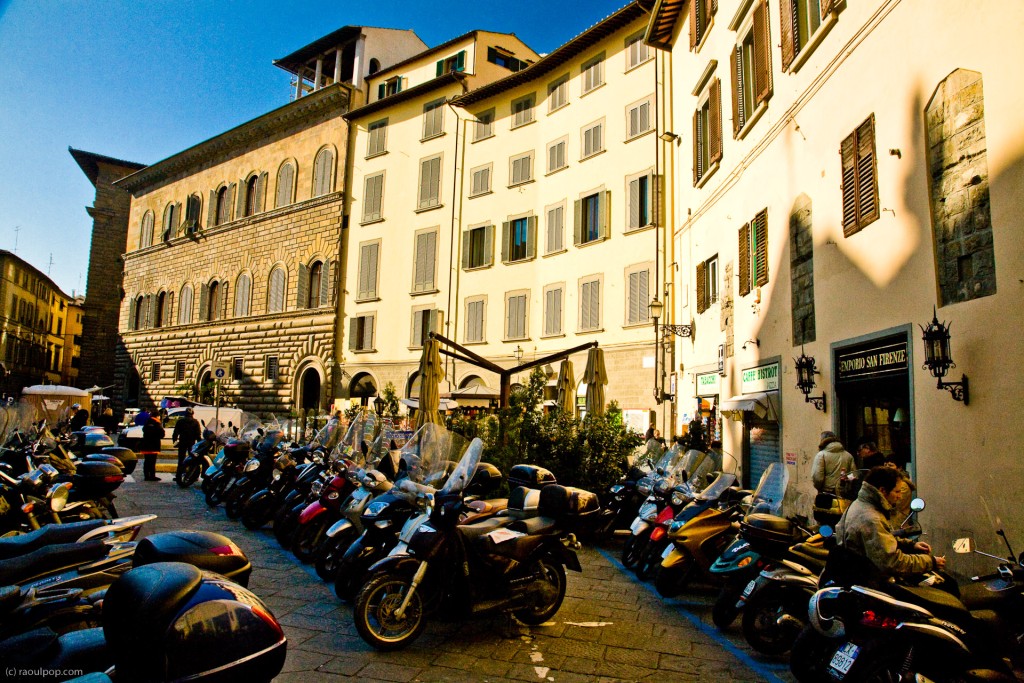
Scooter city II

Huddle

Piazza della Signoria II

No Fakes, Thanks

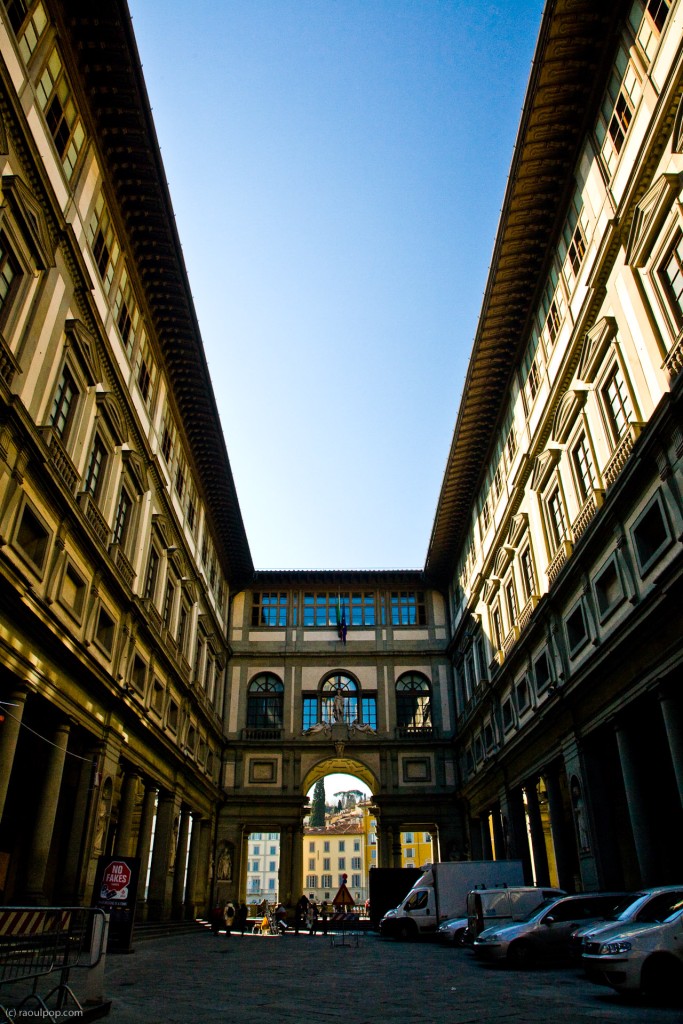
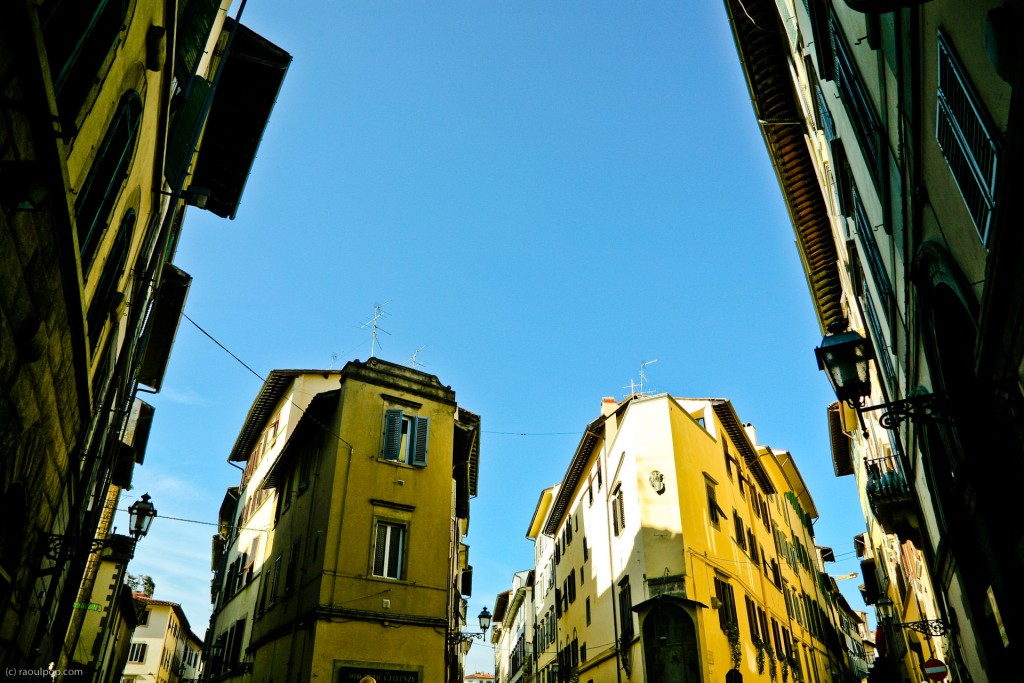
Narrow slit of sky

Didn't I see this in a movie somewhere?

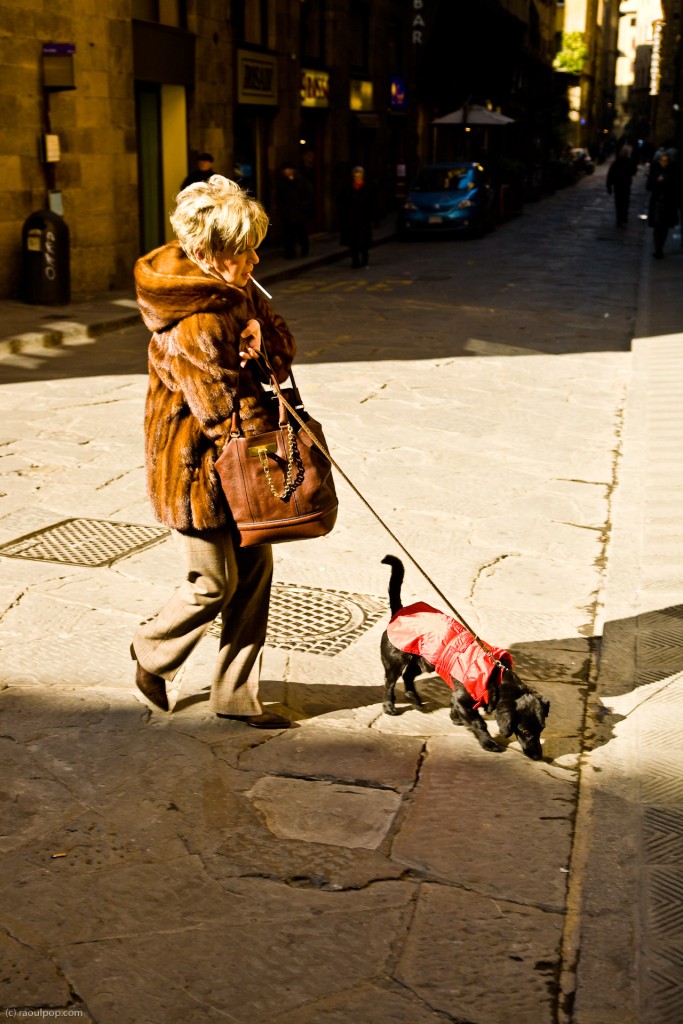
Old lady walking her pooch

We crossed the old bridge then climbed up to the Palazzo Pitti with its hilltop gardens and amazing views of Florence and the surrounding areas, then came back down and slowly made our way back across the Arno to the railway station and our car. Venice was next on our list, but we had to drive a good while till we got there and find a hotel to sleep for the night.

Palazzo Pitti

Hilltop gardens

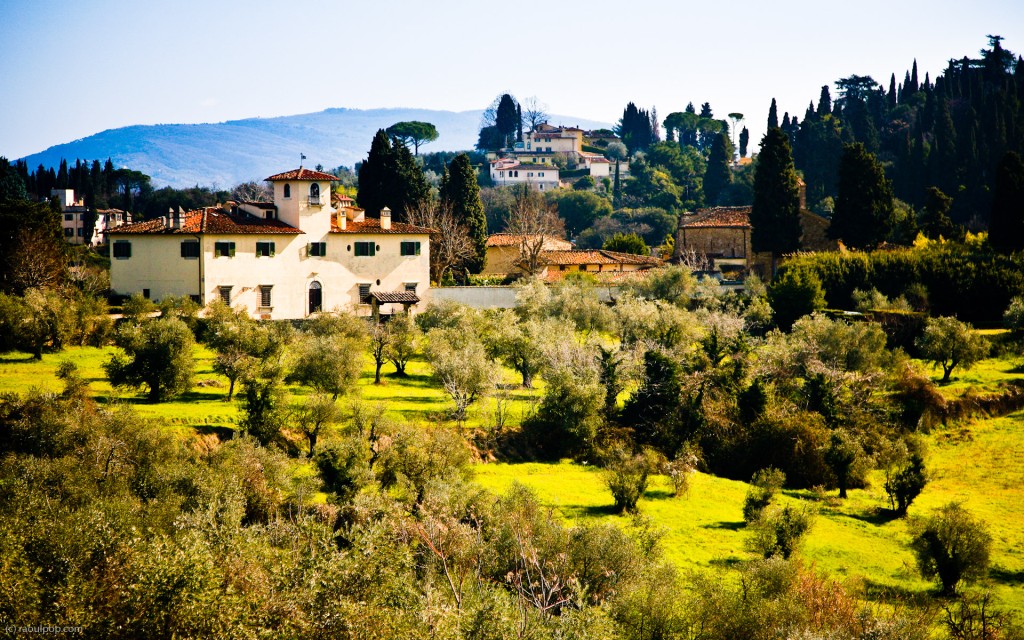
Tuscan villa

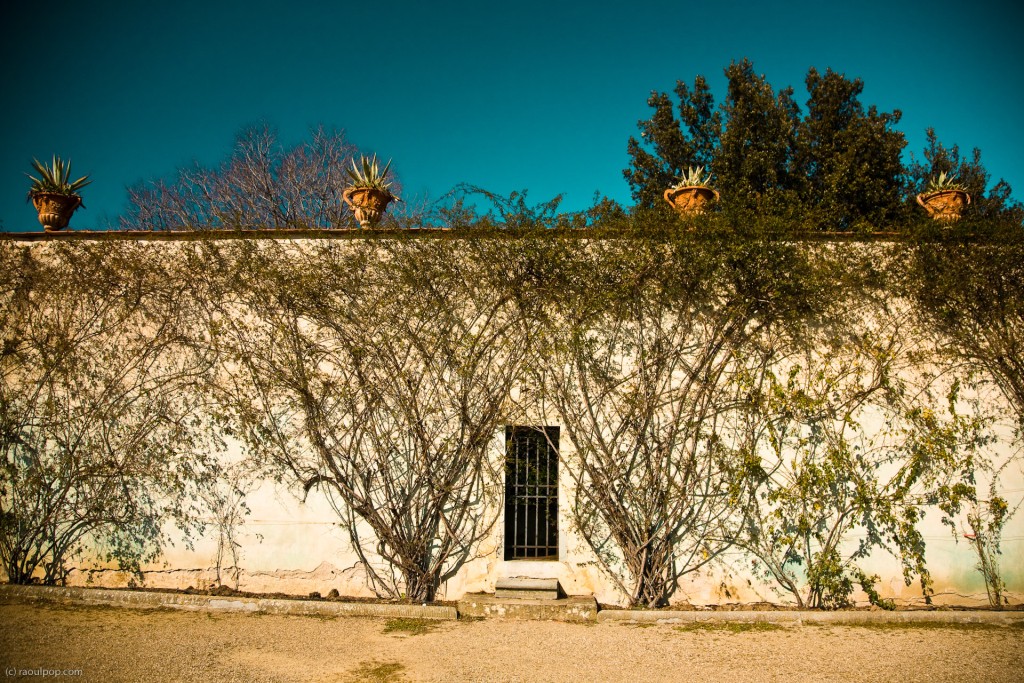
Walled and barred

Where the road divides

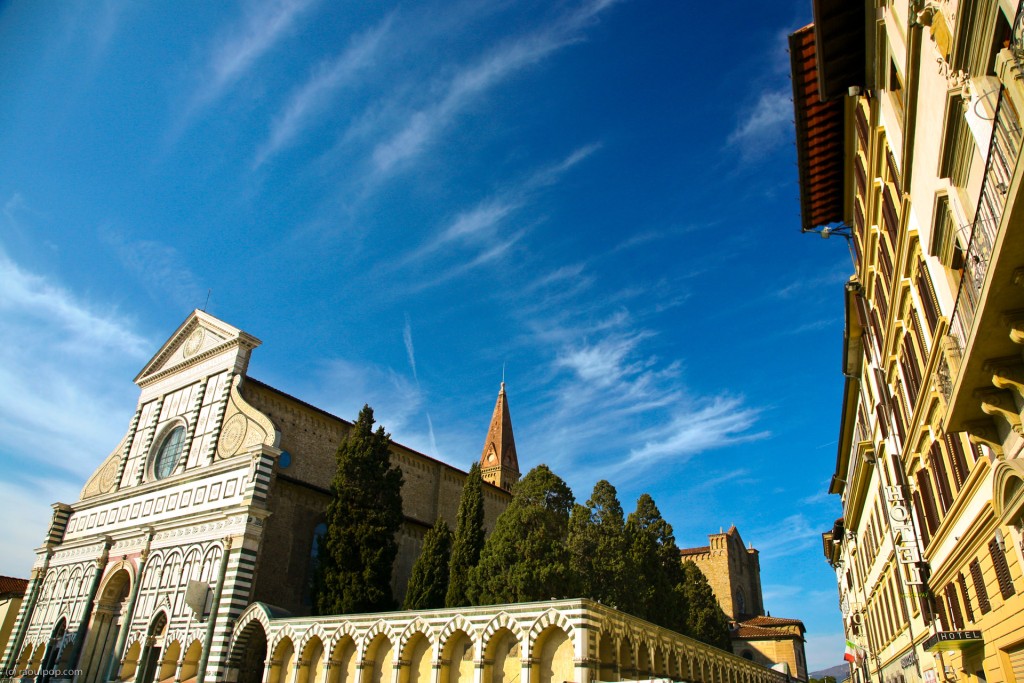
Santa Maria Novella

After making our way out of the city, we took the highway toward Venice, then exited somewhere near Modena and made our way toward Ferrara on country roads. It was near Modena that we saw the Lamborghini factory — actually, passed right by it — but it didn’t occur to us till after the fact. That was unfortunate, it would have been nice to take a tour.

We found a small, cozy and very clean hotel on the outskirts of Ferrara and slept there for the night.

Dusk in Emilia Romagna

All the photos you see here and more can be found at larger sizes in the Firenze album in my photo catalog.

Standard
Lists

Condensed Knowledge – March 29, 2009

This is a summary of articles I read and found interesting during this past week. The list is shared from among my feed subscriptions:

Standard
Reviews

Google Reader translates posts?

Yesterday morning, I added a new feed to my subscriptions in Google Reader, and noticed what I thought was a new feature: the ability to translate posts automatically, within GR. The feature was actually launched in November of last year, and it works through the normal drop-down menu. A new option was added there, and it looks like this:

Google Reader automatic post translation

Isn’t that cool? The translation technology used is the same one found in Google Translate. What’s also cool is how the languages are detected. I assume the translate option with GR uses the language setting saved in the GR settings or in the Google Account settings, and then it either uses the auto-detect capabilities built into Google Translate to figure out the language, or it looks at the language setting encoded within the feed itself.

Google Translate

It’s an incredibly useful feature, because it allows people to read blogs in other languages without worrying about copying and pasting the text into a separate translation tool. Just think, if I write a post in Romanian and publish it on my site, the auto-translation tool within GR will allow you to read it as if I’d written it in English! Granted, the translation is machine-generated so it won’t read fluently and might even miss a few meanings here and there, but it’s certainly better than nothing, which is what we had before.

I’d also like point out that if you’re reading articles on my site instead of the feed, I’ve recently added auto-translation capabilities to each post via the same Google Translate technology. You’ll have the option to translate any of my articles into several languages, by clicking on a particular language, right under any post title, as shown below. I hope this will prove useful to my readers from other countries.

Post header showing auto-translation capabilities

Standard
Thoughts

Are roadside trees a safety concern?

In Romania, many roadways are lined with trees. It could be walnut trees, or poplar trees, or fruit trees of some sort — the point is, they decorate each side of the road, standing guard, so to speak. I happen to think they enhance the beauty of the road, but I’ve heard talk of people who want to do away with them. They say they’re dangerous since drivers might run into them, as it happens every once in a while.

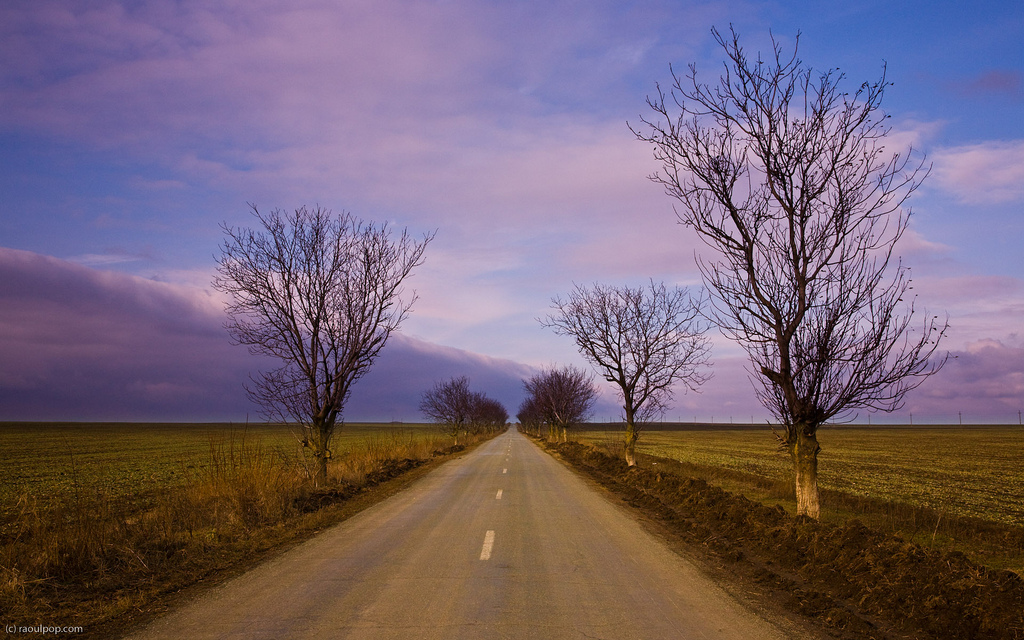
The road ahead

I recorded my own thoughts on the matter one day, while driving on a road in the province of Dobrogea. You can watch the video clip, or you can read on. My words and my voice both carry the same message.

I disagree. I don’t think the trees are dangerous. It’s the drivers who are dangerous. In the overwhelming majority of the cases where cars meet with trees, the drivers engaged in reckless maneuvers and were the very cause for the accident. Any trees that happened to be there simply drove that point home much more poignantly than some shrubs or an empty field ever could.

Thing is, Romanian roads, with very few exceptions, were built for low speeds. They were laid down during Communist times, when the car of choice (the only car, actually) was a Dacia — a relic of early 60s pseudo-design. It was underpowered, creaky — even when new — handled like a tractor hooked up to a blender engine, and stalled frequently in cold weather. If you managed to hit 100 km/h in those cars, it was definitely something. My grandparents had a Dacia 1310 model, and when that thing would get close to 100 km/h, it shook so badly I thought it’d fall apart.

Those were the cars that the road builders had in mind when they laid the roads and highways of Romania. The speed limit in the cities was and still is 40-50 km/h, and the speed limit outside the cities was 80-90 km/h. The latter has now been increased to 100 km/h. Problem is, people drive on these roads at 130-160 km/h or more. They just weren’t built for these speeds. The turns are steep, ungraded, sometimes unmarked, there are potholes most everywhere, and one often finds pebbles and mud on the roads from tractors that cross them to get to the fields, which makes braking on certain portions of the roads hazardous at best.

And yet, people just don’t get it. They think they’re somehow immune to accidents, until they lose control and run into a tree, often with disastrous consequences. Are the trees guilty? No. They simply point out the obvious — that the drivers themselves are to blame. If the trees weren’t there, I bet those same drivers would go even faster, knowing that if they ran off the road, they’d stop in some bales of hay or a wheat field. It would encourage even more irresponsible behavior.

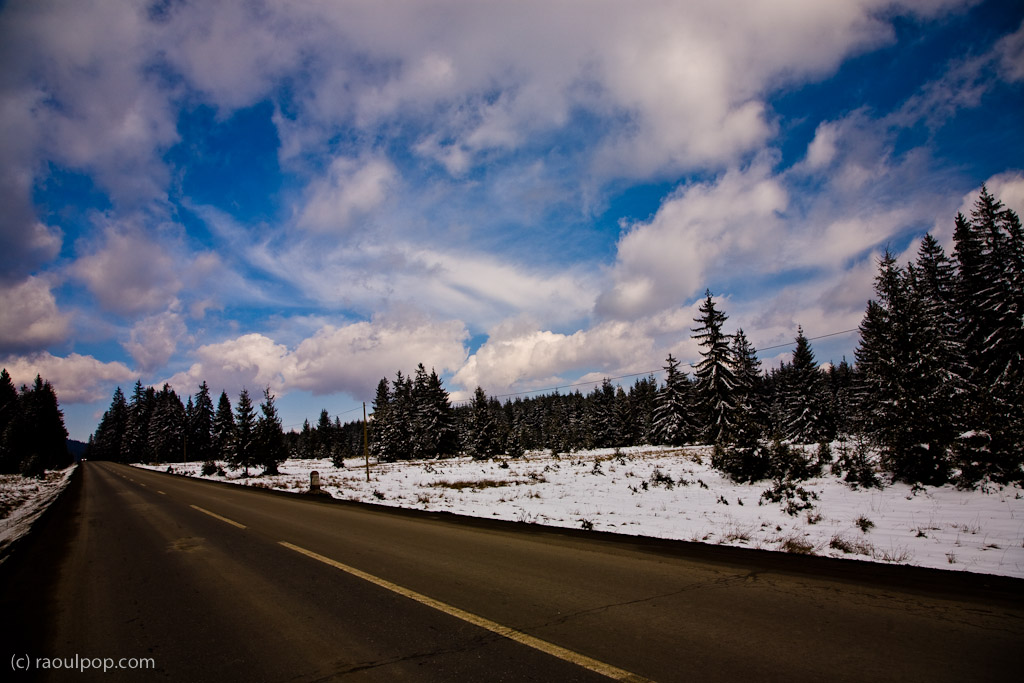
A mountain road

I like the trees. Let them stay where they are.

Standard
Places

Barcelona in 1908

Barcelona in 1908


I love the way this video was done.

Standard