Exercise

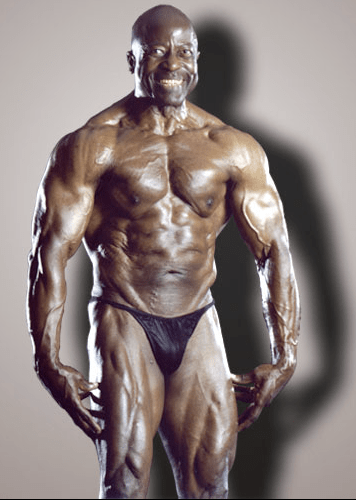
This is how you can look at 72

Meet Jim Morris, a 72-year old California man, who has been working out every day for most of his life and has won many bodybuilding competitions. He does it because he loves it. There’s a video of him working out on YouTube, originally broadcast one one of the local TV stations where he lives. The photo you see below is him at age 71, about a year ago.

Jim Morris 1

You can read more about his life and dedication to the sport of bodybuilding on his website. He is a personal trainer, and has helped many people get fit over the years, starting in the early 1950s. His diet is also something special. He only eats nuts, fruits, beans and vegetables.

Can it be done by anyone? I think so. You just need the inspiration, which Jim Morris has just provided, and the drive, which you must work up yourself. I think it’s worth it. Do you?

Images used courtesy of Jim Morris.

Standard
Exercise

Flabbier by the day

I used to smirk when I heard the excuses I make now. I used to feel superior. What me, ever get flabby? That’s for losers who can’t find the time to visit the gym, right? Well, here I am, thirty, and getting flabby. Sure, you can’t see it yet. If you saw me, you’d say I still look fit or even thin. But that’s not the picture I see, since I’m privy to more revealing details…

It’s ironic, finding myself in the same situation as the people I used to deride. I went to the gym regularly, obsessively, one could say, from the start of college to my mid-twenties. It was easy. I was driven to get big, and I got big. I wanted strength and muscles, and I got them. Then, complacency set in. That, and the fact that I got tired of homosexuals trying to pick me up during my workouts… I tell you, those were traumatic experiences for me, because I started to associate the gym with being harassed by homosexuals, and how much fun are workouts going to be when that happens? But let me focus on the things I could have changed instead.

About 25, I got a job as a director of IT at a hospital. The responsibilities were huge, and given my young age, the pressure was on to deliver results. I stopped working out as I worked long and longer hours. When I did manage to go to the gym, my mind was on other things. My workouts were sporadic. And as we all know, consistency is key to most things in life, including exercise. I couldn’t exercise consistently, and a trip to the gym here and there wasn’t going to cut it. I’m a naturally thin person, so my muscle mass kept dropping, along with my weight. I’m now somewhere between 155-165 lbs (haven’t weighed myself in a while), and this seems to be my natural weight. My body tends to stay there no matter what I do. At 21, I was 195 lbs at 7% body fat. At 18, I was 135 lbs at 4% body fat. Yes, that’s a big weight difference. No, I did not take steroids. I did eat like a horse though, and worked out a whole lot.

Given that I exercised regularly for such a long time, my body stayed together and looking good for a good while after I stopped. I swam in high school and worked out regularly for seven years, almost every day, so I was in great shape. For the sake of those numerous workouts, I managed to get through the two years in my stressful IT job without showing much damage. Then, I had another computer job for a couple of years, implementing a complex new system for a university. Even though my office was right next to the gym, and even though there were no homosexuals to harass me there, I couldn’t bring myself to go regularly. I always found excuses, usually work-related.

So here I am today, in another computer job full of responsibilities, having turned thirty some months ago, and getting flabbier by the day. After five years of practically neglecting my body, it’s starting to show. It’s amazing I’ve lasted this long, and it only goes to show how resilient the human body really is — but I can see it won’t work anymore. My bones are starting to make cracking sounds when I get up or exert myself. Physical effort tires me out. If I go up two flights of stairs, my breathing will noticeably increase. I get a lot more headaches nowadays. If I don’t consciously tense up my abs, my stomach bulges outwards, just enough to scare my wife. When I sit down, I can grab the fat layer on my abs in my hand. I’m starting to get love handles, and no, there’s nothing love-ly about them. Instead of pectorals, I now sport two soft placeholders, sad reminders of what used to be there. My shoulders have rounded out and my biceps, once the size of baseballs, have turned into golf balls. My strong back muscles, once able to squat and deadlift hundreds of pounds, have now flattened out and gained the consistency and firmness of sponges. My quadriceps, once rock hard all the time, are now soft, and jiggle like jello when I walk. I can feel them doing that, and it’s really sad. I’m ashamed of my calves once more. And of course — the most telling sign — when I wave my hand, what used to be my triceps now flips and flops worse than some current-day politicians. It’s really depressing, so I won’t go on.

Here’s how my typical day goes, and I’m sure it’s like this for many, many people. I get up from bed, where I’ve been lying down, and sit down to have breakfast. Then I sit in the car on the way to work, where I sit in my chair for 8-9 hours, only to walk out and sit in my car on the way home, where I sit down for dinner and sit at my desk for another 3-4 hours, working on consulting and personal projects. When my wife and I relax or visit with friends, we sit on couches. During the weekends, most of our time is spent sitting in church on Saturdays, or at home, with friends, at the movies, in restaurants, etc. There’s always something to do, but most of the time, it involves sitting. And it’s really easy to make excuses for not exercising. After all, there’s always something pressing: a deadline, an email, a project that needs finishing, a movie we’ve really been meaning to see, fatigue from overwork, malaise, etc. The reasons keep coming, they never stop, and that’s just it. We need to stop them! I need to put a stop to them! Because if I don’t, life will go on, and I’ll get flabbier and flabbier, till pretty soon, I’ll be a sorry shadow of what I once was, worn out and exhausted, dysmorphic, continually making excuses for something I could have changed a long time ago.

The point is, I did it to myself. Outside of a couple of things I had no control over, I am responsible for this. And I’m also responsible for turning things around. I can do it, but I need to stop making excuses.

As I write this, my sorry substitutes for pectorals and triceps are sore from a workout I did last night. My abs are still sore from a workout I did two days ago. Yes, it’s sad that it’s taking so long for my muscles to recover, but that’s a hole I dug for myself. I made a promise last night that I’m not going to let myself slip into pudginess and dysmorphism, and by golly, I’m going to keep it! Say it with me people, it’s not cool to be flab-ulous! 🙂 From now on, I’ll push work and personal pursuits aside for the sake of exercise.

The truth is, and it’s taken me a while to realize this, life gets busier as we get older. And if we don’t make time for exercise, if we don’t consider it as important as sleep, food and water, we’ll never be able to do it regularly. And when we don’t do it regularly, we get flabby, fat, overweight, obese, etc.

I’ll post updates from time to time on my progress. And if this inspires any of you out there in the same boat as me to start exercising, that’ll be wonderful!

Standard
Exercise, How To

Starting a vegan diet

First, if you are indeed motivated to go vegan, I want to congratulate you, and to let you know that the advantages are incredible. But… going on a vegan diet could be a very drastic step for anybody, especially if they’re eating the usual American fare: red meat, fries, cola and coffee. You will experience significant withdrawal symptoms, even if you are now a vegetarian. You will definitely crave all of your old favorites, and there will be plenty of times when you’ll ask yourself why. It’ll be up to you to let your mind overcome your senses, and to choose health over appetites.

No matter what we think of food, it is a drug. Although it may not come in test tubes, it is made up chemicals which trigger certain reactions in our body. Some of these chemicals are addictive. Sugar for example, is an addictive chemical. We humans will crave sugar if we get our body used to a certain quantity of it on a daily basis. Similarly, certain chemicals in red meat are also addictive. When the animals are killed, they release certain “fight or flight” hormones in their bloodstream, which quickly travel to the muscle cells that make up the meat. These chemicals remain there through the cooking process until those of us who still eat meat consume it. Once in our body, these hormones, which are still active, trigger certain sensations of well-being and raised awareness, which are then associated with meat-eating. And we probably all know about the addictive qualities of coffee…

In a similar manner, although not as obtrusively, all of the food we eat either gets associated with positive or negative feelings. That is why we like certain foods. And we don’t even have to like them to experience withdrawal symptoms, we just have to be used to eating them. Their absence in our diet will make us miss them.

It is for these reasons that a great many people fail in their resolution to stay vegan, and revert to much less healthful lifestyles. Of course, there are other, secondary reasons, such as convenience (you can get a burger and a cola pretty much anywhere, but it’s much harder to find good vegan food) or health problems caused by a lack of planning in their diets.

Being a vegan by definition means eating a variety of vegan foods: vegetables, fruits and legumes. There are certain vitamins or minerals that only certain foods can provide, and if one sticks to the obvious lettuce and tomatoes and the hardy beans and potatoes and perhaps a few apples and bananas here and there, they’re going to run into serious health problems. While proper planning in a vegan diet will be treated in another article (and I’m not sure when I’ll get the chance to write it,) here I simply want to introduce the concept of dietary planning and make you aware of the dangers inherent in a lack of planning.

How does one become a vegan? Well, as you’ve already seen, one has to be fairly motivated, and the strongest motivator that one can have is the desire to stay healthy and live a long life. And given all of the health problems caused by meat and dairy-based diets, going and staying vegan is the only way to ensure that your body can function at its best.

What’s next after motivation? Putting your beliefs into practice. My advice is to take it slowly. It’s not going to be good for you to go vegan cold turkey, because you’ll quickly get discouraged and might revert back to your old lifestyle. Vegan food tastes very bland to a person who’s been eating meat. You’ll need to get your taste buds and mind accustomed to the taste of vegan food, and after a few months of eating it, you’ll finally discover the finer flavors and textures of it. You may even begin to like it. Please don’t think this sounds dreary. I don’t look forward to my meals as a bland experience, but you may. Just realize that your attitude will change, but it may take months.

So how do you do it? If you’re now eating meat, calculate how many times a week you eat it, and reduce the number of meat-containing meals, replacing those meals with either chicken or fish, or vegetarian meals. You may be inclined to drop meat completely out of your diet. Good for you! Do it, but stick in there. If you’ve switched to chicken or fish, continue on this diet for about 1-2 months, all the while reducing the number of times you eat chicken or fish per week and replacing those meals with vegetarian meals. After 2-3 months at the most, you should be a vegetarian. Sounds easy? It is, if you stick to my plan.

Now that you’re a full fledged vegetarian, start planning your diet. Make sure you include all of the veggies and fruits that you need in your diet. And if you’re still consuming milk and cheese and eggs, drop the American-made cheese as fast as you can. I’m referring to the non-organic American cheeses. They are one of the least healthy foods on this planet. They are made from the milk of cows treated with all sorts of hormones that will wreak havoc in your body. Also, as a rule, dry cheese is not very healthy. Wet cheese (feta cheese, cottage cheese, etc.) is okay. But be sure to get only organic cheeses.

Next, drop the eggs. If you like them, you may want to read about their high fat and cholesterol content, and about the hormones they use to grow the chickens. You may also want to think about the fact that eggs are really the placenta and embryo of the chicken. If you must have eggs, get the organic kind. Next, drop the milk. The non-organic milk is loaded with unhealthy hormones, and it actually causes cancer cells in your body to grow and develop into tumors, because the cows here in the States are treated with growth factors (certain chemicals which cause cellular growth). These chemicals accumulate in the milk, and they’re not destroyed by pasteurization. If you must have milk, get the organic kind.

You shouldn’t stay in the vegetarian phase too long, or you’ll get stuck there, midway. Make the move fast, within 1-2 months of becoming vegetarian. Start reading about the vegan diet, and start planning your move. Make sure you know where to buy all of the vegetables and fruits that you need at reasonable prices. Have everything ready, learn a few good dishes to get you through the first vegan week, and then take the plunge. Throw away any vestige of your old lifestyle: any stale meat in the freezer, any cheese or eggs that you might have around the house, any candy bars, any cookies or potato chips. Clean out your house, so nothing tempts you, then start being a vegan.

Now you’ll be in for a few rough weeks, or even months, as your mouth will water at the sight of old foods. Stay in there, and read about the dangers of eating the old foods. It’ll keep you motivated. Believe me, you will begin to love vegan food, and you will also feel disgust at the sight or smell of old food, because now you’ll know exactly what’s in it and why it smells and looks the way it does.

Standard
Exercise

Finding the right resolve for exercise

Exercise today is in bad shape. This is not because people are exercising too little, or because the general public’s perception of exercise is disdainful. We are being inundated with reasons to exercise these days. Virtually all magazines are full of large-type promises: a leaner waist, tighter abs, bigger arms, etc. The list goes on and on.

People’s approach to exercise today is very piecemeal. They focus on the trees instead of looking at the forest. Most every fitness article that I read mentions nothing about whole body workouts or gymnastics. Instead, they all give the “perfect” prescription for getting rid of fat in problem areas, or tightening/enlarging a specific muscle. Your body is not a machine. You cannot replace the spare tire around your waist by just working your abs. You cannot work on just specific parts and ignore the rest. You can focus on specific body parts, but you need to work your entire body.

What’s worse, the wrong reasons are offered for exercising. Have you looked at the headlines lately? “Have better sex”, “Have better orgasms”, “Impress the girls”, “Get the biceps that will turn eyes”, “Girls, get a tighter butt”, etc. Are those really the reasons that people should exercise? No!

Exercising simply to obtain those benefits is a short-sighted, egotistical approach that will only make it harder for you to have a positive body image. Exercising for these reasons will definitely enforce negative habits and cause you to obsess unnecessarily about things that are out of your control.

Imagine your kids are walking through the supermarket, and they stumble upon these magazines. Do you really want their impressionable minds to be stamped with these ideas?! You work hard enough trying to keep them on a good path in life, do you really want some profit-minded magazine editor making your life harder? Are these the goals that you would like them to strive for when they are exercising?

Here are the reasons for exercising on a regular basis:

  • Better health, even perfect health. Yes, this is an attainable goal! Good exercise coupled with a healthy diet and sleeping habits is the winning combination for perfect health. Without good health, we cannot lead normal lives. Our intellect is impaired and we cannot work and create at our best, our day to day activities have to be reduced, life is not enjoyed as much, personal relationships suffer enormously… I’m sure we can all think of many more problems that arise when we are not healthy.
  • A longer life. Yup, you’ll live much longer if you exercise on a regular basis. The statistics are all fairly conservative on the issue, but I can tell you that you’ll probably add 10 or more years to your life if you keep exercising till the day you die. Just think of all the people that have died in the prime of their life because they were overweight or simply did not exercise.
  • A faster, more powerful brain. Many research studies have talked about this lately. Exercise makes your mind work better. It’s a given. If you don’t believe me, try it out for yourself. Start an exercise program, and even after just one week, you’ll see a marked difference in the way you think and solve problems.
  • More physical strength. A balanced exercise program will increase your physical strength over time. Your strength can double, or even triple or quadruple depending on your current state.
  • A better posture. Exercise will make you stand up straighter, and will even help correct curvature issues of the spinal column such as scoliosis. Once the muscles in your back get stronger, and if you maintain good body posture at all times while exercising, mild to moderate scoliosis can be corrected largely or entirely. In addition to these benefits, people will give you more respect once you keep a straight body posture. It’s all in the body language. A person with slumped shoulders and a downturned head simply does not get as much respect as a person with correct body posture.
  • Increased flexibility. A good exercise program should make all of your muscles more flexible. Flexibility is the key to staying injury-free when we get older. It is because muscles aren’t flexible and don’t answer as fast that older people lose their balance and fall, breaking hips, legs and hands, sometimes even their necks.
  • Denser bone. Why should you care about this one? Because bones that are less dense are more likely to break. Older people get a disease called osteoporosis, where bones get less dense and as a result are brittle and break very easily. This disease is caused by age-related hormonal imbalances, but exercise can make their and your bones denser, because the effort of the movement not only stimulates your body to make the hormones necessary for bone health, but it also works the bones themselves, literally rejuvenating them. Blood once more circulates through them, and as they twist and turn with your muscles, they start once again to acquire the flexibility and density they possessed in your youth.

Now what do you think of exercise? I could come up with many more reasons, but these are the most important ones. And you will not get these benefits unless your exercise program is put together with them in mind. You will most certainly not get these if your workouts are motivated by a desire to turn heads or have better sex. Why? Because attitude is so important in any activity that we do. And when our attitude is selfish or it focuses on one shortsighted aspect instead of embracing the entire picture, our results suffer.

How then should we structure our exercise programs? Here are a few important guidelines:

  • You should take your entire body into consideration. I’m at the gym about 4-5 times a week, and I see people go there on a regular basis just to work on their abs, or just to work on their arms. I see people that just go there to run on the treadmills or just to use the stairmasters. That’s not the way to do it. An asymmetric approach will produce asymmetric results. People that run all the time may find that they still can’t get rid of the fat around their waists even though they run miles and miles every day. I see people who have indeed developed certain body parts very well, but others lag far behind. For example, their arms, especially their biceps, may be big, but their chest is small, and their legs are pencil thin. They not only put themselves in jeopardy because any one overdeveloped body part will cause imbalances in the rest of your body, but they also proliferate negative weightlifter stereotypes.
  • You should include a lot of stretching exercises in your workouts. As a rule, you should stretch before exercising, during your exercises, and after you are finished with your workout. Read these articles for some great stretching exercises.
  • You should not push your body too hard all the time. Don’t expect to set new personal records with every workout that you do. You will burn out, and that’s guaranteed. Instead, focus your efforts on maintaining good form in all your exercises, and on finishing all the sets that you planned to do. Personal records will come of themselves.
  • You should balance out your exercises. If you are a weightlifter, make sure your have days when you just stretch, run or swim. Plan ahead. Don’t do just one type of exercise all of the time. It may make your ego feel better, but your body will feel worse.

If you put the advice in this article into practice, I guarantee you that you will be pleasantly surprised. You will eventually receive all of the benefits mentioned here, and many more to boot. You may find that you have gotten rid of that spare fat around your waist, that you are indeed turning heads, and that your intimate relationships have improved, but these will be side effects. They should always be considered just side effects!

The main focus of all your exercises should be to maintain and increase your health. If you do this, all the other benefits will come as a nice bonus, as the icing on the cake. But your health should always come first. That should be your motivation, and that should be your goal.

Standard
Exercise

Low impact abdominal exercises

A quick list of low impact abdominal exercises.

  1. Lying Bicycle: Sit on the floor, and prop your back at a 45 degree angle with the floor by using your hands. Bend your back so your abs can tighten better. Hold your legs up off the floor, and start bicycling on an imaginary bike. Repeat until exhaustion.
  2. Ab Crunches: Sit down on the floor, and prop yourself up with your hands. Keep your knees bent at 45 degree angles and your feet planted on the floor. Tighten your abdominal muscles, and lower your upper body toward the floor while keeping your hands in the air next to your body. Use your abdominal muscles to lower your body, but do not allow your upper back and shoulders to touch the floor. Hold for 1-3 seconds, then bring your body back up until your hands can touch your legs. Do not rest in this position. Once your body is up, begin to lower it again. Repeat until exhaustion.
  3. Lying Leg Raises: Lie down on the floor, and rest your hands palms down next to your hips. Using your abdominal muscles, start to raise up both your legs off the floor. Keep the feet together, heel to heel. Raise them up until they make a 60 degree angle with the floor, or just before the point where you can hold them in the air without straining your abdominal muscles. Hold them there for 1-3 seconds, then lower them back down, but don’t let them hit the floor. Let them touch the floor ever so slightly, and lift them back up once again. Repeat until exhaustion.
  4. Twisting Ab Crunches: These are fun to do and they work your obliques, which are the muscles underneath your “love handles”. Use the same movement as for the Ab Crunches (described above), but with the following changes: (1) Instead of keeping your hands in the air, cross them on your chest, and (2) Instead of raising your trunk up in a straight curve, twist your trunk in alternate movements so one of your elbows is in line with the opposite knee. In other words, as you come up, twist your body to the left so your right elbow (your arms are cross, remember?) can almost touch your left knee. Lower your body and straighten it at the same time, then come back up and twist it to the right so your left elbow can almost touch your right knee. Repeat until exhaustion.
  5. Twisting Lying Bicycle: If you’re ready for a high intensity ab exercise, this is it. Combine the movements of the Twisting Ab Crunches and Lying Bicycle crunches into one. As you bicycle your legs, lift your trunk up and twist it so opposite elbows and knees touch. You can either cross your arms on your chest, or cross your fingers behind your head (but make sure you don’t pull on your neck!), and do this until exhaustion. When you’re done with this, you’ll be done with abs for the day, because you’ll be too tired to do any other exercises.
Standard