Reviews

The Flickr XP Uploader

For the past week, I’ve been using the Flickr XP Uploader to publish my photos, and I like it more than jUploadr. Since I add titles and keywords to all my photos in Lightroom, I like it when they are read and transferred automatically to the site when the photos get uploaded. For some reason, jUploadr always managed to lose my titles. It managed to transfer the keywords okay, but not the titles.

The Flickr XP Upload Tool

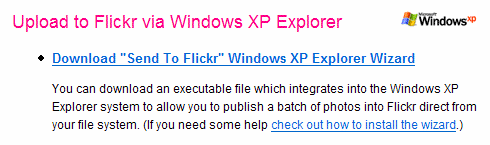
With the Flickr XP Uploader, everything gets transferred as it should, and it works with the built-in capability of Windows XP. It’s so easy! The install involves a simple registry entry. When I want to use it, I select the photos I want to transfer in Windows Explorer, click on Publish to Web, select Flickr, and upload. Within minutes, my photos are up on Flickr with the titles and keywords intact. I love the ease of use and the time savings. If you’re working on Windows XP, give it a try!

Standard
Reviews

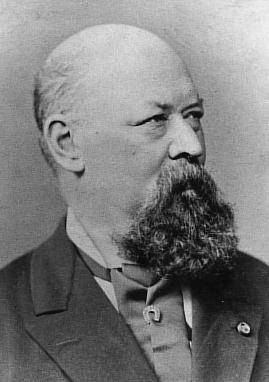
The music of Franz von Suppé

By coincidence, I heard two pieces written by Franz von SuppĂ© within the last 24 hours, and realized he’s always been one of my favorite composers, although I never knew his name. If you’ve watched cartoons, then you’ve definitely heard his Light Cavalry Overture, and chances are you’ve also heard his Jolly Robbers Overture. They’re both popular pieces, both are fast-paced, and both will make you smile when you hear them.

Franz von Suppé had to have been an optimistic, contented man to have written such beautiful music. There was no mistake in his choice of career. After all, he turned down both law and medicine for music. His father wanted him to study law in Padua, and his mother wanted him to study medicine in Vienna. I heard this on WETA yesterday, as they introduced his Light Cavalry Overture.

If you aren’t a fan of his music already, try it out. You’ll likely become a fan. And if you’re in the area, tune in to WETA. They have some pretty cool music, and the little biographic capsules they offer about composers are pretty nice as well.

Standard
Reviews

What the Duck on watermarks

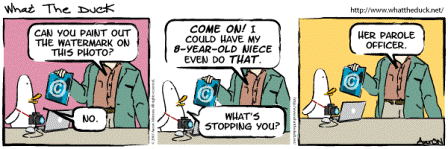
Aaron Johnson, the creator of What the Duck, has apparently seen this post of mine, where I talk about image theft. He’s just sent me an email to let me know of today’s WTD, which handles the issue of watermarks and image theft in that wonderful, funny way that I’ve come to love.

Here’s the strip in question, reproduced with Aaron’s permission. Click through to view it at full size on WTD. And if you haven’t already, bookmark the site or subscribe to the RSS feed. If you like photography, then you’ll love WTD.

WTD on watermarks and copyright

Standard
Reviews

Pirates of the Caribbean: At World's End (2007)

Pirates of the Caribbean - At World's End (2007)Saw Pirates of the Caribbean: At World’s End last night with Ligia. Superb follow-up to Dead Man’s Chest (2006). I loved the plot twists in this one, and thought the script was handled wonderfully to offer closure to the story points from the first and second movies in the series. It seemed to me there was a ton more action packed into this one than the first and even the second. And it was certainly not as dark as the second, which left me frustrated and with a headache. As expected, things definitely had the Jerry Bruckheimer signature: big music, big fights, and furious, charging action.

I loved all of the legends and tales that were weaved so nicely into this movie’s plot (Calypso, the maelstrom, the literal end of the world, Davy Jones’ locker). (For more information about the places discussed in the movie series, see the Geography of the Pirates of the Caribbean, but know that it contains spoilers.)

Now about the acting: superb, as we’ve come to expect from the previous two movies. Honestly, praises are to lavished all around. Everyone’s performances felt authentic. I was in awe of Geoffrey Rush’s portrayal of Barbossa this time around. That man is a born character actor! Orlando Bloom really grew into the role of Will Turner this time. It felt to me as if he finally inhabited the character. Kevin McNally’s performance as Mr. Gibbs also stood out as more forceful than in the other two movies.

There’s a surprise appearance by someone in this movie. I’ll give you a hint: he appears at Shipwreck Cove as a pirate, and he was supposedly an inspiration for Johnny Depp’s portrayal of Jack Sparrow… This may be a spoiler, but I have to point it out, or you may miss it: it looks like Jack Sparrow is the son of this pirate king. Watch closely for the dialogue between them!

The set designers and the editors are to be praised as well. Like in the first movie of the series, they did a wonderful job in making the sets inhabitable. When I watched it, things were so real I could imagine walking around the streets and places that were filmed. Beyond that, the entire movie came alive — it was believable and authentic. It met my litmus test: I didn’t notice the sets, and focused on the movie.

There was one thing I didn’t like: the makeup on the actors’ faces was very visible in some scenes, and it was a deep sort of yellow. It looked as if they had jaundice. I understand it’s really hard to deal with makeup in humid and wet environments, especially when people are sweating and action sequences are being shot, but still, it was disconcerting to look at their faces and see them yellow in one cut and normal in the next. This happened especially during scenes filmed on the ships.

The way is left open for another movie at the end. Don’t worry, this movie does NOT end in a cliffhanger, like the second one. I thought that was a particularly cruel move, and I’m glad to see it didn’t happen here. Everything that needs closure gets closure, while the gate is still left ajar. Beautiful ending, if you ask me. And that reminds me: do NOT leave the movie theater until ALL of the credits roll by. There is a surprise scene at the end (and I mean the END) of the movie. Don’t want to spoil it for you, but do NOT leave the theater, wait for it. It’s worth it!

One of the last scenes takes place between Will and Elizabeth. I’ll spoil it if I go into the details, but it’s very endearing, and involves a play on words — a wonderful metaphor about sincere love, and the act of giving someone your heart with the hope that they will guard it well.

More information:

Standard
Reviews

Flickr tightens up image security

Given my concern with image theft, I do not like to hear about Flickr hacks. A while back, a Flickr hack circulated around that allowed people to view an image’s full size even if the photographer didn’t allow it (provided the image was uploaded at high resolution.) The hack was based on Flickr’s standard URL structure for both pages and image file names, and allowed people to get at the original sizes in two ways. It was so easy to use, and the security hole was so big, that I was shocked Flickr didn’t take care of it as soon as the hack started to make the rounds.

It’s been a few months now, and I’m glad to say the hack no longer works. I’m not sure exactly when they fixed it. Since it’s no longer functional, I might as well tell you how it worked, and how they fixed it.

D

First, let’s look at a page’s URL structure. Take this photo of mine (reproduced above). The URL for the Medium size (the same size that gets displayed on the photo page) is:

http://flickr.com/photo_zoom.gne?id=511744735&size=m

Notice the last URL parameter: size=m. The URL for the Original size is the same, except for that last parameter, which changes to size=o. That makes the URL for the original photo size:

http://flickr.com/photo_zoom.gne?id=511744735&size=o

Thankfully, that no longer works. If the photographer disallows the availability of sizes larger than Medium (500px wide), then you get an error that says something like “This page is private…”

Second, they’ve randomized the actual file names. So although that image of mine is number 511744735, and it stands to reason that I would be able to access the file by typing in something like http://farm1.static.flickr.com/231/511744735_o.jpg, that’s just not the case. Each file name is made up of that sequential number, plus a random component made up of letters and numbers, plus the size indicator. So the actual path to the medium size of the image file is:

http://farm1.static.flickr.com/231/511744735_b873d33b12_m.jpg

This may lead you to think that if you can get that random component from the URLs of the smaller sizes, you can then apply the same URL structure to get at the larger size, but this is also not the case. It turns out that Flickr randomizes that middle part again for the original size. So although it stays the same for all sizes up to 1024×768, it’s different for the original. For example, the URL for the original size of that same photo is:

http://farm1.static.flickr.com/231/511744735_d3eb0edf2d_o.jpg

This means that even if you go to the trouble of getting the file name for one of the smaller sizes, you cannot guess the file name of the original photo, and this is great news for photographers worried about image theft.

While I’m writing about this, let me not forget about spaceball.gif, the transparent GIF file that gets placed over an image to discourage downloads. It can be circumvented by going to View >> Source and looking at the code to find the URL for the medium-size image file. It’s painful, but it can be done, and I understand there are some scripts that do it automatically. The cool thing is that after Flickr randomized the file names, it became next to impossible to guess the URL for a file’s original size. The best image size that someone can get is 1024×768, which might be enough for a 4×6 print, and can probably be blown up with special apps to a larger size, but still, it’s not the original.

Perhaps it would be even better to randomize the file name for the large size as well, so that it’s different from the smaller sizes and the original size. That would definitely take care of the problem. Still, this is a big step in the right direction.

Standard