Places

The John Douglass Brown House in Alexandria

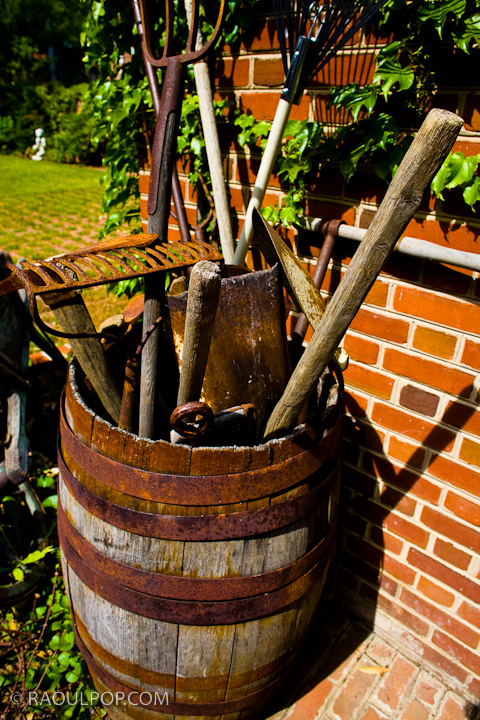
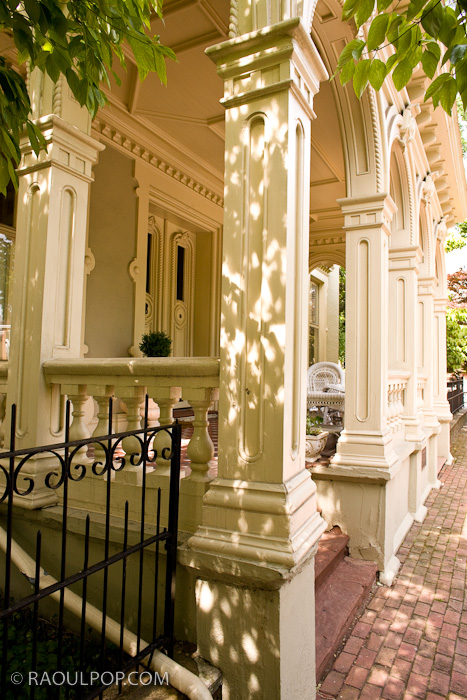
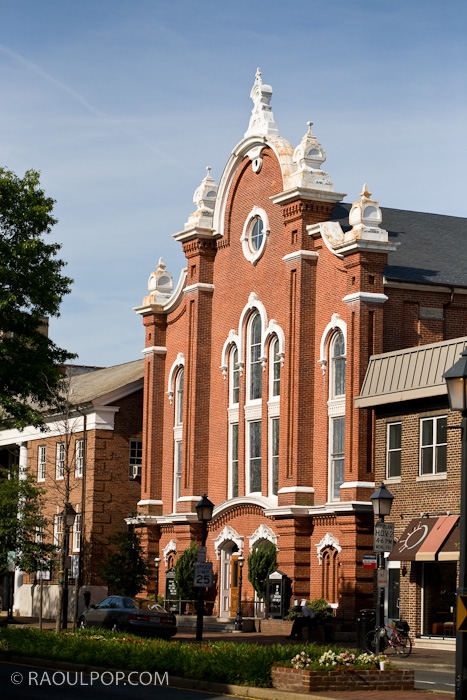
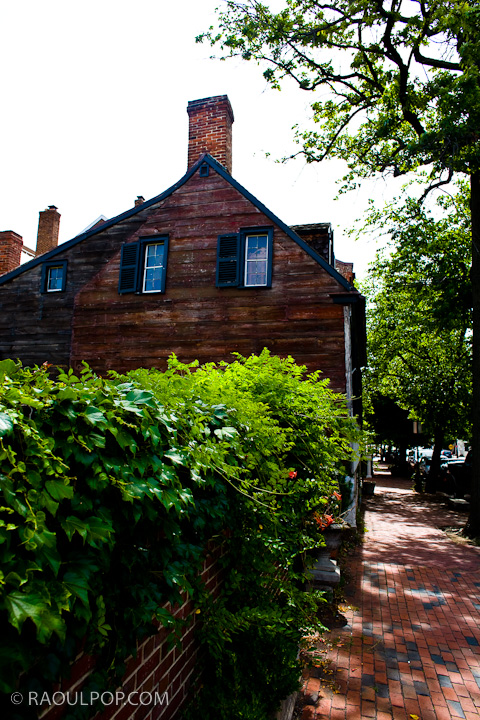
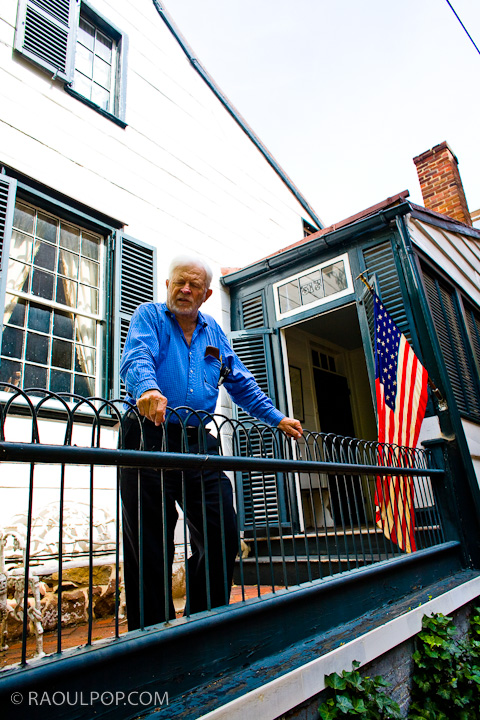
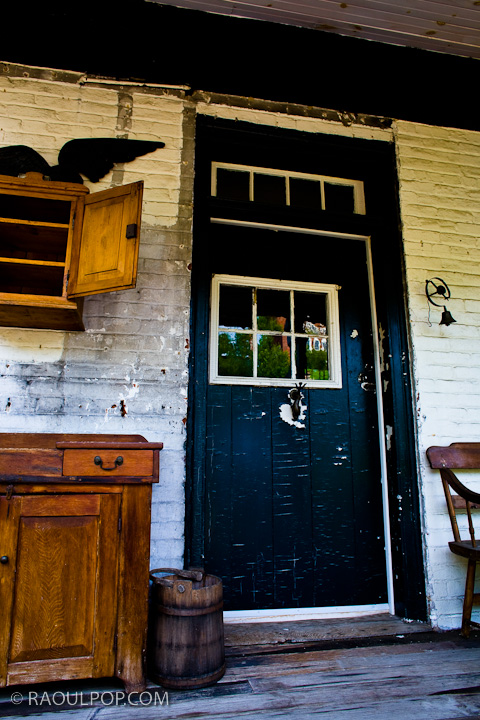
The John Douglass Brown House stands apart from the rest of the houses you see in Alexandria because of the choice of its building material: wood. (Most of the houses in that part of the town are brick.) The simple, rustic architecture talks of an early, more modest beginning as a farmhouse, not a townhome for a wealthy trader, like the rest of the places around it.
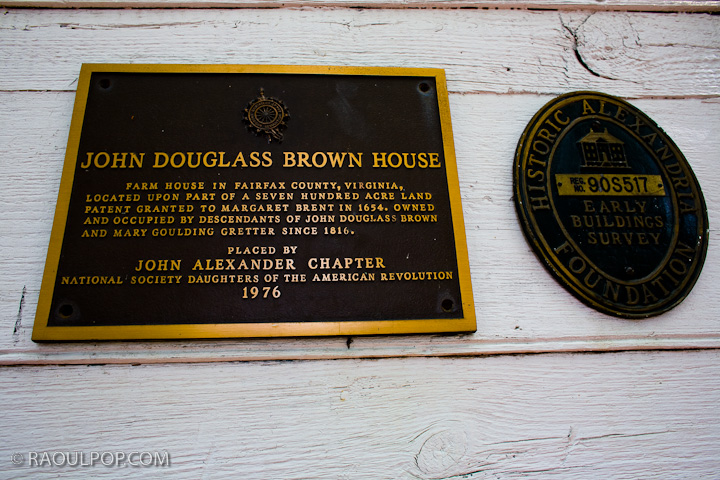
Built in the 1700s, the house was owned and occupied by the descendants of the John Douglass Brown and Mary Goulding Gretter from 1816 until the 1970s-80s. When we visited it (it’s not open to the public), not knowing anything about it, we realized something was different nonetheless, and began to look at its exterior more closely.
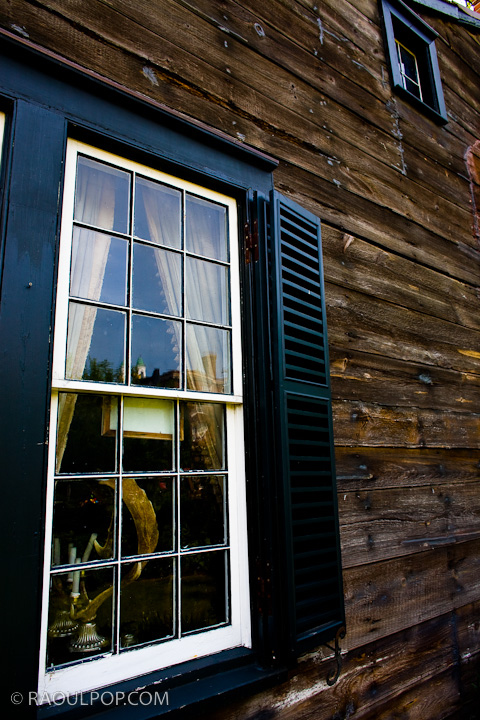
The neighbors came out, and we talked to them. They graciously offered to introduce us to its current owner, Mr. Charles J. Reeder, who couldn’t have been nicer. We got to talking, and asked if we could come inside the interior courtyard to photograph it. He allowed us in.
Continue reading

Standard
Thoughts

Two kittens on a stool

I did promise Sunday would be my cat day, right? I couldn’t keep that promise last week, as I was traveling, but I’m back this week with another post about our kittens.

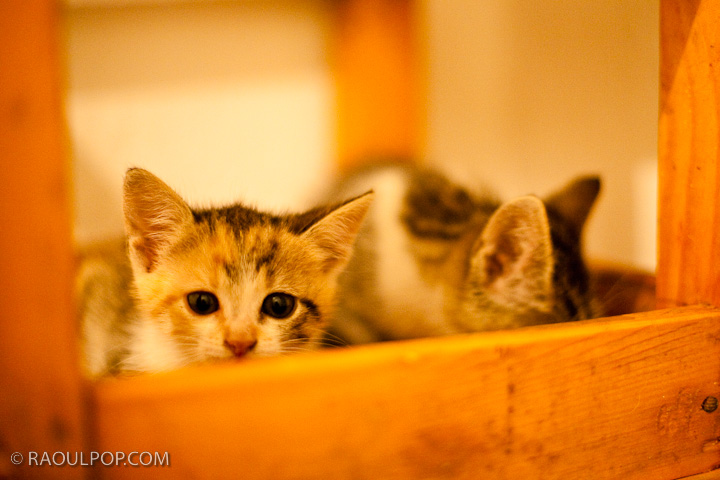
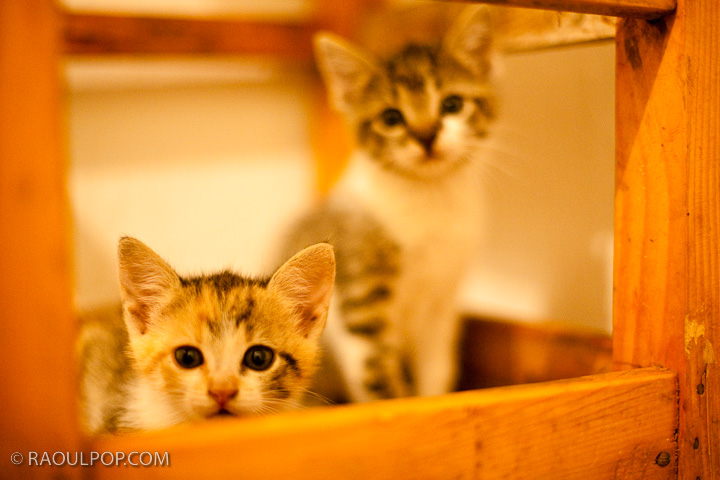
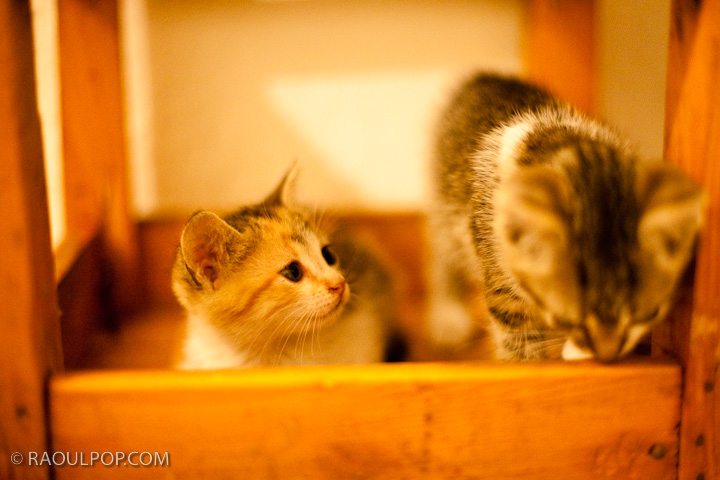
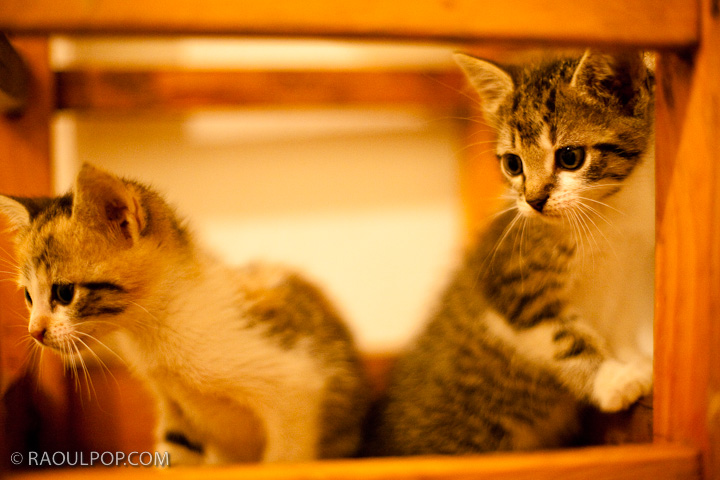
Here are Mitzi and Trixie, resting on an inverted stool one evening, when they were about two months old. They loved that chair! Even though they had their own box, laid with soft padding, they preferred to sleep in the seat of this stool.

The sequence of photographs you see here is chronological, recorded as they moved about in the chair, reacting to our movements and the sound of the camera’s shutter. Think of it as a very simple moving picture.

Continue reading

Standard
Places

Alexandria, Virginia

The city of Alexandria (Virginia, USA) began its life in 1749, as a port for Scottish and English merchants. Alexandria is located in Northern Virginia, across the Potomac River from southern Washington D.C. The city encompasses 15.75 square miles at an average elevation of 30 feet above sea level.

It was named in honor of John Alexander, the Scott who purchased the land in 1669, for 6,000 pounds of tobacco and cask, from Robert Howson, an English ship merchant. Howson had received it as a land grant from Sir William Berkeley, the Governor of Virginia, for bringing over 120 settlers from England.

The town was incorporated in 1779, and by that time it had become a bustling port, filled with brigs, schooners and ships who came there to trade in flour, hemp and tobacco. In 1789, the town was ceded to the Federal Government, to become part of the new District of Columbia. It was retroceded to Virginia in 1847. In 1852, it gained city status and a new charter.

By the time of the American Revolution, it was one of the principal colonial trading centers and ports. George Washington, America’s first president, maintained a town house in Alexandria, and was on its Board of Trustees. During the Civil War, it was occupied by the Union Army and was a major logistical supply centers for the federal army.

Continue reading

Standard
Thoughts

Identity theft and password security

A neat infographic that details how identity theft occurs and why password security fails when passwords aren’t secure enough. If you’ve ever wondered why you’re asked to choose both lowercase and uppercase letters in your password, know this: an eight-character lowercase password can be cracked in just two hours, but if you add just one uppercase character, it can take up to 200 years.

Identity Theft and Password Security

Standard
Video Log

The plaster bagworm

We found this tiny little striped bug in South Florida, USA. It had a silken brown cocoon which it dragged behind it. It was a tiny little larva with minuscule legs, and its cocoon had two entrances. It would hide inside, then emerge out of either end to begin moving along.

I’ve never seen a bug like it, and would love to know what it is. Updated 6/4/10: it’s a plaster bagworm, and that wasn’t its cocoon, but its home — and it’s a pest. Thanks Andrew!

Standard