Reviews

Hardware review: ioSafe Solo, the fireproof and waterproof drive

The folks from ioSafe gave me a 500 GB ioSafe Solo drive and asked if I could write about it. The short summary is this: it’s quite different from a regular external drive, and yes, it does exactly what it says it’s supposed to do — it is fireproof and waterproof.
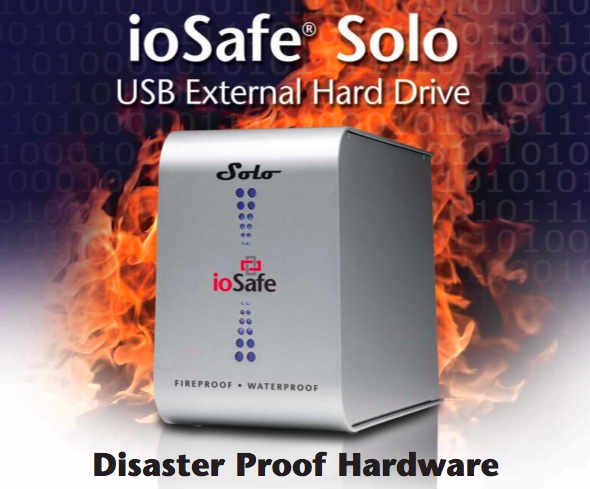
iosafe-fireproof

How is it different? For one thing, it’s big — much bigger than a regular external drive, much bigger than even a Drobo. Keep in mind this is a single-drive enclosure, while the Drobo is a four-drive enclosure. It’s also much heavier than a regular external hard drive. The discrepancy is explained solely by its unique purpose, which is to withstand fires and floods. I’ll explain below.
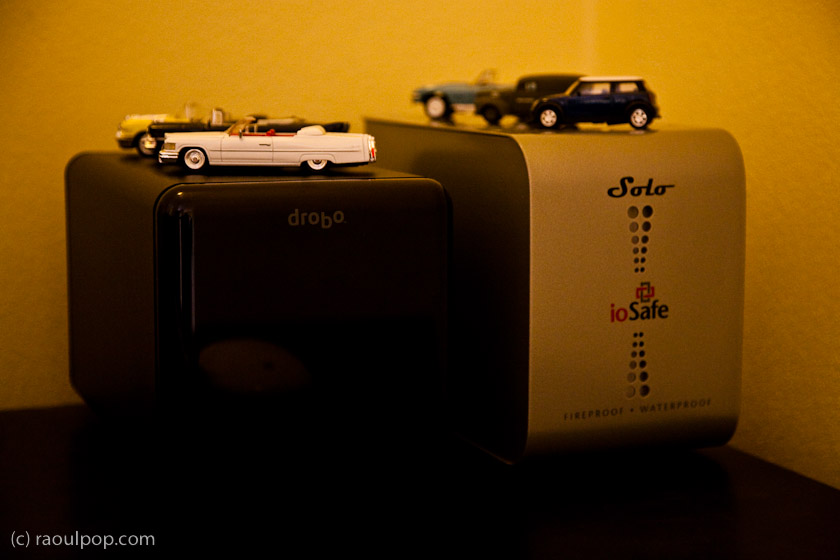
iosafe-solo-and-drobo-1

The ioSafe drive is made with technologies like the FloSafe air cooled vent, HydroSafe water barrier and DataCast fire safe — patented technologies which the folks at ioSafe invented.

One of my concerns with the drive, given its watertight and fireproof seals, was how it cools itself. Could it withstand regular use? Wouldn’t the drive overheat during extended use? The answer is no, thanks to the FloSafe vents, which stay open and allow air to circulate through the enclosure as long as the room temperature stays under 200° F. Once the ambient heat passes over that threshold, the vents close and seal automatically, protecting the drive inside. The closing mechanism doesn’t rely on electricity — it’s mechanically triggered, which means it’ll work whether or not the drive is plugged in.

The drive and circuits are packed inside a foam enclosure called the DataCast fire insulation. The DataCast formulation forms a chemical bond with water molecules that, at temperatures above 160° F, releases water vapor to limit the internal temperature of the hard drive. This enables the ioSafe data storage product to protect your data from heat damage while the unit is engulfed in fire. Typical fires last about 30 minutes and have temperatures of approximately 800° F to 1000° F. The ioSafe fire resistant data storage product has been tested up to UL 72 one-hour standards at 1700° F and the ASTM E119 fire curve standard. While the strength and duration of a fire cannot be predicted, the ioSafe drive has been over-engineered to withstand even the toughest fires, and that’s good news for your data.

When it comes to flood protection, the HydroSafe barrier blocks fresh or saltwater damage, including full immersion, while still allowing for the heat dissipation necessary for normal functioning. All ioSafe products are inherently flood resistant, whether or not the vents are open or closed, which is as it should be, since a flood isn’t normally associated with a temperature rise above 200° F.

The official specs of the ioSafe Solo drive which I reviewed say that it’s fireproof to 1550° F up to ½ hour and waterproof to 10 feet of fresh or saltwater up to 3 full days. They also say the drive comes with a 3-year warranty and a $1,000 Data Recovery Service, which works as follows (quoting from ioSafe website):

  1. The Company or its contracted partner will provide phone or email based support to assist in recovering the data, or
  2. The Company will pay for the disaster exposed product to be shipped back to the Company’s headquarters for data recovery. If data recovery is successful, a replacement product will be loaded with the original data and shipped back to the original user, or
  3. At the discretion of the Company, if the data recovery by the Company is not successful, the Company will pay up to the amount shown in the table below for the specific product to a third-party disk recovery service of the Company’s choice to extract the data. Any data extracted will be loaded on a replacement product and shipped back to the original user. The Company has the right to use a factory refurbished product as the replacement product.
Product Line U.S. Dollars per Disk
S2, R4 $5,000
3.5 Pilot, 3.5 Squadron $2,500
Solo External HDD $1,000

I know of no other company that offers a free data recovery service, particularly after a damaging incident such as a fire or a flood. ioSafe does it, proving their commitment to the safety of your data.

Now let’s talk about the other aspects of the drive, such as its looks, performance and noise levels.

The enclosure of the ioSafe Solo is made of solid sheet metal, particularly the front, top and bottom, which is made of a single piece of 1 mm thick steel. It’s built like a tank — as hard drives go, anyway — and is made to withstand hits and dents. The simplicity of the design — two leaves of sheet metal bent into simple curves that fit together like a dovetail joint — makes it appealing to someone who likes good, solid design.

ioSafe-Solo-front

Other than its size, the enclosure’s exterior isn’t fancy or flashy. The real beauty lies inside, in the fireproof and waterproof padding and seals. Other than a bit of branding and the blue LEDs on the front, the sides, top and bottom feature no adornments at all.
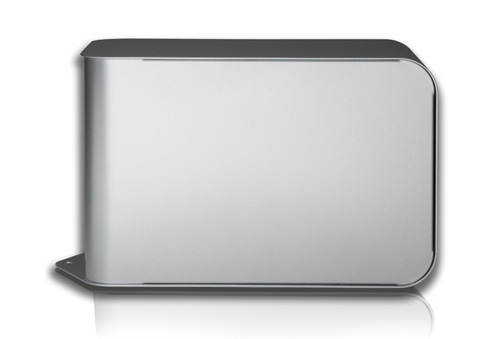
ioSafe-Solo-side

The back side features a lip with a punch hole that can be used to secure the drive physically to a flat surface, or with a security cable. The back of the drive has a power switch, the USB connector, the air grille through which the drive cools itself, the DC power port, and a metal plate with the drive’s serial number etched onto it.
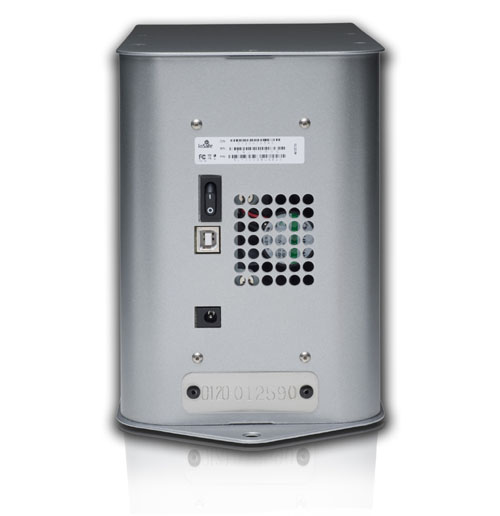
ioSafe-Solo-rear

Hardware noise is something I’m always concerned with. I prefer my hardware to be as quiet as possible. I compared the ioSafe drive with other external devices that I own, like the 1st generation Drobo, the 2nd generation Drobo, the WD My Book Studio Edition II, and the LaCie Mini. On an approximate loudness scale, it ranks below a 1st gen Drobo but above all the other devices, like the 2nd gen Drobo, the My Book Studio and the LaCie Mini. It’s the fan that’s the cause of the noise, not the hard drive itself. Given how much padding and sealing there is inside the enclosure, the fan has to work extra in order to cool it, so you’ll always hear its hum. The good thing is that it’s constant, so you tend to get used to it after a while.

The drive has a USB 2.0 interface, so you can expect typical USB 2.0 transfer speeds from it (it tops out at 480 Mbps). For example, I was able to copy 122.25 GB to the ioSafe Solo in 1 hour and 50 minutes, which is par, or perhaps even a little faster, than my prior experiences with USB 2.0 transfers.

Beside the size of the drive, which is considerable but appropriate given its specifications and purpose (5.0″W x 7.1″H x 11.0″L), there’s also its weight to consider (15 lbs). This is a heavy drive. It’s not something you can lug around in a backpack. It’s something that’s meant to be stationary and to withstand fires and floods. It is serious business. I wouldn’t even call the ioSafe Solo a drive you can keep on your desktop. Yes, you can do that, but it’s probably better to keep it bolted to the floor or to your wall, or even better, plug it into a USB to Ethernet device and keep it away from your desk, somewhere in the basement, in the attic, or in a closet. Turn it on every once in a while, copy your vital data to it, then turn it off and forget about it, until you have a disaster. Then dig it out, retrieve your data, and pat yourself on the back for having bought it.

The ioSafe Solo isn’t the only device made by ioSafe. They have a whole range of drives that cater to consumers and businesses alike. They have internal drives, made to fit inside existing computers, that use the same fire and water-resistant technology. They’re 2.5″ drives fitted inside custom 3.5″ enclosures with SATA interfaces. They also have rack-mountable RAID systems configured as RAID 1 (mirrors) and NAS devices that can be configured as RAID 0/1/5.

I initially planned to put the review unit through fire and water in order to test it, but I honestly don’t know what new things I could add to what people have already done to it in order to prove its capabilities. Take this video from the Wall Street Journal for example, where ioSafe’s CEO dunked the drive in a pool, then baked it in an oven to show the data stays safe.

Another reviewer barbecued the ioSafe Solo, only to find out the data stayed safe, as expected. On a local TV station in California, where ioSafe is headquartered, Robb Moore, ioSafe’s CEO, went on camera to torch yet another product — their 3.5″ internal drive that uses the same technology. The result, once more, was the expected one. The data stayed safe even though the drive was put through 30 minutes of 1200° F fire.

Finally, Gear Diary ran the ultimate fire test on the ioSafe Solo. They put it inside a burning car, left it in there for 10-15 minutes, hosed it down with professional fire equipment, then disassembled it to see if the data stayed safe. It did.

Like I said, I don’t know what I could add by torching and dunking my review unit, when it’s already been done much better by others. Gear Diary’s test in a burning car was the ultimate proof for me. That was a real test under real life conditions, and the drive proved that it could withstand it.

If you’d like to buy the Solo, you can do so directly from ioSafe or from Amazon.

After the 49 Fire that destroyed 63 homes in Auburn, CA on 8/30, ioSafe CEO Robb Moore offered free ioSafe Solo drives to the fire victims.

If you’d like to win your very own ioSafe Solo drive, then join ioSafe’s Facebook page. As soon as they have 5,000 fans, they’ll hold a drawing and award one of them the drive.

Images used courtesy of ioSafe.

Standard
Lists

Condensed Knowledge – September 20, 2009

This is a summary of articles I read and found interesting during this past week. The list is shared from among my feed subscriptions. I only share a certain number of articles in each of these posts, so if you'd like to see more, visit my full Google Shared Items list.

Standard
Thoughts

How about a real Apple TV (an Apple tablet)?

Ligia and I were watching cartoons in bed this morning, on my laptop, and I realized Apple still hasn’t capitalized on the opportunity to create a real Apple TV. Here I was, after having ejected my external drives, disconnected the laptop from its peripherals, taken it off its stand and put it on our bed, when all of this could be handled very simply with a larger iPod — a combination iPod/Apple TV/Apple Cinema Display.

Try as I might, I just can’t watch movies or video content on my iPod. The screen is too small, even though I have an iPod touch. It has no speakers, so I have to use headphones. Clearly, Apple has the technological know-how to put together a really nice Apple TV that’s not yet another box tethered to a TV in the living room, but a display with integrated speakers and the circuitry that allows it to get on my network and access media from various drives, or to play the media I sync to it through iTunes, or to download media from the Internet. And yet, it’s content to charge people for small fry (iPods, hamstrung Apple TVs, etc.) when it comes to personal entertainment devices.

Just think, with a nice LED screen of about 13-17 inches, a touch screen, plenty of onboard storage, a good battery, WiFi, Bluetooth, and speakers, they could have an amazing device that I could take with me wherever I decide to sit in the house or in the yard. I could take it in bed and watch movies without draining my already tired laptop battery, I could take it outside on the patio at night to watch stuff there, etc.

Apple already has all of this technology. Why don’t they put it together?

They have the LED displays already, in their laptops and in their Cinema line.

led-cinema-display

They have the touch screen capabilities, from the iPod and iPhone.

ipod-touch

They have the media playback capabilities and other circuitry from the Apple TV.

Apple TV

They have the amazing batteries from the MacBook Pro line.

new-apple-batteries

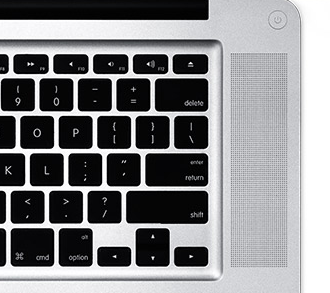
The speakers are also from the MacBook Pro line, and they’re some of the best small speakers on the market, if not the best.

macbook-pro-speakers

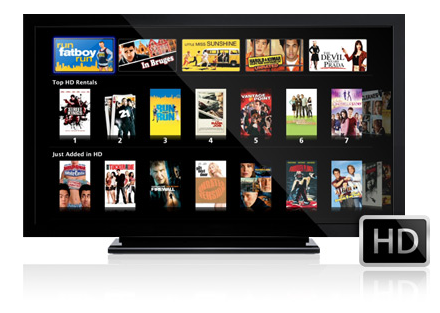
People talk about an iTablet, but I’m not really sold on the idea. Yes, if you put all of these components together, you could have an iTablet, but what I want is a larger iPod, or rather a usable, untethered Apple TV with a nice, built-in display and decent battery life. It could look something like this (and no, this isn’t a rendering, it’s a screenshot from Apple’s own website).

itv

Take away the stand, and imagine a nice iPod-like bezel around it, so you can grab it in your hands and hold it. Perhaps it could have some sort of leg that folds out to let it stand on its own, too. This is what I’m looking for. An iPod I can actually watch, anywhere.

Images used courtesy of Apple.

Standard
Reviews

Camera preview: Canon PowerShot G11

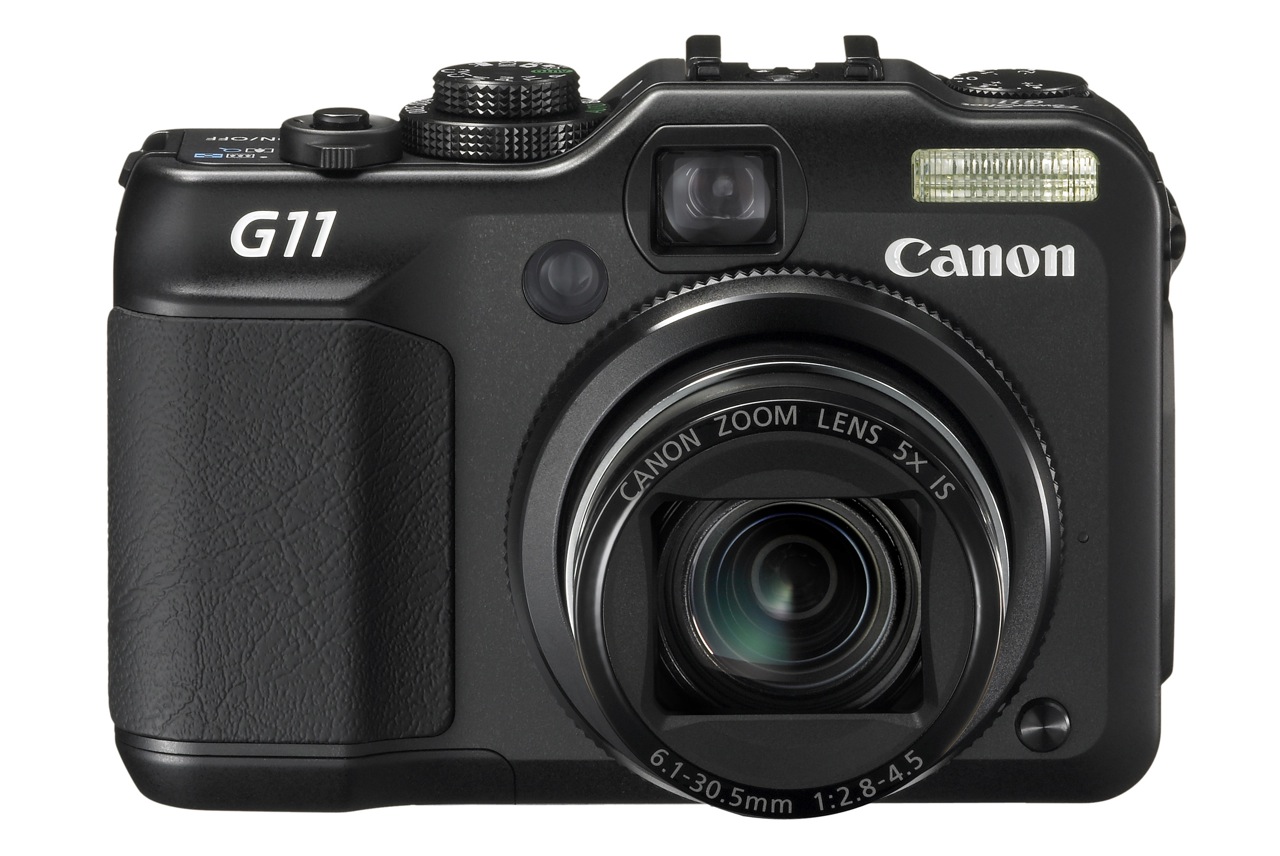
On August 19, Canon announced the launch of the new flagship PowerShot digital camera, the G11. Having shot extensively with a G10 this summer, I’m ambivalent about upgrading to the G11.

For one thing, I welcome the better low light capabilities. While the G10 showed some noise when shooting in low light, it was acceptable when I compared it with other non-DSLRs on the market. If the G11 improves on that, great.

But the G11 is no different from the G10 when it comes to video recording. It still only shoots SD video (480p, 30fps), when other comparable cameras on the market have long since moved to HD video (720p, 30fps). Even other PowerShot cameras from Canon, like the SX20 and the SD980 and SD940, which cost less than the G11, are able to shoot HD video (720p, 30fps). Why has Canon decided to hamstring the G11, unless perhaps they feel that, with its superior collection of features, it cuts into their HD video camera sales? (If that’s the case, then it’s a sorry excuse, because they’d be putting profits before customers.)

The G11 also has lower resolution than the G10 (10 megapixels instead of 14.7 megapixels). I’m no fan of gratuitous resolution, so I’m reserving my judgment on this until I get my hands on a G11. Canon says they did it to improve low light capabilities, and I believe them — if the low light claims prove to be accurate. There’s only so much resolution you can squeeze out of the same sensor size before noise becomes an issue, even at lower ISOs.

What I’d also like to see from the G11 is a better dpi setting. One of the main differences between DSLRs and consumer-grade digital cameras is the dpi setting of the images they output. A regular digital camera will output its images at 72 dpi, which is the equivalent of screen resolution, while most DSLRs output their images at 240 dpi. That’s why — unless you tinker with the dpi setting in an image editing program — you can get a larger print from a 10 megapixel DSLR image than you can from a 10 megapixel regular digital camera image. The Canon G10 and G11 output their images at 180 dpi. That’s pretty good compared to 72 dpi, but it’s still not 240 or 300 dpi. I would love to see the G11 give me 240 dpi, right out of the camera, without needing to change that setting in post-processing.

The G11 is also slightly more sluggish than the G10 when it comes to shooting speed (1.1 fps vs. 1.3 fps). It’s probably due to the extra computations it performs on each image, but one would think shooting speed would at least stay the same, if not increase, with each camera generation.

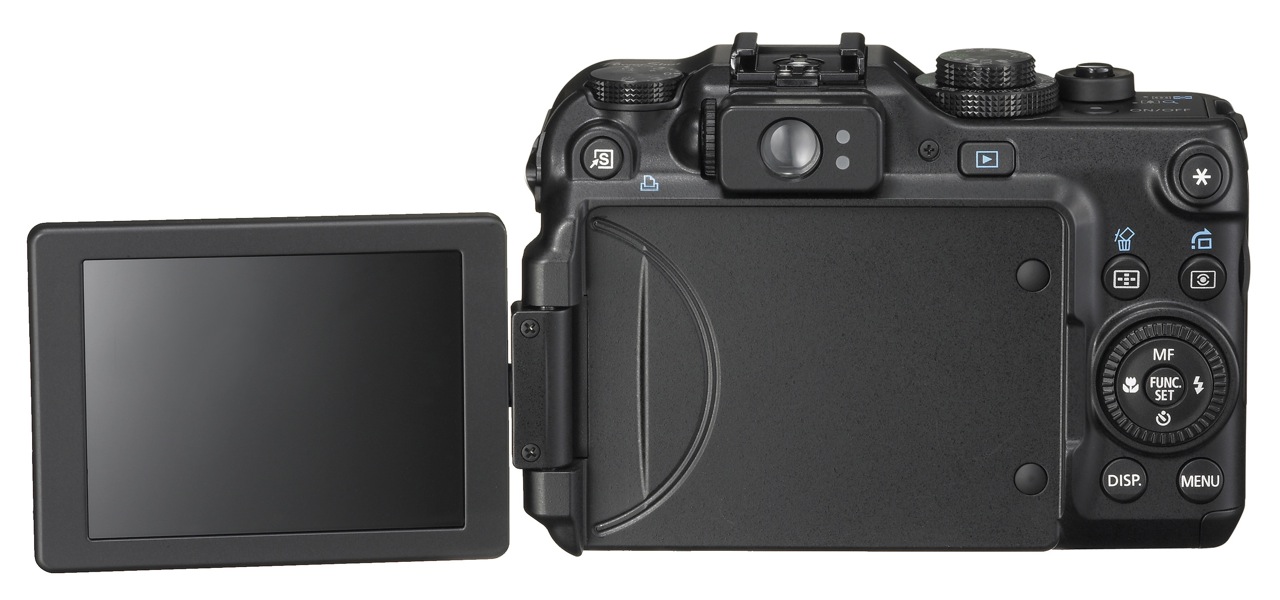
The G11 also has a smaller screen than the G10 (2.8 in vs. 3.0 in). I understand this is due to its nature (swivel vs. fixed), but having that larger screen on the G10 was really nice. Still, the swivel screen should allow for more creative angles, so that could count as a plus.

Battery life is also a bit of a downer. On the G10, the specs say the battery lasts for about 400 shots. In real life conditions, it last much less (about 200-300 shots, depending on how sparingly you use the optical zoom). On the G11, the specs say the battery life is about 390 shots, and is likely to be much less than that in real life conditions as well. Couldn’t Canon have used a different battery or done something to improve the battery life? After all, the display is slightly smaller as well, so that should take less juice to power up. Sure, the battery life is said to be markedly better when using the viewfinder, but have you tried using the viewfinder on either the G10 or the G11? It’s more like a fuzzy rangefinder. It’s terrible.

So there you have it. Not much to brag about when it comes to the G11. Nothing revolutionary when it comes to the upgrades, and let’s face it, not even something that I, along with many others, expected, like HD video. The better low light capabilities sound interesting, and if the camera delivers enough on that end to compensate for the decrease in resolution, the G11 may be worth your money. I did like the G10. It’s a great camera with many advanced capabilities. Let’s hope the G11 can live up to its predecessor.

If you’d like to buy the G11, you can do so from Amazon or B&H Photo.

Images used courtesy of Canon.

Standard
Thoughts

Is global warming a cyclical event?

While most agree that global warming is occurring, they do not agree on the root cause. Some say global warming is caused by man, mainly by CO2 emissions, while others say it is part of a larger picture of cyclical global warming and cooling events that have occurred throughout history. Unfortunately, the debate is mostly one-sided, with man-made global warming proponents getting most of the media coverage, and the cyclical global warming proponents ostracized and denigrated as false scientists.

A new salvo was launched recently against the man-made global warming side, with the publication of an article by Danish professor Henrik Svensmark, entitled “While the Sun Sleeps”. As the title alludes, Mr. Svensmark believes the sun shows reduced magnetic activity and is about to go into a period of hibernation, which means a period of global cooling will likely begin soon. The full translation of the article from Danish to English is available on Anthony Watts’ blog, and I encourage you to read it. Here’s a quote:

When the Sun is active, its magnetic field is better at shielding us against the cosmic rays coming from outer space, before they reach our planet. By regulating the Earth’s cloud cover, the Sun can turn the temperature up and down. High solar activity means fewer clouds and and a warmer world. Low solar activity and poorer shielding against cosmic rays result in increased cloud cover and hence a cooling. As the Sun’s magnetism doubled in strength during the 20th century, this natural mechanism may be responsible for a large part of global warming seen then.

That also explains why most climate scientists try to ignore this possibility. It does not favour their idea that the 20th century temperature rise was mainly due to human emissions of CO2. If the Sun provoked a significant part of warming in the 20th Century, then the contribution by CO2 must necessarily be smaller.”

As for me, I’m still on the fence about this, but I’m leaning toward what Svensmark says. It makes more sense to me. While there’s little doubt that the Earth has been warming for the past few decades, that weather patterns are screwed up, and that pollution and emissions are running rampant and must be reduced drastically or eliminated where possible, I’m still not sure we’re behind the global warming phenomenon.

What tilts the balance of my opinion further away from man-made global warming is the face being used for the campaign — that of Al Gore. Try as I might, I can’t stomach the guy. When I think about his claim to inventing the internets, and his electricity-chugging lifestyle (which goes in stark contrast to what he’s saying when he speaks publicly), and his face, which just isn’t the face of a man that should be trusted — I’m sorry, I just have to look for more proof before I believe what he’s got to say. I’m also still in shock that the man got a Nobel Prize for the stuff he talks about — after all, he’s little more than a pusher of carbon credits, which are dangerously close to a green, global Ponzi scheme in my book.

Who knows, I might be wrong about Al Gore — he may be genuine for all I know — and in that case, I hope the agenda he and his supporters are pushing goes through, but right now, I believe global warming is cyclical, and only time will tell for sure who’s right.

More importantly, I believe global pollution must be addressed regardless of who’s right and wrong on global warming. Our environment is on the verge of collapse due to all the crap we’ve been pouring into it since the 1800s. Pollution is a real threat to our survival, as countless studies have shown. Let’s do something about that, right away.

Standard