Lists

Condensed Knowledge – September 13, 2009

This is a summary of articles I read and found interesting during this past week. The list is shared from among my feed subscriptions. I only share a certain number of articles in each of these posts, so if you'd like to see more, visit my full Google Shared Items list.

Standard
Thoughts

Why not, Apple?

Finally got around to watching the Apple Special Event from 9/9/09, and was very glad to see Steve Jobs back at the helm. As I mulled over what I’d seen, two questions came to mind:

  1. If Apple could place a niftly little camera in the new iPod Nano, why couldn’t they do it sooner for the iPhone? Why so much hedging on that issue? After all, it’s not like video cameras in smartphones were such an exotic item, even back when the first generation iPhones came out.

    ipod-nano

  2. If the iPod touch and the iPhone are such great gaming platforms, and they run a pared down version of OS X, why can’t I play those same games on my MacBook Pro or my iMac? Granted, I could understand they’re not made for the higher resolutions of a laptop or desktop machine, but still, they’d be running on much better hardware, so they should be screaming fast. Apple’s always had a bad rep for not being a good gaming platform. Seems to me like an easy flick of the switch to let people run those same iPod touch and iPhone games on their Macs and get more bang for their bucks. Or is this coming down the pike in the near future?

    ipod-touch-games

Images used courtesy of Apple.

Standard
Thoughts

Gotta give them something to do

It’s easy to decry TV, movies and sports as nothing more than a time suck, as a constant push toward looser morals and a consumer culture, but they also provide a benefit that’s not often discussed — that of giving people something acceptable to do with their time. Among other things, they redirect energy that would be spent on real life behaviors into vicarious behaviors, and in some ways, that’s a good thing in today’s world.

You look back through recent history, and you’ll see that as societies became more civilized, people distanced themselves from nature and segmented their existence not only in terms of time but also in terms of space. When economies were based solely (or mostly) on agriculture and crafts, people had plenty to do all day long. Life and work followed a natural cycle, and they intermingled. (You see some of that these days with telecommuting.) People had homes, and they had land, and they worked on that land and around their homes all day long. They put in long hours during the spring, summer and autumn, and relaxed during winter, at home with their families. Nowadays, very few people still live on that cycle. Most people have office jobs and live in apartment buildings, particularly in the larger cities where the costs of owning a home are prohibitive. When they get home at night, what’s there to do? Little, really. When you have an apartment, what are you going to do? Stare at the walls? Vacuum the floors? Re-organize your sock drawers? I suppose that’s how the need for mass entertainment developed, first with sports, then movies, then TV. When you have (roughly) five hours of free time per day, you’ve got to spend it somehow, so why not become a sports fan, or why not watch movies or TV?

As one follows the progress of their favorite sports team or TV show, they live in that world, through those characters or stars, and experience the highs and lows of that microcosm. Some would say that’s a form of population control, of dumbing down the population, of occupying their time with nonsense so they don’t wake up and start something. In some ways, it is, but it’s also needed. What would people do with the energy and time they spend on sports and TV if those outlets didn’t exist? Some would spend it in positive ways — with their families, on books, arts, hobbies, games, newspapers, trips and the like — and yet others (and this is a number that can’t be quantified) would spend it in negative ways — and the variety of those ways is something that would boggle the mind. For that group of people, the fact that they spend their time in front of the TV or in the stands, cheering for their sports teams, is undoubtedly a good thing.

So, beside the fact that there are very real benefits to TV networks and advertisers as more people tune in to see TV shows and sports matches, or to movie studios as more people go to see their latest creation, or to sports teams when fans fill their stadiums, there are arguable benefits to be gained for society in general as more people tune out the outside world and turn on their TVs. The issue is clearly more complicated than that, and I’m oversimplifying things, but I wanted to point out this particular aspect. It’s but one view among many that can be taken when you talk about this subject. The more I think of this, the more I realize its complexity can’t possibly be explained in a single post, so don’t expect an overarching conclusion here — just an observation.

Standard
Thoughts

One way to respond to stress

I was reminded today of something I’ve known for a long time, something that still hasn’t become second nature to me. I was faced with stressors, and how I chose to respond to those stressors determined my mood and milieu for the rest of the day. On a long-term basis, the sum of all these responses determines how my body will look. Scary, isn’t it?

Hence, a rule I will try to keep in my mind at all times: my response to stress is determined by my attitude, which in turn determines how my body feels and looks afterward.

There have been countless times in the past when my attitude toward a stressful situation caused me pain (anger, headaches, malaise, arguments), and yet, today, and a few other times, a simple switch in the way I chose to perceive the situation (it wasn’t even a complete 180° turnaround, just a different way of looking at the problem) allowed me to roll with the punches and go right on with my business. Instead of being stumped by stress, I overcame it and that allowed me to be productive and avoid feeling ill.

I remember my dad telling me about attitude more than a decade ago, when I was in college, but as a wise man once said, college is wasted on youth. It didn’t stick then, and it’s still not sticking. Sure, it sounds nice and you and I agree with this stuff (I bet you’re nodding your head right now) but until you bang your head against the wall a few hundred/thousand times, you don’t get to learn this lesson.

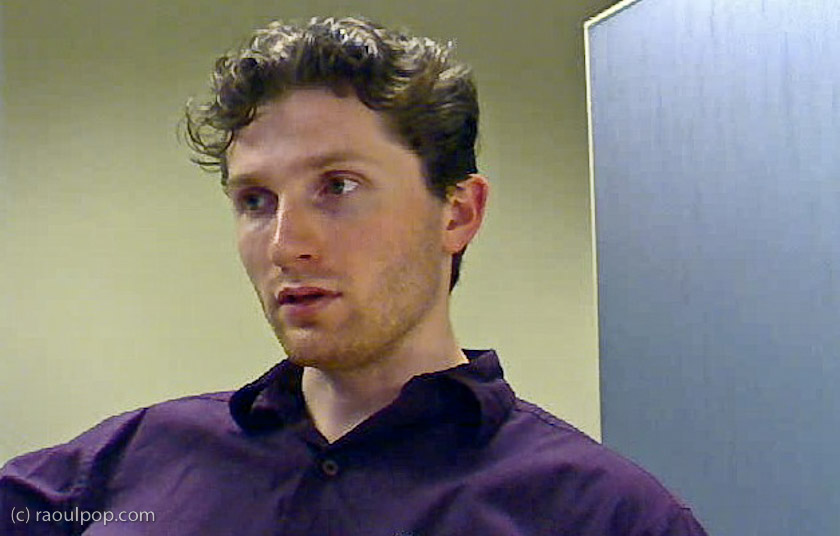
The simple heart of the matter is that I can look and feel like this…

raoul-at-work-2

… or I can look and feel like this.

raoul-and-ligia-at-home-7

I’ll take the latter any time, because I know the costs involved with the former state.

Standard
Places

New town center, Baia Mare, Romania

We began our recent trip through Bucovina in the city of Baia Mare, the capital of the province of Maramures in Romania. A few interesting tidbits about the city:

  • It has a Mediterranean-like climate, which means it can support chestnut trees — a rarity given that it’s located in the northern part of Romania, which in itself is quite a ways north from the Mediterranean Sea.
  • Population is about 150,000 people
  • The region is rich in gold and silver
  • It was one of the few known shtetls in Romania, along with Radauti and Gura Humorului. (Shtetls are, or rather were, pre-WWII, small towns with large Jewish populations from Central and Eastern Europe.)
  • The new town center was built in the 70s and 80s and features modern architecture

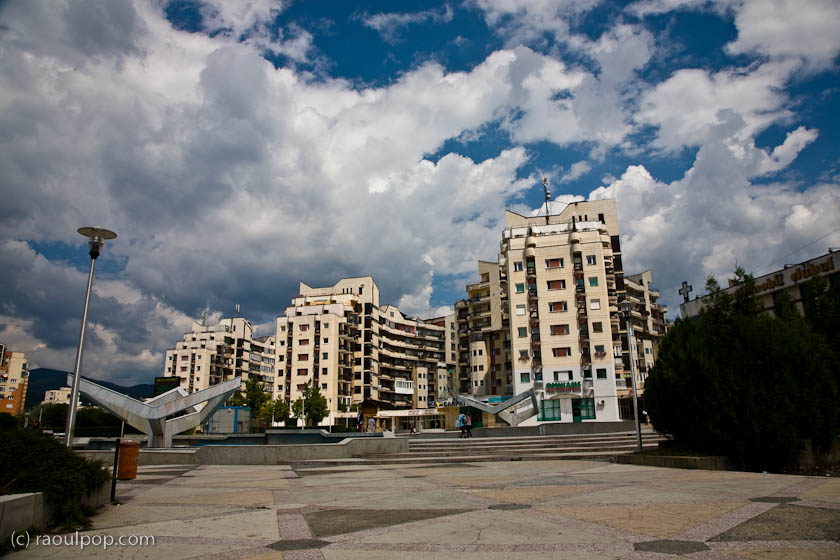
We visited the very same new town center. The architecture is certainly modern, but is unfortunately not maintained. Almost all of the buildings show cracks, some of the exteriors have begun to peel off, some windows are broken, there’s graffiti on most of them, and all are covered in a nice, thick layer of muck. I guess some of that can’t be helped after 40 years, but still, some efforts ought to be put forth by the city to maintain the architecture, right?

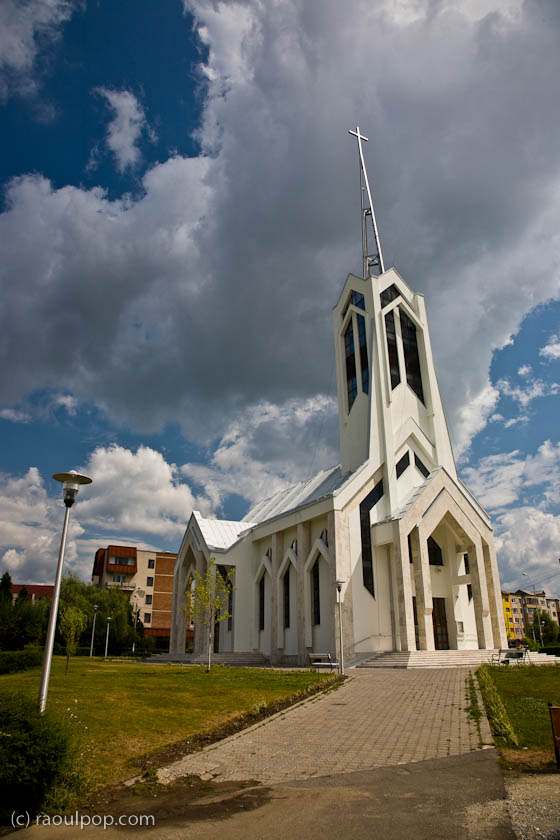
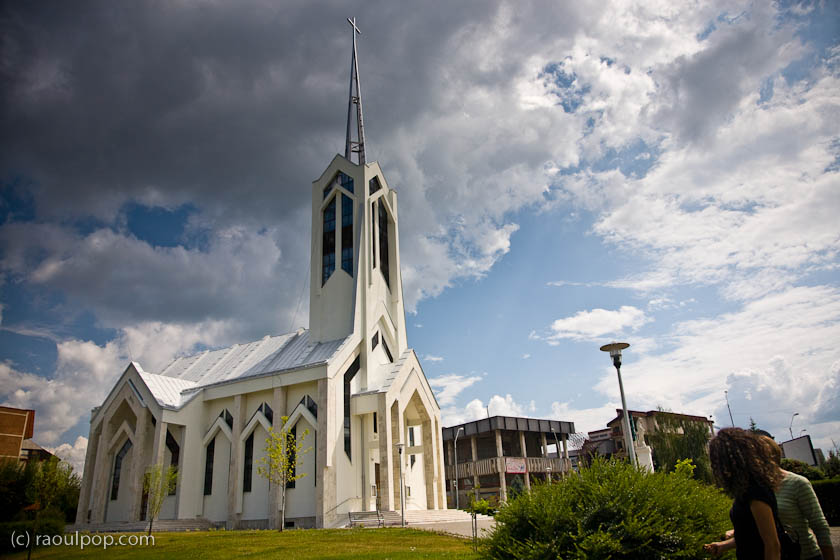
baia-mare-maramures-37

The image of the church above is a fairly good representation of the state of downtown Baia Mare and of Romanian cities in general. At first sight, it looks nice, but as you get closer, you begin to see glaring problems such as the state of the sidewalk (potholes among a mixture of pavement, mud, asphalt and stones), poor landscaping, poorly maintained buildings, etc. If you were to look closer, you’d see problems with the building as well. To some extent, this can be blamed on the past Communist regime, where the emphasis was placed on quantity, not quality. The construction issues have only become evident in recent years, as layers have started to come off apartment buildings and public buildings alike, peeling like onion skins, revealing the crumbling masonry work beneath.

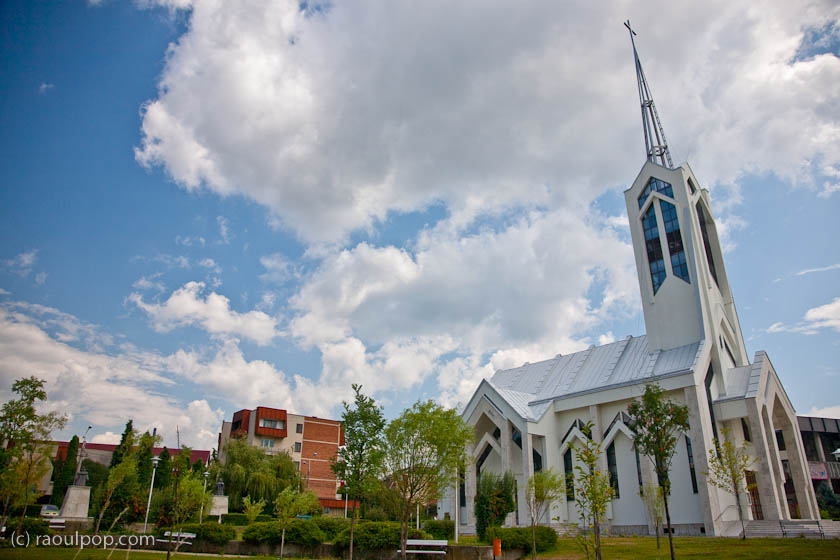
This next photograph shows the building defects a little better.

baia-mare-maramures-5

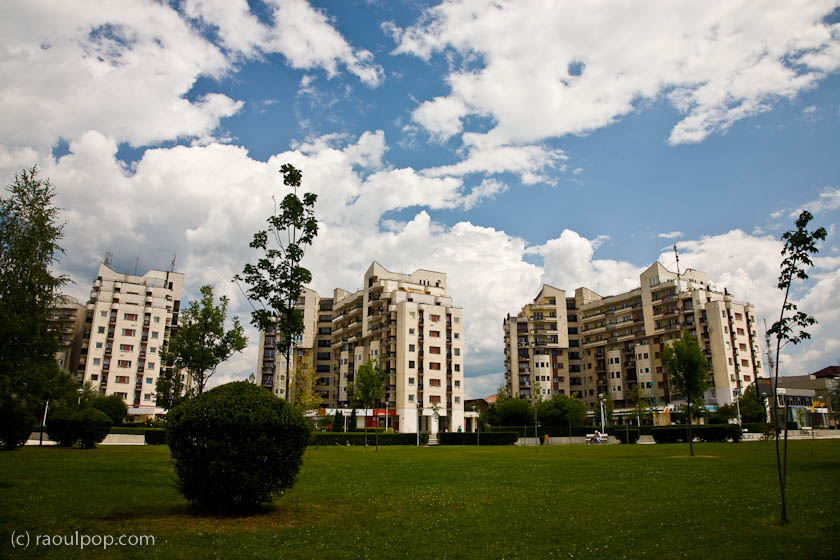
The buildings look much nicer from nice from afar, don’t they?

baia-mare-maramures-9

baia-mare-maramures-24

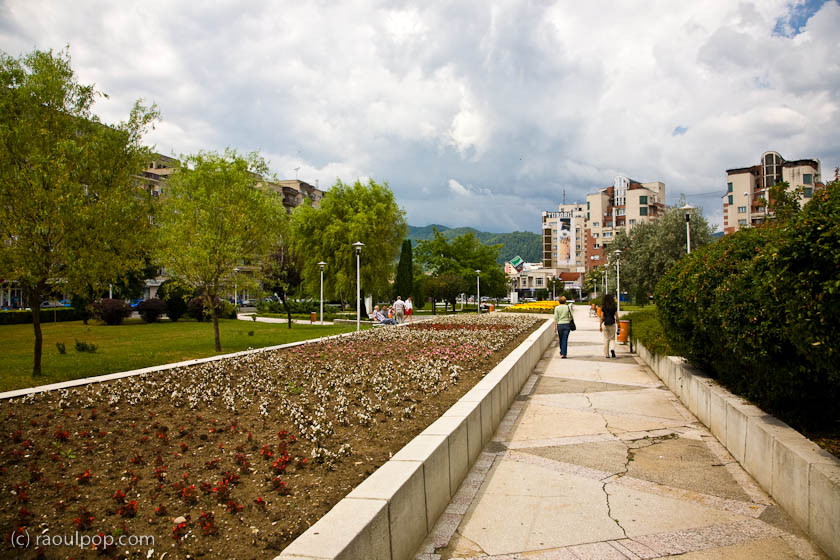
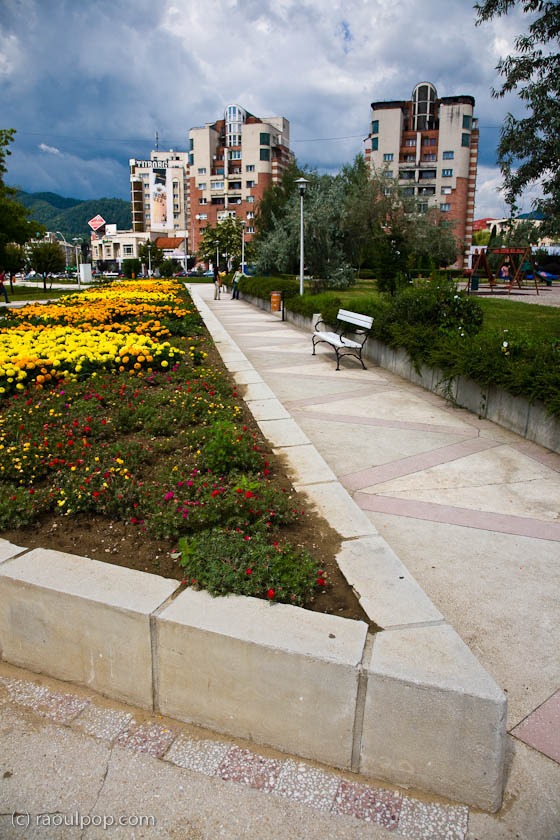
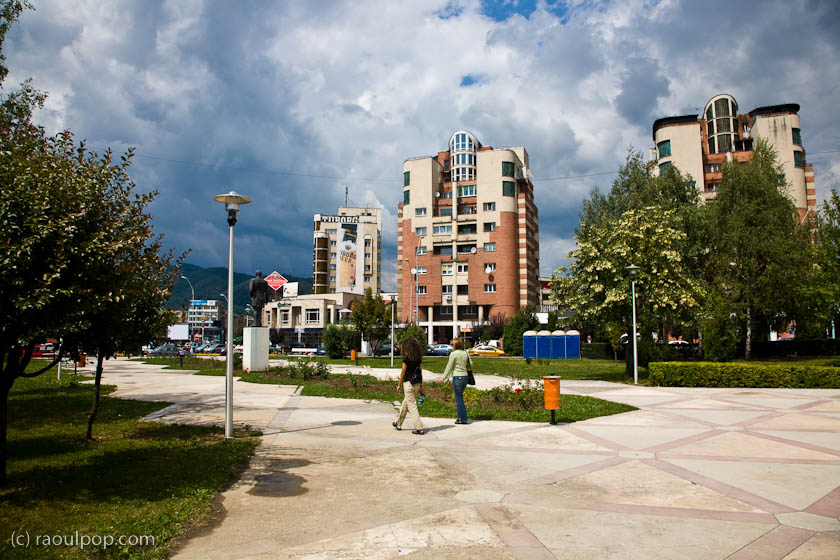
I took most of the photos from a park in the new town center, as you can see for yourself if you look at the surroundings. All in all, in terms of planning, it’s good. The idea of a central park in a new downtown, and the allowance for plentiful vegetation among apartments and shops and hotels is great. But a great idea must also be executed in appropriate fashion in order for it to be fully appreciated. In this new town center, like in most town centers built during Communist times, proper execution just isn’t there.

Look, don’t think I’m bashing Baia Mare. It’s a wonderful city, and there are many cities in worse shape in Romania. All I’m saying is things could be a lot better than they are. The predecessors could have done a better job building the city, and their successors could be doing a better job maintaining and beautifying it.

baia-mare-maramures-33

baia-mare-maramures-21

baia-mare-maramures-20

baia-mare-maramures-19

baia-mare-maramures-16

baia-mare-maramures-10

baia-mare-maramures-27

baia-mare-maramures-1

Standard