Places

Images from historic churches and monasteries in Bucovina and Moldova

In August of 2*** (regular readers will know the year 😁), we took a tour of the historic churches and monasteries in the provinces of Moldova and Bucovina (within the territory of Romania).

A clarification is in order here. When people hear Moldova they automatically think about the Republic of Moldova, which used to be part of the Romanian province of Moldova but was taken by the Russians in 1940. That whole region has a fairly tumultuous history which you can read here. Just keep in mind these photographs were taken within the current-day borders of Romania and yes, there are two provinces called Bucovina and Moldova in Romania. I’ve lost track of how many times people have tried to correct me on this, all of them foreigners…

romania-historical-provinces

I could have published individual posts of each place but that would have been tedious for me (and for you too). I know it was tedious for me when we visited these places, one after another, day after day, dealing with heat, huge crowds and the hospitality industry (you know, the three Hs of travel; they add together to form a fourth H which is a four-letter word)… but we had made a plan and we stuck to it. Romanians in general tend to make trips to these places yearly for religious reasons. We visited these places because of their historical and architectural value, so while we were there we saw as many as we could in the time we had allotted ourselves.

In this gallery of photographs (there are 134 of them), you will see images from the following places:

  • The wooden church in Șurdești (Maramureș), a UNESCO monument and also the highest wooden church in the world
  • Moldovița Monastery
  • Sucevița Monastery
  • Chilia lui Daniil Sihastrul
  • Putna Monastery
  • “Dragoș Vodă” wooden church
  • Voroneț Monastery, famous for the blue used in its exterior murals, called Voroneț Blue
  • Humorul Monastery
  • Arbore Church
  • Dragomirna Monastery
  • Agapia Monastery
  • Văratec Monastery
  • Neamț Monastery
  • Secu Monastery
  • Sihăstria Monastery

Since I arranged the photos in chronological order, you’ll see them just as they’re listed above. You’ll probably want to know which was my favorite place. Dragomirna Monastery, definitely! Enjoy the gallery and thanks for being a subscriber!

I kept things simple in terms of photo gear for this trip, because there were four of us in the car and I knew I’d have to deal with the 3Hs of travel I mentioned above. I shot mainly with my Canon EOS 5D and the EF 24-105mm f/4L lens. My backup camera was the Canon PowerShot G10.

Canon EOS 5D (front)

Canon EOS 5D

Canon EF 24-105mm f4L IS USM Lens

Canon EF 24-105mm f4L IS USM Lens

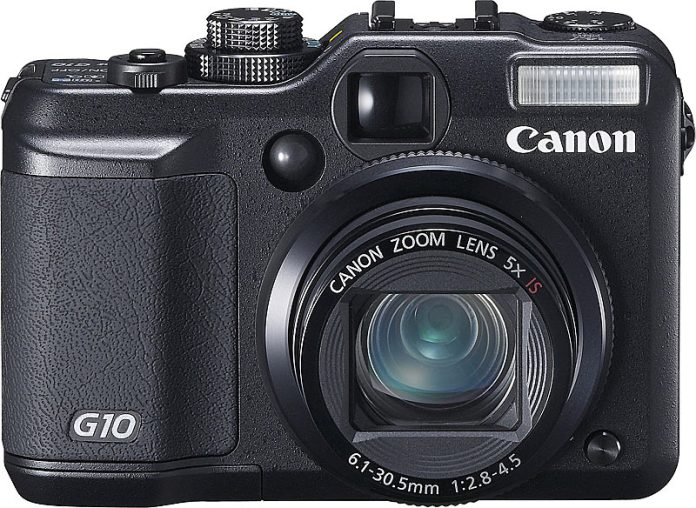
Canon PowerShot G10

Canon PowerShot G10

Standard
Places

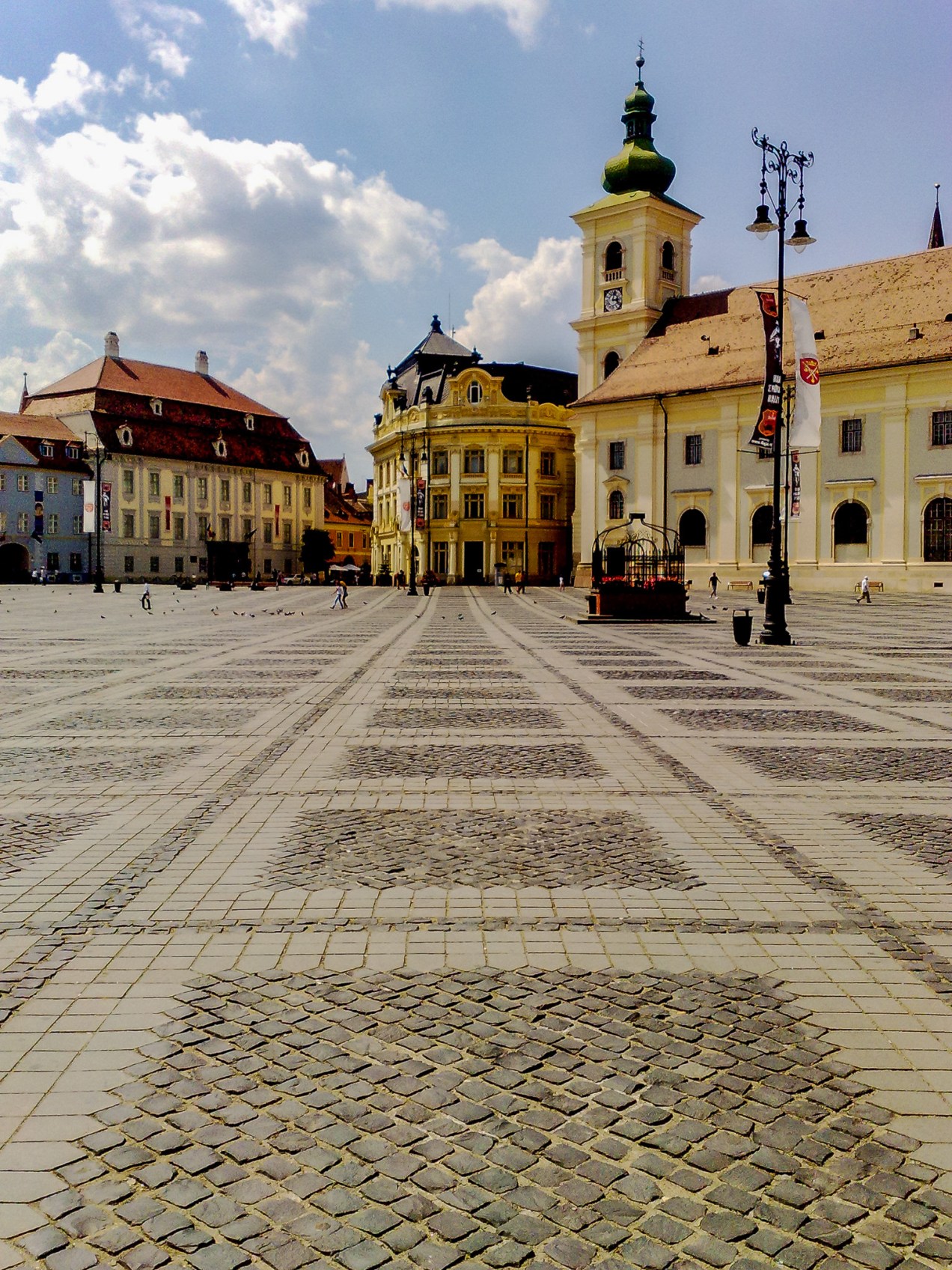
A walk through Sibiu’s historical center

These are a few photographs (only 13 this time 😁) taken during a walk through Sibiu’s historical center nine years ago (yes, 2009). If you’re wondering why I keep publishing photos from that year, it’s because I’m finally taking care of my editing backlog. Wait, Raoul, are you saying you’re nine years behind on editing your photos? Ahem… most of my photos, yes. When you take lots of photos, that’s what happens 🤷‍♂️.

Anyway, these photos were taken with my cellphone at the time, the now-venerable Nokia N95 which had a 5 megapixel camera. It was pretty good by the standards of its time and is woefully behind the times now, not necessarily in megapixels but in dynamic range and image quality. Still, it did okay in daylight.

Enjoy the photos!

And here is the grandfather of many of today’s cellphone cameras:

Nokia N95-1

Standard
Places

Blue hour and snowfall!

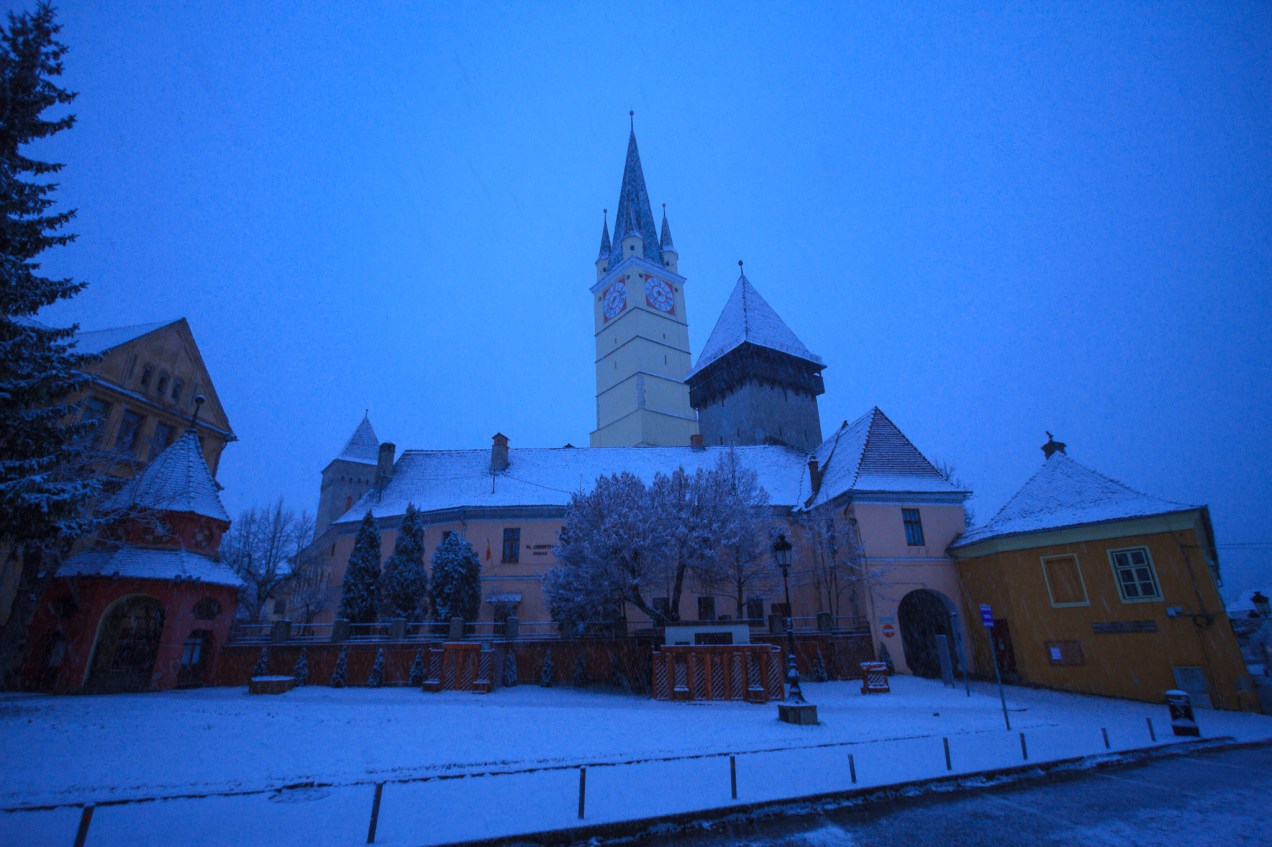
This past Sunday morning, I woke up to a beautiful snowfall and luckily for me, about 10 minutes before the blue hour (which actually lasts less than an hour). I tiptoed down the stairs so I wouldn’t wake up my wife and child, put some clothes and shoes on, and because it was snowing heavily, I took my Canon 7D (my only weather-sealed camera), along with the 10-22mm EF-S lens (which is also weather-sealed). I wanted an ultra-wide perspective to the photos and also the ability to shoot without a tripod at low shutter speeds. An ultra-wide lens lets you do that because of the “reciprocal rule”: as long as the shutter speed matches the focal length, you should get a good photo (provided you have steady hands). A 10-22mm lens would let me use shutter speeds as low as 1/10th of a second, which is just what I did on some of the photos. Enjoy the gallery!

For those of you who love looking at camera gear (I know I do), here is a photo of the camera and lens I used.

Canon EOS 7D

Canon EOS 7D

Canon EF-S 10-22mm f:3.5-4.5 Lens

Canon EF-S 10-22mm f:3.5-4.5 Lens

Standard
Places

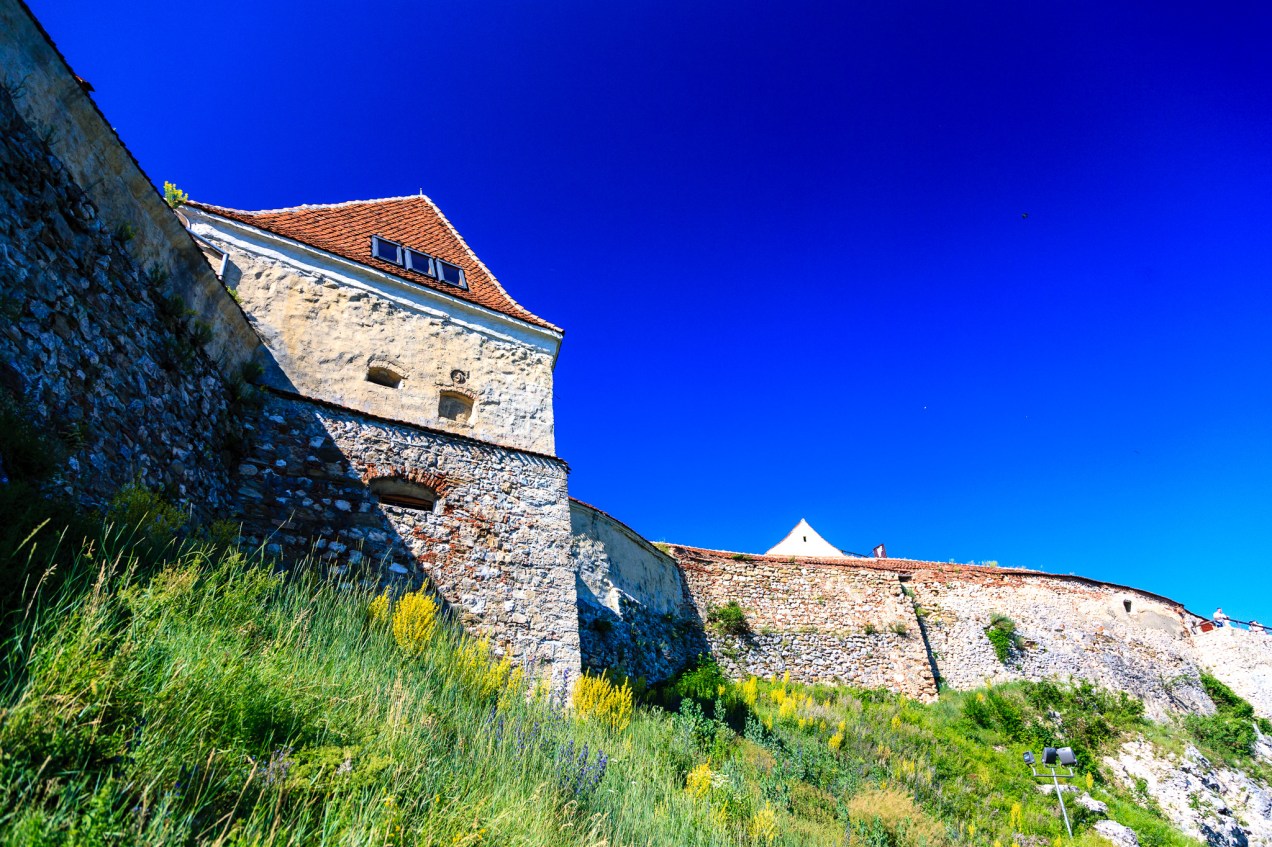
The fortress at Rasnov

There is a fortress near Brasov, built above a village-turned-town. It’s called Rasnov and it’s been there since early medieval times.

Râșnov citadel and village on the Josephine Map of Transylvania

Râșnov citadel and village on the Josephine Map of Transylvania

The citadel was built as part of a defence system for the Transylvanian villages exposed to outside invasions. A decisive aspect for building the citadel on the actual location was the route of the invading armies which were coming from the Bran pass and were passing through Râșnov on their way to Burzenland (Țara Bârsei). The only chance of survival for the inhabitants of the area, including the ones from the villages of Cristian and Ghimbav, was refuge inside the citadel. Compelled to stay there for decades, the people of Râșnov and the nearby villages turned the fortification into a dwelling.

Sources such as Wikipedia state that archaeological research revealed the existence of fortification traces on the citadel hill since prehistoric and Dacian times, but I have to say this is the case for virtually every town in Transilvania. At one spot or another in the city, archeologists will find traces of fortifications or houses that date way back to Dacian times or even earlier. Romania is an old country.

The medieval citadel we see today is considered to have been built between 1211-1225, during the rule of the Teutonic Knights in Burzenland. Although there is no written evidence for this, it makes sense historically.

In 1335, during a Tatar incursion that ravaged Burzenland, Râșnov and Brașov were the only citadels that remained unconquered. This is also the first documented attestation of the fortifications at Rasnov. In 1421, an Ottoman army laid siege to the citadel. In 1600, Michael the Brave along with his troops and his wife, Lady Stanca, retreated here after the defeat at the Battle of Mirăslău.

The citadel was conquered only once in 1612, during the rule of Prince Gabriel Báthory. The reason was the lack of water. While there was no well within the citadel walls, there was a path to a secret spring outside its walls, but this was discovered by the enemy troops. Without water, the siege quickly ended. An interior well was then dug inside the walls, directly in the rock bed, between 1623 and 1642. It is 146 metres (479 ft) deep.

In 1718 the citadel was partially destroyed by a fire and in 1802 it was damaged by an earthquake. In 1821 refugees from Wallachia (during the revolution led by Tudor Vladimirescu) retreated to the citadel. Between 1848-1849, because the region was constantly ravaged by Hungarian revolutionaries and Austrian imperial troops, the villagers retreated to the citadel. This was the last mission of the citadel as a place of refuge and defence. After those events ended, it was left to ruin, to be restored during the early 21st century.

We visited it in the summer of 2009. I hope you enjoy this gallery of photos I took there.

Standard

As hinted in a previous post, here are more photos from Rockville, MD. Some were taken in the historic district and the rest in the city’s modern downtown.

Happy Thanksgiving! 🙂

Places

More photos from Rockville

Gallery