Reviews

Hardware review: Elgato Turbo.264

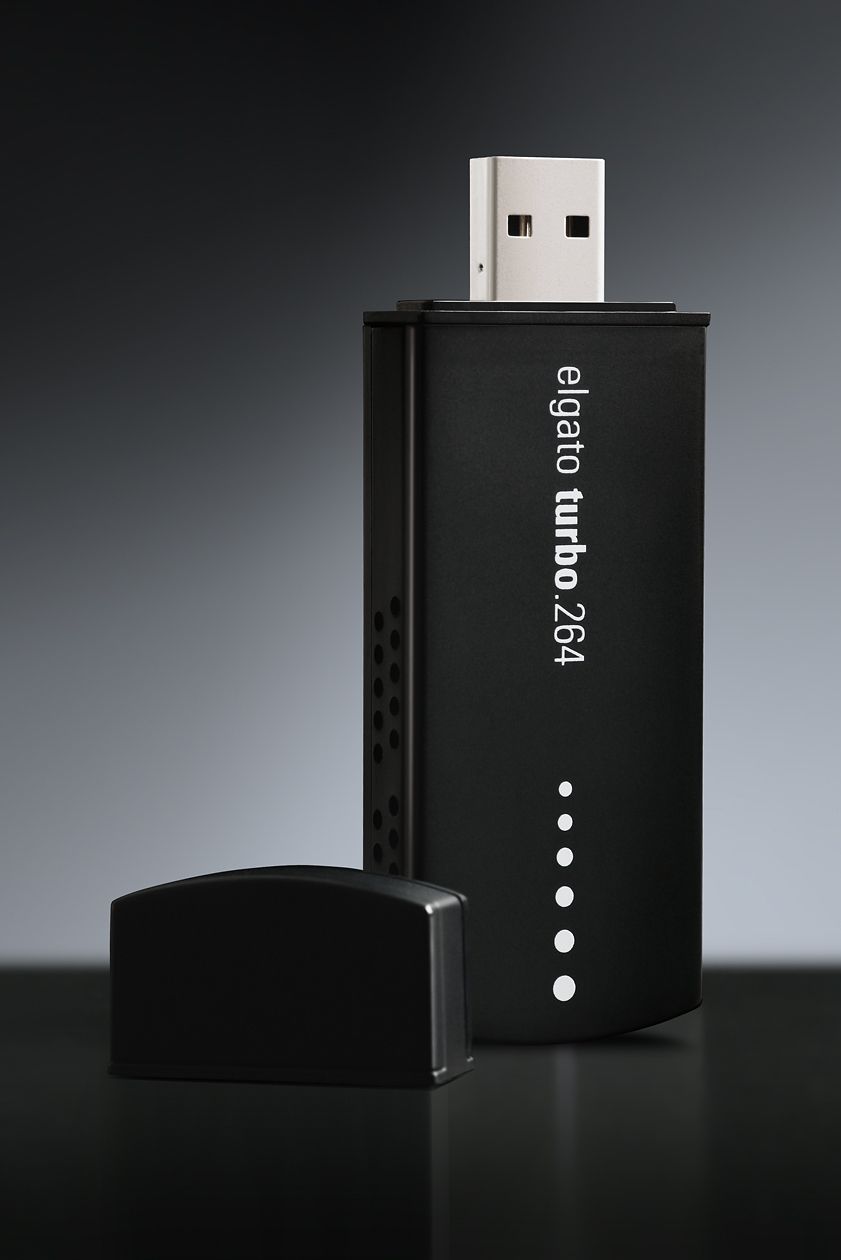
I’ve been using the Elgato Turbo.264 hardware encoder since February of 2008 (see item 5 here) and am happy with it. When I first saw it on the Elgato website, I thought it was a gimmick. After all, what could a little USB stick do that my iMac’s or my MacBook Pro’s CPU and GPU couldn’t do? I was in for a pleasant surprise.
Elgato Turbo.264

The Turbo.264 was launched on May 16, 2007. The original press release claimed that it would not only speed up encodings to the MP4 format using its own software, but that it would also speed up exports from iMovie, Quicktime Pro and other Mac software. I haven’t been able to figure out how to do the latter, but can definitely vouch for the former. I’ve converted virtually all of my DVDs to electronic format with the Turbo.264, and yes, it has sped up that process significantly.

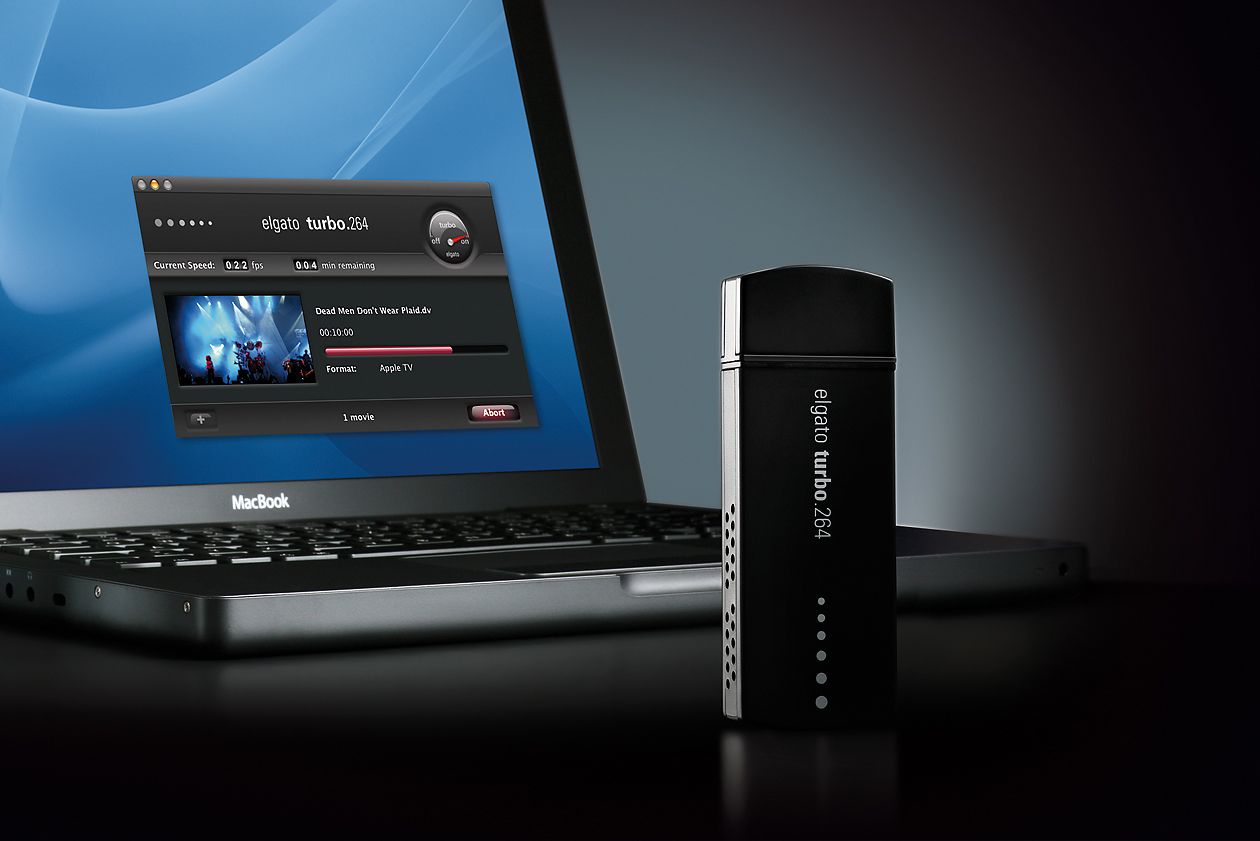
Encoding speeds will vary depending on what your computer is doing at that time, and on the export quality (Apple TV, iPod, etc). You can easily select the type of output for your exports from a drop-down menu when you drag a movie onto the Turbo.264 app — yes, the UI is that easy to use. The encoding speeds I’m quoting below refer to exports for Apple TV, which are the highest quality in terms of resolution and bit rate.

I should mention that while the Turbo H.264 takes most of the processing load off your CPU, it doesn’t handle all of the computing tasks by itself. From my experience, encoding movies without the Turbo.264 meant the CPU usage stayed somewhere between 90-100%. Encoding movies with the Turbo.264 meant the CPU usage stayed somewhere between 25-35%, allowing me to use my machine for other tasks such as processing photos in Lightroom or working in Dreamweaver.
Elgato Turbo.264

From my own experience, I’ve seen the Turbo.264 take a mere 2-3 hours to encode a movie on my iMac G5 (2GHz PowerPC CPU, 2GB RAM) when it would have taken me somewhere between 24-48 hours to do it with Quicktime Pro. This usually meant encoding speeds were somewhere between 20-24 fps. On my MacBook Pro (2.5GHz Intel Core 2 Duo CPU, 4GB RAM), encoding speeds approach and sometimes excel 30 fps, which means movies are encoded at normal playing speeds.

Speeds will also vary given the type of storage you’re using for the original movies and exported movies. I’ve seen slightly faster encoding speeds on Firewire 400 drives vs. USB 2.0 drives, and I’ve gotten my fastest encoding speed to date, 35-36 fps, when I used a FW 800 drive. In other words, the movie to be encoded should be stored on the FW drive, and you should also be exporting to that same FW drive. If you’re storing and exporting movies to your local drive, encoding speeds will be slower, and you’ll be slowed down even more by Time Machine, because it’ll kick in every hour and try to copy the changed files to the backup drive.

When I encoded movies, I usually had no other apps open, or if I did, it was usually only Firefox or Safari or Mail or some other lightweight app. As a matter of fact, I’m encoding a movie from a portable USB 2.0 drive (see item 4 here) as I write this, and I’m getting 31 fps, which seems to be the usual encoding speed on my MBP.

Encoding speeds were fastest when exporting for my iPod Touch (it’s the iPhone setting in the Turbo.264 app). It took as little as a half hour to encode a full movie for my iPod, which meant I could be done preparing movies for a long plane ride in about 2 hours.

Nothing’s perfect, and I do have a few complaints about the Turbo.264. While the encoding software is intuitive and easy to use, sometimes it’s too easy, and there’s no option that lets me separate chapters from titles. What happens then is for DVDs that aren’t built right — the main feature isn’t a separate title from the ads, previews and other features on the DVD — the Turbo.264 won’t know the difference and it will encode all of those things together with the main feature, which means I have to do extra work afterward cleaning up the file.
Elgato Turbo.264

For example, I’ll sometimes get those annoying and tacky copyright warnings at the start of my encoded movies. I couldn’t care less about them and I don’t want to see them. These are my movies and I’m not doing anything illegal. Or, I’ll get the second title on a DVD appended onto the end of the first title, and then I have to split the file, making me do extra work.

If you’re looking for a product that will let you speed up the encoding of HD videos (720p and 1080p), the Turbo.264 can’t help you there; it can only encode videos up to 800x600p in resolution. On the plus side, it will encode both NTSC and PAL videos, which is to be expected given that Elgato is a German company.

Sometimes, and only for some movies, the Turbo.264 won’t properly mux the audio with the video. The sound will be off by a fraction of a second (or more), which is really annoying. I discussed the muxing issue in more detail in the past. The thing to do is to always check the encoded files carefully. Sometimes you may need to re-encode some files, or use an alternative encoding app, such as Handbrake.

This leads me into a discussion of the Turbo.264 alternatives. There are two that I’ve used and liked: Handbrake, mentioned above, and ffmpegx. They are both faster than using Quicktime Pro, naturally, but both are slower than Turbo.264. Of the two, only Handbrake can encode with the H.264 codec, which is the preferred way to encode MP4 files these days, and it’s much slower than Turbo.264 at that. However, if you use the ffmpeg codec in Handbrake, it is significantly faster than Turbo.264, about 2-3 times faster when exporting for Apple TV, at a similar bit rate (cca 2500 kbps). Of course, then you can get into a discussion of the quality issues between the two codecs, and that’s beyond the scope of this review. The important thing is that the alternative is there if you want it.

Elgato Turbo.264

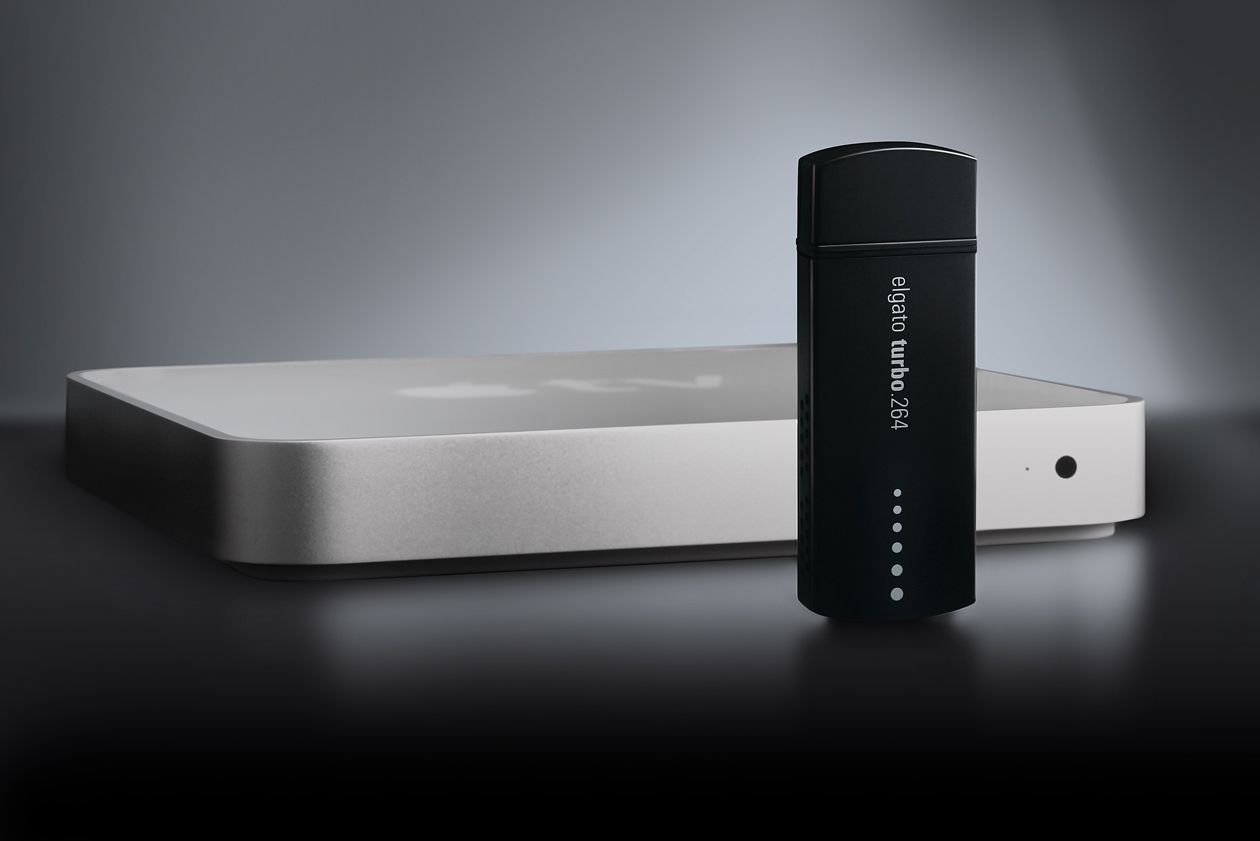
The question you’ve got to ask yourselves is this: is your time more precious than $100? If you find yourselves with a big library of movies that you want to encode for Apple TV or for WD TV, and you want to encode them using the H.264 codec, then the answer is yes — at least it was in my case. For a few days at least, Elgato is making that decision easier: if you’re in the US, they’re running a special MacWorld deal for this week only (until 1/10/09), and they’re selling the Turbo.264 for $69.95.

Reference: official specs for Turbo.264. Buy it from: Amazon, B&H Photo. Photos used courtesy of Elgato.

Standard
Reviews

Join MP4 files with Front End Digital Media Workshop

Want an easy way to join MP4 clips together? Front End Media Workshop, a nifty piece of Mac software published by the now defunct K-werkx, can definitely help you out. While the folks that put it together aren’t online any longer, the app is still available for download from CNET.

FE_DMW makes it really easy to join video clips

FE_DMW makes it really easy to join video clips

The app (it shows up as FE_DigitalMediaWorkshop in the Apps folder by the way) is meant to do a bunch of other things, but I found it most useful to join together several MP4 clips from my video collection.

For example, I’d purchased a DVD of “The Curious Adventures of Mr. Wonderbird“, a re-titled version of the 1952 original, La Bergère et Le Ramoneur. The film is little known, and features the dramatic escape of a pair of lovers from the claws of a despotic ruler. A curious bird helps them escape and orchestrates the toppling of the ruler’s oppressive regime, which mirrored, at the time, what was going on behind the iron curtain of Eastern Europe. Peter Ustinov voices the bird and also narrates the story.

At any rate, I’d copied the DVD to my computer only to later realize that I’d done it by chapters instead of copying the entire movie as a single file. Front End Digital Media Workshop allowed me to drag the five or six clips for each chapter onto its main window, drag and drop to arrange them in order, then, within minutes, join them together as a single file. The output was saved to the desktop in a folder (one for each join operation), where I could review, rename and archive it.

Sure, if you have Quicktime Pro, you can join video files there, or you can also import them into iMovie, but a small, single purpose app that does it faster and without a lot of fuss scores higher in my book. I may even use it later to snip clips from the beginning and end of some of my other video files, since I see that it has that feature built in as well.

Standard
Thoughts

Hooray for Netflix Watch Instantly abroad

Updated 8/11/11: The loophole detailed in this post has been closed off by Netflix, but there’s a simple way to bypass their new rules, provided you have a US credit card and mailing address. I’ve written a new how-to article that details how I’ve been watching Netflix from outside the US for the past year. ➡ Click here to read it

My wife and I are avid Netflix users, and we had a problem. We knew we’d be going abroad for an extended stay in Romania, and we didn’t know how we could get Netflix service there. Of course we realized DVD shipments wouldn’t work, but we thought the Watch Instantly feature would at least be available to us. I love streaming movies to our laptops, and was excited by the availability of Watch Instantly on our Macs when it became available in November of 2008.

The official word from Netflix is that Watch Instantly is not available outside of the US, due to licensing agreements.

Netflix Watch Instantly not available outside of the US

Fortunately, there’s a loophole. If you go to your queue, you can select movies from the queue and stream them to your computer by clicking on the Play button there. It’ll take a while to buffer them — I think it’s because a connection from Romania to Netflix isn’t as reliable for streaming movies as a connection from inside the US. The Netflix player insists on buffering the stream all the way to 100%, but in a few minutes or a little more time, depending on the speed of your connection, you could be watching a Netflix movie on your computer, as if you were back in the US.

Netflix Watch Instantly buffering outside the US

Netflix Watch Instantly playing outside the US

I hope Netflix doesn’t close this loophole. Their restriction doesn’t make sense to me in the first place. After all, non-US residents can’t get Netflix accounts. You have to have a US address and live in the US in order to get a Netflix account. And if you, a US citizen or resident, happen to be traveling abroad and you have an active Netflix account, you should be able to log on and watch movies. You’re paying for the service, so it’s your right.

Standard
Reviews

Netflix Watch Instantly comes to the Mac

On October 27 (last month), Netflix started testing a new way to stream movies for its Watch Instantly feature. They began using Microsoft’s Silverlight player, which is platform-independent and can still handle the DRM that movie studios love so much. This meant that Mac users were no longer left out of the picture, and could finally watch Netflix streaming movies on their machines.

On October 31, they finished their first round of testing and allowed all Netflix customers to opt into the new feature. They cautioned users that there might still be some bugs and lower-than-expected quality on some movies. I started using the new feature immediately, and after having watched a few movies, here are my impressions:

  • Streaming quality is indeed a bit lower than expected on some movies, and during some scenes. Not sure why, but it’s not prevalent, and will likely be addressed soon.
  • PowerPC Macs are left out of the picture, not due to Netflix, but Microsoft, who have not released a version of Silverlight for PowerPC Macs — I doubt they will, unfortunately. This means our iMac G5, which now works great (after repeated trips to the Apple Store for repairs), will never be able to stream Netflix movies. I think that’s pretty sad.
  • Silverlight doesn’t come with any preference pane for Macs where its various options can be adjusted. This means that unless certain of its built-in options are adjusted “from the factory”, so to speak, your Mac’s screen will go dim and your screensaver will come on while you’re watching a movie on full screen. Your Mac might even go to sleep. Every time the screensaver comes on, Silverlight exits full screen mode. This gets old pretty quickly, as you can imagine, and it’s not ideal by any measurement.
  • Movies cache and play much quicker than before.
  • Netflix will remember where I stopped watching a movie, and will bring me back to that exact point when I log on again and hit play on a title. I watched a portion of The Adventures of Baron Munchausen while logged onto Netflix from Safari, then went to bed; the next day, I logged on through Firefox, clicked on Play, and almost instantly, the movie started playing from the very spot where I’d stopped watching.
  • Did I mention we can watch streaming movies on our Macs, finally? This is incredibly cool!

I couldn’t be happier with Netflix. As a service, I think it’s one of the best business ideas that was ever put into practice. It fulfills a customer need at a reasonable price, and (at least for now), that price includes the ability to watch a LOT of streaming movies at no extra charge. I say “for now” because, let’s face it, there are costs associated with licensing and serving streaming movies (copyrights, hardware, bandwidth, overhead, etc.), and at some point, I think Netflix will have to adjust its prices to reflect this. I don’t think the price changes at that point will be big, but as more and more people start using the Watch Instantly feature, the extra usage will need to be taken into account.

I also believe that long-term, Netflix intends to emphasize its movie streaming service and slowly phase out its DVD mailers. It won’t happen until they can ensure a ubiquitous streaming experience for its customers, and that means flawless streaming for TVs and computers alike. They’ve already made incredible inroads with Roku, Xbox 360, and with Tivo, which can all stream Netflix movies directly to TVs. Now that you can watch streaming movies on both Macs and PCs, things are looking better and better, and Apple TV looks more hamstrung than ever.

Standard
Reviews

WD TV is better than Apple TV

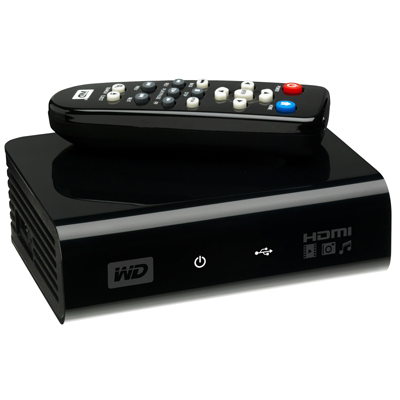
WD has put a new device on the market, and it’s called the WD TV HD Media Player. It’s a small box that can connect to a TV via HDMI or Composite output cables, and can take most USB external hard drives as input (it should even read USB flash drives as long as they’re formatted in FAT32). Once a device is connected, the WD TV will read the media from that drive (movies, photos, music) and let you browse through them and play them on your TV. What sets this device apart for me is that it has gone beyond other similar devices like the LaCinema Premier, or Apple TV. I’ll explain below.

The LaCie product, for example, doesn’t play as many formats as WD TV, and can only support NTFS and FAT32 file systems.

You’re limited in the amount of content you can play with LaCinema Premier, since the drive is integrated within the device itself, and because not as many video formats are supported (see the specs on the LaCie website). That means you have to lug the whole thing from your home office to your living room, re-connect it at each place, and copy files onto it when you want to refresh its inventory. The remote also leaves something to be desired (too many buttons).

I know and like Apple TV myself, having bought one and configured it for my parents, but frankly, I find it overpriced and under-featured. The more you use Apple TV, the more limitations you find:

  • It has an internal hard drive that syncs with content over a wireless network, which means you have to wait forever to get a movie onto it. The drive can also fill up quickly, depending on which size you pick. (Yes, you can also connect it via a Gigabit network, if you’ve pre-wired your living room and home office with Gigabit wires already — but most people have not.)
  • You can stream to it, but then you always have to keep iTunes open, and it’s a hassle to remember that, especially when you’ve just sat down on the living room couch and turned on the TV.
  • You also need to be able to troubleshoot WiFi issues in case you’re not getting enough bandwidth and Apple TV playback stutters.
  • You have to add every single video clip you want to play on Apple TV to the iTunes library, and I don’t care for that sort of thing. I just want to store my stuff in folders and browse it from a device (like WD TV).
  • Apple TV has a USB port on the back, but you can’t use it for anything but “diagnostics” unless you hack the device. This is stupid. I can’t use the port to connect Apple TV to my computer and copy content onto it, I can’t use it to connect an external hard drive to it and have it read the content from it (like WD TV), and it just sits there, unused, unless I pay for a hacking device like aTV Flash.
  • It overheats like crazy. It can burn your fingers if you’re not careful.

I love the design of Apple TV and its diminutive remote. I love the fact that I can swap remotes between it and my laptop if I want to. I think the on-screen menus are well done. I also like the fact that it can stream Flickr photos and YouTube videos, but these extra functions are just that: extra-neous. It simply cannot do its basic job well, and that is to play my media conveniently.

I’m not alone in being frustrated with it. Thomas Hawk has written repeatedly against Apple TV, and for the very same reasons I describe in this post. Steve Jobs recently said he’s not sure what to do with Apple TV. He’s treating it like an unwanted step child. It’s not listed in the Mac product lineup on Apple’s website. It sits off to the side in a section of its own, and you have to do a search for “Apple TV” in order to find it. Corrected 11/11/08: It’s listed in the iTunes and More line-up along with the iPods.

For one thing, Mr. Jobs, you can stop being so greedy in your approach to the device and let people use the USB port on the back. Or how about letting people stream Netflix videos with it, so they don’t have to buy a separate device? I’m a Mac user and have a Netflix account. Until Netflix release Roku and opened up its streaming program to Mac users, I was in the dark. You probably don’t want to do these things because it’ll cut into your video rentals and purchases, and you like that extra revenue stream, but the fact remains that sales of the device will always remain low if you insist on hamstringing it.

The WD TV Player, on the other hand, is made to suit most people. It has a USB port where you can connect most external hard drives. It will read NTFS, FAT32, and HFS file systems too. (I found that out from WD Support, because the info isn’t listed among the specs. They pointed me to KB article #2726.) There seems to be an issue with HFS+ file systems, but they’ll still work, only differently. I’ll have to look into that later.

Also not listed among the specs is an Optical Audio port, but when I look at the back of the device, it seems to me I can see one there.

To me, WD TV is the long-awaited answer to my media player needs. At around $99 (street price), this is one device that will make its way to my Christmas stocking pretty soon, because I’ve got a Drobo full of content I’d like to play my way, not to mention that I also have two WD Passport drives.

I may even get one for my parents, to replace their Apple TV. They’ve had to keep their Drobo connected to their iMac in the home office, with iTunes open, all this time, just so they could watch a movie or two from the Drobo. That’s not right. Once I get the WD TV, I can take their Drobo, put it in the living room, and hook it up right there, without worrying about WiFi, streaming, iTunes, and a whole bunch of nonsense. Apple dropped the ball with Apple TV, and WD picked it up and started running with it.

The WD TV supports the following file formats:

  • Music: MP3, WMA, OGG, WAV/PCM/LPCM, AAC, FLAC, Dolby Digital, AIF/AIFF, MKA
  • Photo: JPEG, GIF, TIF/TIFF, BMP, PNG
  • Video: MPEG1/2/4, WMV9, AVI (MPEG4, Xvid, AVC), H.264, MKV, MOV (MPEG4, H.264). It will play MPEG2/4, H.264, and WMV9 videos up to 1920x1080p 24fps, 1920x1080i 30fps, 1280x720p 60fps resolution. That’s awesome.
  • Playlist: PLS, M3U, WPL
  • Subtitle: SRT (UTF-8)

I plan to get one soon, and I’ll let you know in this post if it lives up to its specs and my expectations. If you’d like to get one too, Amazon lists them. See below.

You can buy the WD TV Player from:

Standard