Places

Photos from Antietam Battlefield

Last weekend, on a fiercely hot Sunday, my wife and I visited the Antietam Battlefield, located near Sharpsburg, MD. It’s quite easy to get to it from DC. You take 270-N to 70-W, then keep going on 70-W until you see the signs for Antietam. Once off the highway, you’ve got another 8 miles or so till you get there. You can’t miss it. There’s a big National Park Service sign by the side of the road. All in all, it’s about a 1 hour and 30 minute drive, give or take 15 minutes, and the history lesson is priceless.

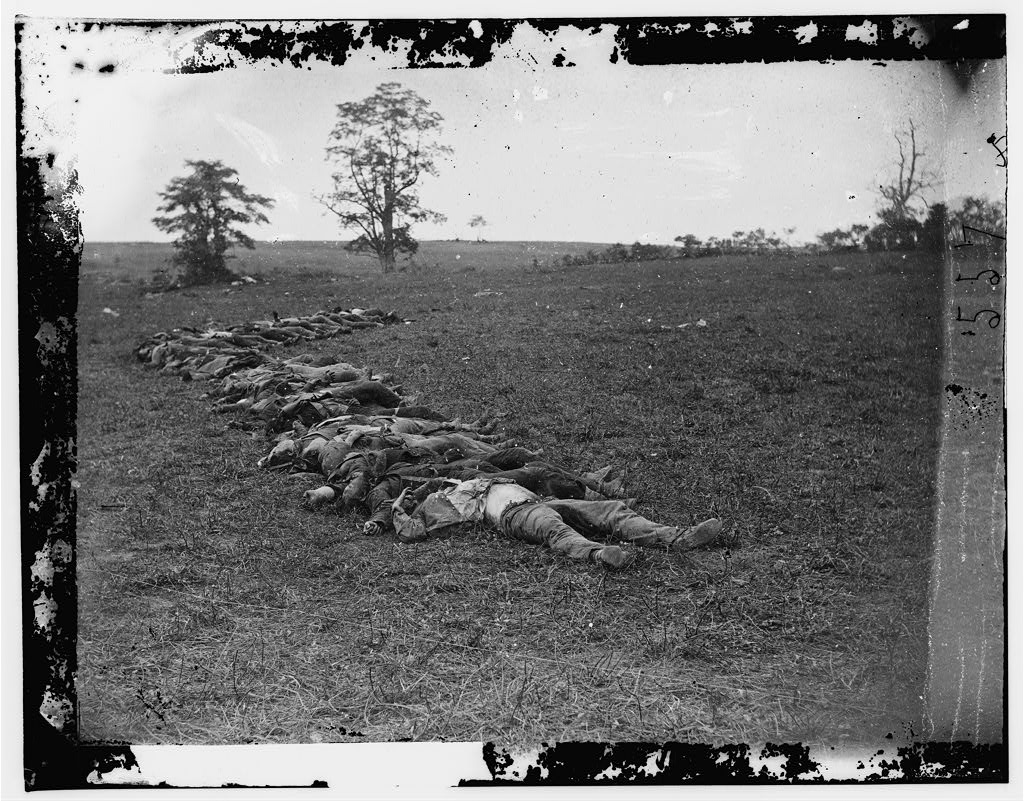
Antietam is “the bloodiest one day battle in American History”, according to the official NPS website. In 12 hours of “savage combat”, over 23,000 soldiers were killed, wounded or missing. Six generals were killed during this battle. The human price of this battle was driven home by a photographer: Alexander Gardner. His haunting photographs of the dead at Antietam were said to have brought them “to our doorsteps” by the New York Times. And it’s true. It’s one thing to sing of battles won and of bravery on the battlefield, and it’s quite another to stare at the dead in front of you and see the horrible price of that thing you call victory.

What always strikes me when I look at war is how senseless it all is. Even when I’m far removed from it, by a century and more, I can’t help shivers from running down my spine when I think the ground I stand on is the same ground where countless men lost their lives.

Why? How many more people need to die horribly until humanity as a whole realizes war is bad? Forget humanity as a whole, how about the United States alone? When will we get it? Ever? At the first sign of trouble somewhere (preferably in the Middle East), we’re more than happy to send our soldiers in there to die for some trumped up cause, and to spend trillions of dollars and bankrupt our economy as well. At least the Civil War had a good reason. The country needed to be kept together, and slavery abolished. Still, in spite of those good reasons, far too many people died during that dark time in American history: around 360,000 lost their lives, and countless more were injured or maimed for life.

I’m going to show you how Antietam looks today. But I want you to have a look at the way it was back then, too, especially through Gardner’s eyes. Never mind the fact that the dead bodies may have been arranged in a photo or two. Death is still death, and it’s still just as grim and nasty regardless of the pose.

First, the Library of Congress has a LOT of scanned negatives from the Civil War — an amazing resource. Here is their collection of Civil War photographs. That’s where I got the few photos shown below (taken by Alexander Gardner). Most of the photos are in the public domain, which means they can be used freely, although it would be nice to give the LoC credit for their work in scanning, archiving and curating the photographs. It’s also worth looking at the October 1862 issue of Harper’s Weekly, which features illustrations and reports by eyewitnesses to the battle.

This is Abraham Lincoln at Antietam, after the battle ended.

Abraham Lincoln with two generals at Antietam

Assorted photos of dead soldiers, in the aftermath of the battle.

Gardner’s notable photographs from the battlefield are listed in an album on the NPS website. Have a look at them, and even download them, should you want to have your own archive.

What does it look like today?

Dunker Church is the spot where truce was called at the end of the battle. If you’re interested, there’s a nice historical summary available.

The church is visible in this photo taken by Gardner as well.

The approximate spot where those soldiers died is now the site for a war monument. I hope you won’t find me irreverent, but I find war monuments woefully inadequate at paying back the men that gave their lives in battle. They’re pretty much useless at teaching people lessons against war as well, since they usually depict some victory symbol, or men charging, or some other idiotic thing like that.

What is that supposed to mean?! Tens of thousands of men died here, and we have an eagle on a column? Whoopee…

You know the expression “war on the doorstep”? Well, the people who had farms at Antietam got to know it full well during that battle.

Just remember, the next time a politician makes the case for war, this is really what he or she means. Those are going to be your sons and daughters.

Historical photographs courtesy of the Library of Congress. Photographer: Alexander Gardner. The recent photographs are naturally, my own.

Standard
Places

A weekend down in Florida

Ligia and I took a mini-vacation this past weekend and flew down to Florida to see my parents. You might remember it as the place where I feel most at home here in the States.

We left our cozy little apartment last Friday morning, and in a couple of hours, thanks to the amazing convenience of modern travel, I found myself wielding a weed whacker in my parents’ yard. After other assorted yard work, a little dazed by the torrid sun, I took refuge under the auspices of a cold shower, where I cleaned bits of grass and plants… from places I didn’t even know I had. There’s something funny about switching computer work for yard work. I just know there is.

So what else did I do? The usual geeky son stuff. I assembled a home theater furniture piece and rewired the various components that made it up, such as the two satellite dish receivers, VCR, DVD player and Apple TV. Now it looks really nice, if I might say so myself.

I installed the latest updates from Apple on their two Macs. Installed SP3 on their XP virtual machine running on Parallels. (Which reminds me, I need to check with my mom soon and see if Parallels will continue to give her grief now that I reinstalled it.)

Also updated their Drobo with the latest version of the Dashboard. By the way, their Drobo is still loud because the fan cranks into high gear prematurely and stays there inordinate amounts of time. I talked about this in my Drobo review, and I’d like to see Data Robotics come out with a firmware update for this problem in the near future.

We also found time to go to the beach, twice. I got to blind everyone there with my amazingly white complexion. It felt good — after all, I worked hard to get it. It took months and months in front of the computer to achieve that perfect pasty pallor.

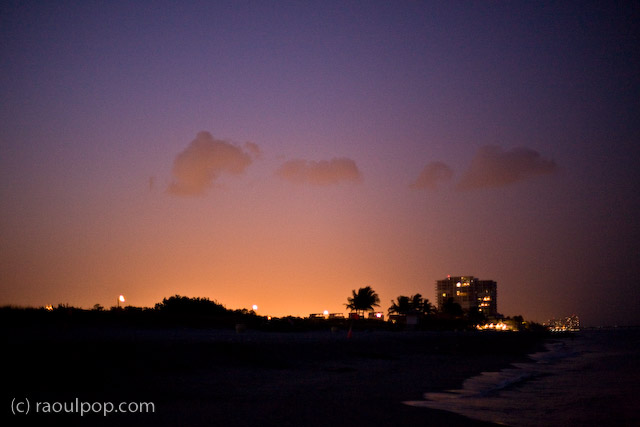
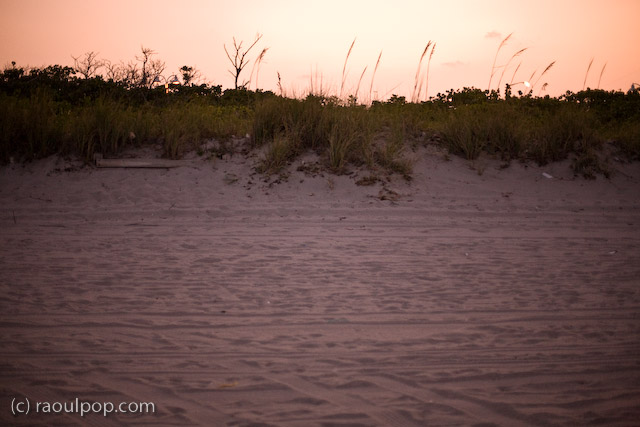
One of our walks on the beach was at dusk.

As night fell and the sky darkened, city lights became more apparent in the distance.

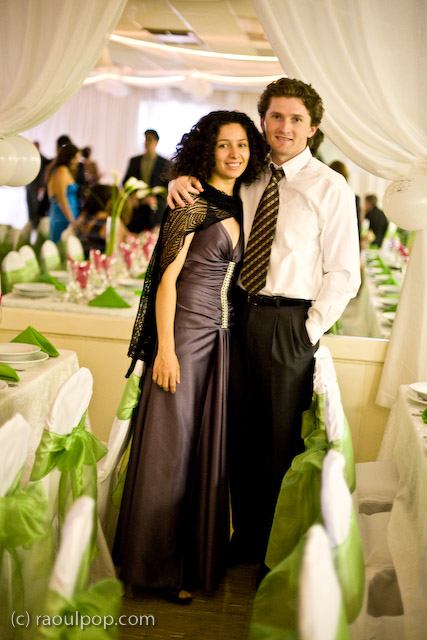
We attended a friends’ wedding as well. I’d post their photo, but I’m not sure how comfortable they’d be with that, so I’ll stick to a photo of Ligia and I, taken by my mom.

I asked my parents if I could post a couple of photos I took of them, and they agreed. Here’s my dad.

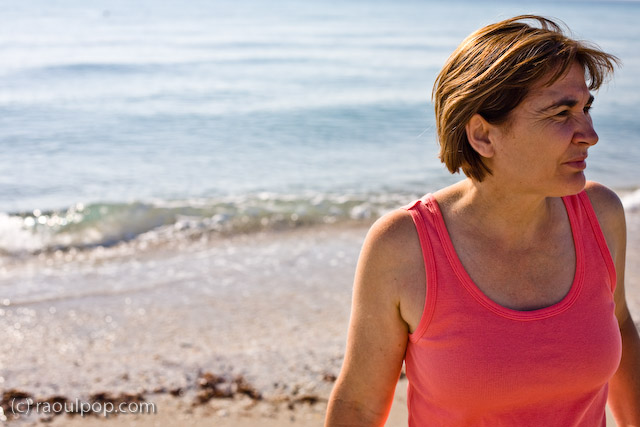
And here’s my mom.

I’m happiest about convincing my mom to sit down with us on the last evening to watch The Awful Truth (1937), one of our most favorite movies. Yes, she enjoyed it.

Standard
Places

Shenandoah Valley panoramas

You are about to see several panoramic photos that have taken me well over 35 hours to create — and I’m not counting travel time, setup time, time it took to take the photos, and the time it took to write this post.

This slideshow requires JavaScript.

A couple of weekends ago, Ligia and I got into our MINI and drove up to Shenandoah National Park, for a single purpose: to take a few panoramic photos of the valley from the tops of the Appalachian Mountains. Fortunately, that simply meant driving on beautiful, scenic Skyline Drive and stopping at various points to set up the tripod and take series of shots that would later be stitched together. Unfortunately, the weather wasn’t exactly collaborating, in spite of the cheery weather report. The day was neither sunny nor cloudy. The light was diffuse and had that washed, in-between quality that doesn’t really make it good for anything. But, I was there, and if that’s what I had to work with, so be it.

As it turned out, driving out there and taking the photos was the easiest part of the whole thing. Like I mentioned in the opening paragraph, putting together the panoramas was by far the longest, most excruciatingly slow stretch of processing work I have ever done. I do not recommend it to anyone, for multiple reasons, which I’ll mention below. If you just want to see the photos, skip ahead.

A few thoughts on the whole thing

I will not do panoramas very often in the future, unless I’m commissioned to do specific ones. If and when I do another panorama for myself (not for a client), it will likely only be a 5 to 10 photo image, simply because it takes an enormous amount of time to stitch and process them on the computer if they’re made up of more images than that.

For one thing, you would need a super fast, quad-core or better computer loaded to the gills with RAM to get any sort of decent speed while processing panoramas. A Mac Pro worth about $7,000 or better should do the trick. Seriously, every single simple operation, like cropping or rotating, took at least 10 minutes or more to execute. Sometimes just assembling a single panorama in Photoshop (through the Photomerge feature) took about 45 minutes. I have the latest MacBook Pro laptop (2.5 GHz Intel Core 2 Duo processor, 512 MB video card, 4 GB RAM), and it still took what seemed like forever to get through each panorama.

The resolution of the photos also matters. My individual photos are 12-megapixels each, at 240 dpi, made by a Canon 5D. Just imagine how much processing power is needed to put together 20 or 30 of these photos into a single image!

People don’t appreciate panoramas. I bet you most people will skim this post, unimpressed, and move on. You can’t really appreciate panoramic photos unless they’re printed out in their full size and spread out on a wall, right in front of you. You can’t appreciate their size on your computer monitor, no matter how large it might be. The largest single monitors nowadays are 30″ and have a maximum resolution of 2560×1600. That’s equivalent to about 6 megapixels at 72 dpi. You can’t possibly appreciate a 12 megapixel photo at 1:1 size on a current-day monitor, much less a panorama made up of 20 of those photos.

As an aside, don’t confuse monitor size with resolution. There are LCD HDTVs on the market that are 42″, 46″ or more in size, but they can only display up to 1920×1080 pixels, which is much less resolution than a 30″ monitor.

I can’t show you the full panoramas on my site, because of photo theft. Not that I think my panoramas (these ones in particular) are spectacular and would fetch amazing prices, but I know for a fact that if I post my panoramas at full resolution, there will be people who will steal them and try to profit from them.

How does the new Lightroom 2 Beta handle panoramas?

After I processed the photos in Photoshop CS3, which worked without crashing for the whole bunch, although it ate an amazing amount of space on my hard drive for its scratch disk, I imported them into the new Lightroom 2 Beta, to see how it would handle them.

Most of the photos were over 1 GB in size, uncompressed. Because I saved most as TIFs, using ZIP compression, their file size on disk was significantly lower. Lightroom did amazingly well to start with. It created small previews very quickly, and also created the 1:1 previews much quicker than Photoshop would have been able to render them. I was able to use the spot heal brush to remove sensor dust spots, and also used the new selective retouching brushes, without any problems. Lightroom 2 was able to do these things without significant delays, and would show the effects instantaneously.

LR2 only started hiccuping when I started to add some meta-data to the photos. As I went through and added meta-data, then opened them at 1:1 size once more, it would hang, literally forever. I had to keep force quitting it, and had to do that regularly, for each and every photo that I wanted to look at. Interestingly enough, when I wanted to export the panoramas to use them here on my site, it did it without any problems, and without crashing. It’s certainly odd behavior, but it is in Beta after all.

On to the photos

While I cannot post the panoramas at full resolution here, I did post them at higher sizes than I would normally post, in order to give you a better idea of what they look like. I also created 1:1 previews of regions of each photo, to help you realize how big they really are.

If you click on each panorama (not its 1:1 detail), it will take you to its photo page, where it will tell you how large it is (in megapixels), and how many photos went into making it. If you click on it again (on that page), it will take you to its larger size. Sorry for the double-clicking, but that’s how things work in WordPress these days.

First, a panoramic of Skyline Drive itself. This road is amazing, and I’m so glad the US government decided to build it back in the 1930s. It literally hugs the tops of the Appalachian mountains and lets average John and Jane drive on top of the world (as high as possible in this area of the world, anyway).

We stopped along Skyline Drive, parked our car, and took a hike through the forest on one of the paths marked out there. In the middle of nowhere (literally), we found this cabin, called Range View.

It was a darling little place built out of stone and off the grid (in spite of the fact that wires ran right above it). The fireplace was outside the cabin, by the front door. While the place was locked up and the windows equipped with thick wire and netting, Ligia and I could spot beds and various pieces of old furniture inside. Don’t know what it’s used for nowadays, but it is used, because there was an open bottle of wine standing in plain sight near one of the windows, and it was of recent vintage.

The rest of the photos, including the 1:1 previews, are found in the gallery below. Click on each to get to the photo page, then click again to see it in a larger size. Enjoy!

Standard
Lists

Condensed knowledge for 2008-03-07

Standard
Places

Dawn over the Atlantic Ocean

This will be my 1,000th post, so perhaps it’s fitting that it be this: photos of the dawn, breaking high above the clouds, somewhere near the coast of France. It symbolizes a new beginning, a milestone — although I have to confess it came by surprise. I hadn’t monitored the number of posts for a while. By chance, I glanced at it yesterday and saw the fateful sum: 999. That’s when I knew I had to make this 1,000th post a little more special than the rest.

We were on our way to Paris from Washington, DC, on board an overnight Air France flight. We were going to have a short layover at Charles de Gaulle airport, then fly to Bucharest, where a rental car awaited our arrival. From there, we’d drive north, crossing the Carpathian Mountains to reach my grandfather’s house in Transylvania.

I liked Air France. The chairs were fairly comfortable, there was more space between the rows than on Austrian Airlines, and all of the seat gadgets worked, which was very unlike Alitalia (see paragraph 7 of that post for the details). The food was great, they got our menu selections right, the stewards and stewardesses were friendly and polite, and we had a good experience overall. I would fly with them again.

I hadn’t slept much all night. I can’t sleep very well on airplanes — I should probably say I can’t sleep much at all on airplanes. There’s the noise, then, of course, the “wonderful” seats and the lack of humidity, etc. I usually watch movies to pass the time while I gasp for air and pour water down my parched throat.

Outside, pitch black darkness stared back at me, and the faint reflection of a bleary-eyed traveler bearing my resemblance was visible in the window. Had there been no one around, it would have been eerie. But Ligia was next to me. She was sleeping somewhat peacefully, and that comforted me.

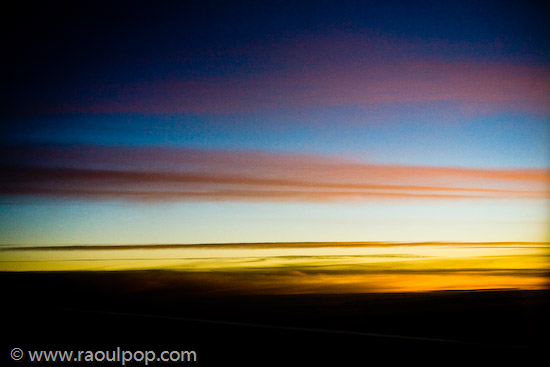
As morning approached and the first rays of light began to break through the darkness, Ligia woke up. I took out my 5D, and stood ready for that fleeting moment when color and light would combine to produce something worth capturing. Here it is.

Dawn breaking

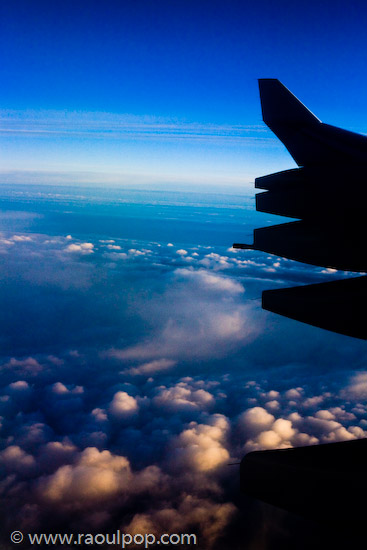
At 33,000 feet, the cloud clover stayed below, and only its remembrance remained, in the shape of wispy lines that traced alongside us.

I kept my camera ready in case other opportunities presented themselves, and I wasn’t disappointed. A supersonic jet passed by us, leaving orange-yellow contrails in its wake.

Jet set

No matter how commoditized flight gets, there are still a great number of people that can never afford to experience it. I suppose that has its pluses and minuses. On the plus side, enough pollution is generated by existing airplanes, so perhaps it’s better that their number is kept somewhat limited. On the other hand, many opportunities open up to you when you can travel so fast. Trips that take days suddenly take only hours. Life, for better or worse, gets faster, and you can do more. I suppose that can be both good and bad, depending on your point of view. I’m on the fence about it myself.

The rarefied life

We found ourselves in our rental car, driving toward Transylvania, that afternoon. We drove through the evening and part of the night. Road repairs made our trip unnecessarily long, but that’s a story for another day. As we were driving through the Carpathian Mountains, night set in, and I stopped to take this photo.

A closing account

As we paused to rest, we thought about the last 24 hours. In that relatively short span of time, we’d traveled over 4,000 miles and still had a few more to go.

Life moves fast these days. If we’re not careful, we can end up old and tired, having spent a lifetime running around from place to place. Sometimes it’s worth more than we know it to STOP, even if it’s only for a few minutes, and look around us. That’s when we realize that those few moments of pause are more precious than whole days of nonstop action.

Standard