Thoughts

Tempered enthusiasm

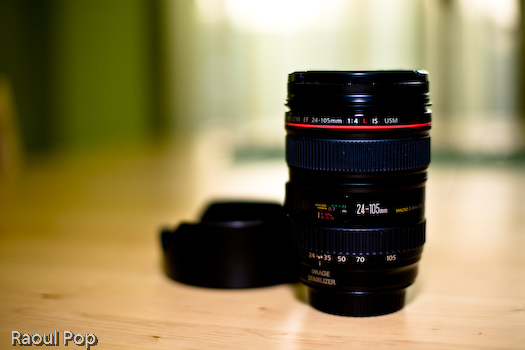
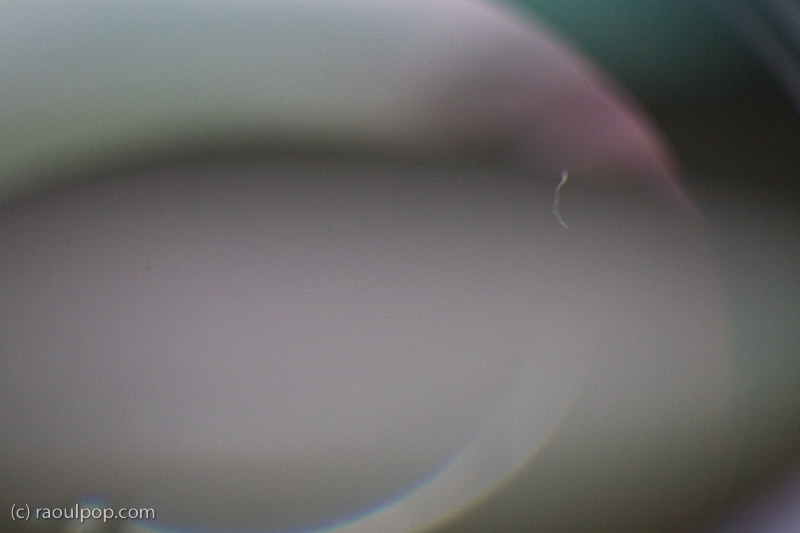
After getting all excited about my new 24-105mm zoom, I found a strand of thread sticking resolutely to the interior of the front lens. It was definitely inside, and I couldn’t get it to go away. Even if it came loose, it would still be inside, and would probably stick to one of the other interior lenses. It was a factory defect.

I called B&H Photo, who graciously shipped out another lens to me, free of charge, and also paid for the return shipment of my defective lens. While I may be disappointed in Canon’s quality control process, I have only good things to say about B&H. Incidentally, I waited patiently for them to re-open after the Jewish High Holidays (they were closed for over a week) so I could order the lens. It was worth the wait. Things I order from them get here the very next day, because they ship out of New Jersey and I live in Maryland. I pay for Ground and get what is essentially Overnight shipping. It’s an added advantage to their great prices and customer service.
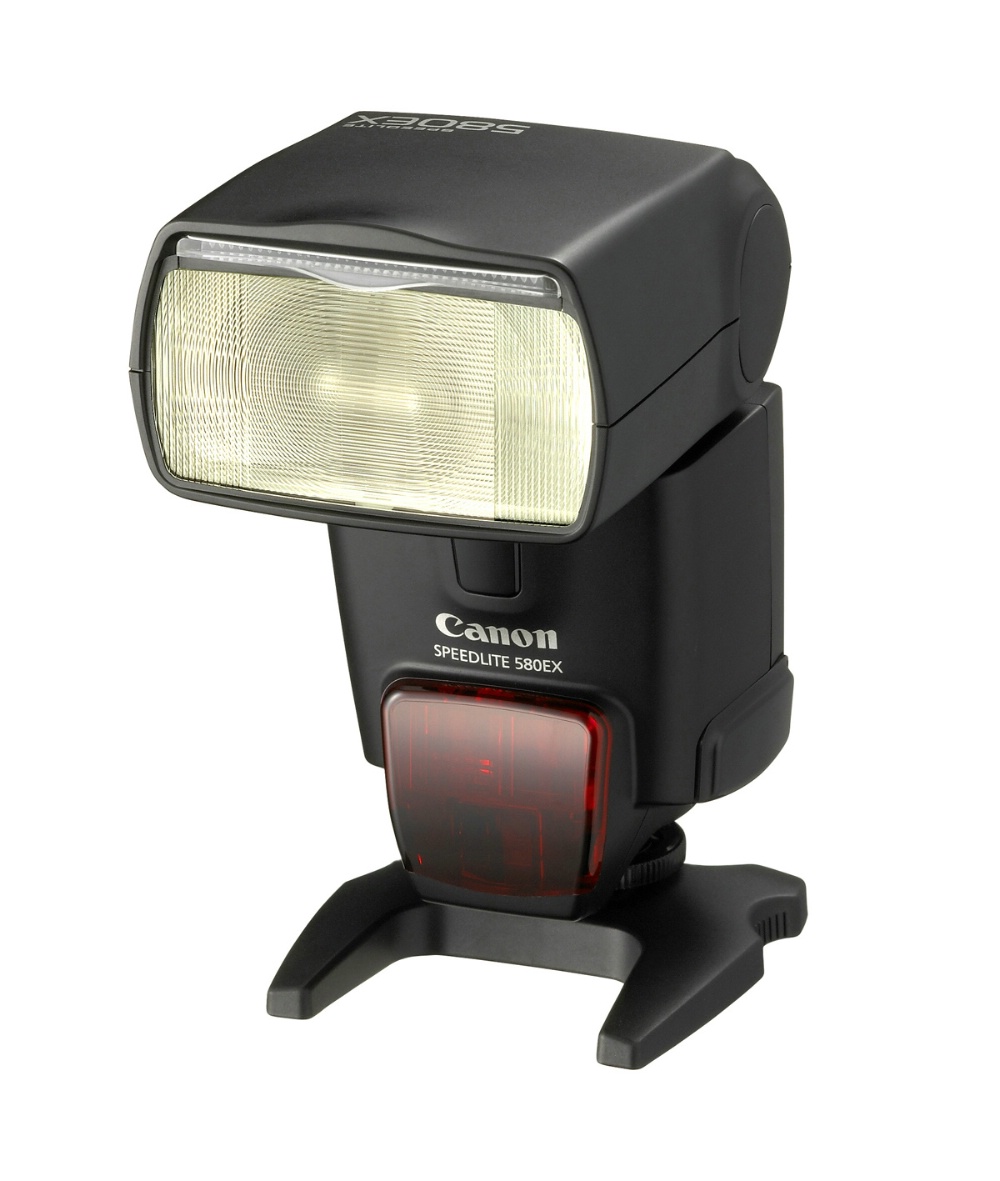
My 580EX II speedlite is another disappointment. It’s been acting strangely since March of this year. Sometimes it refuses to work with the 100mm f/2.8 macro lens. The aperture and shutter settings get completely messed up and the shutter won’t fire. Until now, I had to take it off the camera, take the batteries out, let it rest for a bit, then put it back together and on my 5D, and sometimes it still wouldn’t work.

Yesterday, I finally decided I’d had enough and shipped it to Canon for repairs. I hope they’ll choose to treat it as still under warranty, because I filed the original repair request back when it still had a couple of months of warranty left. We’ll see.

Meanwhile, I got my replacement lens from B&H today, and I have reason to be disappointed with Canon once again. Their QC should be better, especially for L series lenses. This new lens has two tiny specks on the inside of the rear lens. You could almost say they’re not there, except that they are, and it’s really bothering me. Maybe I’m overreacting to this, having been sensitized by the previous defect. I don’t think it’s going to affect the quality of the photos (I hope for that at any rate), but for a lens that costs over $1,000, I expect better build quality.

I leave you with a series of short videos that demonstrate how Canon make their lenses. They’re narrated in Japanese. I saw the English version (in a single video) a while back, but I can’t find it now. For those of you that won’t see the embedded video below (like the feed subscribers), here are the links to each video clip: part 1, part 2, part 3. With all of that emphasis on checking the lenses after they get made, you wouldn’t expect to find strands of thread or specks inside the lenses like I did.

Standard
Thoughts

Finally got the EF 24-105mm f/4L zoom

It was introduced by Canon on 8/22/2005. I reviewed it back on 4/19/2007. I compared it with the EF 24-70mm f/2.8L lens back on 10/5/2007 and deemed it superior. I complained that I didn’t have it on 9/14/2008, after coming back from our trip to Austria. Now I finally bought it, and I am not sorry. At long last, I have a versatile zoom I can use just about anywhere. I am giddy with joy.

Standard
Thoughts

Just give me a good zoom lens, thanks

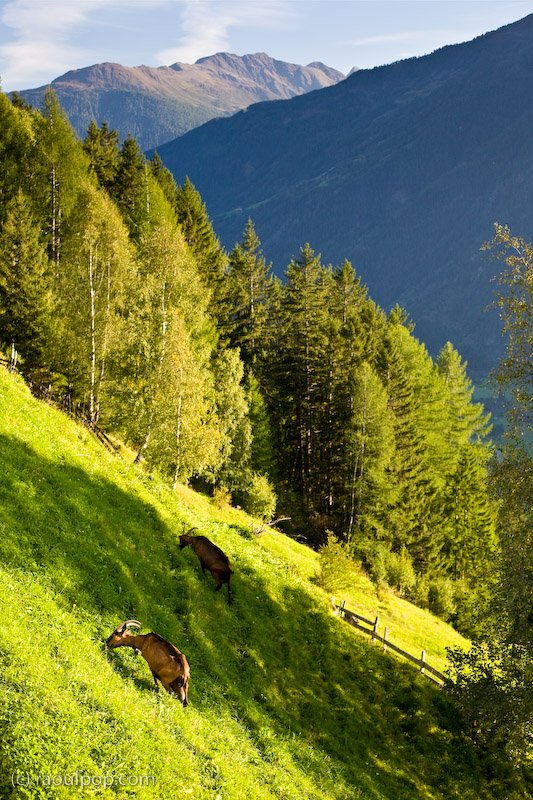
Greetings from Osttirol! My wife and I have been vacationing in Austria for the past week. It’s a gorgeous place to visit and, needless to say, I took tons of photos here. I’ve been carrying my Canon 5D and my lenses with me everywhere, and let me tell you, I’ve been sorely in need of a good zoom lens.

The lens inventory in my camera bag is woefully short at the moment. I started out with three primes: EF 24mm f/1.4L, EF 50mm f/1.4, and EF 100mm f/2.8 Macro. I sold the 24mm prime with the intention of buying the EF 24-105mm f/4L Zoom, but other circumstances intervened, and now I’ve only got the 50mm and 100mm lenses.

There are some who say it’s better to have prime lenses. I disagree. I’d like to see them carry five or six prime lenses in a backpack up and down a mountain in order to get the range that one or two good zoom lenses would give, and then tell me if they still feel the same way. And by the way, try changing lenses in swift mountain breezes, with insects buzzing around you and just dying to get inside the sensor chamber and leave smudge marks (which happened to me). Oh, and don’t forget to throw in a few other accessories such as polarizers and UV filters of various sizes for the different diameters of each lens, plus one or two water bottles and a fleece jacket plus an umbrella in case the weather goes bad, and then we’ll talk…

In a way, I was glad to only have to carry two lenses; I’d have really felt the weight of a third one. But I felt so limited in the photos I could take, because I could only use the 50mm or the 100mm lens to frame my photos. In some instances, I could walk back and forth to get a better view or angle, but in others, there was no way to get a better photo without also being able to fly — which incidentally, would be very nice, but I haven’t figured out how to do it yet. And no, I don’t believe in cropping. I only do it when I absolutely have to. I didn’t pay $2,800 for a full-frame sensor that can take 12.8 megapixel photos so I could crop them and get the same resolution I can get from a $500 camera.

To this day, I slap my head when I think that I could have had the 24-105mm zoom lens as a kit lens with my 5D for a little over half its usual price. I was such a fool not to get it! It’s a light and sharp zoom with more range than the EF 24-70mm f/2.8L, and you can easily walk around with it for hours without getting too tired.

So far on this trip (which ends very soon, unfortunately) I took 1904 photos with the 50mm prime, and 471 photos with the 100mm prime. If I had had (don’t you just love the English language) the 24-105mm zoom on my trip, it’d have stayed on my camera 95% of the time, because that’s the range I use the most, particularly on the wider end of that focal spectrum, which was not available to me, each and every day, how stupid could I be, ugh…

Look, I’m not knocking the 50mm prime, which is a great prime, and very cost effective given its low light capabilities and sharpness. And I’m definitely not knocking the 100mm prime, which is versatile and a fantastic macro lens with gorgeous bokeh. But I really didn’t need f/1.4 or macro capabilities for landscape photography, which is what I did on this trip. I needed a zoom lens!

So, if you’re not sure what lenses to get, don’t do what I did, or you’ll be frustrated to no end as well. First get a good, lightweight zoom lens, one that won’t kill your wrist as you carry your camera around taking photos. Later, as you find that you need more specific capabilities, such as being able to take handheld photos at dusk or dawn, or more bokeh, or macro photos, then spring for those primes that have the features you need.

Standard
Thoughts

DSLRs and video to converge

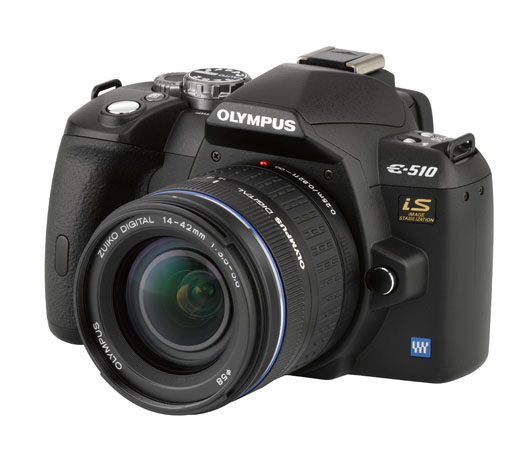
On September 24, 2007, I published my review of the Olympus E-510 DSLR, one of the first prosumer cameras on the market to feature Live View (TTL video preview, directly off the same CMOS sensor used for photographs). Unless people were to jump to conclusions, I wanted to make it clear that it won’t let you record videos — but I knew that market forces were aligning to bring some sort of video capability to DSLRs.

I myself was opposed to that idea. I thought it would bastardize a DSLR to make it record video. After all, a DSLR takes great photos, and it should only do that. I also thought that video camera manufacturers would squeeze photo-taking capabilities into video cameras, which would result in crappy photos being taken by gadgets that should have stayed video cameras. Well, I was wrong. I forgot all about how the market delivers what the consumer wants, and has a way of sometimes exceeding expectations.

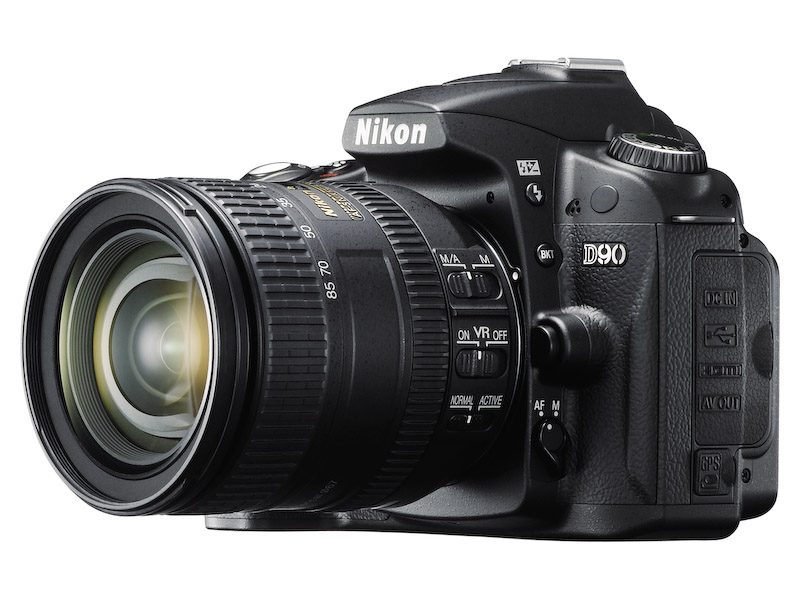
Behold the Nikon D90. It is the first DSLR that takes video, and it’s not some low-res video that you can get from a point-and-shoot digicam; it’s 720p HD video. What’s more, it lets you control depth of field by manually adjusting the focus while shooting. Best of all, you’re already using a sensor that takes great photographs, and the expensive glass you already paid for. You don’t need to spend yet more money on a dedicated video camera. You get the best of both worlds: the interchangeable lenses of a DSLR, and the quality of a decent video camera.

I am truly blown away by the D90’s specs. If I hadn’t already invested in the Canon 5D and Canon lenses, I would be sorely tempted to get the D90. I crave (badly) the ability to take quality photos and video with a single device, but unfortunately, up to this point, that was not possible unless I carried both a DSLR and a video camera.

As good as the D90 is though, it will soon be eclipsed. Why? Market forces. How long do you think it will be before we’ll have a DSLR that can record 1080p HD video? Or how about an even smaller and thinner DSLR than currently possible? How about a DSLR that looks and weighs about the same as a point-and-shoot, but gives you photo quality that’s equivalent to (or exceeds) today’s DSLRs? It’s all coming.

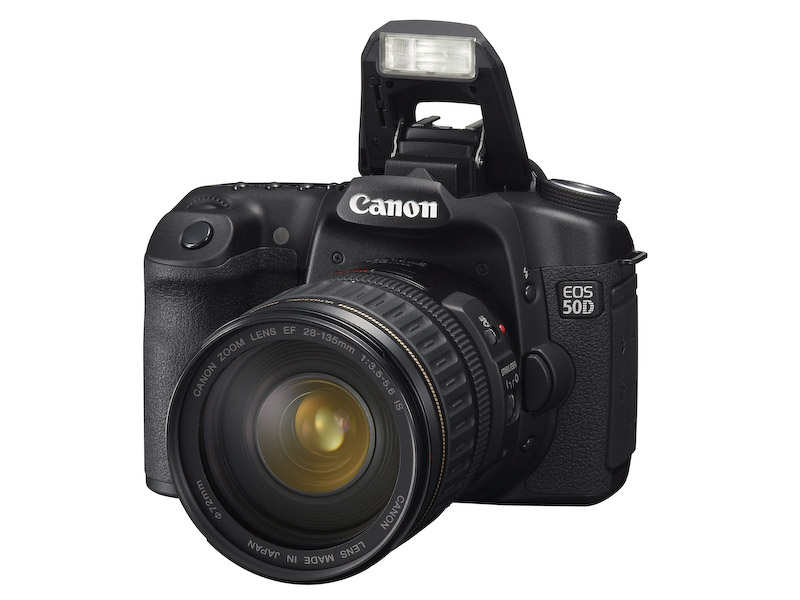
Let’s look at what’s currently available. First, we have the new Canon 50D. You may think it’s been eclipsed by the D90 or the D300, but you’d be wrong. You see, Canon took things further than I thought possible with it, by giving us 15 megapixels in a cropped (1.6x) sensor that also shoots (natively) up to 3200 ISO. I didn’t think that was possible on a cropped sensor. I thought 12 megapixels was the max at that sensor size. I was wrong.

You know where else I’ll be proven wrong? Back when I attended the Olympus E-3 launch party, I talked about the camera’s (somewhat) limited 10 megapixel resolution, and I thought they had reached the limitations of the Four Thirds 2x cropped sensor. I thought the sensor’s surface area was too small to get more resolution out of it. But now that Canon has proven you can get 16 megapixels out of a 1.6x cropped sensor, I don’t see why you can’t get 12 megapixels or more out of a 2x cropped sensor.

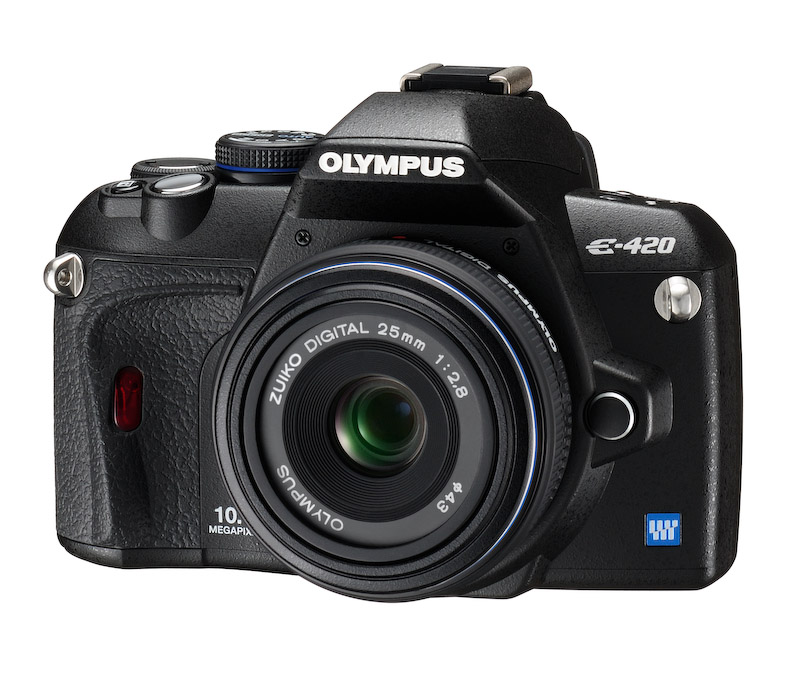
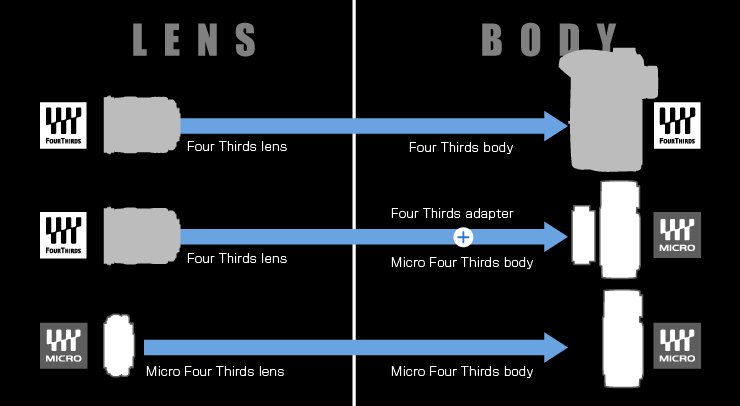
Here’s where I get to the last part, smaller and lighter DSLRs than currently thought possible. Currently, the smallest DSLR on the market is the Olympus E-420, pictured below. Do you know what the Four Thirds consortium has come up with? It’s the Micro Four Thirds standard, which allows for thinner, shorter lenses, and thinner, shorter camera bodies. A Micro Four Thirds camera will look and weigh just about the same as a point-and-shoot camera with a decent zoom lens.

Wait, it gets even better. The current aspect ratio of Four Thirds cameras is 4:3. The aspect ratio of Micro Four Thirds cameras will be 16:9. That’s the same aspect ratio used in movies. Where do you think that’s going? It means your photos and your videos will have the same aspect ratio, and the line between photography and videography will get even more blurred, and it’s quite possible that in the near future, we’ll have 1920x1080p HD video recorded by a tiny little DSLR with a tiny little lens on it.

That’s just what seems logical to me, and I’m a fairly conservative estimator. You wait and see what the market will do. We’ll have some very interesting DSLRs to play with in the next few years.

[Images used courtesy of Canon, Nikon and Olympus. ]

Standard
Reviews

What I did in 2007

I made a concerted effort to write consistently and with substance in 2007. Product reviews are one of the foundational pieces of my site. I enjoy doing them, and people seem to enjoy reading them. I thought I’d highlight the most important ones from 2007 below.

Camera reviews (in chronological order)

The thing to keep in mind about my camera reviews is that for all but one of the reviews marked “full”, I used those cameras as my primary cameras for at least a month. That means they went with me wherever I went, so my understanding of how they work in real-world conditions is more than can be gotten from a lab review.

Lens reviews (in chronological order)

I also started reviewing lenses in 2007. Since I had to rent them in order to do this, I couldn’t very well keep them for a whole month, like I did with my cameras, but I did my best to make sure I put them through most conditions you’d encounter outdoors.

Hardware reviews (in chronological order)

I started doing hardware reviews as well, motivated by the problems I kept having with the products I had purchased. I wanted to tell people what to watch out for, and it looks like they appreciate hearing about it.

These were just a few of the articles I wrote during 2007. To browse through all of the posts from that year, use the Archives. Don’t forget to subscribe to my feed so you can find out about all of my new posts in 2008.

Thanks!

Standard