The Olympus SP-560 Ultra Zoom is just about as good and versatile a camera as you can get, short of a DSLR. I’ve been using this late-model digital camera for the last month, and I’m very impressed with its design and capabilities. A detailed write-up is available below, as well as a video review (approximately 46 minutes long). Sample photographs are enclosed at the end of the review.

How is this camera different from the rest?
- Amazing focal range (18x zoom or 27-486mm equivalent)
- Great design
- Image stabilization (both sensor shift and digital)
- High ISO capabilities (50-6400 ISO)
- Both JPEG and RAW shooting modes
- Face detection
- Shadow adjustment (brings details out of the shadows)
- Uses AA batteries
- 3-15 frames per second
- 8 megapixels resolution
- Timelapse (in-camera)
- Alarm clock (yes, you read that right; it’s got an alarm clock built in)
- Image editing (in-camera; lighting and redeye fixes, RAW and color editing, frames and labels, calendar creation, face selection and cropping, movie editing)
Let’s get to the details
I was impressed with the great design of the camera as soon as I pulled it out of its box. As a matter of fact, the first thing that attracted me to the camera was its design, and that’s why I requested a review unit from Olympus. I’m glad to say I wasn’t disappointed by either the camera’s design or its capabilities.
The SP-560 UZ is not a camera for a complete beginner to photography. In order to use it fully, you need to be comfortable with basic camera controls, and to know how to change camera settings. The people who will appreciate this camera will be those who want a long focal range, high ISO capabilities, great optics and print-worthy resolution. As a matter of fact, this would be a good secondary body for a DSLR user that wants to get extended focal reach without spending thousands on expensive telephoto lenses. They’ll be able to use their DSLR at close ranges and use the SP-560UZ to fill in for macro photography and far-away shots.
As soon as you look at the camera, you’ll notice something unusual: every portion of the camera that can be gripped is covered with soft rubber. The eyecup and the lens barrel are lined with rubber as well. You’ll also notice the great-looking metal frame on the side of the camera, with eyelets where the camera strap attaches. The frame not only makes the camera look great, but it reinforces the body as well, guarding against bumps.
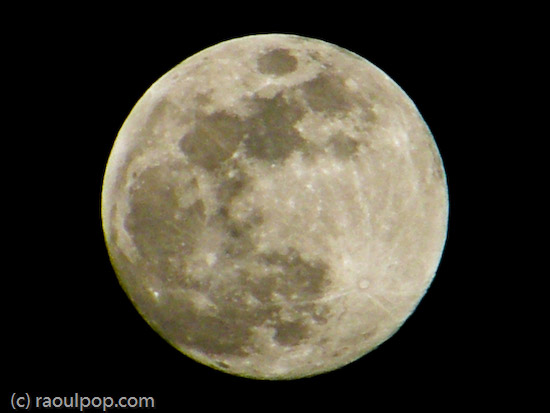
This camera is called an Ultra Zoom for a very good reason. It has an 18x zoom. That translates to an equivalent focal range of 27-486mm. This was previously unheard of, and it’s one of the largest zooms out there. I believe the only camera that currently tops the SP-560 in zoom length is the SP-570, with its 20x zoom. It is also made by Olympus.
As you can see below, the camera features a 2.5″ color LCD at 230,000 pixels. The LCD display will compensate for exposure and WB changes in order to approximate the look of the finished photograph. It’s pretty accurate in real world practice, which is great, especially when you consider that other digital cameras like the Fuji S9100 do not have accurate LCD displays.
The controls are all well-placed and easy to reach and use, even in the dark. I found myself using them with no problems while shooting at night, after only a day or two of using the camera during daylight hours. One thing I love about Olympus is that they carry their design language through their entire lines. The mode dial, buttons and colors used for the symbols are all easily recognizable and perform the same functions on all their cameras. This means that once you’ve shot with any Olympus camera, you can pick up another and continue using it without having to worry about how to change settings and options. This makes their cameras easy and enjoyable to use.
The great design of the camera becomes self-evident when you look at it from the top. Here you can see that the camera has a proper, nicely-sized grip, and the top controls are well-spaced. When you hold it in your hand, it’s well-balanced, even with the lens barrel extended. It’s a pleasure to use it.
Another couple of characteristics that become visible when you look at the camera from this angle are the lens specs: ED (which stands for Extra-low Dispersion), increases contrast and sharpness, as well as decreases chromatic aberration, 4.7-84.2mm is the focal range (27-486mm equivalent), and f/2.8-4.5 (aperture).
I find the aperture specs amazing. For a lens with this mind-boggling range, the aperture stands out as an achievement. First, the lens starts out wide at f/2.8, which is one of the highest apertures possible for zoom ranges at the moment. (f/2.0 is the lowest, but very few lenses have it.) Then, at its full focal range, its aperture is f/4.5 instead of f/5.6, which is the norm even for much more expensive lenses. Keep in mind this is not a professional zoom lens, but a lens built into a digital camera! That amazes me.
One of the buttons that’s visible from the top view is the Image Stabilization button. It lets you toggle IS on and off. I used IS extensively while shooting with the SP-560 UZ, and it’s definitely worth it. It works by stabilizing the image through shifting the sensor on the X and Y axis, and by providing an extra layer of digital image stabilization as well. It’s a must-have feature on a camera with this focal range, and the fact that it works so well makes it remarkably useful.
Another benefit this camera offers is that it uses AA batteries instead of the custom-made rechargeable batteries of other cameras. I consider this a huge plus in my book, since I can use my existing cache of rechargeable batteries and not have to worry about having to carry the camera’s charger along with me, or purchasing an additional custom battery for it.
The battery life is remarkably good – better than I’d expected. I was able to get about 275 photos with the camera after putting in freshly charged NiMH AA batteries. Keep in mind digital cameras use up batteries a lot more than DSLRs, because they have to power the LCD display all the time, and they also use electricity to power the zoom motor.
The camera is remarkably lightweight without batteries inside, and remains lightweight even with 4 AA batteries inside.
One other detail that speaks volumes about the quality of the camera’s build is the lens cap. You know how lens caps usually work by some latch or notch that extends outward and secures the cap against the lens barrel? Not with this lens. It was fitted with special felt on the inside, and this creates enough friction to hold the cap onto the lens barrel nicely. The result is a beautiful, fluid sliding movement when attaching and detaching the lens cap. It’s poetry in motion.
The camera is sturdy and weather resistant. I took it outside during a snowstorm and took photos while barely shielding it from the weather. It handled the situation without any problems, and even though it was dripping wet when I got it back inside, no damage occurred. I should mention the camera is not waterproof or weatherproof. Its build quality alone sustained it during the wet weather.
With every new Olympus camera I review, the on-screen menus seem to get better and better. They’re well laid-out, the colors are perfectly chosen to increase visibility, settings are easy to find — I’m impressed every time.
The picture quality is there, surprisingly. I say “surprisingly” because I expected the photos to be somewhat fuzzy, or some defects to exist in the lens given its extreme 18x zoom. I was pleasantly surprised when I discovered that the photo quality does not suffer at all, even with the extended focal reach. I saw no chromatic aberration, no fringing, no vignetting (if you see vignetting in my sample photographs, it’s because I added it in post-processing). The photos were slightly less sharp at the upper end of the zoom (14-18x), but the only way you can get sharper optics at those ranges is to pay thousands of dollars for them. Given this camera’s price, and the fact that the lens is built-in, the optics are great, and so is the photo quality. You’ll see what I mean when you look at the sample photographs shown at the end of my review.
A few issues
While high ISO noise is remarkably lower than on other digital cameras and even some DSLRs I have used, there is an odd transition that takes place in noise levels as one goes from ISO 800 to 1600, 3200 and 6400 ISO. Noise levels start to go up around 800 ISO and continue that way up to 3200 ISO, then are drastically reduced at 6400 ISO.
This is because resolution is cut back to 3.3 megapixels at 6400 ISO in order to cut back on noise. This is very effective and yields very usable photographs at that setting. The camera does not reduce the resolution at 800, 1600 and 3200 ISO, noise levels remain higher, and photos taken at those ISO settings, particularly at 3200 ISO, are not that usable. It would have been better to scale back on the resolution starting at 800 or 1600 ISO in order to cut back on noise levels at those settings as well.
Don’t let this make you think the camera has high noise levels. As stated above, the noise levels are lower than on other digital cameras I’ve tried, including some DSLRs. The Olympus EVOLT E-500, for example, only went up to 1600 ISO, and the chroma noise at that setting was unbearably high.
I tried to get the time lapse feature to work on three separate occasions, and couldn’t. I followed the directions as outlined in the manual, and the camera simply wouldn’t obey my instructions. I’m not sure why, and if you’ve managed to get that feature to work, do let me know in the comments. Perhaps I did something wrong, but then again, I followed the instructions to the letter. I think this may be something that will need to get fixed with a firmware update. It is fixable.
The zoom motor is fast, which is needed for the long focal range, but fine zoom adjustments couldn’t be obtained for the very same reason. When I wanted to adjust the framing of a photo, the camera would move past my desired framing when I used the zoom lever, simply because it moved too fast. This is something you may want to keep in mind as you use the camera. Fine zoom adjustments are somewhat possible, but only through very short touches on the zoom lever.
Although RAW capability is present and it works, it’s not usable in situations where you have to depend on a decent frame rate. I used RAW for about a day on the camera, then promptly went back to JPG mode, because it takes over 15 seconds to write a photo to the card when using RAW mode.
The manual focus feature on the camera isn’t accurate. It’s really more like an electronic approximation of the focus, adjusted manually. I don’t think this issue is camera specific. It’s probably present on all digital cameras that don’t have a real manual focus ring on the lens barrel. The camera provides a little picture-in-picture magnification of the photo, in order to help you gauge whether things are in focus as you adjust it manually, so rely on that instead of the feet or meters gradation present on the side of the screen. This will work for close ranges, but will not work for things or objects that are far away. You’ll see what I mean if you try it out.
What you’ll need to do in those situations is to switch the AF to area selector, and to move the focus area to a point in the photograph that the camera can use to adjust its focus automatically. That way things will work properly. You’re pretty much on your own for sky photographs. Switch to a small aperture (up to f/8) and hope for the best there. Again, this is not a camera-specific issue, all non-DSLR digital cameras seem to have this problem.
A few wishes
I would have been thrilled if this camera had a hotshoe mount. It does have a built-in flash, but it would have been great if I could have put an external flash on it. It does, however, have the ability to work with external flashes wirelessly, so if you have those, you’ll be able to use them with this camera just fine.
I would have loved to see it use a remote control. It’s really nice to be able to photograph or start video recordings via remote control.
A dedicated button that could turn the face detection feature on and off would have been very useful. I know the IS button can be programmed to control face detection, but dedicated buttons for each feature are needed. Face detection is a hot feature and should be “featured” more prominently.
Last but not least, a manual focus ring would have been awesome. Maybe even a manual zoom ring — that would have helped with the battery life, although, like I said before, I’m not complaining about that. The battery life is already pretty great.
Video review
You can view it below or here. And you can download it as well.
Summary
This camera feels like a luxury item. Really, it does. It’s beautifully designed and finished, and overall, it works great. Its amazing focal range makes it a very versatile camera that’s worth bringing along everywhere, even indoors in low light. It can yield usable photographs without a flash at 6400 ISO, and that’s remarkable.
Don’t let my few gripes fool you. This is a great and highly usable camera. I really do wish I could have reviewed this camera during spring, summer or fall instead of winter, because you would have been able to see how well it reproduces color and handles details throughout the focal range.
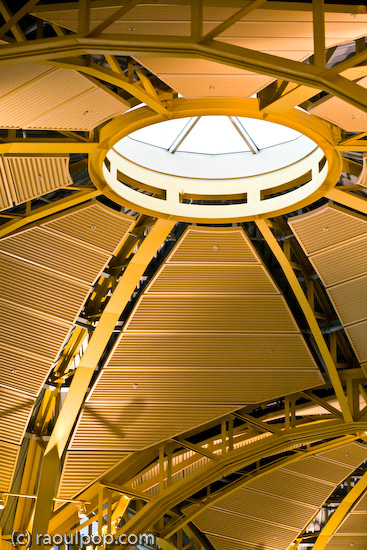
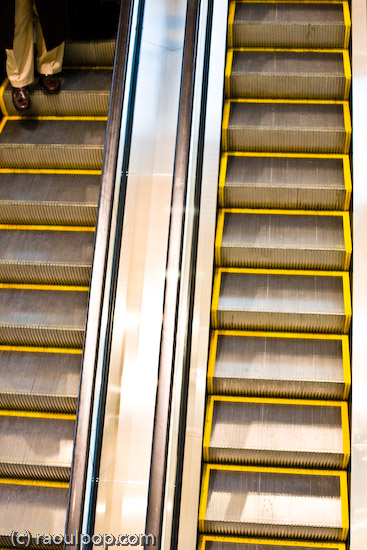
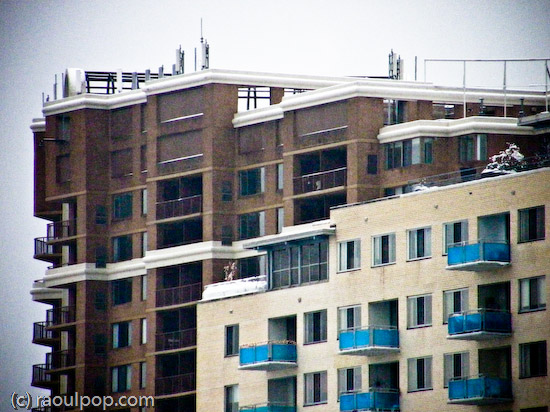
The sample photographs are shown below.
Buy the Olympus SP-560 UZ
More information about the Olympus SP-560 UZ
You can view even more sample photographs taken with the SP-560 UZ by visiting these two posts of mine:
- Vantage point photography, where I photographed North Bethesda from the top of a local skyscraper (skyscraper being used loosely here, but it was one of the tallest buildings around at 18 stories high)
- January snowfall, where I photographed a recent snowstorm in our area
- Watching the skies, where I took photos of my community
26.011201
-80.149490



























 Raoul Pop


