We recently purchased an ornate Baroque wall clock which was working perfectly fine at the store. When we got it home and put it on the wall, we discovered that the crystalline chime it makes each half-hour had disappeared. I assumed that it was a minor issue, so I opened it up carefully, after which I discovered that the hammer which struck the bell inside the mechanism had gotten stuck during the transport. After I got it unstuck, the clock started chiming again. Not an earth-shattering discovery but we were happy. Here’s a look at the process:
After working with this setup for over a year, I wanted to share it with you, having gained full knowledge of its advantages and disadvantages. It is what works for me at this time, in my particular situation, but it may help you as well, if like me, you make your own videos and don’t have a team working behind the scenes.
This 3-4 camera setup is what I use to film my wife’s shows: Ligia’s Kitchen and De Vorbă cu Ligia. For my own videos I use a more basic 1-2 camera setup, since I have to be both in front and behind the camera.
Let me state the advantage and disadvantages first and then I’ll give you the exact list of equipment.
The advantages:
The big iPad displays allow for proper framing, focusing and exposure control. I always disliked those tiny screens on DSLRs and video cameras.
The iPads have big batteries (except for the iPod Touch) that allow for hours of filming.
The featherweight iPod Touch can be mounted in all sorts of unusual spots (including overhead).
Live viewing and control of the video feeds (things such as focus, exposure, white balance), including instantaneous switching between the feeds, from a master iPad. One person can manage all of the cameras at once. This setup allows up to four angles at a time.
Lightweight, small and highly portable setup.
With the aid of dedicated apps, you can get very good control of the video quality and look, right in the camera, without having to resort to a lot of post-editing.
The disadvantages:
Video quality isn’t on par with what you can obtain from a good DSLR with a good lens or better yet, from a dedicated, professional video camera. The dynamic range isn’t there, the noise levels are fairly high, the focus isn’t crisp enough. What you’ll need to do to compensate is to make sure your lighting is as good as you can get it.
The battery life of the iPod Touch is terrible. Have an external power source (plug or power bank) readily available if you need to record more than 30-45 minutes of video.
Also, the iPod Touch has a much slower processor than the iPad, so don’t attempt to use it as a master controller or for video editing. Use it only as a slave camera and be prepared to wait for good, long times when it updates itself with new Apple software and apps.
The on-camera (iPad Air and iPod Touch) microphones don’t offer good sound. The iPad’s microphone is passable from a close distance when nothing else is available, but that of the iPod Touch sounds tinny, no matter the situation. Use shotgun, dedicated or lavalier microphones for better sound.
You’ll need good WiFi signal in the room where you’re recording video, if you’re going to want to manage the video feeds from each iPad camera on a master iPad.
The equipment list:
4 iPad Air units: mine are 128 GB first-generation models, I got a great deal on them at B&H Photo about 1 ½ years ago, I think they were old stock and they were making room for the 2nd generation iPads. I went for the largest capacity available because I wanted to be able to record lots of video without needing to stop and download. It just so happened that they also had 4G LTE, which was a nice plus. It was the right decision.
1 iPod Touch unit: I got this because it was small and I wanted to use it for overhead angles, where a heavy camera might fall on my head. I didn’t want to use my iPhone, just in case it ever fell from its rigging. (An iPod is cheaper to replace than an iPhone.) It was the right decision. The short battery life and slow performance were unexpected and disappointing, but it does its job when needed.
5 iOgrapher cases for the iPads and iPod Touch: check out their website, they keep working on their cases and have developed new ones to fit the new gadgets from Apple. I love their cases because they work both handheld (they have two big handles on each side) or mounted on a tripod. And they have mounts for external microphones and lights, right on top where they’re needed.
5-6 iOgrapher lenses: I use a mix of Telephoto and Wide Angle lenses made for the iOgrapher cases, they use a 37 mm mount. They’re not pro-level lenses and they have a bit of distortion and chromatic aberration around the edges, but they’ll do the job.
2 Rode smartLav+ lavalier microphones. This is where our iPhones are useful. We put them on Airplane mode, plug these mics into them, start up the Voice Memos app and slide them in our pockets. We get to record great audio with little fuss.
The following iPad/iPod Touch/iPhone apps: the built-in Camera app that comes with iOS, RecoLive MultiCam and Filmic Pro.
1 or more video lights. There are a ton of options here. We use this one. Its advantage is that it comes with interchangeable color filters that shift the temperature of the light.
1 hair light such as this one. I mounted it on a C-stand that I extended to its maximum height and lateral length. You may need to use some sandbags to stabilize the stand.
We also use the room’s own lighting for effect and illumination. I tend to use cold temperatures for the studio lights (white CFLs and LEDs) and warm temperatures for the room lights. I know people say you shouldn’t mix light colors when you’re shooting video or photos, but I like it. When they’re mixed the right way, they give me a “live” white balance, an in-studio “look” for my video, which is better than doing it in post.
If you have any questions or if I’ve forgotten to mention anything, let me know in the comments. I hope this helps you!
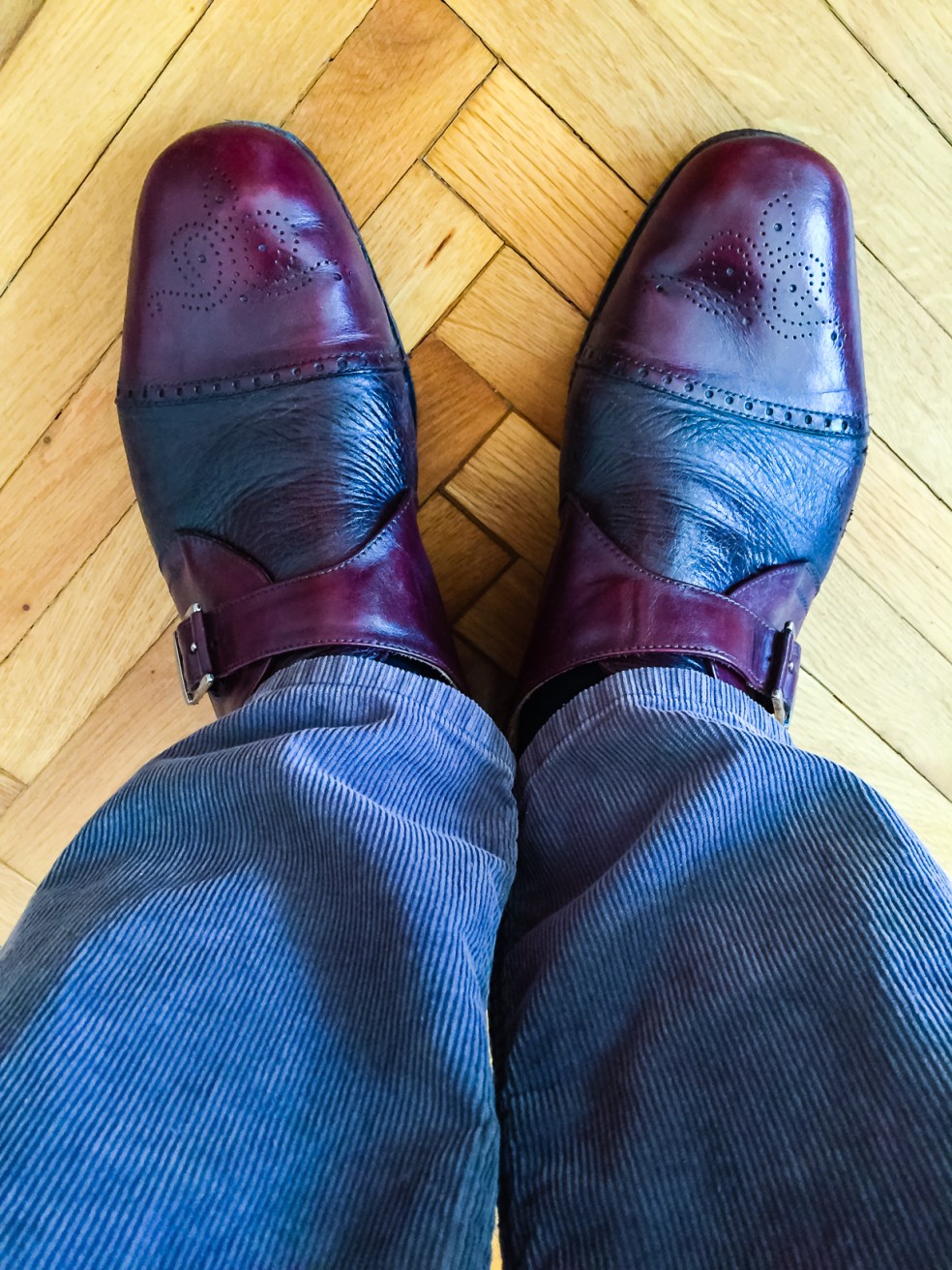
I’ve owned these monk-strap shoes for over 10 years. I photographed them this morning for the purposes of this post. These are one of the pairs of shoes I use around the house for all kinds of work: home office, going to the cellar to fetch firewood, going into the dusty attic to put or get various things, renovation work, etc.
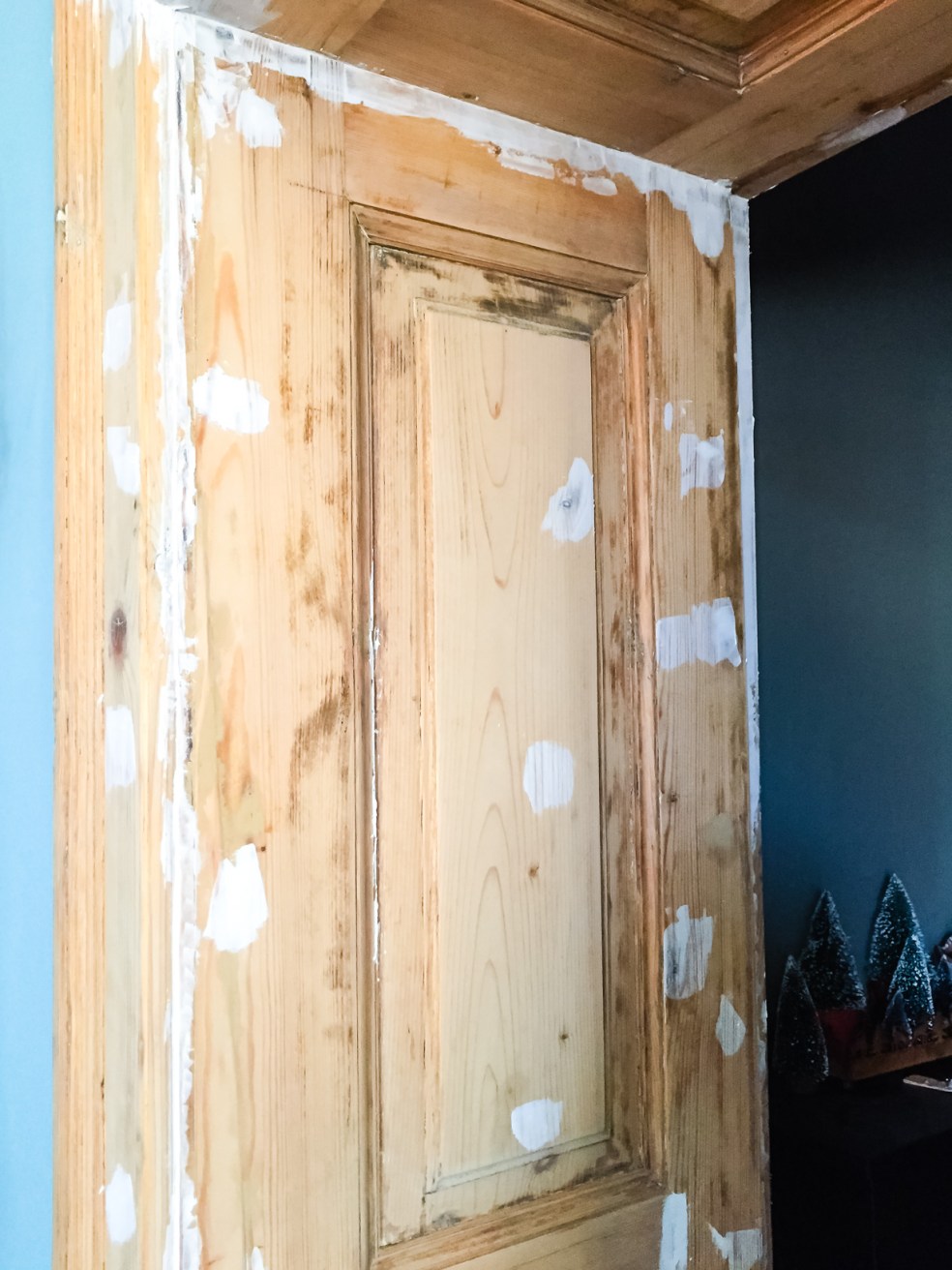
I used them last night as we mounted this restored door frame back in place, as I used a miter saw in the cellar, carried the various parts up to the house, used a nail gun to secure them in place and assemble the frame.
You can see these same shoes in this video.
I also used them when I built our garden shed in Florida.
In spite of all the wear and tear I’ve put them through over the years, a little elbow grease always gets them looking great, and that’s a testament to the craftmanship of the shoemaker. The brand (Mario Calugi) isn’t as important here as the lesson to be learned from the experience.
Lots of people make a big stink about how wearing leather contributes to animal cruelty but the truth of the matter is, using every little bit of an animal that’s going to get sacrificed for its meat anyway, is the right thing to do.
Furthermore, taking proper care of your belongings, especially the ones made from other beings (because animals are beings, not things) is crucial and it is part of showing respect for the sacrifice of that animal, for the protection its skin profers you and for the hard work that went into making the finished good you now have in your possession.
Good leather lasts a lifetime if you take care of it. Great shoes also last a lifetime if you take care of them. Yes, it means changing the soles when they wear out, it means treating the leather and polishing it, but it’s the right thing to do. It’s part of being a good, responsible human being to take care of your stuff. Please do it.
One of the things I know to be true, because it’s proven itself to me time and time again, is the value of my relationship with Ligia (my wife). I knew it to be true as soon as I met her. My heart told me so, in pretty clear terms, that if I didn’t connect with her, if I didn’t make it work with her long-term, it would be something I would regret for the rest of my life. The heart will do that — talk to you at crucial times — but you have to listen. You have to be in a state of mind where you’re looking for guidance. Both my wife and I were in that state of raised awareness, so to speak, when we met, and we both felt that we were made for each other, even if we hadn’t yet gotten to know each other.
I told you that in order to set the scene. Fast forward 14 years and my wife and I are happily married. More than that, we know we can trust each other implicitly. We can rely on each other implicitly. We think alike. We share common goals and visions for our life together. We share everything with each other: what we’re thinking, feeling, planning on doing, finances, expenses, etc. We work together. We form the perfect team and it’s this concerted effort, this uniting of two beings, that multiplies the effect of our united actions, so that it’s not just x2, it’s more like x3 or x4. I guess one word for it would be synergy. A year or so ago, we were told by a Russian shaman that we were true soulmates, which is apparently something quite rare in the world. We didn’t seek this piece of knowledge, it came out serendipitously as we were inquiring about something else.
I believe our relationship grew to be so for two reasons: (1) we both wanted it to be this way and we made concerted, persistent efforts over time to get it to this point (we’re aware that this is an ongoing project) and (2) we shared a lot of common ground from the start. You know the old saying, “opposites attract”… well, long-term that’s not really true. You need a lot of common ground so that you stay together over time, otherwise the relationship and the bond between you will get pulled in different directions. Instead of naturally pulling together, you’ll waste a lot of effort and time just trying to stay together and you won’t be able to accomplish the goals you want to achieve as a couple, or even the goals you want to achieve as a person.
Now don’t take my words as golden rules. I’m not trying to pose as an expert here. I’m talking strictly from my own experience and as I stated here, my experience with women is limited and before I met my wife, it was mostly painful. This is what works for my relationship with Ligia. Your experience may vary. With that in mind, here’s a video I made on this very subject. I spoke from my heart and I hope it helps you.
In this episode, Ligia makes a quick and delicious dessert from raw vegan whipped cream and blackberries, sweetened with Green Sugar, an all-natural powdered sweetener made from stevia, with none of the stevia after-taste.

 Raoul Pop