Places

One perfect foggy morning

Have you ever woken up to the perfect morning fog? I have. We were staying with relatives in a tiny little village in Moldova, Romania. Their house sat between several hills.

As I got out of the house on day, morning was just starting to break. The soft, diffuse light just barely illuminated the sleepy silhouettes of the trees.

Breaking light

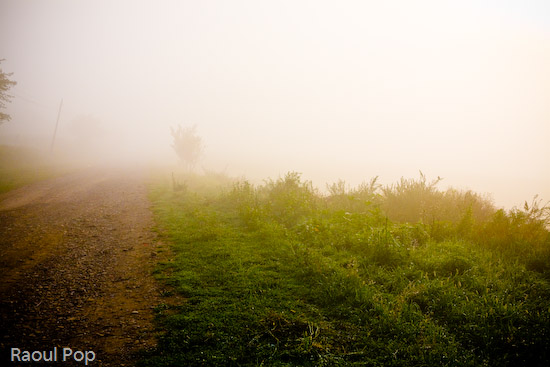
A little while later, the sun started breaking through the fog. The empty country road lay out before me, beckoning.

On the road again

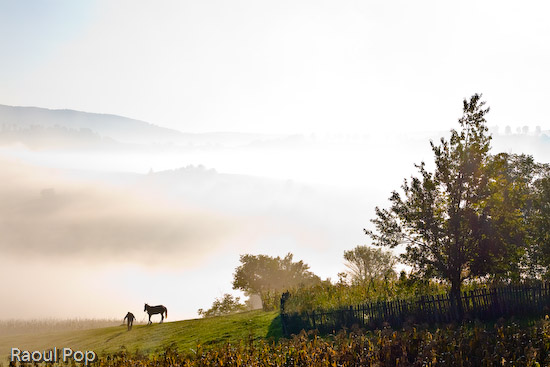
People started to wake up. Here, a man took out his horse to pasture as the sun literally burst onto the scene from top right.

Into the morning sun

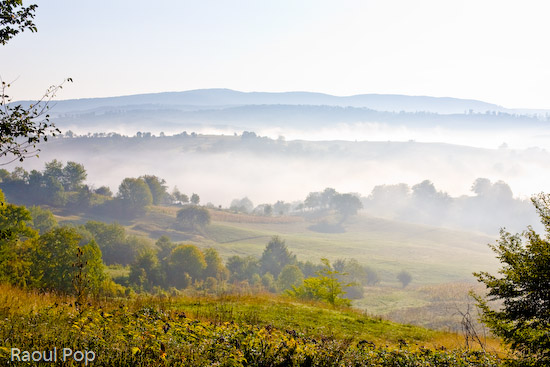
The fog found itself overpowered by the sun, and retreated to the valleys between the hills. As far as the eye could see, little hill tops peered out from among the soft white fog, greeting the morning.

Hill top after hill top

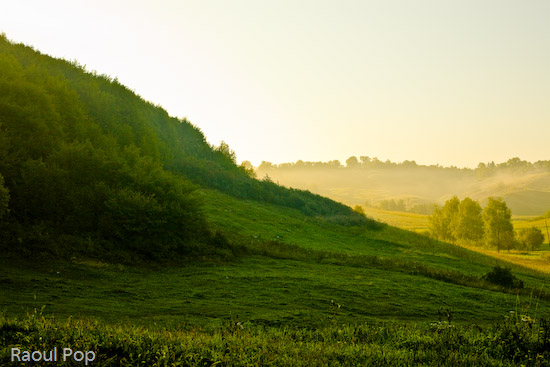
I descended into a valley not yet touched by rays of light, and spotted the sun around the corner. A new day had begun, and there were many miles still to go.

Just around the corner

Standard
Reviews

Flushed Away (2006)

“Flushed Away” is an entertaining tale of a house rat named Roddy enjoying the good life as the spoiled pet of a rich girl. Just as the girl’s family goes on vacation and he can really let loose, an intruding rat comes in, gets a taste of the good life, and flushes Roddy down the toilet.

Roddy ends up in some sort of rat colony (more like a little city) down in the sewers, and he must find a way to get back home while negotiating life on completely new terms. He finds a girl rat named Rita, who helps him. The two make an unlikely pair since she hates him from the get go, but as they say, opposites attract. There’s a nice surprise ending that I don’t want to spoil for you, and tons of action throughout.

If you’re familiar with Nick Park’s work (think Wallace & Grommit) then you’ll recognize the animation style. The difference is that “Flushed Away” is computer-animated, not made with the usual stop-motion clay puppets that Nick Park works with. The same style was preserved, for the most part, but it was all done on the computer. There is a noticeable difference, and for the diehard Wallace & Grommit fans, it’s a bit of a letdown. The movement is neither smooth enough for good computer animation, or jumpy enough to fit Nick Park’s stop-motion style. But in the end, the movie stands on its own as an enjoyable adventure and one tends to forget about the animation’s shortcomings.

Nick Park actually voices one of the slugs in the movie. He’s not in the credits, and I can’t find out which slug it is, so I’ll let you all guess. If you find out, do let me know.

This movie also features famous actors for the main voice talents, and as I stated in other movie reviews, there’s no reason not to give real voice actors the chance to do these roles. I don’t know that Hugh Jackman and Kate Winslet added anything special to the voices of Roddy and Rita, other than their names and a bit of intonation. Now when it comes to The Toad, voiced by Ian McKellen, and Le Frog, voiced by Jean Reno, the story is entirely different. Their voices are distinct enough to fill out their characters and make them come to life.

At any rate, it’s a great family movie and I liked it.

More info:

Standard
Places

Downtown Bacau, Romania

Bacau is one of the bigger cities in Romania. I had a chance to visit its downtown area this September. I’d never been there before, so I stopped to take a few photos. It was early on a Sunday morning, so there weren’t many people on the streets.

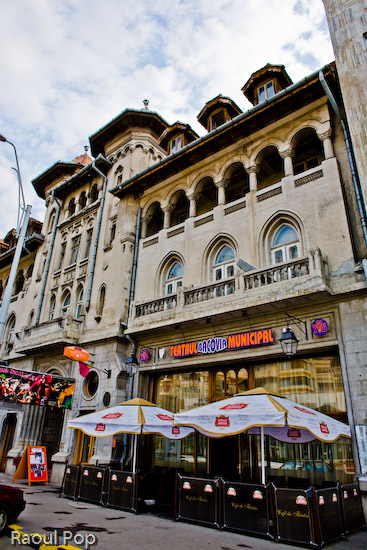
I love the northern Italian architectural elements used in the facade of the Bacau Theatre building, especially the upper floor, with its balcony, arches and mini-towers.

Teatrul Municipal Bacovia

The entrance to the theatre is quite imposing:

Entrance to Bacau Theatre

Across the street from the theatre, you can see this large condominium building (at least I assume it’s condominiums, I doubt they’re all offices.) I thought the architectural plan was a good way to make a square shape look interesting. It looked pretty good, but, as one finds in Romania, ads were plastered all over its sides. I wonder what the people living in those apartments now obscured by the posters must think of it all. Are they getting paid? Are they just getting annoyed? Who knows.
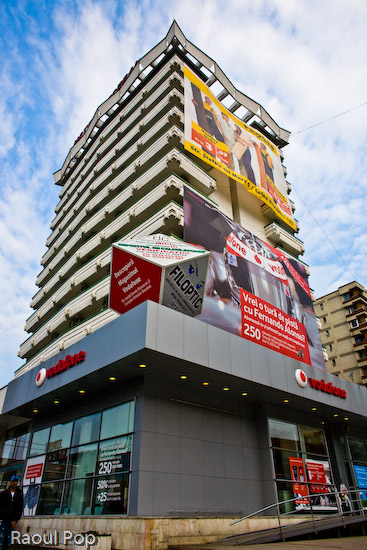
Vodafone Bacau

Right next door to the building above, we can see a monster left over from communist times… At least this dying breed of an apartment building is one of the better ones I’ve seen in Romania. One mostly sees nasty, crumbling, weather-stained concrete ruins when it comes to communist architecture. This particular building looks pretty well maintained, too. Of course, its central location might have something to do with that.

Complex Comercial Junior

A little ways down the street, we find the public library, but the building is in sore need of restoration. I’m not sure if it’s still being used, but I’d love to get inside it at some point in the future. It could lead to some interesting photographic opportunities.

Biblioteca Bacau

Here’s another view of the library, from the back:
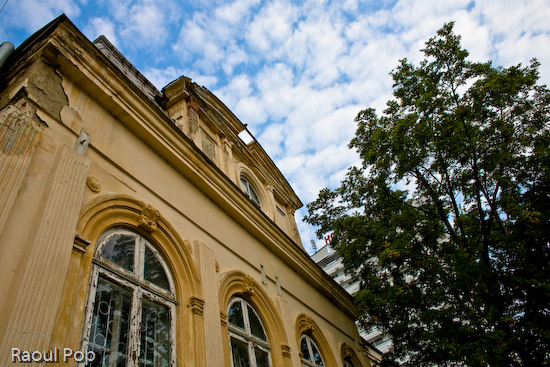
Almost in ruins

There was a public park in the area, with art on display. I found a modern statue, and some post-modern wooden carved poles, styled after folk themes.

Pensive

Abstract wooden sculpture

Hidden behind the park and public library, I found the Bacau Ateneu. One of our friends plays the violin over there. 🙂
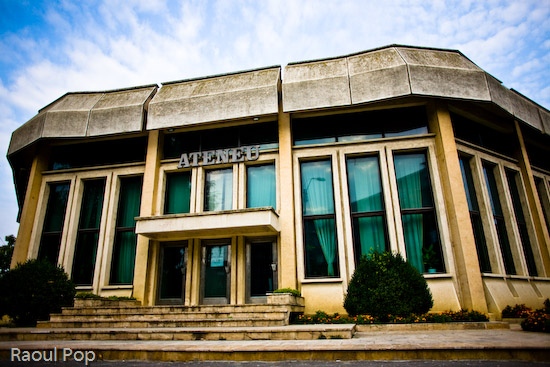
Ateneu Bacau

Further down the street, you’ll see the county government building. This is the main entrance:
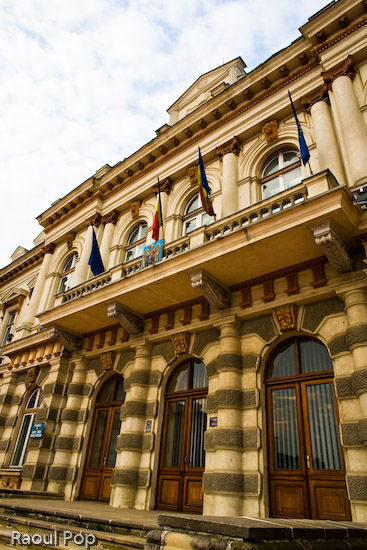
Consiliul Judetean Bacau

I liked the clasically-styled architecture, typical of turn-of-the-century construction. Here’s a window detail. Notice the stucco stripes, columns and arches.

Striped and arched

That concludes my sightseeing tour of downtown Bacau. Who knows, maybe I’ll get to visit it again in the future and take more photos. 🙂

Standard
Thoughts

Google bought Jaiku

Around noon today, I saw Scoble’s Twitter about Google’s purchase of Jaiku, and left two comments on his blog post. Basically, I said that Jaiku’s purchase made sense, but that Google probably considered Twitter and found Jaiku to be less expensive. I use both Twitter and Jaiku myself. I tried using Jaiku as my primary microblogging service, but came back to Twitter.

The thing about Jaiku is that it has more built-in features than Twitter, no questions about that. Its built-in feed integration service doesn’t even exist at Twitter, where we have to use the third-party Twitterfeed to get similar functionality. I wrote an in-depth comparison of Twitter and Jaiku back in July, and I invite you to have a look at it (see Part 1 and Part 2 of “The value of microblogging services”).

The kicker could be even more interesting though, and I don’t know if someone else has already touched on this. We all know about Facebook’s ridiculous $15 billion valuation, right? Well, Google’s purchase of Jaiku has just burst that absolutely ridiculous bubble. Jaiku offers functionality very similar to Facebook’s, but without all the annoying hype.

I bet you the price Google paid for Jaiku was very reasonable, much like the price they paid for FeedBurner. I for one am glad Google pays sane prices for their acquisitions, unlike Microsoft. The only time I think they splurged was with YouTube, but they paid for the users there. (They obviously didn’t pay for the content, since most of it was and still is pirated from TV and movies…)

I hope Facebook’s valuation drops down to some normal amount now, something like $500-750 million. By the way, I’m not on Facebook and I don’t intend to join it any time soon. I’m also not on MySpace.

Standard
Thoughts

Photography, take two, part two

I continued to work on replacing photos hosted with third party services. The list of modified posts is provided below. This has proven to be a huge effort. I had to locate the photos in my digital library — not all of which is keyworded yet, though I’ve got location information for all my photos — but I also chose to re-process, keyword and re-title the photos. You see, most of these photos were keyworded through bulk uploaders, for the purpose of displaying that data on third party photo sharing sites, not for my own library. Clearly that effort was wasted, but I didn’t know that back when I did it… Where applicable, I am also re-writing some of the text.

I want to make sure that the content I provide here at ComeAcross is truly top tier, as much as possible. What does that mean? Well, it means I spent my entire weekend, including Monday, working on the posts listed below, and on the posts listed in part one. I still have more posts to go. I don’t mind doing this — actually, I look forward to it — but I do hope that you, the reader, appreciate the effort that goes on behind the scenes. 🙂

Also see Photography, take two, part one.

Standard