
Calm, soothing vignettes of autumn, which will soon be here. The photos were taken in Grosvenor Park. Enjoy!


Calm, soothing vignettes of autumn, which will soon be here. The photos were taken in Grosvenor Park. Enjoy!
Sometimes the very simple breakfasts are the best. Raw honey, scooped out of a fresh honeycomb just picked from the beehive, made by happy, healthy bees growing on pesticide-free land, slathered onto fresh-baked bread and washed down with raw almond milk. This is the ambrosia of the gods.
Enjoy!


Did I ever profess my love for Morgan Cars publicly? It’s time I did. I love them!

For years, I decried the ugly design of modern cars and I wondered where old design went. I looked at cars made in the 20s, 30s, 40s and 50s and wondered when cars were going to get beautiful again. About a year ago, I found out there’s a car company that never abandoned the old design principles and has been making gorgeous cars by hand in their factory in Malvern, in the UK, since 1909.
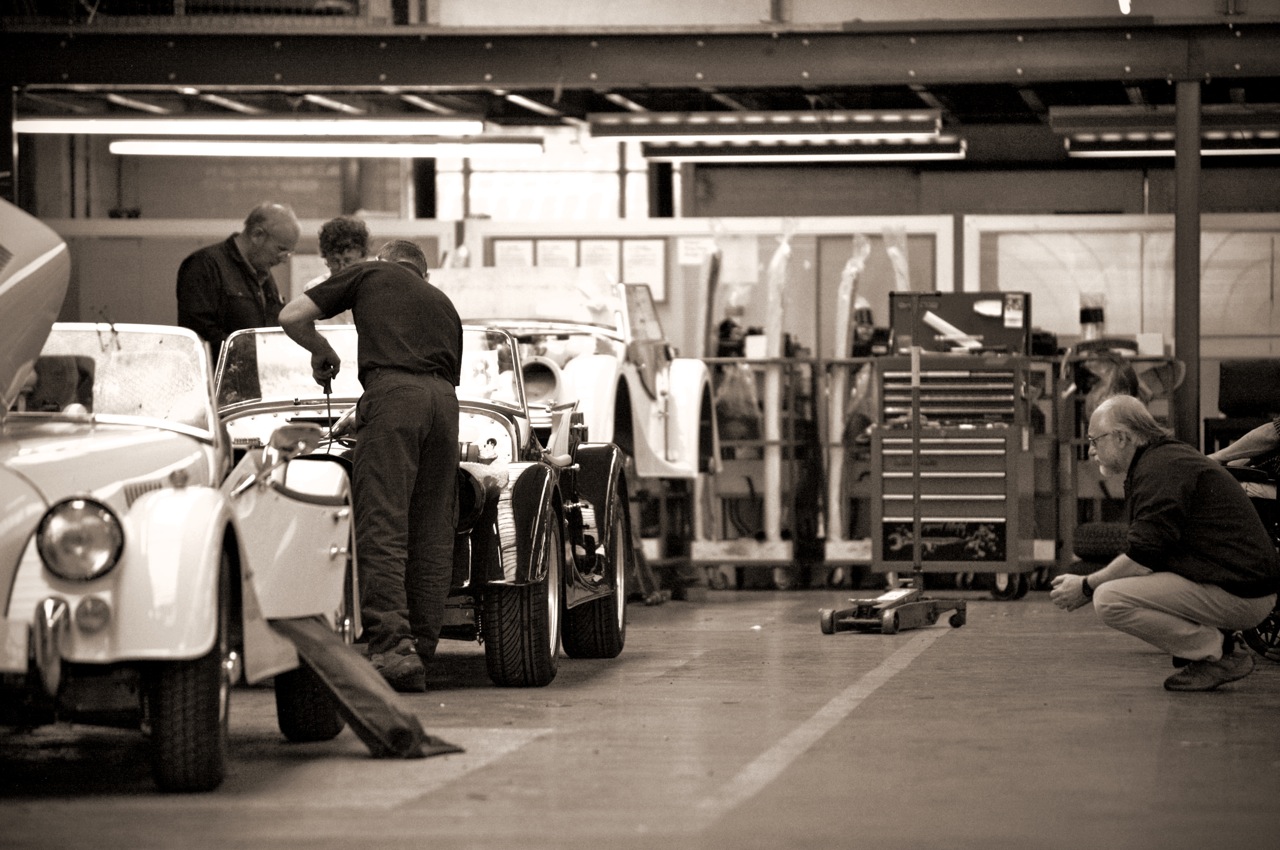
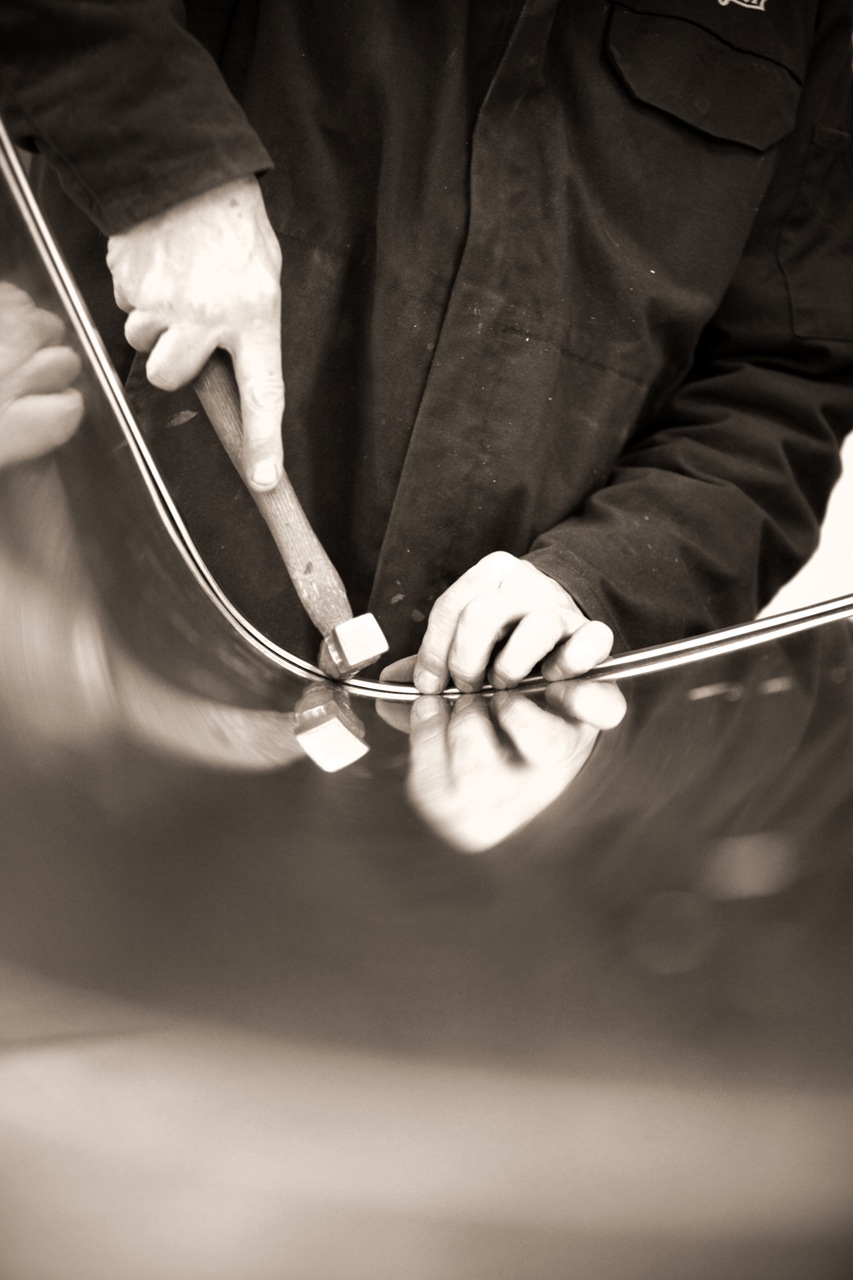
Skilled craftsmen bend the sheet metal laboriously into its iconic shapes and carpenters carefully assemble the wood frame of the car by hand. (Yes, you read that right, the frame is wooden.)

Not only are the cars made by hand and bespoke, but they’re also affordable. Would you believe prices start at £32,000 for a car made to your desires? That’s awesome.

I just plain love the design. I can’t explain why. It simply appeals to me. It feels like it’s meant to be, it fits in with my soul and it fits in with the environment. It’s so seldom that a machine, an artificial construct, feels natural in the middle of nature, but in the case of a Morgan, it’s a match made in heaven.

I’m planning a trip to their factory. I plan to test drive a few models and see which one Ligia and I like best and then… we’ll see! 🙂



Photos used courtesy of Morgan Motor Company.
In August of 2001, around the 1-year anniversary of my website, I wrote two articles. The first was titled “How to Keep Your Exercise Goals” and the second, “Finding the Right Resolve for Exercise“.
I wrote the articles after working out seriously and regularly for over 7 years (at the time), so the insights I laid down in them were solid. As good as they were, I was to discover another great insight about exercise, which was to affect me years down the road. It relates to both topics (exercise goals and the resolve to keep them).
It’s about the principle of weightlifting known as “Training to Failure“. You can watch the video or you can read the script (with some slight modifications) below.
I started doing this while in college, as I tried a lot of things in order to grow. I would train to failure on all sets (other than warm-ups) or just the last sets of my workouts, depending on my stamina and my drive on a given day.
Training to failure yielded results, no question about that. Pushing yourself to the limit often helps you discover new limits, beyond what you thought was possible. Coupled with good nutrition, plenty of rest and a proper, serious workout schedule, training to failure will yield results.
In part, it was responsible for my impressive gains in muscle mass and strength. Here’s what I looked like in September of 1994. There’s no way to get around it: I was a pencil-neck. I’d done a lot of swimming in high school and while it’d made me taller, it didn’t add any bulk at all to my body.

In September of 1994, just starting college.
And then here’s what I looked like in May of 1998.

In May of 1998, after a workout.
Big difference, right? That was an increase in weight from 135 lbs. to 195 lbs. and strength gains that went through the roof. I should clarify that I did not take steroids to look like that. I worked out to my limit and beyond, every workout, ate a lot and rested a lot (when I didn’t pull all-nighters to study for exams).
So, training to failure is a good thing, right? Not so fast.
As a practice, it’s a wonderful thing. You’re pushing yourself to the limit. Great! As a name, it’s bad.
Why? Because it’s insidious. The term “Failure Training” or “Exhaustion Training” crawls into your brain and slowly but surely, it begins to affect your attitude toward going to the gym and lifting weights. It takes years, but it’ll happen.
Unless you’re aware of what I’m telling you here, you won’t know why, but workouts and weightlifting will start to become boring to you. You’ll find yourself saying, “What’s the point? I’m lifting these weights up and down, it’s the same movements all the time, I repeat them till I can’t do any more, then I rest for a while and start over again. This is useless, there’s not future in it.”
I’m here to tell you that’s not you talking. You’re doing your part. You’re going to the gym, you’re lifting the weights, you’re eating right, resting, staying informed; you keep at it, but you’re discouraged.
What’s going on is that you’ve got faulty programming in your mind. You’ve gotten so used to the “failure training” that all training has become a failure for you. That’s how your mind now thinks of exercise, and you’re in a terrible situation.
Whoever called it “Training to Failure” made an unfortunate decision. Thankfully, we can fix it, but it’s going to take a bit of effort.
First, let’s start referring to it as “Expansion Training” or “Growth Training“. Make up your own name for it if you want, but it’s got to be something positive, something that encourages you to go on and is a good thing for your mind to recall. It’s got to help you visualize the results you want.
Think about it. Does “Failure Training” help you visualize big muscles or more strength? Not likely. But does “Growth Training” help you see more, bigger muscles? How about “Expansion Training”? Does that help you visualize breaking limits, expanding what you thought was possible?
There’s nothing wrong with the practice of training to exhaustion or to failure. It’s a wonderful thing. We just have to change the way we refer to it, and once we do that, a lot less people who are currently using the technique will get discouraged long-term.
I am currently in the process of trying to change my own thinking on it, after finding out the hard way why I lost the drive to work out years ago. This very thing was one of the reasons.
You may not think simple words can have that sort of power, but when you combine them with effort, pain, visualization and time, those insidious words can have an awful effect. That’s why a positive name change is so important, and it should have been at the top of the list when this technique was invented (or named).
Every time the term “Exhaustion Training” or “Failure Training” comes to your mind, replace it with “Expansion Training” or “Growth Training”. Every time you employ the technique and you push your body to the limit, visualize the positive: your muscles are growing, your body is getting bigger and stronger (or leaner if you want to lose weight). Don’t think about the micro-tears, don’t think about the pain, the exhaustion, and most certainly don’t think about failure. Think about how much you’re improving and how you’re keeping your body in shape, and how good it’s going to look. See yourself leaner, muscular, stronger — all around better.
That’s the way you should approach every “Expansion Training” set and for that matter, every workout, and you’ll be amazed at the results!
Earlier this month (on August 7th to be exact), my website turned 12. Yes, I’ve been writing and publishing online since 2000!
I also got two unexpected gifts around the anniversary date. One of my articles got featured on the home page of WordPress.com (in the Freshly Pressed section). It was the second time I was featured, so it felt pretty good. (This was my first featured post.)

Another nice surprise was to see my stats counter fly past 1,000,000 views.

That’s over 1 million views since January of 2010, when I moved my site to WordPress.com. I had been self-hosting a WordPress install prior to that, and before that, my website went through several iterations of static HTML designs and a home-grown blogging engine written in ASP, running off an Access database (it was surprisingly stable). By my own guesstimate, the total number of views on my website since 2000 is somewhere around 10-12 million, if not a lot more. I used to get about 3,000 visits (not just views) per day in previous years.
Web traffic is but one measure of a website’s value. I’m much more pleased by your interactions with my articles and your messages to me, particularly the ones where you tell me how much you like the content I publish here. I do put in a lot of effort into my posts, I’ve done it from the start, and I’m glad when people see the quality.
So, a hearty thank you to all of you who are subscribed, particularly to those of you who are long-time readers! I hope you’ll stick around for another 12 years; I know I will! Cheers! 🙂
 Raoul Pop