Thoughts

Read the Bill, Congress!

The US Congress recently passed the Cap and Trade Bill without reading through the over 1200-page document, which more than likely contained more pork than a Louisiana farmer’s pantry. It was a bill drafted by lobbyists and edited in closed door committees, paving the way for tons of very lucrative government contracts and taxes that will surely pad many insiders’ pockets for decades to come.

Now they’re getting ready to fast-track the House Health Care Bill, another over 1000-page document, introduced as H.R. 3200, which no one will likely read, except the lobbyists drafting it and the few congressmen whose larder needs refilling as the way for the bill is greased through the inner workings of our illustrious Congress.

What’s to be done about this? At the very least, Congress should bother to read the bills before they vote and sign them. Pretty simple, right?

That’s why the Sunlight Foundation came up with ReadtheBill.org, a website which proposes a simple rule: post all bills online for 72 hours before they are debated. This was introduced as H. Res. 554 — a change to the House resolutions — and is slowly making its way through the approval process thanks to people like you and me, who are bugging our representatives to vote for it. The 72 hour delay would give constituents a decent amount of time during which to read through the proposed bills and see if they need to act.

I endorse the 72 Hour Rule

Let’s not forget President Obama promised his own 5-day delay on signing any new bills during his campaign, but has almost never respected that promise. So we’ve got a Congress and a President that don’t really bother to read all the bills they’re signing, and don’t even want to pretend like they’re doing it — at least not yet. It’s a grand example they’re setting for the rest of the world, isn’t it? They’re passing bills they haven’t read, and they’re telling us everything is on the up and up, and we have nothing to worry about, because they’re hard at work on fixing America. Whoopee!

Please tell your friends about ReadtheBill.org. Go there, sign the online petition, and bug your Representatives to pass the 72-hour rule.

Read The Bill from Sunlight Foundation on Vimeo.

Standard
Thoughts

It’s no surprise broadband internet sucks in the US

A recent Akamai survey, which I shared here and here, ranked US in the 33rd spot (globally) when it came to broadband internet connections above 2 Mbps. Sure, it moved up two spots compared to last year, but it’s still lagging behind countries such as Monaco, Slovakia, South Korea, and believe it or not, Romania — which is where I’m living these days.

That’s sad. It’s very sad because a country such as Romania, with fewer resources than the US, and with a LOT more corruption at every level, has managed to provide better Internet services than the US. It just goes to show you how much pork barrel legislation and ridiculous lobbying can slow down an entire country’s Internet access. Why, every time a company tried to improve the way broadband worked in the US, it was eventually bought out or dragged down and kept down for the count.

Remember Telocity? It was one of the first companies to offer DSL service in the US, ahead of Ma Bell. Even though it was paying hefty amounts of money for the right to transport Internet traffic on Ma Bell’s lines, they had enormous problems with the same Ma Bell, due to problems that would somehow just happen to crop up on the same wires or the switching equipment. Then they’d have to pay more money so Ma Bell could fix their own equipment, which they’d say Telocity broke, etc., ad nauseam, and so on and so forth.

That’s just one example. Another was the more recent push to restructure the way cable services are provided (both TV and internet). One of the efforts was the a-la-carte programming initiative, and another was the push for faster and more reliable cable Internet services. You wouldn’t believe the advertising, PR and lobbying blitz the cable industry started and kept up for several months — actually, I’m fairly sure you saw their ads on TVs and buses everywhere, particularly in the Washington, DC area.

Or what about when they got together in late 2007 and 2008 to ask for an Internet tax? Remember the tiers of traffic they wanted to create? They wanted all the big websites to pay them for the traffic, as if they weren’t already getting enough money from the customers for their slow and unreliable services. They also wanted large chunks of money from the federal government in order to upgrade their infrastructure. No matter how much money they make, they’re so greedy they always want more, more, more.

What I’d like to know is how all these other countries, including Romania, can manage to offer faster and more reliable Internet services without asking for money from their countries’ government, without charging big websites for their traffic, and also by charging less per month for better broadband? How is that possible? Could it be that these companies actually know how to run their businesses while their counterparts in the US are filled with lazy, greedy idiots?

I still vividly remember an incident which happened while I was a director of IT at a Florida hospital, several years ago. A BellSouth technician had been called in to check the phone boards, and my network and servers kept going down and coming back up. The Medical Records system kept giving errors when employees wanted to access forms to fill in patient data, not to mention that other network services, like file sharing and printing, kept going on the fritz. I checked every one of the servers and they were fine. I finally walked into the switch room, at my wits’ end, only to find the moronic BellSouth employee with his fat, lazy butt on our UPS, jiggling it back and forth as he chatted with someone back at BellSouth HQ, plugging and unplugging the power supply that fed one of the main network switches. I went ballistic, grabbed him by the collar and threw him out of my switch room. Was he that stupid that he didn’t know where he was sitting? Was he such a pig that he couldn’t feel the plugs underneath him as he sat on them? He didn’t even want to apologize for taking out an entire hospital’s network during daytime hours. That’s BellSouth for you.

I don’t know how the US can get better broadband, unless it’s legislated. An ultimatum must be given by the government, one that can’t be overridden by any lobbyists or CEOs shedding crocodile tears in front of Congress. These companies simply will not get their act together until they, too, are grabbed by their collars and shaken about. They’ve gotten used to the status quo, they like it, and they’re clinging to it with all their might.

Meanwhile, here’s a sample of the Internet plans you can get in Romania right now. For comparison purposes, 1 Euro is worth about $1.4 these days.

Romtelecom (the main phone carrier, provides ADSL services):

  • 2 Mbps, 2084 kbps/512 kbps, 4.88 Euro/month
  • 4 Mbps, 4096 kbps/512 kbps, 7.02 Euro/month
  • 6 Mbps, 6144 kbps/512 kbps, 9.40 Euro/month
  • 8 Mbps, 8192 kbps/768 kbps, 14.16 Euro/month
  • 20 Mbps, 20480 kbps/1024 kbps, 24.87 Euro/month

[source]

Birotec (provides fiber optic services, all plans include phone line with varying amount of minutes based on plan price):

  • 3 Mbps up/down, 10 Euro/month
  • 4 Mbps up/down, 15 Euro/month
  • 6 Mbps up/down, 20 Euro/month
  • 8 Mbps up/down, 29 Euro/month
  • 10 Mbps up/down, 49 Euro/month

[source]

RDS (provides fiber optic, cable, cellular modem and dial-up access — prices not readily available on website):

  • Fiber optic access up to 2.5 Gbps
  • Cable access up to 30 Mbps

[source]

The lowest internet access plan in Romania is 2 Mbps. Cellular modems are advertised at speeds up to 3 Mbps. Meanwhile, in the US, you can still find 512 Kbps plans at prices twice or three times as much as the 2 Mbps plans in Romania. That’s the price of complacency and excessive lobbyism.

Standard
Thoughts

Concerned about swine flu? Know who to thank for it

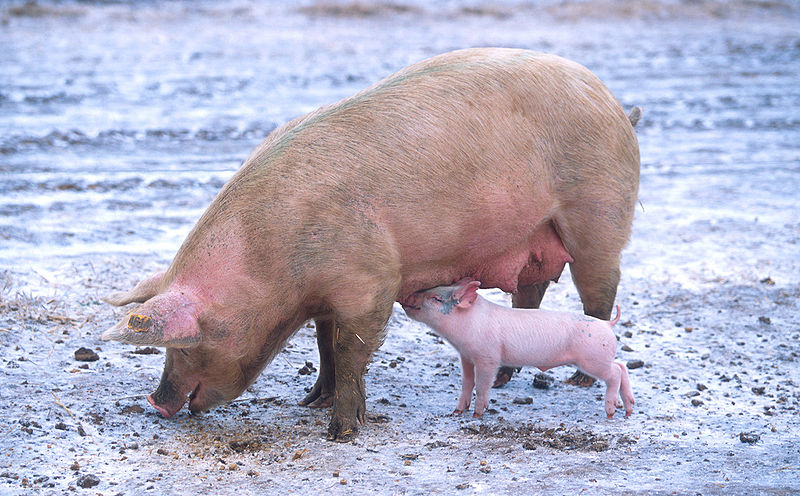
To all those people who are worried about swine flu — you should thank the pig farming industry for it, and the rotten politicians who keep it going the way it is, even though it’s one of the worst polluters in the US. It’s no wonder new viruses are getting cooked up in those industrial pig farms, given the conditions in which they keep the pigs.

And perhaps you should also thank your local landscaping companies, who, about this time each year, dump tons of pig offal around your communities at outrageously high prices. Along with the smell, you’re also getting a dose of swine flu, trichinella and other intestinal parasite eggs, and who knows what other poisons, cooked up nicely in fermented pig manure.

sow-with-piglet

Enjoy all this, and keep in mind you’re the one financing the whole shebang when you buy pig meat and you hire landscaping companies based not on how sustainable and non-polluting their methods are, but on how tall they can make your pansies and grass grow…

Updated 5/3/09: Wired Science confirms my hunch that the pig farming industry is to blame for this virus in an article entitled “Swine Flu Ancestor Born on US Factory Farms.

Standard
Thoughts

A few words on the economic crisis at hand

I’ve just got to say what I’m about to say, because it’s gnawing at me from inside, and I need to have it out. I’m not going to pretend I’m some economic guru, and I’ll use plain words.

My thinking on economics is simple. I understand tangible products. If an economy makes stuff I can touch and see, if it manages to sell that stuff both inside and outside the country, and the unemployment rate is low, then things are well.

I think things started to go sour when our industries decided to shift manufacturing to third-world countries. The thinking was that cheaper labor would result in cheaper products and lower prices. The truth was that it took jobs away from our country and it really only resulted in higher profits for the investors, not lower prices for us. As more companies would announce they were moving factories abroad, I would wince, because I knew our economic power was decreasing with each and every move. When you’re making less stuff in your own country, it’s plain common sense to realize that your economy is weaker.

As our economy started to move away from manufacturing and toward the service sector, I winced again. If you’re not making tangible products, what are you really making? Services? Knowledge? That’s all nice and good, but you can’t base an economy on intangibles. You just can’t. You have to have a good, healthy mix. I suppose I shouldn’t complain about this so much, since I work in IT. Still, at least what I make is tangible. I make websites and web systems. You can see and touch those, or click on them anyway. But not everyone can be a knowledge worker. It takes a certain amount of dedication, interest, perseverance and education, and many people simply don’t have the inclination to do that, or to be knowledge workers. That’s where having a good mix of jobs to offer your people is important. The more manufacturing jobs you move away from the country, the less variety you can offer your people. Plus, what do you do with all the folks you’re laying off as you “restructure” your economy?

When real estate prices started going up like crazy, I knew they’d come down, hard. They were bound to do so. When a pathetic little townhouse with a few tiny rooms, made out of plywood and fake brick cladding, cost over $400,000, that couldn’t be good. As prices kept going up, and people bought up multiple properties using ARMs, banking on the hope that the values of these properties would continue to grow, but no regular person could afford to actually own one of them, that was just plain wrong. When the home prices in most neighborhoods are so high that they’re out of reach for most, that’s asking for trouble.

Then I heard about the gaming that went on behind the scenes, as loans were approved by mortgage companies which seemed to sprout out everywhere. We knew someone who worked at one of these companies, and that person was just shocked at what went on. Executives would push employees to approve more and more loans only so they could get fat bonuses and afford McMansions and Mercedes cars. Meanwhile, the employees got nothing but low pay and long hours.

What’s more, I also heard about investment firms buying up groups of mortgages left and right, and re-selling them, and creating ridiculous layers of investments and speculations on top of these (mostly) insecure loans, in order to squeeze as much profit from them as possible. I’m sure that if you go back and check most loans, you’ll find 5-6 layers of additional financial speculation on top of the original mortgage. That’s insane and it makes me sick when I think about it. Instead of letting someone borrow money and charging them the set interest fee for the life of the loan, banks were selling these loans left and right as soon as the papers were signed, not caring where they ended up, letting others take the fall when and if the loan defaulted, etc ad nauseam. I knew that wasn’t going to end well.

Fast forward a couple of years to where we are today, and is it really any surprise that we’re here? Is it? And what’s being done about it? The government wants to bail out the banks and give them insane sums of money. You can’t do that! If they’ve mismanaged their own money so badly over these past several years, while their executives got filthy rich, let those same “smart” executives figure out how to fix their own problems! But no, what we’ve got now are scare tactics employed across the main stream media, where politicians and bankers are trying to scare us into giving in and allowing the bailout plan to go through. We’ve got bankers lobbying politicians to get the plan passed, and we’ve got them salivating at the thought of getting a piece of the bailout pie. This is ridiculous and irresponsible!

I keep thinking about Bush’s televised speech when he wanted to go into Iraq. And then I think about his speech just a few days ago, where he used the exact same scare tactics and language to try and get us to agree to the bailout plan. Jon Stewart did a great job of contrasting the two speeches on The Daily Show [reference]. Here’s a man that’s derailed our country, our economy, our international standing, and our military over the past 8 years, and we get to see his scare tactics in use once more. He’s clearly beholden to special interests, and they write his agenda. They wrote his agenda when he said we should go into Iraq, and they’re writing his agenda now that he wants to bail out the corrupt bankers. Given his track record, does he really deserve any credibility? I don’t think so.

So what should we do? Ride it out. Let the bankers suffer and cry. Let’s take our proverbial castor oil, let the crap pass through the system, and move on. They said it would be a disaster yesterday, when the stock market tumbled 778 points, and yet it jumped back up by 485 points today as investors gobbled up stocks while the prices were low. I think we all need a serious round of belt-tightening. Many Americans need to learn a hard lesson, namely that life doesn’t work on credit, that you need actual, real money to buy stuff. People and politicians and banks everywhere need to learn real fiscal responsibility. They need to learn that they can’t run up bills on credit cards and loans and credit derivatives and bond issues and not expect them to come due at some point. They need to learn that saving is more important than spending, and that a healthy economy means an economy that keeps its jobs inside the country, and makes most of what it needs inside the country as well.

It is truly unfortunate that none of the candidates running for president is saying this. I support Obama on my website, as you can tell by the Obama button in the sidebar, but that doesn’t mean I agree with him on everything. I think he’s the better choice out of the two, but he’s pretty short on substance when it comes to what needs to be done about our economic crisis. And he actually supports the bailout plan — probably out of fear, because he doesn’t want to be saddled with a big recession should he win office. I honestly wish Ron Paul was still running for president, because he’d get my vote, solely for his common sense approach to this whole mess.

Standard
Thoughts

Pork's dirty secret: It's one of America's worst polluters

Pork’s Dirty Secret: The nation’s top hog producer is also one of America’s worst polluters : Rolling Stone.

I’m shocked beyond belief by what I read in Rolling Stone magazine today, in the article pointed about above. Let me quote a few excerpts to draw your attention to the crimes that have gone unpunished for the last couple of decades, done right here in the US, under our eyes and noses, and with the approval of smarmy politicians all too happy to oblige deep-pocketed campaign contributors.

This is how pig farms function:

“Taken together, the immobility, poisonous air and terror of confinement badly damage the pigs’ immune systems. They become susceptible to infection, and in such dense quarters microbes or parasites or fungi, once established in one pig, will rush spritelike through the whole population. Accordingly, factory pigs are infused with a huge range of antibiotics and vaccines, and are doused with insecticides. Without these compounds — oxytetracycline, draxxin, ceftiofur, tiamulin — diseases would likely kill them. Thus factory-farm pigs remain in a state of dying until they’re slaughtered. When a pig nearly ready to be slaughtered grows ill, workers sometimes shoot it up with as many drugs as necessary to get it to the slaughterhouse under its own power. As long as the pig remains ambulatory, it can be legally killed and sold as meat.

The drugs Smithfield administers to its pigs, of course, exit its hog houses in pig shit. Industrial pig waste also contains a host of other toxic substances: ammonia, methane, hydrogen sulfide, carbon monoxide, cyanide, phosphorous, nitrates and heavy metals. In addition, the waste nurses more than 100 microbial pathogens that can cause illness in humans, including salmonella, cryptosporidium, streptocolli and girardia. Each gram of hog shit can contain as much as 100 million fecal coliform bacteria.

Smithfield’s holding ponds — the company calls them lagoons — cover as much as 120,000 square feet. The area around a single slaughterhouse can contain hundreds of lagoons, some of which run thirty feet deep. The liquid in them is not brown. The interactions between the bacteria and blood and afterbirths and stillborn piglets and urine and excrement and chemicals and drugs turn the lagoons pink.”

This is the man in charge of the largest pig producer in the US:

“The chairman of Smithfield Foods, Joseph Luter III, is a funny, jowly, canny, barbarous guy who lives in a multimillion-dollar condo on Park Avenue in Manhattan and conveys himself about the planet in a corporate jet and a private yacht. At sixty-seven, he is unrepentant in the face of criticism. He describes himself as a “tough man in a tough business” and his factories as wholly legitimate products of the American free market. He can be sardonic; he likes to mock his critics and rivals.”

This is how the journalist describes his encounter with the smell from one of the pig shit lagoons:

“Concentrated manure is my first thought, but I am fighting an impulse to vomit even as I am thinking it. I’ve probably smelled stronger odors in my life, but nothing so insidiously and instantaneously nauseating. It takes my mind a second or two to get through the odor’s first coat. The smell at its core has a frightening, uniquely enriched putridity, both deep-sweet and high-sour. I back away from it and walk back to the car but I remain sick — it’s a shivery, retchy kind of nausea — for a good five minutes. That’s apparently characteristic of industrial pig shit: It keeps making you sick for a good while after you’ve stopped smelling it. It’s an unduly invasive, adhesive smell. Your whole body reacts to it. It’s as if something has physically entered your stomach. A little later I am driving and I catch a crosswind stench — it must have been from a stirred-up lagoon — and from the moment it hit me a timer in my body started ticking: You can only function for so long in that smell. The memory of it makes you gag.”

And this is what happens to the people who live near the pig shit lagoons:

“Epidemiological studies show that those who live near hog lagoons suffer from abnormally high levels of depression, tension, anger, fatigue and confusion. “We are used to farm odors,” says one local farmer. “These are not farm odors.” Sometimes the stink literally knocks people down: They walk out of the house to get something in the yard and become so nauseous they collapse. When they retain consciousness, they crawl back into the house.”

And this is what happens when the lagoons spill their vile contents into the environment, which happens all too often:

“The biggest spill in the history of corporate hog farming happened in 1995. The dike of a 120,000-square-foot lagoon owned by a Smithfield competitor ruptured, releasing 25.8 million gallons of effluvium into the headwaters of the New River in North Carolina. It was the biggest environmental spill in United States history, more than twice as big as the Exxon Valdez oil spill six years earlier. The sludge was so toxic it burned your skin if you touched it, and so dense it took almost two months to make its way sixteen miles downstream to the ocean. From the headwaters to the sea, every creature living in the river was killed. Fish died by the millions.”

As if those sorts of unmitigated environmental disasters aren’t enough, it gets worse:

“… Corporate hog farming contributes to another form of environmental havoc: Pfiesteria piscicida, a microbe that, in its toxic form, has killed a billion fish and injured dozens of people. Nutrient-rich waste like pig shit creates the ideal environment for Pfiesteria to bloom: The microbe eats fish attracted to algae nourished by the waste. Pfiesteria is invisible and odorless — you know it by the trail of dead. The microbe degrades a fish’s skin, laying bare tissue and blood cells; it then eats its way into the fish’s body. After the 1995 spill, millions of fish developed large bleeding sores on their sides and quickly died. Fishermen found that at least one of Pfiesteria’s toxins could take flight: Breathing the air above the bloom caused severe respiratory difficulty, headaches, blurry vision and logical impairment. Some fishermen forgot how to get home; laboratory workers exposed to Pfiesteria lost the ability to solve simple math problems and dial phones; they forgot their own names. It could take weeks or months for the brain and lungs to recover.”

And now the bastard that runs Smithfield, Joseph Luter, wants to expand into Europe, particularly into Poland and Romania:

“When Joseph Luter entered Poland, he announced that he planned to turn the country into the “Iowa of Europe.” Iowa has always been America’s biggest hog producer and remains the nation’s chief icon of hog farming. Having subdued Poland, Luter announced this summer that all of Eastern Europe — “particularly Romania” — should become the “Iowa of Europe.” Seventy-five percent of Romania’s hogs currently come from household farms. Over the next five years, Smithfield plans to spend $800 million in Romania to change that.”

You want to see a real terrorist? One that’s irreversibly damaged the environment, killed millions of fish and other aquatic life, and ruined the lives of tens of thousands of people? Look no farther than Joseph Luter. The evidence is overwhelming. And yet he’s not in prison. No, he’s out, enjoying his life while ruining the lives of others. I say we put him not in jail, but in a prison which contains one of his very own pig shit lagoons, where he’s to spend the remainder of his criminal life.

Luter has made pig farming profitable, but at what expense? The environmental disasters he’s directly responsible for equal the ones perpetrated on mankind by the industrial revolution — only we outgrew those abuses, and didn’t expect to find such flagrantly illegal and morally corrupt behavior in the businesses of today.

Don’t think Luter is the only one. You look at cows, at sheep, at chicken and other farm animals, and you’ll find incredible, criminal abuses of animal life and the environment in all those industries. Seemingly everywhere, our food supply has been hijacked by companies hell-bent on making profits at the expense of health, safety, the environment and even life.

Quotes used courtesy of Rolling Stone magazine. If the magazine feels that the quotes are too extensive, please contact me and I will abbreviate them.


Standard