Thoughts

Gotta give them something to do

It’s easy to decry TV, movies and sports as nothing more than a time suck, as a constant push toward looser morals and a consumer culture, but they also provide a benefit that’s not often discussed — that of giving people something acceptable to do with their time. Among other things, they redirect energy that would be spent on real life behaviors into vicarious behaviors, and in some ways, that’s a good thing in today’s world.

You look back through recent history, and you’ll see that as societies became more civilized, people distanced themselves from nature and segmented their existence not only in terms of time but also in terms of space. When economies were based solely (or mostly) on agriculture and crafts, people had plenty to do all day long. Life and work followed a natural cycle, and they intermingled. (You see some of that these days with telecommuting.) People had homes, and they had land, and they worked on that land and around their homes all day long. They put in long hours during the spring, summer and autumn, and relaxed during winter, at home with their families. Nowadays, very few people still live on that cycle. Most people have office jobs and live in apartment buildings, particularly in the larger cities where the costs of owning a home are prohibitive. When they get home at night, what’s there to do? Little, really. When you have an apartment, what are you going to do? Stare at the walls? Vacuum the floors? Re-organize your sock drawers? I suppose that’s how the need for mass entertainment developed, first with sports, then movies, then TV. When you have (roughly) five hours of free time per day, you’ve got to spend it somehow, so why not become a sports fan, or why not watch movies or TV?

As one follows the progress of their favorite sports team or TV show, they live in that world, through those characters or stars, and experience the highs and lows of that microcosm. Some would say that’s a form of population control, of dumbing down the population, of occupying their time with nonsense so they don’t wake up and start something. In some ways, it is, but it’s also needed. What would people do with the energy and time they spend on sports and TV if those outlets didn’t exist? Some would spend it in positive ways — with their families, on books, arts, hobbies, games, newspapers, trips and the like — and yet others (and this is a number that can’t be quantified) would spend it in negative ways — and the variety of those ways is something that would boggle the mind. For that group of people, the fact that they spend their time in front of the TV or in the stands, cheering for their sports teams, is undoubtedly a good thing.

So, beside the fact that there are very real benefits to TV networks and advertisers as more people tune in to see TV shows and sports matches, or to movie studios as more people go to see their latest creation, or to sports teams when fans fill their stadiums, there are arguable benefits to be gained for society in general as more people tune out the outside world and turn on their TVs. The issue is clearly more complicated than that, and I’m oversimplifying things, but I wanted to point out this particular aspect. It’s but one view among many that can be taken when you talk about this subject. The more I think of this, the more I realize its complexity can’t possibly be explained in a single post, so don’t expect an overarching conclusion here — just an observation.

Standard
Thoughts

One way to respond to stress

I was reminded today of something I’ve known for a long time, something that still hasn’t become second nature to me. I was faced with stressors, and how I chose to respond to those stressors determined my mood and milieu for the rest of the day. On a long-term basis, the sum of all these responses determines how my body will look. Scary, isn’t it?

Hence, a rule I will try to keep in my mind at all times: my response to stress is determined by my attitude, which in turn determines how my body feels and looks afterward.

There have been countless times in the past when my attitude toward a stressful situation caused me pain (anger, headaches, malaise, arguments), and yet, today, and a few other times, a simple switch in the way I chose to perceive the situation (it wasn’t even a complete 180° turnaround, just a different way of looking at the problem) allowed me to roll with the punches and go right on with my business. Instead of being stumped by stress, I overcame it and that allowed me to be productive and avoid feeling ill.

I remember my dad telling me about attitude more than a decade ago, when I was in college, but as a wise man once said, college is wasted on youth. It didn’t stick then, and it’s still not sticking. Sure, it sounds nice and you and I agree with this stuff (I bet you’re nodding your head right now) but until you bang your head against the wall a few hundred/thousand times, you don’t get to learn this lesson.

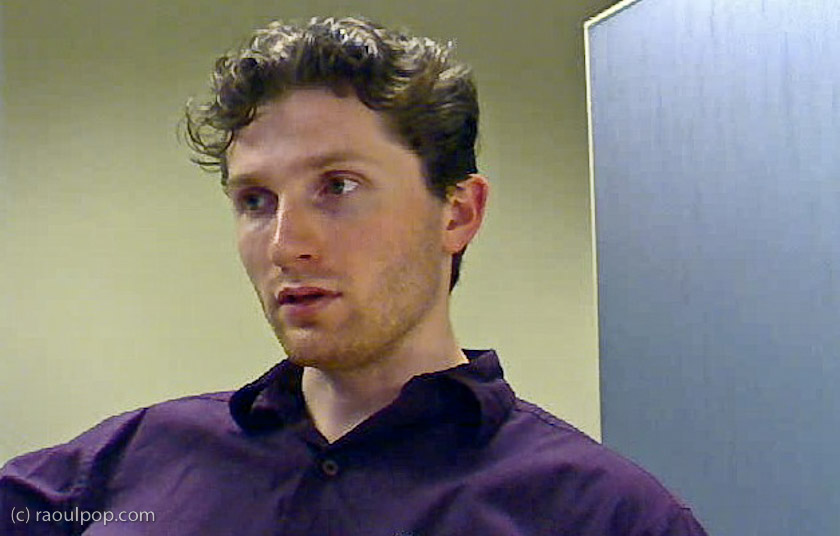
The simple heart of the matter is that I can look and feel like this…

raoul-at-work-2

… or I can look and feel like this.

raoul-and-ligia-at-home-7

I’ll take the latter any time, because I know the costs involved with the former state.

Standard
Thoughts

What cartoons are your children watching?

This is a question I keep asking myself every time I turn on the TV and look at the Cartoon Network, or The Disney Channel, or Nickelodeon these days. It’s unbelievable how much thoughtless, cheaply made programming they shove into their slots, with little or no thought for substance, style, quality and most of all, for values.

Just like most foods you can buy at the store these days are made up mostly of fillers and devoid of nutrition and natural goodness, most cartoons on TV are nothing but patina, a modicum of presentation pulled over a steaming pile of dung.

The Disney Channel is in the most shameful state of all. They have a legacy to live up to. They have a heritage, which is something no other channel has. Back in the early 90s, when I came to the States, The Disney Channel was way up there on a pedestal in terms of programming quality. It was heaven for a boy with a hunger for good cartoons.

Now, it’s 95% garbage. They’ve got terrible live-action shows geared solely toward filling programming slots and selling merchandise and hurriedly-done computer-animated cartoons.

What happened to shows like Duck Tales, or the Rescue Rangers, or Tale Spin? What happened to the old cartoons with Mickey Mouse, Pluto, Daffy Duck and the rest of the gang? Aren’t there any people who still have good ideas at Disney’s TV subsidiary? There are obviously very talented people at Pixar, where great movies still get made. Can’t Disney recruit some more people like that? They’ve obviously got the money, since they just spent $4 billion on Marvel. Only a small fraction of that money would go a long way toward turning around The Disney Channel.

Overall, the industry is in decline, precisely because they’ve been focusing on quantity, not quality and substance. They’re trying to spend as little money as possible and churn out as much footage as possible, without any foresight or real planning about a show’s direction, character development, plot, dialogue, character animation (movement, drawing style, aesthetic appearance, etc.), progress (generally, if characters are doing something or striving to achieve something, progress or setbacks toward an overarching goal ought to be achieved with each show), and most of all, since these cartoons are shown on children’s channels, they ought to be kid-friendly, they ought to promote good values, and they ought to appeal to one’s artistic sensibilities.

As for those who give these shows the go-ahead, I can only describe their approach as auto-pilot. They’re throwing stuff at a wall in order to see what sticks, and instead of trying to figure out why stuff doesn’t stick, they’re looking for more stuff to throw. They care little about any of the things I mentioned above. They care about filling slots, preferably with stuff made by people they know, and about selling ads during those slots. They’re trying to hock merchandise instead of realizing their jobs involve a much higher responsibility than that of a vendor at the local flea market. They ought to care deeply about what they put on the air, and instead of examining the merchandise they’re selling through the critical lens of someone who is helping shape young children into responsible, caring, sensible adults, they’re looking at these cartoons as a means to an end — the end being solely the channel’s bottom line.

What they don’t realize is their revenues are decreasing not because they need more live action shows on a cartoon channel, or because less people are watching TV because they’re spending more time on the internet, or because they need to spend less money and cut more corners — they’re decreasing as a direct result of the crap they are putting on TV. If only they took their time to find quality cartoons and filled their programming slots with them, they would see revenues and ratings increase, not to mention that we’d have happier, healthier children all around.

You may ask yourselves, how do I find good cartoons when the good offerings are so slim? I outlined a few good rules of thumb in this post. The most important part is that you should use your good judgment to find shows that are worth watching. Don’t give into popular opinion or into what kids may ask for, because at younger ages, they need guidance. They’re not ready to save the world, in spite of what’s portrayed in run-of-the-mill cartoons. Ask your friends, or go online to sample what’s available in stores. Go to YouTube and look for video clips from quality cartoons you can purchase, or if you hear of a good cartoon show that’s not televised, go to their website and see if they show clips. Now, more than ever, there’s real choice, because you’re not limited by what’s on the TV channels, and it’s so easy and affordable to get to the good stuff if you only put a little effort into it.

Standard
Thoughts

The pain and importance of communication

During the past several months, I’ve had to work with people much more than before, and I learned a few things, one of which is the importance of communication.

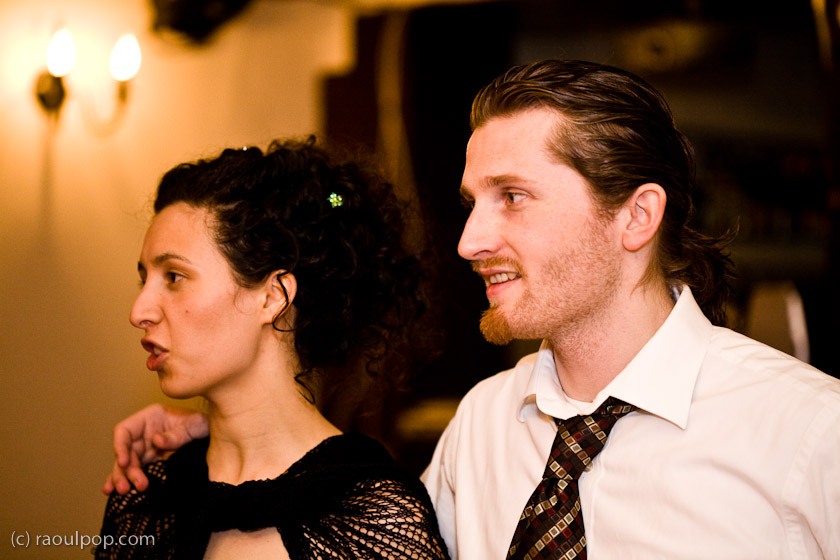
Ligia and Raoul, talking

It’s one thing to sit in front of the computer all day and communicate via email and the occasional meeting, as it happens in IT work, and it’s quite another to only do it in person, face to face, explain concepts and ideas, try to get your vision across, then see how well others understood and delivered on the stuff you needed. More often than not, I’ve been disappointed, but I’m told that’s par for this course.

So where does communication help?

Where there’s tension, it helps deflate anger and potential conflict. I’ve been in situations where the tension had built up so much the hair stood up on my back and I was ready to punch someone, and yet if we were able to communicate rationally for a few minutes and hash out the various problems that we faced, all of that pent-up anger literally melted away. Of course, if the other person can’t communicate rationally, that’s another story altogether…

I can’t overemphasize the importance of communicating with each other as you work on a project with other people, particularly when it’s new territory for either one of you. Most people aren’t good communicators. They’d rather just do their work, but if they’re not taking the time to understand what it is you want them to do, being faced with an end result that differs from your expectations can lead to bad situations all around. So what I’ve had to do is to initiate communication most of the time, and to get these people to explain to me each stage of the work they were doing, several times a day, just to make sure they’re on the right track.

In the past, when I worked on IT projects, I had to do the same thing sometimes, but more often than not, I got too frustrated with the capabilities of others and brushed them aside, preferring to do the work myself, knowing I could do it faster and better. That wasn’t possible this time. I’ve been involved in construction/renovation work, and even though I could do the work myself, I couldn’t allow myself to do it because I needed to get results on a tight schedule. Doing things myself would have meant pushing deadlines into the future, and that wasn’t an option. The teams I worked with could deliver the stuff on time, but I had to make sure we were communicating properly. It was a real challenge, and I gained a new-found respect for general contractors and project managers. It’s very stressful and exhausting to work on construction projects and ensure everything gets done according to plan and to your vision when you’re dealing with people. Unfortunately, until we invent robots that can do all manner of construction work to spec — and I doubt that’ll ever happen — that’s what we have to work with.

In IT work, if something isn’t right, you can go back in and change things. You erase or modify the code, re-adjust the software options, etc. You’ve only wasted time, not materials. (Yes, you can also waste resources and others’ time, but let’s not bring that into the equation for this analogy.) In construction work, you not only waste time, you waste materials, and that can really add up. There’s also the painful cost of tearing down stuff that wasn’t built right and starting from scratch, and you pay for this in more stress.

So yeah, communication is vital, but there are some serious flip sides to it.

I’ve found out that you can still be misunderstood and judged even when you do your best to communicate as much as possible — and here I’m not talking about construction work, but life in general. Your every action can be perceived as the opposite of what you meant it to be. You’ll try to help someone else and they’ll think you’re trying to hurt them. You’ll do a good deed and it’ll get mocked or your kindness will be abused when others seek to take advantage of you. It is so painful to deal with this crap, and yet there’s no way around it unless you go live someplace away from everybody — and let me tell you I’m sorely tempted to do it.

There is so much potential in each of us to create, to do good things, lasting things, beautiful things, to achieve lofty goals working in harmony, but we’re stuck using language to communicate what’s inside us. There’s no better way to transfer information and ideas between us. Unfortunately, words can be sorely lacking in the power to transfer information and vision, in most situations where it’s really important for them to convey that. And yes, this is coming from a writer, someone who loves using words. It’d be so much easier if we could communicate what’s in our hearts, unequivocally, when we needed to do it, so there would be no doubt in the mind of the other person of what our true intentions really are. Of course my vision is somewhat utopic. After all, many people simply don’t aspire to do good things. Their goals stop at the ordinary or downright sordid aspects of life, and you can’t do much good with those people. You’re better off avoiding them, unless you welcome extra stress in your life.

I suppose one antidote for all this pain caused by living and working among people is to not care. By this I don’t mean we should be callous. I mean we shouldn’t care what others think of our actions or of us. We should stand rooted in our morality and do what we know is right, treat others the way we want to be treated, and let others think what they will of us. As long as we’re true to our own moral compasses, nothing else should matter. Right? But somehow it does, doesn’t it? And it’s so damned painful, too.

Standard
Thoughts

My wife's ratatouille

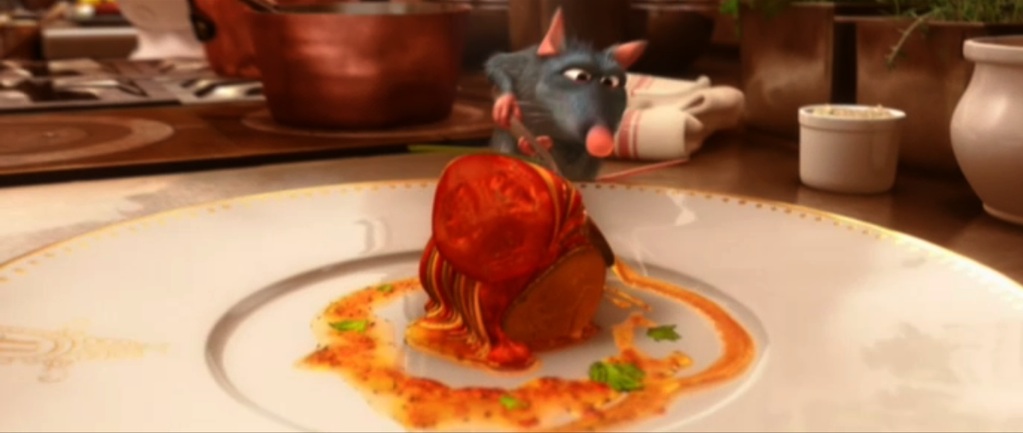
My wife made ratatouille for us yesterday. We’re big fans of the movie Ratatouille (2007), and we wanted to see what the recipe tastes like. She looked up several on the internet, picked one that she thought would be good and made it, only to find out it didn’t taste all that great. No problem — being the great chef that she is, she changed it on the fly, and in the end, it came out unbelievably delicious. It may not have looked like it did in the movie…

ratatouille

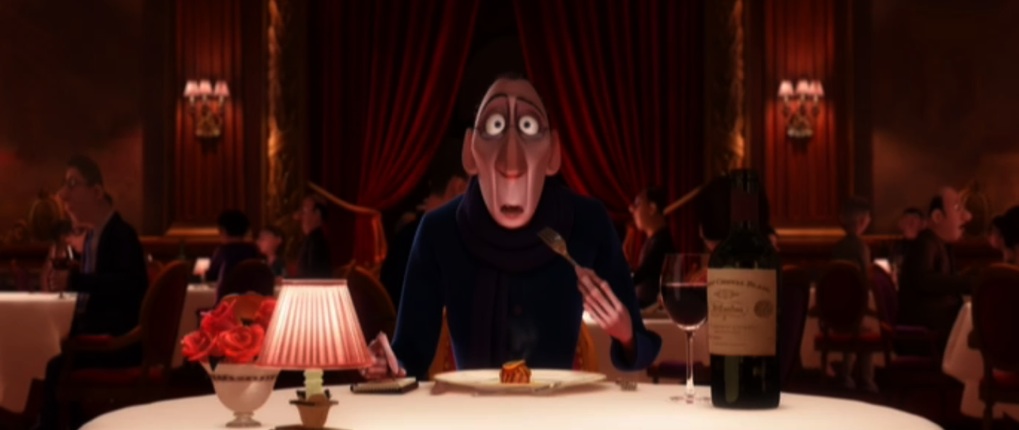
… but let me tell you, my reaction was just about the same as Anton Ego’s when I took the first bite.

anton-ego-reaction

If you’d like to see how she made it, the recipe’s posted on her website. Enjoy!

Standard