Thoughts

Sorry about the growing pains

My sites were out of commission yesterday afternoon, evening, and part of the night as well. Each outage lasted anywhere from half an hour to a couple of hours, and drove home very clearly this message: I need a web server upgrade.

While it was certainly frustrating to see my sites go down, and to see that no matter how much I tuned Apache or MySQL, I couldn’t meet the traffic demands, it’s also encouraging to see that I first outgrew shared hosting plans, then outgrew a small dedicated server, and had to (now) upgrade to a more powerful dedicated server. My site stats show this same trend. Traffic levels have been growing steadily throughout this year and even more in the last few months. October in particular has been rough on my little web server.

Yesterday, Google and Yahoo had been indexing my sites, on top of the usual, fairly heavy traffic. I started having serious performance issues during the afternoon, which led to a small outage. Google got done with my sites after that, but Yahoo kept going, and Cuil, the new search engine on the block, joined the party as well. Cuil is known for taxing web servers heavily when it indexes sites, and it was merciless on me last night. It, together with Yahoo, brought my server down and kept it down for close to one and a half hours.

I got it back up and re-tuned Apache and MySQL with Chris Johnston‘s help, but at some point during the night, it went down hard, and stayed down. When I woke, I decided enough was enough. It was high time I upgraded.

Thanks to my awesome hosting company, SliceHost, I was able to double the specs of my previous server in less than two hours. Before non today, my little web server morphed into a larger, more powerful one that can handle the current traffic levels with ease. We’ll see how long it can keep up before I need to upgrade again. You can help there. I don’t mind at all if I have to upgrade again in the near future, should my traffic levels warrant it.

Thank you for sticking around!

Standard
Thoughts

Cabin John cops are the coolest

This past Thursday, I was on my way home from work, in a hurry, because my wife and I wanted to be on time to the Gipsy Kings concert that evening. Traffic on 495 was much nastier than usual, and it was pretty clear to me that I needed to take an alternative route home, and also find another way to get to Wolf Trap. After jumping on 495 from the Georgetown Pike to get over the Legion Bridge, I got off immediately on the Clara Barton Parkway and headed down to the Cabin John exit.

There’s a stop sign there as the exit ramp meets the bridge over the parkway. Usually, no one stops, but I try to, just the same. I think you know by now what I’m getting at. My mind was on the concert, on the projects at work that I’d been working on that day, on the weather, which I hoped would hold up… and I did a lame rolling stop right past the sign.

As I did that, I saw two cop cars on the side of the road ahead. They’d been looking at me, and one of them signaled me to pull over. I knew the instant I saw them that I’d get pulled over, and I knew why they were there, too.

So I pull over, and this towering cop comes up to my window and asks for my license and registration. I start fumbling around. My license was in my wallet, which was in my camera bag on the back seat. I turn around, pull it out, then try to remember where my registration is. Okay, it’s in the glove compartment… somewhere. I pull out the owner’s manual because I think it’s somewhere in there. All of my papers should be neatly placed in a little folding booklet, which I locate and start going through.

The cop is getting a little impatient. What can I do… I don’t get pulled over that often, and now I can’t remember where things are. It’s not like I rehearse what to do when I get pulled over. One doesn’t prepare for it.

Finally, I hand him what I think is my registration, but it turns out to be my insurance. He’s reaches into my booklet himself and fishes out the registration. “Has your license ever been suspended or revoked?” he asks me. I give him a “Huh?!” look as I mumble a “No”. Fine, he goes back to his car to look up my record.

Meanwhile, I start thinking what I’m going to tell him when he asks me why I didn’t stop. I’ve recently seen the “Don’t Talk to the Police” videos [part 1, part 2]. Should I try to put that advice into practice? Will it work? Would it even apply in my situation? After all, they clearly saw me not stopping at the sign. Shouldn’t I be honest and admit I screwed up? Maybe he’ll be lenient, right? Yeah, but what if he’s an ass, like the Virginia trooper that screwed up my driving record to make his ticket quota?

While I’m still thinking, he shows up at my window again, with a stern look on his face. “Do you know why I stopped you?” he asks. All my logic goes out the window and I suddenly become stupid. “Um, ah… no?” I mumble. “There’s a stop sign back there. Did you see it?” What am I going to do now? I got myself into this mess with my fancy double talk, now what? I stick my dumb head out the window and crane my neck, trying to look at the stop sign I know too well. “Um, ah… um, yeeeeeaaaah, that one,” I say, and feel like a certified dolt. He gives me a look that speaks volumes…

I finally decide to fess up and say something lame like, “I’m sorry, I was in a hurry and forgot to stop.” At least that’s true, even if it sounds really lame. He gives me the sort of look that says, “Yeah right, buster,” and goes back to his car. Oh crap, now he’s got me. I’m going to get it for sure: a ticket and some extra points just for kicks. It’s a moving violation, after all.

So I sit there, wondering just how much it’s going to hurt, and it doesn’t take long. He comes right back and sticks a piece of paper in my hand. I can’t look at it, my eyesight’s just gone fuzzy. “That’s a warning!” he says, and a very audible sigh of relief escapes my lips. “Thank you!” I say. I think my whole being effused gratitude that moment, because the corners of his lips started to crack into a smile.

He goes on, intending to give me a stern lesson, “You gotta stop, every time. No rolling stop, no California stop, you have to make a complete stop.” I look up at his face while he’s talking. A father, in his fifties, with mostly white hair with tinges of bronze blond. An honest face, with green eyes that pierce when he talks, and you can see he cares about people and about safety. A good cop. I try to allay his concern by saying, “For what it’s worth, officer, I do stop at the important stop signs,” then realize how stupid I sound, and continue, “but mostly no one stops at that one.”

“I know,” he says, “and that’s why we’re here! Drive safely!” he says as he turns away. I pack up my papers and start on my way, knowing that this would not have turned out the same way in Virginia, where the cops are out to get you no matter what.

Am I saying I deserved to get only a warning? No. I clearly ran that stop sign, the cops saw me, and I expected a ticket. I wasn’t going to argue about it. I dreaded the points though. I hate the points. It seems they get dished out more and more these days, and your insurance goes up, and they make you a liability when other cops stop you and they see you have points — it makes it more likely that you’re going to get another costly ticket. Points beget more points. It’s a vicious circle.

Thankfully, this cop decided he was going to do something really nice. Perhaps he looked at my record and saw that I’m a careful driver, or perhaps he’s just a really nice person. I don’t know why, but he only gave me a warning, and I’m truly grateful for it. Believe me, it had the same effect as a ticket. I’ve obeyed every stop sign since, and will continue to do so, because every time I approach a stop sign, I think about not getting pulled over again. If it happens again, I know I’ll get a ticket.

Thank you, Officer McDonald! You are one cool cop!

Standard
Thoughts

My take on the fading car culture

2003 MINI Cooper S

As I read through my feeds, I noticed a headline about the fading car culture. It seems a Nissan executive has noticed how interest in cars is waning due to congestion costs, interest in public transportation, and a desire to spend money elsewhere, like gadgets.

I also noticed something disingenuous in that article. It was his response to the 35 mpg mandate by 2020: “It is not an issue,” he said. Really? Is that why Nissan was one of the car companies that lobbied against it? I don’t want to lay the blame for this on Nissan alone, as most of the major car companies lobbied against fuel regulations in the past and some are still doing it. By the same token, the blame for the fading car culture does fall on most car companies, though there are other factors at play.

For one thing, car designs got horribly bad at some point in the late 60s. While cars are made better and they last longer, car designs have lost their soul. There isn’t that visceral response to a car nowadays that one has when they look at a classic car, one that was built to look good, not just function well. Everything is about streamlining nowadays — the wrong kind of streamlining, that is. There are no bold design decisions made anymore. Every great conceptual design gets neutered before it enters the production floor. I’m talking about curves that serve no purpose other than to make the cars more appealing. I’m talking about bold grilles, wooden or metal accent dashboards, gauges and textures that make you want to touch them. I’m talking about classic design elements. Just look at cars made in the 20s, 30s, 40s and 50s.

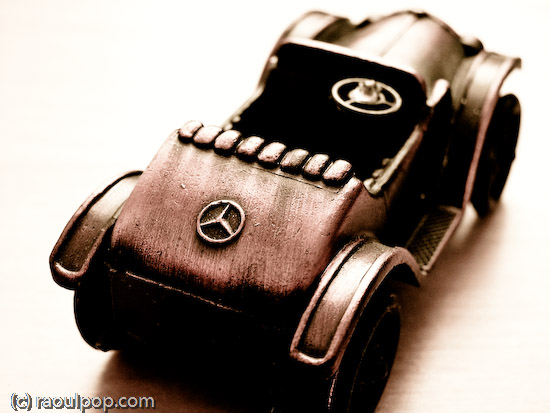
The old Mercedes

Fiat

Tears from the headlight

Stout and solid back

I’m not suggesting these photos are the best examples. This is what I have in my photo library, so that’s what I used. I’m sure there are a ton of great examples out there, and those familiar with car history know what I mean. That’s what I’m talking about. And that’s exactly what you won’t see on the market today. The few companies that might still include classic styling elements don’t do it wholeheartedly. We’ve got most people driving around in boxes nowadays. And they’re supposed to like it?

Another reason is an increase in fuel prices. Let’s face it, it’s no fun to drive around in a car that will put a serious dent in your monthly budget. Who’s to blame? Well, besides things that can’t be helped, like a dwindling oil supply, unstable world conditions and an increase in demand, I can think of a certain group I could finger: car companies. After all, they’ve been lobbying against fuel economy regulations for some time, and they’ve also refused to focus on economical models. Well, that same desire to save pennies on the dollar on improvements here and there is now going to cost them dollars — lots of them, and they’re the ones that have helped to dig the hole they’re in.

What’s another problem? Congestion on the roads. It’s no fun to drive bumper to bumper. Yet, increasingly so, that’s what driving has come to mean for those living in urban areas. When driving equals commuting, and when commuting means teeth-gnashing and extra stress you don’t need, do you really think people will want to drive, or that they’ll associate their cars with warm, fuzzy feelings? With the cost of new roads being so prohibitive, we know this isn’t going to change. If anything, we’ll start incurring more tolls in the future.

Congested highway

There are other costs that are driving this trend, such as car insurance and the high cost of traffic tickets, particularly when they’re falsely given out, which happens quite a bit when police departments want to put some money in their coffers. It happened to me, and that false ticket not only cost me about $150 but a day in court as well, and an extra $700 as well because of an increase in my car insurance. You think someone’s not going to consider public transportation options when driving starts costing them that much, particularly when they did nothing wrong? And what do you think they’re going to think about the crooked police officers that put them in that mess? I tell you, every time I remember what that thieving bastard did to me, smoke comes out of my ears. I hope he gets all that’s coming to him for what he did to me and probably to countless others…

More importantly perhaps is this: public companies react in unhealthy ways to market plateaus. That’s because they’re geared toward constant economic growth. Their market share or number of products sold or profits have to continually increase in order to satisfy the hungry appetites of investors and market analysts. Anything less than an increase on last year’s take is considered a failure. An extreme case of this very screwed up way of looking at things is Intel’s current situation. They earned 45% more in 2007 than in 2006, and yet their stock price dropped when they announced that their projected earnings in 2008 would be about the same as those of 2007. Instead of rejoicing over a stellar performance, our faulty economic expectations want more and more out of a market that’s performing very well.

That puts public companies in a very awkward and hard to sustain position. We’ll leave the microprocessor market alone, since I’m talking about cars at the moment. But do they honestly think that they can sustain (no, increase) their growth rate in a plateauing market? Who are they fooling? The demand for cars is going to continue to plateau, and quite possibly decrease. Sure, China and India are starting to develop, but they haven’t got the infrastructure or the economy to sustain a similar car-per-family ratio that we see in the States or Europe. What’s more, petrol supplies have already peaked. They are now going to start decreasing. Even if their infrastructure and economies could support a lot of cars, the Earth couldn’t, thank goodness. Have you driven in China or India lately? Their urban areas are packed chock full with cars of all makes and 2-cycle scooters already. They’re polluted to high heaven. I doubt we’d want more cars in those places. Add to that the upcoming flooding of the car market with cheap cars (enter India’s Tata car), and you’ve got a worldwide car market in serious trouble.

It seems to me there are a few things that could be corrected:

  • Stop the insanity of always expecting more from the market. Economic supply is not unlimited. Economists that made up that cockamamie idea should be taken out and horsewhipped, and recordings of those punishments should be posted to YouTube… Car companies need to realize that demand for their products will plateau. It’s a given. (Do I really expect public companies and their investors to change their perspectives? Yes, but it’s not going to happen. People are inherently greedy.)
  • Boring designs need to be retired for good. Serious inspiration needs to be drawn from the era of automobiles when the term motoring really meant something. Give people a reason to be passionate about their cars. Look at what Apple is doing with computers. Well-designed cars will sell, but they’ve got to look and feel so good people will drool over them.
  • A true focus needs to be placed on fuel efficiency and alternative propulsion methods. Ethanol-enhanced gasoline or even pure ethanol is not going to be the solution. I doubt it, and only one of the reasons is that corn agriculture cannot be sustained at the levels needed to mass-produce ethanol without turning all of the fields into dust bowls. Read up on soil erosion in agriculture if you want more info on this. Hydrogen fuel cells are expensive and still need oil to be produced. Not viable long-term. Now is the time to really look at other ways, such as bacterially-produced fuels, or steam/other water-based fuels. Electricity, if made through solar or wind power, is infinitely sustainable, and electric cars are already viable alternatives.
  • Car companies could focus on producing efficient, well-made public transportation vehicles in addition to personal vehicles. We know they’re going to be needed more and more in urban areas, and yet very few of the major car manufacturers have focused their efforts on fleets. Buses are still horribly inefficient when it comes to fuel usage, and they’re ugly and non-aerodynamic to boot. They usually get 5-8 miles per gallon, they’re loud, slow, unsafe, and they start rattling after only a few months of usage. They could stand a lot of improvement. The market is there and will continue to grow. Did you know, for example, that the Washington, DC metro cars were made in Italy and are very expensive? While it’s nice to know that DC metro goers ride in Italian-made wagons, why couldn’t they be made here in the US?

These are just a few ideas, but they’re meant to get the discussion started. Want to know what Nissan is doing about it? They’re ready to follow in the footsteps of the Tata car, and are readying their own designs for a cheap car. How that’s going to play out in the large scheme of things, no one knows for sure. But what we do know is that we don’t need more pollution and more congestion…

I leave you with a photo of the car that acted as a catalyst for change back when it was introduced. It can be done again, and in all the right ways. We just need a daring and willing company.

The classic MINI

Standard
Places

Vantage point photography

It’s fun to change your photographic point of view every once in a while, especially if that opportunity is available to you. Fortunately, we live in an area with fairly tall buildings, so all we need to do is to get to the roof. The world sure is different from up there!

I took my own advice a couple of days ago, spurred on by the chance to try out a new camera: the SP-560UZ from Olympus, the most powerful ultra-zoom digital camera they make. It’s got a monster 18x zoom, the equivalent of 27-486mm focal range. I’m currently reviewing it, and should be able to publish my findings sometime in the 1st or 2nd week of February, perhaps sooner. So far, I like the camera a lot.

This is one photo that perhaps best exemplifies the camera’s powerful zoom. That Bethesda skyline is 5-7 miles away. With the naked eye, you can barely see those buildings, tiny as fleas, somewhere on the horizon. But the SP-560UZ bring them that close, and with its built-in image stabilization, lets me get a photo like this one while shooting handheld at maximum focal range.

Bethesda skyline

In another part of Bethesda, you can see this next building. I never noticed it was crooked before, but then again, I could never get this close to it before. I tried rotating the image to see if my horizon line was at fault — the cloud line was also crooked – but that wasn’t the case. When I line up the photo with the ground line horizontally, and with the trees vertically, the building clearly appears to be leaning to the right. I wonder if its owner knows of this.

Odd inclination

This is another photo I couldn’t get before: buildings near Montgomery Mall were always too far away for my reach.

Looking toward Montgomery Mall

Then I turned and looked toward Bethesda proper, which can always be recognized by the National Naval Medical Center tower. The National Institutes of Health are across the street from it, but they’re not tall enough to show above the tree line.

National Naval Medical Center at dusk

Here’s Wisconsin Avenue as it passes over I-495 and I-270.

Wisconsin Avenue at dusk

Here’s one of my favorite scenes. The photo shows NNMC, Wisconsin Avenue, the I-270 and I-495 overpasses, and the Metro Red Line, all at once. And to top it off, you can see the Metro itself rounding the corner as it climbs up from underground. That area is one of the most visually complicated transportation hubs I have ever seen. You’ve got two major interstate roads coming together in the valley below, Wisconsin Avenue bridging the gaps over the interstates (with the requisite exits onto each highway, of course), and above, the metro line, on an overpass bridge that comes up, out of the ground somewhere in the middle of the photo. And then you’ve got Tuckerman Lane and Grosvenor Lane, plus a bunch of other roads, spilling onto Wisconsin Avenue as well. It’s one big traffic spaghetti bowl, that’s what it is.

Looking toward Bethesda

While Ligia and I were up there, two news helicopters from Channel 4 and Channel 7 flew rapidly overhead, then hovered above over I-495 at some distance away. Looks like there was some sort of accident there, but we couldn’t see anything because of the tree cover.

Covering the news

The North Bethesda and Rockville skyline was something I’d always wanted to catch with a good tele lens as well. The SP-560UZ made it possible. These are the buildings near the White Flint metro station. I love the architecture of those buildings, and must make time to photograph them up close at some point.

Reflections at dusk

This is another view of North Bethesda that extends into Rockville. The tower in the lower left foreground belongs to Georgetown Preparatory School, which has been in existence at the same location since 1789.

North Bethesda skyline

This is another view of the North Bethesda skyline. That big building that fills the background is a huge condominium building, and the one with the golden windows is an office building. Every time I see those golden windows (and I’ve been seeing them for some time) I keep promising myself that I’ll get up close to photograph them, but it never happens. Perhaps I’ll manage to make time this year.

Rockville skyline

Finally, the road shown below is Tuckerman Lane, a major street that connects Rockville Pike to Old Georgetown Road and I-270 and I-495, at dusk.

Tuckerman Lane from above

You may or may not remember Tuckerman Lane from this photo I took last July.

Tuckerman Lane at sunset

This last photo was taken with the EF 100-400mm IS L series zoom from Canon, but to be fair, photos look a LOT better when it’s summer and you get that beautiful dusk light filling the scene than on a dreary, snow-less winter evening. Don’t judge the SP-560UZ harshly — its lens is very good given its price and intended market segment.

I keep talking about I-270 and I-495, and if you’re not from the area, you have no idea what they are. I-270 is a major local highway that cuts across Maryland from North to South and collects traffic going into and out of DC. I-495 is the beltway. You may have heard the expression “inside the beltway” with regards to Washington, DC. I-495 is that beltway, and it does just that — it surrounds DC and lets people travel around it as needed without having to deal with the major traffic delays associated with driving through DC. Of course, driving on the beltway itself it no picnic either. It’s one of the busiest highways in the US. At peak times, it’s bumper to bumper traffic, all the way…

By the way, this is my Week 2 post of the 2008 Community Challenge. Here’s Week 1.

Standard
Thoughts

A rule of thumb to help you avoid accidents

So many traffic accidents happen when we don’t keep our proper distance from the cars in front of us. Here’s a simple equation to help you do just that:

Distance (in car lengths) = (Speed/10) – 1

Let me explain it. Say you’re going along at 20 mph — the distance between your car and that in front of you should be 1 car length. If you’re going along at 40 mph — the distance between your car and that in front of you should be 3 car lengths. Obviously, the formula given above is no good at speeds below 10 mph, so use your judgment there. I try to leave half a car-length to 1 car length between my car and someone in front of me, even if my speed is fairly low. I never know when they could brake suddenly. People’s actions can’t be predicted, and it’s best to have a little room for error in our calculations and reflexes.

I would go further and add an additional car length to that distance — in other words, modify the equation as follows, if you’re older and have problems seeing, if it’s dark, or if it’s rainy or foggy.

Distance (in car lengths) = (Speed/10)

If it’s snowing or it’s icy on the roads, by all means, drive slower and keep as far away from the car in front of you as you can. There’s no way to approximate distances in those situations. You never know just how your car will behave when you brake. Just hope you don’t have to brake on a particularly icy portion of the road, because you’ll skid all over the place, and chances are you’ll hit something.

MINI Cooper S on snowy country road

One additional word of advice. If you’re going to drive through snow, sleet or ice, make sure you’ve either got winter tires on your car, or you’ve got good all-season tires that aren’t worn out. And be sure that your brakes are in good working condition.

I don’t claim to be a traffic safety expert, so don’t think this rule of thumb is written in stone. See how my advice will work for you, and let me know if you think my equations need some adjustments. The idea is to keep the math simple so that everyone can understand and benefit from this.

Standard